Margot Marsh's father admitted that he hadn't loved her as a child, but grew to respect her as an adult.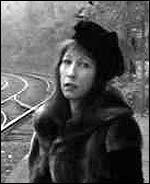
Margot Marsh
|
Margot Marsh's relationship with her father was very remote when she was a young girl. He wasn't around much, and worked long hours in his own business. "He never was particularly either physically or verbally affectionate...I don't think he could relate to little children".
As Margot got older her father was always insistent that she should never have children. One morning when Margot was about seventeen her father came in as she was having breakfast and announced that it was about time she went on the Pill.
Though Margot did notice that other fathers were different, she put some of this down to the fact that her father was continental. She feels that his background must have had a effect on him. He had left Vienna in 1938, on the first train out of Vienna after Kristallnacht and was later interned on the Isle of Man as a 'friendly alien' when Britain entered the War. He didn't hear from his own parents for seven or eight years, and didn't know if they were alive or dead. "That could scar somebody, and he never really talked about it".
She has two brothers, and then two step-brothers when her father remarried (her mother died in 1973). She doesn't think her father's relationship with these siblings was any closer than her own had been. The day she moved out of home her father converted her bedroom into the dining room, but her brother's room suffered a similar fate several years later when he came home to find a hole knocked through his bedroom wall just before he moved out.
Things didn't change much between them after Margot left home, though she does remember clearly one particular weekend when she had gone home to see him. "We sat down in the lounge, and for once started to talk about love. He said 'you know convention says that you should love your children and they should love you, but in fact certainly when you were going through puberty I didn't like you at all. But now I want you to know that I love you, and it's a genuine love for what you are, and not the fact that you're my daughter. As an individual I love you' It was marvellous".
Margot never told her father that she hadn't felt loved as a child, but it meant a great deal to her to be told that her father loved her genuinely and not out of obligation. Towards the end of his life he and Margot were very close.