| | | THE LATEST PROGRAMME | | | |
| | | | |  | | |
World War I
Germany defeated France in six weeks during the Franco-Prussian war of 1870, and did so again in 1940. Professor Chris Andrew poses a similar outcome at the outset of World War I in 1914.
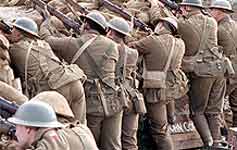
The hardship of life in the trenches, and the enormous loss of life that accompanied the war of attrition in Flanders became an iconic image that has haunted us ever since. It's almost inconceivable to imagine that the generation of young men who died during the 1914-18 war might have been spared had Germany enjoyed a lightning victory.
Speaking to historians who specialise in World War I Professor Chris Andrew imagines a very different world. Dr Chris Clarke, author of a recent biography of Kaiser Wilhelm, imagines a triumphant German army marching down the Champs Elysees.
The postwar conditions that led to the rise of Adolf Hitler would have been utterly transformed. Far from paying reparations to France, as it did after 1918, a victorious Germany would have exacted penalties from France and even Russia. Indeed, it's quite conceivable that the Russian Revolution could have taken a different course entirely. Neither would there have been the hyperinflation in Germany that led to the devaluation of the Deutschmark.
Dr Bob Tombs, a specialist in 20th century French history imagines the creation of a collaborationist French government, rather like that of Marshal Petain in Vichy, only 25 years earlier. He imagines the Modernist art movement fleeing to New York, and even Pablo Picasso becoming a safe, traditionalist portrait painter.
Further reading
Christopher Clarke
Kaiser Wilhem
Longman
ISBN: 0582245591
Robert Tombs (ed)
Nationhood and Nationalism in France
Routledge
ISBN: 0044457421
| | |
| | |






 to the 11 April 2002 programme