bbc.co.uk
Home
Explore the BBC
Radio 4
PROGRAMME FINDER:
Programmes
Podcast
Schedule
Presenters
PROGRAMME GENRES:
News
Drama
Comedy
Science
Religion|Ethics
History
Factual
Messageboards
Radio 4 Tickets
Radio 4 Help

About the BBC

Contact Us

Help


BBC Radio 4 - 92 to 94 FM and 198 Long WaveListen to Digital Radio, Digital TV and OnlineListen on Digital Radio, Digital TV and Online

History
WHAT IF
MISSED A PROGRAMME?
Go to the Listen Again page
THE LATEST PROGRAMME
Thursday 4 April 2002, 8.00-8.30pm
repeated 9.30-10.00pm
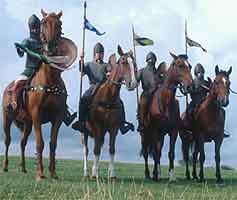
crusaders

The First Crusade

It was at a speech made outside Clermont Ferrand that Pope Urban II called for a Crusade to claim the holy city of Jerusalem for Christianity, and wrest it from Islamic control. This was the start of a movement that continued, some historians argue, for over 500 years. The Crusades of course, have a topical relevance since the events of September 11 2001. In their own ways and for their own ends, both President George W Bush and Osama Bin Laden have invoked the image of the Crusades.

In fact, the First Crusade was something of a shambling fiasco. A motley collection of knights and venturers from the countries of Western Europe made their way to Turkey, on the frontier between Christendom and the Islamic world. After a year all of the Crusaders' horses had died, as had most of their pack animals. It seemed the operation was doomed to failure. The taking of Jerusalem appeared inconceivable, and yet in 1097 - on foot - that's what the Crusaders achieved.

Professor Chris Andrew poses the quite plausible hypothesis that the First Crusade did indeed fail. What would have been the consequences of such an outcome? Renowned expert on the Crusades, Professor Jonathan Riley-Smith, editor of The Oxford Illustrated Guide to the Crusades explains that, had they failed to take Jerusalem, there would have been no Crusading movement. He goes further: a victory for Islam might well have encouraged the Seljuk Turks to invade Europe with greater success than they achieved in later centuries.

We're faced with the scenario of a Muslim Europe, and, allowing still for the discovery of the New World, a Muslim United States of America.


Listen Live
Audio Help
LISTEN AGAIN
Listen to the latest programme.
PREVIOUS PROGRAMMES

Visit the What If archive for a chance to hear previous programmes.
RELATED PROGRAMMES
This Sceptred Isle
USEFUL LINKS
www.bbc.co.uk/history

HISTORY NEWSLETTER
Subscribe to the BBCi History Newsletter

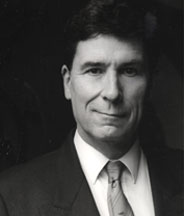
PRESENTER

photo: Jerry Bauer

Professor Christopher Andrew of Cambridge University asks what if major turning points in history had taken a different turn. By altering a single plausible fact, he re-examines the events of the day. The result is always thought-provoking, and refreshes our memories of what did actually happen. In suggesting an alternative history, we can reflect on how extraordinary it is that things did indeed happen in the way they did.
Audio Help
LISTEN AGAIN
Listen to the latest programme.
PREVIOUS PROGRAMMES

Visit the What If archive for a chance to hear previous programmes.
RELATED PROGRAMMES
This Sceptred Isle
USEFUL LINKS
www.bbc.co.uk/history

HISTORY NEWSLETTER
Subscribe to the BBCi History Newsletter

PRESENTER

photo: Jerry Bauer

Professor Christopher Andrew of Cambridge University asks what if major turning points in history had taken a different turn. By altering a single plausible fact, he re-examines the events of the day. The result is always thought-provoking, and refreshes our memories of what did actually happen. In suggesting an alternative history, we can reflect on how extraordinary it is that things did indeed happen in the way they did.

News & Current Affairs | Arts & Drama | Comedy & Quizzes | Science | Religion & Ethics | History | Factual

Back to top

About the BBC | Help | Terms of Use | Privacy & Cookies Policy