Programme 4: Benjamin Zephaniah on Bob Marley
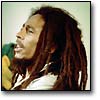 Springing from the Rude Boy culture of the ghettos of Kingston, Jamaica, Bob Marley became a reggae legend, before dying of cancer at age 36. Springing from the Rude Boy culture of the ghettos of Kingston, Jamaica, Bob Marley became a reggae legend, before dying of cancer at age 36.
The son of Norval Sinclair Marley, a middle-aged white marine officer and Cedella Malcom, an 18-year old black girl, Robert Nesta Marley was born on February 6, 1945 in St. Ann, Jamaica.
Norval spent little time with his son and in 1957 Cedella moved the family to Kingston, ending up in the shantytown of Trenchtown, named because it was built over a ditch that drained the sewage of old Kingston.
By the late 1950s, Marley had dropped out of school, and was working as a welder, spending all his free time perfecting his vocal abilities with Neville O'Riley Livingston, better known as Bunny, and Peter McIntosh.
In 1962, Marley released his first single, Judge Not, before forming the Wailing Wailers with Bunny and McIntosh. The band focused on ska, and released their first single, Simmer Down, on the Coxsone label.
After marrying Rita Anderson, in 1966, Marley spent 8 months in the United States. On his return to Jamaica, in 1967, his life and music changed profoundly.
Marley became involved in the Rastafarian movement. With Bunny and McIntosh, Marley formed the Wailers. The group now veered away from ska and took on a slower, rock steady rhythm. Rude Boy anthems were replaced with a new spiritual and social message. The Wailers recorded some of the earliest reggae hits, including Soul Rebel, Duppy Conqueror and Small Axe, under the guidance of Lee Perry. However it was in 1970, with the addition of the rock solid rhythm section of bassist Aston "Family Man" Barrett and his brother, that the Wailers became Caribbean superstars.
In search of an international audience Marley walked into the office of Chris Blackwell, founder of Island Records, and talked his way into a recording contract. With access to the world's top recording facilities, the Wailers released what is commonly known as the first reggae album, Catch a Fire, in late 1972.
Then, after brief American and British tours, the group went back in the studio to record Burnin', which was released in 1973.
The Wailers hit the road again, but touring took its toll, and by late 1974 Bunny and McIntosh left the Wailers. Renamed Bob Marley and the Wailers, Marley replaced the vocal harmonies with the I-Threes, a female vocal trio featuring Marley's wife Rita, Marcia Griffiths and Judy Mowatt. The band was named Rolling Stone magazine's Band of the Year, in 1976.
In the face of rising violence in the run up to the Jamaican Election Marley organised the "One Love Peace Concert". Days before the show, six gunmen broke into Marley's house and shot at the musician, his wife, and managers Don Taylor and Don Kinsey. Surviving, Marley took the stage to play one of the most emotionally charged shows of his career.
Marley's political message of freedom and equality was aimed at the youth back in the Jamaican ghettos, but reached beyond. In 1978 Marley was awarded the United Nations Medal of Peace for his "One Love Peace Concert" in Jamaica. While in 1980 Marley played at the Independence Ceremony of the newly liberated nation of Zimbabwe.
While playing soccer on the Exodus tour, Marley injured his toe and, because it was against his Rastafarian beliefs, refused surgery. The injury came back to haunt him. During an American tour in late 1980, Marley fell ill at Madison Square Garden. The toe injury had become cancerous, and the cancer had spread to his brain, lungs and stomach. On May 11, 1981, Marley died in a hospital in Miami.
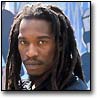 Marley biographer Chris Salewicz also helps to explore why, since his death in 1981, Marley's stature in the developing world has grown from rebel leader to redeeming hero. Marley biographer Chris Salewicz also helps to explore why, since his death in 1981, Marley's stature in the developing world has grown from rebel leader to redeeming hero.
The programme is chaired by Humphrey Carpenter.
Return to Great Lives home page.
|







 Listen to programme 4: Benjamin Zephaniah on Bob Marley
 to programme 4: Benjamin Zephaniah on Bob Marley