


The World TonightA 40th Anniversary Special
To mark its 40th anniversary The World Tonight has been going through the archives for key moments.
On Monday April 5th, we produced a special edition of the programme. We looked back at the stories we covered in the first days of The World Tonight and examined how those stories have moved on - these included Northern Ireland, the rise and fall of the Khmer Rouge in Cambodia, as well as an interview with the first presenter of the programme, Douglas Stuart.
Listen again to The World Tonight 40th anniversary edition (5th April 2010).
From the archives
In order to see this content you need to have both Javascript enabled and Flash installed. Visit BBC Webwise for full instructions
Apollo 13: 15 April 1970
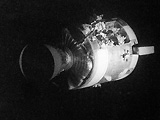
As Apollo 13 was crippled on its way to the moon presenter Douglas Stuart interviews American astronaut Walter Schirra, in 1970.
Hear Douglas Stuart interview astronaut Walter Schirra- A rummage in the Apollo archive from BBC News.
- More about this interview
Watergate: 10 May 1974

At the height of the Watergate Crisis, Douglas Stuart interviewed John Mclaughlan, special assistant to US President Richard Nixon.
Hear Douglas Stuart's interview with John Mclaughlan- Find out about the Watergate scandal
- More about this interview
Cyprus: 22 July 1974
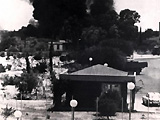
Douglas Stuart challenged the Turkish ambassador to the UN over the failure of Turkish forces to observe a ceasefire following their invasion of Cyprus.
Hear Douglas Stuart's interview with the Turkish ambassador- Cyprus - 'a tragedy all round' from BBC News
- More about this interview
Vietnam: 21 January 1976
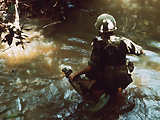
In an exclusive interview General William Westmoreland told presenter Douglas Stuart how the US armed forces were defeated by policy and public opinion.
Hear General William Westmoreland's interview with Douglas Stuart- A History of the war in Vietnam from BBC News
- More about this interview
Election '79: 20 April 1979

John Sergeant followed Mrs Thatcher on the campaign trail in 1979 and this report shows vividly how politicians' desire to use the media is not such a recent phenomenon.
Hear John Sergeant's report on Margaret Thatcher's election campaign- Margaret Thatcher: From MP to PM from BBC News
- More about this interview
Recession: 14 October 1980
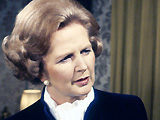
Margaret Thatcher tells Brian Curtois why calls for the government to inject more money into the economy are wrong.
Hear Brian Curtois interview Margaret Thatcher- More about this interview
The Falklands War: 14 June 1982
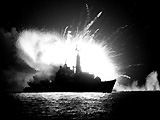
The Falklands War came to an end on June 14th 1982. BBC defence correspondent, Robert Fox, was there and filed for The World Tonight.
Hear Robert Fox interview Major General Jeremy Moore- The Falklands War - 25 years on from BBC News
- More about this interview
The Miners' Strike: 18 June 1984
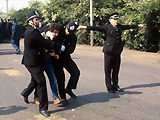
The miners strike of 1984 was a test of strength between Margaret Thatcher's government and Arthur Scargill's National Union of Miners.
Hear Richard Kershaw introduce Bob Sinkinson's report on June 18th 1984- The Miners' Strike 1984 from BBC News
- Audio slideshow: The miners' strike from BBC News
- More about this report
The assassination of Indira Gandhi: 31 October 1984
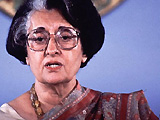
The Indian Prime Minister Indira Gandhi was assassinated on October 31st 1984. Richard Kershaw spoke to the BBC's most famous Delhi correspondent, Mark Tully.
Hear Mark Tully discuss the implications of the assasination- Indira Gandhi's death remembered from BBC News
- More about this report
The fall of the Berlin Wall: 9 November 1989
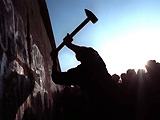
Robin Lustig was presenting The World Tonight on the day that the Berlin Wall fell. He spoke to Mike Hamburger, the head of the pro-democracy New Forum Movement.
Hear Robin Lustig assess the future of East Germany with Mike Hamburger- The Berlin Wall: The tale of a city divided from BBC News
- More about this interview
Civil War in Somalia: 23 April 1991
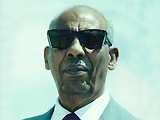
In early 1991, Somalia's longstanding dictator, Siad Barre had been overthrown but in the ensuing months rival factions had started to fight amongst themselves and effective national government collapsed. In April 1991, Peter Biles reported from Somalia and the themes in his report remain uncannily familiar to this day.
Hear Peter Biles reported from Somalia- Q&A: Somalia's conflict from BBC News
- Somali Civil War from Wikipedia
Coup in the USSR: 22 August 1991

In August 1991, hardliners in the Soviet Union launched a coup against the reformist leader, Mikhail Gorbachev. The coup attempt set in train a series of events that led to the break up of the USSR five months later. The coup attempt started on August 19th and collapsed a couple of days later on the 21st in the face of resistance from the people of Moscow, rallied by the leader of the Russian Republic in the USSR, Boris Yeltsin. The following night on the programme, Arkady Maslennikov, Information Officer for the Supreme Soviet told Stephen Jessel that President Gorbachev had been too trusting of his colleagues.
Hear Stephen Jessel's interview with Arkady Maslennikov- Three days that shook the world from BBC News
- Reform, Coup and Collapse: The End of the Soviet State by Professor Archie Brown
- The Soviet Union's Last Stand by Malcolm Brinkworth
- 1991 Soviet coup d'état attempt from Wikipedia
Peace in the Middle East?: 14 March 1995
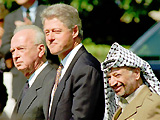
In March 1995, Robin Lustig interviewed the then Israeli Prime Minister, Yitzak Rabin. 18 months before the Oslo Accords had been agreed between the Israelis and the Palestine Liberation Organisation, and the Palestinian Authority established. But beyond that, little progress had been made in moving the peace process forward. Robin asked Mr Rabin if he could sympathise with the Palestinians' frustration at the lack of movement.
Hear Robin Lustig's interview with Israeli Prime Minister, Yitzak Rabin- The Middle East crisis from BBC News
- Yitzhak Rabin profile from BBC News
- The Oslo Accords from Wikipedia
The hunt for Radovan Karadzic: September 1996
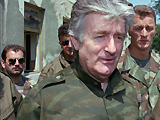
In October 1995 the former Bosnian Serb leader Radovan Karadzic, who was finally arrested in Belgrade last year and is now on trial for war crimes, had already been indicted by the International Tribunal at the Hague, and was apparently on the run. The international community had forced an end to the civil war that had cost 100,000 lives and there was a force of 60,000 Nato peacekeepers in the country. But when Robin Lustig went to the Bosnian Serb capital of Pale a year later in September 1996, he discovered it was not hard to find the elusive Dr Karadzic.
Hear Robin Lustig's interview with former Bosnian Serb leader Radovan Karadzic- Bosnia-Hercegovina timeline from BBC News
- Radovan Karadzic profile from BBC News
- The Bosnian War from Wikipedia
The end of Empire in Hong Kong: 1 July 1997
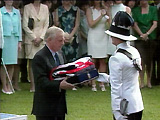
At the end of June 1997, 150 years of British colonial rule in Hong Kong came to end as the territory was returned to Chinese authority. Robin Lustig was there.
Hear Robin Lustig's report on the end of British rule in Hong Kong- The day Britain returned Hong Kong to China from BBC News
- Chris Patten profile from BBC News
- The transfer of sovereignty over Hong Kong from Wikipedia
The start of the War on Terror: 9 September 2001
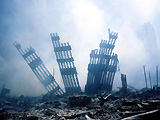
On 11 September 2001, al-Qaeda attacked the United States killing nearly 3,000 people. The events of that day led the Bush Administration to launch its 'War on Terror' and attack Afghanistan and Iraq - defining events of the past ten years. Claire Bolderson was presenting that night.
Hear Claire Bolderson's report on 9/11- America's day of terror from BBC News
- 9/11: Five years on from BBC News
- September 11 in Context from BBC History
The War in Iraq: 20 March 2003
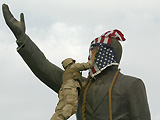
On 20th March 2003 American and British land forces invaded the country following air strikes on Iraq's military communications overnight. The BBC was one of the few broadcasters with journalists in Baghdad. At the end of the first day of the war, Claire Bolderson spoke live to our correspondent there, Rageh Omar.
Hear Claire Bolderson talk with Rageh Omar- The story of the war from BBC News
- Iraq after Saddam from BBC News
- How Iraq's War Shaped our World from BBC World Service
The war in Afghanistan: 2 March 2006
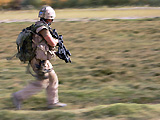
The war in Afghanistan was at a turning point in March 2006 when British troops headed to Helmand province to tackle the Taliban insurgency as part of Nato's expansion in the region. Canadian troops were already in Helmand and presenter Jackie Hardgrave spoke to the commander of Canada's expeditionary forces Major-General Michel Gauthier. He described how he saw the challenge for British troops in Helmand.
Hear Jackie Hardgrave interview Major-General Michel Gauthier- Analysis: UK Afghan troop levels from BBC News
- Q&A: British troops in Afghanistan from BBC News
- UK fatalities in Afghanistan and Iraq from BBC News
Lehman Brothers - can you spare a dime?: 15 September 2008
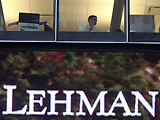
Overnight on 14 September 2008, the huge American investment bank Lehman Brothers collapsed when the US government refused to bail it out. Shaun Ley was presenting the programme on Monday 15th and he spoke to the former US Labor Secretary Robert Reich, asking him what the authorities could do now Lehman's had collapsed.
Hear Shaun Ley's interview with Robert Reich- Lehman Bros files for bankruptcy from BBC News
- Global recession timeline from BBC News
- The Credit Crunch from BBC News
President Obama: 9 November 2008
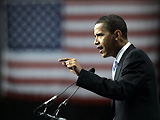
In November 2008, American voters made history by electing a black man as their president. To mark the historic election of Barack Obama, we spoke to the American poet and civil rights activist, Maya Angelou. Robin Lustig asked her for her reaction to Mr Obama's victory.
Hear Robin Lustig talk to Maya Angelou- Profile: Barack Obama from BBC News
- US Elections 2008 from BBC News
- Barack Obama documentary from Radio 1Xtra
Last On
Available to listen
22/11/2013
Kerry flying to Geneva to join talks on Iran's nuclear programme. With David Eades.
BBC iD
BBC iDBBC navigation
BBC links

BBC © 2014The BBC is not responsible for the content of external sites. Read more.
This page is best viewed in an up-to-date web browser with style sheets (CSS) enabled. While you will be able to view the content of this page in your current browser, you will not be able to get the full visual experience. Please consider upgrading your browser software or enabling style sheets (CSS) if you are able to do so.
