


So You Want To Be A Scientist?The Shortlist
In order to see this content you need to have both Javascript enabled and Flash installed. Visit BBC Webwise for full instructions
About the shortlist
Here are the 10 shortlisted entries in our search for the BBC's Amateur Scientist of the Year.
Discuss the ideas on the Radio 4 Blog or Radio 4 Facebook page.
Find out who the finalists are on Material World (22nd April 2010).
Listen to the shortlisted entries
Sam O'kell: Measuring the Mosh-pit
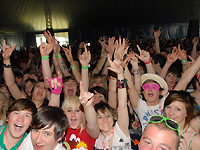
Occupation: Croupier
Idea: "I believe the greatest crowd density at a music gig is not at the front, next to the barriers, but three rows back between 6-10 feet from the front. I would test this by wearing a pressure sensing vest beneath normal clothes, and take readings at different locations in the crowd".
Listen to Sam O'Kell's idea for measuring the mosh-pitRuth Brooks: Homing Snails
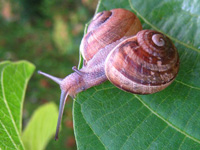
Occupation: Retired special needs tutor
Idea: "What is the homing distance of the Garden Snail (Helix aspersa) that decimates my plants? How far away do I have to dump them before they find their way back to my garden?"
Listen to Ruth Brooks' idea for tracking snailsShane Record: Model Customers
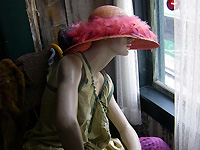
Occupation: Artist and gallery owner
Idea: "Because people are reluctant to enter my art gallery when I am in there alone (painting, mostly) I put a realistically dressed mannequin in, her back to the gallery entrance, staring at the work to bring people in. But does it work or am I just an eccentric artist?"
Listen to Shane Record's idea for attracting more customersNina Jones: Facebook Photo-fit

Occupation: A-level student
Idea: "What makes up a typical Facebook profile picture? Adults seem to choose pictures showing an event in their lives - their wedding, or a photo with their children - whereas teenagers seem to show themselves having a good time, often with friends at a party. Through investigation, I will test these predictions, and also look into why this occurs."
Listen to Nina Jones' idea for assessing Facebook profile photosNick Walthew: Road to Hapiness
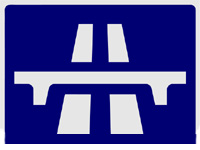
Occupation: Retired farm manager
Idea: "Who are happier, people travelling north or south on the M1? I would test this by waving at travellers going north and south simultaneously from a bridge, counting the number of people that wave back."
Listen to Nick Walthew's idea for measuring happiness on the motorwayBen Fernando: Pink for a Girl?
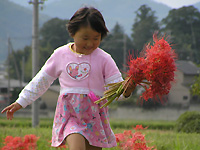
Occupation: GCSE student
Idea: "An investigation in to the gender specific extent of the visible part of the electromagnetic spectrum - to see whether girls prefer pink because they can see further into the far red part of the EM spectrum."
Listen to Ben Fernando's idea for testing gender-based colour biasJohn Rowlands: Noctilucent Clouds
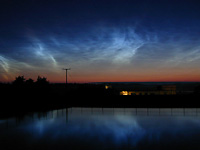
Occupation: Aerial photographer
Idea: "To investigate the frequency and brightness of noctilucent clouds, believed to be linked to climate change. The sun is currently climbing slowly out of a century-low in activity, and so there is a chance to study noctilucent cloud and solar cycle."
Listen to John Rowlands' idea for measuring the impact of noctilucent cloudsAnnie Trolley: Smells like Teen Spirit?
Occupation: Hospital secretary
Idea: "I want to know if our sense of smell is a natural defence against harm. Whenever my teenage boys use aerosol deodorants in their bathroom I can smell it from my bedroom - 12 metres away. I hate it! Is this something innate, or do we learn by experience?"
Listen to Annie Trolley's idea for 'blind smelling'Owen Griffiths: Busy Busy Bees
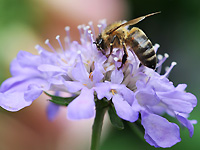
Occupation: Artist and lecturer
Idea: "Concerned by the threat to honey bees, I propose to have a piece of music based on the sounds of bees sung to the hive by a choir once a week, over a set period of time, and see if this increases the production of honey."
Listen to Owen Griffiths' idea to improve increase honey productionAngus Johnson: Men and Mess
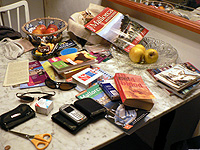
Occupation: Retired computer programmer
Idea: "I want to investigate whether there is a difference between men and women in their visual ability to find one item amid a clutter of other objects. Anecdotal evidence and personal experience suggest that women are much better, but I would like to confirm or contradict this scientifically."
Listen to Angus Johnson's idea to test our ability to fing things amid clutter
So You Want To Be A Scientist?
Last On
Available to listen
Ancient horses; Uncertainty; How cutlery affects taste
How 700,000-year-old horse DNA could change the way scientists study evolution.
BBC iD
BBC iDBBC navigation
BBC links

BBC © 2014The BBC is not responsible for the content of external sites. Read more.
This page is best viewed in an up-to-date web browser with style sheets (CSS) enabled. While you will be able to view the content of this page in your current browser, you will not be able to get the full visual experience. Please consider upgrading your browser software or enabling style sheets (CSS) if you are able to do so.
