

Local Navigation
 Jim Al-KhaliliTheoretical Physicist| From The Life Scientific
 most recentJohn SulstonBiologist | From The Life Scientific
 Nicky ClaytonProfessor of Comparative Cognition | From The Life Scientific
 Matthew TaylorChief Executive of the RSA | From Brain Culture: Neuroscience and Society
 Geoff BunnPsychologist| From A History of the Brain
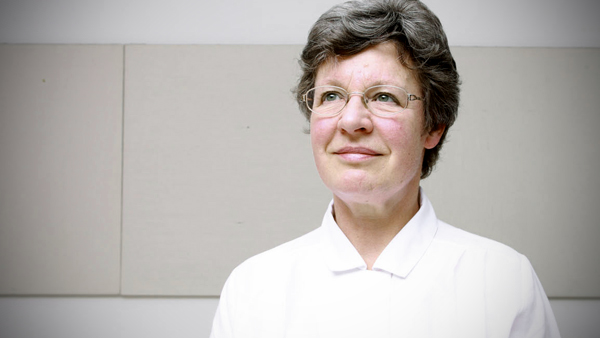 Jocelyn Bell BurnellPhysicist and Astronomer| From The Life Scientific
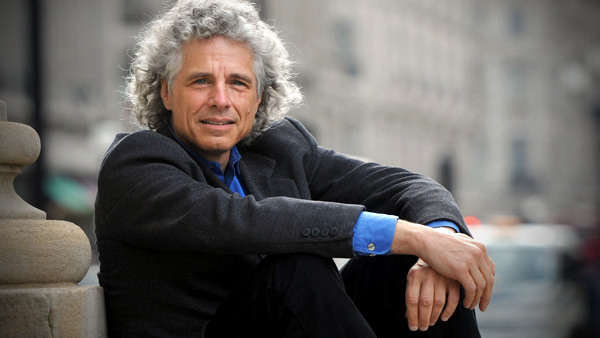 Steven PinkerCognitive Psychologist| From The Life Scientific
 Paul NurseGenetics and cell biology| From The Life Scientific
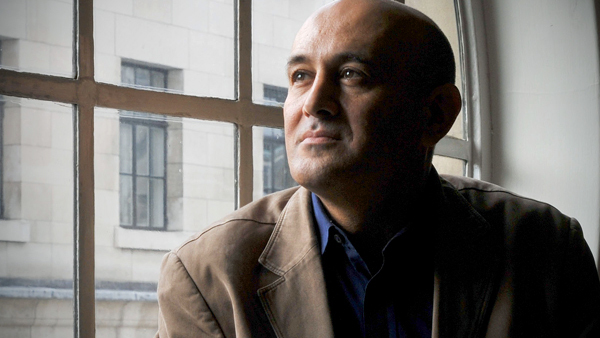
Jim Al-Khalili OBE is a Professor of Physics at the University of Surrey where he also holds a chair in the Public Engagement in Science. He is a member of the British Science Association's Council and holds an EPSRC Senior Media Fellowship.
Appyling the strange and facinating rules of quantum mechanics to the sub atomic world.
It's my job to try and come up with a mathematical theory that matches the data that then tells us something about the real world.

Listen: Public Face of Science
"Public engagement and science communication are deemed to be really worthy things that more scientsts should do."
"These are public scientists who were out there communicating and popularising scientists, they were regarded as a "lower calibre" than those who stayed in their ivory towers. Thankfully that attitude is changing fast."
 Physicist Brian Cox tells Matthew Parris how Carl Sagan's Cosmos TV show changed his life. (2010)
Dr Steve Jones, Reader in Genetics at University College, London gives six Reith Lectures on the new biological insight into humanity. (1991)
 Radio 4's award winning science/comedy show hits Glastonbury to prove that science really is the new rock n roll. Brian Cox and Robin Ince are joined on stage by musicians Billy Bragg and Graham Coxon, comedian Shappi Khorsandi, and scientist Professor Tony Ryan. (2011)
"Very few scientists are good presenters, and very few presenters happen to be scientists" - Johnny Ball Children's TV presenter.
Beginning in 1965, the BBC's flagship science programme ran for nearly 40 years. Its mix of quirky film reports and live experiments examined the changing state of current technology and put new inventions to the test.
From Patrick Moore to Brian Cox, meet some of the scientists who have explained the biggest concepts via the TV screen. (2010)
Bang Goes the Theory is BBC TV's guide to popular science. Discover and challenge the scientific principles that shape your world - watch videos and do real experiments at home.

With an Iraqi father and English mother, the Baghdad Jim Al-Khalili spent his early years in was cosmopolitan and vibrant but, once Saddam Hussein came to power, his parents realised the family would have to flee, and he has lived and worked in Britain for the past 30 years.
 He's spent his adult life studying sub-atomic particles - and trying to explain them to the rest of us. He fell in love with physics when he was a teenager growing up in Iraq. Listen to Jim Al-Khalili's choice of discs to take to his desert island. (2010)
 Gertrude Bell was a British woman who arguably founded the modern state of Iraq. Explorer, mountaineer and archaeologist, this extraordinarily talented woman travelled widely across Arabia in the years preceding the first world war. Presented by Jim Al-Khalili. (2011)
 Gabriel Gatehouse hears the extraordinary tales of the people coming into and out of Iraq - and paints a portrait of a still troubled country through its international gateway. (2011)
Listen: Theoretical Nuclear Physics
"That's really my bread and butter area of science - mathematical physics using quantum mechanics - the mathematical modelling of atomic nuclei. It's my job to try and come up with a mathematical theory that matches the data that then tells us something about the real world."
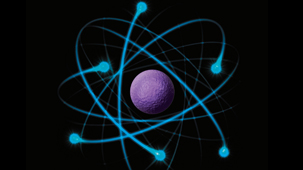
"The further you zoom in the more expensive the science gets, the more data you have to analyse and more complicated it is."
 Melvyn Bragg examines one of the greatest scientific breakthroughs of the 20th century, and certainly the most controversial; the development of nuclear physics. (2002)
 Comedian and physicist Ben Miller explores the workings of the new LHC atom smasher at CERN in Switzerland and what it is designed to discover (2008)
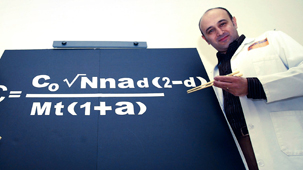
"Appyling the strange and facinating rules of quantum mechanics to the sub atomic world."
 Melvyn Bragg and guests discuss one of the deepest problems in contemporary physics. It's called the measurement problem and it emerged from the flurry of activity in the early 20th century that gave rise to Quantum Mechanics. (2009)
 When Quantum Mechanics was developed in the early 20th century reality changed forever. In the quantum world particles could be in two places at once, they disappeared for no reason and reappeared in unpredictable locations, they even acted differently according to whether we were watching them. (2002)
Scientists have "entangled" the motions of pairs of atoms for the first time. The results, published in Nature, further bridge the gap between the world of quantum mechanics and the laws of everyday experience. (2009)
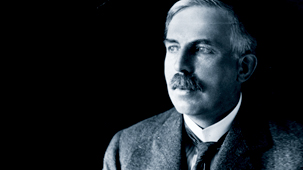
"We are currently cebrating the centenary of Rutherford's famous paper in 1911 where he first explained what the inside of an atom looked like - that it's mostly empty space with electrons buzzing around a nucleus."
 Melvyn Bragg and guests discuss Ernest Rutherford. He was the father of nuclear science, a great charismatic figure who mapped the landscape of the sub-atomic world. (2004)
Manchester is hosting a series of events to mark the centenary of a paper by Ernest Rutherford that changed the way we look at the world and Universe around us.
 Simon Singh examines the significance of subatomic particles.
"I don't know if it's my scientific training or because I was going to head that way, but by my mid-teens I was no longer religious."

"My father's Muslim and my mother is a Christian. I grew up in a household that was religious but in a broad sense."
 Writer and journalist Ehsan Masood explores the status of science in the modern Islamic world, and asks whether measures taken to promote science are having an impact on the work of Muslim scientists. (2009)
In western eyes, science and religion don't mix. But Muslims see no contradiction in a belief system that embraces both science and religion. Ziauddin Sardar investigates the philosophical and practical links between science and Islam. (2003)
Jim Al-Khalili examines the legacy of a scientist born in AD 965 in what is now Iraq who went by the name of al-Hassan Ibn al-Haytham.

"I find it more comfortable to say I'm an atheist, and for that I probably have someone like Dawkins to thank." (Jim Al-Khalili)
 John Gray argues that the scientific and rationalist attack on religion is misguided. (2011)
 Is there a secular meaning of life and how this can be achieved without a shared reference to God or other higher spiritual figure. (2010)
 Author of popular science books such as The Selfish Gene and The Blind Watchmaker, Richard Dawkins talks to Sue Lawley about his scientific beliefs which are firmly rooted in the conviction that Darwin's theory of evolution provides the starting point for all we need to know about our world. See Richard Dawkins' choice of eight records for his island exile. (1995)
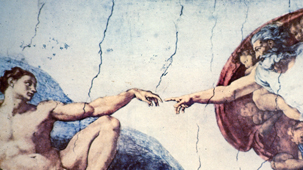
"What happens if you're teaching in a school and a pupil tells you that your teaching conflicts with their religious beliefs?"
 Politicians, it seems, are increasingly turning to disciplines like neuroscience and evolutionary anthropology to understand why we do things, so they can better tailor and design policies that will work in the real world. (2011)
It is one of the great questions of the past 150 years - Did God or evolution drive the emergence of life in all its resplendent variety? (2011)
 Under discussion - what an understanding of the Big Bang Theory proves about the existence or not of God. How is the search for the so-called "God particle" or Higgs Boson taking shape at the Large Hadron Collider at CERN, Switzerland and what are the implications for its discovery? (2010)
"Of course I'm interested in Time Travel. If anyone ever tried to build a time machine I don't think I'd be the first person to try it out."
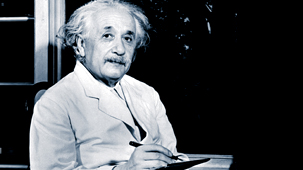
"The way relativity comes alive for many people is what it tells us about the possiblity of time travel. There are possibilities of travelling through time according to our best theory of relativity of time"
 For Newton time was absolute and set apart from the universe, but with the theories of Albert Einstein time became more complicated; it could be squeezed and distorted and was different in different places.(2008)
 Professor Kathy Sykes, biographer John Gribbin and presenter Matthew Parris discuss whether Einstein was really a 'crazy genius'. (2006)
To celebrate the 100th anniversary of Einstein's Annus Mirabilis of 1905 Dr Brian Cox takes a look at the huge impact of Einstein's theories and talks to the scientists, who one hundred years later are still heavily influenced by his work. (2005)
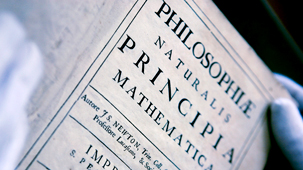
"One of the most important books ever writen, certainly in science. It's absolutely priceless."
 Professor of Mathematics Marcus du Sautoy reveals the personalities behind the calculations and argues that mathematics is the driving force behind modern science. (2010)
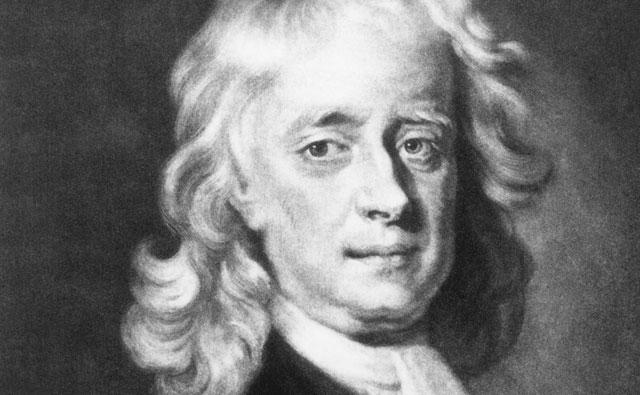 In 1686-1687 Sir Isaac Newton published the three laws of motion and his law of universal gravitation, the best description of gravity for more than 200 years until Albert Einstein's theory of general relativity. Newton developed the branch of mathematics called calculus. (2006)
 In 1687 Isaac Newton attempted to explain the movements of everything in the universe, from a pea rolling on a plate to the position of the planets. It was a brilliant, vaultingly ambitious and fiendishly complex task; it took him three sentences. (2008)
Select a scientist to explore more about their life, work and inspiration. Choose a subject to discover even more from the Radio 4 Archive & beyond. You can download programmes to listen to later or stack them up to listen to in Your Playlist below.

BBC © 2014The BBC is not responsible for the content of external sites. Read more.
This page is best viewed in an up-to-date web browser with style sheets (CSS) enabled. While you will be able to view the content of this page in your current browser, you will not be able to get the full visual experience. Please consider upgrading your browser software or enabling style sheets (CSS) if you are able to do so.

