|
| Geoff Adams-Spink tells the remarkable story of thalidomide. | |
|
|
|
|
It's forty years since the world woke up to the horror of Thalidomide. Presented by Geoff Adams-Spink, who was himself directly affected by the drug, this programme tells the moving human story of Thalidomide and investigates how this powerful medication is currently being used in the fight against disease.
| |
|
 |
|
| Geoff Adams-Spink |
|
When in the late 1950s and early 1960s pregnant women across the globe reached for a recommended remedy for bouts of morning sickness, they had no idea how this, "chemical shrapnel", as it has since been called, would affect the lives of their unborn children. Around ten thousand babies were born with disabilities as a result of their mothers taking the Thalidomide drug. Just under half of those have survived - four hundred and fifty-six of them in the UK.
Thalidomide: 40 Years On draws on archive from the UK, Germany (where the majority of Thalidomide survivors reside), Australia, and Canada. At the heart of this Archive Hour is the story of the survivors and their families, with archive material dating back to 1960. Feature programmes like Limbless Baby (a title that jars horribly forty years later), broadcast in 1963, telling the story of one family and their two year old daughter, including interviews with the midwife and family doctor. Then there are news pieces from Radio Newsreel, and the case of Madame Suzanne Vandeput in Belgium who was found not guilty of murdering her Thalidomide daughter. Any Questions, with panellists Hugh Gaitskell and Lady Bonham Carter, went on to discuss the case that week. There is material in the archive from every decade telling this, the human story of Thalidomide.
The presenter, Geoff Adams-Spink – himself affected by thalidomide – looks at how the drug was developed as a ‘totally harmless’ sedative, the shock of the birth defects that it brought about, and the lives of those affected. The programme also asks why scientists have once again started using the drug to treat leprosy, AIDS patients and people with certain types of cancer.
Geoff is part of the fortysomething thalidomide generation. He was left with short arms, no right eye and very poor vision in his left eye. He’s worked as a journalist for the BBC for thirteen years, is married to another BBC staffer, Caroline, and has two daughters. | | |
|
 |
|
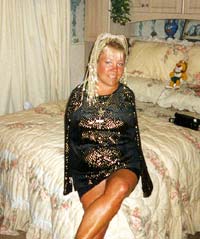
| Mandy Masters from Essex – a psychic and the UK’s first thalidomide grandmother |
|
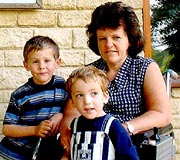 | 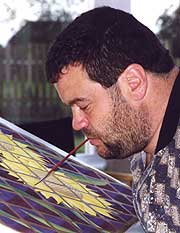 | Geraldine Freeman (above), mother of two is married to another thalidomider, Eddie. They live in a barn conversion in Wiltshire.
Tom Yendell (right)– wasn’t seen by his parents until he was six months old: health professionals didn’t think they would stand the ‘shock’ of having a deformed child. Tom’s also a family man and an artist with his own gallery in Hampshire.
|
|
 Listen again available here Listen again available here
|
|
|
RELATED LINKS | |
| Guardian Unlimited - Life after thalidomide
The Thalidomide Trust
BBC News Online - Thalidomide story
BBC Ouch website
The BBC is not responsible for the content of external websites
| |
|