 A new series from Radio 4 charts the development of the United States, exploring three key themes: Empire, Liberty and Faith. (In three series)
Monday to Fridays - 3.45pm
Omnibus - Friday 9pm
Series 1 - 15 September-24 October
Week 6 - Slave or Free?
The 'Arsenic' of Mexico
In the 1820s and early 1830s Americans settled in the Mexican territory of Texas, often with grants from the Mexican government who wanted to populate their vast territories. In 1835, the American settlers revolted and the following year Mexico conceded independence to Texas. In 1845 Texas was admitted to the Union.
The U.S. failed in its attempts to purchase New Mexico and California from the Mexicans and President Polk exploited a border clash to justify declaring war. America's victory led to a treaty in 1848 which ceded New Mexico and California to America for $15 million, leaving Mexico an embittered neighbour. America's borders now stretched from the Atlantic to the Pacific but this reopened the debate about whether the west should be open to slavery. Author Ralph Waldo Emerson predicted that the U.S. would swallow the Mexican lands but that they would be like arsenic, poisoning the Union.
Gold, God and the 'Little Giant'
California, newly acquired from Mexico, was transformed by the discovery of gold. The gold rush of 1849 produced a flood of settlers for whom proper government had to be established. Congress had to decide whether the new state of California should admit slaves or be the preserve of free whites. After a bitter battle, the Compromise of 1850 made concessions to both sides. California was admitted as a free state, satisfying the free-soilers, but the Fugitive Slave Law - obliging Northerners to return runaway slaves to their masters - gave the South some assurance that its interests would be respected.
'Paddies', Papists & Demon Drink
The decade after 1845 saw a new challenge to American identity as 3 million immigrants arrived, mostly from Ireland and Germany. Proportionate to the existing population, this was the biggest influx of newcomers in U.S. history. To date the country had been run by people largely of British, Protestant stock, who despised the non-British newcomers as poor, criminal and Catholic. Cities like New York and Philadelphia saw fierce culture wars between newcomers and the established ethnic groups.
Slaves, Masters and the 'Slave Power'
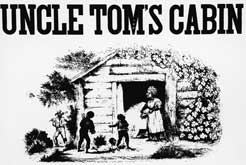
Support for abolition was boosted by the 1852 publication of Harriet Beecher Stowe's Uncle Tom's Cabin. What really concerned most Northerners was not the fate of the slaves but the menace of the slave-owners - known as the 'slave power' - whom they believed threatened the whole country. If slavery were allowed in the West, since it was cheaper than free labour it would squeeze out the free farmer. More slave states equalled more pro-slavery members of Congress, perpetuating the South's apparent dominance of political life.
In 1854, a new political party was formed in the North to combat this. The new Republican Party campaigned for 'Free Soil, Free Labor, Free Speech, Free Men'. The two main parties to date - the Democrats and Whigs - had supporters across the country but the Republicans were entirely Northern. Their rise signified that America's party system was falling apart.
'A House Divided'
Although California was fast-forwarded into the Union, the Great Plains were still largely unsettled. In 1854, Congress passed the Kansas-Nebraska Act, creating separate Kansas and Nebraska territories and allowing inhabitants to decide for themselves whether to allow slavery. Fearing the other side would gain control of the state, pro- and anti-slavery factions rushed to Kansas, which descended into anarchy. Stories about 'Bleeding Kansas' helped persuade many Northerners of the threat posed by Slave Power to the nation and they flocked to the Republicans.
The Democratic Party - the last political bridge spanning the Union - fractured into Northern and Southern wings, giving victory in the 1860 presidential election to Abraham Lincoln and the Republicans. Within a few months most of the Southern states had broken from the Union, declaring independence as the Confederate States of America while Northerners flocked to the colours to preserve the Union, plunging America into civil war. Lincoln had warned that 'A house divided against itself cannot stand'. The anguished debate about the place of slavery in the land of liberty, which had dogged America ever since independence, would now be decided by force.
Quotes featured on this page were voiced by: Morgan Deare, Bill Hope and Burt Caesar. Episode summaries by Victoria Kingston.