| | | | | | | |  | |  | |
Send us your review:
Describe the atmosphere and live music at a local pub, restaurant, festival, church or temple, club night.... inspire other people to check it out!
| | |
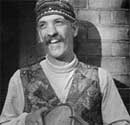
Musician: Bosco De Oliveira
Location:London
Instruments: Percussion / voice
Music:Brazilian / Pagode / Samba
| | | HOW I CAME TO THIS MUSIC WHERE I PLAYA FAVOURITE SONG |   
| |
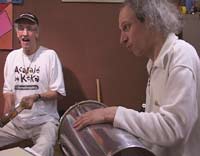
 Watch (2'59) a pagode rehearsal of 'Malandro Agulha' sung by Bosco De Oliveira with Grupo Sambando. Bosco De Oliveira (voice, pandeiro), John Harborne (cavaquinho), Roberto Castlellarin (guitar), Barak Schmool (tantan) and Xavier Osmir (repique de mao). Watch (2'59) a pagode rehearsal of 'Malandro Agulha' sung by Bosco De Oliveira with Grupo Sambando. Bosco De Oliveira (voice, pandeiro), John Harborne (cavaquinho), Roberto Castlellarin (guitar), Barak Schmool (tantan) and Xavier Osmir (repique de mao).
Listen (5'55) to 'Riva' sung by Bosco De Oliveira and Liliana from the album, Brazilian Explosion , (Mr Bongo 1996).
Listen (1'49) to Bosco De Oliveira talk about his music.
'In 1984, I started the London School of Samba with Alan Hayman. It's a great thing as it's still going on with other samba schools springing up'
How I came to this music:
 I was born in 1952 in Belo Horizonte, a city in Brazil north west of Rio. When I grew up, the radio played Brazilian popular music, Samba, a lot of Brazilian ‘western’ music, a lot of Rock and Roll and the Bossa Nova. It was the folkloric music from the north east which was fashionable and hooked me in, not the pop music. I was born in 1952 in Belo Horizonte, a city in Brazil north west of Rio. When I grew up, the radio played Brazilian popular music, Samba, a lot of Brazilian ‘western’ music, a lot of Rock and Roll and the Bossa Nova. It was the folkloric music from the north east which was fashionable and hooked me in, not the pop music.
There was the street music, played in carnivals and music played by the Congados, which was a festival of music and drama in honour of a Catholic saint, but celebrated by Africans or Afro-Brazilians. The plays relate to medieval European wars and feature the King and Queen of Congo, ambassadors and the captain. It’s done to drumming and it's fascinating. One saint, Nossa Senora de Rosario (Our Lady of the Rosary), the patroness of all drummers, was commemorated the day I was born. On my birthday when I was a kid you'd always hear the drums outside as the Congados passed by. That's how my love of the drum developed.
I came to England because my first wife was English. There weren't many Brazilians here in the early 80's but now there are loads. In 1984, I started the London School of Samba with Alan Hayman. It's still going on. Now other samba schools have sprung up out of the London School of Samba like Quilombo do Samba and Paraiso.
I was asked to join Grupa Sambando by John Harborne who'd discovered a group called Fundo do Quintal. He fell in love with their music and decided to start this band. There are three Brazilians in it. This music came out of a very early style of Samba called Partido Alto which had a lot of improvisation. There was a big revival in the late 70s, early 80s. It became know as Pagode, the name for party. So Pagode music is party music.
[next page]// page 1 | 2 | 3 |
|