In this programme
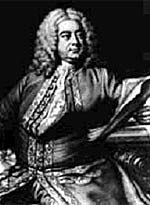 George Frideric Handel (1685 – 1759)
A special programme dedicated to the 18th century composer, George Frideric Handel.
Tom Service presents the programme from the Handel House Museum at 25 Brook Street in London. Later the residence of rockstar Jimi Hendrix, Handel lived at this address for the last 36 years of his life and wrote dozens of his most popular works there, including Messiah.
Though accepted as an English composer, Handel was born in Halle, Germany, and learnt much of his craft in Italy before his arrival in London when he was in his mid-twenties.
Tom begins his own Handel odyssey with a look at the enigma of Handel ‘the man’. Early biographers suggested that the composer was a bon viveur and a man for whom good food and wine were absolute necessities, but beyond his gormandising, his private life and sexuality remain unsolved mysteries.
Writers Ruth Smith and Ellen Harris and conductor Nicolas McGegan paint a portrait of Handel the musician, businessman and socialite.
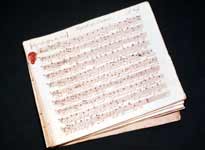 Emmanuelle Haim
French conductor, Emmanuelle Haim, has made it her mission to explore early Handel repertory, including many works from his prolific output of vocal music written whilst touting himself around the courts of Italy. Tom talks to Haim about performing these ambitious works with her group Le Concert d’Astree and about the specific appeal of Handel’s writing.
“What the Messiah means to me”
This year’s 28th London Handel Festival poses the question: what is the enduring appeal of Handel’s Messiah? – a work which was poorly received when it was first performed in London. Over the past few weeks, the Handel House has hosted a series investigating “What the Messiah means to me” as this work continues to draw people from all walks of life into Handel’s music. Tom catches up with the performers in one of these projects as they gather to sing Quincy Jones’s gospel version of the work.
The London Handel Festival continues until 15th May and you can find further information on their website: www.london-handel-festival.com
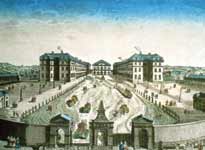 The Foundling Museum
Beyond making a small fortune for himself in his own lifetime, Handel was also a co-founder of the Foundling Hospital in London - the country's first charity for orphans, waifs and strays.
The Messiah tradition began at the Foundling Hospital, as benefit performances were given every year, starting in 1749. Indeed, Handel did not just give the Hospital performances of oratorios, he also bequeathed a fair copy of his Messiah score to the Hospital in his will, both of which are also housed in the Museum.
For more information about the Foundling Museum, visit their website: www.foundlingmuseum.org.uk
![Bust of GF Handel]() Reception today ...
Reception today ...
To find out what perceptions of Handel are today and where the future of Handel's music lies, Tom is joined by conductor and Handel biographer Christopher Hogwood and Handel scholar Ruth Smith. Together, they explore what happened to Handel's reputation after his death.
For further Handel listening, join BBC Radio 3's Early Music Show on Saturday 14th and Sunday 15th May 2005 for a broadcast featuring music from a concert at the London Handel Festival and a live programme from the Gottingen Festival, directed by Nicolas McGegan.
To find out more about Handel click here




 Listen Live
 help
help