

First Click
Beginners guide to Blogs
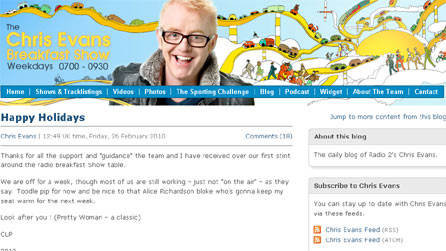
The word 'blog' is short for 'web log'.
At its simplest, a web log is a frequently updated personal website with all updates displayed in reverse chronological order so that the most recent update is always visible at the top.
Many blogs take the form of an online diary or journal, and even when the content is not date-specific, most new blog pages are automatically stamped with the date and time of their creation, which reinforces the perception of blogs as journals.
Other characteristics typical of many blogs are copious links to other sites or blogs, and an area for readers to add comments, creating a sense of community and interaction among 'bloggers'. This last bit is crucial really, as the greatest distinction between a blog and a conventional site is that a blog is intended as a conversation between its author and its readers, whereas a conventional site is more like a monologue.
Why has the popularity of blogs exploded so rapidly?
For the blogger:
1. They're incredibly simple to update. You don't need any special software or technical skills - you can create and update your own blog just by registering with one of the many blogging services, picking from a range of ready-made page designs, and typing your text into your web browser. You can be ready to go in less than 10 minutes.
2. A blog really does give everyone a voice. Whether you want to use a blog as an online diary, a platform for your opinions, a showcase for your photos or your music, or just as a place to list your favourite links, it gives you your own corner of the web.
For the reader:
1. Whatever you read on a blog, you're more likely to be getting the unfiltered version, straight from the horse's mouth. Blogging is so immediate that blogs have become an alternative to the traditional media. For example - on 7 July 2005 in the hours immediately following the terrorist attacks on London transport, eyewitness accounts (and photos taken with camera phones) started to appear on blogs while conventional news sources were still unclear as to what had actually happened.
2. Conventional media is still essentially about one-way traffic: they print or broadcast stuff, and you (the reader, listener or viewer) consume it. But a blog turns this process into a conversation - you can immediately interact with the writer by posting comments about what they have written.
Chris Evans Blog
 Chris Evans
Chris's daily blog on his thoughts on the breakfast show and his many other adventures.
Simon Mayo Blog
 Simon Mayo
discusses news of the show and how you can get involved.
Jamie Cullum Blog
 Jamie Cullum
showcases his love for all types of jazz and contemporary music.
An Introduction To First Click

- An Introduction To First Click
Sir Terry and other Radio 2 presenters remember when they first went online.
Listening & Watching Online
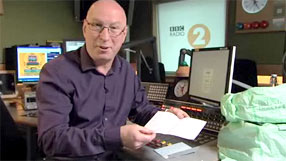
- Listening & Watching On The Web
Ken Bruce explains how to watch and listen to exactly what you want, whenever you like.
Safety & Security Online

- Jeremy Vine's Advice For Staying Safe Online
Watch the video and be reassured by Jeremy's handy tips.
Joining Conversations

- Joining Conversations Online
Simon Mayo looks at the different types of conversations you can have online such as blogs, online phone calls and on social networking sites.
BBC iD
BBC iDBBC navigation
BBC links

BBC © 2014The BBC is not responsible for the content of external sites. Read more.
This page is best viewed in an up-to-date web browser with style sheets (CSS) enabled. While you will be able to view the content of this page in your current browser, you will not be able to get the full visual experience. Please consider upgrading your browser software or enabling style sheets (CSS) if you are able to do so.
