

PEEL AT
GLASTONBURY
Glastonbury
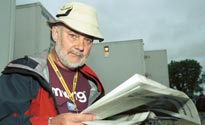 The very first Glastonbury Festival, called The Pilton Festival, took place in 1970. John loved it from the start, often taking his whole family down to the festival with him.
But it was the BBC broadcasts he presented that forever associated him with Glastonbury in the eyes of the British public.
A montage of John Peel at the 1999, 2002, 2003 and 2004 Glastonbury Festivals:
Watch High Quality (Broadband)
Watch Low Quality (Narrowband)
Many artists who made their first appearance on Peel's Radio 1 show would crop up on one of the smaller stages at Glastonbury in the same year. Acts such as Pulp, The White Stripes and David Bowie, who were championed by Peel in their early years, would later be Glastonbury graduates, topping the bill to play a career-defining show on the Pyramid Stage.
"He was a master at choosing the bands that were going to make it and had a knack of finding them," says Glastonbury founder Michael Eavis. "He was on the ball and such a clever bloke at choosing the music that was going to be fashionable."
John talks about people whining about mud, and staying in a hotel because of his bad back.
Watch High Quality (Broadband)
Watch Low Quality (Narrowband)
Perhaps the most appropriate tribute to John's Glastonbury legacy came from Michael Eavis, who renamed the New Bands Stage the John Peel Stage. "It's very appropriate because it's all the sort of music that John would have chosen", says Eavis.
John Peel made a massive contribution to the Glastonbury experience, whether he was introducing bands, being spotted wandering through the site or sitting on a hay bale looking at the wrong camera.
John didn't manage to get to every Glastonbury Festival over the years but his broadcasts on both radio and television have come to symbolise the spirit of the ever-eclectic event.
