
Marzena Diakun conducts...
Friday 27/1/23, 7.30pm


Claude Debussy
Prélude à l’après-midi d’un faune (10’)
Thierry Pécou
Cara Bali Concerto for piano and orchestra (27’)
BBC co-commission: UK premiere
INTERVAL (20’)
Bohuslav Martinů
Symphony No. 3 (26’)
Marzena DiakunConductor
Alexandre Tharaud Piano


This concert is being broadcast live by BBC Radio 3 in Radio 3 in Concert. It will be available to stream or download for 30 days via BBC Sounds, where you can also find podcasts and music mixes. Visit bbc.co.uk/now for more information on future performances.
Introduction

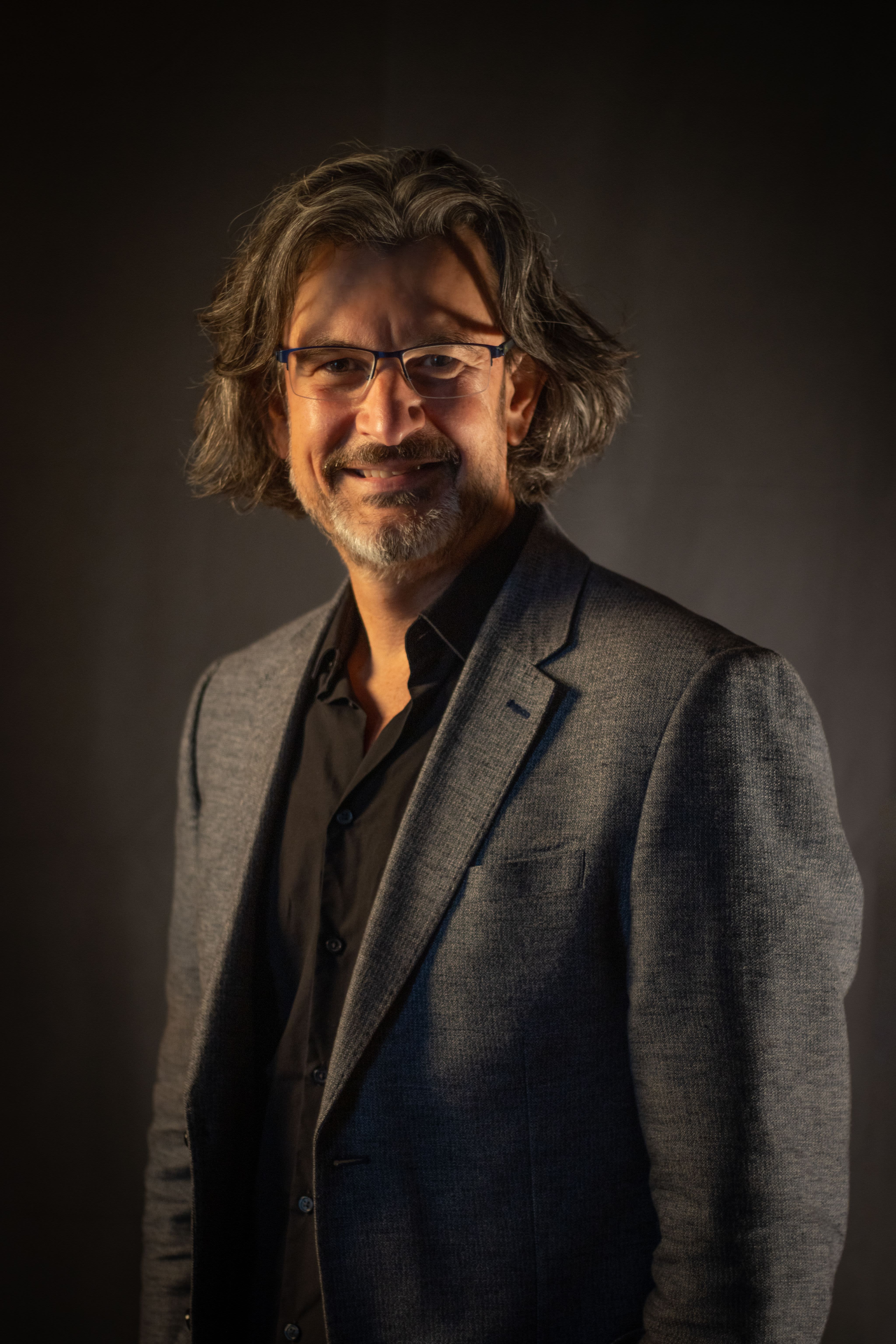
Welcome to tonight’s concert, for which BBC NOW is joined by the award-winning conductor Marzena Diakun.
She has a particular passion for contemporary music, so it’s fitting that the programme has at its centre the UK premiere of Thierry Pécou’s mellifluously titled Cara Bali, a piano concerto inspired by the timbres of the gamelan. The soloist tonight is the wonderful French musician Alexandre Tharaud, who gave its world premiere in Lyons last year.
We are in France for the concert’s opening item too: Debussy’s Prélude à l’après-midi d’un faune, a piece that quietly heralded nothing less than the start of modern music itself. To end, Martinů’s Third Symphony, a work he composed in celebration of the Boston Symphony Orchestra and its legendary conductor Serge Koussevitzky.
Enjoy!
Matthew Wood
Head of Artistic Production
Please respect your fellow audience members and those listening at home. Turn off all mobile phones and electronic devices during the performance. Photography and recording are not permitted.
Claude Debussy (1862–1918)
Prélude à l’après-midi d’un faune (1891–4)

Debussy’s haunting Prélude à l’après-midi d’un faune (‘Prelude to the Afternoon of a Faun’) is one of the most remarkable examples of literature transformed into music. It was inspired by the French Symbolist poet Stéphane Mallarmé’s poem of the same title, and in it Debussy offers a musical illustration of a faun’s dreamlike recollection of his encounters with nymphs and naiads. Rather than simply following Mallarmé’s narrative, Debussy seeks to depict the desires and dreams of the faun in a succession of scenes. This in turn creates sonic images of the faun’s sensual experience in an early example of musical Impressionism.
The flute – the instrument of the faun – plays a major role in Debussy’s reimagining of L’après-midi. The Prélude is set in motion by a wavering line on solo flute, whose timbre gives a dreamy tone to the music. The melody is then transferred first to the oboes and clarinets and subsequently to the violins as the faun encounters the nymphs. After the solo flute reappears over an enchanting harp figuration, a new line on the solo oboe emerges, heralding a change of scene, the music building to a climax as the faun declares his love for the nymphs. The mood quietens once more as the main theme resurfaces, and at the end we are left in an equivocal state, questioning together with the faun whether what we have experienced was dream or reality.
Further Listening: Les Siècles/François-Xavier Roth (Harmonia Mundi HMM905291)
Further Reading: Debussy: A Painter in Sound Stephen Walsh (Faber)
Thierry Pécou (Born 1965)
Cara Bali Concerto for piano and orchestra (2020)
BBC co-commission with Orchestre National de Lyon and Opéra de Rouen Normandie: UK premiere

1 Vivace
2 Vivace
Alexandre Tharaud piano
Thierry Pécou’s Cara Bali Concerto is inspired by Balinese gamelan, the traditional musical ensembles predominantly made up of percussion instruments such as gong, gong-chimes, metallophones, cymbals and drums. According to the composer, it is ethnomusicologist Michael Tenzer’s study of gamelan gong kebyar – the pre-eminent 20th-century genre of Balinese gamelan music – that provides the guide to the mechanisms of such music on which the Cara Bali Concerto is based.
Though intended as a piano concerto, Cara Bali takes gamelan music as a point of departure for its poetic and formal innovation. This is clearly reflected in Pécou’s treatment of the piano, which recalls the percussive sounds of the gongs and the metallophones. In addition to that, Cara Bali also uses gamelan music’s characteristic interlocking patterns, which are here distributed among different instruments.
In both movements the piano is integrated into the musical textures in a similar way as is found in a gamelan ensemble. At times, the orchestral instruments converge on a sustained note, articulating structure and marking the phrasing in a manner reminiscent of the suspended gongs in gamelan gong kebyar. Together with the often percussive and emphatic writing, these techniques create a vivid soundscape through which Pécou takes us on a journey to Bali.
Cara Bali was co-commissioned by BBC Radio 3, the Orchestre National de Lyon and Opéra de Rouen Normandie. It received its world premiere on 28 April 2022 at the Lyon Auditorium, performed by tonight’s soloist Alexandre Tharaud and the Orchestre National de Lyon, under the baton of Ben Glassberg.
Website: www.schott-music.com/en/person/thierry-pecou
INTERVAL: 20 minutes
Bohuslav Martinů (1890–1959)
Symphony No. 3 (1944)

1 Allegro poco moderato
2 Largo
3 Allegro – Andante
Martinů dedicated his Third Symphony to the Boston Symphony Orchestra and its Music Director Serge Koussevitzky, who in 1944 were celebrating a 20-year collaboration. It was one of five symphonies that Martinů wrote during a productive five-year period in the United States after fleeing the war in Europe. The Third was first performed by its dedicatees in Boston on 12 October 1945.
Unlike his previous symphonies, Martinů here opts for a three-movement design, omitting the traditional scherzo. In each movement, the motivic idea presented at the beginning generates all the subsequent music. The first movement opens with a three-note figure which immediately turns into a recurring ascending pattern. After a mysterious solo on the bassoons and cor anglais, this thematic process gradually accelerates – first with a solemn line on the strings, and later via compression of the three-note figure on the woodwinds. It builds to an assertive brass blast, before the strings start to unwind the tension and bring back the initial idea for one final electrifying statement.
The second movement is built on a sombre, twirling motivic idea. Following an instrumental dialogue, it is taken up by solo flute before giving rise to a succession of oscillating patterns across the orchestra. The accumulated tension is gradually released, before a conversation between the strings builds to a climax that gradually softens, and the cor anglais once more enjoys a moment in the limelight.
The third movement, initially forceful and fast-paced, then slows to become more ruminative, with an expressive viola theme transforming the mood. The spirited motifs from the opening are reconfigured and given new meaning.
Programme notes © Kelvin H. F. Lee
Further Listening: BBC Symphony Orchestra/Jiří Bělohlávek (Onyx ONYX4061)
Further Reading: Martinů and the Symphony Michael Crump (Toccata Press)
Help us Improve Our Online Programmes.
Please take this 5-minute survey and let us know what you think of these notes.
Programme Survey
Biographies
Marzena Diakun conductor

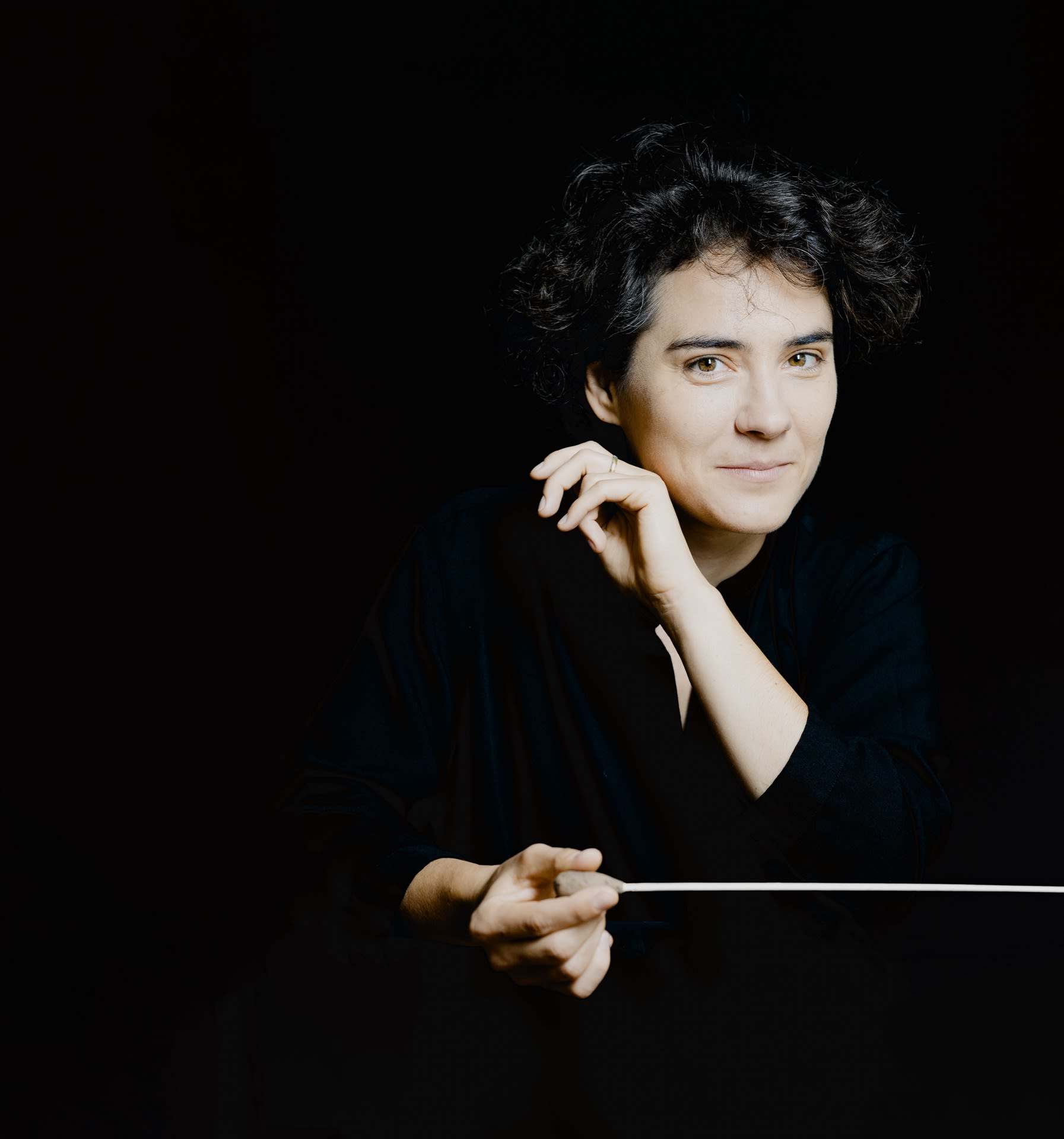
In September 2021 Marzena Diakun became Artistic Director and Chief Conductor of the Orquesta de la Comunidad de Madrid and Chief Conductor of the Orchestre Symphonique de l’Opéra de Toulon. She came to international attention in 2016 following several concerts with the Orchestre Philharmonique de Radio France and is a former recipient of the Boston Symphony Orchestra’s Tanglewood Conducting Fellowship and a Taki Concordia Fellowship.
Recent engagements have taken her to the Suisse Romande Orchestra, Royal Liverpool and Warsaw Philharmonic orchestras, Polish National and Prague Radio Symphony orchestras, Orquesta Sinfónica del Principado de Asturias, Real Orquesta Sinfónica de Sevilla, Orchestre National de Lyon, Orquestra Sinfónica do Estado de São Paulo, Deutsche Staatsphilharmonie Rheinland-Pfalz, RTV Slovenia Symphony Orchestra, Lausanne Chamber Orchestra and Gothenburg Opera.
She is a dedicated exponent of contemporary music and has given premieres of numerous works, including, in 2016, the Polish premiere of Olga Neuwirth’s opera Lost Highway.
Among the soloists with whom she has collaborated are Martin Grubinger, Peter Jablonski, Andreas Staier, Ewa Kupiec, Truls Mørk, Daniel Müller-Schott, Camilla Nylund, Klaus Florian Vogt, Catherine Wyn-Rogers and Nathalie Stutzmann.
She studied conducting under Mieczysław Gawronski at the Karol Lipinski Academy of Music in Wrocław (where she is now a conducting professor) and completed postgraduate studies at the University of Music and Performing Arts in Vienna. She has been mentored by conductors including Kurt Masur, Andrey Boreyko and Pierre Boulez and was a finalist in the Lutosławski Conducting Competition and a semi-finalist in both the Donatella Flick Conductors Competition in London and Cadaqués Competition in Barcelona.
Marzena Diakun has received a number of prominent awards in her native Poland, including the Kreatywni Wrocławia Award, Artist of the Year in 2013 and the Koszalin Eagle Award.
Alexandre Tharaud piano

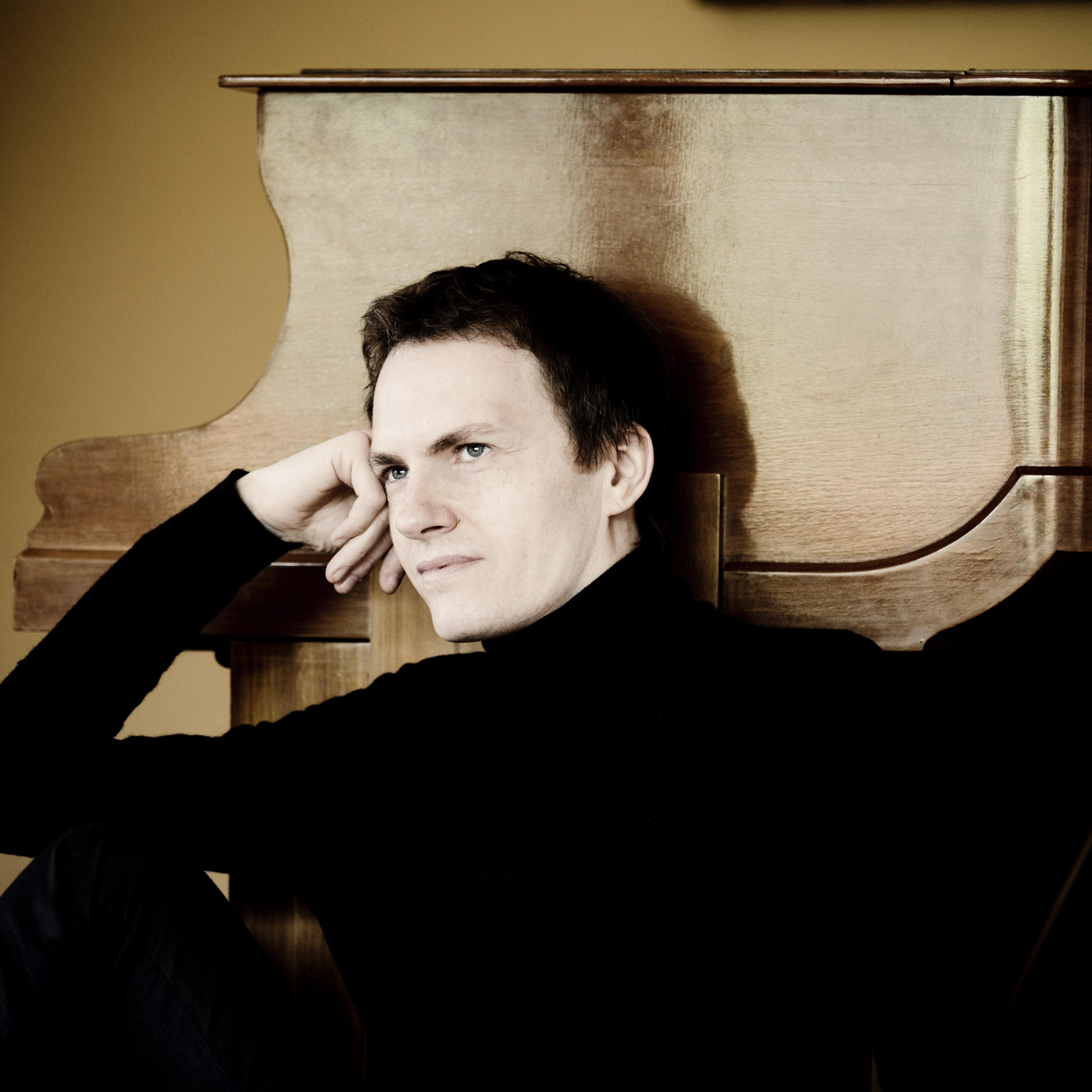
In a career spanning more than 25 years, Alexandre Tharaud has established himself as a leading figure in the classical music world and a key exponent of French pianism. His award-winning discography of over 25 solo albums features repertoire ranging from Couperin, Bach and Scarlatti, via Mozart, Beethoven, Schubert, Chopin, Brahms and Rachmaninov to major 20th-century French composers. The breadth of his artistic endeavours is also reflected in collaborations with theatre makers, dancers, choreographers, writers and film makers, as well as with singer-songwriters and musicians outside the realm of classical music.
He is a sought-after soloist, appearing with many of the world’s leading orchestras; current and recent highlights include concerto performances with the Orchestre de Paris, Orchestre National de France, NAC Orchestra Ottawa, Les Violons du Roy, Beethoven Orchester Bonn, Zurich Chamber Orchestra and the BBC Scottish and São Paulo State Symphony orchestras.
As a recitalist, he is a regular guest at the world’s most prestigious venues. Current and forthcoming highlights include recitals at the Philharmonie de Paris, London’s Kings Place, Frankfurt Alte Oper, Bayreuth, Amsterdam Concertgebouw, Casa da Música Porto, Zankel Hall in New York and extensive touring in Japan, China and Korea.
He has an exclusive recording contract and recent highlights include Versailles, featuring composers associated with the courts of the French kings Louis XIV, XV and XVI, Beethoven’s last three sonatas, Rachmaninov’s Second Piano Concerto, Brahms chamber music with cellist Jean-Guihen Queyras and an album with singer-songwriter Barbara.
In 2017 he published Montrez-moi vos mains, an engaging account of daily life as a pianist. He had previously co authored Piano intime with journalist Nicolas Southon. He is the subject of a film directed by Raphaëlle Aellig Régnier, Alexandre Tharaud: Le Temps dérobé, and appeared in the role of the pianist Alexandre in Michael Haneke’s celebrated 2012 film Amour.
BBC National Orchestra of Wales
For over 90 years, BBC National Orchestra of Wales has played an integral part in the cultural landscape of Wales, occupying a distinctive role as both broadcast and national symphony orchestra. Part of BBC Wales and supported by the Arts Council of Wales, it has a busy schedule of live concerts throughout Wales and the rest of the UK. The orchestra is an ambassador of Welsh music and champions the works of contemporary composers.
It performs annually at the BBC Proms and biennially at the BBC Cardiff Singer of the World competition, and can be heard regularly across the BBC: on Radio 3, Radio Wales and Radio Cymru, as well as providing the soundtracks for some of your favourite television programmes.
Highlights of this season include the Elemental Explorations concerts in Brecon and Newport with Nil Venditti, Disney’s Fantasia in concert, Britten and Elgar with the orchestra’s much-loved Conductor Laureate Tadaaki Otaka, an all-new Gaming concert with gaming music legend Eímear Noone and a CoLaboratory concert with the sensational cellist Abel Selaocoe.
Alongside its busy schedule of live concerts, BBC NOW works closely with schools and music organisations throughout Wales, regularly delivering workshops, side-by-side performances and young composer initiatives to inspire and encourage the next generation of performers, composers and arts leaders and make music accessible to all. To find out more visit bbc.co.uk/bbcnow
Patron
HM King Charles III KG KT PC GCB
Principal Conductor
Ryan Bancroft
Conductor Laureate
Tadaaki Otaka CBE
Composer-in-Association
Gavin Higgins
Composer Affiliate
Sarah Lianne Lewis
First Violins
Lesley Hatfield Leader
Nick Whiting Associate Leader
Martin Gwilym-Jones Sub-Leader
Cecily Ward
Terry Porteus
Suzanne Casey
Kerry Gordon-Smith
Juan Gonzalez
Carmel Barber
Zanete Uskane
Patrycja Mynarska
Zhivko Georgiev
Paul Mann
Gary George-Veale
Second Violins
Ruth Heney
Ros Butler
Sheila Smith
Vickie Ringguth
Joseph Williams
Michael Topping
Katherine Miller
Beverley Wescott
Sellena Leony
Jane Sinclair
Caroline Heard
Elizabeth Whittam
Violas
Rebecca Jones *
Tetsuumi Nagata
Peter Taylor
Laura Sinnerton
Catherine Palmer
Robert Gibbons
Ania Leadbeater
Anna Growns
Daichi Yoshimura
Sharada Mack
Cellos
Alice Neary *
Keith Hewitt #
Jessica Feaver
Sandy Bartai
Rachel Ford
Alistair Howes
Carolyn Hewitt
Katy Cox
Double Basses
David Stark *
Christopher Wescott
Richard Gibbons
Antonia Bakewell
Thea Sayer
Flutes
Matthew Featherstone *
Carys Gittins
Fiona Sweeney
Piccolo
Fiona Sweeney
Oboes
Aleksandra Rojek ‡
Amy McKean
Sarah-Jayne Porsmoguer
Cor Anglais
Sarah-Jayne Porsmoguer †
Clarinets
Tim Lines ‡
Lenny Sayers
Cara Doyle
Bassoons
Paul Boyes ‡
Alexandra Davidson
David Buckland
Contra-Bassoon
David Buckland †
Horns
Neil Shewan †
Meilyr Hughes
Joseph Ryan
William Haskins
Tom Taffinder
Trumpets
Philippe Schartz *
Robert Samuel
Kaitlin Wild
Trombones
Donal Bannister *
Michael Marshall
Bass Trombone
Darren Smith †
Tuba
Daniel Trodden †
Timpani
Steve Barnard *
Percussion
Chris Stock *
Mark Walker †
Phil Hughes
Harps
Valerie Aldrich-Smith †
Inbar Vernia
Piano
Catherine Roe Williams
* Section Principal
† Principal
‡ Guest Principal
# Assistant Principal
The list of players was correct at the time of publication
Director Lisa Tregale +
Orchestra Manager Vicky James **
Assistant Orchestra Manager Nick Olsen
Orchestra Coordinator, Operations Kevin Myers
Business Coordinator Caryl Evans
Head of Artistic Production Matthew Wood
Artists and Projects Manager Eleanor Phillips
Orchestra Librarian Eugene Monteith **
Producer Mike Sims
Broadcast Assistant Jacob Perkins
Head of Marketing and Audiences Sassy Hicks +
Marketing Coordinator Amy Campbell +
Digital Producer Yusef Bastawy
Social Media Coordinator Harriet Baugh
Education Producers Beatrice Carey, Rhonwen Jones **
Audio Supervisors Simon Smith, Andrew Smillie
Production Business Manager Lisa Blofeld
Stage and Technical Manager Steven Brown
Assistant Stage and Technical Manager Dave Rees
BBC Wales Apprentices Josh Gill, Analese Thomas-Strachan, Jordan Woodley
+ Green Team member
** Diversity & Inclusion Forum