
‘Enigma’ Variations
Thursday 11/4/24, 7.30pm
BBC Hoddinott Hall, Cardiff
Friday 12/4/24, 7.30pm
Brangwyn Hall, Swansea


Grace Williams
Sea Sketches18’
William Mathias
Harp Concerto25’
INTERVAL: 20 minutes
Edward Elgar
‘Enigma’ Variations31’
The advertised conductor Tadaaki Otaka has unfortunately had to withdraw from this concert. We’re very grateful to Jac van Steen for taking his place at short notice.
Jac van Steenconductor
Catrin Finch harp


The concert in Cardiff is being broadcast live in Radio 3 in Concert; the concert in Swansea is being recorded by BBC Radio 3 for future broadcast in Radio 3 Afternoon Concert. They will be available for 30 days after broadcast via BBC Sounds, where you can also find podcasts and music mixes.
Introduction
Former Principal Guest Conductor Jac van Steen makes a much-anticipated return to BBC NOW for a programme showcasing Welsh and English composers. We begin with Grace Williams’s Sea Sketches, a work composed while she was working in London during the Second World War, but which evokes with pinpoint clarity the beloved coast of her native Barry.
As well as three for his own instrument, the piano, William Mathias wrote concertos for a whole range of instruments, often inspired by friends and colleagues. His Harp Concerto was composed for that doyen of the instrument, Osian Ellis. Playing it tonight is a star of current times, Catrin Finch.
We end with Elgar’s ‘Enigma’ Variations, in which the composer offers musical portraits of friends and family, ranging in mood from the playful to the profoundly eloquent.
Enjoy!
Matthew Wood
Head of Artistic Production
Please respect your fellow audience members and those listening at home. Turn off all mobile phones and electronic devices during the performance. Photography and recording are not permitted.
Grace Williams (1906–77)
Sea Sketches(1944)

1 High Wind
2 Sailing Song
3 Channel Sirens
4 Breakers
5Calm Sea in Summer
Grace Williams worked as music mistress at Camden School for Girls in London during the Second World War and completed her Sea Sketches in August 1944. She dedicated the suite to her ‘parents who had the good sense to set up home on the coast of Glamorganshire’, and the work was probably composed with memories of the sea views that can be seen from her family home in Barry. She often admitted to her London friends at this time that she dreamt of composing and living by the sea and, in 1947, returned home to live and work in Wales. Fittingly, her Sea Sketches were premiered in March of that year by the strings of the BBC Welsh Symphony Orchestra conducted by Mansel Thomas.
The piece opens with a brisk ‘High Wind’ movement (Allegro energico) where a fanfare-like melody in high violins is developed against whirring demisemiquaver figures that are tossed between upper and lower strings – like flecks of sea foam in strong wind.
A calmer sea is depicted in ‘Sailing Song’ (Allegretto), initially captured by the gently rocking melody in violas, with different string colours (trills and pizzicato) used to chart the course of the boat as the movement unfolds.
A nocturnal seascape is evoked in ‘Channel Sirens’ (Lentomisterioso), which begins with the sound of a distant foghorn on muted violas and cellos and suspended, pulsing chords in upper strings. As the movement unfolds, Williams makes imaginative use of string textures and unusual timbres – including harmonics, glissandos and solo and tutti passages – to suggest an eerie scene of boats navigating through heavy fog at night.
The haunted mood is soon dispelled by ‘Breakers’ (Presto), a sunny, scherzo-like movement that teems with tumbling chromatic scales and arpeggiated themes, bringing to mind waves breaking on the shore.
In contrast, the final sketch, ‘Calm Sea in Summer’, is an Andante of slowly rocking, hypnotic melodic lines. This movement contains some intensely impassioned arguments in the strings but ends quietly on a note of tranquillity in the warm summer sea.
Programme note © Rhiannon Mathias
William Mathias (1934–92)
Harp Concerto, Op. 50(1970)
1 Moderato
2 Adagio appassionato, sempre flessibile
3 Allegro vivo
Catrin Finch harp
William Mathias was fascinated by concerto form and wrote the majority of his 11 concertos with specific performers in mind. He composed his Harp Concerto for the great Welsh harpist Osian Ellis, balancing the different sounds and techniques that are required from the solo harp with a reduced orchestra of single wind and brass, percussion, celesta and strings. The piece was premiered by Ellis and members of the Bournemouth Symphony Orchestra conducted by James Lockhart at the Llandaff Festival in June 1970; it remains one of Mathias’s most acclaimed pieces to this day.
Each of the concerto’s three movements presents a different musical landscape of Wales. Mathias himself associated the first movement with ‘the land and seascapes of South West Wales’ – the area where he grew up – and the music throughout seems lit with the spirit of youth in spring. After opening with a lyrical woodwind call and warm string chords, the harp accompanies a melodious song played by the flute. A quicker, more pungent theme is introduced – initially stated by pizzicato wind, trumpet and xylophone – and the harp takes centre stage in the third slower section, in which it is magically accompanied by woodwind and a ringing celesta. These thematic ideas are developed and, following a majestic climax, the movement closes with an echo of the lyrical call heard in the opening bars.
The central Adagio movement is dark and elegiac in character, and is prefaced with lines from R. S. Thomas’s poem ‘Welsh Landscape’:
To live in Wales is to be conscious
At dusk of the spilled blood
That went to the making of the wild sky,
Dyeing the immaculate rivers
In all their courses …
Drawing inspiration also from the ‘heroic rhetoric and elegiac feeling‘ found in early Welsh poems, Mathias opens the movement with an anguished descending theme in the orchestra, accompanied by a martial timpani beat and wistful reflections by the solo harp. A series of musical episodes follows, each coloured by delicately etched textures and sonorities; Mathias demands some unusual harp techniques, including tapping the soundboard. A brief cadenza heralds the return of the opening theme – now stated quietly as if receding into the distance – and the movement ends with a single, bell-like note from the soloist.
The Allegro finale is, in contrast, an exuberant rondo that celebrates the spirit of dance. Following a short fanfare, the joyful main theme is played first by the harp before being extensively explored by the orchestra. Foot-tapping, syncopated chords on the harp and lower strings accompany a second theme in the woodwind, characterised by its skipping rhythms. The pace momentarily slows to include recollections from the first movement and a dramatic cadenza for solo harp, before picking up speed for a final sprint. Mathias ends the concerto with a playful wink when it is revealed that the finale’s second theme has, all along, been preparing the way for the trumpet’s rendition of the Welsh folksong ‘Dadl Dau’ in the final bars.
Programme note © Rhiannon Mathias
INTERVAL: 20 minutes
Edward Elgar (1857–1934)
Variations on an Original Theme (‘Enigma’), Op. 36 (1898–9)
Theme (‘Enigma’)
1 C. A. E.
2 H. D. S.-P.
3 R. B. T.
4 W. M. B.
5 R. P. A.
6 Ysobel
7 Troyte
8 W. N.
9 Nimrod
10 Dorabella
11 G. R. S.
12 B. G. N.
13 * * * (Romanza)
14 Finale: E. D. U.
‘The Enigma I will not explain,’ wrote Elgar –i‘its “dark saying” must be left unguessed … further, through and over the whole set another and larger theme “goes”, but is not played.’ Several ingenious attempts have been made to find that ‘larger theme’. Could ‘Auld lang syne’, or even ‘Rule, Britannia!’, be half-concealed in the music somewhere? Or is it something more – well – enigmatic? Elgar loved puns and double meanings, so is it possible that something else, something broader, is implied by the word ‘theme’?
A clue to that is provided by his description of how the ‘Enigma’ theme originally came to him. Tired from a day’s teaching, Elgar was improvising at the piano, when suddenly his wife, Alice, interrupted him:
‘Edward, that’s a good tune.’ I awoke from the dream: ‘Eh! Tune, what tune?’ And she said, ‘Play it again, I like that tune.’ I played and strummed, and played, and then she exclaimed: ‘That’s the tune.’
In another version of the story, Alice asks Elgar what he’s playing: ‘Nothing,’ says Elgar, ‘but something might be made of it.’ The more one knows about this ambitious but profoundly insecure composer, the more that sounds like a description of Elgar himself at that time. Though he was already in his forties, Elgar was still far from established on the British cultural scene and was feeling thwarted and isolated. Years later he told the critic Ernest Newman that the ‘Enigma’ theme ‘expressed when written (in 1898) my sense of the loneliness of the artist … and to me, it still embodies that sense’.
So is the ‘larger theme’ that runs through the ‘Enigma’ Variations Elgar himself, lonely and pensive at first, but revealing other aspects of his complex character as the 14 variations progress? The theme remains more or less clearly identifiable, but it goes through rich and ingenious transformations as it encounters each of the ‘friends’ Elgar tells us are ‘pictured within’. It becomes impassioned in the company of Alice (Var. 1), playful and flirtatious in the company of ‘Dorabella’ (Var. 10), profoundly melancholic when unburdening itself to the cellist Basil Nevinson (Var. 12) and noble in the famous ‘Nimrod’ (Var. 9), which records how his publisher friend August Jaeger encouraged him to aspire towards the most sublime heights. Then, in the finale (Var. 14), Elgar himself emerges like the butterfly from the chrysalis, wings magnificently outspread. If Elgar the artist is the ‘larger theme’ that ‘goes’ through the ‘Enigma’ Variations, then in this magnificent apotheosis he says to each of those friends, ‘See what you have made of me!’
Programme note © Stephen Johnson
Help Us Improve Our Online Programmes.
Please take this 5-minute survey and let us know what you think of these notes.
Programme Survey
You may also like:
Stardust and Souls
LIVESTREAM and BSL Interpretation
Thursday 18/4/24, 7.30pm
BBC Hoddinott Hall, Cardiff
Alexander Campkin Sounds of Stardust world premiere
Dani Howard Percussion Concerto world premiere
Poulenc Stabat mater
Sofi Jeannin conductor
Dame Evelyn Glennie percussion
Julieth Lozano soprano
BBC National Chorus of Wales
ETHEREAL | ATMOSPHERIC | MYSTERIOUS
To conduct a concert featuring two world premieres and a gem of the choral repertoire, we’re delighted to welcome back the inimitable Sofi Jeannin alongside the BBC National Orchestra and Chorus of Wales, Dame Evelyn Glennie and BBC Cardiff Singer of the World Audience Prize-winner Julieth Lozano for an evening of musical exploration and discovery.
First a world premiere from Alexander Campkin: his Sounds of Stardust. Dame Evelyn Glennie, percussionist extraordinaire, takes to the stage for the world premiere of Dani Howard’s new percussion concerto, before we celebrate Poulenc’s sacred vocal masterpiece. The Stabat mater was written in response to the death of his close friend, the artist Christian Bérard, and it embraces both light and dark – a true representation of the composer’s devout Catholicism, yet witty and effervescent personality.
American Explorations
Friday 3/5/24, 7.30pm
The Riverfront, Newport
Saturday 4/5/24, 7.30pm
BBC Hoddinott Hall, Cardiff
Barber Adagio for Strings
Barber Violin Concerto
Ives Symphony No. 2
Ryan Bancroft conductor
Benjamin Bakerviolin
EMOTIVE | INFLUENTIAL | DAZZLING
Join us for a celebration of American classical music with our LA-born Principal Conductor Ryan Bancroft. Popular the world over, Barber’s Adagio for Strings is one of the most recognisable pieces in the entire orchestral repertoire. It is surely his best-known work, used in film and television, as well as, most poignantly at Franklin D. Roosevelt’s funeral and following the assassination of JFK.
Less well-known is Barber’s dazzling Violin Concerto. It was composed in the 1930s, a time when its traditional melody, rhythm, harmony and orchestration might have seemed old-fashioned. But, with its memorable themes, syncopation and distinctive counter-rhythms, Barber offers a work full of exciting narrative and virtuosity. To perform it we’re thrilled to welcome the charismatic violinist Benjamin Baker.
We continue our exploration of the music of Charles Ives with Ryan Bancroft, with his Second Symphony. This piece is infamous for quoting well-known American melodies and is his first major work to explore fully this borrowing, blended with European influences, as if to form a snapshot of the coming together of Ives’s childhood and adult life.
Bartók’s Concerto for Orchestra
Thursday 9/5/24, 7.30pm
BBC Hoddinott Hall, Cardiff
Friday 10/5/24, 7.30pm
Brangwyn Hall, Swansea
Caroline Shaw The Observatory UK premiere
Ravel Piano Concerto in G major
Bartók Concerto for Orchestra
Giancarlo Guerrero conductor
Sergio Tiempo piano
COLOURFUL | DYNAMIC | ENTHRALLING
Caroline Shaw’s The Observatory (which receives its UK premiere) was inspired by a trip to the Griffin Observatory near the Hollywood Bowl; it explores in sound new ways of looking at the universe, melding old and new with chaos and clarity, in a tantalising stream of consciousness.
Ravel’s atmospheric Piano Concerto, a rich mix of lyricism, evocative orchestration and virtuoso piano writing, is performed by the inimitable Sergio Tiempo as he makes his debut with BBC NOW. The virtuosity continues in Bartók’s brilliant, folk-inflected Concerto for Orchestra, which closes this breathtaking programme, conducted by the illustrious Grammy Award-winning Costa Rican conductor Giancarlo Guerrero.
Biographies
Jac van Steenconductor

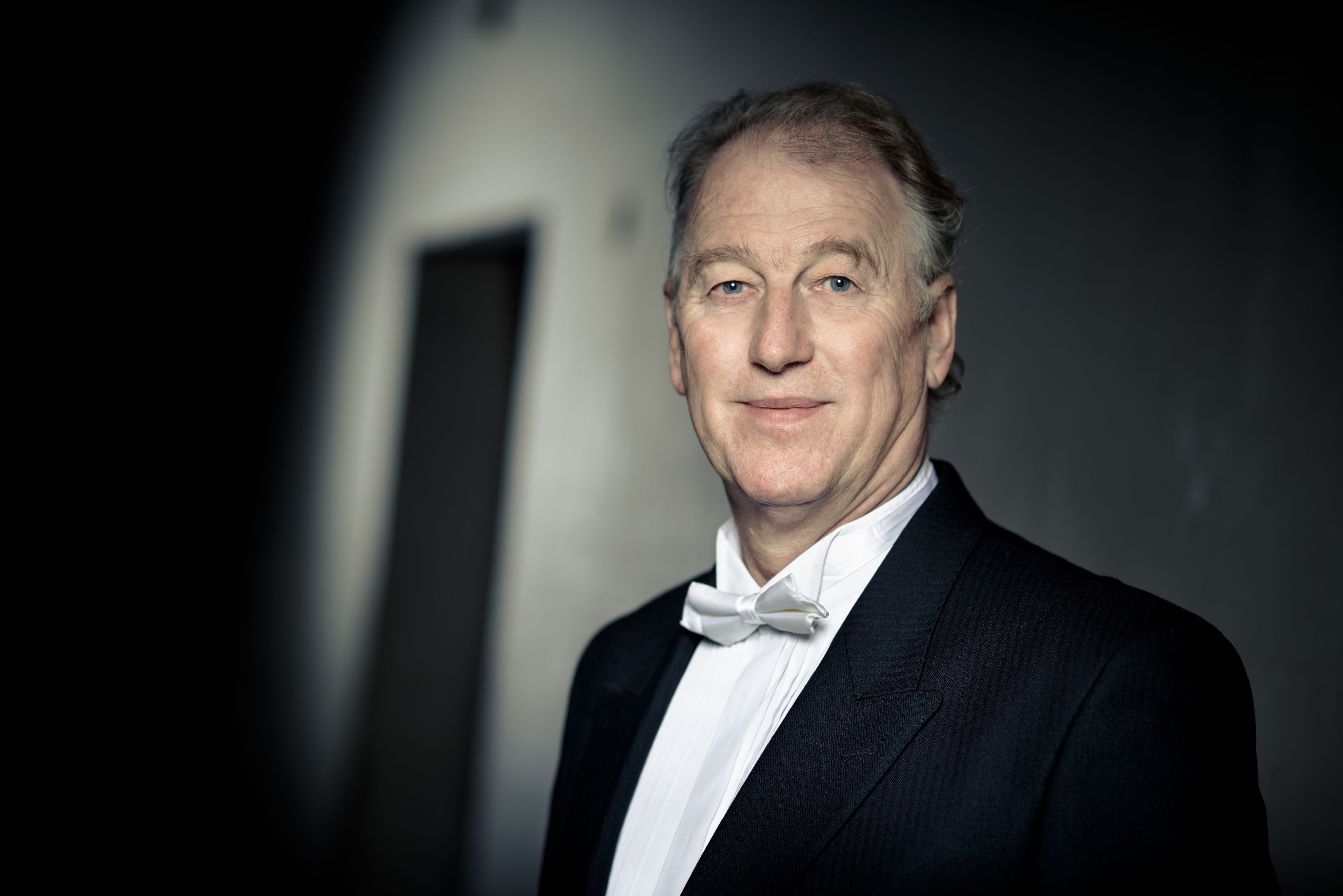
Photo: Simon van Boxtel
Photo: Simon van Boxtel
Jac van Steen was born in the Netherlands and studied orchestra and choir conducting at the Brabant Conservatory of Music.
Since participating in the BBC Conductors’ Seminar in 1985, he has enjoyed a very busy career. He has worked with leading orchestras in Europe, holding the posts of Music Director and Chief Conductor of the Netherlands National Ballet, the orchestras of Bochum and Nuremberg, Weimar Staatskapelle, Dortmund Opera and Philharmonic Orchestra and Musikkollegium Winterthur, as well as being Principal Guest Conductor of BBC National Orchestra of Wales. He is currently Principal Guest Conductor of the Ulster Orchestra and Prague Symphony Orchestra.
He is also in demand in the opera house, having made notable debuts with the Vienna Volksoper and Opera North (both 2013) and Garsington Opera (2015) and developed close relationships with all three. In the 2018–19 season he made his debut with Oslo Opera.
He visits the UK regularly, conducting the Philharmonia, City of Birmingham Symphony Orchestra and Royal Philharmonic. Other highlights include his debut in Tokyo with the New Japan Philharmonic and the Malaysian Philharmonic Orchestra.
His substantial discography covers a wide range of repertoire with various orchestras.
Besides his activities as conductor, he is dedicated to teaching and is Professor of Conducting at the Royal Conservatory of Music in The Hague. He also regularly works with the Royal Northern College of Music, Royal Academy and Royal College of Music. In 2018 he led the Royal Opera’s Jette Parker Young Artists showcase.
Catrin Finchharp

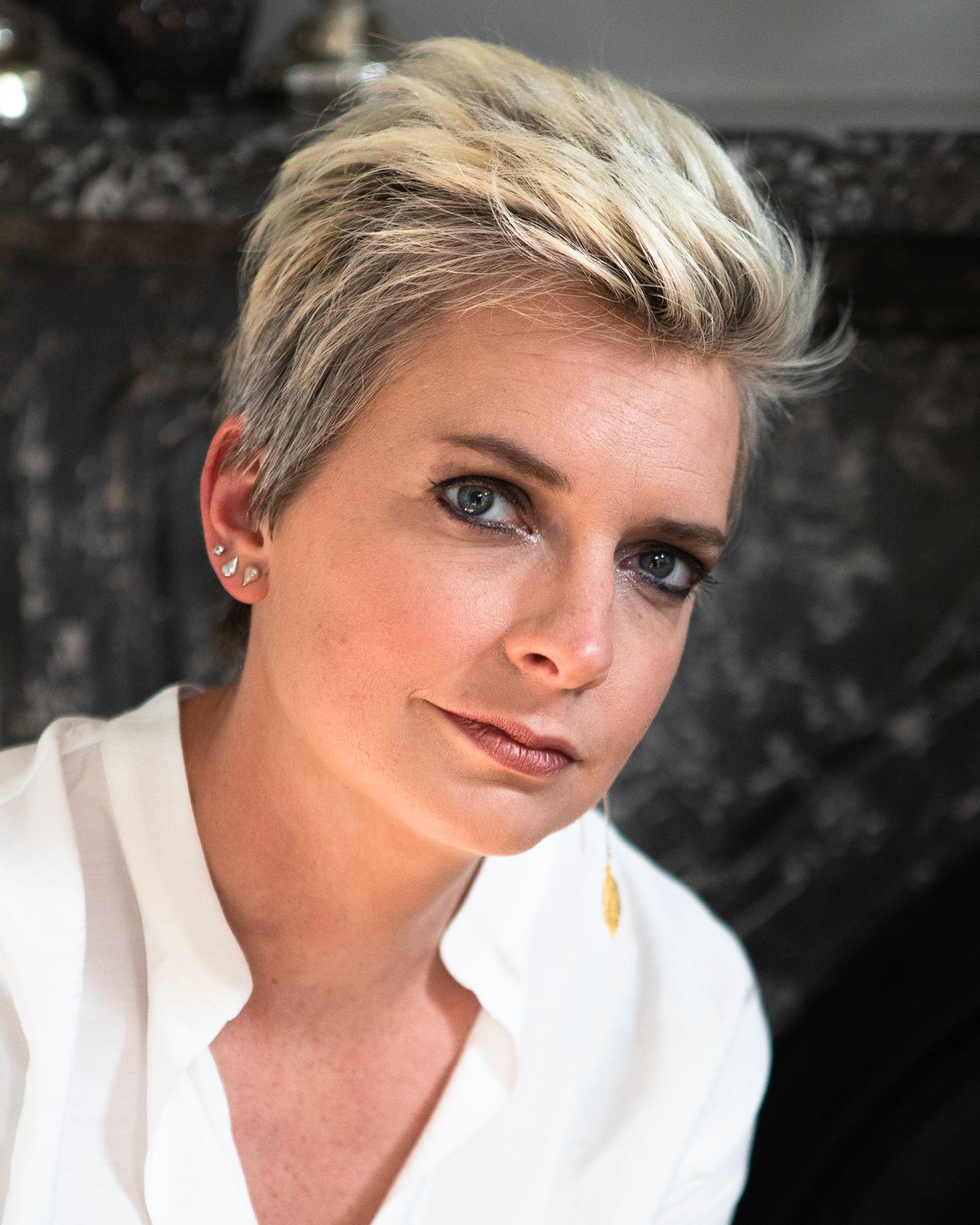
Photo: Jennie Caldwell
Photo: Jennie Caldwell
Catrin Finch, from Llanon on the west coast of Wales, is one of the leading harp virtuosos of today. After intense classical studies she served as Royal Harpist to the H.R.H. The Prince of Wales in her early twenties. She has performed with many of the world’s leading orchestras, has reached No. 1 in the charts for her rendition of Bach’s Goldberg Variations, and has recorded for the world’s leading classical labels. Her adventurous spirit has also led to collaborations with non-classical artists, notably with kora virtuoso Seckou Keita, with whom she won Best Group at the 2019 BBC Radio 2 Folk Awards.
Classical highlights include appearances with many of the world’s leading orchestras, including the New York and Royal Philharmonic orchestras, Boston Pops, Academy of St Martin in the Fields and the English Chamber Orchestra. She has appeared at renowned festivals, including Salzburg, Edinburgh, Spoleto and MDR Musiksommer in Leipzig, as well as touring throughout Europe, North and South America, Australia and the Middle East.
She has recorded for many major international record labels both as a soloist and with notable artists such as Sir Bryn Terfel, Sir James Galway and Julian Lloyd Webber.
She continues to explore and push the boundaries of her art with award-winning international collaborations with artists such as kora players Seckou Keita and Toumani Diabaté, Cimarrón and, most recently, classical violinist Aoife Ní Bhriain.
Catrin Finch is currently Head of Harp at London’s Royal Academy of Music.
BBC National Orchestra of Wales
For over 90 years, BBC National Orchestra of Wales has played an integral part in the cultural landscape of Wales, occupying a distinctive role as both broadcast and national symphony orchestra. Part of BBC Wales and supported by the Arts Council of Wales, it has a busy schedule of live concerts throughout Wales, the rest of the UK and the world.
The orchestra is an ambassador of Welsh music and champions contemporary composers and musicians; its concerts can be heard regularly across the BBC – on Radio 3, Radio Wales and Radio Cymru.
BBC NOW works closely with schools and music organisations throughout Wales and regularly undertakes workshops, side-by-side performances and young composer initiatives to inspire and encourage the next generation of performers, composers and arts leaders.
The orchestra is based at BBC Hoddinott Hall in Cardiff Bay, where its purpose-built studio not only provides the perfect concert space, but also acts as a broadcast centre from where its live-streamed concerts and pre-recorded content are presented as part of its popular Digital Concert Series.
For further information please visit the BBC National Orchestra and Chorus of Wales’s website: bbc.co.uk/now
Patron
HM King Charles III KG KT PC GCB
Principal Conductor
Ryan Bancroft
Conductor Laureate
Tadaaki Otaka CBE
Composer-in-Association
Gavin Higgins
Composer Affiliate
Sarah Lianne Lewis
First Violins
Lesley Hatfield leader
Nick Whiting associate leader
Martin Gwilym-Jones sub-leader
Gwenllian Hâf MacDonald
Terry Porteus **
Suzanne Casey
Carmel Barber **
Alejandro Lobato
Anna Cleworth **
Emilie Godden **
Juan Gonzalez **
Žanete Uškāne **
Rebecca Totterdell **
Peter Povey **
SecondViolins
Anna Smith *
Kirsty Lovie
Sheila Smith **
Ilze Abola
Michael Topping **
Katherine Miller
Joseph Williams
Beverley Wescott **
Roussanka Karatchivieva
Lydia Caines **
Vickie Ringguth **
Amy Fletcher **
Violas
Tetsuumi Nagata
Peter Taylor
Catherine Palmer **
Anna Growns
Daire Roberts
Lydia Abell **
Robert Gibbons **
Carl Hill **
Charlotte Limb **
Cellos
Alice Neary *
Jessica Feaver
Sandy Bartai
Keith Hewitt **
Carolyn Hewitt **
Alistair Howes **
Rachel Ford **
Katy Cox **
Double Basses
David Stark *
Alexander Jones # **
Christopher Wescott **
Yat Hei Lee
Richard Gibbons **
Chris Kelly **
Flutes
Matthew Featherstone *
Lindsey Ellis
Piccolo
Lindsey Ellis †
Oboes
Catriona MacKinnon ‡
Amy McKean †
Clarinets
Nick Carpenter *
Lenny Sayers
Bassoons
Jarosław Augustiniak *
Gareth Humphreys
David Buckland
Contrabassoon
David Buckland †
Horns
John Davy
Meilyr Hughes
Tom Taffinder
Ed Griffiths
Trumpets
Philippe Schartz *
Robert Samuel
Corey Morris † ++
Trombones
Donal Bannister*
Dafydd Thomas
Bass Trombone
Darren Smith †
Tuba
Anders Swane
Timpani
Steve Barnard *
Percussion
Phil Girling
Phil Hughes
Andrea Porter
Organ/Celesta
Gregory Drott
* Section Principal
† Principal
‡ Guest Principal
# Assistant String Principal
** not in Mathias
++ Principal in Mathias
The list of players was correct at the time of publication
Director Lisa Tregale
Orchestra Manager appointment in progress
Assistant Orchestra Manager Nick Olsen
Orchestra Personnel ManagerKevin Myers
Business Coordinator Caryl Evans
Orchestra Administrator Eleanor Hall +
Head of Artistic Production Matthew Wood
Artists and Projects Manager Victoria Massocchi **
Orchestra Librarian Eugene Monteith
Producer Mike Sims
Broadcast Assistant Kate Marsden
Head of Marketing and Audiences Sassy Hicks
Marketing Coordinator Amy Campbell-Nichols +
Digital Producer Yusef Bastawy
Social Media Coordinator Harriet Baugh
Education Producers Beatrice Carey, Rhonwen Jones **
Audio Supervisors Simon Smith, Andrew Smillie
Production Business Manager Lisa Blofeld
Stage and Technical Manager Steven Brown +
Assistant Stage and Technical Manager Josh Mead
BBC Wales Apprentice Jordan Woodley
+ Green Team member
** Diversity & Inclusion Forum