
Season Closing Concert
Thursday 6/6/24, 7.30pm
BBC Hoddinott Hall, Cardiff
Friday 7/6/24, 7.30pm
Brangwyn Hall, Swansea


Antonín Dvořák
Cello Concerto in B minor40’
INTERVAL: 20 minutes
Jennifer Higdon
Blue Cathedral11’
William Dawson
Negro Folk Symphony 36’
Ryan Bancroftconductor
Alisa Weilerstein cello


The concert in Cardiff is being recorded by BBC Radio 3 for broadcast on 13 June in Radio 3 in Concert. It will be available for 30 days after broadcast via BBC Sounds, where you can also find podcasts and music mixes.
Introduction

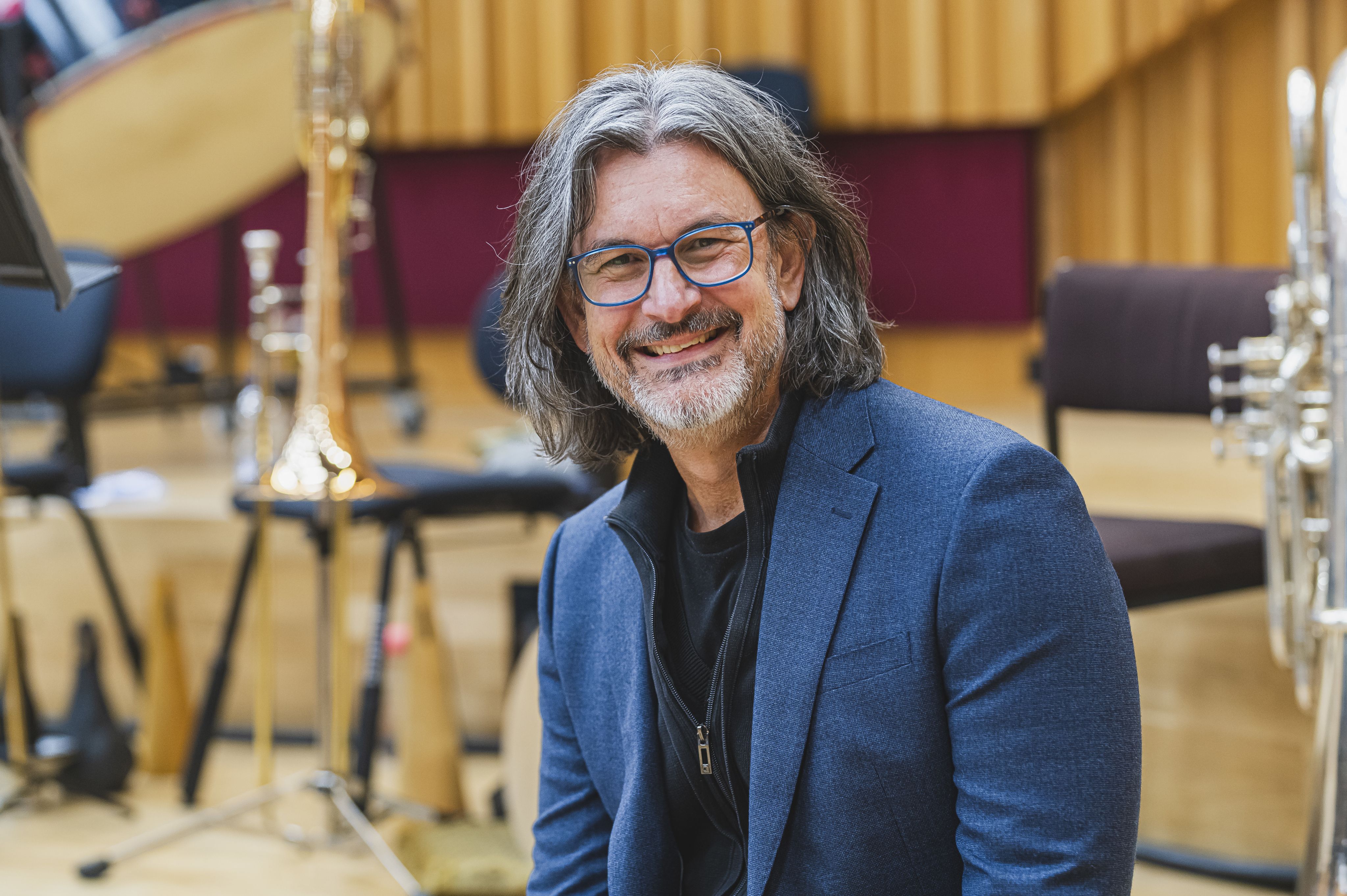
Photo: Kirsten McTernan
Photo: Kirsten McTernan
For tonight’s concert we’re delighted to welcome back Principal Conductor Ryan Bancroft for his last concert of the season with BBC NOW.
Fittingly, for our Los Angeles-born conductor, there’s a strong American strand running through the programme, ending on a high with William Dawson’s Negro Folk Symphony, a work unveiled to considerable acclaim 90 years ago by the Philadelphia Orchestra and Leopold Stokowski, no less.
Dawson was inspired by the example of Dvořák, who, while based in New York, had urged American composers to find inspiration from their own cultural roots. We begin with the Czech master himself, and his much-loved Cello Concerto, which he completed in the US. It’s a homage to his homeland and it’s easy to understand why it has become so beloved of cellists and audiences alike. Tonight we’re delighted to welcome the stellar American cellist Alisa Weilerstein to perform it.
Continuing the American theme is Jennifer Higdon’s Blue Cathedral, a work written to mark the Curtis Institute’s 75th anniversary, but which also became a homage to her own late brother. While writing it, she explained, ‘I found myself imagining a journey through a glass cathedral in the sky’.
Enjoy!
Matthew Wood
Head of Artistic Planning and Production
Please respect your fellow audience members and those listening at home. Turn off all mobile phones and electronic devices during the performance. Photography and recording are not permitted.
Antonín Dvořák(1841–1904)
Cello Concerto in B minor(1894–5)

1 Allegro
2 Adagio, ma non troppo
3 Finale: Allegro moderato
Alisa Weilerstein cello
Antonín Dvořák gazed across vast distances with homesick longing in his Cello Concerto. He completed it in 1895 in New York, during his third year as Director of Manhattan’s newly established National Conservatory of Music. He’d greatly enjoyed his first two years in the role, as he demonstrated in the awe and wonder of his ‘New World’ Symphony (No. 9) and the warm contentment of his ‘American’ Quartet. By his third year, however, he found himself increasingly missing Bohemia. It was a situation made worse by some worrying news: his sister-in-law, Josefína Kounicová (née Čermáková), was gravely ill. Some 30 years earlier, the young Dvořák had been passionately in love with Josefína, who was one of his piano pupils. When she didn’t return his affections, however, he eventually married her younger sister Anna. But it’s widely believed that his feelings hardly changed across the intervening decades.
Nonetheless, it was an American inspiration that prompted Dvořák to write his Cello Concerto. Earlier in his career, the eminent Czech cellist Hanuš Wihan had badgered the composer for a concerto, but Dvořák had always declined, unconvinced of the cello’s suitability as a concerto soloist. But when in March 1894 he heard the Second Cello Concerto by Victor Herbert, one of his conservatory colleagues, he was immediately inspired, writing his own piece in just three months between November 1894 and February 1895. Nor did he forget about the ailing Josefína: he incorporated a quotation from his song ‘Leave Me Alone’ (‘Kéž duch můj sám’), one of her favourites, into the concerto’s lyrical slow movement.
Dvořák eventually returned to Bohemia in April 1895 and, just a month later, Josefína died. In response, the composer threw himself back into his Cello Concerto, replacing its original celebratory ending with a quiet memory of his song ‘Leave Me Alone’. When Wihan, the work’s dedicatee, demanded a showy solo cadenza to demonstrate his exceptional skills in the finale, Dvořák refused, even going as far as emphasising his wishes in a note to his publisher: ‘I must insist that my work be published just as I have written it. I give you my work only if you promise me that no-one – not even my esteemed friend Wihan – shall make any alteration in it without my knowledge and permission, also that there be no cadenza such as Wihan has made in the last movement.’
Despite its stormy drama, the Cello Concerto is often contemplative in tone, with soloist and orchestra equally matched as partners rather than adversaries. Its assertive opening movement gives way to pastoral tranquillity in the central slow movement, before Dvořák’s otherwise exuberant finale unexpectedly immerses listeners in bittersweet melancholy just before its close.
Programme note © David Kettle
INTERVAL: 20 minutes
Jennifer Higdon(born 1962)
Blue Cathedral(1999)
Blue … like the sky. Where all possibilities soar.
Cathedrals … a place of thought, growth, spiritual expression … serving as a symbolic doorway into and out of this world.
Blue represents all potential and the progression of journeys. Cathedrals represent a place of beginnings, endings, solitude, fellowship, contemplation, knowledge and growth. As I was writing this piece, I found myself imagining a journey through a glass cathedral in the sky. Because the walls would be transparent, I saw the image of clouds and blueness permeating from the outside of this church. In my mind’s eye the listener would enter from the back of the sanctuary, floating along the corridor among giant crystal pillars, moving at a contemplative pace. The stained glass windows’ figures would start moving with song, singing a heavenly music. The listener would float down the aisle, slowly moving upwards at first and then progressing at a quicker pace, rising towards an immense ceiling which would open to the sky … as this journey progressed, the speed of the traveller would increase, rushing forwards and upwards. I wanted to create the sensation of contemplation and quiet peace at the beginning, moving towards the feeling of celebration and ecstatic expansion of the soul, all the while singing along with that heavenly music.
These were my thoughts when the Curtis Institute of Music commissioned me to write a work to commemorate its 75th anniversary. Curtis is a house of knowledge – a place to reach towards that beautiful expression of the soul which comes through music. I began writing this piece at a unique juncture in my life and found myself pondering the question of what makes a life. The recent loss of my younger brother, Andrew Blue, made me reflect on the amazing journeys that we all make in our lives, crossing paths with so many individuals singularly and collectively, learning and growing each step of the way.
Blue Cathedral represents the expression of the individual and the group … our inner travels and the places our souls carry us, the lessons we learn, and the growth we experience. In tribute to my brother, I feature solos for the clarinet (the instrument he played) and the flute (the instrument I play). Because I am the older sibling, it is the flute that appears first in this dialogue. At the end of the work, the two instruments continue their dialogue, but it is the flute that drops out and the clarinet that continues on in the upward-moving journey. This is a story that commemorates living and passing through places of knowledge and of sharing and of that song called life.
Programme note © Jennifer Higdon
William Dawson (1899–1990)
Negro Folk Symphony (1925–9, rev. after 1952)
1 The Bond of Africa
2 Hope in the Night
3 O Le’ Me Shine, Shine Like a Morning Star!
In 1893 Antonín Dvořák urged American composers to use African American folk music as the basis for a distinctive national music. His folk-music-inspired Symphony No. 9, ‘From the New World’, had its premiere in New York that year. Little did Dvořák know that an African American composer from Alabama would take his words and example to heart a few decades later, leading to the composition of his own Negro Folk Symphony.
The premiere performances in 1934 of William L. Dawson’s first and only symphony were an astonishing success with audiences and critics alike – a remarkable reception for any unknown American composer, let alone a Black one. The Philadelphia Orchestra, conducted by Leopold Stokowski, received tumultuous applause after every movement. Unfortunately, the composer lacked the resources, connections and advocates to keep his symphony from plunging into obscurity within a couple of years. Dawson dedicated himself to teaching at Tuskegee Institute in Alabama, leading the choir to national fame and creating enduring choral arrangements of African American spirituals.
In 1952–3 Dawson spent several weeks in West Africa, studying the music of his ancestors. He was amazed by the drumming, singing and dancing he encountered, writing home to his wife Cecile that the African music he had heard on records was ‘child’s play’ compared to the real thing. Upon returning to the US, Dawson significantly revised and improved the Negro Folk Symphony, infusing it with new sounds and rhythms inspired by his experiences. Published in 1963, this revised version is the only one that has been heard since.
The symphony’s movements are united by a four-note motif heard at the start, representing, in the composer’s words, ‘the link taken out of a human chain when the first African was taken from the shores of his native land and sent to slavery’. The first movement conveys the richness of African Americans’ cultural heritage, the second the tragedy of enslavement and the third the joy and healing offered by freedom. Dawson uses several pre-existing folk tunes as melodic material, although he strikingly chooses not to include any in the middle movement. The Negro Folk Symphony is distinguished by the composer’s mastery of orchestral colour, complex textures and rhythms, and keen dramatic sense. It is a distinctly African American response to Dvořák’s Ninth Symphony, offering listeners comparable pleasures but a far more complicated message.
Programme note © Gwynne Kuhner Brown
Help Us Improve Our Online Programmes.
Please take this 5-minute survey and let us know what you think of these notes.
Programme Survey
You may also like:
Gergely Madaras conducts …
Friday 21/06/24, 7.30pm
BBC Hoddinott Hall, Cardiff
Debussy Prélude à l’après-midi d’un faune
Debussy Nocturnes
Christian Mason Thaleia UK premiere
Franck Psyché – ‘Les jardins d’Éros’
Gergely Madaras conductor
Noémi Győri flute
BBC National Chorus of Wales
BEGUILING | ILLUSTRATIVE | ENTRANCING
Shimmering ambiguity and transparent harmonies glisten with subtly Eastern-inspired melodies, nuance and sheer beauty in Debussy’s ground-breaking Prélude à l’après-midi d’un faune, depicting the dreams and encounters of a mythical faun. We then explore light and shade in his Nocturnes, inspired by Whistler’s series of paintings of the same name. In the first, ‘Nuages’, we experience airily luminous melody, followed by propulsive rhythmic drive in ‘Fêtes’, while the use of women’s voices in ‘Sirènes’ brings an eerie quality to the texture.
Christian Mason’s flute concerto Thaleia uses the solo instrument in a mellifluously uninhibited style, reflective of Debussy’s L’après-midi. It was written for Noémi Győri as part of her ‘Contemplation of the Nymph’ project, with the characteristics of Thaleia, a Naiad-nymph of Mount Etna, taking the focal role. We’re delighted that Noémi will join BBC National Orchestra of Wales and conductor Gergely Madaras for the work’s UK premiere. We end this enchanting concert with ‘Les jardins d’Éros’ from Franck’s symphonic poem Psyché, setting words by Sicard and Louis de Fourcaud and inspired by Apuleius’s Metamorphoses.
Biographies
Ryan Bancroftconductor

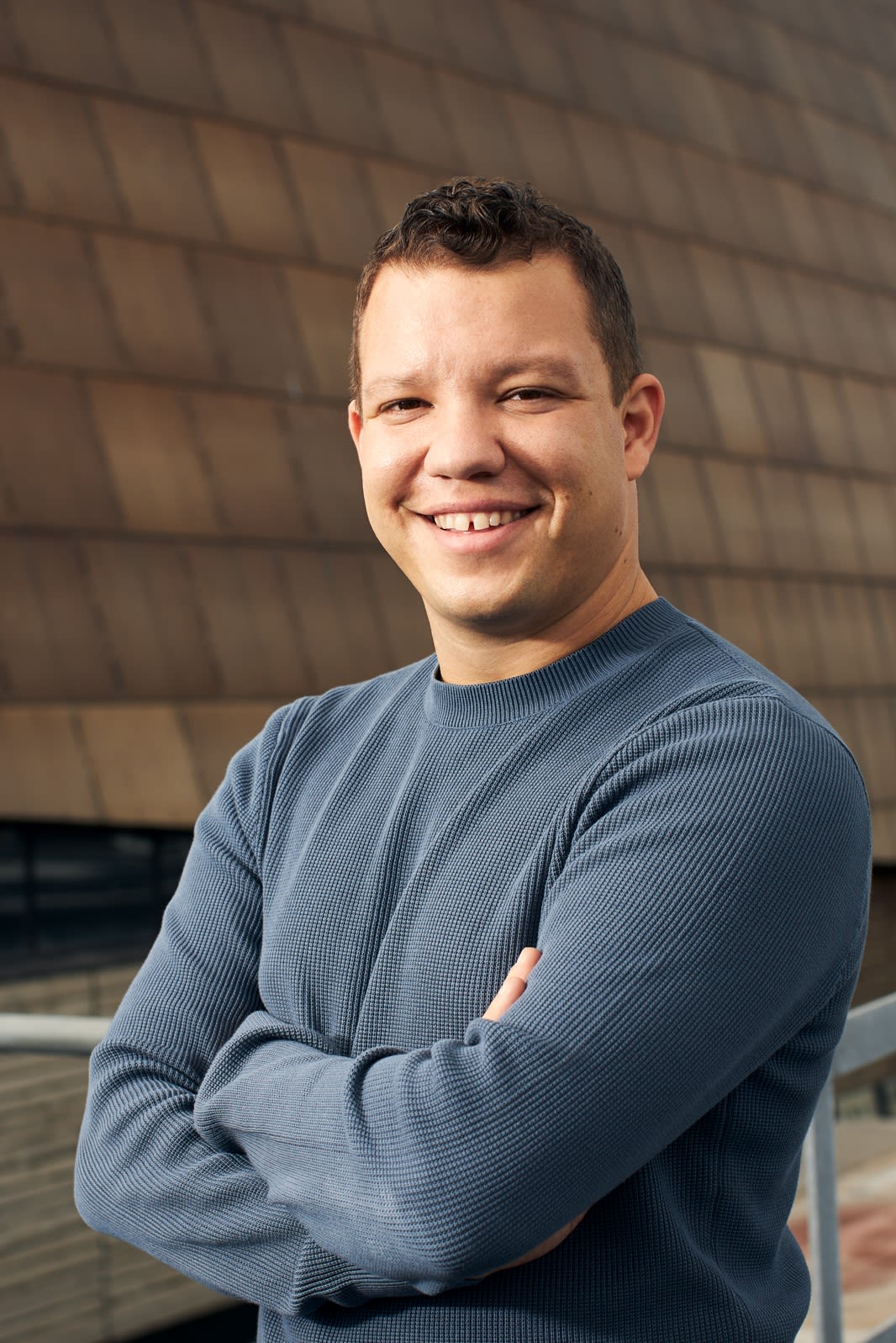
Photo: Benjamin Ealovega
Photo: Benjamin Ealovega
Ryan Bancroft grew up in Los Angeles and first came to international attention in April 2018, when he won both First Prize and Audience Prize at the prestigious Malko Competition for Young Conductors in Copenhagen. Since September 2021 he has been Principal Conductor of BBC National Orchestra of Wales. Following his first visit to work with the Tapiola Sinfonietta, he was invited to become its Artist-in-Association from the 2021/22 season. In September he became Chief Conductor of the Royal Stockholm Philharmonic Orchestra.
His new role as Chief Conductor in Stockholm saw him open the season with the orchestra’s first performance of Sven-David Sandström’s The High Mass and highlights include premieres of pieces by Daniel Börtz and Anders Hillborg, and concerts with Emanuel Ax and Seong-Jin Cho.
Last summer he made his Hollywood Bowl debut with the Los Angeles Philharmonic; this season he also makes debuts with the Cleveland Orchestra, San Francisco and Cincinnati Symphony orchestras, NDR Elbphilharmonie Orchestra, Orquesta Sinfónica de Castilla y León and Netherlands Radio Philharmonic Orchestra, as well as returning to the Toronto Symphony Orchestra and Philharmonia Orchestra.
He has a passion for contemporary music and has performed with Amsterdam’s Nieuw Ensemble, assisted Pierre Boulez in a performance of his Sur incises in Los Angeles, premiered works by Sofia Gubaidulina, John Cage, James Tenney and Anne LeBaron, and has worked closely with improvisers such as Wadada Leo Smith and Charlie Haden.
He studied at the California Institute of the Arts, Royal Conservatoire of Scotland and in the Netherlands.
Alisa Weilersteincello

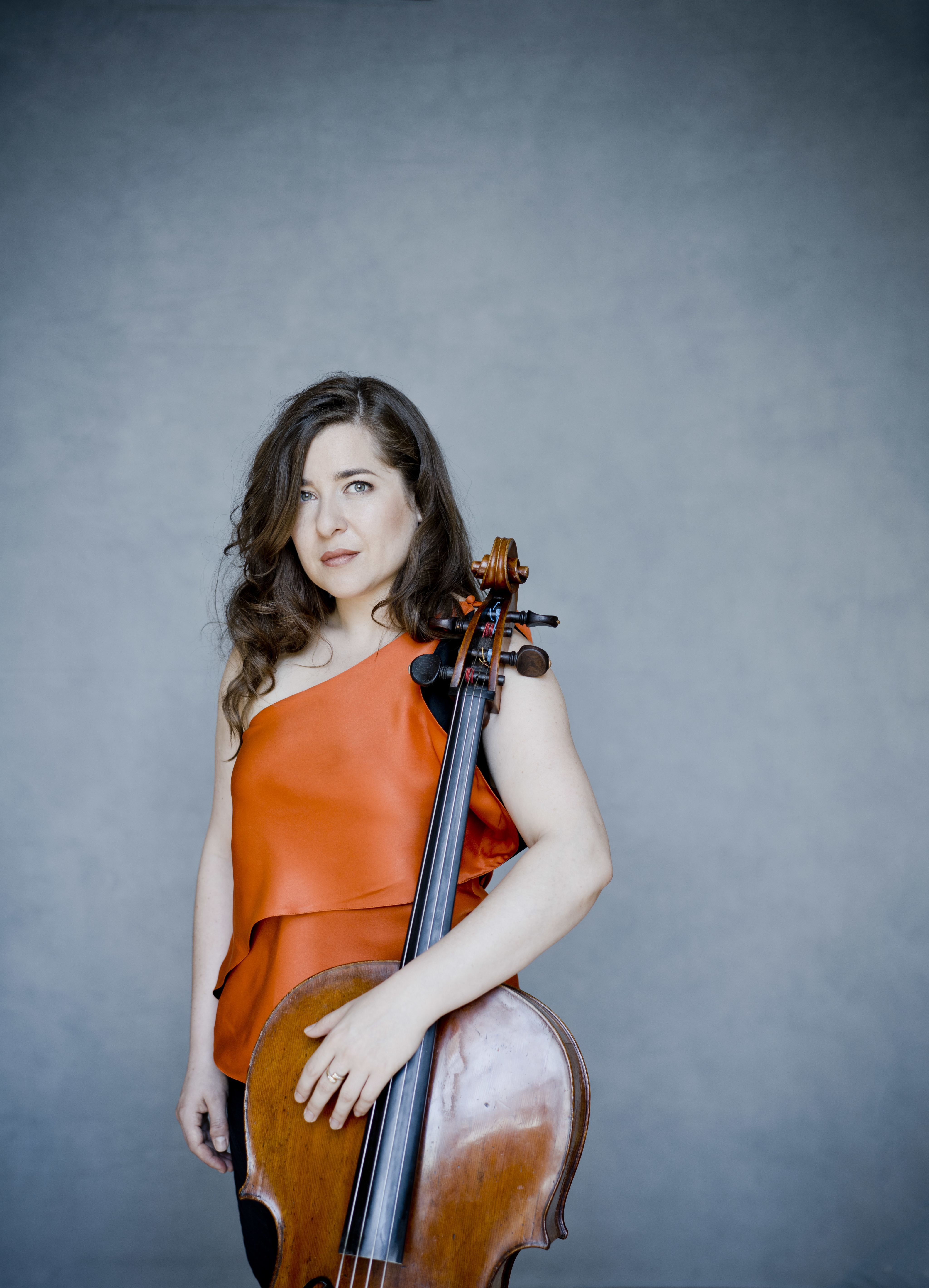
Photo: Marco Borggreve
Photo: Marco Borggreve
Alisa Weilerstein is one of the foremost cellists of our time. Known for her consummate artistry, emotional investment and rare interpretive depth, she was recognised with a MacArthur Fellowship in 2011. Today her career is truly global in scope, taking her to the most prestigious international venues for solo recitals, chamber concerts and concerto collaborations with leading conductors and orchestras worldwide.
Born in 1982, Alisa Weilerstein discovered her love for the cello at two and a half, when she had chicken pox and her grandmother assembled a makeshift set of instruments from cereal boxes to entertain her. Although immediately drawn to the Rice Krispies box cello, Weilerstein soon grew frustrated that it didn’t produce any sound. After persuading her parents to buy her a real cello at the age of four, she developed a natural affinity for the instrument and gave her first public performance six months later. At 13 she made her professional concert debut, playing Tchaikovsky’s ‘Rococo’ Variations with the Cleveland Orchestra, and in March 1997 she made her first Carnegie Hall appearance with the New York Youth Symphony Orchestra. A graduate of the Young Artist Program at the Cleveland Institute of Music, where she studied with Richard Weiss, she also holds a degree in history from Columbia University.
Born into a musical family, she is the daughter of violinist Donald Weilerstein and pianist Vivian Hornik Weilerstein, and the sister of conductor Joshua Weilerstein.
BBC National Orchestra of Wales
For over 90 years, BBC National Orchestra of Wales has played an integral part in the cultural landscape of Wales, occupying a distinctive role as both broadcast and national symphony orchestra. Part of BBC Wales and supported by the Arts Council of Wales, it has a busy schedule of live concerts throughout Wales, the rest of the UK and the world.
The orchestra is an ambassador of Welsh music and champions contemporary composers and musicians; its concerts can be heard regularly across the BBC – on Radio 3, Radio Wales and Radio Cymru.
BBC NOW works closely with schools and music organisations throughout Wales and regularly undertakes workshops, side-by-side performances and young composer initiatives to inspire and encourage the next generation of performers, composers and arts leaders.
The orchestra is based at BBC Hoddinott Hall in Cardiff Bay, where its purpose-built studio not only provides the perfect concert space, but also acts as a broadcast centre from where its live-streamed concerts and pre-recorded content are presented as part of its popular Digital Concert Series.
For further information please visit the BBC National Orchestra and Chorus of Wales’s website: bbc.co.uk/now
Patron
HM King Charles III KG KT PC GCB
Principal Conductor
Ryan Bancroft
Conductor Laureate
Tadaaki Otaka CBE
Composer-in-Association
Gavin Higgins
Composer Affiliate
Sarah Lianne Lewis
First Violins
Lesley Hatfield leader
Nick Whiting associate leader
Martin Gwilym-Jones sub leader
Gwenllian Hâf MacDonald
Terry Porteus
Suzanne Casey
Anna Cleworth
Emilie Godden
Žanete Uškāne
Ruth Heney
Carmel Barber
Amy Fletcher
Gary George-Veale
Catherine Fox
SecondViolins
Anna Smith *
Amy Jones
Ros Butler
Sheila Smith
Michael Topping
Katherine Miller
Joseph Williams
Lydia Caines
Ilze Abola
Vickie Ringguth
Beverley Wescott
Roussanka Karatchivieva
Violas
Alex Thorndike #
Tetsuumi Nagata
Peter Taylor
Lowri Taffinder
Robert Gibbons
Catherine Palmer
Anna Growns
Daíre Roberts
Lucy Theo
Ania Leadbeater
Charlotte Limb
Cellos
Alice Neary *
Raphael Lang
Sandy Bartai
Keith Hewitt
Carolyn Hewitt
Rachel Ford
Alistair Howes
Tabitha Selley
Double Basses
David Stark *
Alexander Jones #
Christopher Wescott
Richard Gibbons
Thea Sayer
FabiánGaleana
Flutes
Matthew Featherstone *
John Hall †
Lindsey Ellis
Piccolo
Lindsey Ellis †
Oboes
Steve Hudson *
Henrietta Cooke
Amy McKean †
Cor Anglais
Amy McKean †
Clarinets
Nicholas Carpenter *
Aaron Hartnell-Booth
Hannah Morgan
Lenny Sayers
E flat Clarinet
Aaron Hartnell-Booth
Bass Clarinet
Lenny Sayers †
Bassoons
Jarosław Augustiniak *
Andrew Huntriss
David Buckland
Contrabassoon
David Buckland †
Horns
Tim Thorpe *
Meilyr Hughes
Neil Shewan †
Joel Ashford
John Davy
Trumpets
Philippe Schartz *
Robert Samuel
Corey Morris † **
Trombones
Donal Bannister *
Simon Wills
Bass Trombone
Darren Smith †
Tuba
Daniel Trodden †
Timpani
Barnaby Archer
Percussion
Phil Girling
Harry Lovell-Jones
Sam Jowett
Christina Slominska
Harp
Deian Rowlands
Piano/Celesta
Catherine Roe Williams
* Section Principal
† Principal
‡ Guest Principal
# Assistant String Principal
** Principal in Dvořák
The list of players was correct at the time of publication
Director Lisa Tregale
Orchestra Manager appointment in progress
Assistant Orchestra Manager Nick Olsen
Orchestra Personnel ManagerKevin Myers
Business Coordinator Caryl Evans
Orchestra Administrator Eleanor Hall +
Head of Artistic Planning and ProductionMatthew Wood
Artists and Projects Manager Victoria Massocchi **
Orchestra Librarian Eugene Monteith
Producer Mike Sims
Broadcast Assistant Kate Marsden
Head of Marketing and Audiences Sassy Hicks
Marketing Coordinator Amy Campbell-Nichols +
Digital Producer Yusef Bastawy
Social Media Coordinator Harriet Baugh
Education Producers Beatrice Carey, Rhonwen Jones **
Audio Supervisors Simon Smith, Andrew Smillie
Production Business Manager Lisa Blofeld
Stage and Technical Manager Steven Brown +
Assistant Stage and Technical Manager Josh Mead
BBC Wales Apprentice Jordan Woodley
+ Green Team member
** Diversity & Inclusion Forum