
Mahler 9 with Markus Stenz
Thursday 17/11/22, 7.30pm


Gustav Mahler
Symphony No. 9 (81’)
There will be no interval
Markus Stenz conductor


The concert is being recorded by BBC Radio 3 for future broadcast in 'Radio 3 in Concert'. It will be available for 30 days after broadcast via BBC Sounds, where you can also find podcasts and music mixes. Visit bbc.co.uk/now for more information on future performances.
Introduction

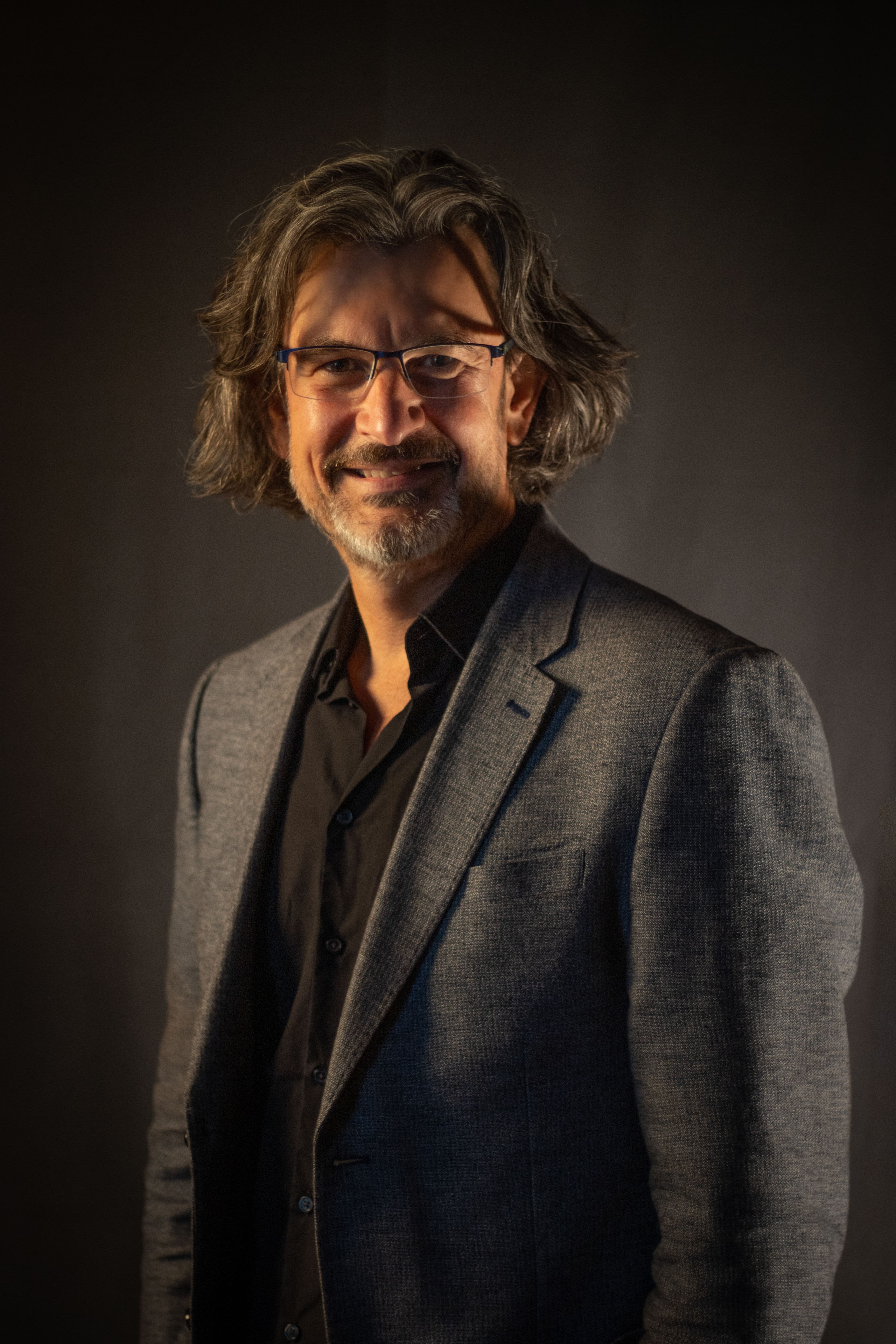
Welcome to tonight’s concert in which we’re thrilled to welcome back Markus Stenz to conduct our wonderful BBC National Orchestra of Wales.
Only one work sits on the programme tonight, standing alone as one of the giants of the orchestral canon: Mahler’s Ninth Symphony. It was the composer’s final symphony (the 10th left unfinished), tragically never performed in his lifetime. Perhaps this offers eerie reflection of Mahler’s own superstitious nature, who was convinced of the curse of the ninth which was of course to prove Beethoven, Schubert and Bruckner’s last symphonies.
Creeping into being it unfolds over the course of the evening – a reflection of life, encompassing everything from the serene beauty and joyousness of being to the very last bar marked soft and ‘ersterbend’ (dying away). A breathtaking musical representation of life itself.
Enjoy!
Matthew Wood
Head of Artistic Production
Please respect your fellow audience members and those listening at home. Turn off all mobile phones and electronic devices during the performance. Photography and recording are not permitted.
Gustav Mahler (1860–1911)
Symphony No. 9 in D major (1908–9)

1 Andante comodo – Allegro
2 Im Tempo eines gemächlichen Ländlers. Etwas täppisch und sehr derb
3 Rondo-Burleske. Allegro assai. Sehr trotzig
4 Adagio. Sehr langsam und noch zurückhaltend
Late works have a habit of attaining something of a mythical status, a tantalising glimpse into the mind of the dying composer and his or her final creative utterances. And it is true that, when Mahler composed his Ninth Symphony, he was clouded by death. In 1907 he had lost his four-year-old daughter to scarlet fever, and just a few months later his doctor diagnosed him with an incurable heart condition. In addition, there was the superstition about composing a Ninth at all, as his wife Alma explained in her letters: ‘In his dread, he wished to dodge a Ninth Symphony, as neither Beethoven nor Bruckner had reached a Tenth.’ As it turns out, history would indeed repeat itself and Mahler’s Ninth would become his last completed symphony. He died in 1911, a year before it received its premiere.
Little wonder, then, that the work has achieved that same iconic ‘deathbed’ status – the last notes of the finale are even marked ersterbend (‘dying away’). Such a detail might seem trivial were the whole symphony not littered with allusions to death and closure, from the opening theme of the first movement to the closing strains of the last. Just as the symphony seems to fade away into nothingness, so it creeps almost imperceptibly into being, the harp then strings outlining the sighing ‘Leb’ wohl’ (farewell) motif – words that Mahler himself writes into the score. But from this tiny, understated germ of an idea he conjures a huge movement of extraordinary breadth, its mood disturbed only by the sudden intrusion of brass and percussion, played at Mahler’s direction ‘with the greatest violence’.
For the composer Alban Berg, this was the movement that revealed Mahler’s true intentions in composing his Ninth. This is where he shows that, yes, it is a symphony about death, but it is also just as much about the joy and fulfilment of existence. ‘The first movement is the greatest Mahler ever composed,’ wrote Berg. ‘It is the expression of a tremendous love for this earth, the longing to live on it peacefully and to enjoy nature to its deepest depths – before death comes. For death is inevitable.’
Mahler’s letters tell a similar story. In the summer of 1909, he wrote to the conductor Bruno Walter, who would later conduct the work’s world premiere: ‘I have more thirst for life than ever, and find the “habits of existence” sweeter than ever.’ Mahler pours this thirst for life into the central two movements of the Ninth: the first an earthy folk dance that threatens to spill over into a giddy waltz, the second a blistering Rondo-Burleske in which he brings his contrapuntal creativity to the fore. When the finale comes, then, it emerges not from the shadows of death but from the vibrancy and vitality of life. And, as that life seeps away, reluctantly, over the course of this epic final movement, it becomes clear that Mahler is not signalling his solemn departure from this world but instead clinging onto the last vestiges of life with all his being.
Programme note © Jo Kirkbride
Further Listening: Gürzenich Orchestra of Cologne/Markus Stenz (Oehms OC654)
Further Reading: Gustav Mahler: An Introduction to His Music Deryck Cooke (Faber)
Biographies
Markus Stenz conductor

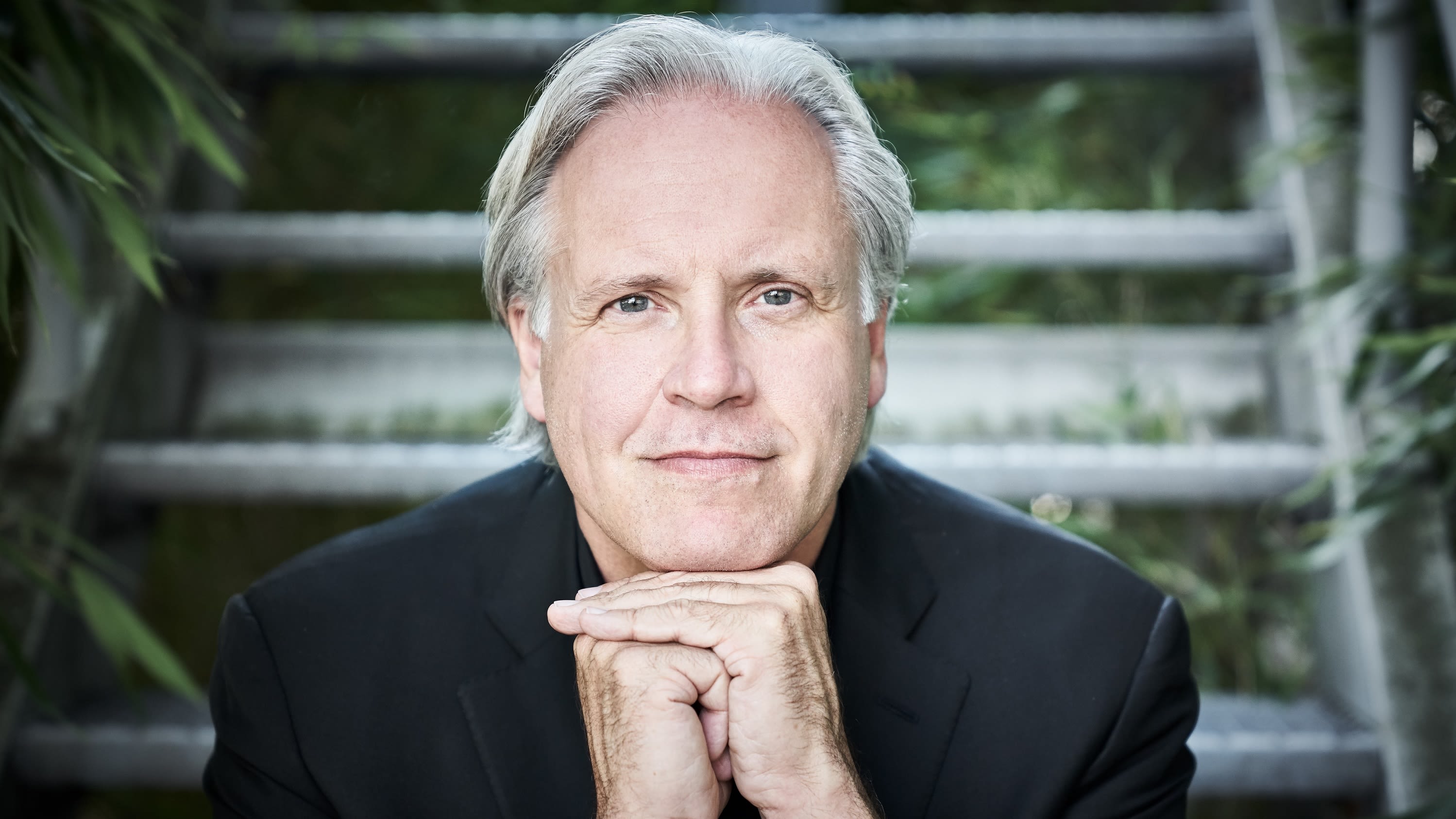
Photo: Kaupo Kikkas
Photo: Kaupo Kikkas
Markus Stenz studied at the Hochschule für Musik in Cologne under Volker Wangenheim and at Tanglewood with Leonard Bernstein and Seiji Ozawa.
He made his opera debut in 1988 at La Fenice in Venice. He returned there last season for Mozart, Schumann and Wagner and this season and beyond he conducts Wagner’s The Flying Dutchman and Berg’s Wozzeck.
Other operatic highlights include Schreker’s Die Gezeichneten at the Bavarian State Opera, Munich; the world premiere of György Kurtág’s Fin de partie at La Scala, Milan, with subsequent performances at the Dutch National Opera and Opéra National de Paris; and Britten’s A Midsummer NIght’s Dream and Offenbach’s The Tales of Hoffmann at the Deutsche Oper Berlin.
This season he makes debuts with the Orchestra dell’Accademia Nazionale di Santa Cecilia in Rome and the Detroit Symphony Orchestra, and returns to the Japan, Netherlands Radio and Seoul Philharmonic orchestras, Oregon and Indianapolis Symphony orchestras and the Gürzenich Orchestra of Cologne.
Further ahead he will work with the Orchestre National de Lyon, Dutch National Opera and the City of Birmingham Symphony Orchestra.
The most recent addition to his award-winning discography is Bruckner’s Symphony No. 7 with the Stavanger Symphony Orchestra. Other highlights include a Mahler symphony cycle, Richard Strauss’s Don Quixote and Till Eulenspiegel and Schoenberg’s Gurrelieder, all with the Gürzenich Orchestra.
BBC National Orchestra of Wales
For over 90 years, BBC National Orchestra of Wales has played an integral part in the cultural landscape of Wales, occupying a distinctive role as both broadcast and national symphony orchestra. Part of BBC Wales and supported by the Arts Council of Wales, it has a busy schedule of live concerts throughout Wales and the rest of the UK. The orchestra is an ambassador of Welsh music and champions the works of contemporary composers.
It performs annually at the BBC Proms and biennially at the BBC Cardiff Singer of the World competition, and can be heard regularly across the BBC: on Radio 3, Radio Wales and Radio Cymru, as well as providing the soundtracks for some of your favourite television programmes.
Highlights of this season include the Elemental Explorations concerts in Brecon and Newport with Nil Venditti, Disney’s Fantasia in concert, Britten and Elgar with the orchestra’s much-loved Conductor Laureate Tadaaki Otaka, an all-new Gaming concert with gaming music legend Eímear Noone and a CoLaboratory concert with the sensational cellist Abel Selaocoe.
Alongside its busy schedule of live concerts, BBC NOW works closely with schools and music organisations throughout Wales, regularly delivering workshops, side-by-side performances and young composer initiatives to inspire and encourage the next generation of performers, composers and arts leaders and make music accessible to all. To find out more visit bbc.co.uk/bbcnow
Patron
HM King Charles III KG KT PC GCB
Principal Conductor
Ryan Bancroft
Conductor Laureate
Tadaaki Otaka CBE
Composer-in-Association
Gavin Higgins
Composer Affiliate
Sarah Lianne Lewis
First Violins
Lesley Hatfield leader
Nick Whiting associateleader
Martin Gwilym-Jones sub-leader
Gwenllian Hâf MacDonald
Terry Porteus
Suzanne Casey
Kerry Gordon-Smith
Ilze Abola
Juan Gonzalez
Ruth Heney
Robert Bird
Carmel Barber
Anna Cleworth
Paul Mann
Richard Newington
Zhivko Georgiev
Second Violins
Anna Smith *
Ros Butler
Sheila Smith
Vickie Ringguth
Patrycja Mynarska
Michael Topping
Katherine Miller
Joseph Williams
Sellena Leony
Beverley Wescott
Emma Purslow
Laurence Kempton
Jane Sinclair
Gary George-Veale
Violas
Rebecca Jones *
Alex Thorndike #
Tetsuumi Nagata
Tom Congdon
Ania Leadbeater
Robert Gibbons
Sara Sheppard
Carys Barnes
Dáire Roberts
Sharada Mack
Carl Hill
Lucy Theo
Cellos
Alice Neary *
Keith Hewitt #
Raphael Lang
Sandy Bartai
Carolyn Hewitt
Alistair Howes
Rachel Ford
Katy Cox
Kathryn Graham
Sarah Berger
Double Basses
David Stark *
Alexander Jones
Christopher Wescott
Richard Gibbons
Claire Whitson
Ryan Smith
Imogen Fernando
Andy Vickers
Flutes
Matthew Featherstone *
John Hall
Liz May
Katherine Bicknell
Piccolo
Lindsey Ellis †
Oboes
Steve Hudson *
Amy McKean
Alec Harmon
Sarah-Jayne Porsmoguer
Cor Anglais
Sarah-Jayne Porsmoguer †
Clarinets
Nick Carpenter ‡
Mark Simons
Alison Lambert
Lenny Sayers
E Flat Clarinet
Mandy Burvill
Bass Clarinet
Lenny Sayers †
Bassoons
Vahan Khourdoian ‡
Rosemary Cow
Alexandra Davidson
David Buckland
contra-bassoon
David Buckland †
Horns
Tim Thorpe *
Dave Ransom
Neil Shewan †
William Haskins
John Davy
Trumpets
Jon Holland ‡
Robert Samuel
Gwyn Owen
Tim Hawes
Trombones
Donal Bannister *
Fernando Martin
Bass Trombone
Darren Smith †
Tuba
Daniel Trodden †
Timpani
Steve Barnard *
Phil Hughes
Percussion
Chris Stock *
Mark Walker †
Rhydian Griffiths
Phil Hughes
Harps
Valerie Aldrich-Smith †
Ceri Wynne Jones
* Section Principal
† Principal
‡ Guest Principal
# Assistant Principal
The list of players was correct at the time of publication
Director Lisa Tregale +
Orchestra Manager Zoe Poyser +
Assistant Orchestra Manager Vicky James **
Orchestra Administrator Nick Olsen
Orchestra Coordinator, Operations Kevin Myers
Business Coordinator Caryl Evans
Head of Artistic Production Matthew Wood
Artists and Projects Manager Eleanor Phillips
Orchestra Librarian Eugene Monteith **
Producer Mike Sims
Broadcast Assistant Jacob Perkins
Head of Marketing and Audiences Sassy Hicks
Marketing Coordinator Amy Campbell +
Digital Producer Yusef Bastawy
Social Media Coordinator Harriet Baugh
Education Producers Beatrice Carey, Rhonwen Jones **
Audio Supervisors Simon Smith, Andrew Smillie
Production Business Manager Lisa Blofeld
Stage and Technical Manager Steven Brown
Assistant Stage and Technical Manager Dave Rees
BBC Wales Apprentices
Josh Gill
Analese Thomas-Strachan
Jordan Woodley
+ Green Team member
** Diversity & Inclusion Forum