
Shostakovich 13 with Ryan Bancroft
Saturday 10/2/24, 7.30pm
Brangwyn Hall, Swansea
Sunday 11/2/24, 3.00pm
BBC Hoddinott Hall, Cardiff


Ludwig van Beethoven
Piano Concerto No. 136’
INTERVAL: 20 minutes
Dmitry Shostakovich
Symphony No. 13, ‘Babi Yar’59’
Ryan Bancroftconductor
Jonathan Biss piano
James Platt bass
BBC National Chorus of Wales (men’s voices)


The concert in Cardiff is being recorded by BBC Radio 3 for future broadcast inRadio 3 in Concert. It will be available for 30 days after broadcast via BBC Sounds, where you can also find podcasts and music mixes.
Introduction
Welcome to today’s concert, for which we’re delighted to welcome back to the podium BBC NOW’s Principal Conductor Ryan Bancroft.
The programme consists of two masterpieces, one full of the exuberance of a youthful genius, the other a defiant utterance from a composer at the height of his powers.
Beethoven’s own instrument was the piano and in his day he was as famed as a pianist as he was as a composer – until deafness made performance impossible. His First Piano Concerto (actually the second chronologically, but the earliest to be published) has an infectious strutting confidence, which gives way to a drawn-out slow movement full of song, before the last movement rounds things off with an irrepressible energy. We’re delighted to welcome back Jonathan Biss as soloist.
Shostakovich’s searing 13th Symphony could not be in starker contrast. By turns theatrical, bitterly humorous and transcendental, it sets a sequence of poems by Yevgeny Yevtushenko. These begin with ‘Babi Yar’, which commemorates the scene of a massacre where, in 1941, Nazis killed over 30,000 Jews in a ravine outside Kyiv. From the grief-stricken opening we move to the sharp satire of poems on ‘Humour’ and ‘Fears’, a paean to the stoicism of Soviet women, and finally a poem taunting those who fail to stand up for their beliefs. We’re delighted to welcome James Platt as soloist and the basses of the BBC National Chorus of Wales.
Enjoy!
Matthew Wood
Head of Artistic Production
Please respect your fellow audience members and those listening at home. Turn off all mobile phones and electronic devices during the performance. Photography and recording are not permitted.
Ludwig van Beethoven (1770–1827)
Piano Concerto No. 1 in C major, Op. 15(1793–5, rev. 1800)

1 Allegro con brio
2 Largo
3 Rondo: Allegro
Jonathan Biss piano
Like Mozart before him, Beethoven wrote piano concertos as much to demonstrate his own pianistic virtuosity as to show off his compositional skill. Since writing music and playing music were considered equally important accomplishments – unlike the one-or-the-other specialist approach which started to dominate in the 20th century – the concertos tell us the story of a young man determined to make a name for himself as a leading musician of the day. He wanted recognition as a brilliant soloist and toured extensively as a performer while his hearing (and political circumstances – touring during the Napoleonic Wars was hardly to be encouraged) allowed. And of course, in time, the audiences and critics of his new home city of Vienna would come to acknowledge his creative brilliance in these and other early orchestral works.
Of Beethoven’s five piano concertos the one in B flat major, though written first, was published second – which is why we now know it as the Piano Concerto No. 2; drafted in the late 1780s, when the young composer was still in Bonn, it was then heavily revised over the next few years (including a wholesale replacement of the final movement). Officially published as his Piano Concerto No. 1, the C major work that we hear today was sketched in 1793, and Beethoven worked at it on and off over the next few years to get it ready for a concert performance by 1795. It may have been included in his Viennese debut on 29 March 1795; but more likely it was premiered at a concert on 18 December that year organised by his teacher, Joseph Haydn. Beethoven’s childhood friend Franz Gerhard Wegeler reports that it was only two days before the first public performance of this concerto that Beethoven actually composed the finale. He also records that at the first rehearsal, which took place in Beethoven’s rooms, the piano was a semitone flat and the wind instruments couldn’t play their lines comfortably – so Beethoven simply transposed his solo line to C sharp major to allow them to play in tune!
There is something wonderfully collaborative about Beethoven’s writing in this piece. Instruments step out of the ensemble frequently, taking their turns with short solos or in conversational exchanges of ideas between sections. To match this variety, the pianist is given a rich array of different techniques and textures – trills, hand-crossing, inner voices which creep back and forth between the player’s hands – rather than simply acting as an orchestral counterbalance. The lyrical slow movement is a showcase of rhythmic variety, the piano’s strait-laced beat divisions into twos and fours eventually giving way to groups of three, which percolate gradually through the orchestra. In the bouncing finale – with a principal theme reminiscent of hunting calls – Beethoven wrongfoots us by including two cadenzas rather than the usual one.
Programme note © Katy Hamilton
INTERVAL: 20 minutes
Dmitry Shostakovich (1906–75)
Symphony No. 13 in B flat minor, ‘Babi Yar’, Op. 113 (1962)
1 Babi Yar: Adagio – Allegretto – Adagio
2 Humour: Allegretto
3 In the Store: Adagio
4 Fears: Largo
5 A Career: Allegretto
James Platt bass
BBC National Chorus of Wales (men’s voices)
There are few Shostakovich pieces as unequivocal as his 13th Symphony, in which he condemned the atrocities of anti-Semitism and Stalinism. Soviet commemoration of the Holocaust was muted compared to Europe and the USA, partly because of the immense civilian and military losses endured by the USSR. Babi Yar (Babyn Yar in Ukrainian) is a ravine outside Kyiv; over 29–30 September 1941, occupying Nazi forces rounded up the city’s Jewish population and executed over 33,000 people; the event became synonymous with the Holocaust on Soviet soil.
In 1961 the poet Yevgeny Yevtushenko published his poem ‘Babi Yar’ in protest at the official indifference to preserving the massacre site as a memorial. It opens with the bitter line ‘There is no memorial above Babi Yar’. Shostakovich set the full poem, along with three other Yevtushenko texts, and commissioned a new poem, ‘Fears’, to create a multi-movement choral symphony. Musically, the score shows the influence of Mussorgsky, with the use of bass singer, male-voice chorus and bell-like textures.
‘Babi Yar’ is the first movement, a funereal elegy dedicated to Jewish suffering, including vignettes from the Dreyfus Affair and the life of Anne Frank. It opens with a solemn chime, as the chorus intones the damning opening line.
The second movement, ‘Humour’, criticises the Russian tsars and praises the power of humour under political repression: ‘three cheers for humour/He’s a brave fellow!’
The third movement, ‘In the Store’, is an ode to hard-working and long-suffering Soviet women, standing in long lines to secure food for their families: ‘Their
pious hands/Weary from carrying their shopping bags’.
‘Fears’, the fourth movement, depicts the oppressive culture of Stalin’s Great Terror with suitably unsettling 12-note accompaniment, starting with the chilling phrase ‘Fears are dying out in Russia’. Dying out, perhaps, but not dead: there was fear of the informer, fear of the knock at the door in the middle of the night.
The final movement, ‘A Career’, condemns those who choose not to speak out in order to preserve their careers. The text references Galileo, who spoke out against scientific censorship, and the music ends with a celesta solo and one final intonation of the chime that opened the whole work. Shostakovich wrote to his friend Isaac Glikman: ‘I am not expecting this work to be fully understood, but I cannot not write it.’
The risky subject matter made the premiere problematic, with some performers withdrawing and government agents monitoring rehearsals. The first movement’s condemnation of anti-Semitism drew criticism in particular. Yevtushenko edited his text to be more inclusive, but Shostakovich insisted that there was ongoing anti-Semitism in the Soviet Union: ‘It is an outrageous thing, and we must fight it. We must shout about it from the rooftops!’
Combined with severe musical language, the 13th Symphony is Shostakovich’s clearest condemnation of totalitarianism. It struck a particularly poignant note with long-suffering Russian audiences, who had seen some of his earlier works as conforming to the authorities’ view of history. As pianist Maria Yudina wrote: ‘Shostakovich has become “one of us” again with his 13th.’
Programme note © Daniel Elphick
Text and translation

1 Babi Yar
Nad Babim Yarom pamyatnikov nyet.
Krutoi obryv, kak groboye nadgrobye.
Mne strashno,
mne sevodnya stolko let,
kak samomu yevreiskomu narodu.
Mne kazhetsa seichas – ya yudei.
Vot ya bryedupa dryevnemu Egiptu.
A vot ya, na kryeste raspyaty, gibnu,
i da sikh por na mne – sledi gvazdey.
Mne kazhetsa, shto Dreifus – eta ya.
Meshchanstvo – moi danoschik i sudya!
Ya za reshotkoy, ya papal v koltso,
zatravlennyi, oplyovannyi, obolgannyi,
damachki s bryusselshmi oborkami,
viszha, zontami tichut mne v litso.
Mne kazhetsa, ya – malchik v Białystoke.
Krov lyotsya, rastekayas pa palam.
Beschinstvuyut vozhdi traktirnoy stoiki.
I pakhaut vodkoy s lukom popolam.
Ya, sapagom otbroshennyi, bessilny,
naprasna ya pogromshchikov molyu.
Pad gogot: ‘Bey zhidov! Spasai Rossiyu!’
Labaznik izbivaet mat moyu.
O russhy moi narod, ya znayu,
ty pa sushchnosti internatsionalen,
no chasta te, chi ruki nechisti,
tvoim chisteishim imyenem bryatsali.
Ya znayu dobrotu moyei zyemli.
Kak podla, shto i zhilachkoi ne drognuv,
antisemity narekli sibya:
‘Soyuzom russkova naroda.’
Mne kazhetsa, ya – eta Anna Frank,
prozrachnaya, kak vyetochka v aprele,
i ya lyublyu, i mne nye nado fraz,
no nado, shtob drug v druga my smotreli.
Kak malo mozhno videt, obonyat!
Nelzya nam listev i nelzya nan neba,
no mozhno ochen mnoga –
eta nezhno drug druga
vtyomnoy komnate obnyat!
– ‘Syuda idut!’
– ‘Nye boysa. Eta guly samoi vesny,
ona idyot syuda.
Idi ko mne,
dai mne skoreye guby!’
– ‘Lomayut dver!’
– ‘Nyet! Eta ledokhod!’
Nad Babim Yarom shelest dihkh trav,
dyerevya smotryat grozno, po-sudeiski.
Zdes molcha vsyo krichit,
i, shapku snyav,
ya chuvstvuyu, kak myediemo sedeyu.
I sam ya, kak sploshnoy bezzvuchny krik,
nad tysyachami tysyach pogrebyonnykh,
Ya – kazhdy zdes rasstrelyanny starik,
Ya – kazhdy zdes rasstrelyanny rebyonok.
Nishto vo mne pro eta nye zabudet.
‘Internatsional’ pust progremit,
kogda naveh pokhoronen budet
pasledni na zyemle antisemit.
Yevreiskoy krovi nyet v krovi moyei,
no nenavisten zloboy zaskaruzloy
ya vsem antisemitam kak yevrei,
ipatomu ya nastoyashchiy russkiy!
2 Yumor
Tsari, koroli, imperatori,
vlastiteli vsei zyemli,
komandovali paradami,
no yumorom nye mogli.
V dvortsy rmenitykh osob,
vse dni vozlezhashchikh vykholenna,
Yavlyalsa brodyaga Ezop,
i nishchimi oni vyglyadeli.
V domakh, gde khanzha nasledil
svoimi nogami shchuplymi,
Vsyu poshlost Khodzha Nasreddin
shibal, kak shakhmaty, shutkami!
Khotyeli yumor kupit,
da tolko yevo nye kupish!
Khotyeli yumor ubit,
a yumor pokazyval kukish!
Borotsa s nim delo trudnoye.
Kaznili yevo bez kontsa.
Yevo galova otrublennaya
torchala na pike stryeltsa.
No lish skamoroshi dudochki
svoy nachinali skaz,
on zvonko krichal:
‘Ya tutochki!’
I likho puskalsa v plyas.
V potryopannom kutsem paltishke,
ponuryas i slovno kayas,
pryestupnikom politicheskim
on, poimanniy, shol na kazn.
Vsem vidom pakornost vykazival,
gotov k nezemnomu zhityu,
kak vdrug iz paltishka vyskalzival,
rukoi makhal
i – tyu-tyu!
Yumor pryatali v kamery,
da chyorta s dva udalos.
Reshotki i steny kamennye
on prokhodil naskvoz.
Otkashlivayas prostuzhenno,
kak ryadovoy boyets,
shagal on chastushkoy-prastushkoy
s vintovkoi na Zimnyi dvorets.
Privyk on ko vzglyadam sumrachnym,
no eta yemu nye vryedit,
i sam na sibya s yumorom
yumor paroy glyadit.
On vyechen.
Vyechen!
On lovok.
Lovok!
I yurok.
I yurok!
proidyot cherez vsyo, cherez vsyokh.
Itak, da slantsa yumor!
On muzhestvenniy chelovek!
3 V Magazinye
Kto v platke, a kto v platochke,
kak na podvig, kak na trud
v magazin po-odinochke
molcha zhenshchiny idut.
O, bidonov ikh bryatsanye,
zvon butilok i kastryul!
Pakhnet lukom, ogurtsami,
pakhnet sousom ‘Kabul’.
Zyabnu, dolgo v kassu stoya,
no pakuda dvizhus k nyei,
ot dykhanya zhenshchin stolkikh
v magazinye vsyo teplei.
Oni tikho podzhidayut,
bogi dobriye semyi,
i v rukakh oni szhimayut
dengi trudniye svoyi.
Eta zhenshchiny Rossii.
Eta nasha chest i sud.
I byeton oni mesili,
i pakhali, i kosili …
Vsyo oni perenosili,
vsyo oni perenesut.
Vsyo na svete im pasilno –
skolka sily im dano!
Ikh obschitivatpostidno!
Ikh obveshivat greshno!
I v karman pelmeni sunuv,
ya smotryu, surov i tikh,
na ustaliye ot sumok
ruki pravyedniye ikh.
4 Strakhi
Umirayut v Rossii strakhi,
slovno prizraki prezhnikh lyet,
lish na paperti, kak starukhi,
koye-gde yeshcho prosyat na khleb.
Ya ikh pomnyu vo vlasti i sile
pri dvore torzhestvuyushchei lzhi.
Strakhi vsyudu, kak tyeni, skolzili,
pronikali vo vsye etazhi.
Potikhonku lyudei priruchali
i na vsye nalgali pyechat:
gde molchat by – krichat priuchali,
i molchat – gde by nada krichat.
Eta stala sevodnya dalyokim.
Dazhe stranna i vspomnit teper.
Tayinyi strakh pered chim-to donosom,
tayinyi strakh pered stukom v dver.
Nu, a strakh gavorit s inastrantsem?
S inastrantsem – ta shto, a s zhenoy?
Nu, a strakh bezotchotnyi ostatsa
posle marshei vdvoyom s tishinoy?
Nye boyalis my stroit v meteli,
ukhodit pad snaryadami v boy,
no boyalis paroyu smyertelno
razgovarnat sam s soboy.
Nas nye sbili i nye rastlili,
i nedarom seichas vo vragakh
pobedivshaya strakti Rossiya
yeshcho bolshiy rozhdaet strakh.
Strakhi noviye vizhu, svetleya:
strakh neiskrennim byt so stranoy,
strakh nepravdoy unizit idei,
shto yavlyayutsa pravdoy samoy;
strakh fanfarit do odurenya,
strakh chuzhiye slova povtoryat,
strakh unizit drugikh nedaveryem
i chrezmerno sibye daveryat.
Umirayut v Rossii strakbi.
I kogda ya pishu eti stroki
i paroyu nevolno speshu,
to pishu ikh v yedinstvennom strakhe,
shto ne v polnoyu silu pishu.
5 Karyera
Tvyerdili pastyri, shto vreden
i nyerazumen Galilei.
(Shto nyerazumen Galilei …)
No, kak pakazivayet vremya,
kto nyerazumnei – tot umnei!
Uchonyi, svyerstnik Galileya,
byl Galileya nye glupeye.
On znal, shto vyertitsa zyemlya,
no u nyevo byla semya.
I on, sadyas s zhenoy v karety,
svershiv predatelstvo svoyo,
schital, shto dyelayet karyeru,
a mezhdu tem gubil yeyo.
Za asaznaniye planety
shol Galilei odin na risk,
i stal velikim on.
Vot eta – ya ponimayu – karyerist.
Itak, da zdravstvuyet karyera, kagda karyera takova,
kak u Shekspira i Pastera,
Nyutona i Tolstovo,
i Tolstovo … Lva?
Lva!
Zachem ikh gryazyu pakryvali?
Talant – talant, kak ni kleimi.
Zabyty te, kto proklinali,
no pomnyat tekh, kovo klyali.
Vse te, kto rvalis v stratosferu,
vrachi, shto gibli ot kholyer,
vot eti dyelali karyeru!
Ya s ikh karyer beru primer!
Ya veryu v ikh svyatuyu vyera.
Ikh vyera – muzhestvo mayo.
Ya dyelayu sibye karyeru tem,
shto nye dyelayu yeyo!
Yevgeny Yevtushenko (1932–2017)
Translation
Babi Yar
There is no memorial above Babi Yar.
The steep ravine is like a coarse tombstone.
I’m frightened,
I feel as old today
as the Jewish race itself.
I feel now that I am a Jew.
Here I wander through ancient Egypt.
And here I hang on the cross and die,
and I still bear the mark of the nails.
I feel that I am Dreyfus.
The bourgeois rabble denounce and judge me.
I am behind bars, I am encircled,
persecuted, spat on, slandered,
and fine ladies with lace frills
squeal and poke their parasols into my face.
I feel that I am a little boy in Białystok.
Blood is spattered over the floor.
The ringleaders in the tavern are getting brutal.
They smell of vodka and onions.
I’m kicked to the ground, I’m powerless,
in vain I beg the persecutors.
They guffaw: ‘Kill the Yids! Save Russia!’
A grain merchant beats up my mother.
Oh my Russian people, I know
that at heart you are internationalists,
but there have been those with soiled hands
who abused your good name.
I know that my land is good.
How filthy that without the slightest shame
the anti-Semites proclaimed themselves:
‘The Union of the Russian People.’
I feel that I am Anne Frank,
as tender as a shoot in April.
I am in love and have no need of words,
but we need to look at each other.
How little we can see or smell!
The leaves and the sky are shut off from
us, but there is a lot we can do –
we can tenderly embrace each other
in the darkened room!
– ‘Someone’s coming!’
– ‘Don’t be frightened. These are the
sounds of spring, spring is coming.
Come to me,
give me your lips quickly!’
– ‘They’re breaking down the door!’
– ‘No! It’s the ice breaking!’
Above Babi Yar the wild grass rustles,
the trees look threatening, as though in judgement.
Here everything silently screams,
and, baring my head,
I feel as though I am slowly turning grey.
And I become a long, soundless scream
above the thousands and thousands buried here,
I am each old man who was shot here,
I am each child who was shot here.
No part of me can ever forget this.
Let the ‘Internationale’ thunder out
when the last anti-Semite on the earth
has finally been buried.
There is no Jewish blood in my blood,
but I feel the loathsome hatred
of all anti-Semites as though I were a Jew –
and that is why I am a true Russian!
Humour
Tsars, kings, emperors,
rulers of all the world,
have commanded parades
but couldn’t command humour.
In the palaces of the great,
spending their days sleekly reclining,
Aesop the vagrant turned up
and they would all seem like beggars.
In houses where a hypocrite had left
his wretched little footprints,
Mullah Nasredin’s jokes would demolish
trivialities like pieces on a chessboard!
They’ve wanted to buy humour,
but he just wouldn’t be bought!
They’ve wanted to kill humour,
but humour gave them the finger.
Fighting him’s a tough job.
They’ve never stopped executing him.
His chopped-off head
was stuck onto a soldier’s pike.
But as soon as the clown’s pipes
struck up their tune,
he screeched out:
‘I’m here!’
And broke into a jaunty dance.
Wearing a threadbare little overcoat,
downcast and seemingly repentant,
caught as a political prisoner,
he went to his execution.
Everything about him displayed submission,
resignation to the life hereafter,
when he suddenly wriggled out of his coat,
waved his hand
and – bye-bye!
They’ve hidden humour away in dungeons,
but they hadn’t a hope in hell.
He passed straight through
bars and stone walls.
Clearing his throat from a cold,
like a rank-and-file soldier,
he was a popular tune marching along
with a rifle to the Winter Palace.
He’s quite used to dark looks,
they don’t worry him at all,
and from time to time humour
looks at himself humorously.
He’s eternal.
Eternal!
He’s artful.
Artful!
And quick.
And quick!
He gets through everyone and everything.
So then, three cheers for humour!
He’s a brave fellow!
In the Store
Some with shawls, some with scarves,
as though to some heroic enterprise or to work,
into the store one by one
the women silently come.
Oh, the rattling of their cans,
the clanking of bottles and pans!
There’s a smell of onions, cucumbers,
a smell of ‘Kabul’ sauce.
I’m shivering as I queue up for the cash desk,
but as I inch forward towards it,
from the breath of so many women
a warmth spreads round the store.
They wait quietly,
their families’ guardian angels,
and they grasp in their hands
their hard-earned money.
These are the women of Russia.
They honour us and they judge us.
They have mixed concrete,
and ploughed, and harvested …
They have endured everything,
they will continue to endure everything.
Nothing in the world is beyond them –
they have been granted such strength!
It is shameful to short-change them!
It is sinful to short-weight them!
As I shove dumplings into my pocket,
I sternly and quietly observe
their pious hands
weary from carrying their shopping bags.
Fears
Fears are dying out in Russia,
like the wraiths of bygone years;
only in church porches, like old women,
here and there they still beg for bread.
I remember when they were powerful and mighty
at the court of the lie triumphant.
Fears slithered everywhere, like shadows,
penetrating every floor.
They stealthily subdued people
and branded their mark on everyone:
when we should have kept silent, they taught us to scream,
and to keep silent when we should have screamed.
All this seems remote today.
It is even strange to remember now.
The secret fear of an anonymous denunciation,
the secret fear of a knock at the door.
Yes, and the fear of speaking to foreigners?
Foreigners? … Even to your own wife!
Yes, and that unaccountable fear of being left,
after a march, alone with the silence?
We weren’t afraid of construction work in blizzards,
or of going into battle under shell-fire,
but at times we were mortally afraid
of talking to ourselves.
We weren’t destroyed or corrupted,
and it is not for nothing that now
Russia, victorious over her own fears,
inspires greater fear in her enemies.
I see new fears dawning:
the fear of being untrue to one’s country,
the fear of dishonestly debasing ideas,
which are self-evident truths;
the fear of boasting oneself into a stupor,
the fear of parroting someone else’s words,
the fear of humiliating others with distrust
and of trusting oneself overmuch.
Fears are dying out in Russia.
And while I am writing these lines,
at times unintentionally hurrying,
I write haunted by the single fear
of not writing with all my strength.
A Career
The priests kept on saying that Galileo
was dangerous and foolish.
(That Galileo was foolish …)
But, as time has shown,
The fool was much wiser!
A certain scientist, Galileo’s contemporary,
was no more stupid than Galileo.
He knew that the earth revolved,
but he had a family.
And as he got into a carriage with his wife
after accomplishing his betrayal,
he reckoned he was advancing his career,
but in fact he’d wrecked it.
For his discovery about our planet
Galileo faced the risk alone,
and he was a great man.
Now that is what I understand by a careerist.
So then, three cheers for a career
when it’s a career like that of
Shakespeare or Pasteur,
Newton or Tolstoy,
Or Tolstoy … Leo?
Leo!
Why did they have mud slung at them?
Talent is talent, whatever name you give it.
They’re forgotten, those who hurled curses,
but we remember the ones who were cursed.
All those who strove towards the stratosphere,
the doctors who died of cholera,
they were following careers!
I’ll take their careers as an example!
I believe in their sacred belief,
and their belief gives me courage.
I’ll follow my career in such a way
that I’m not following it!
Translation by Andrew Huth © Boosey & Hawkes Music Publishers Ltd
Help Us Improve Our Online Programmes.
Please take this 5-minute survey and let us know what you think of these notes.
Programme Survey
You may also like:
St David’s Day Stravaganza
Thursday 29/2/23, 7.30pm
Brangwyn Hall, Swansea
William Mathias Holiday Overture
SirKarl Jenkins Stravaganza UK premiere
Sir Karl Jenkins Dewi Sant
Jeff Howard A Welsh Celebration
Grace Williams Fanfare and Hen Wlad Fy Nhadau
Nil Venditti conductor
Jess Gillamsaxophone
BBC National Chorus of Wales
National Youth Choir of Wales
UPLIFTING | CELEBRATORY | EFFERVESCENT
What better way to celebrate St David’s Day than with music by iconic Welsh composers, performed by the National Orchestra of Wales?
We celebrate 90 years since William Mathias’s birth with his Holiday Overture, written in 1971 specially for BBC NOW. We then move on to Sir Karl Jenkins and the UK premiere of his saxophone concerto Stravaganza, written for tonight’s soloist – the sensational Jess Gillam. It wouldn’t be St David’s Day without any singing, so BBC National Chorus of Wales and the National Youth Choir of Wales take centre stage in Jenkins’s Dewi Sant, and a medley of your favourite Welsh tunes.
Martyn Brabbins conducts …
Friday 8/3/24, 7.30pm
Brangwyn Hall, Swansea
Saturday 9/3/24, 7.30pm
BBC Hoddinott Hall, Cardiff
Grace Williams Elegy for Strings
Nielsen Violin Concerto
Rachmaninov Symphony No. 2
Martyn Brabbins conductor
Liya Petrova violin
EXQUISITE | RESONATING | THRILLING
Grace Williams shows an early hint of the highly individual music she would compose in later years in tonight’s concert opener, her Elegy for Strings. From the dramatic Praeludium to its introspective Adagio, Nielsen offers, in his Violin Concerto, a thrilling journey through harmony, gesture and mood. We’re delighted to welcome as soloist the Bulgarian virtuoso Liya Petrova, winner of the 2016 Nielsen Violin Competition.
Among the most famous of Rachmaninov’s output is his Second Symphony, and there’s little wonder why! Dynamic brilliance, melodious triumph and exquisite beauty reign in this deeply emotional outpouring of music. To conduct, we welcome back BBC NOW favourite Martyn Brabbins.
Bartók’s Concerto for Orchestra
Thursday 9/5/24, 7.30pm
BBC Hoddinott Hall, Cardiff
Friday 10/5/24, 7.30pm
Brangwyn Hall, Swansea
Caroline Shaw The Observatory UK premiere
Ravel Piano Concerto in G major
Bartók Concerto for Orchestra
Giancarlo Guerrero conductor
Sergio Tiempo piano
COLOURFUL | DYNAMIC | ENTHRALLING
Caroline Shaw’s The Observatory (which receives its UK premiere) was inspired by a trip to the Griffin Observatory near the Hollywood Bowl; it explores in sound new ways of looking at the universe, melding old and new with chaos and clarity, in a tantalising stream of consciousness.
Ravel’s atmospheric Piano Concerto, a rich mix of lyricism, evocative orchestration and virtuoso piano writing, is performed by the inimitable Sergio Tiempo as he makes his debut with BBC NOW. The virtuosity continues in Bartók’s brilliant, folk-inflected Concerto for Orchestra, which closes this breathtaking programme, conducted by the illustrious Grammy Award-winning Costa Rican conductor Giancarlo Guerrero.
Biographies
Ryan Bancroftconductor


Benjamin Ealovega
Benjamin Ealovega
Ryan Bancroft grew up in Los Angeles and first came to international attention in April 2018, when he won both First Prize and Audience Prize at the prestigious Malko Competition for Young Conductors in Copenhagen. Since September 2021 he has been Principal Conductor of BBC National Orchestra of Wales. Following his first visit to work with the Tapiola Sinfonietta, he was invited to become its Artist-in-Association from the 2021/22 season. In September he became Chief Conductor of the Royal Stockholm Philharmonic Orchestra.
His new role as Chief Conductor in Stockholm saw him open the season with the orchestra’s first performance of Sven-David Sandström’s The High Mass and highlights include premieres of pieces by Daniel Börtz and Anders Hillborg, and concerts with Emanuel Ax and Seong-Jin Cho.
This summer he made his Hollywood Bowl debut with the Los Angeles Philharmonic; this season he also makes debuts with the Cleveland Orchestra, San Francisco and Cincinnati Symphony orchestras, NDR Elbphilharmonie Orchestra, Orquesta Sinfónica de Castilla y León and Netherlands Radio Philharmonic Orchestra, as well as returning to the Toronto Symphony Orchestra and Philharmonia Orchestra.
He has a passion for contemporary music and has performed with Amsterdam’s Nieuw Ensemble, assisted Pierre Boulez in a performance of his Sur incises in Los Angeles, premiered works by Sofia Gubaidulina, John Cage, James Tenney and Anne LeBaron, and has worked closely with improvisers such as Wadada Leo Smith and Charlie Haden.
He studied at the California Institute of the Arts, Royal Conservatoire of Scotland and in the Netherlands.
Jonathan Bisspiano


Benjamin Ealovega
Benjamin Ealovega
Jonathan Biss is a world-renowned pianist and educator and a critically acclaimed author. He has appeared internationally as a soloist with the London, Los Angeles and New York Philharmonic orchestras, Boston, Chicago and San Francisco Symphony orchestras, Cleveland and Philadelphia orchestras, Royal Concertgebouw, Philharmonia and Gewandhausorchester Leipzig, among many others. He is also Co-Artistic Director alongside Dame Mitsuko Uchida at the Marlboro Music Festival, where he has spent 15 summers.
This season he performs with the St Louis Symphony Orchestra and Stéphane Dénève, Cincinnati Symphony Orchestra and Ramón Tebar, and the Philadelphia Orchestra and Yannick Nézet-Séguin at Carnegie Hall. Throughout the season he presents a new project that pairs solo piano works by Schubert with new compositions by Alvin Singleton, Tyson Gholston Davis and Tyshawn Sorey at San Francisco Performances, Boston’s Isabella Stewart Gardner Museum, among other venues. He continues his collaboration with Mitsuko Uchida, including performing Schubert’s music for piano four-hands at Carnegie Hall; and appears with the Brentano Quartet.
European engagements this season include performances with the London Philharmonic Orchestra and Karina Canellakis; concerts with the Elias Quartet at the Liverpool Philharmonic Hall, Cockermouth Music Society and Wigmore Hall; a recital of works by György Kurtág and Schubert at the Sala Verdi in Milan. Jonathan Biss concludes his European season with the Paris Chamber Orchestra and conductor Pekka Kuusisto performing Timo Andres’s The Blind Banister, part of his ongoing Beethoven/5 commissioning project.
James Plattbass

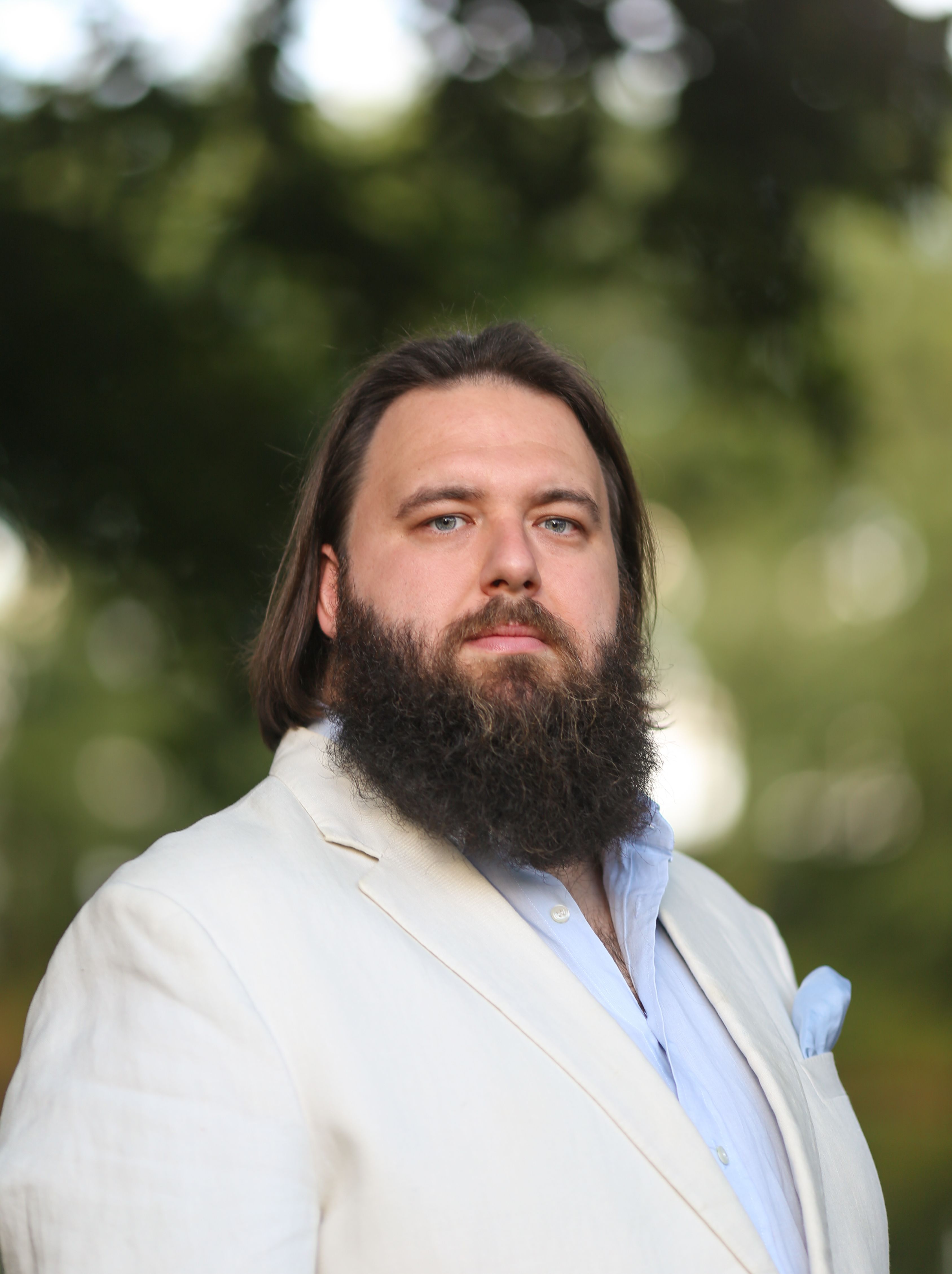
British bass James Platt studied at Chetham’s School of Music, the Royal Academy of Music and the Guildhall School of Music & Drama. He was a member of the Jette Parker Young Artists Programme at the Royal Opera, Covent Garden, from 2014 to 2016.
Engagements this season include Verdi’s Requiem with the Bournemouth Symphony Orchestra and David Hill, Mozart’s Requiem with the Orchestra of the Welsh National Opera and Tomáš Hanus, and Haydn’s The Creation with the Philharmonia Orchestra under Daniel Hyde and The Seasons with the Tapiola Sinfonietta and Matthew Halls. On the opera stage he sings the Commendatore (Don Giovanni) in his debut with Opéra de Lille and returns to Glyndebourne in the role of Sarastro (The Magic Flute).
Recent highlights have included appearances at the Royal Opera House, Covent Garden, Welsh National Opera, La Scala, Milan, Dutch National Opera, Scottish Opera, Deutsche Oper Berlin, Maggio Musicale Fiorentino and the Grange Festival.
His concert appearances have included Elgar’s The Dream of Gerontius with the London Philharmonic Orchestra under Edward Gardner at the BBC Proms; Zacharie (Meyerbeer’s Le prophète) with the London Symphony Orchestra under Sir Mark Elder at the Aix-en-Provence Festival; Hunding (Die Walküre) with the Philharmonie Zuidnederland under Hartmut Haenchen; a European tour of Handel’s Ariodante and Bach’s Christmas Oratorio with Les Musiciens du Louvre and Marc Minkowski; Shostakovich’s Four Romances on Poems by Pushkin with the Hallé and Elder; Beethoven’s Symphony No. 9 with the Royal Northern Sinfonia under Lars Vogt; Verdi’s Requiem with the Orchestre National de Lyon and Leonard Slatkin; and Mahler’s Symphony No. 8 with the Royal Philharmonic Orchestra under Vasily Petrenko.
BBC National Orchestra of Wales
For over 90 years, BBC National Orchestra of Wales has played an integral part in the cultural landscape of Wales, occupying a distinctive role as both broadcast and national symphony orchestra. Part of BBC Wales and supported by the Arts Council of Wales, it has a busy schedule of live concerts throughout Wales, the rest of the UK and the world.
The orchestra is an ambassador of Welsh music and champions contemporary composers and musicians; its concerts can be heard regularly across the BBC – on Radio 3, Radio Wales and Radio Cymru.
BBC NOW works closely with schools and music organisations throughout Wales and regularly undertakes workshops, side-by-side performances and young composer initiatives to inspire and encourage the next generation of performers, composers and arts leaders.
The orchestra is based at BBC Hoddinott Hall in Cardiff Bay, where its purpose-built studio not only provides the perfect concert space, but also acts as a broadcast centre from where its live-streamed concerts and pre-recorded content are presented as part of its popular Digital Concert Series.
For further information please visit the BBC National Orchestra and Chorus of Wales's website: bbc.co.uk/now
Patron
HM King Charles III KG KT PC GCB
Principal Conductor
Ryan Bancroft
Conductor Laureate
Tadaaki Otaka CBE
Composer-in-Association
Gavin Higgins
Composer Affiliate
Sarah Lianne Lewis
First Violins
Lesley Hatfield leader
Nick Whiting associate leader
Martin Gwilym-Jones sub-leader
Gwenllian Hâf MacDonald
Terry Porteus
Suzanne Casey
Carmel Barber
Nadine Nigl
Anna Cleworth
Juan Gonzalez
Emilie Godden
Ruth Heney
Rebecca Totterdell
Žanete Uškāne
SecondViolins
Anna Smith *
Ros Butler
Sheila Smith
Lydia Caines
Ilze Abola
Roussanka Karatchivieva
Vickie Ringguth
Beverley Wescott
Joseph Williams
Katherine Miller
Jane Sinclair
Gary George-Veale
Violas
Francis Kefford ‡
Alex Thorndike #
Tetsuumi Nagata
Peter Taylor
Daire Roberts
Robert Gibbons
Lowri Thomas
Lydia Abell
Catherine Palmer
James Drummond
Cellos
Alice Neary *
Tamsy Kaner
Jessica Feaver
Sandy Bartai
Keith Hewitt
Alistair Howes
Rachel Ford
Carolyn Hewitt
Double Basses
David Stark *
Alexander Jones #
Christopher Wescott
Ketan Curtis
Richard Gibbons
Thea Sayer
Flutes
Matthew Featherstone *
John Hall †
Lindsey Ellis
Piccolo
Lindsey Ellis †
Oboes
Steve Hudson *
Amy McKean †
Sarah-Jayne Porsmoguer
Cor anglais
Sarah-Jayne Porsmoguer †
Clarinets
Nick Carpenter *
Natalie Harris
Lenny Sayers
E flat Clarinet
Natalie Harris
Bass Clarinet
Lenny Sayers †
Bassoons
Jarosław Augustiniak *
Jamie King
David Buckland
Contrabassoon
David Buckland †
Horns
Tim Thorpe *
Meilyr Hughes
Neil Shewan †
Jack Sewter
John Davy
Trumpets
Philippe Schartz *
Robert Samuel
Ryan Linham
Andy Dunn
Trombones
Donal Bannister*
Richard Wheeler
Bass Trombone
Darren Smith †
Tuba
Pete Smith
Timpani
Steve Barnard *
Percussion
Phil Girling *
Phil Hughes
Andrea Porter
Rhydian Griffiths
Harps
Valerie Aldrich-Smith †
Ceri Wynne Jones
Piano/Celesta
Catherine Roe Williams
* Section Principal
† Principal
‡ Guest Principal
# Assistant String Principal
The list of players was correct at the time of publication
Director Lisa Tregale
Orchestra Manager Vicky James
Assistant Orchestra Manager Nick Olsen
Orchestra Coordinator, Operations Kevin Myers
Business Coordinator Caryl Evans
Orchestra Administrator Eleanor Hall +
Head of Artistic Production Matthew Wood
Artists and Projects Manager Victoria Massocchi **
Orchestra Librarian Katie Axelsen (paternity cover)
Producer Mike Sims
Broadcast Assistant Kate Marsden
Head of Marketing and Audiences Sassy Hicks
Marketing Coordinator Amy Campbell-Nichols +
Digital Producer Yusef Bastawy
Social Media Coordinator Harriet Baugh
Education Producers Beatrice Carey, Rhonwen Jones **
Audio Supervisors Simon Smith, Andrew Smillie
Production Business Manager Lisa Blofeld
Stage and Technical Manager Steven Brown +
Assistant Stage and Technical Manager Josh Mead
BBC Wales Apprentice Jordan Woodley
+ Green Team member
** Diversity & Inclusion Forum
BBC National Chorus of Wales
BBC National Chorus of Wales is one of the leading mixed choruses in the UK and, while preserving its amateur status, works to the highest professional standards under Artistic Director Adrian Partington.
Based at BBC Hoddinott Hall in Cardiff Bay, the chorus, which celebrates its 40th birthday this season, regularly works alongside BBC National Orchestra of Wales, as well as giving concerts in its own right. Made up of over 120 singers, the chorus comprises a mix of amateur choristers alongside students from both the Royal Welsh College of Music & Drama and Cardiff University.
Recent highlights include performances of Fauré’s Requiem and Messiaen’s rarely performed O sacrum convivium with Ludovic Morlot, Haydn’s ‘Nelson’ Mass with renowned early-music specialist Christian Curnyn and a CD of Sir Karl Jenkins’s Dewi Sant in his 80th birthday year, plus annual engagements at the BBC Proms – with recent appearances including John Adams’ Harmonium with Principal Conductor Ryan Bancroft, Vaughan Williams’s A Sea Symphony with Andrew Manze and Mozart’s Requiem from memory with Nathalie Stutzmann.
The 2023–24 season sees the chorus perform Vaughan Williams’s Five Mystical Songs with Harry Bicket, Karl Jenkins’ Dewi Sant to mark St David’s Day, Poulenc’s Stabat mater and the world premiere of Alexander Campkin’s Sound of Stardust alongside BBC Cardiff Singer of the World Audience Prize winner Julieth Lozano, plus the basses perform Shostakovich’s gritty 13th Symphony under the baton of Ryan Bancroft.
Committed to promoting Welsh and contemporary music, BBC National Chorus of Wales gave the second-ever performance of Grace Williams’s Missa Cambrensis, 45 years after its premiere, which it has just recorded for CD release later this year, and has premiered works by many composers, including a special performance of Kate Whitley’s Speak Out, set to the words of Malala Yousafzai’s 2013 UN Speech.
The Chorus can be heard on BBC Radio 3, BBC Radio Wales and BBC Radio Cymru, and recently featured in Paul Mealor’s soundtrack for BBC Wales’s Wonders of the Celtic Deep.
BBC National Chorus of Wales (men’s voices)
Artistic Director Adrian Partington
Accompanist Chris Williams
Greg Bannan
Oliver Bourne
Owain Browne
Draw Chen
Matthew Clark
Trevor Clitheroe
Richard Clutterbuck
David John Davies
Ethan Davies
John Davies
Lyndon Davies
Peter Dhonau
Simon Draper
Joshua Eatough
Mike Ennis
James Garland
Rafael Grigoletto
Stephen Hamnett
Ollie Hodgson
Stuart Hogg
Peter Holmes
Tom Hunt
Mike Hurst
Jack Irwin
Stephen Jacks
Alex Jones
Piers Kennedy
John Rhys Liddington
Lucas Maunder
Rory McIver
David McKee
Tony Mitchell
Andrew Morris
Joseff Morris
Gareth Nixon
Mike Osborn
Owen Parsons
Alan Passey
Ben Pinnow
Joseph Pitkethly
John Quinn
Robert Riley
David Rodgers
Thomas Scharf
Neil Schofield
Richard Shearman
Miles Smith
William Stevens
Paul Trott
Orlando Vas
Gerard Walshe
Stephen Wells
Alun Williams
Michael Willmott
Nick Willmott
Emyr Wynne Jones
Elvin Young