Jaime Martín conducts …
Saturday 13/1/24, 3.00pm
Brangwyn Hall, Swansea
Sunday 14/1/24, 3.00pm
BBC Hoddinott Hall, Cardiff


Hubert Parry
Elegy for Brahms 13’
Gavin Higgins
Horn Concerto BBC commission: world premiere c23’
INTERVAL: 20 minutes
Johannes Brahms
Symphony No. 2 43’
Jaime Martínconductor
Ben Goldscheider horn


The concert in Swansea is being recorded by BBC Radio 3 for future broadcast inAfternoon Concert; the concert in Cardiff is being recorded for future broadcast in Radio 3 in Concert and being filmed for future release in the BBC NOW Digital Concert Series.
Introduction
Happy New Year! Welcome to today’s concert, in which BBC NOW is joined by Spanish conductor Jaime Martín for a programme that takes us from German Romanticism right up to the present day.
Brahms’s Second Symphony is a work full of sunshine and good humour; it was also – unusually for this hyper-critical composer – written at speed, much of the piece being composed during a holiday in a picturesque Austrian lakeside town.
When Brahms died in 1897, the English composer Hubert Parry determined to pay homage to a man he regarded as a musical giant. So he began his Elegy for Brahms; however, he found himself unable to finish it and it was only after Parry’s own death in 1918 that fellow composer Charles Villiers Stanford completed the Elegy; it was finally unveiled at a memorial concert for Parry himself.
Bringing matters to the current day, we have the premiere of the Horn Concerto by BBC NOW’s Composer-in-Association Gavin Higgins. As a horn player it’s surprising that it took Gavin to reach the age of 40 before embarking on a concerto for this instrument, but here it finally is, receiving its premiere performance with the wonderful Ben Goldscheider!
Enjoy!
Matthew Wood
Head of Artistic Production
Please respect your fellow audience members and those listening at home. Turn off all mobile phones and electronic devices during the performance. Photography and recording are not permitted.
Hubert Parry (1848–1918)
Elegy for Brahms(1897; completed Stanford 1918)

Hubert Parry was born to a privileged family in south-west England and studied at Eton and Oxford before taking a job at Lloyd’s of London. It was only after finding his way to this family-approved line of business that he began to study music seriously, at a time when the works of Brahms were still rarely heard in Britain. In 1873 he made an attempt to study with his German hero, but was gently rebuffed as a ‘talented, distinguished amateur’ with much still to learn. But by the 1880s Parry was working at both Oxford and the newly founded Royal College of Music, of which he became director in 1895.
Although the two men never met, Parry remained hugely admiring of Brahms’s work and was profoundly moved by his death in 1897, describing him as ‘the greatest master of the second half of the century’. He began his Elegy for Brahms in May 1897, for inclusion in an RCM memorial concert; but he was unable to finish the piece in time and ultimately abandoned it. It was subsequently completed by his RCM colleague Charles Villiers Stanford in 1918 and performed at a memorial concert for Parry himself in November of the same year.
While some sections of the Elegy are an obvious hat-tip to Brahms’s own orchestral writing, the passionate intensity of its central passages owe much to Wagner – also an important influence on Parry’s writing. His careful interweaving of themes leads us seamlessly from one musical idea into another, the stormy climax ultimately resolving into peace and serenity.
Programme note © Katy Hamilton
Gavin Higgins (born 1983)
Horn Concerto (2023)
BBC commission: world premiere
1 Understorey
2 Overstorey
3 Mycelium Rondo
Ben Goldscheider horn
Having been a horn player my whole life, it’s perhaps surprising it has taken me so long to write a piece for my own instrument. But, in my 40th year, I finally felt ready to write a horn concerto. When thinking about this piece, I went back to my roots. I grew up surrounded by trees in the Forest of Dean, at the borderland between England and Wales, and have been fascinated by woodlands ever since. Though abstract, this three-movement piece is an exploration of forests and trees and the undergrowth.
The first movement, titled ‘Understorey’ (pertaining to life on the forest floor), begins slowly in the key of E flat – a nod not only to the opening of Wagner’s Ring cycle, with its evocation of nature, but also a reference to famous horn concertos by Strauss and Mozart. The orchestral horns begin at the very bottom of their register, slowing moving upwards to the highest notes on the instrument. After a series of cadenzas and fanfares from the soloist, we move into something more playful as a new thematic idea is introduced, the solo horn conversing in musical dialogue with the orchestral horns. The middle section sees the return of the opening fanfares, though this time muted and set against wooden timbres in the orchestra, before five horns are heard fortissimo in unison melody. After a return to the expansive cadenzas of the opening, an upwards insect-like scurry of woodwind ends the movement.
The second movement, ‘Overstorey’ (life in the canopy), begins with an evocation of falling leaves and features expressive horn solos against sparse orchestration. The music slowly builds towards an expansive climax in which the orchestral horns make their presence known, before once again returning to something more intimate, with the solo horn line ascending to the top of its range. The falling motif returns at the end, descending through the orchestra until we are once again in the earth and roots, back in E flat.
The final movement is titled ‘Mycelium Rondo’ (referring to the network of fungal hyphae – affectionately known as the ‘wood wide web’ – that connects all forest plant life). As in all good horn concertos this movement takes the form of a rondo. Playful motifs are shared between soloist and orchestra, before all five horns are heard con forza with rollicking temple blocks and brass interjections. A brief calming in the middle of the movement heralds the return of the fanfares and melodic motif from the first movement before the music builds to a climax in which the full orchestra is heard in organ-like chorale. A final rush to the end and we finish with the five horns blazing.
Programme note © Gavin Higgins
INTERVAL: 20 minutes
Johannes Brahms (1833–97)
Symphony No. 2 in D major, Op. 73 (1877)

1 Allegro non troppo
2 Adagio non troppo
3 Allegretto grazioso (quasi andantino)
4 Allegro con spirito
Brahms famously took around 20 years to get from his first attempts at sketching a symphony to the grand premiere of his Symphony No. 1 in 1876. There were multiple obstacles to be overcome: his own ferociously self-critical view of his pieces; the urgent desire not to disappoint those who supported him so generously (above all, Robert and Clara Schumann); and the pressure of finding something interesting and original to do with the genre following the multiple innovations of Beethoven’s symphonies.
But, after this epic struggle to complete the First, the Second Symphony in D major appeared just a year later – in 1877 – and seems to have been an altogether easier and more enjoyable process for Brahms. He wrote the majority of it in the summer of 1877 while on holiday in Pörtschach, a beautiful town in southern Austria on the edge of a large lake named the Wörthersee. Indeed, several of his friends commented on the sunny, major-key cheerfulness of the Second, which they attributed to its picturesque place of composition. ‘It’s no great work of art,’ Brahms remarked, ‘the Wörthersee is virgin soil, with so many melodies flying about that you must be careful not to tread on any.’ The premiere was planned for early December 1877, to be given by the Vienna Philharmonic and Hans Richter. In the event, this first performance was postponed by several weeks because the orchestra was too preoccupied learning Wagner’s Das Rheingold (opening, coincidentally, with the E flat major evocation of the Rhine referenced by Gavin Higgins in his new Horn Concerto) to be able to rehearse the new symphony on time! It was finally heard on 30 December 1877 and was warmly received.
There is great lyricism and light in the Second Symphony – particularly in the third movement, with its graceful melody for winds and dancing string writing. But the piece is not all warmth and sunshine, despite Brahms’s endless joking about it. The first movement famously makes use of his very popular Wiegenlied (Lullaby)in a minor-key version as one of its principal themes, introduced by the violas and cellos. Although there is wit in the reference (Brahms described it as a version ‘for naughty or sickly children’), the conductor Vincenz Lachner pressed Brahms for an explanation as to the presence of dark brass and percussion in this same movement. The composer replied with uncharacteristic openness that he ‘would have to confess that I am … a severely melancholic person, that black wings are constantly flapping above us …’. The second movement continues in this singing, searching mood, tinged with sadness; while in the fourth, the passing clouds seem to clear at last, bringing the piece to a joyous conclusion. And all is written with Brahms’s characteristic fine working of thematic material: the majority of the material for the opening movement is derived from just the opening three notes of the cellos and basses. Otto Dessoff, who had conducted the premiere of Brahms’s First Symphony, wrote of the Second: ‘You forget the material, you don’t know whether it is being sung, played or painted, but feel as if you are being immersed in Beauty.’
Programme note © Katy Hamilton
Help Us Improve Our Online Programmes.
Please take this 5-minute survey and let us know what you think of these notes.
Programme Survey
You may also like:
Shostakovich 13 with Ryan Bancroft
Saturday 10/2/24, 7.30pm
Brangwyn Hall, Swansea
Sunday 11/2/24, 3pm
BBC Hoddinott Hall, Cardiff
Beethoven Piano Concerto No. 1
Shostakovich Symphony No. 13, ‘Babi Yar’
Ryan Bancroft conductor
Jonathan Bisspiano
James Platt bass
BBC National Chorus of Wales
RADICAL | DRAMATIC | VIBRANT
From its bold and assertive opening phrase to the whimsical and playful finale, Beethoven’s Piano Concerto No. 1 is one of the most grand and daring works of its era. It was first performed in 1798 by Beethoven himself, but its origin remains mainly unknown; although we do know that this concerto was actually his second, it just happened to be published first, hence its numbering as Concerto No. 1.
Often banished to the Soviet doghouse for his overt displays of self-expression, combined with his choice of literary inspiration, Shostakovich had gained a reprieve with his purely orchestral 11th and 12th Symphonies; but the inspiration which ignited the narrative for his 13th was once again to upset the proverbial apple cart.
Often referred to by its nickname ‘Babi Yar’, Shostakovich’s theatrical, bitterly humorous and transcendent 13th Symphony sets the words of Yevgeny Yevtushenko. Nikita Khrushchev objected, almost cancelling the premiere, and banning any press coverage. After suffering neglect for some decades, this symphony finally gained recognition in the late 20th century – unsurprising, given the ingenuity of Shostakovich’s sharply contrasting music, ranging from quick wit, via emotional ambivalence to a romantic yearning.
Let All the World in Every Corner Sing
Friday 22/3/24, 7.30pm
BBC Hoddinott Hall, Cardiff
NunesGarcia Overture ‘Zemira’
J. S. Bach Cantata No. 82, ‘Ich habe genug’
Haydn Symphony No. 26, ‘Lamentatione’
Vaughan Williams Five Mystical Songs
Harry Bicket conductor
Julien Van Mellaerts baritone
BBC National Chorus of Wales
MAGNIFICENT | SPIRITUAL | SPELLBINDING
The subtle spirit of Easter permeates this concert, with Harry Bicket returning to the helm of BBC National Orchestra and Chorus of Wales. The evening kicks off with Brazilian composer José Maurício Nunes Garcia’s Zemira Overture, followed by Bach’s sublime cantata ‘Ich habe genug’ performed by baritone Julien Van Mellaerts. With its text recounting the purification of Mary and a desire to escape earthly misery and to be reunited with Jesus, this work is a perfect fit for any Easter concert.
It is less well known that Haydn’s Symphony No. 26 was written for Easter, although the music contains plentiful hints, not least its Sturm und Drang (‘storm and stress’) style, its minor key and a thundery atmosphere underpinning Passiontide plainsong quotations more pertinent for a church than the concert hall. Also composed for Easter is Vaughan Williams’s Five Mystical Songs, which sets texts from The Temple: Sacred Poems by Welsh poet and priest George Herbert. Intrinsically spiritual and direct in delivery, the five movements range from quiet and meditative to triumphant shouts of praise.
Stardust and Souls
LIVESTREAM
Thursday 18/4/24, 7.30pm
BBC Hoddinott Hall, Cardiff
Alexander Campkin Sounds of Stardust world premiere
Dani Howard Percussion Concerto world premiere
Poulenc Stabat mater
Sofi Jeannin conductor
Dame Evelyn Glennie percussion
Julieth Lozano soprano
BBC National Chorus of Wales
ETHEREAL | ATMOSPHERIC | MYSTERIOUS
To conduct a concert featuring two world premieres and a gem of the choral repertoire, we’re delighted to welcome back the inimitable Sofi Jeannin alongside the BBC National Orchestra and Chorus of Wales, Dame Evelyn Glennie and BBC Cardiff Singer of the World Audience Prize winner Julieth Lozano for an evening of musical exploration and discovery.
First a world premiere from Alexander Campkin: his Sounds of Stardust. Dame Evelyn Glennie, percussionist extraordinaire, takes to the stage for the world premiere of Dani Howard’s new percussion concerto, before we celebrate Poulenc’s sacred vocal masterpiece. The Stabat mater was written in response to the death of his close friend, the artist Christian Bérard, and it embraces both light and dark – a true representation of the composer’s devout Catholicism, yet witty and effervescent personality.
Biographies
Jaime Martínconductor

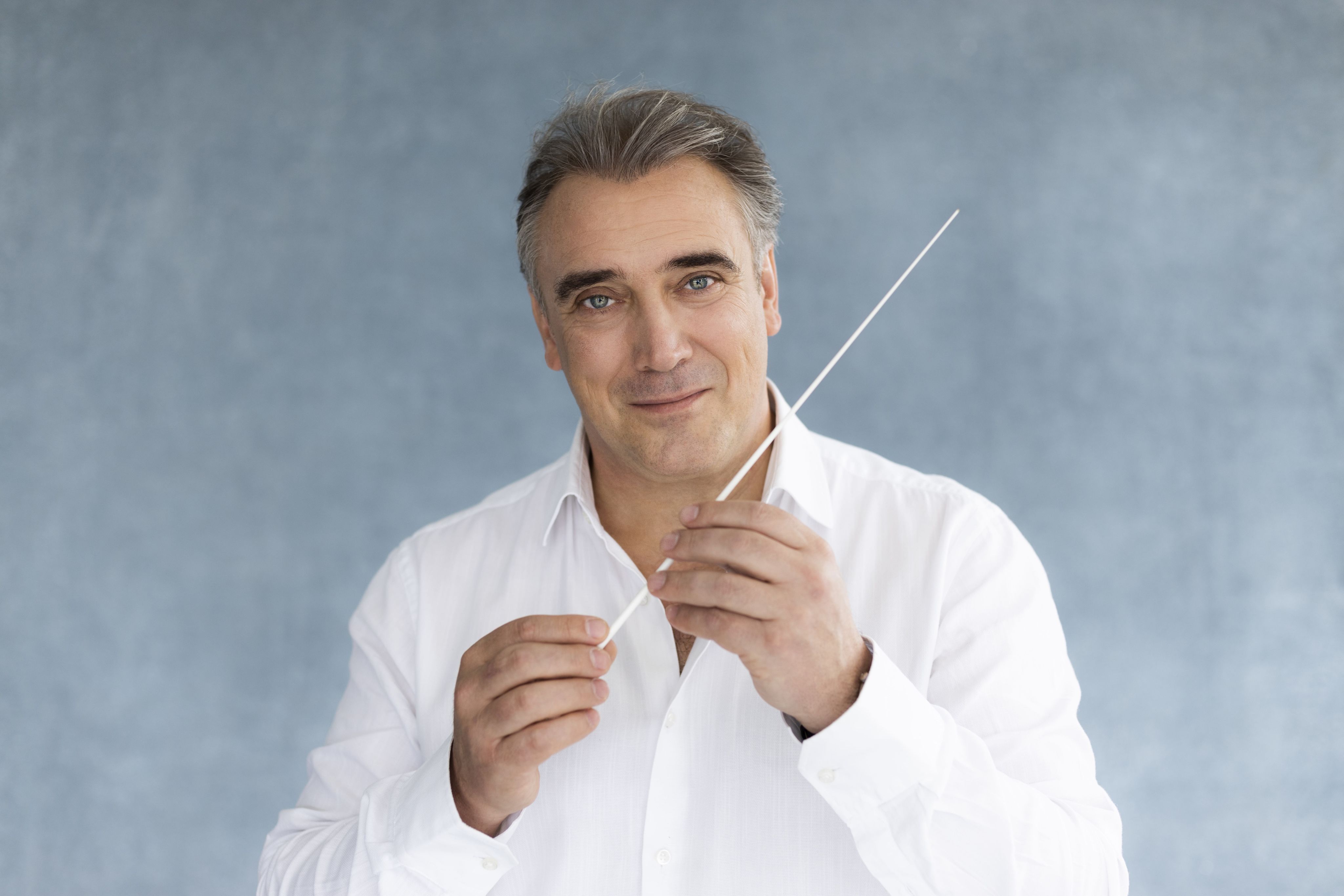
Photo: Paul Marc Mitchell
Photo: Paul Marc Mitchell
Jaime Martín is Chief Conductor of the Melbourne Symphony Orchestra and the National Symphony Orchestra of Ireland and Music Director of the Los Angeles Chamber Orchestra. He was Artistic Director and Principal Conductor of the Gävle Symphony Orchestra (2013–22). In his native Spain he currently holds the post of Principal Guest Conductor of the Spanish National Orchestra, served as Artistic Director of the Santander International Festival and was a founding member of the Orquesta de Cadaqués, with which he was associated for 30 years.
Recent highlights include debuts with the Dallas and Indianapolis Symphony orchestras and the Dresden Philharmonic, an extensive UK tour with the Gävle Symphony Orchestra and his debut at the BBC Proms, conducting BBC NOW. This season he makes his debut with the Budapest Festival Orchestra and returns to the Royal Stockholm Philharmonic, Colorado and Queensland Symphony orchestras, Orquesta Sinfónica de Galicia and Orquesta Sinfónica de Castilla y León. With the Los Angeles CO he conducts programmes ranging from Pergolesi to Danny Elfman and he directs the Melbourne Symphony in works by Dvořák, Holst, Mahler and Richard Strauss, as well as a residency in Indonesia.
His discography includes works by Brahms, Mozart and, most recently, an album of music by Swedish composer Melcher Melchers.
Before turning to conducting full-time in 2013, Jaime Martín was principal flute of the Royal Philharmonic Orchestra, Chamber Orchestra of Europe, English National Opera, Academy of St Martin the Fields and London Philharmonic Orchestra. He is a Fellow of the Royal College of Music and in 2022 the jury of Spain’s Premios Nacionales de Música awarded him its annual prize for his contribution to classical music.
Ben Goldscheiderhorn

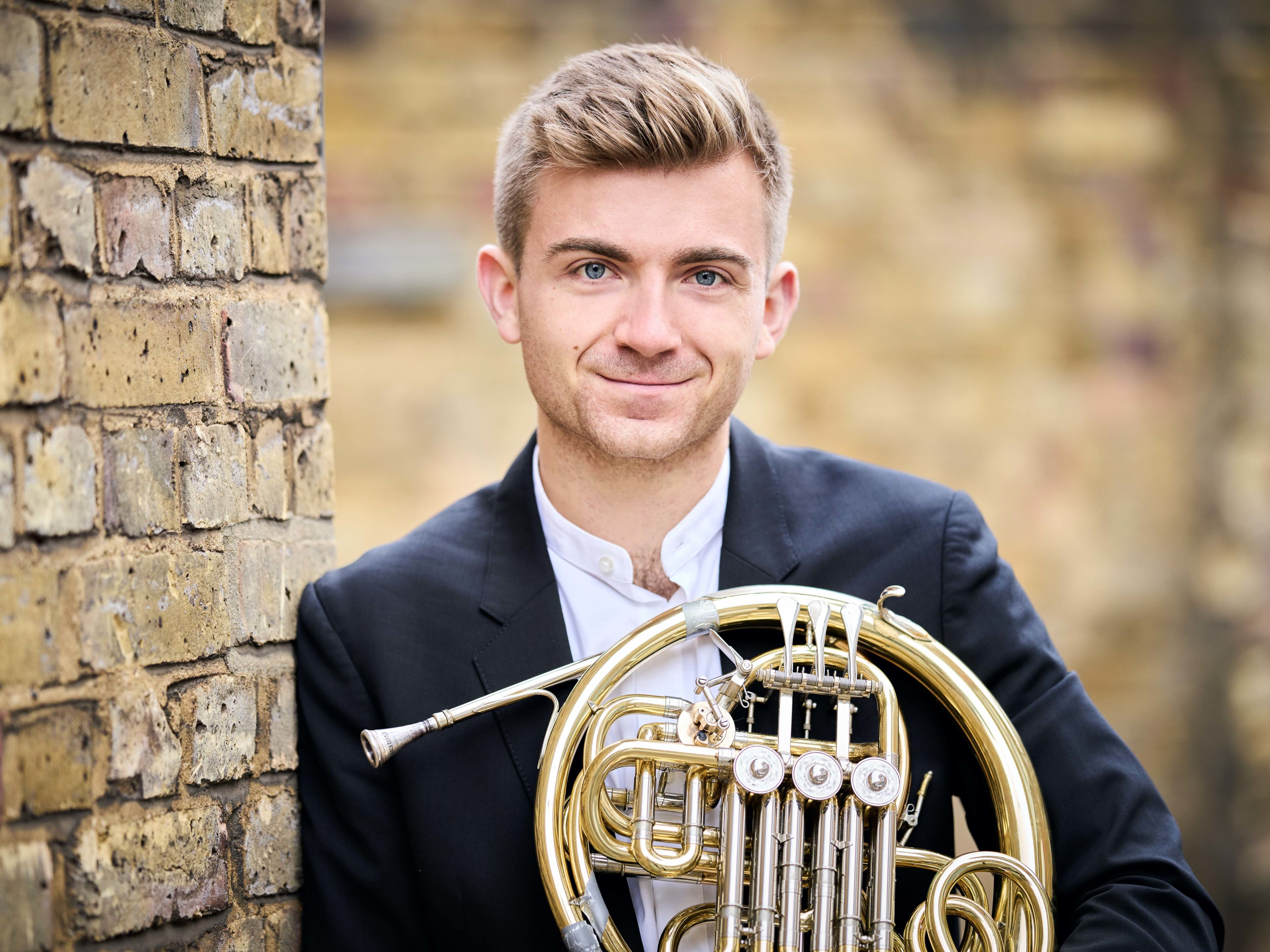
Ben Goldscheider was nominated by the Barbican as an ECHO Rising Star for the 2021/22 season; he has given recitals at major concert halls across Europe, including the Royal Concertgebouw, Vienna Musikverein, Berlin’s Pierre Boulez Saal, Elbphilharmonie Hamburg, Köln Philharmonie and Wigmore Hall.
He has performed with the BBC Symphony Orchestra and made his BBC Proms concerto debut in 2022 with the City of Birmingham Symphony Orchestra, as well as appearing as a soloist with the Mozarteum Orchestra Salzburg, Ulster Orchestra, Aurora Orchestra, Britten Sinfonia, Royal Philharmonic, London Mozart Players, Lucerne Symphony, Tapiola Sinfonietta, Musikkollegium Winterthur, Manchester Camerata, Prague Philharmonia and Deutsches Symphonie-Orchester Berlin.
This season he premieres multiple new commissions for horn, including concertos and solo and chamber works. Highlights include the world premieres of horn concertos by Gavin Higgins and Huw Watkins. His Lucerne Festival debut will include a new commission for natural horn and keyboards by Sara Cubarsi and his debut at the Southbank Centre’s Purcell Room will include new works by Zoë Martlew and Mark Simpson. He will also perform newly commissioned works by Nicola Lefanu (Lammermuir Festival), Victoria Kelly and Georgina Palmer (At World’s Edge Festival in New Zealand) and Matthew Peterson and Joseph Phibbs (Hatfield House Chamber Music Festival).
As a chamber musician he has collaborated with Daniel Barenboim, Martha Argerich, Sergei Babayan, Elena Bashkirova, Sunwook Kim and Michael Volle, among many others. In recital he has worked with Michael Barenboim, Sir Stephen Hough, Tom Poster, Benjamin Baker, James Baillieu, Allan Clayton and the Kaleidoscope Chamber Collective.
His recordings include Legacy: A Tribute to Dennis Brain and a solo concerto recording with the Philharmonia Orchestra conducted by Lee Reynolds.
Born in London, in 2020 he completed his studies with honours at the Barenboim-Said Academy in Berlin with Radek Baborák. Last year he was appointed Artist-in-Association at the Royal Welsh College of Music & Drama.
BBC National Orchestra of Wales
For over 90 years, BBC National Orchestra of Wales has played an integral part in the cultural landscape of Wales, occupying a distinctive role as both broadcast and national symphony orchestra. Part of BBC Wales and supported by the Arts Council of Wales, it has a busy schedule of live concerts throughout Wales, the rest of the UK and the world.
The orchestra is an ambassador of Welsh music and champions contemporary composers and musicians; its concerts can be heard regularly across the BBC – on Radio 3, Radio Wales and Radio Cymru.
BBC NOW works closely with schools and music organisations throughout Wales and regularly undertakes workshops, side-by-side performances and young composer initiatives to inspire and encourage the next generation of performers, composers and arts leaders.
The orchestra is based at BBC Hoddinott Hall in Cardiff Bay, where its purpose-built studio not only provides the perfect concert space, but also acts as a broadcast centre from where its live-streamed concerts and pre-recorded content are presented as part of its popular Digital Concert Series.
For further information please visit the BBC National Orchestra and Chorus of Wales's website: bbc.co.uk/now
Patron
HM King Charles III KG KT PC GCB
Principal Conductor
Ryan Bancroft
Conductor Laureate
Tadaaki Otaka CBE
Composer-in-Association
Gavin Higgins
Composer Affiliate
Sarah Lianne Lewis
First Violins
Lesley Hatfield leader
Nick Whiting associate leader
Martin Gwilym-Jones sub-leader
Gwenllian Hâf MacDonald
Terry Porteus
Suzanne Casey
Carmel Barber
Laura Embrey
Anna Cleworth
Juan Gonzalez
Emilie Godden
Alejandro Trigo
Ruth Heney
Zhivko Georgiev
SecondViolins
Anna Smith *
Ros Butler
Sheila Smith
Vickie Ringguth
Beverley Wescott
Roussanka Karatchivieva
Joseph Williams
Lydia Caines
Michael Topping
Ilze Abola
Jane Sinclair
Gary George-Veale
Violas
Francis Kefford ‡
Alex Thorndike #
Tetsuumi Nagata
Peter Taylor
Robert Gibbons
Catherine Palmer
Daire Roberts
Lydia Abell
Ania Leadbeater
Carl Hill
Cellos
Kate Gould ‡
Richard Birchall
Jessica Feaver
Sandy Bartai
Carolyn Hewitt
Rachel Ford
Alistair Howes
Keith Hewitt
Double Basses
Seb Pennar ‡
Christopher Wescott
Richard Gibbons
Emma Prince
Antonia Bakewell
Thea Sayer
Flutes
Fiona Kelly ‡
John Hall †
Lindsey Ellis
Piccolo
Lindsey Ellis †
Oboes
Catriona MacKinnon ‡
Amy McKean †
Cor anglais
Amy McKean
Clarinets
Nick Carpenter *
Margreet Houtman
Lenny Sayers
Bass Clarinet
Lenny Sayers †
Bassoons
Jarosław Augustiniak *
David Buckland
Contrabassoon
David Buckland *
Horns
Tim Thorpe *
Meilyr Hughes
Neil Shewan †
John Davy
Horns (Parry and Brahms)
Ed Griffiths ‡
Jenny Cox
Tom Taffinder
Dave Ransom
Trumpets
Philippe Schartz *
Robert Samuel
Trombones
Donal Bannister *
Benny Vernon
Bass Trombone
Darren Smith †
Tuba
Daniel Trodden †
Timpani
Steve Barnard *
Percussion
Phil Girling *
Phil Hughes
Andrea Porter
* Section Principal
† Principal
‡ Guest Principal
# Assistant String Principal
The list of players was correct at the time of publication
Director Lisa Tregale
Orchestra Manager Vicky James
Assistant Orchestra Manager Nick Olsen
Orchestra Coordinator, Operations Kevin Myers
Business Coordinator Caryl Evans
Orchestra Administrator Eleanor Hall +
Head of Artistic Production Matthew Wood
Artists and Projects Manager Victoria Massocchi **
Orchestra Librarian Katie Axelsen (paternity cover)
Producer Mike Sims
Broadcast Assistant Kate Marsden
Head of Marketing and Audiences Sassy Hicks
Marketing Coordinator Amy Campbell-Nichols +
Digital Producer Yusef Bastawy
Social Media Coordinator Harriet Baugh
Education Producers Beatrice Carey, Rhonwen Jones **
Audio Supervisors Simon Smith, Andrew Smillie
Production Business Manager Lisa Blofeld
Stage and Technical Manager Steven Brown +
Assistant Stage and Technical Manager Josh Mead
BBC Wales Apprentice Jordan Woodley
+ Green Team member
** Diversity & Inclusion Forum