
Romantics in Exile
Friday 8 April 2022, 7.30pm


Erich Wolfgang Korngold
Violin Concerto in D major 25’
INTERVAL: 20 MINUTES
Rued Langgaard
Symphony No. 1, ‘Mountain Pastorals’ 60’
Nicola Benedetti violin
Sakari Oramo conductor


This concert is being broadcast live by BBC Radio 3 in ‘Radio 3 in Concert’. It will be available for 30 days after broadcast via BBC Sounds, where you can also find podcasts and music mixes.
Help us Improve Our Online Programmes.
Please take this 5-minute survey and let us know what you think of these notes.
Programme Survey
Led by Chief Conductor Sakari Oramo, tonight’s BBC Symphony Orchestra concert throws a spotlight on two 20th-century composers cruelly undervalued in their own time: Erich Wolfgang Korngold, the Jewish émigré dismissed by postwar critics as a mere ‘Hollywood composer’, and Rued Langgaard, the Danish maverick who spent much of his life in the shadow of his compatriot Carl Nielsen.
Korngold’s Violin Concerto spins melodies from several of the composer’s film scores into a luscious web of late-Romanticism. Tonight it is performed by Scottish virtuoso Nicola Benedetti, who was recently announced as Director Designate of the Edinburgh International Festival.
After the interval we hear Langgaard’s First Symphony. Subtitled ‘Mountain Pastorals’, this precocious early work harks back to the music of Wagner and Berlioz while simultaneously hinting at the modernism of Langgaard’s later years.
Erich Wolfgang Korngold (1897–1957)
Violin Concerto in D major, Op. 35 (1937, rev. 1945)


1 Moderato nobile
2 Romance: Andante
3 Finale: Allegro assai vivace
Nicola Benedetti violin
Born in 1897 in Brno, Moravia, Erich Wolfgang Korngold was a phenomenally gifted child prodigy. At 9 he played to Mahler, who declared him a genius. Unfortunately, his father, Julius Korngold, was a powerful music critic for the Viennese newspaper Die Neue freie Presse: his acerbic pen sparked frequent controversies that backfired, most unfairly, against his son as the latter’s reputation spread.
When the Nazis took power in Germany in 1933, the Jewish theatre director Max Reinhardt fled to the US, where Warner Bros. soon wished to film his staging of Shakespeare’s A Midsummer Night’s Dream. Reinhardt invited Korngold to Hollywood to arrange for the movie Mendelssohn’s 1843 incidental music to the same play. There, the studio’s director, Jack Warner, persuaded him to try writing original film scores as well.
This effectively saved Korngold’s life. He was in Hollywood tackling The Adventures of Robin Hood at the time of the Anschluss in 1938; being Jewish, he would almost certainly have faced death in a concentration camp had he not already left Austria for America. He was able to rescue his family and assisted many fellow refugees, but remained perforce in exile.
Korngold soon became one of Hollywood’s most influential composers. Later, his concert works were berated for sounding like film music. But, as he had taken his own late-Romantic style wholesale into the cinema, the truth is more that film music sounds like Korngold. ‘Music is music,’ he wrote, ‘whether it is for the stage, rostrum or cinema. Form may change, the manner of writing may vary, but the composer needs to make no concessions whatever to what he conceives to be his own musical ideology.’
Returning to concert works after the war, Korngold often recycled material from his films, which otherwise disappeared with the movies. Yet critics dismissed Korngold as a ‘Hollywood composer’ and his attempts at a comeback in Vienna in the early 1950s were doomed. He died in 1957, aged 60, believing himself forgotten.
The violinist Bronisław Huberman, a frequent dinner guest at the Korngolds’ California home, always used to joke: ‘So, Erich, where’s my violin concerto?’ – until one evening the composer went to the piano and played him its opening. But Huberman proved reluctant to perform the concerto, and ultimately it was Jascha Heifetz who encouraged Korngold to complete the work and who subsequently gave its premiere in St Louis in 1947, to great public acclaim (though critics at the New York premiere a few weeks later were less impressed).
The soloist enters at the start, with a melody recycled from Korngold’s film score to Another Dawn (1937) – yet sketched as an idea for a concerto before Hollywood had even crossed his mind. The second movement is lusciously melodic, drawing on music from two more films, Juarez (1939) and the Oscar-winning Anthony Adverse (1936), with a central section full of mysterious effects and glistening orchestration. Finally there is a lively set of free virtuoso variations, the underlying theme (from The Prince and the Pauper, 1937) heard only near the end, closing the concerto in a flurry of high spirits.
Programme note © Jessica Duchen
Jessica Duchen is a music critic, author and librettist. Her output includes six novels, biographies of Fauré and Korngold and the libretto for Roxanna Panufnik’s opera Silver Birch plus words for a number of Panufnik’s choral works. Her journalism has appeared in The Independent, BBC Music Magazine and The Sunday Times.
Erich Wolfgang Korngold
Born Brno, Movaria, and named after Mozart by an ambitious father, Erich Wolfgang Korngold was a remarkable child prodigy. Mahler, no less, proclaimed him ‘a genius’ and Richard Strauss and Puccini too doffed their hats to his talents. He composed a ballet, Der Schneemann (‘The Snowman’), aged 11 and at 23 his opera Die tote Stadt (‘The Dead City’) was given simultaneous premieres in two major German cities.
But by the late 1920s musical tastes in Germany were abandoning the lush pastures of the late-Romantic tradition, where Korngold was in his element, preferring instead music that was leaner, sparer and more urban.
A new chapter in his career took him to Hollywood, and in 1938 Warner Bros. invited him to write the score for The Adventures of Robin Hood, featuring Errol Flynn. He was working on the score when the Nazis marched into Austria and so remained in exile in America until a few years after the end of the war. In the meantime he wrote the music for such films as The Private Lives of Elizabeth and Essex (1939) and The Sea Hawk (1940).
Returning to Austria in 1949, Korngold hoped to retrieve his career as a serious composer. The Violin Concerto, Cello Concerto and Symphony in F sharp all date from this period. But the times and tastes too had changed and these late works rarely found favour. Indeed, when Korngold died, back in Hollywood in November 1957, he was best known as a film composer. It was over a quarter of a century before his reputation as a gifted composer across a whole range of musical styles began to rise again.
Profile © Christopher Cook
Broadcaster Christopher Cook has written for BBC Music Magazine, Gramophone and International Record Review. He taught Cultural Studies at the University of Syracuse in London and was a Visiting Research Fellow at Queen Mary University, London.
INTERVAL: 20 MINUTES
Rued Langgaard (1893–1952)
Symphony No. 1, ‘Mountain Pastorals’ (1908–11)


1 Surf and Glimpses of Sun. Maestoso
2 Mountain Flowers. Lento
3 Saga. Lento misterioso
4 Mountain Ascent. Marcato
5 Courage. Maestoso allargando
Rued Langgaard’s Symphony No. 1 is an extraordinary beginning to an extraordinary life story. A musical prodigy, both as composer and organist, Langgaard began work on the symphony aged 15 and completed it three years later. One would have thought that musical Denmark would have been keen to hear what such a super-talented youngster could achieve in symphonic form, but it seems the Danish musical establishment had already taken against him. A premiere was arranged in Germany, with the Berlin Philharmonic, but the symphony’s overwhelming success there only seems to have hardened hearts against him still further in his native country – post-Wagnerian Germanic late-Romanticism wasn’t to most critics’ tastes in Copenhagen in the early 20th century.
Certainly Wagner’s influence, along with that of Bruckner, Tchaikovsky and Berlioz, can be heard in this music; but even at this stage Langgaard isn’t simply derivative. His orchestration – employing a very large orchestra – is wonderful. (Even his detractors granted him that.) And something of the astonishing heaven-storming, hell-confronting intensity of his mature operatic masterpiece Antichrist (1921–9) can be felt in the finale’s brass-enhanced closing stages, even if the style here is nowhere near as dazzlingly eclectic. But there are also moments of great delicacy and tenderness, especially in the second and third movements. For the Berlin premiere Langgaard provided a programme note, outlining how the symphony charts a walk from the foot of a mighty cliff to the summit of a mountain. This has led some to suggest that young Langgaard was paying tribute to Strauss’s similarly programmatic (and hugely scored) Alpine Symphony; but Strauss’s symphony wasn’t completed till 1915, four years after Langgaard’s. The overall concept here is entirely original.
According to Langgaard’s note, the first movement portrays how ‘at the foot of the mountain the surf foams roaring against the rocks. The human soul strains beyond the surf to see the dawn and the promised land.’ As we begin to ascend in the second movement, we hear ‘the flowers of the mountain trembling faintly as the slight breeze sweeps ghost-like through the tops of the spruces’. In the dreamy ‘Saga’, the distant roar of the sea conjures up ‘voices from long-vanished times’; then the ascent continues to the mountain top where ‘the view from the wide horizon, the high-vaulted sky and the faraway blue-sparkling sea with its white crests fills the heart with new courage to face life’. That ‘courage’ is then depicted with growing force in the finale, in which the offstage brass join with the full orchestra for the first time. At this point some critics have felt that Langgaard strains too hard to make his point, and admittedly the last stages of the symphony are very insistent; but it’s worth remembering that he would need all his reserves of courage in the years ahead.
Rued Langgaard
The story of Rued Langgaard (pronounced ‘Ruthe Langaw’) is one of the strangest in the history of classical music. Born in Copenhagen in 1893, he gave his first organ recital aged 11, and had his First Symphony premiered by the Berlin Philharmonic at 19, to great acclaim. But musical Denmark reacted against him and, when Langgaard turned increasingly in a modernist direction, widespread rejection and ridicule followed. Major experimental works such as the Sixth Symphony (1919–20), the collage-like Music of the Spheres (1916–18) and the opera Antichrist (1921–9) remained unperformed in Langgaard’s home country for many years, in some cases until way after his death. Langgaard’s provocative, eccentric manner made things worse and, when he began attacking Carl Nielsen, the leading light in Danish musical life, complete ostracism followed. Eventually Langgaard managed to secure a post as cathedral organist in the provincial city of Ribe, where his music (and his behaviour) became more defiant and absurd. At his death in 1952 he was almost forgotten. But in the 1960s, thanks partly to championship by the Danish composer Per Nørgård, the bizarre breadth of his achievement began at last to be appreciated. Langgaard’s music often embraces hugely contrasting styles, from the extremes of 20th-century radicalism to early-19th-century Romanticism. It is the integrity of his vision that holds everything together, especially in his apocalyptic masterpiece Antichrist, which is now included in the official Danish Cultural Canon.
Programme note and profile © Stephen Johnson
Stephen Johnson is the author of books on Bruckner, Wagner, Mahler and Shostakovich, and a regular contributor to BBC Music Magazine. For 14 years he was a presenter of BBC Radio 3’s Discovering Music. He now works both as a freelance writer and as a composer.
Coming up at the Barbican
Friday 22 April 2022, 7.30pm
Zadie Smith and the BBC Symphony Orchestra
The author joins the BBC SO for an entertaining concert exploring the music, ideas and artists who have inspired her.
Book tickets


Biographies
Sakari Oramo conductor


Photo: Benjamin Ealovega
Photo: Benjamin Ealovega
Sakari Oramo began his career as a violinist and was leader of the Finnish Radio Symphony Orchestra. He is currently Chief Conductor of the BBC Symphony Orchestra, Honorary Conductor of the Finnish Radio Symphony Orchestra and Conductor Laureate of the Royal Stockholm Philharmonic Orchestra (of which he was Chief Conductor and Advisor, 2008–21). From 1998 to 2008 he was Music Director of the City of Birmingham Symphony Orchestra.
This season marks his eighth with the BBC SO, with which he champions new and rarely performed works alongside established highlights of the repertoire. Among his guest appearances this season are engagements with the Berlin Philharmonic, Vienna Symphony, Finnish Radio Symphony and NDR Elbphilharmonie orchestras.
He is a regular at the BBC Proms, where he conducts a typically wide variety of works, often with the BBC Symphony Chorus. He has conducted the Last Night of the Proms on five occasions.
His recordings have won many accolades, including a BBC Music Magazine Award for Nielsen’s Symphonies Nos. 1 and 3 with the Royal Stockholm Philharmonic Orchestra, a Gramophone Award for Rued Langgaard’s Symphonies Nos. 2 and 6, and an ICMA Award for Busoni’s Piano Concerto with Kirill Gerstein and the Boston Symphony Orchestra. Other recent releases include orchestral works by Sibelius, Rachmaninov’s Piano Concertos Nos. 2 and 3 with Yevgeny Sudbin and a disc of music by Florent Schmitt, all with the BBC Symphony Orchestra.
Nicola Benedetti violin
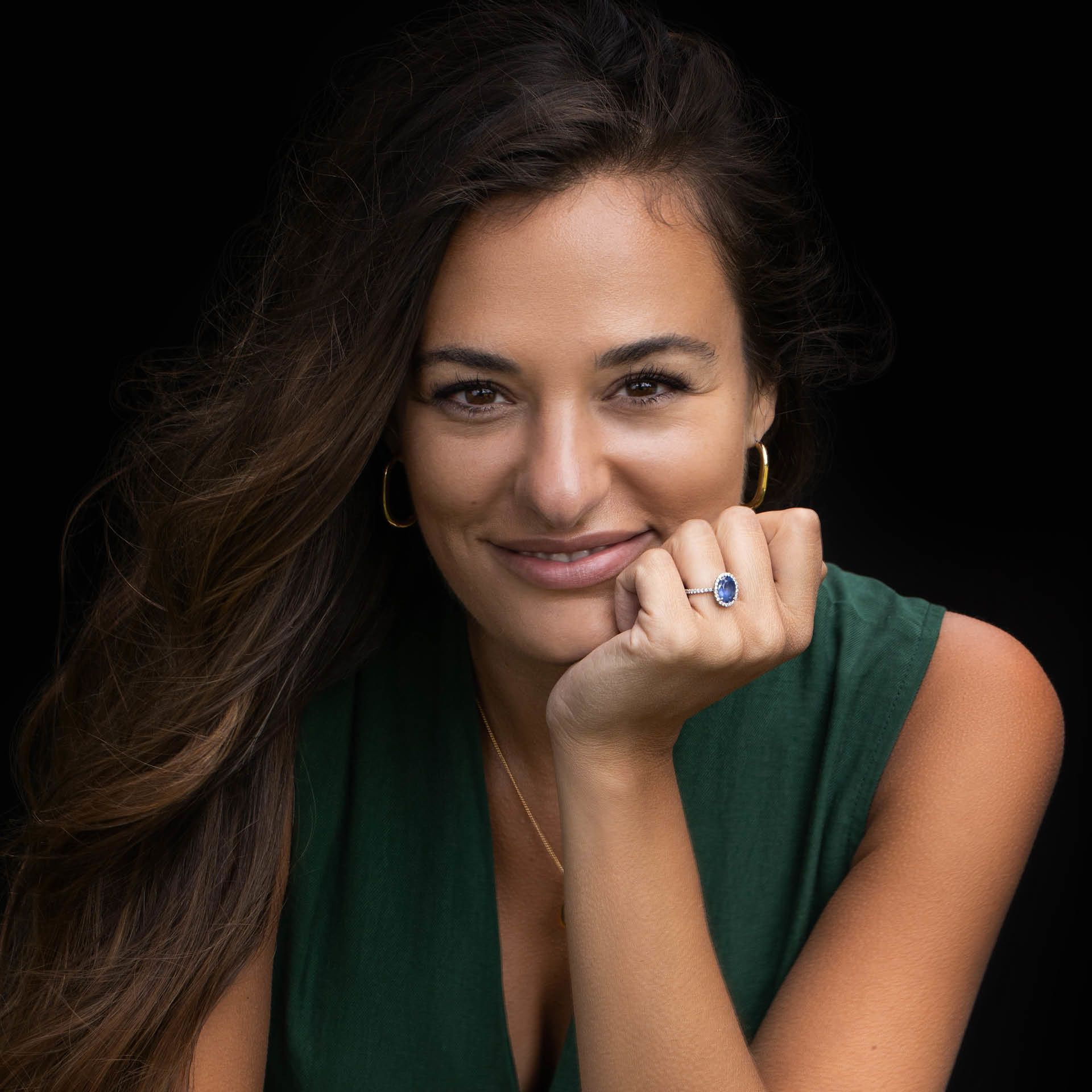
Photo: Franz Galo
Photo: Franz Galo
Nicola Benedetti is one of the most sought-after violinists of her generation. So far this season has seen her perform a solo recital at the Barbican Centre and collaborate with the Cincinnati Symphony Orchestra, London Symphony Orchestra and Netherlands Radio Philharmonic Orchestra, among others. Other season highlights include engagements with the Los Angeles and Royal Stockholm Philharmonic orchestras, play-directing with the Scottish Chamber Orchestra and tours to Spain with the Philharmonia Orchestra and Asia with the London Philharmonic Orchestra. In April last year she gave the world premiere of Mark Simpson’s Violin Concerto with the London Symphony Orchestra and Gianandrea Noseda.
Nicola Benedetti is also a devoted chamber musician and since 2008 has performed in a trio with cellist Leonard Elschenbroich and pianist Alexei Grynyuk. Their past performances include concerts at Amsterdam’s Concertgebouw, Frankfurt’s Alte Oper, Hong Kong’s City Hall, London’s Wigmore Hall, New York’s 92nd Street Y and the Edinburgh International and Ravinia festivals.
Her recent recordings include Baroque with the Benedetti Baroque Orchestra and a Grammy Award-winning album featuring two works written especially for her by jazz musician Wynton Marsalis, the Violin Concerto in D and Fiddle Dance Suite for solo violin. She has also recorded concertos by Shostakovich, Glazunovand Szymanowski, and her album Homecoming: A Scottish Fantasy made her the first solo British violinist since the 1990s to enter the Top 20 of the Official UK Album Chart.
Through the Benedetti Foundation her Virtual Sessions delivered three weeks of online courses to players of all ages and standards, published over 300 videos, delivered 64 live Zoom sectionals to around 1,900 musicians a week in 66 countries and gave 30 live sessions.
Nicola Benedetti was appointed CBE in the 2019 New Year Honours list. She was awarded the Queen’s Medal for Music in 2017 and was appointed MBE in 2013. She has also received nine honorary degrees. Last month she became Director Designate of the Edinburgh International Festival, taking up the role proper in October this year. In doing so, she becomes both the first Scottish and the first female Festival Director since the EIF began in 1947.
Nicola Benedetti plays the Gariel Stradivarius (1717), courtesy of Jonathan Moulds.
BBC Symphony Orchestra
The BBC Symphony Orchestra has been at the heart of British musical life since it was founded in 1930. It plays a central role in the BBC Proms at the Royal Albert Hall, performing at the First and Last Night each year in addition to regular appearances throughout the Proms season with the world’s leading conductors and soloists.
The BBC SO performs an annual season of concerts at the Barbican in London, where it is Associate Orchestra. Its commitment to contemporary music is demonstrated by a range of premieres each season, as well as Total Immersion days devoted to specific composers or themes.
Highlights of the current season include concerts conducted by Sakari Oramo with music by Beethoven, Brahms, Ruth Gipps, Dora Pejačević, Sibelius and others; performances with Principal Guest Conductor Dalia Stasevska, including the devised work Concerto No. 1: SERMON by Davóne Tines, combining music and poetry in a unique examination of racial justice; children’s author Jacqueline Wilson reading from her best-selling books in a family concert; the world premiere of Up for Grabs by composer and Arsenal fanatic Mark-Anthony Turnage; the BBC Symphony Chorus’s return to the Barbican stage for a Christmas concert; a performance with Jules Buckley and Canadian singer-songwriter Patrick Watson; the BBC Symphony Chorus’s return to the Barbican stage for performances including live accompaniment of Vaughan Williams’s score to the film Scott of the Antarctic; a concert celebrating the 100th anniversary of the BBC; and two Total Immersion days, one focusing on music composed in the camps and ghettos of Nazi-occupied Europe and one featuring the music of Frank Zappa. Guest conductors include Alpesh Chauhan, John Storgårds, Jukka-Pekka Saraste, Jordan de Souza and Nathalie Stutzmann.
The vast majority of performances are broadcast on BBC Radio 3 and a number of studio recordings each season are free to attend. These often feature up-and-coming new talent, including members of BBC Radio 3’s New Generation Artists scheme. All broadcasts are available for 30 days on BBC Sounds and the BBC SO can also be seen on BBC TV and BBC iPlayer and heard on the BBC’s online archive, Experience Classical.
The BBC Symphony Orchestra and Chorus – alongside the BBC Concert Orchestra, BBC Singers and BBC Proms – also offer enjoyable and innovative education and community activities and take a leading role in the BBC Ten Pieces and BBC Young Composer programmes.
Chief Conductor
Sakari Oramo
Principal Guest Conductor
Dalia Stasevska
Günter Wand Conducting Chair
Semyon Bychkov
Conductor Laureate
Sir Andrew Davis
Creative Artist in Association
Jules Buckley
First Violins
Stephen Bryant leader
Cellerina Park
Ray Liu
Jenny King
Celia Waterhouse
Colin Huber
Shirley Turner
Ni Do
Molly Cockburn
Annabel Drummond
Thea Spiers
Lynette Wynn
David Larkin
Tim Warburton
Amy Heggart
Second Violins
Heather Hohmann
Dawn Beazley
Joaena Ryu
Daniel Meyer
Vanessa Hughes
Danny Fajardo
Lucy Curnow
Tammy Se
Caroline Cooper
Victoria Hodgson
Maya Bickel
Ruth Funnell
Adrian Dunn
Violas
Becky Jones
Philip Hall
Joshua Hayward
Audrey Henning
Natalie Taylor
Carolyn Scott
Mary Whittle
Peter Mallinson
Matthias Wiesner
Bryony Mycroft
Helen Picknet
Daisy Spiers
Cellos
Timothy Walden
Tamsy Kaner
Mark Sheridan
Sarah Hedley Miller
Michael Atkinson
Augusta Harris
Morwenna Del Mar
Deni Teo
Laura Anstee
Double Basses
Nicholas Bayley
Richard Alsop
Anita Langridge
Josie Ellis
Elen Pan
Peter Smith
Mike Fuller
Flutes
Daniel Pailthorpe
Tomoka Mukai
Piccolo
Rebecca Larsen
Oboes
Richard Simpson
Imogen Smith
Fraser Macaulay
Adrian Rowlands
Clarinets
Richard Hosford
Marie Lloyd
Bass Clarinets
Thomas Lessels
Bassoons
Emily Hultmark
Lully Bathurst
Contrabassoon
Steven Magee
Horns
Nicholas Korth
Michael Murray
Andrew Antcliff
Nicholas Hougham
Alexei Watkins
Wagner Tubas
Mark Wood
Jonathan Bareham
Elise Campbell
Paul Cott
Trumpets
Andy Crowley
Joseph Atkins
Chris Cotter
Off-Stage Trumpets
Tony Cross
Tim Hawes
Martin Hurrell
Trombones
Helen Vollam
Dan Jenkins
Jayne Murrill
Bass Trombone
Robert O'Neill
Off-Stage Trombones
Lindsay Shilling
Rory Cartell
Beth Calderbank
Tuba
Sam Elliott
Richard Evans
Timpani
Antoine Bedewi
Christopher Hind
Percussion
David Hockings
Alex Neal
Fiona Ritchie
Harp
Louise Martin
Celesta
Liz Burley
The list of players was correct at the time of publication