
Shostakovich 9 with Christoph König
Thursday 13/3/25, 7.30pm
Aberystwyth Arts Centre
Friday 14/3/25, 7.30pm
Prichard-Jones Hall, Bangor


Maurice Ravel
Le tombeau de Couperin 17’
Anna Clyne
Glasslands 22’
INTERVAL: 20 minutes
Louise Farrenc
Overture No. 2 7’
Dmitry Shostakovich
Symphony No. 9 27’
Christoph König conductor
Jess Gillam soprano saxophone


The concert in Aberystwyth is being recorded by BBC Radio 3 for future broadcast in In Concert; the concert in Bangor is being recorded for future broadcast in Classical Live. They will be available for 30 days after broadcast via BBC Sounds, where you can also find podcasts and music mixes.
Introduction

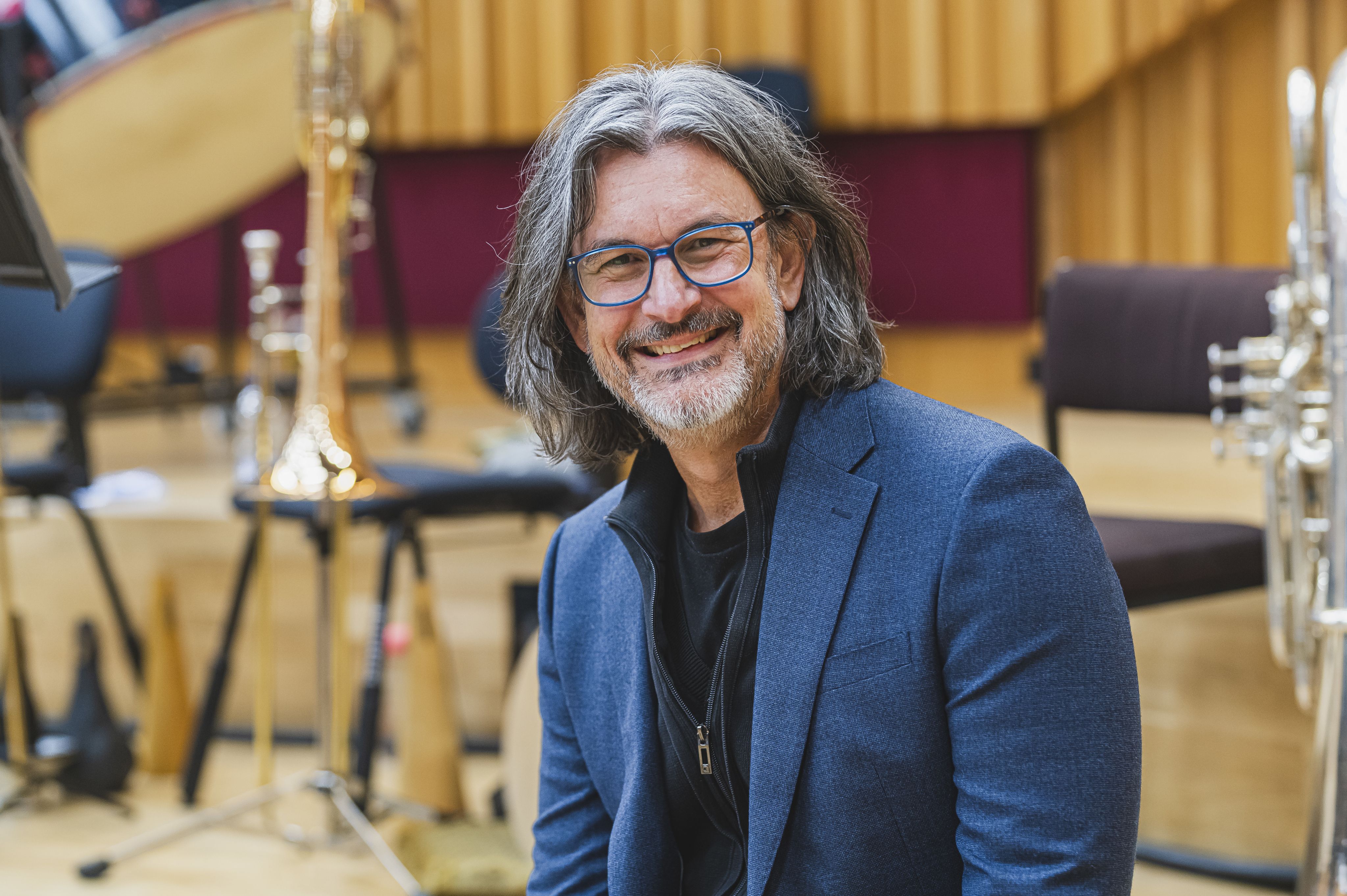
Photo: Kirsten McTernan
Photo: Kirsten McTernan
Welcome to tonight’s concert, part of BBC NOW’s Spring tour, for which Christoph König conducts a programme ranging from high Romantic drama up to the present day. We begin and end with two composers whose anniversaries fall this year. We mark Ravel’s 150th birthday with a performance of his characterful suite Le tombeau de Couperin, a piece in which he memorialises friends lost in the First World War. It’s also 50 years since the death of Shostakovich and his Ninth Symphony is a work whose compactness surprised early audiences but into which he pours music of huge contrast.
The Parisian Louise Farrenc was a pioneer of evidently remarkable gifts, one unafraid to encroach on the world of orchestral music (very much regarded as a man’s world in the 19th century) with her symphonies and two overtures, of which we hear the Second. From the off, Farrenc’s highly skilled writing and ear for drama are very much in evidence.
Bringing things up to the present, we’re joined by the irrepressible Jess Gillam for a new concerto for soprano saxophone – Anna Clyne’s Glasslands, which was inspired by that mythical harbinger of death: the banshee.
Enjoy!
Matthew Wood
Head of Artistic Planning and Production
Please respect your fellow audience members and those listening at home: mobile phones may be kept on but on silent and with the brightness turned down; other electronic devices should be switched off during the performance. Photography and recording are not permitted.
Maurice Ravel (1875–1937)
Le tombeau de Couperin(1914–17, orch. 1919)

1 Prélude
2 Forlane
3 Menuet
4 Rigaudon
Le tombeau de Couperin began life as a suite for piano. Ravel started work on it in 1914, but the First World War interrupted his progress and the piece was not completed until 1917. Six movements – Prélude, Fugue, Forlane, Rigaudon, Menuet and Toccata – were modelled on French Baroque dances and dedicated collectively to the memory of his friends killed in the war. In 1919, the composer scored four of these movements for a small orchestra.
How can musical works best commemorate loved ones? Ravel’s Tombeau is not a series of elegies. Nor is it intended as a series of personal portraits. Instead, there is the intangible sense of nostalgia, of lost worlds and things ethereal. Ravel’s sophisticated tributes honour the memories of people without encasing them in amber, and the result is often moving in both senses of the word.
In the Prélude, the constant flow of notes resembles a perpetual motion. The Forlane was a lively, quick-paced folk dance associated with Venice but Ravel’s version is distinguished by a moderate tempo, lilting rhythms and slightly slurred articulation. The Menuet is both affectionate and stately. Notwithstanding a pastoral middle section, the Rigaudon is characterised by bright sonorities and high-stepping gestures, which bring the work to an exuberant conclusion.
Programme note © Lucía Camacho Acevedo
Anna Clyne (born 1980)
Glasslands(2022)
Jess Gillam soprano saxophone
Composing may be more of a solitary pastime for some, but for Anna Clyne it is shaped by her connections with others. ‘Collaboration fuels a lot of my pieces’, she says. ‘It’s a source of inspiration and an opportunity to see my own music and creative process through a different lens.’ Over the past five years, this has seen her dramatically expand her catalogue of concertos, collaborating on new works for violin, piano, clarinet, cello and saxophone. In each of them, her aim has been to challenge the traditional role of the concerto soloist and to strive, in her own words, ‘for collaborative exchange rather than a battle between soloist and orchestra’.
Her concerto for soprano saxophone and orchestra, Glasslands, is no exception. Across its three parts, the solo line runs through the orchestra like a sinewy, silvery thread. It is still an instrumental showcase in the traditional sense of the concerto, but Clyne’s writing sees the saxophone integrate seamlessly with the orchestra in a mellifluous dialogue that ebbs and flows, vivid one minute, and concealed the next. Like many of Clyne’s works, Glasslands is inspired by folklore. As she explains: ‘Glasslands conjures an imaginary world of three realms governed by the banshee – a female spirit who, in Irish folklore, heralds the death of a family member, usually by wailing, shrieking or keening in the silence of the night.’
The piercing wail of the banshee is the first sound we hear: an agitated cry of alarm that sets in motion a frenzied series of caterwauls, scurries and squalls. And yet, even while the banshee darts frantically to and fro with her urgent message, there are tantalising glimpses of something more ephemeral in the spaces in between. This peaceful, hypnotic sense of calm takes on more shape in the quiet second part, in what amounts to an embodiment of the silence of the night – or perhaps death itself. But it is the final part that brings us full circle, almost synthesising the first two. Here, Clyne takes us to a magical, ethereal realm that glimmers with the sound of the vibraphone and pizzicato strings, a place somewhere beyond this earthly life. The banshee of this realm is more sprite-like and playful, her wildness all but spent – until, just at the last moment, her opening wail is heard once more.
Programme note © Jo Kirkbride
INTERVAL: 20 minutes
Louise Farrenc (1804–75)
Overture No. 2(1834)
Born in 1804 – five months after Berlioz – to a distinguished family of Parisian artists (several of them women), Louise Dumont was a prodigiously gifted young pianist who enrolled at the Paris Conservatoire at the age of 15. Two years later she found a loving and supportive husband in Aristide Farrenc, a flautist and composer who helped promote her compositions and with whom she later edited a huge collection of early keyboard music – from the Fitzwilliam Virginal Book to Frescobaldi and Couperin – called Le Trésor des pianistes. Over the course of the 1820s and 1830s, Louise Farrenc enjoyed a growing reputation not only as a performer, but also as a composer of keyboard music. Critics both in France and further afield (Robert Schumann, for example) praised her stylish writing and craftsmanship. And by the mid-1830s, Farrenc decided to test her mettle in a new compositional arena: orchestral music.
In 1834 Farrenc composed two concert overtures. We hear the second: the ‘Ouverture à Grand Orchestre’ in E flat major, which was finished in early December and given its premiere the following year. It is conceived on a grand scale to match its considerable orchestral forces, with an imposing slow introduction that begins in E flat minor and seems to conjure the overture to Mozart’s Don Giovanni in the dotted rhythms and troubled silences of its opening bars. Will we ever make it to the major key promised in the work’s title? Even in the first few bars of the Allegro it’s not altogether clear, with minor harmonies continuously throwing spanners into the musical works each time it seems that the storm clouds have finally cleared. Here, too, there is something operatic about the energy, bustling textures, and even the beautifully lyrical wind themes when they finally appear. (Paris was, after all, a city in thrall to its opera houses in the 1830s, as Meyerbeer ruled the roost and Berlioz battled to get his works staged.) As the overture continues, Farrenc at times reduces the orchestral forces to a bare minimum, chamber-like passages thrown into sharp relief when the might of the full orchestra reappears. The music concludes with a theatrical final flourish in its home key.
It seems that Aristide made efforts to get both this Overture and its companion in E minor published by the distinguished Leipzig firm of Peters – but unfortunately, the project never came to fruition. Nevertheless, this overture was performed, from manuscript, in Paris (several times) and also in Copenhagen, where its inclusion in a concert at the Royal Theatre was so warmly received that it was repeated by request at the Danish Court just a few days later.
Programme note © Katy Hamilton
Dmitry Shostakovich (1906–75)
Symphony No. 9 in E flat major, Op. 70(1945)
1 Allegro
2 Moderato
3 Presto –
4 Largo –
5 Allegretto – Allegro
Shostakovich originally announced that his Ninth Symphony would be a celebration of the Soviet victory over the Nazis, in true Socialist Realist heroic style. Indeed, his Seventh and Eighth Symphonies had both been massive in scale, so his listeners probably expected something similar in scope and grandeur. The symphony that eventually emerged, however, was quite different. It was short, for one thing – the entire symphony lasts less time than single movements of the Seventh and Eighth. It was small in scale, too – indeed, it was given the label ‘Classical’ because of its form and character. It was hardly the heroic symphony with which Shostakovich had teased the public, and the composer knew it. ‘Musicians will love to play it, and critics will love to blast it,’ Shostakovich breezily said.
The Classicism of this symphony is most obvious in its first movement, which follows the strict 18th-century sonata form right down to the repeated exposition. Most notably, the trombone repeats a miniature fanfare often exactly when it shouldn’t, as when it interrupts the high piccolo’s introduction of the movement’s second theme. Here it’s as if the composer winks: ‘Sure, I can follow the rules – sometimes.’
The second movement is darker, though how dark and sombre is in practice left to the conductor. Still, it provides a contrast to the merry first movement, if still rooted in a kind of dance world. The clarinet’s repeating theme could almost be a waltz, except that the rhythm is sometimes interrupted by a tentative, one-beat hesitation. Here it’s as if the composer drags his feet: ‘Oh, all right, I suppose I’ll follow the rules.’
The final three movements are played uninterrupted. The scherzo-like Presto moves exceptionally quickly from faint and fleeting to brassy and assertive, but it dies away into nothing almost as quickly as it builds up. The Largo then blasts away all remnants of the previous melody, trombones and tubas (of all things!) intoning sombrely ahead of a soulful bassoon solo. This procedure then repeats, the bassoon solo lightening up into a jaunty Allegretto that can’t seem to decide whether to be a dance, like the symphony’s opening, or a march. ‘At last,’ the composer seems to sigh, ‘here’s that hero I promised – maybe.’
Programme note © Marina Frolova-Walker
Help Us Improve Our Online Programmes.
Please take this 5-minute survey and let us know what you think of these notes.
Programme Survey
You may also like:
Reformation & Invigoration
Livestream
Thursday 15/5/25, 7.30pm
BBC Hoddinott Hall, Cardiff
Mozart The Marriage of Figaro – overture
Jörg Widmann Violin Concerto No. 2 UK premiere
Mendelssohn Symphony No. 5, ‘Reformation’
Jörg Widmann conductor
Carolin Widmann violin
STYLISH | DRAMATIC | VIVACIOUS
Busy whispers and buzzing excitement lead to thrilling climaxes in Mozart’s ever-popular overture to his opera The Marriage of Figaro. Witty, scampering and joyful throughout, it’s the perfect opener to any concert. Mendelssohn’s Fifth Symphony was written to mark the 300th anniversary of a seminal moment in the founding of the Protestant Reformation; it journeys through dramatic outbursts, aria-like solos and jaunty chorales towards triumph in the face of reform. To conduct we’re delighted to welcome Jörg Widmann, who is making his debut with BBC NOW.
Violinist Carolin Widmann has made a name internationally as one of the finest performers of the Classical and Romantic repertoire, so it comes as little surprise that when they were youngsters she told her brother Jörg that he was crazy asking her to try out some extended techniques! His Second Violin Concerto is written for and dedicated to Carolin, and in it, the solo line functions as the work’s narrator, giving the violin its own voice and exploring the virtuoso Romantic style in which Carolin revels.
Biographies
Christoph König conductor

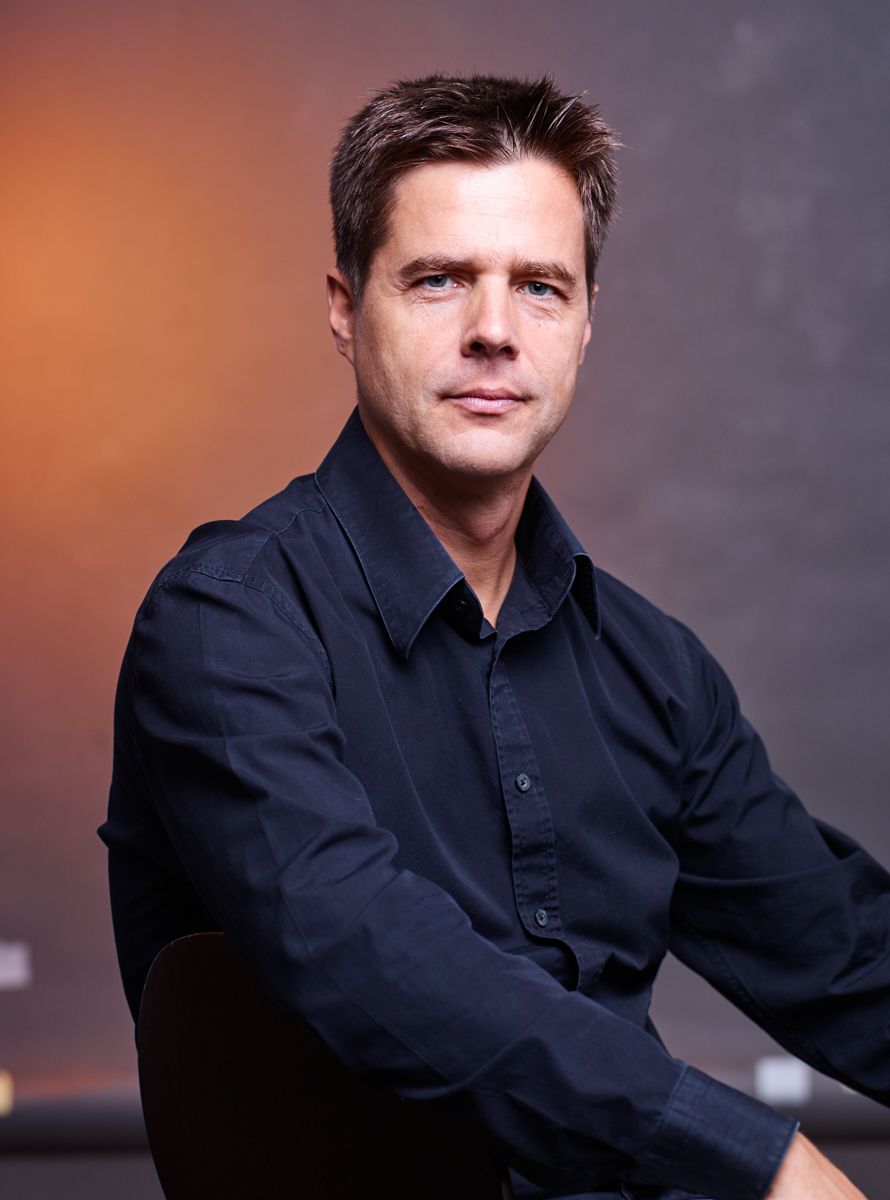
Christoph König began his tenure as Chief Conductor of the Spanish Radio and Television Symphony Orchestra (RTVE) in Madrid in the 2023/24 season and has been Principal Conductor and Music Director of the Solistes Européens Luxembourg since 2010. At the beginning of this season he became Principal Guest Conductor of the Warsaw Philharmonic. He is in high demand as a guest conductor all over the world. Since his US debut in 2010 he has conducted many North American orchestras, including the Houston, Indianapolis, New Jersey, Oregon, Pittsburgh and Toronto Symphony orchestras, as well as the Los Angeles Philharmonic.
Past and future highlights include appearances with the Bournemouth, BBC Scottish, City of Birmingham, Colombia National, Danish National, New Jersey and New Zealand Symphony orchestras; the Dresden, Netherlands, Rochester, Royal and Stuttgart Philharmonic orchestras, Staatskapelle Dresden, Orchestre de Paris, Vienna Concert Association, Salzburg Mozarteum Orchestra, Beethoven Orchestra, Bonn, and the Romanian National Radio Orchestra.
From 2009 to 2014 he was Principal Conductor of the Orquestra Sinfónica do Porto Casa da Música. From 2003 to 2006 he served as Principal Conductor of the Malmö Symphony Orchestra, as well as Principal Guest Conductor of the Gran Canaria Philharmonic Orchestra.
Christoph König has collaborated with many of the world’s leading opera houses, including Zurich Opera, Deutsche Oper Berlin, Bonn Oper, Semperoper Dresden, Staatsoper Stuttgart and Madrid’s Teatro Real.
His discography includes a Beethoven cycle, as well as music by Berio, Brahms, Copland, Dvořák, Ives, Méhul, Melcer and Schubert.
Christoph König was born in Dresden and sang in the city’s famous Boys’ Choir. He studied conducting, piano and singing at the Musikhochschule Dresden and furthered his studies in masterclasses with Sergiu Celibidache and Colin Davis, later becoming assistant to the latter at the Semperoper Dresden.
Jess Gillam soprano saxophone

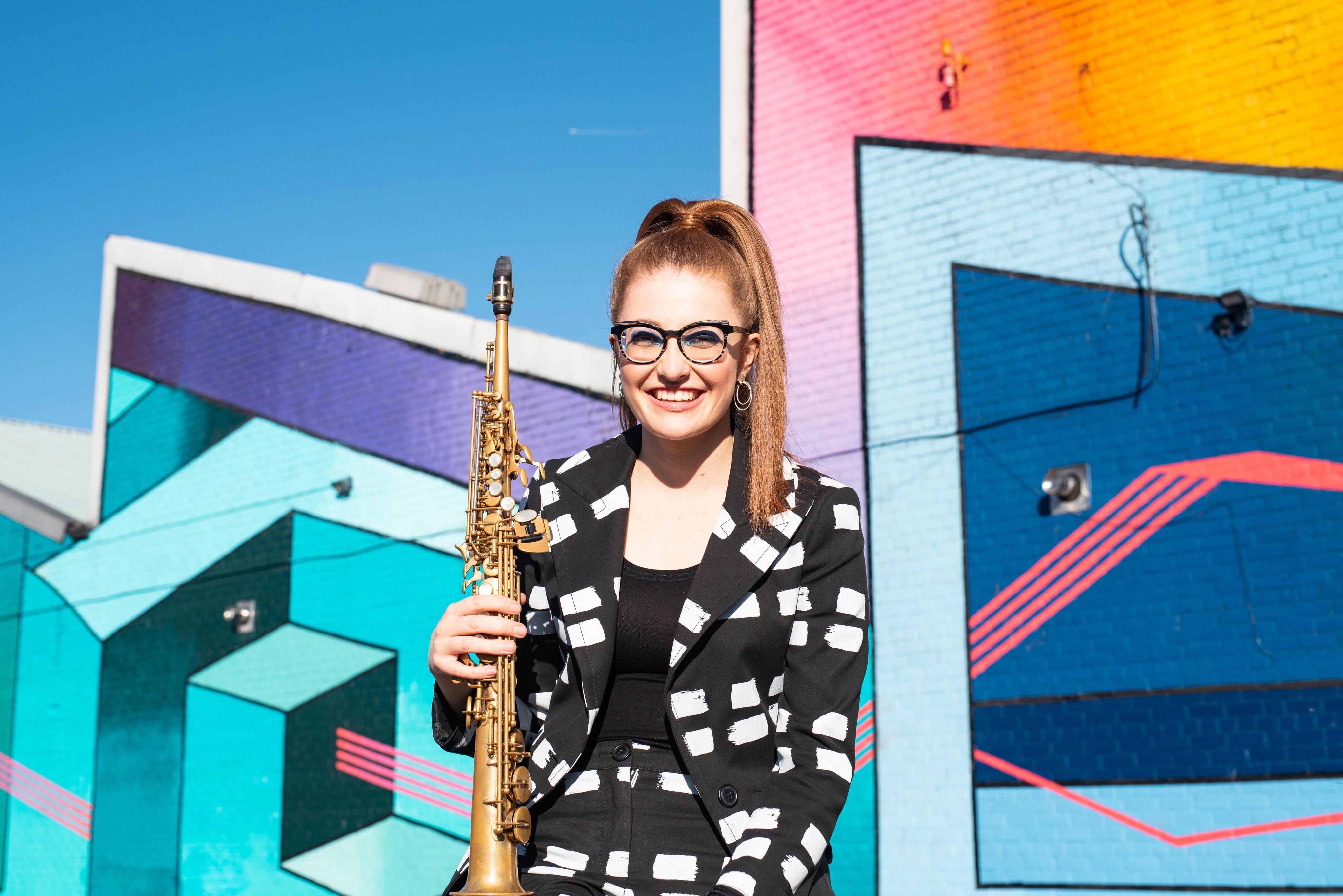
Jess Gillam is celebrated as a leading figure of the saxophone. She has been invited to play on the world’s major stages since becoming the youngest ever soloist to perform at the Last Night of the Proms. Equally at home behind the microphone, she is the youngest ever presenter on BBC Radio 3 with her award-winning weekly show, This Classical Life.
She is passionate about broadening the repertoire for the saxophone and this season’s premieres include the work she performs tonight, Anna Clyne’s Glasslands, and Dani Howard’s Saxophone Concerto with the Royal Stockholm Philharmonic Orchestra.
Highlights of her concerto appearances have included concerts with the BBC, Gothenburg, Houston, Iceland, Lahti, London and Sydney Symphony orchestras, the London, Munich and Royal Liverpool Philharmonic orchestras and the Minnesota Orchestra, among others.
On the recital stage, Jess Gillam has performed across Europe, the US and beyond. As an ECHO Rising Star in the 2022/23 season, she appeared at some of Europe’s most prestigious concert halls. She has also given recitals at the Kissinger Sommer, Schleswig-Holstein and Heidelberger Frühling festivals. Following her Carnegie Hall debut in the 2022/23 season and recitals at the Aspen Festival and Boston Celebrity Series, she returns to the US this season.
Collaboration is central to her music-making and she formed the Jess Gillam Ensemble in 2019 in order to take inspiration from different musical worlds.
She has an exclusive recording contract and her albums Rise and Time have both reached No. 1 in the UK Classical Music Charts.
In 2016 Jess Gillam became the first saxophonist to reach the finals of BBC Young Musician. She has been the recipient of a Classic BRIT Award and was awarded an MBE in the Queen’s Birthday Honours list in 2021. Returning to her roots in Ulverston in Cumbria, she continues to promote her own concert series in her hometown, which she founded aged 12.
BBC National Orchestra of Wales
For over 90 years, the BBC National Orchestra of Wales, the only professional symphony orchestra in Wales, has played an integral part in the cultural landscape of the country, occupying a distinctive role as both a broadcast and national orchestra, and serving as an ambassador of Welsh culture, regularly performing music created in Wales and championing Welsh composers and artists.
Part of BBC Cymru Wales and supported by the Arts Council of Wales, BBC NOW performs a busy schedule of concerts and broadcasts, working with acclaimed conductors and soloists from across the world, including its Principal Conductor, the award-winning Ryan Bancroft.
The orchestra is committed to working in partnership with community groups and charities, taking music out of the concert hall and into settings such as schools and hospitals to enable others to experience and be empowered by music. It undertakes workshops, concerts and side-by-side performances to inspire and encourage the next generation of performers, composers and arts leaders, and welcomes thousands of young people and community members annually through its outreach and education projects.
BBC NOW performs annually at the BBC Proms and biennially at the BBC Cardiff Singer of the World competition, and its concerts can be heard regularly across the BBC – on Radio 3, Radio Wales and Radio Cymru. On screen, music performed by BBC NOW can be heard widely across the BBC and other global channels, including the soundtrack and theme tune for Doctor Who, Planet Earth III, Prehistoric Planet, The Pact and Children in Need.
Based at BBC Hoddinott Hall, Cardiff Bay, BBC NOW utilises a state-of-the-art recording studio with a camera system for livestreams and TV broadcasts to bring BBC NOW’s music to a broader audience across Wales and the world. For more information about BBC NOW please visit bbc.co.uk/now
Patron
HM King Charles III KG KT PC GCB
Principal Conductor
Ryan Bancroft
PrincipalGuest Conductor
Jaime Martín
Conductor Laureate
Tadaaki Otaka CBE
Composer-in-Association
Gavin Higgins
First Violins
Terry Porteus
Suzanne Casey
Žanete Uškāne
Carmel Barber
Juan Gonzalez
Alejandro Trigo
Anna Cleworth
Ruth Heney **
Second Violins
Anna Smith *
Ros Butler
Sheila Smith
Beverley Wescott
Joseph Williams
Michael Topping
Vickie Ringguth
Katherine Miller
Lydia Caines **
Roussanka Karatchivieva
Violas
Tetsuumi Nagata
Peter Taylor
Lowri Taffinder
Robert Gibbons
Lydia Abell
Anna Growns
Catherine Palmer
Cellos
Raphael Lang
Sandy Bartai
Keith Hewitt
Alistair Howes
Rachel Ford
Double Basses
Christopher Wescott
Richard Gibbons
Evangeline Tang
Flutes
Piccolo
Oboes
Amy McKean †
Cor anglais
Clarinets
Will White
Bassoons
Rebecca Allen
Jo Shewan
Horns
Meilyr Hughes
Neil Shewan
Dave Ransom
James Chesney
Trumpets
Louis Barclay
Trombones
Dafydd Thomas †
Bass Trombone
Tuba
Timpani
Percussion
Harp
* Section Principal
† Principal
‡ Guest Principal
# Assistant String Principal
The list of players was correct at the time of publication
Director Lisa Tregale
Orchestra Manager Liz Williams
Assistant Orchestra Manager Nick Olsen **
Orchestra Personnel ManagerKevin Myers
Business Coordinator Georgia Dandy **
Orchestra Administrator Eleanor Hall +**
Head of Artistic Planning and ProductionMatthew Wood
Artists and Projects Manager Victoria Massocchi **
Orchestra Librarian Naomi Roberts **
Producer Mike Sims
Broadcast Assistant Emily Preston
Head of Marketing and Audiences Sassy Hicks
Marketing Coordinator Amy Campbell-Nichols +
Digital Producer vacancy
Social Media Coordinator Harriet Baugh
Education Producers Beatrice Carey, Rachel Naylor maternity cover
Audio Supervisors Simon Smith, Andrew Smillie
Production Business Manager Lisa Blofeld
Stage and Technical Manager vacancy
Assistant Stage and Technical Manager Josh Mead +
+ Green Team member
** Diversity & Inclusion Forum


