
John Storgårds conducts music by Gubaidulina, Mussorgsky and Shostakovich
Thursday 24 March 2022, 7.30pm


Click here for a PDF version of the sung texts
Sofia Gubaidulina
Fairy-Tale Poem 12’
Modest Mussorgsky
Songs and Dances of Death (orch. Dmitry Shostakovich) 20’
INTERVAL: 20 minutes
Dmitry Shostakovich
Symphony No. 5 in D minor 51’
Kostas Smoriginasbass-baritone
John Storgårdsconductor
Eva Ollikainen, the advertised conductor, has had to withdraw from tonight’s performance owing to an injury. The BBC Symphony Orchestra is grateful to John Storgårds for taking her place.


This concert is being broadcast live by BBC Radio 3 in Radio 3 in Concert. It will be available for 30 days after broadcast via BBC Sounds, where you can also find podcasts and music mixes.
Help us improve our online programmes
Please take this five-minute survey and let us know what you think of these notes.
Programme Survey
Dmitry Shostakovich was the foremost Soviet composer of his generation. Nevertheless, he was constantly aware of his place in the continuum of Russian music, acknowledging the influence of predecessors such as Modest Mussorgsky and granting his imprimatur to younger composers, including the Tatar individualist Sofia Gubaidulina.
Shostakovich’s Fifth Symphony was labelled ‘a Soviet artist’s reply to just criticism’, following the withdrawal of the formally adventurous and harmonically challenging Fourth Symphony and the denunciation – by none other than Stalin himself – of the scandalous opera The Lady Macbeth of the Mtsensk District. Despite apparently conforming to socialist realist requirements, however, it is a deeply moving and intensely personal response to the situation in which the composer found himself.
The maverick genius Mussorgsky was at the heart of the group of St Petersburg composers known as ‘The Five’ or ‘The Mighty Handful’. His pioneering style of text-setting exerted an inescapable influence upon Shostakovich, who made an orchestration of his searing Songs and Dances of Death for a 1962 performance by the soprano Galina Vishnevskaya. Tonight’s soloist is the Lithuanian bass-baritone Kostas Smoriginas.
The concert opens with an early orchestral work by Gubaidulina that vividly illustrates her uniquely expressive approach to sonority and instrumental colour. The BBC Symphony Orchestra is conducted in these three complementary but contrasting works by John Storgårds.
Sofia Gubaidulina (born 1931)
Fairy-Ttale Poem (1971)


Sofia Gubaidulina’s early orchestral work Fairy-Tale Poem originates in her music for a children’s radio play based on the Czech author Miloš Macourek’s short story Křída (‘Chalk’). This is a tale about a stick of chalk which dreams of the seascapes and castles it could draw, but is only used for routine school work. One day, a schoolboy hides the chalk in his pocket and the chalk’s dreams come true, but by this point it has been completely used up in the boy’s fantasy pictures. Gubaidulina says: ‘I liked this fairy tale so much, and it seemed so symbolic of the artist’s fate, that my relationship with this work became very personal.’ The orchestra includes piano, vibraphone and marimba, which help to create the score’s many haunting and magical sounds. The moods and textures are constantly changing, from soft clusters in the clarinets and piano to intense, almost expressionist passages in the strings and harp. By the early 1970s, Gubaidulina had already mastered the full range of modern compositional techniques and was becoming more selective in order to create her own expressive language. She establishes the colours of the different orchestral groups and then mixes them theatrically, aiming above all for poignancy and beauty.
Sofia Gubaidulina
Sofia Gubaidulina is one of today’s leading composers. Her father was Tatar, her mother Russian. She studied at the Kazan and Moscow Conservatories and set out on her compositional path in the 1960s, when the Khrushchev ‘Thaw’ granted Soviet composers access to avant-garde techniques. Like her colleagues Alfred Schnittke and Edison Denisov, she experimented avidly, and in the 1970s she formed the ensemble Astreya to perform improvisations on non-Western instruments. She stood outside the mainstream approved by the Union of Composers, which often prevented the performance of her large-scale works, and it was only through writing film music that Gubaidulina was able to earn a living. In the 1980s her music finally received broader recognition outside Russia following international performances by Gidon Kremer of her violin concerto Offertorium (1980). Since 1992 Gubaidulina has been resident in Germany. She is prolific and culturally omnivorous, but her music is always distinguished by its spirituality and its striving for transcendent beauty, which she often finds in unusual instrumental timbres, textures and playing techniques. Her music aims to lift her listeners above the everyday and switch their minds to contemplation and the pursuit of higher truths.
Programme note and Profile © Marina Frolova-Walker
Marina Frolova-Walker is Professor of Music History at the University of Cambridge and Fellow of Clare College, Cambridge. She is the author of Russian Music and Nationalism from Glinka to Stalin and Stalin’s Music Prize: Soviet Culture and Politics.
Modest Mussorgsky (1839–81), orch. Dmitry Shostakovich (1906–75)
Songs and Dances of Death (1875–7, orch. 1962)


1 Lullaby
2 Serenade
3 Trepak
4 The Field Marshal
Kostas Smoriginas bass-baritone
Mussorgsky was always a guiding light for Shostakovich. It is easy to see why: both composers shared a keen sense of the tragic, a predilection for ascetic sonorities and a sense of humour leaning towards the dark and the grotesque. Shostakovich was a lifelong follower of Mussorgsky in his technique for setting poetic texts, which combines a more jagged and ‘realistic’ presentation of human speech with lyrical melody. Shostakovich even undertook the monumental task of reorchestrating both of Mussorgsky’s full-length operas, Boris Godunov (1940) and Khovanshchina (1959).
The orchestration of the Songs and Dances of Death was made for a 1962 concert in Gorky (now Nizhny Novgorod), featuring Shostakovich with his friends, soprano Galina Vishnevskaya and her husband, cellist Mstislav Rostropovich. The idea was that both Rostropovich and Shostakovich would make their conducting debuts away from the public glare of Moscow or Leningrad (St Petersburg). Shostakovich conducted his First Cello Concerto with Rostropovich as soloist, and Vishnevskaya sang the Songs and Dances with Rostropovich conducting. While Rostropovich subsequently made conducting his second career, Shostakovich never returned to the conductor’s rostrum.
Mussorgsky’s cycle sets poems by his close friend Arseny Golenishchev-Kutuzov. Death is allegorised and dramatised in four contrasting ways: she (the word ‘death’ is feminine in Russian) comes to an infant’s sickbed, to an adolescent girl dreaming of love, to a drunken peasant in a snowstorm and to a battlefield as the only true field marshal. The conception draws from the tradition of danse macabre paintings dating back to the Black Death in the mid-14th century. Musically, the cycle was influenced by Liszt’s Totentanz (‘Dance of Death’) for piano and orchestra, a terrifying and obsessive piece that Mussorgsky considered far superior to the better-known Danse macabre of Saint-Saёns.
Mussorgsky’s figure of Death is characterised afresh for each new encounter. In the first song, ‘Lullaby’, she tells an exhausted mother that she can watch over her sick child, while the accompaniment creates a claustrophobic sense of dread: resistance is futile. To the girl of the ‘Serenade’ she appears as a lovesick knight promising ecstasies, but the final cry, ‘You’re mine!’, spells her end. Mussorgsky’s sympathy for the dispossessed shines in the harrowing ‘Trepak’: who but Death would sing a lullaby to a peasant lost in the snow? Mussorgsky could sympathise, since alcoholism and the search for a roof over his head were a constant part of his life despite his aristocratic birth. In the final song, ‘The Field Marshal’, we see Death in all her terrible glory; Mussorgsky borrows the melody of the Polish song ‘Z dymem pożarów’ (‘With the smoke of fires’), a patriotic anthem of rebellion.
Programme note © Marina Frolova-Walker
Modest Mussorgsky
For most of his lifetime, and for some time afterwards, Mussorgsky was considered something of a dilettante. In 1856 he entered a regiment of the Guards in St Petersburg and the same year, with no training in composition, made an abortive attempt at an opera. Conscious of his inexperience, he took lessons from Balakirev, through whom he became part of the group of composers known as ‘The Five’ or ‘The Mighty Handful’, and as early as 1859 determined on his path as a nationalist composer. Beset by a series of misfortunes – chronic alcoholism, financial problems and his need to take on work as a civil servant – his output suffered. His vivid orchestral tone-poem Night on a Bare Mountain (1867) and his virtuosic piano suite Pictures at an Exhibition (1874, later orchestrated by Ravel, among others) are regularly performed, but his greatest achievement was in opera, although he only managed to complete Boris Godunov (1868–9), based on Pushkin. His other major opera, Khovanshchina, as well as other works, only appeared posthumously, heavily edited by Rimsky-Korsakov.
Profile by Edward Bhesania © BBC
INTERVAL: 20 MINUTES
Dmitry Shostakovich (1906–75)
Symphony No 5 in D minor (1937)


1 Moderato – Allegro non troppo – Largamente – Moderato
2 Allegretto
3 Largo
4 Allegro non troppo
The year of Shostakovich’s Fifth Symphony, 1937, was also the climax of the mass killing known as Stalin’s ‘Great Terror’. From the initial denunciations of senior Party members and military, the arrests spiralled outwards through their family members and relatives, colleagues, friends and eventually casual acquaintances. Two of Shostakovich’s relatives had succumbed when in June came the arrest of Marshal Tukhachevsky, the Red Army commander of the Civil War, once a Soviet hero, and now an ‘enemy of the people’ facing execution. Tukhachevsky took a keen interest in music and was a long-standing patron and friend of Shostakovich, which clearly now put the composer in grave danger.
Shostakovich was already out of favour with the regime. His opera The Lady Macbeth of the Mtsensk District had displeased Stalin in January 1936 and was condemned in Pravda for ‘formalism’ and ‘naturalism’. Shostakovich was advised to collect folk songs and absorb them into his language, so that his music would be healthier and more accessible to ‘the people’. His Fourth Symphony, a highly challenging modernist work, was due to be premiered in December 1936 but Shostakovich prudently withdrew it, realising that it would be taken as a criminally obstinate adherence to the wrong path. Composers who refused to write music in a clear idiom with broad appeal were alienated from the cause of building socialism, as the official music critics declared.
The Fifth Symphony was a balancing act. Shostakovich responded to some of the demands for clarity: the symphony has a classical four-movement structure, it avoided the excesses and dissonance of the Fourth and it follows a clear musical narrative, from the slow, ruminative first movement to the energetic finale, and from minor to major. It has Beethovenian fire and Tchaikovskian raw emotion. On the other hand, Shostakovich showed no signs of conforming to the conservative, folk-based style that constituted the safe mainstream for his colleagues. He remained true to his own art, and even projected a powerful, moving message.
The first audiences, in Leningrad (St Petersburg) and Moscow, greeted the symphony with standing ovations and tears. In part, this was a conscious show of support for the composer after the vicious and prolonged press campaign against him. It was also partly a more spontaneous emotional reaction, in particular to the third movement, which has the character of a requiem: By that point in the Terror, everyone in the audience had someone to mourn. The reactions to the finale were more varied: some heard it as Shostakovich’s forced and insincere compliance with the requirement for a conclusion representing the triumph of socialism, while others heard the mighty thunder of percussion in the coda as the Party’s call for Shostakovich to leave his seclusion and join the people in their joyous struggle. Even the most hostile of the official critics were sufficiently won over to say that Shostakovich was standing at the threshold to reform.
From the start, then, audiences have taken the Fifth Symphony to be autobiographical, an interpretation that has been further advanced by some recent discoveries. The lyrical theme of the first movement (listen out for the solo horn) is a near copy of the refrain ‘L’amour, l’amour’ in the Habanera from Bizet’s Carmen. This and other hidden quotations from the opera point to a secret dedicatee, namely Shostakovich’s lover Elena Konstantinovskaya, who was in Spain in 1936, at the start of the Spanish Civil War, and later married the documentary film-maker Roman Carmen.
Dmitry Shostakovich
Dmitry Shostakovich has emerged as one of the 20th century’s greatest composers but his standing is bound up with his biography, the oppression of the Stalin regime and the politics of the Cold War. He was a musical prodigy whose graduation work, the First Symphony, soon won him international fame. At home he became the No. 1 composer, the most admired and best paid. Even so, he also suffered from harsh official censure, beginning in 1936 when his internationally acclaimed opera The Lady Macbeth of the Mtsensk District was withdrawn from Soviet stages following direct criticism from Stalin himself. His Seventh Symphony, written during the siege of Leningrad (St Petersburg), became an international symbol of resistance to Nazism but prompted sneers from Western composers such as Stravinsky, who thought that art serving any kind of politics was distasteful. After Shostakovich’s death, his work was mined for messages of resistance to the regime, and such messages can indeed be found next to ciphers and hidden quotations relating to his private life. Shostakovich’s massive output, including the monumental cycles of 15 symphonies and 15 string quartets, thus remains a magnet for intense engagement – and not only for the reasons of its transcendent beauty and power.
Programme note and profile © Marina Frolova-Walker
Coming up at the Barbican
Friday 1 April 2022, 7.30pm
Symphonie fantastique
The much talked-about Canadian conductor Jordan de Souza makes his UK concert debut in music that is devilishly enjoyable, wickedly entertaining and frantically unpredictable.
Book tickets


Biographies
John Storgårds conductor

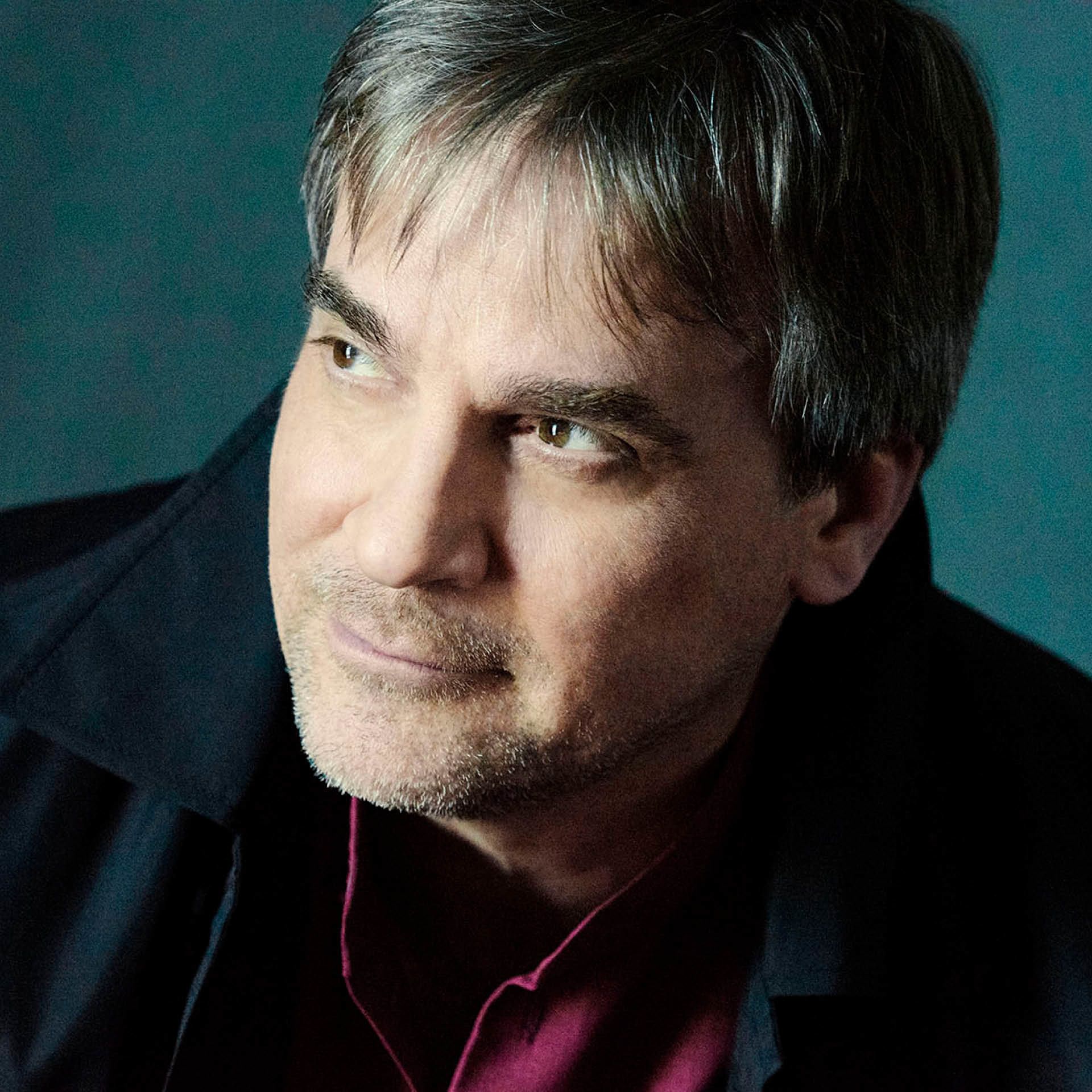
Photo: Marco Borggreve
Photo: Marco Borggreve
John Storgårds studied the violin with Chaim Taub and subsequently became concertmaster of the Swedish Radio Symphony Orchestra under Esa-Pekka Salonen, before studying conducting with Jorma Panula and Eri Klas. He is Chief Guest Conductor of the BBC Philharmonic, Principal Guest Conductor of Canada’s National Arts Centre Orchestra, Ottawa, and Artistic Director of the Lapland Chamber Orchestra.
Highlights of the current season include the world premiere of Sebastian Fagerlund’s chamber symphony Auroral with the Tapiola Sinfonietta, the world premiere of Fazıl Say’s Phoenix, a concerto for two pianos with Lucas and Arthur Jussen and the Munich Philharmonic Orchestra, his return to the Gothenburg Symphony Orchestra for a ‘podium-swap’ in which he plays and shares conducting duties with Barbara Hannigan, and his return to the SWR Symphony Orchestra. In June he makes his debut with the Berlin Philharmonic Orchestra in a programme featuring Bruckner’s Sixth Symphony and the world premiere of Gerald Barry’s Double Bass Concerto.
John Storgårds’s award-winning discography includes recordings of music by Schumann, Mozart, Beethoven and Haydn, as well as rarities by Holmboe and Vasks featuring him as soloist. With the BBC Philharmonic he has recorded symphony cycles by Sibelius and Nielsen, and embarked upon a series of the late symphonies of Shostakovich. With the Lapland CO he has recorded Mahler’s Symphony No. 10 in a chamber orchestra arrangement by Michelle Castelletti and music by Finnish composer Outi Tarkiainen. His disc of works by Rautavaara was nominated for a Grammy and won a Gramophone Award in 2012.
Kostas Smoriginas bass-baritone
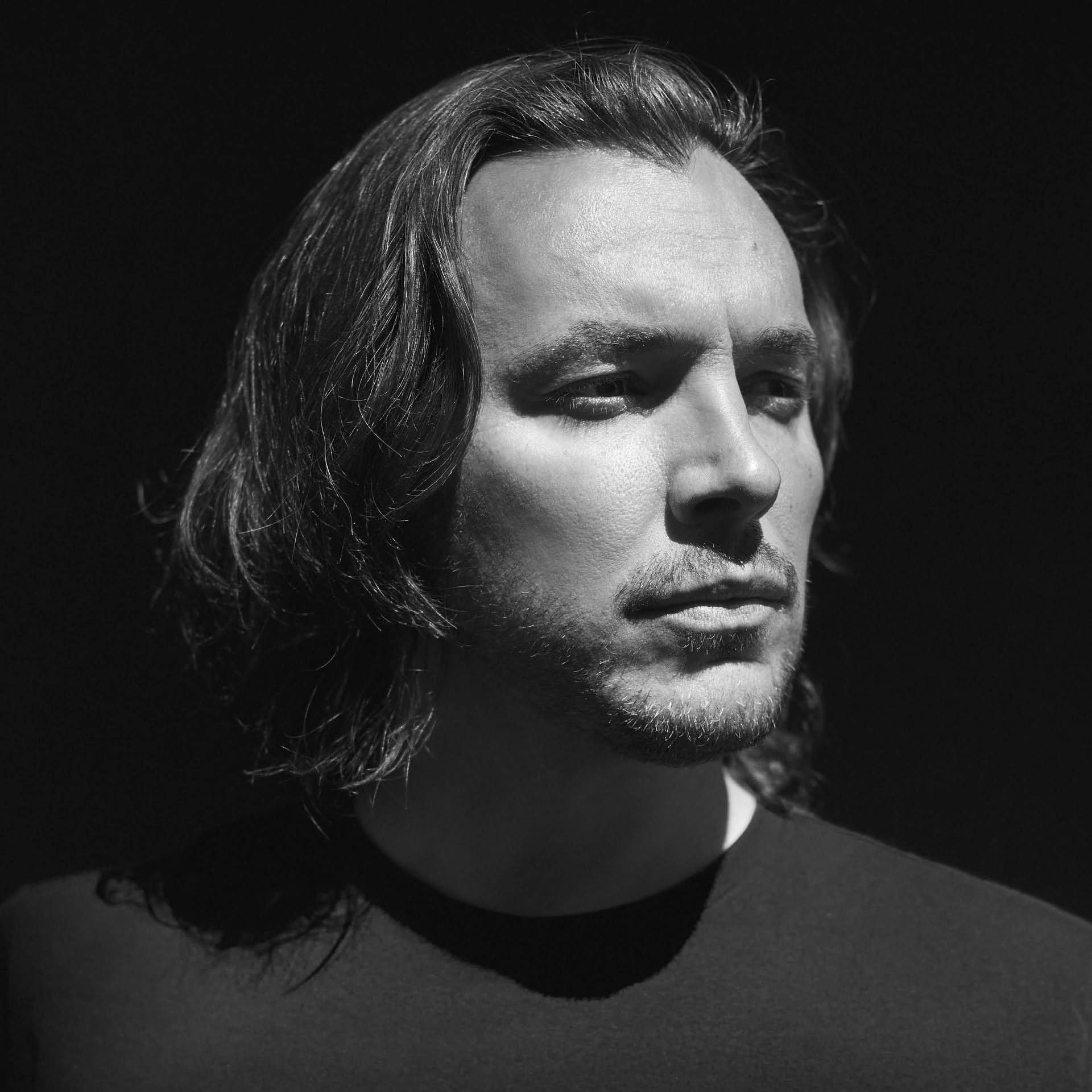
Photo: Monika Penkūkū
Photo: Monika Penkūkū
Lithuanian bass-baritone Kostas Smoriginas studied at the Lithuanian Music and Theatre Academy before representing his country at the BBC Cardiff Singer of the World competition. He studied at the Royal College of Music and was a member of the Jette Parker Young Artist Programme of the Royal Opera, Covent Garden.
He made his debut with the Berlin State Opera as Escamillo (Carmen) and has since performed the role with the Berlin Philharmonic Orchestra under Sir Simon Rattle (also recorded) and at the Salzburg Easter Festival, Santa Fe Music Festival, Dresden Semperoper, Beijing’s National Centre for the Performing Arts and Covent Garden. Highlights of the current season include his debut at the Zurich Opera House as Jochanaan (Salome), the title-role in Eugene Onegin for New Israeli Opera and Szymanowski’s Stabat mater with the Netherlands Radio Philharmonic Orchestra at the Amsterdam Concertgebouw.
Other operatic roles include Herald (Lohengrin) and Shchelkalov (Boris Godunov), which he has sung for the Royal Opera, Scarpia (Tosca) for Opéra de Rouen, Kurwenal (Tristan and Isolde) for Cologne Opera and with the Boston Symphony Orchestra under Andris Nelsons both in Boston and at Carnegie Hall, New York, and the title-roles in Don Giovanni for Opéra de Lausanne and The Marriage of Figaro in Dresden.
Kostas Smoriginas made his BBC Proms debut in a 2009 performance of Stravinsky’s Les noces. His concert repertoire also includes the Requiems of Mozart, Verdi and Fauré, Brahms’s A German Requiem, Beethoven’s Ninth Symphony, Janáček’s Glagolitic Mass, Dvořák’s Te Deum, Rachmaninov’s The Bells and Shostakovich’s Symphony No. 13.
BBC Symphony Orchestra
The BBC Symphony Orchestra has been at the heart of British musical life since it was founded in 1930. It plays a central role in the BBC Proms at the Royal Albert Hall, performing at the First and Last Night each year in addition to regular appearances throughout the Proms season with the world’s leading conductors and soloists.
The BBC SO performs an annual season of concerts at the Barbican in London, where it is Associate Orchestra. Its commitment to contemporary music is demonstrated by a range of premieres each season, as well as Total Immersion days devoted to specific composers or themes. Highlights of the current season include concerts conducted by Sakari Oramo with music by Beethoven, Brahms, Ruth Gipps, Dora Pejačević, Sibelius and others; performances with Principal Guest Conductor Dalia Stasevska, including the devised work Concerto No. 1: SERMON by Davóne Tines, combining music and poetry in a unique examination of racial justice; children’s author Jacqueline Wilson reading from her best-selling books in a family concert; the world premiere of Up for Grabs by composer and Arsenal fanatic Mark-Anthony Turnage; the BBC Symphony Chorus’s return to the Barbican stage for performances including live accompaniment of Vaughan Williams’s score to the film Scott of the Antarctic; a performance with Jules Buckley and Canadian singer-songwriter Patrick Watson; a concert celebrating the 100th anniversary of the BBC; and two Total Immersion days, one focusing on music composed in the camps and ghettos of Nazi-occupied Europe and one featuring the music of Frank Zappa. Guest conductors include Alpesh Chauhan, Jukka-Pekka Saraste, Jordan de Souza and Nathalie Stutzmann.
The vast majority of performances are broadcast on BBC Radio 3 and a number of studio recordings each season are free to attend. These often feature up-and-coming new talent, including members of BBC Radio 3’s New Generation Artists scheme. All broadcasts are available for 30 days on BBC Sounds and the BBC SO can also be seen on BBC TV and BBC iPlayer and heard on the BBC’s online archive, Experience Classical.
The BBC Symphony Orchestra and Chorus – alongside the BBC Concert Orchestra, BBC Singers and BBC Proms – also offer enjoyable and innovative education and community activities and take a leading role in the BBC Ten Pieces and BBC Young Composer programmes.
Chief Conductor
Sakari Oramo
Principal Guest Conductor
Dalia Stasevska
Günter Wand Conducting Chair
Semyon Bychkov
Conductor Laureate
Sir Andrew Davis
Creative Artist in Association
Jules Buckley
First Violins
Stephen Bryant leader
Raymond Liu
Jenny King
Celia Waterhouse
Colin Huber
Shirley Turner
Ni Do
Molly Cockburn
Liz Partridge
James Wicks
Ruth Schulten
Zanete Uskane
Lynette Wyn
Raja Halder
Amanda Smith
Kate Cole
Second Violins
Heather Hohmann
Ellie Consta
Daniel Meyer
Vanessa Hughes
Danny Fajardo
Tammy Se
Caroline Cooper
Victoria Hodgson
Lucica Trita
Raja Halder
Sioni Fraser
Jamie Hutchinson
Aisling Manning
Barbara Dziewięcka-Data
Violas
Rachel Roberts
Philip Hall
Joshua Hayward
Nikos Zarb
Audrey Henning
Natalie Taylor
Michael Leaver
Carolyn Scott
Mary Whittle
Peter Mallinson
Matthias Wiesner
Linda Kidwell
Cellos
Timothy Walden
Tamsy Kaner
Graham Bradshaw
Mark Sheridan
Sarah Hedley Miller
Michael Atkinson
Augusta Harris
Becky Leyton
Jane Lindsay
Helen Rathbone
Double Basses
Lynda Houghton
Richard Alsop
Michael Clarke
Beverley Jones
Josie Ellis
Elen Pan
Lucy Hare
Alice Kent
Flutes
Daniel Pailthorpe
Tomoka Mukai
Fergus Davidson
Piccolo
Kathleen Stevenson
Oboes
Tom Blomfield
Imogen Smith
Clarinets
Richard Hosford
Marie Lloyd
E flat Clarinet
James Burke
Bass Clarinet
Thomas Lessels
Bassoons
Emily Hultmark
Lorna West
Contrabassoon
Steven Magee
Horns
Nicholas Korth
Michael Murray
Mark Wood
Nicholas Hougham
Mark Wood
Phillippa Koushk-Jalali
Trumpets
Philip Cobb
Joseph Atkins
Kaitlin Wild
Martin Hurrell
Trombones
Byron Fulcher
Dan Jenkins
Duncan Wilson
Bass Trombone
Robert O’Neill
Tuba
Sam Elliott
Timpani
Christopher Hind
Percussion
Alex Neal
Fiona Ritchie
Joe Cooper
Jess Wood
Harp
Anne-Sophie Bertrand
Piano/Celesta
Elizabeth Burley
The list of players was correct at the time of publication