
Festivals of Sound
Sunday 8/9/24, 3.00pm
BBC Hoddinott Hall, Cardiff


Johannes Brahms
Academic Festival Overture10’
Pyotr Tchaikovsky
Violin Concerto33’
INTERVAL: 20 minutes
Antonín Dvořák
Symphony No. 641’
Jaime Martínconductor
Nemanja Radulović violin


The concert is being recorded by BBC Radio 3 for future broadcast in Classical Live; it will be available for 30 days after broadcast via BBC Sounds, where you can also find podcasts and music mixes.
Introduction

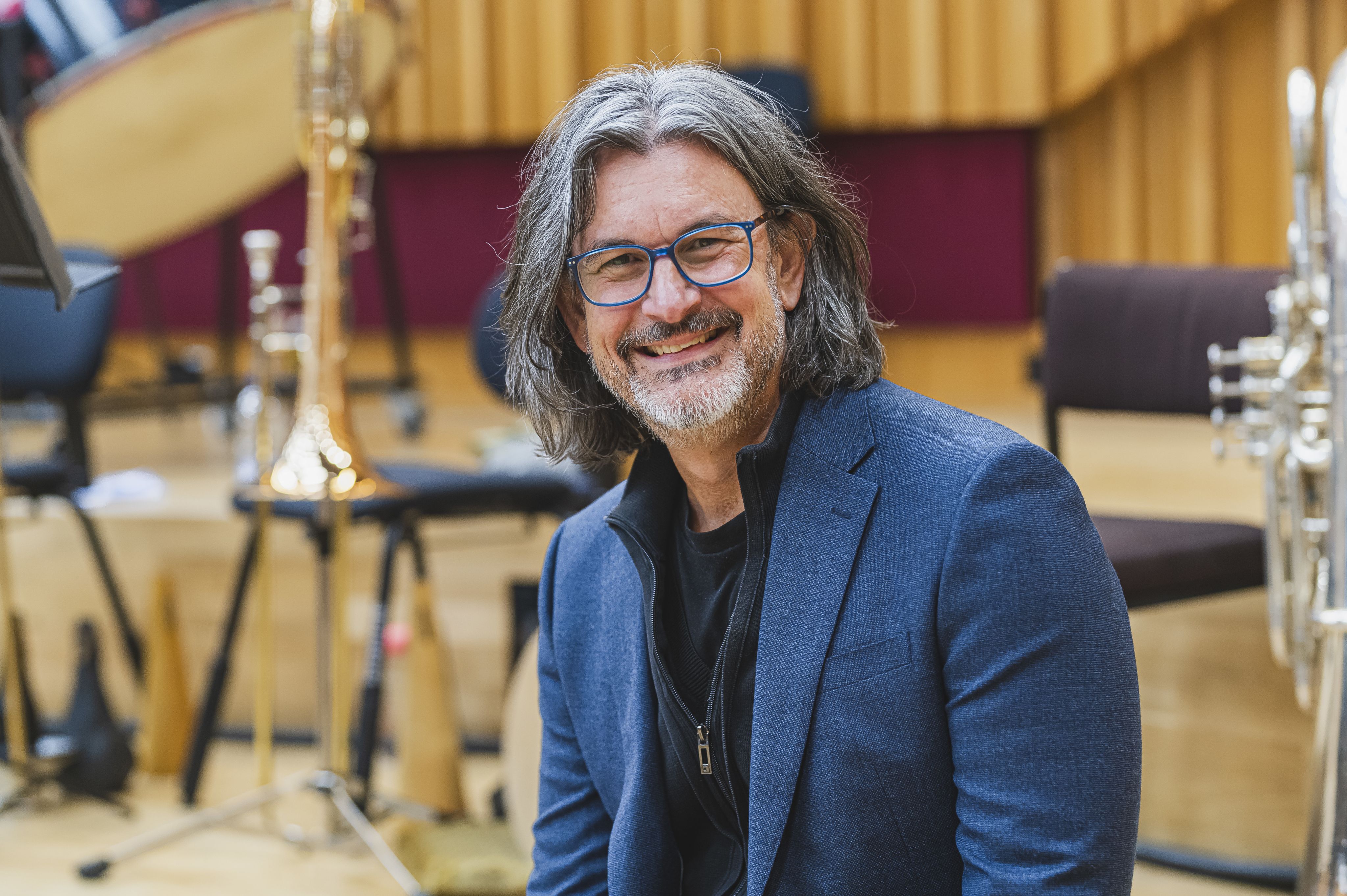
Photo: Kirsten McTernan
Photo: Kirsten McTernan
What better way to ease ourselves into the 2024/25 Hoddinott Hall season than under the baton of our new Principal Guest Conductor Jaime Martín. We open with Brahms’s musical thank you to the University of Breslau for an honorary doctorate: his Academic Festival Overture blends traditional student songs with quirky orchestration to create moods of lyricism, rambunctiousness and an irrepressible feeling of fun.
Tchaikovsky – like Brahms, rarely short of creative ideas – wrote his Violin Concerto in just two weeks. It has a winning combination of memorable melodies, rousing brilliance and enchanting simplicity, all crowned by crackling virtuosity from the solo part, performed here by the fabulous Nemanja Radulović. We end with Dvořák’s Sixth Symphony, arguably his first displaying complete mastery, with the composer’s ear for colour, warm expressiveness and fiery Bohemian spirit in perfect harmony.
Enjoy!
Matthew Wood
Head of Artistic Planning and Production
Please respect your fellow audience members and those listening at home. Turn off all mobile phones and electronic devices during the performance. Photography and recording are not permitted.
Johannes Brahms(1833–97)
Academic Festival Overture, Op. 80 (1880)

Brahms’s academic training was fairly basic. He mostly taught himself, which makes the range and depth of knowledge he achieved all the more impressive. But as a young man he’d thrown himself into the student social life of Göttingen University, and memories of those escapades – and of the students’ robust drinking songs – stayed with him. So when, in 1879, the University of Breslau awarded him the title of Honorary Doctor of Philosophy, Brahms responded with an overture which wasn’t quite the solemn, intellectually rigorous affair its title seemed to promise.
In essence, the Academic Festival Overture is a symphonic development of four student songs: the patriotic ‘Ich hab mich ergeben’ (‘I am devoted to you with heart and hand’), which appears near the opening on resplendent brass, then ‘Hört, ich sing das Lied der Lieder’ (‘Listen, I sing the song of songs’) in praise of beauty, then ‘Was kommt dort von der Höh?’ (‘What comes from up yonder?’), launched by two perky bassoons, traditionally sung at initiation rites for new students. Finally, ‘Gaudeamus igitur’ (‘So let us rejoice’) sounds triumphantly on winds through a rich brocade of glittering percussion and surging strings.
Programme note © Stephen Johnson
Pyotr Tchaikovsky(1840–93)
Violin Concerto in D major, Op. 35 (1878)
1 Allegro moderato – Moderato assai
2 Canzonetta: Andante –
3 Finale: Allegro vivacissimo
Nemanja Radulovićviolin
Tchaikovsky’s Violin Concerto is one of the brightest and most joyfully exuberant works he ever created. Yes, there are fleeting shadows, but still it’s hard to believe that this music could have emerged after one of the deepest and most painful crises in this crisis-prone composer’s life. In 1877, the year before he composed the concerto, the not-quite openly homosexual Tchaikovsky startled his friends by announcing that he was getting married to one of his students. Unfortunately, it seems his bride-to-be, the 29-year-old Antonina Miliukova, either misunderstood or refused to accept the terms and conditions of their marriage (there was to be no physical intimacy), and a distraught Tchaikovsky soon fled the marital home, and later the country. He even appears to have attempted suicide by drowning himself, though the accounts are confusing. As he later confessed, ‘for some months on end I was a bit insane’.
As so often, what seems to have helped Tchaikovsky out of this partial ‘insanity’ was composing. Feelings of anguish and depression – and perhaps also guilt – can be heard in his next two major works: the ‘Fate’-haunted Fourth Symphony and the opera Eugene Onegin (both composed in 1877–8). Then in 1878, at a Swiss lakeside resort, he at last found the peace and stimulation he needed. When the young violinist Iosif Kotek, with whom Tchaikovsky had once been in love, turned up with a pile of music, the effect on the composer was almost immediate. One of the works the two men played together was Édouard Lalo’s Symphonie espagnole, a work full of the flavour and atmosphere of the warm South, with a prominent and challenging solo violin part. Tchaikovsky was delighted with the piece: ‘It has a lot of freshness, lightness, of piquant rhythms, of beautiful and excellently harmonised melodies …’
Soon Tchaikovsky was working on a Violin Concerto, in which the sense of relief and returning joie de vivre speak on almost every page – at least in the outer two movements. The long first movement balances lyrical and virtuosic elements beautifully: the violin dazzles one moment, sings the next. But it is brilliance and vitality that triumph at the end. The Canzonetta that follows is a long outpouring of sweetly melancholic melody, led by violin, unusually, muted throughout, but the melancholy here is not of the soul-scouring kind: the emotional peaks and troughs negotiated in the Fourth Symphony and Eugene Onegin are safely in the past – for the moment at least. Then a brief solo cadenza leads confidently into the scintillating Finale, full of the flavour of Russian folk-dance music – a heady aromatic cocktail of vodka fumes, fried onions and creaking, high-kicking leather boots. Even in voluntary exile, Tchaikovsky hadn’t forgotten his motherland.
Programme note © Stephen Johnson
INTERVAL: 20 minutes
Antonín Dvořák(1841–1904)
Symphony No. 6 in D major, Op. 60(1880)
1 Allegro non tanto
2 Adagio
3 Scherzo (Furiant): Presto – Trio: Poco meno mosso – Scherzo
4 Finale: Allegro con spirito
It often needs only a simple stroke to transform a lame musical idea into a great one. Dvořák’s first idea for the opening movement of his Sixth Symphony was a tune in the minor key, based on a Czech folksong, in a pedestrian two-time. Then inspiration struck: Dvořák altered the theme from minor to major, and a fast three beats per bar replaced the original two. Instead of a pleasant folksy tune we have a truly symphonic theme with an impressive swinging, waltz-like momentum. From this glorious beginning the composer was able to create his first truly great symphonic opening movement.
Another thing that’s new about the Sixth Symphony is the complete assurance of the orchestral writing. There may be fine magical touches of instrumental colour in Dvořák’s earlier symphonies, but there are also passages where the textures can sound muddy or coarse-grained. The freshness and refinement of the Sixth’s sound-world is never compromised. We can also sense how much Dvořák’s thinking was influenced by nature – birdsong and the sounds of wind and water, as well as the ‘unpolished’ music of the Czech rural communities he’d known from boyhood.
This new mastery was no doubt partly due to the encouragement of the conductor Hans Richter, who in 1879 had given a splendid performance of Dvořák’s Third Slavonic Rhapsody in Berlin in the presence of the composer. Not only was the audience loudly enthusiastic, but Richter himself pulled the composer out of his seat and embraced him on the concert platform. Afterwards Richter took Dvořák to dinner and made him promise to write a symphony for him. The result was the Sixth, completed in the summer of 1880 – though only, as we’ve seen, after at least one false start. Dvořák clearly realised that he had to turn out something extra special for a star conductor such as Richter, which may explain why the first movement’s leading idea took time to shape itself – the burden of high expectation can be creatively inhibiting.
A song-like Adagio, again folk-flavoured, follows the sustained flight of the first movement. Then comes a more direct invocation of Czech folk music in the Scherzo. Its subtitle is ‘Furiant’: a reference to a wild dance in a constantly shifting rhythm. Dvořák’s main theme drives forward on a typical pattern of one-two–one-two–one-two alternating with one-two-three–one-two-three. A gentler pastoral Trio section follows, in which Dvořák makes unusual and very touching lyrical use of a solo piccolo. The Finale makes no secret of its debt to Dvořák’s hero and mentor Johannes Brahms: the opening theme of this movement and that of Brahms’s Second Symphony (also in D major) are clearly related. But this is an act of homage, not of outright theft, and the movement as a whole is fully independent in spirit, building confidently to one of Dvořák’s most exhilarating endings.
Programme note © Stephen Johnson
Help Us Improve Our Online Programmes.
Please take this 5-minute survey and let us know what you think of these notes.
Programme Survey
You may also like:
Sir Stephen Hough plays Brahms
Thursday 3/10/24, 7.30pm
Brangwyn Hall, Swansea
Brahms Piano Concerto No. 1
Brahms, arr. Schoenberg Piano Quartet No. 1
Ryan Bancroft conductor
Sir Stephen Hough piano
MASTERFUL | RADIANT | LIVELY
World renowned pianist Sir Stephen Hough joins BBC National Orchestra of Wales and Principal Conductor Ryan Bancroft to launch the 2024/25 season in Swansea with a programme of Brahms and beginning with his mighty First Piano Concerto.
Uncompromising and masterful, this work remains a favourite with audiences and performers alike. From the strength of its highly symphonic first movement via a radiant slow movement to the jaunty finale, this concerto shows a fascinating blend of musical heritage with a progressive outlook that is uniquely Brahmsian.
Premiered in 1861, and orchestrated by Schoenberg in 1937, Brahms’s First Piano Quartet is an ingenious display of variation and transformation. Taking musical ideas and immediately exploring their possibilities paves the way for a constantly developing large-scale showcase of elegance, radiance and exhilaration.
Dancing & Deities
BSL Interpretation
Thursday 21/11/24, 7.30pm
BBC Hoddinott Hall, Cardiff
Rossini, arr. Respighi La boutique fantasque – suite
Rossini Stabat mater
Nil Venditti conductor
Masabane Cecilia Rangwanasha soprano
Marianna Pizzolato mezzo-soprano
Levy Segkapane tenor
Ashley Riches bass-baritone
BBC National Chorus of Wales
THEATRICAL | MAGICAL | ENTRANCING
Imagine dancing dolls in a magical toy shop, and a pair of fabulous cancan dancers plotting to stay together at any cost and you have the charming story of La boutique fantasque. With its vibrant and whimsical music (arranged by Ottorino Respighi from piano pieces by Gioachino Rossini) this ballet is a sequence of exquisite dances, each more lively than the last, making for a joyful listening experience.
In contrast Rossini’s own Stabat mater is a work which teeters on the edge of sacred sentimentality and overt operatics. The bravura and rollickingly memorable tunes of the ‘Cujus animam’ and the fire and brimstone of ‘Inflammatus et accensus’ seamlessly interweave with the unequivocally sacred qualities of the ‘Eja mater’ and ‘Quando corpus morietur’ – a true masterpiece that is heartfelt, expressive and vocally shapely yet rhythmic and outspokenly operatic.
Biographies
Jaime Martínconductor

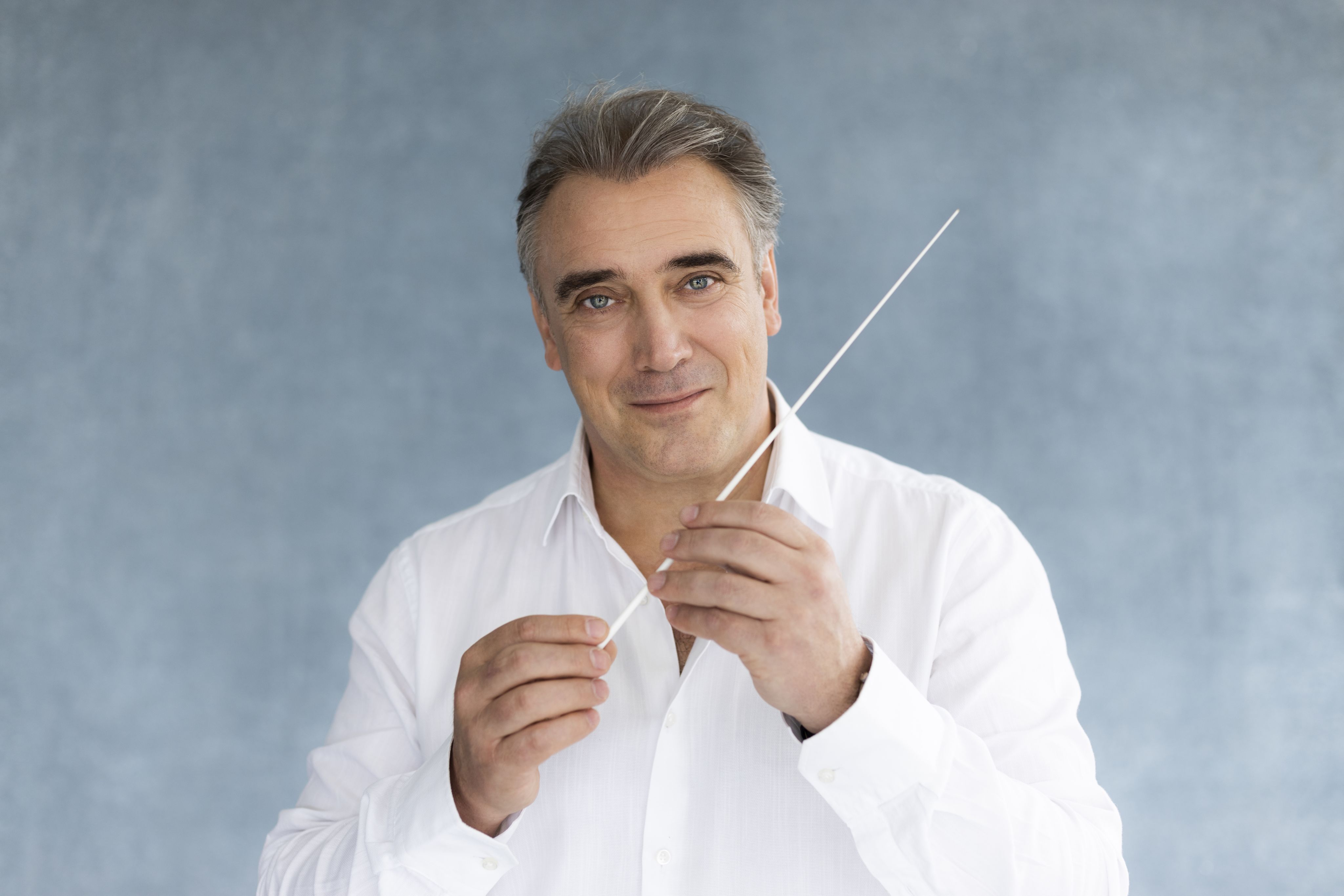
Paul Marc Mitchell
Paul Marc Mitchell
Spanish conductor Jaime Martín is Chief Conductor of the Melbourne Symphony Orchestra, Music Director of the Los Angeles Chamber Orchestra and Principal Guest Conductor of the BBC National Orchestra of Wales. He was Chief Conductor of the National Symphony Orchestra of Ireland (2019–24), Principal Guest Conductor of the Spanish National Orchestra (2022–24) and Artistic Director and Principal Conductor of the Gävle Symphony Orchestra (2013–22).
Recent highlights include acclaimed debuts with the Dallas and Indianapolis Symphony orchestras and the Dresden Philharmonic, a UK tour with the Gävle Symphony and his debut as a conductor at last year’s BBC Proms. This season he has made his debut with the Budapest Festival Orchestra, and returned to the Royal Stockholm Philharmonic orchestras, Castile and León, Colorado, Galicia and Queensland Symphony orchestras and BBC National Orchestra of Wales.
Jaime Martín’s debut recording with the Melbourne Symphony Orchestra (songs by Debussy and Richard Strauss with Siobhan Stagg) was released earlier this year. He has recorded Mozart’s wind concertos with the London Symphony Orchestra, a series of Brahms recordings with the Gävle SO, a disc of choral works with the Eric Ericson Chamber Choir, as well as most recently works by Swedish composer Melcher Melchers.
Before turning to conducting full-time in 2013, he was principal flute of the Royal Philharmonic Orchestra, Chamber Orchestra of Europe, English National Opera and London Philharmonic Orchestra.
Nemanja Radulovićviolin

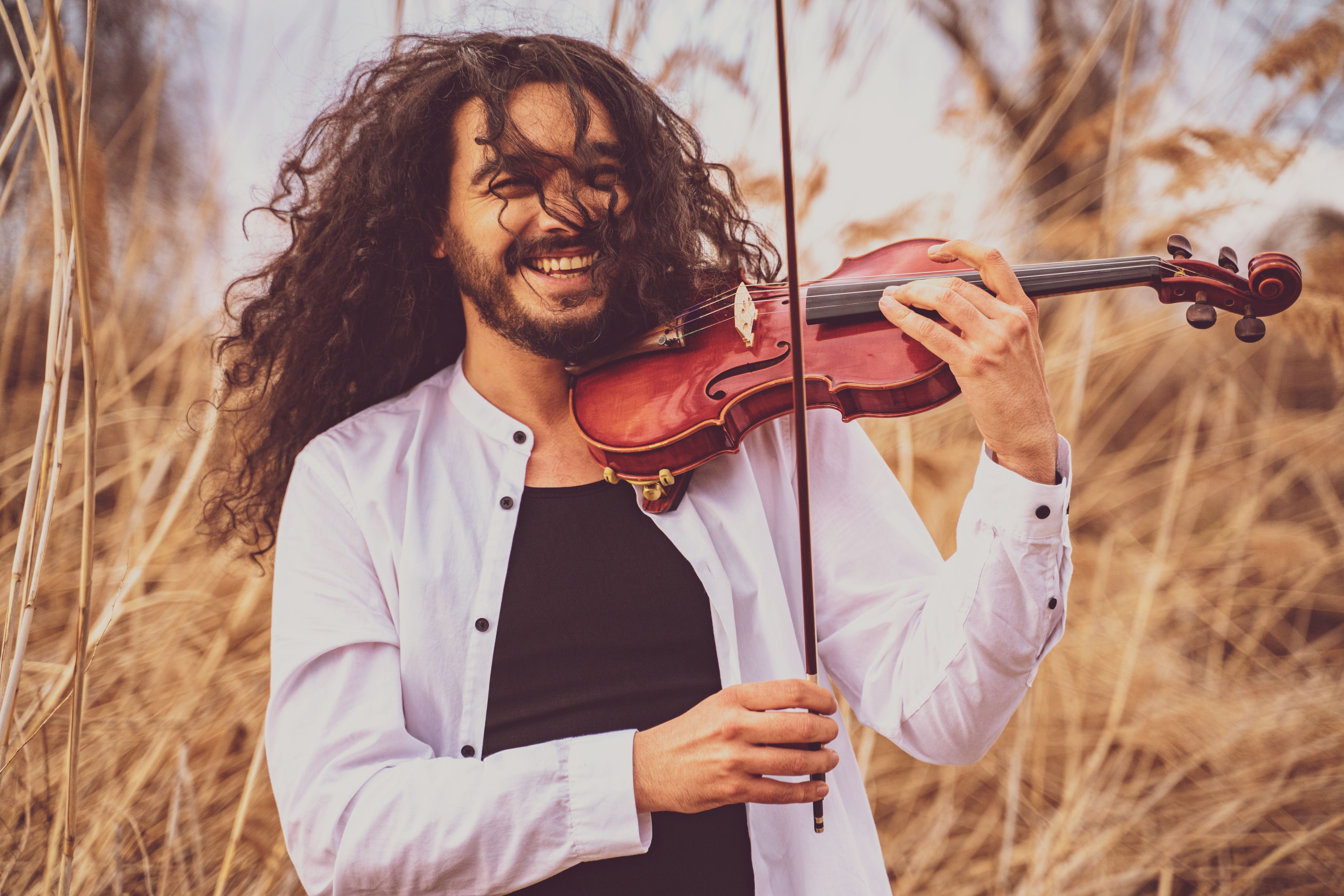
Sever Zolak
Sever Zolak
Serbian-French violinist Nemanja Radulović is the winner of several competitions, including the Joseph Joachim and Stradivarius violin competitions and George Enescu Competition, and was named ECHO Klassik Newcomer of the Year in 2015.
He has appeared with the world’s leading orchestras, including the Bilbao, Düsseldorf, Gothenburg, Montreal, Queensland, RAI National, Sydney, Tokyo, WDR and Yomiuri Nippon Symphony orchestras, the Copenhagen, Munich, Netherlands Radio, Royal, Royal Liverpool and Tampere Philharmonic orchestras, Deutsches Symphonie-Orchester Berlin, Orchestre Philharmonique de Radio France, Staatskapelle Dresden and the national orchestras of Belgium, Ireland and Spain.
He has given recitals at such notable venues as the Amsterdam Concertgebouw, Berlin Philharmonie, Carnegie Hall, Salle Pleyel, Suntory Hall, Teatro Colón and the Théâtre des Champs-Élysées.
Recent and forthcoming highlights include debuts with Deutsche Kammerphilharmonie Bremen, the Hallé, Los Angeles Chamber Orchestra, New York Philharmonic, Philharmonia Orchestra and Quebec Symphony Orchestra and performances with his chamber orchestra Double Sens (with which he plays and directs).
The most recent addition to his extensive discography is a recording of Beethoven’s Violin Concerto and his own arrangement of Beethoven’s ‘Kreutzer’ Sonata. Nemanja Radulović was appointed Chevalier de l’Ordre des Arts et des Lettres by the French government in 2017.
BBC National Orchestra of Wales
For over 90 years, the BBC National Orchestra of Wales, the only professional symphony orchestra in Wales, has played an integral part in the cultural landscape of the country, occupying a distinctive role as both a broadcast and national orchestra, and serving as an ambassador of Welsh culture, regularly performing music created in Wales and championing Welsh composers and artists.
Part of BBC Cymru Wales and supported by the Arts Council of Wales, BBC NOW performs a busy schedule of concerts and broadcasts, working with acclaimed conductors and soloists from across the world, including its Principal Conductor, the award-winning Ryan Bancroft.
The orchestra is committed to working in partnership with community groups and charities, taking music out of the concert hall and into settings such as schools and hospitals to enable others to experience and be empowered by music. It undertakes workshops, concerts and side-by-side performances to inspire and encourage the next generation of performers, composers and arts leaders, and welcomes thousands of young people and community members annually through its outreach and education projects.
BBC NOW performs annually at the BBC Proms and biennially at the BBC Cardiff Singer of the World competition, and its concerts can be heard regularly across the BBC – on Radio 3, Radio Wales and Radio Cymru. On screen, music performed by BBC NOW can be heard widely across the BBC and other global channels, including the soundtrack and theme tune for Doctor Who, Planet Earth III, Prehistoric Planet, The Pact and Children in Need.
Based at BBC Hoddinott Hall, Cardiff Bay, BBC NOW utilises a state-of-the-art recording studio with a camera system for livestreams and TV broadcasts to bring BBC NOW’s music to a broader audience across Wales and the world. For more information about BBC NOW please visit bbc.co.uk/now
Patron
HM King Charles III KG KT PC GCB
Principal Conductor
Ryan Bancroft
PrincipalGuest Conductor
Jaime Martín
Conductor Laureate
Tadaaki Otaka CBE
Composer-in-Association
Gavin Higgins
First Violins
Lesley Hatfield leader
Nick Whiting associate leader
Martin Gwilym-Jones sub-leader
Gwenllian Hâf MacDonald
Terry Porteus
Suzanne Casey
Ruth Heney
Alejandro Trigo
Emilie Godden
Anna Cleworth
Žanete Uškāne
Juan Gonzalez
Amy Fletcher
Jane Sinclair
Second Violins
Anna Smith *
Laura Emberey
Ros Butler
Michael Topping
Roussanka Karatchivieva
Lydia Caines
Vickie Ringguth
Ilze Abola
Beverley Wescott
Joseph Williams
Katherine Miller
Gary George-Veale
Violas
Chris Yates ‡
Tetsuumi Nagata
Peter Taylor
Robert Gibbons
Catherine Palmer
Lowri Thomas
Lydia Abell
Anna Growns
Ania Leadbeater
Charlotte Limb
Cellos
Jesper Svedberg ‡
Jessica Feaver
Sandy Bartai
Rachel Ford
Keith Hewitt
Carolyn Hewitt
Alistair Howes
Katy Cox
Double Basses
Alexander Jones #
Richard Gibbons
Georgia Lloyd
Ketan Curtis
Daniel Vassallo
Callum Duggan
Flutes
Matthew Featherstone *
John Hall †
Lindsey Ellis
Piccolo
Lindsey Ellis †
Oboes
Steve Hudson *
David Hedley
Clarinets
Nicholas Carpenter *
Emídio André Costa
Bassoons
Jarosław Augustiniak *
Andres Yauri
Contrabassoon
David Buckland †
Horns
Tim Thorpe *
Meilyr Hughes
Neil Shewan †
Jack Sewter
John Davy
Trumpets
Philippe Schartz *
Robert Samuel
Corey Morris †
Trombones
Donal Bannister*
Dafydd Thomas
Bass Trombone
Darren Smith †
Tuba
Daniel Trodden †
Timpani
Rhys Matthews ‡
Percussion
Phil Girling ‡
Phil Hughes
Andrea Porter
* Section Principal
† Principal
‡ Guest Principal
# Assistant String Principal
The list of players was correct at the time of publication
Director Lisa Tregale
Orchestra Manager Liz Williams
Assistant Orchestra Manager Nick Olsen **
Orchestra Personnel ManagerKevin Myers
Business Coordinator Georgia Dandy
Orchestra Administrator Eleanor Hall +
Head of Artistic Planning and ProductionMatthew Wood
Artists and Projects Manager Victoria Massocchi **
Orchestra Librarian vacancy
Producer Mike Sims
Broadcast Assistant Kate Marsden
Head of Marketing and Audiences Sassy Hicks
Marketing Coordinator Amy Campbell-Nichols +
Digital Producer Yusef Bastawy **
Social Media Coordinator Harriet Baugh
Education Producers Beatrice Carey, Rachel Naylor maternity cover
Audio Supervisors Simon Smith, Andrew Smillie
Production Business Manager Lisa Blofeld
Stage and Technical Manager Steven Brown +
Assistant Stage and Technical Manager Josh Mead +
+ Green Team member
** Diversity & Inclusion Forum