Nobody Knows the Trouble I See
Friday 10/3/23, 7.30pm


Ludwig van Beethoven
Overture ‘Leonore’ No. 3 14’
Bernd Alois Zimmermann
Nobody Knows de Trouble I See 15’
INTERVAL: 20 minutes
Anton Bruckner
Symphony No. 0 46’
Simon Höfele trumpet
Ryan Bancroftconductor


This concert is being broadcast live by BBC Radio 3 in Radio 3 in Concert. It will be available to stream or download for 30 days via BBC Sounds, where you can also find podcasts and music mixes. Visit bbc.co.uk/now for more information on future performances.
Introduction

Welcome to tonight’s concert, for which BBC NOW is joined once again by our Principal Conductor Ryan Bancroft.
We begin in stirring fashion with Beethoven’s ‘Leonore’ No. 3, one of no fewer than four overtures he produced for his sole opera, Fidelio. With its darkness-to-light drama, this is the composer in his most heroic vein.
We close with Bruckner’s Symphony No. 0: the unorthodox numbering derives from the fact that he initially rejected it, and it was only rediscovered posthumously. It is full of Bruckner’s trademarks, with writing of simple melodic beauty contrasting with great, surging climaxes and, underpinning everything, a strong musical framework.
We’re delighted to welcome the trumpet player Simon Höfele to perform Zimmermann’s extraordinarily inventive concerto Nobody Knows de Trouble I See, a work that daringly juxtaposes a wide array of musical styles with complete aplomb.
Enjoy!
Matthew Wood
Head of Artistic Production
Please respect your fellow audience members and those listening at home. Turn off all mobile phones and electronic devices during the performance. Photography and recording are not permitted.
Ludwig van Beethoven (1770–1827)
Overture ‘Leonore’ No. 3, Op. 72b (1806)

In all of Beethoven’s output, nothing was subject to quite the same torturous process of composition as his only opera, Fidelio. ‘Of all my children, this is the one that cost me the worst birth-pangs and brought me the most sorrow’, he later lamented to his biographer, ‘and for that reason it is the one most dear to me.’ Fidelio, as the opera would eventually become known, began life as Leonore in 1803. But the three-act Leonore (originally named after the heroine) was subsequently revised and reduced into the two-act Fidelio (‘the faithful one’), and was not premiered in its final version until 11 years later.
The overture, meanwhile, appeared in no fewer than four separate versions, of which the second incarnation – confusingly now known as ‘Leonore’ No. 3 – seems to have earned its place as the concert hall favourite. While the fourth and final Fidelio overture would take themes from the opera and use them to create a chronological précis of the opera’s main dramatic action, No. 3 was instead composed as a dramatic curtain-raiser in its own right. Indeed, its tone is so dramatic that it is often at risk of overshadowing the opera itself, hence its more fitting place in the concert hall.
The overture begins morosely and in darkness in Florestan’s prison cell, his thoughts gradually drifting towards earlier, happier times. As minor transforms to major and Florestan’s fighting spirit returns, the overture unfurls into a buoyant work of irrepressible energy, a triumph of liberty in the face of adversity, the epitome of Beethoven’s ‘heroic’ style.
Programme note © Jo Kirkbride
Further Listening: Leipzig Gewandhaus Orchestra/Riccardo Chailly (Decca 4783492)
Further Reading: Beethoven (Master Musicians) Barry Cooper (OUP)
Bernd Alois Zimmermann (1918–70)
Nobody Knows de Trouble I See (1954)

Simon Höfeletrumpet
Bernd Alois Zimmermann was one of the most strikingly original composers of the German avant-garde after the Second World War. Most famous for his astonishing opera Die Soldaten (completed in 1964), he wrote the trumpet concerto Nobody Knows de Trouble I See (the title as published was a common rendering at the time) a little earlier in his career. It was commissioned by North-West German Radio and first performed in Hamburg on 11 October 1955 by the trumpeter Adolf Scherbaum, conducted by Ernest Bour. The title is explained by the composer in the score: throughout the work, he uses the African-American Spiritual ‘Nobody Knows the Trouble I See’ – a melody which had already made a memorable appearance in the concert hall as one of the spirituals in Michael Tippett’s A Child of Our Time (first performed in 1944). Zimmermann’s choice of this tune was also politically motivated: he saw it as a way to protest against racial hatred in the 1950s through his music.
Zimmermann’s concerto has very unusual scoring which underlines how important jazz was to him: as well as conventional orchestral wind instruments, the work has parts for five saxophones (three alto, tenor and baritone), three jazz trumpets (in addition to the soloist) and a percussion section which calls for three jazz players. Furthermore, the orchestral pianist is required to double on Hammond organ, an instrument heard to startling effect in places.
Using fragments (often heavily disguised) of ‘Nobody Knows’ as a melodic thread throughout the work, the musical language is an engrossing mixture of post-war 12-tone techniques, the occasional dash of Stravinsky and the exciting sonorities of contemporary jazz. This combination of styles appealed to Zimmermann as a way of merging compositional rigour with improvisatory flair. The concerto is in a single movement, marked throughout by splashes of surprising instrumental colour, with the soloist (and chief musical protagonist) as an almost constant voice over the ever-evolving orchestral sonorities, as Zimmermann veers gleefully from atonality to the full-throated roar of a Big Band, before eventually retreating into silence.
Programme note © Nigel Simeone
Further Listening: Alison Balsom; BBC Scottish Symphony Orchestra/Lawrence Renes (Warner Classics 6785902)
INTERVAL: 20 minutes
Anton Bruckner (1824–96)
Symphony No. 0 in D minor (1869)

1 Allegro
2 Andante
3 Scherzo: Presto – Trio: Langsamer und ruhiger
4 Finale: Moderato
Bruckner’s long quest for public recognition and symphonic mastery was beset by problems. His First Symphony was given its premiere in Linz on 9 May 1868 (conducted by the composer), and he wrote the present work between January and September 1869, intending it to be his Second Symphony (and describing it as such on the manuscript). Even at the height of his powers, Bruckner was chronically lacking in self-confidence – still more so at the start of his career. When the conductor Otto Dessoff looked at the score of the first movement and asked, ‘But where is your main theme?’, Bruckner was so distressed that he wrote on the title page that his work was ‘annulliert’ (annulled), and he changed the number to a zero. The symphony lay untouched for decades, until its value was eventually recognised in 1924: the year in which it was published (in Vienna) and first performed (in Klosterneuburg) to mark the centenary of Bruckner’s birth.
It certainly deserved this belated resurrection. The opening of the first movement is very characteristic, with an agitated violin ostinato over a steady bass line (a technique Bruckner was to use again, in the same key, at the start of his Third Symphony). A lyrical second theme is presented by the violins, while a third idea is sung out by the woodwind over tense string figurations. Bruckner treats all three themes to various kinds of repetition and development, surging to climaxes and then finding moments of repose. Eventually a coda provides an imposing affirmation of D minor.
The Andante slow movement (in B flat major) opens with a hymn-like string phrase, answered by the woodwind. The slowly unfolding chords and contrasted sonorities of strings and wind remind us, perhaps, that Bruckner was also a gifted organist – the effect is not unlike changing manuals on an organ. Next, a quietly propulsive accompaniment introduces a broad, highly expressive theme. Both main ideas are extended and developed and the mood is predominantly serene, returning at the very end to the same string chords with which the movement began.
The Scherzo is dramatic and urgent, marked by punchy rhythms, while its central Trio section is slower and more tender. After this rather spiky movement, the Finale begins with a slow introduction (very unusual in Bruckner) before the main idea arrives, initially thundered out by the whole orchestra in unison. The second theme is very different: a rather operatic tune over a pulsing accompaniment. Towards the end of the movement, Bruckner ratchets up the tension, before a moment of calm, then an abrupt change to the brighter key of D major for a brief, triumphant coda.
Programme note © Nigel Simeone
Further Listening: RSO Berlin/Riccardo Chailly (Decca 4215932)
Further Reading: The Cambridge Companion to Bruckner ed. John Williamson (CUP)
Help us Improve Our Online Programmes.
Please take this 5-minute survey and let us know what you think of these notes.
Programme Survey
Biographies
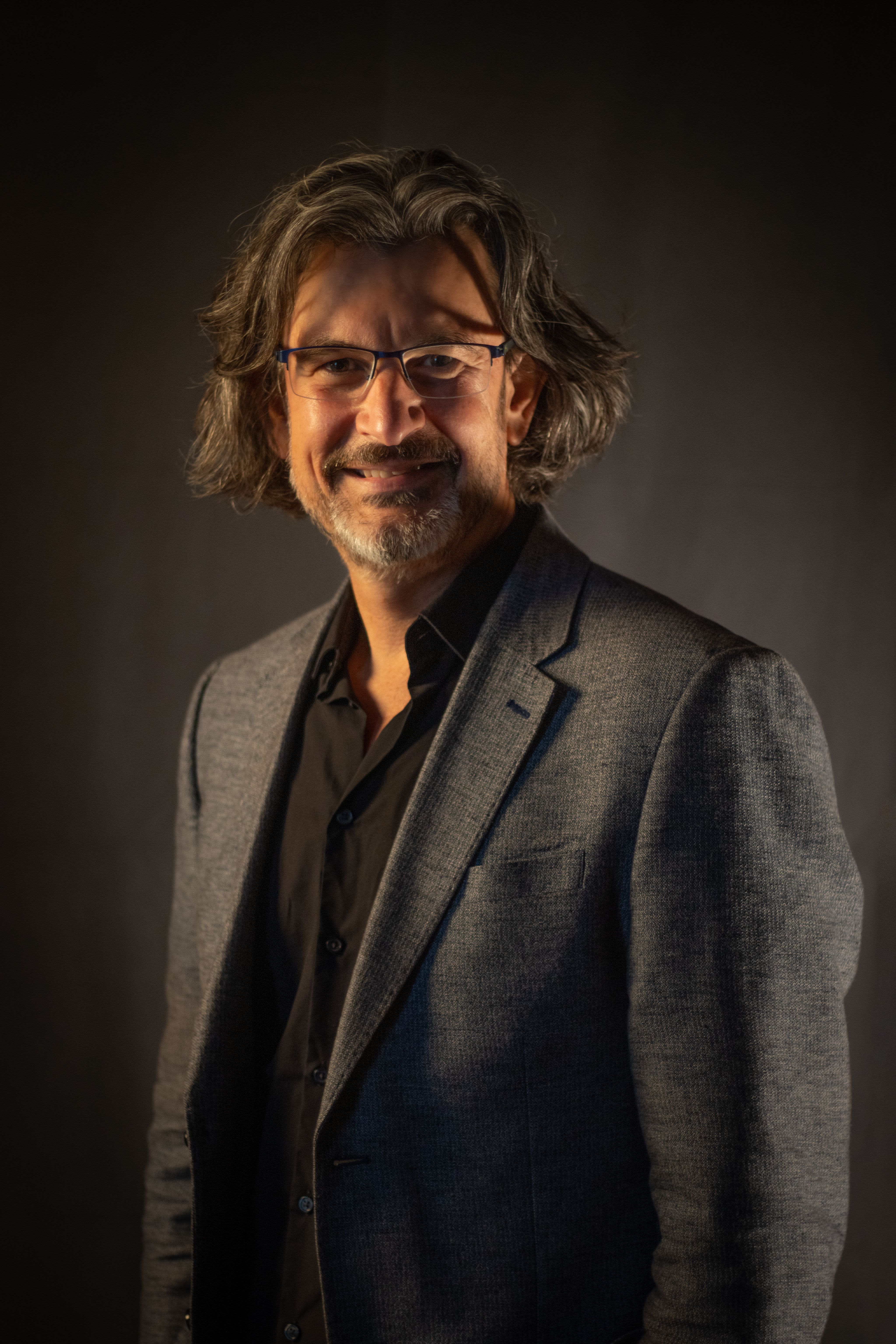
Ryan Bancroft conductor


Photo: Benjamin Ealovega
Photo: Benjamin Ealovega
Ryan Bancroft grew up in Los Angeles and first came to international attention in April 2018, when he won both First Prize and Audience Prize at the prestigious Malko Competition for Young Conductors in Copenhagen. Since September 2020 he has been Principal Conductor of BBC National Orchestra of Wales. Following his first visit to work with the Tapiola Sinfonietta he was invited to become its Artist-in-Association from the 2021–22 season. Last year he was announced as Chief Conductor Designate of the Royal Stockholm Philharmonic Orchestra and will take up the position next September.
He has made debuts with a number of leading European orchestras, including the Philharmonia, London and Rotterdam Philharmonic, BBC, Danish National and Swedish Radio Symphony orchestras, Toulouse Capitole Orchestra, RAI Turin and Ensemble Intercontemporain. In North America he has worked with the Baltimore, Houston and Toronto Symphony orchestras and this season makes debuts with the Dallas Symphony and Minnesota Orchestra. He also appears for the first time at Suntory Hall with the New Japan Philharmonic and Midori, at the Royal Festival Hall with the Philharmonia and Sir Stephen Hough and at the Royal Concertgebouw with the Netherlands Philharmonic. He also returns to the City of Birmingham, Gothenburg and Malmö Symphony orchestras.
He has a passion for contemporary music and has performed with Amsterdam’s Nieuw Ensemble, assisted Pierre Boulez in a performance of his Sur incises in Los Angeles, premiered works by Sofia Gubaidulina, Cage, Tenney and Anne LeBaron, and has worked closely with improvisers such as Wadada Leo Smith and Charlie Haden. He returns to work with the Ensemble Intercontemporain in March.
He studied at the California Institute of the Arts, Royal Conservatoire of Scotland and in the Netherlands.
Simon Höfele trumpet
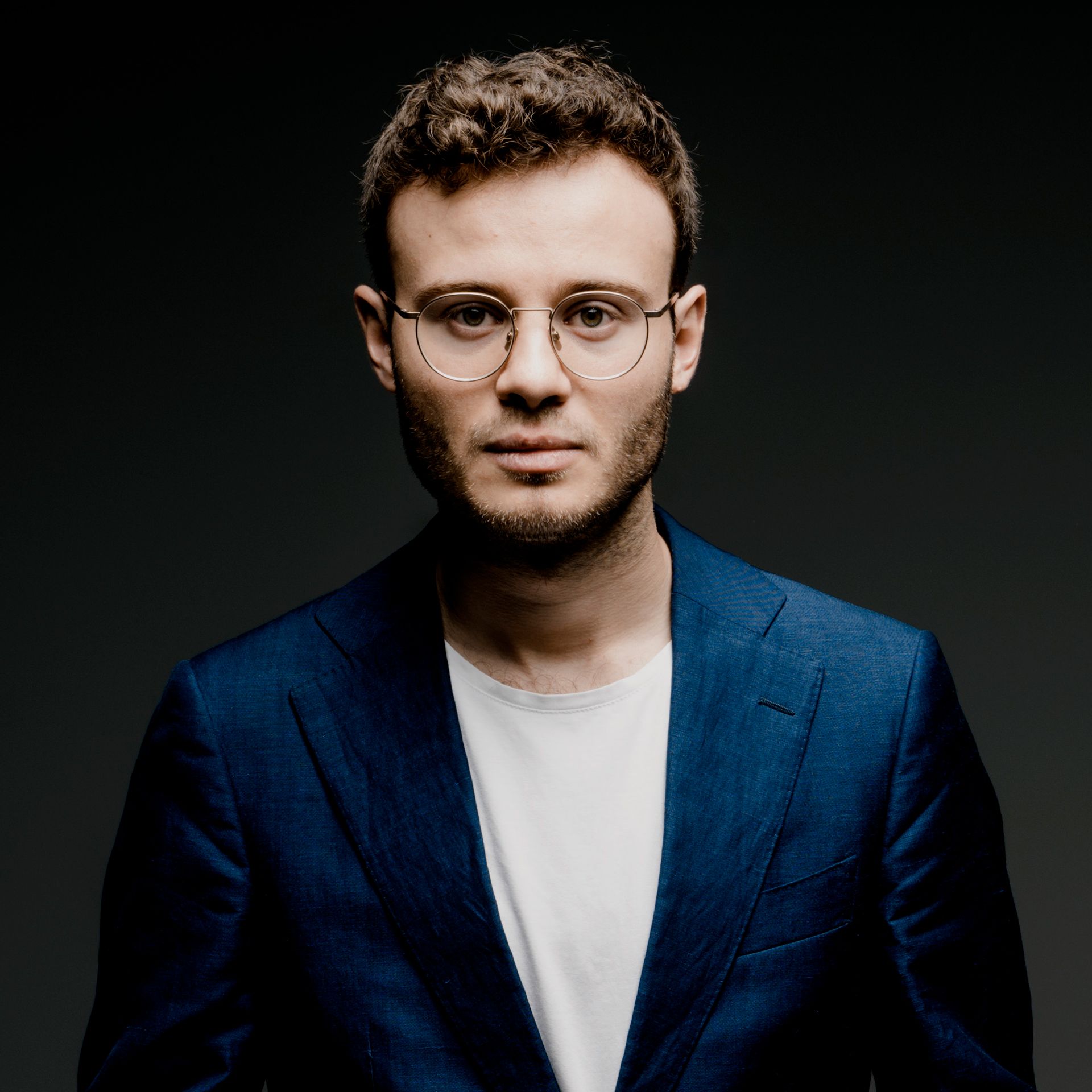
Photo: Marco Borggreve
Photo: Marco Borggreve
Simon Höfele won Germany’s major classical music prize, the Opus Klassik, in 2020, launching his international career.
He has already played with many leading orchestras and last season was Artist-in-Residence with the Brandenburgisches Staatsorchester Frankfurt.
He has given recitals at London’s Wigmore Hall, the Zurich Tonhalle, Vienna Konzerthaus, Amsterdam Concertgebouw, Gulbenkian Foundation in Lisbon, L’Auditori in Barcelona, Müpa Budapest, Luxembourg Philharmonie, BOZAR in Brussels, Hamburg Elbphilharmonie, Berlin Konzerthaus, Prinzregententheater and Herkulessaal in Munich and Dortmund Konzerthaus, as well as at the Cheltenham, MITO, Rheingau, Schleswig-Holstein, Mecklenburg-Vorpommern, MDR Musiksommer and Grafenegg festivals.
Conductors with whom he has worked include Ryan Bancroft, Joseph Bastian, Semyon Bychkov, Alpesh Chauhan, Jonathan Cohen, Dennis Russell Davies, Jan Willem de Vriend, Ben Gernon, Pietari Inkinen, Julia Jones, Vladimir Jurowski, Roland Kluttig, Joana Mallwitz, Andrew Manze, Matthias Pintscher, Clemens Schuldt, Steven Sloane, Markus Stenz, Valentin Uryupin, Mario Venzago, Lorenzo Viotti, Duncan Ward and Kahchun Wong among others.
As well as performing standard trumpet repertoire, he also has a strong interest in contemporary music; this season he premieres Helena Winkelman’s Icaros and Miroslav Srnka’s Orion Arm.
Simon Höfele received his first trumpet lessons at the age of 7 and is a former BBC Radio 3 New Generation Artist, an ECHO ‘Rising Star’ and was selected as an artist in the Dortmund Konzerthaus ‘Junge Wilde’ series.
BBC National Orchestra of Wales
For over 90 years, BBC National Orchestra of Wales has played an integral part in the cultural landscape of Wales, occupying a distinctive role as both broadcast and national symphony orchestra. Part of BBC Wales and supported by the Arts Council of Wales, it has a busy schedule of live concerts throughout Wales and the rest of the UK. The orchestra is an ambassador of Welsh music and champions the works of contemporary composers.
It performs annually at the BBC Proms and biennially at the BBC Cardiff Singer of the World competition, and can be heard regularly across the BBC: on Radio 3, Radio Wales and Radio Cymru, as well as providing the soundtracks for some of your favourite television programmes.
Highlights of this season include the Elemental Explorations concerts in Brecon and Newport with Nil Venditti, Disney’s Fantasia in concert, Britten and Elgar with the orchestra’s much-loved Conductor Laureate Tadaaki Otaka, an all-new Gaming concert with gaming music legend Eímear Noone and a CoLaboratory concert with the sensational cellist Abel Selaocoe.
Alongside its busy schedule of live concerts, BBC NOW works closely with schools and music organisations throughout Wales, regularly delivering workshops, side-by-side performances and young composer initiatives to inspire and encourage the next generation of performers, composers and arts leaders and make music accessible to all. To find out more visit bbc.co.uk/bbcnow
Patron
HM King Charles III KG KT PC GCB
Principal Conductor
Ryan Bancroft
Conductor Laureate
Tadaaki Otaka CBE
Composer-in-Association
Gavin Higgins
Composer Affiliate
Sarah Lianne Lewis
First Violins
Lesley Hatfield leader
Nick Whiting associate leader
Fiona McCapra
Terry Porteus
Suzanne Casey
Kerry Gordon-Smith
Ilze Abola
Juan Gonzalez
Anthony Wing Pong Poon
Ruth Heney
Carmel Barber
Anna Cleworth
Dániel Máté Mészöly
Paul Mann
Second Violins
Anna Smith *
Molly Cockburn
Vickie Ringguth
Sellena Leony
Michael Topping
Beverley Wescott
Joseph Williams
Lydia Caines
Gary George-Veale
Emma Menzies
Zhivko Georgiev
Eleanor Gilchrist
Violas
Rebecca Jones *
Alex Thorndike #
Tetsuumi Nagata
Peter Taylor
Ania Leadbeater
Robert Gibbons
Catherine Palmer
Laura Sinnerton
Lily Rogers
Carl Hill
Cellos
Alice Neary *
Keith Hewitt #
Jessica Feaver
Alistair Howes
Rachel Ford
Carolyn Hewitt
Kathryn Graham
Katy Cox
Double Basses
Alexander Jones ‡
Christopher Wescott
Richard Gibbons
Emma Prince
Lowri Morgan
Evangeline Tang
Flutes
Fiona Fulton ‡
Lindsey Ellis
Piccolo
Lindsey Ellis †
Oboes
Steve Hudson †
Sarah-Jayne Porsmoguer
Cor Anglais
Sarah-Jayne Porsmoguer †
Clarinets
Nick Carpenter ‡
Lenny Sayers
Saxophones
Gerard McChrystal
Naomi Bailey
Megan Glover
Rhys Taylor
Dave Miller
Bassoons
Jaroslaw Augustyniak *
Rosemary Cow ‡
Alex Davidson
Horns
Tim Thorpe *
Meilyr Hughes
Neil Shewan †
William Haskins
John Davy
Trumpets
Philippe Schartz *
Robert Samuel
Cameron Todd
Trombones
Donal Bannister *
Pawel Cieślak
Bass Trombone
Darren Smith †
Tuba
Daniel Trodden †
Timpani
Steve Barnard *
Percussion
Chris Stock *
Mark Walker †
Phil Hughes
Harp
Valerie Aldrich-Smith †
Piano/Hammond Organ
Ben Dawson
Guitar
Steve Smith
* Section Principal
† Principal
‡ Guest Principal
# Assistant Principal
The list of players was correct at the time of publication
Director Lisa Tregale +
Orchestra Manager Vicky James **
Assistant Orchestra Manager Nick Olsen
Orchestra Coordinator, Operations Kevin Myers
Business Coordinator Caryl Evans
Head of Artistic Production Matthew Wood
Artists and Projects Manager Eleanor Phillips
Orchestra Librarian Eugene Monteith **
Producer Mike Sims
Broadcast Assistant Jacob Perkins
Head of Marketing and Audiences Sassy Hicks +
Marketing Coordinator Amy Campbell +
Digital Producer Yusef Bastawy
Social Media Coordinator Harriet Baugh
Education Producers Beatrice Carey, Rhonwen Jones **
Audio Supervisors Simon Smith, Andrew Smillie
Production Business Manager Lisa Blofeld
Stage and Technical Manager Steven Brown
Assistant Stage and Technical Manager Dave Rees
BBC Wales Apprentices Josh Gill, Analese Thomas-Strachan, Jordan Woodley
+ Green Team member
** Diversity & Inclusion Forum