
Notes of Love
Thursday 29/5/25, 7.00pm
Symphony Hall, Birmingham
Friday 30/5/25, 7.30pm
Brangwyn Hall, Swansea


Béla Bartók Violin Concerto No. 1 21’
INTERVAL: 20 minutes
Gustav Mahler Symphony No. 5 in C sharp minor 68’
Ryan Bancroft conductor
James Ehnes violin


The concert in Birmingham is being recorded by BBC Radio 3 for future broadcast in Classical Live; it will be available for 30 days after broadcast via BBC Sounds, where you can also find podcasts and music mixes.
Introduction
Welcome to tonight’s concert, in which our Principal Conductor Ryan Bancroft returns for a programme centred around the theme of love – in two works that explore both its pain and its joy.
Bartók’s First Violin Concerto was written for a young violinist – Stefi Geyer – with whom he had fallen in love after encountering her at the Franz Liszt Academy in Budapest. Alas, his feelings were not reciprocated and Geyer never performed his concerto, which was only rediscovered after her death. Tonight we’re delighted to welcome back star violinist James Ehnes as soloist.
Mahler’s Fifth Symphony dates from a time of turmoil in the composer’s life: he’d overcome serious illness and resigned as conductor of the Vienna Philharmonic, and had fallen in love with the woman who was to become his wife – Alma Schindler. Some see the slow movement of the Fifth Symphony (the famous Adagietto) as a love letter to her; whatever its meaning, it offers an expanse of beauty in a work that is initially fraught and full of anguish, though this mood is finally banished in the surging finale.
Enjoy!
Lisa Tregale
Director
Please respect your fellow audience members and those listening at home: mobile phones may be kept on but on silent and with the brightness turned down; other electronic devices should be switched off during the performance. Photography and recording are not permitted.
Béla Bartók (1881–1945)
Violin Concerto No. 1 (1907–8)

1 Andante sostenuto
2 Allegro giocoso
James Ehnesviolin
It has become something of a cliché in music writing – and often not an entirely accurate one – to describe certain pieces as ‘love letters’ from composers to others in their lives. In the case of Bartók’s Violin Concerto No. 1, however, that description is entirely true and warranted.
The 26-year-old Bartók was appointed a professor of piano at Budapest’s Franz Liszt Academy of Music in 1907 (where he would remain as a teacher until 1934). It was there that he first encountered the violin student Stefi Geyer, and he quickly developed passionate feelings towards her. So much so, in fact, that he composed an entire Violin Concerto – tonight’s work – specially for Geyer. He described his love for her as ‘a kind of opium’ that fired up his musical creativity, ‘even if it is nerve-wracking, poisonous and dangerous’.
The piece takes an unusual two-movement form, which wasn’t Bartók’s original plan. He would later describe its gently lyrical opening movement as portraying an ‘idealised Stefi, celestial and inward’. The solo violin begins alone, tracing a sweetly rising four-note theme that Bartók said represented Geyer herself. So inescapable is that four-note idea in the strings’ opening web of lines that it’s easy to infer Bartók’s somewhat obsessional yearning for her. Towards the end of the movement, too, the soloist sings out an ecstatic version of Geyer’s melodic idea high in its range, and the movement ends with the same theme repeated over and over again.
The mood changes entirely, however, with Bartók’s exuberant, playful second movement. The composer described it as simply ‘cheerful, witty and amusing’, while Geyer saw it as ‘a tribute to the violinist he admired’. There’s every opportunity for the soloist to demonstrate their skills among the movement’s fiery, extrovert writing, though there’s time for contemplation in a slower, more passionate section (built around the Geyer motif turned upside down) before the concerto’s boisterous conclusion.
Bartók had originally planned a third movement, which he said would depict Geyer as ‘indifferent, cool and silent’, though he later abandoned what he called this ‘hateful’ idea. Even that perhaps indicates, however, that all was not well between the two young musicians. Geyer accepted the concerto from Bartók, but never played it, and soon afterwards broke off contact with the composer. The manuscript would remain undiscovered among Geyer’s possessions until both she and Bartók had died, and she bequeathed it to the Swiss conductor and philanthropist Paul Sacher, who arranged for its belated premiere in May 1958 in Basel. By then, Bartók’s ‘other’ Violin Concerto, written in 1937–8, had established itself in the repertoire, and certain academics and performers were not best pleased at now having to designate it No. 2. Nonetheless, the newly rediscovered No. 1 served to reveal a younger, more romantic Bartók – in both musical and emotional senses of the word.
Programme note © David Kettle
INTERVAL: 20 minutes
Gustav Mahler (1860–1911)
Symphony No. 5 in C sharp minor(1901–2)
Part I
1 Trauermarsch [Funeral March]: In gemessenem Schritt. Streng. Wie ein Kondukt [With measured tread. Strict. Like a cortège]
2 Stürmisch bewegt. Mit grösster Vehemenz
[Stormy. With utmost vehemence]
Part II
3 Scherzo: Kräftig, nicht zu schnell [Vigorous, not too fast]
Part III
4 Adagietto: Sehr langsam [Very slow] –
5 Rondo-Finale: Allegro – Allegro giocoso
The composition of the Fifth Symphony marked one of the happiest times of Mahler’s life. Just a few months earlier he had met and fallen in love with Alma Schindler, to whom he proposed in the autumn of 1901, marrying her in March 1902. Although he left behind no indication of a programme for the Fifth Symphony, its trajectory from melancholy to elation seems to reflect Mahler’s own discovery of happiness.
Its five movements are grouped into three parts, the first of which opens with one of the bleakest funeral marches he ever wrote – but there is hope even here, with a motif of yearning that appears just as the movement seems to be on the brink of desolation. And while the stormy second movement is as savage as the first movement was desolate, all this is really just preparation for the symphony’s longest movement, the exuberant central Scherzo that depicts ‘a human being in the full light of day, in the prime of his life’. Once we have heard the Scherzo our perception of the two preceding movements is transformed: suddenly, these cease to be expressions of grief and become memorials for a life now past – these are Mahler’s songs of farewell to a former life. The finale confirms it, at last reaching its radiant new home of D major, having started out in the depths of C sharp minor. And just as this sunny movement draws to a close, a sombre brass chorale that originally fell flat in the second movement returns once more, renewed and revived, to bring the symphony to a jubilant close.
The fact that Mahler chose to return to ‘pure’ instrumental music in this symphony – having included a vocal element in his Second, Third and Fourth – suggests that he intended to create a clean musical break for himself. The lone trumpet call that opens the symphony also seems to herald the dawning of a new era. But the reality is subtler still: for although Mahler omits the voice itself from the score of the Fifth Symphony, the intimacy of song is preserved within the orchestral texture.
Nowhere is this more keenly felt than within the Adagietto, the Fifth Symphony’s languid slow movement, which was reportedly written as a candid love song to his new wife, Alma. It is marked Sehr langsam (‘Very slow’) and essentially unfolds in a single span lasting some 10 minutes, providing a dramatic contrast to the exuberance of the preceding Scherzo and inhabiting an altogether more tender space of quiet contemplation and benign simplicity. Although there is no voice and no text in the score, Alma Mahler later related in a letter to the conductor Willem Mengelberg that the movement was inspired by a poem Mahler left for her: ‘How much I love you, you my sun, I cannot tell you that with words. I can only lament to you my longing and love.’ When Mengelberg copied the poem into the score, the words produced a convincing underlay to the melody. So Mahler’s ‘song without words’ is in fact a ‘song with words’, one in which the sentiment is so direct and so tender that the orchestra carries its meaning more expressively than a voice could ever hope to do.
Programme note © Jo Kirkbride
Help Us Improve Our Online Programmes.
Please take this 5-minute survey and let us know what you think of these notes.
Programme Survey
You may also like:
Songs of Destiny
BSL Interpretation
Friday 20/6/25, 7.30pm
BBC Hoddinott Hall, Cardiff
Brahms Serenade No. 2
Brahms Schicksalslied
Stravinsky Symphony of Psalms
Ryan Bancroft conductor
BBC National Chorus of Wales
EXQUISITE | FERVENT | PICTORIAL
If historically serenades were intended as music for entertainment, then Brahms has most definitely excelled in his Serenade No. 2. This early work oozes Brahmsian character from the outset with its lilting warmth, lively cross rhythms, and plenteous melody to charm the listener.
Similarly characteristic, but more brooding in nature is Brahms’s heady setting of the poem Schicksalslied by Friedrich Hölderlin. In two verses contrasting the lives of the eternally blissful with those subjected to cruel fate, Brahms moves between the light and airy versus the tempestuous. Stravinsky, by contrast, uses modes reminiscent of traditional Gregorian chant, paired with fugal writing and ecstatic dance motifs, to portray the text of psalms in a pure work of genius, his Symphony of Psalms! To conduct BBC National Orchestra and Chorus of Wales in their final concert of the Cardiff season we’re delighted to welcome back Principal Conductor, Ryan Bancroft.
Lesley’s Lunchtime Concerts
Thursday 3/7/25, 2.00pm
BBC Hoddinott Hall, Cardiff
Friday 4/7/25, 2.00pm
Newport Cathedral
Haydn Symphony No. 64
Caroline Shaw Punctum
Dvořák Serenade for Strings
Lesley Hatfield director/violin
Join us in Newport and Cardiff this summer for our special lunchtime concerts presented by BBC NOW leader, Lesley Hatfield, kicking off with one of Haydn’s Sturm und Drang masterpieces, his Symphony No. 64.
Caroline Shaw has described Punctum as an ‘exercise in nostalgia’; it takes its musical inspiration from J. S. Bach’s St Matthew Passion, but with its harmonic sequences twisted out of shape, creating a sensory palette of Classicism without form. We close in joyous fashion with Dvořák’s Serenade for Strings, a work by turns lilting, humorous and exuberant.
Biographies
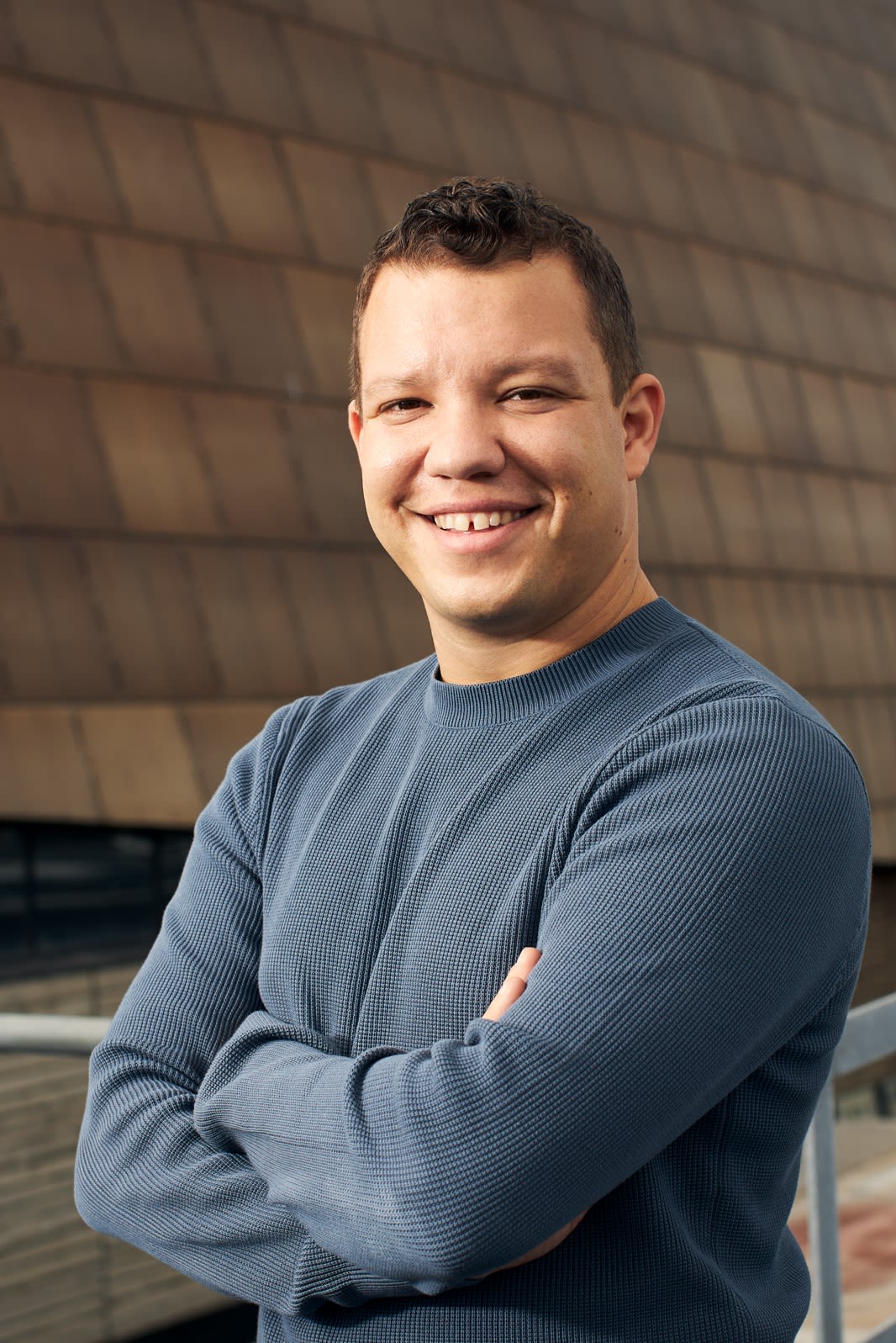
Ryan Bancroftconductor

Benjamin Ealovega
Benjamin Ealovega
Ryan Bancroft grew up in Los Angeles and first came to international attention in April 2018, when he won both First Prize and Audience Prize at the prestigious Malko Competition for Young Conductors in Copenhagen. Since September 2021 he has been Principal Conductor of BBC National Orchestra of Wales. Following his first visit to work with the Tapiola Sinfonietta, he was invited to become its Artist-in-Association from the 2021/22 season. In September 2023 he became Chief Conductor of the Royal Stockholm Philharmonic Orchestra.
After beginning his tenure as Chief Conductor in Stockholm with the orchestra’s first performance of Sven-David Sandström’s The High Mass, his second season includes performances of Mahler and Bruckner symphonies, alongside world premieres by Chrichan Larson and Zacharias Wolfe, and collaborations with renowned soloists including Leif Ove Andsnes, Maxim Vengerov and Víkingur Ólafsson.
This season he has made debuts with the Boston and Finnish Radio Symphony orchestras, Deutsches Symphonie-Orchester Berlin at the Berlin Philharmonie and the WDR Symphonieorchester in Cologne.
He has a passion for contemporary music and has performed with Amsterdam’s Nieuw Ensemble, assisted Pierre Boulez in a performance of his Sur incises in Los Angeles, premiered works by Sofia Gubaidulina, John Cage, James Tenney and Anne LeBaron, and has worked closely with improvisers such as Wadada Leo Smith and Charlie Haden.
He studied at the California Institute of the Arts, Royal Conservatoire of Scotland and in the Netherlands.
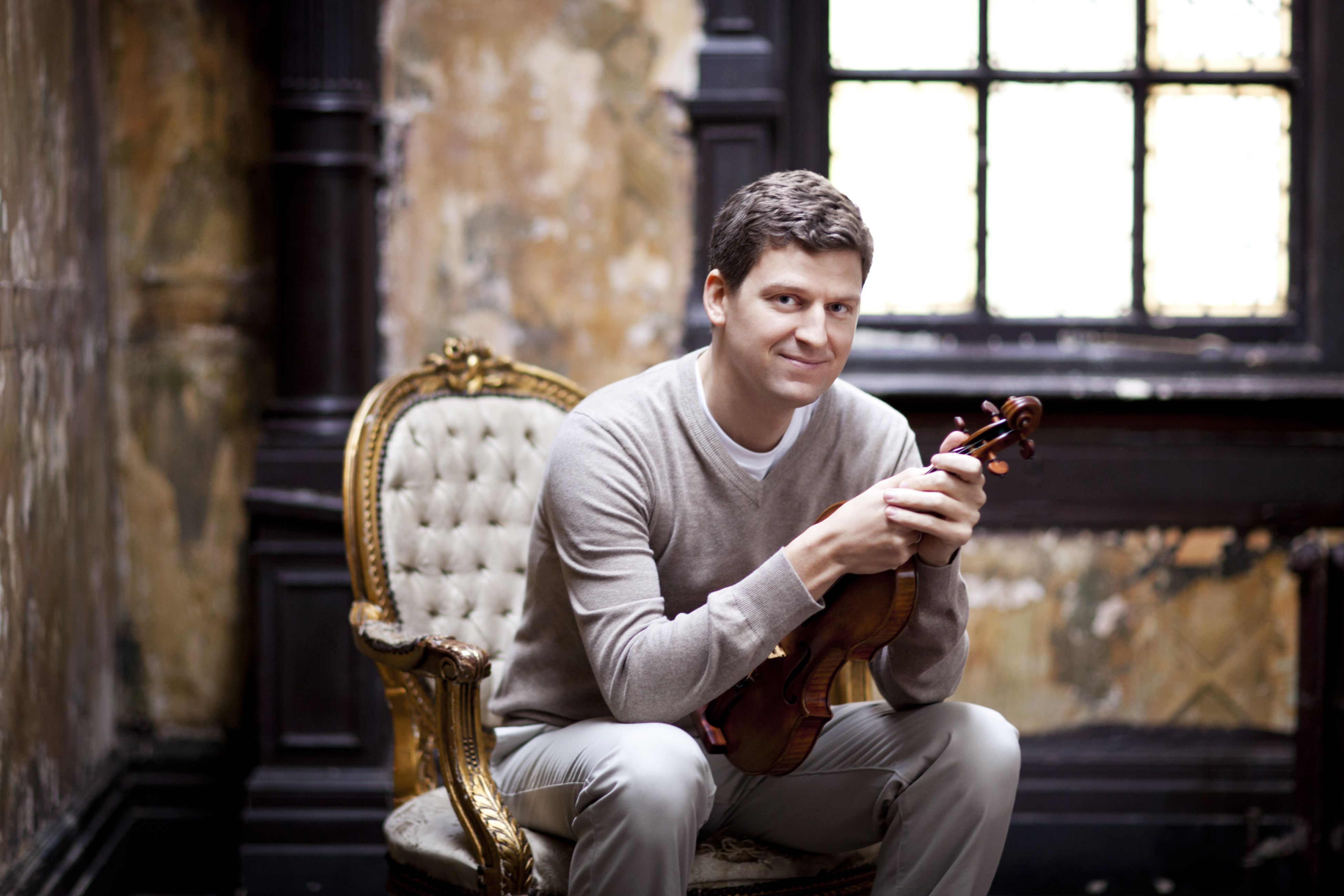
James Ehnesviolin

Benjamin Ealovega
Benjamin Ealovega
James Ehnes has established himself as one of the most sought-after musicians on the international stage. Gifted with a rare combination of effortless virtuosity, serene lyricism and an unfaltering musicality, he is a regular at the world’s most celebrated concert halls.
Recent orchestral highlights include concerts with the Royal Concertgebouw Orchestra, Zurich Tonhalle Orchestra, London Philharmonic Orchestra, Boston, Chicago and NHK Symphony orchestras and Cleveland Orchestra. This season he is Artist-in-Residence with the Melbourne Symphony Orchestra and also tours to Asia, performing the complete Beethoven violin sonatas at Kioi Hall, Tokyo, as well as appearing with the Hong Kong Philharmonic and Singapore Symphony Orchestra.
Alongside his concerto work, he maintains a busy recital schedule. He performs regularly at Wigmore Hall, Carnegie Hall, Symphony Center Chicago, Amsterdam Concertgebouw and the Ravinia, Montreux, Verbier, Dresden and Aix-en-Provence festivals. He is also a dedicated chamber musician: he is leader of the Ehnes Quartet and Artistic Director of the Seattle Chamber Music Society.
His extensive discography has garnered many awards, including two Grammys, three Gramophone Awards and 12 Juno Awards. In 2021 he was named Gramophone’s Artist of the Year, which celebrated his recent contributions to the recording industry, including the launch of an online recital series entitled ‘Recitals from Home’ which was released in June 2020 in response to the COVID-19 pandemic and subsequent closure of concert halls. He recorded Bach’s Sonatas and Partitas and Ysaÿe’s Six Sonatas from his home with state-of-the-art recording equipment and released six episodes over the period of two months.
He began violin studies at the age of five, became a protégé of the noted Canadian violinist Francis Chaplin aged nine, and made his orchestra debut with the Montreal Symphony Orchestra aged 13. He continued his studies with Sally Thomas at the Meadowmount School of Music and the Juilliard School, winning the Peter Mennin Prize upon his graduation in 1997. He is a Member of the Order of Canada and the Order of Manitoba, a Fellow of the Royal Society of Canada, and an honorary fellow of the Royal Academy of Music, where he is a visiting professor. Last summer he was appointed as professor of violin at the Indiana University’s Jacobs School of Music.
James Ehnes plays the ‘Marsick’ Stradivarius of 1715.
BBC National Orchestra of Wales
For over 90 years, the BBC National Orchestra of Wales, the only professional symphony orchestra in Wales, has played an integral part in the cultural landscape of the country, occupying a distinctive role as both a broadcast and national orchestra, and serving as an ambassador of Welsh culture, regularly performing music created in Wales and championing Welsh composers and artists.
Part of BBC Cymru Wales and supported by the Arts Council of Wales, BBC NOW performs a busy schedule of concerts and broadcasts, working with acclaimed conductors and soloists from across the world, including its Principal Conductor, the award-winning Ryan Bancroft.
The orchestra is committed to working in partnership with community groups and charities, taking music out of the concert hall and into settings such as schools and hospitals to enable others to experience and be empowered by music. It undertakes workshops, concerts and side-by-side performances to inspire and encourage the next generation of performers, composers and arts leaders, and welcomes thousands of young people and community members annually through its outreach and education projects.
BBC NOW performs annually at the BBC Proms and biennially at the BBC Cardiff Singer of the World competition, and its concerts can be heard regularly across the BBC – on Radio 3, Radio Wales and Radio Cymru. On screen, music performed by BBC NOW can be heard widely across the BBC and other global channels, including the soundtrack and theme tune for Doctor Who, Planet Earth III, Prehistoric Planet, The Pact and Children in Need.
Based at BBC Hoddinott Hall, Cardiff Bay, BBC NOW utilises a state-of-the-art recording studio with a camera system for livestreams and TV broadcasts to bring BBC NOW’s music to a broader audience across Wales and the world. For more information about BBC NOW please visit bbc.co.uk/now
Patron
HM King Charles III KG KT PC GCB
Principal Conductor
Ryan Bancroft
PrincipalGuest Conductor
Jaime Martín
Conductor Laureate
Tadaaki Otaka CBE
Composer-in-Association
Gavin Higgins
First Violins
Martin Gwilym-Jones sub-leader
Gwenllian Hâf MacDonald
Shana Douglas
Terry Porteus
Ruth Heney
Anna Cleworth
Emilie Godden
Kerry Gordon-Smith
Žanete Uškāne
Carmel Barber
Alejandro Trigo
Jane Sinclair
Amy Fletcher
Second Violins
Anna Smith *
Ros Butler
Sheila Smith
Roussanka Karatchivieva
Katherine Miller
Beverley Wescott
Michael Topping
Ilze Abola
Joseph Williams
Lydia Caines **
Vickie Ringguth
Elizabeth Whittam
Violas
Alex Thorndike #
Tetsuumi Nagata
Peter Taylor
Laura Sinnerton
Catherine Palmer
Anna Growns
Lydia Abell
Robert Gibbons
Lowri Taffinder
Cellos
Jonathan Ayling ‡
Jessica Feaver
Sandy Bartai
Carolyn Hewitt
Alistair Howes
Rachel Ford
Keith Hewitt
Kathryn Graham
Double Basses
Alexander Jones #
Christopher Wescott
Emma Prince
Fabien Galeana
Georgia Lloyd
Antonia Bakewell
Callum Duggan
Flutes
John Hall †
Lindsey Ellis
Elizabeth May
Piccolos
Elizabeth May
Oboes
Amy McKean †
Patrick Flanaghan
Cor Anglais
Patrick Flanaghan
Clarinets
Will White
Lenny Sayers
Bass Clarinet
Lenny Sayers †
Bassoons
Antonia Lazenby
David Buckland
Contrabassoon
David Buckland †
Horns
Meilyr Hughes
John Davy
Tom Taffinder
Dave Ransom
Michael Gibbs
Ed Griffiths
Trumpets
Robert Samuel
Corey Morris †
Tim Barber
Will Morley
Trombones
Dafydd Thomas †
Bass Trombone
Tuba
Adrian Miotti
Timpani
Steve Barnard *
Percussion
Phil Girling
Andrea Porter
Rhydian Griffiths
Harps
Elen Hydref
Emily Harris
* Section Principal
† Principal
‡ Guest Principal
# Assistant String Principal
The list of players was correct at the time of publication
Director Lisa Tregale
Orchestra Manager Liz Williams
Assistant Orchestra Manager Nick Olsen **
Orchestra Personnel ManagerKevin Myers
Business Coordinator Georgia Dandy **
Interim Orchestra Administrator Daniel Williams
Head of Artistic Planning and Productionvacancy
Artists and Projects Manager Victoria Massocchi **
Orchestra Librarian Naomi Roberts **
Producer Mike Sims
Broadcast Assistant Emily Preston
Head of Marketing and Audiences Sassy Hicks
Marketing Coordinator Amy Campbell-Nichols +
Digital Producer Angus Race
Social Media Coordinator Harriet Baugh
Education Producers Beatrice Carey, Rachel Naylor maternity cover
Audio Supervisors Simon Smith, Andrew Smillie
Production Business Manager Lisa Blofeld
Stage and Technical Manager Josh Mead +
Assistant Stage and Technical Manager vacancy
+ Green Team member
** Diversity & Inclusion Forum