
Fireworks of Passion
Thursday 20/3/25, 7.30pm
BBC Hoddinott Hall, Cardiff
Friday 21/3/25, 7.30pm
Brangwyn Hall, Swansea


Grace Williams
Penillion 14’
Max Bruch
Violin Concerto No. 1 24’
INTERVAL: 20 minutes
Rachmaninov
Symphony No. 3 39’
Tadaaki Otaka conductor
Eldbjørg Hemsing violin
BBC Hoddinott Hall is certified by EcoAudio and we’re proud to be supporting the BBC in becoming a more sustainable organisation. For more information on the BBC’s net-zero transition plan and sustainability strategy please visit https://www.bbc.co.uk/aboutthebbc/documents/bbc-net-zero-transition-plan-2024.pdf




The concert in Cardiff is being broadcast live by BBC Radio 3 in In Concert; it will be available for 30 days after broadcast via BBC Sounds, where you can also find podcasts and music mixes.
Introduction

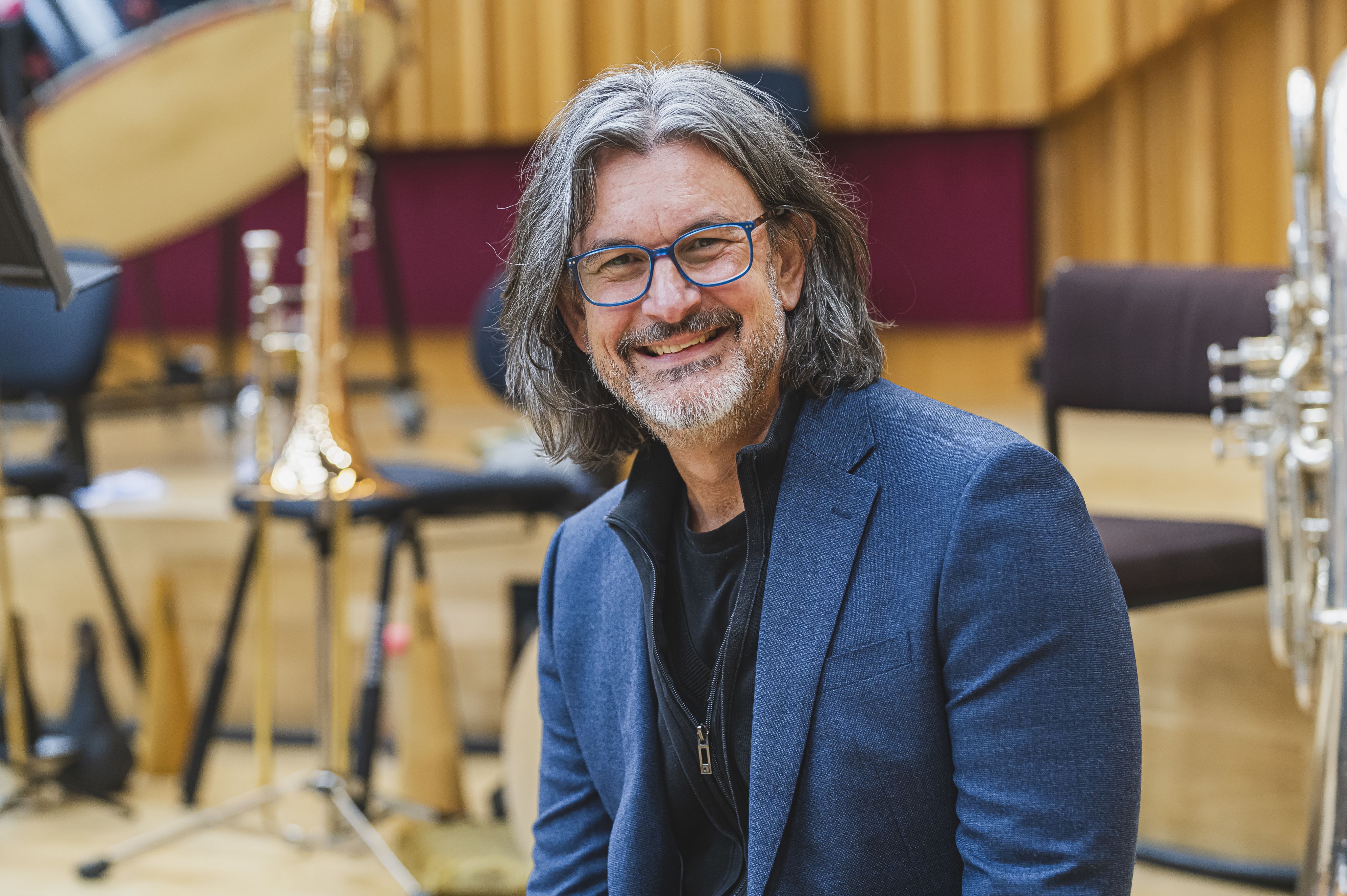
Photo: Kirsten McTernan
Photo: Kirsten McTernan
Welcome to tonight’s concert, for which we’re delighted to welcome back our much-loved Conductor Laureate Tadaaki Otaka in a programme that ranges from the lushest Romanticism to the homegrown wonder that is Grace Williams. Her Penillion takes the traditional improvised Welsh song genre and transforms it into an orchestral work that may sound as if it’s based on traditional folk melodies but which are in fact all her own invention.
We welcome back the gifted Norwegian violinist Eldbjørg Hemsing to play Bruch’s much-loved First Violin Concerto. With her combination of easy virtuosity and beauty of sound, she’s sure to put her own mark on this evergreen piece.
Tadaaki Otaka is well-known for his love of the music of Rachmaninov and we finish with his Third Symphony, a work that abounds in melodic beauty and a sense of narrative drive, shot through with decades of experience of writing for orchestra.
Enjoy!
Matthew Wood
Head of Artistic Planning and Production
Please respect your fellow audience members and those listening at home: mobile phones may be kept on but on silent and with the brightness turned down; other electronic devices should be switched off during the performance. Photography and recording are not permitted.
Grace Williams (1906–77)
Penillion(1955)

1 Moderato cantando
2 Allegro con fuoco
3 Andante con tristeza
4 Allegro agitato
Traditional penillion features improvised verses sung in Welsh, generally accompanied by a harp. Grace Williams explores the spirit of the genre in her orchestral piece of that name, written in 1955 for the National Youth Orchestra of Wales, rather than simply using traditional Welsh tunes to create picture-postcard ‘local colour’. In fact none of the melodies in this remarkable four-movement work are folk songs – Williams composed them all herself. The influence of her teacher, Ralph Vaughan Williams, was important here. He was a pioneering folk-song collector and his earlier works often include themes that either are traditional or sound as though they could be. But with time his understanding deepened, so that it wasn’t so much the tunes themselves but the way they’d grown and developed – the ‘variants’ that sprang from them – that left its imprint deep within his music.
Grace Williams’s Penillion takes an equally original approach: in the first and third movements in particular, she weaves quasi-improvisatory melodies around a rhythmically simple accompaniment, often coloured by harp. Ingeniously she creates the effect that these melodic lines are free-floating, or at least semi-detached from the accompaniment – an effect quite different from what you’d normally expect in Western classical music. These two meditative, lyrical movements are contrasted with the rousing, warlike second (con fuoco means ‘with fire’) and the vigorous dance music of the agitato (‘agitated’) finale – though even that dies away at the end. There is a deep, rich vein of melancholy in Penillion, recalling not only some of the nation’s most haunting folk songs, but also the great Welsh minor-key hymn tunes, such as ‘Jesus, lover of my soul’. If this is what Vaughan Williams called ‘national music’, it is so in profound and multifaceted ways – ways that can speak beyond national borders.
Programme note © Stephen Johnson
Max Bruch (1838–1920)
Violin Concerto No. 1 in G minor, Op. 26
(1864–6, rev. 1868)
1 Prelude: Allegro moderato –
2 Adagio
3 Finale: Allegro energico – Presto
Eldbjørg Hemsing violin
Depending on your point of view, Max Bruch should either be much envied or much pitied over his Violin Concerto No. 1 in G minor. Its path to completion was far from smooth – two torturous years of composition followed by such an unsatisfactory 1866 premiere that he immediately withdrew it for further revisions – but the violinist who then advised on it and premiered the final 1868 version was none other than the Hungarian virtuoso Joseph Joachim. Bruch, still only 30, found himself catapulted to the sort of international fame of which most composers only dream. On the other hand, not only did the concerto’s fame eclipse everything else that he subsequently wrote (including two further violin concertos), but he didn’t even benefit financially, having agreed a one-off fee with its publisher rather than royalties.
Were the Prelude with which the concerto opens a picture, it might represent a dawn mist rolling over some remote corner of the Scottish Highlands (which Bruch was later to visit): a sombre timpani roll, followed by a suspense-filled exchange between orchestra and soloist, initially subdued, but building to a mighty climax. The rest of this fiery, energetic movement is then dominated by the soloist, whose highly virtuosic writing spans the violin’s entire range, much of it double-stopped and full of the colours of Hungarian Gypsy music. In fact the whole feels only a hop, skip and a jump away from Joachim’s own hair-raisingly virtuosic Violin Concerto ‘In the Hungarian style’ of 1857; where Bruch improves on Joachim, though, is that when his orchestra does get the spotlight, it’s thunderingly exciting in a way that Joachim’s orchestration is not.
The central Adagio feels like a homage to Mendelssohn’s E minor Violin Concerto, not only because of its similar warmly rapturous lilt, but also in the way it begins seamlessly, following a restatement of the Prelude’s dreamlike opening exchange. Bruch does then pause before his Finale, which is a joyous, extrovert dance of Hungarian-flecked rhythmic pep, again with double-stops galore for the violin. As it races towards the final flourish, it’s not hard to imagine what an effect this combination of music and violinist must have had at its 1868 unveiling.
Programme note © Charlotte Gardner
INTERVAL: 20 minutes
Sergey Rachmaninov (1873–1943)
Symphony No. 3 in A minor(1935–6)
1 Lento – Allegro moderato – Allegro
2 Adagio ma non troppo – Allegro vivace
3 Allegro – Allegro vivace – Allegro
Rachmaninov wrote his Third Symphony over the course of two summers (1935–6) on his Swiss estate, where he tried to recreate the bucolic calm of his pre-Revolutionary life in Russia, but with modern comforts. At first glance, the piece is one of nostalgia, brimming with echoes of Tchaikovsky, Borodin, Rimsky-Korsakov and his own younger self – a ‘truly Russian’ symphony. But the familiar idioms have been subtly modernised: there are ruptured textures and surprising turns, not to mention deceptive paths that seem to lead nowhere. The orchestra, taking a cue from Richard Strauss, becomes highly individualised, and its lushness often takes on a hard edge.
The very first notes make us scour the orchestra for their source: what is this beautiful instrument? Perhaps a saxophone? In fact it is a unique mix of a clarinet and muted horn and cello, intoning a melody in the style of a Russian Orthodox chant. This chant will become a motto, appearing at crucial junctures and also insinuating itself into seemingly unrelated themes. Then we hear more of the trademark Rachmaninov: huge curtain-raising chords and a resolute march-like theme. It is as if the composer is gathering together his most recognisable traits, but only in order to redirect them towards new goals.
Rachmaninov said that he always had a programme in mind, a story or at least an image behind the music, but he rarely made these public. In the Third Symphony, admittedly, it is not easy to find a key to the narrative. Many years earlier, the movements of Rachmaninov’s First Piano Sonata had represented Faust, Gretchen and Mephistopheles in turn. Something similar, but transplanted to Russian soil, seems to underpin this symphony.
The first movement flows from the main aspects of Rachmaninov’s lyricism: gloom and nostalgia in the clarinets, then warmth and hope in the cellos. There is an ecstatic and heroic climax, then the themes are developed with longing, anxiety and high drama, which is reined in by the return of the motto.
Next is an Adagio-cum-Scherzo. The motto is now an epic song, and the achingly beautiful solo violin evokes Scheherazade, or perhaps Gretchen? Out of the orchestral whirlwind emerges an odd triple-time march, a sinister portent.
The jolly Russian dance at the beginning of the finale is deceptive. A tone of subtle mockery undermines it, and there are questions and hesitations, as if asking ‘what’s next?’ There is a fugue, and then a passage full of oriental languor, but these are red herrings. What was hidden then reveals itself as the Dies irae motif, the Requiem Mass chant that became a Romantic symbol of death, now swept up into a danse macabre. Will the Russian motto still have the last word?
Programme note © Marina Frolova-Walker
Help Us Improve Our Online Programmes.
Please take this 5-minute survey and let us know what you think of these notes.
Programme Survey
You may also like:
Missa solemnis
Thursday 10/4/25, 7.30pm
Llandaff Cathedral, Cardiff
Friday 11/4/25, 7.30pm
Brangwyn Hall, Swansea
Beethoven Missa solemnis
Andrew Manzeconductor
Carolyn Sampson soprano
Sophie Harmsen mezzo-soprano
Ed Lyon tenor
Darren Jeffery bass
BBC National Chorus of Wales
MAGNIFICENT | REVERENTIAL | WORLD-CLASS
Standing as a monument among sacred choral works, Beethoven’s Missa solemnis is a Mass setting of immense weight and scale. In it, lofty grandeur and heavenward serenity dance with angular leaping figures; violent dynamic contrasts weave through the delicately orchestrated massed forces; and a searching quality reflective of the composer’s own faith – that of looking beyond our understanding at a numinous God – is never far from the surface.
Beethoven regarded the Missa solemnis as his greatest work, and it is surely a ‘bucket list’ piece for all music lovers. With an acclaimed line-up of soloists stepping up alongside the BBC National Orchestra and Chorus of Wales, this is a performance not to be missed.
Songs of Destiny
BSL Interpretation
Friday 20/6/25, 7.30pm
BBC Hoddinott Hall, Cardiff
Brahms Serenade No. 2
Brahms Schicksalslied
Stravinsky Symphony of Psalms
Ryan Bancroft conductor
BBC National Chorus of Wales
EXQUISITE | FERVENT | PICTORIAL
If historically serenades were intended as music for entertainment, then Brahms has most definitely excelled in his Serenade No. 2. This early work oozes Brahmsian character from the outset with its lilting warmth, lively cross rhythms, and plenteous melody to charm the listener.
Similarly characteristic, but more brooding in nature is Brahms’s heady setting of the poem Schicksalslied by Friedrich Hölderlin. In two verses contrasting the lives of the eternally blissful with those subjected to cruel fate, Brahms moves between the light and airy versus the tempestuous. Stravinsky, by contrast, uses modes reminiscent of traditional Gregorian chant, paired with fugal writing and ecstatic dance motifs, to portray the text of psalms in a pure work of genius, his Symphony of Psalms! To conduct BBC National Orchestra and Chorus of Wales in their final concert of the Cardiff season we’re delighted to welcome back Principal Conductor, Ryan Bancroft.
Biographies
Tadaaki Otaka conductor

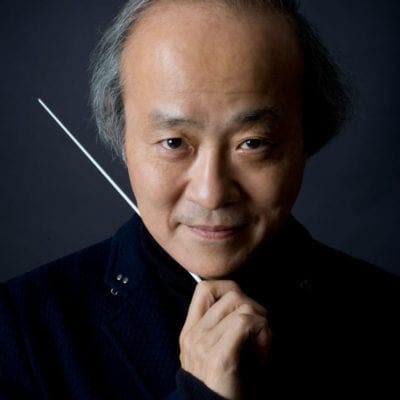
Martin Richardson
Martin Richardson
Japanese-born Tadaaki Otaka has been Music Director of the Osaka Philharmonic Orchestra since 2018 and, following a distinguished tenure as Principal Conductor of BBC National Orchestra of Wales, became its Conductor Laureate. He also holds the titles of Permanent Conductor of the NHK Symphony, Conductor Laureate of the Tokyo Philharmonic Orchestra, Honorary Guest Conductor of the Yomiuri Nippon Symphony Orchestra and Honorary Conductor Laureate of the Kioi Hall Chamber Orchestra Tokyo. He has enjoyed a close association with the Sapporo Symphony Orchestra for four decades.
As well as conducting extensively in Japan, he is also a highly regarded teacher of young conductors. He combines these activities with regular European visits and recent BBC NOW highlights include appearances at the BBC Proms. He has also served as juror of the Donatella Flick Conducting Competition in London, the Malko Competition in Copenhagen and the 18th Tokyo International Music Competition for Conducting – being named the chairperson of the last of these in 2021.
In the field of opera, in addition to his work with the New National Theatre Tokyo, he has conducted Peter Grimes, Fidelio, Die Fledermaus, Tosca, Tannhäuser, Carmen, Der Freischütz and Salome.
He has conducted many premieres, including works by Japanese composers such as Matsumura, Takemitsu and Miyoshi, and his discography includes many celebrated recordings with BBC NOW and Camerata Tokyo.
His awards include the Suntory Music Award, a CBE and the Elgar Society’s Elgar Medal, to mark a compelling record of conducting the composer’s works overseas. His reputation as an outstanding interpreter of a broad range of repertoire, including Mahler, Bruckner, Shostakovich, Richard Strauss, Walton and Elgar, led to the Royal Welsh College of Music & Drama conferring on him an Honorary Fellowship in 1993; he also holds an Honorary Doctorate from the University of Wales. In 2021 he was awarded the Order of the Rising Sun, Gold Rays with Rosette by the Japanese government.
Eldbjørg Hemsingviolin

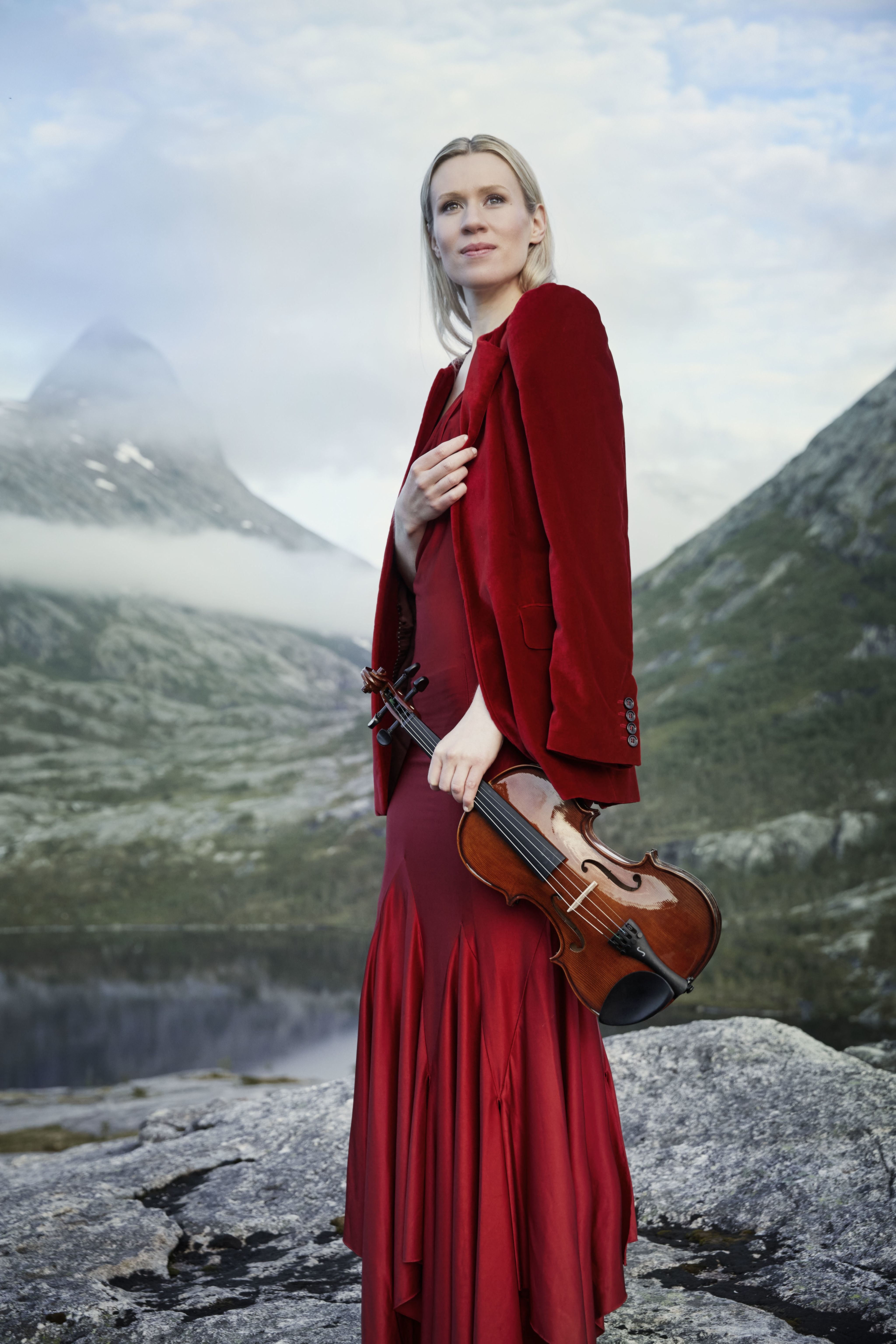
Gregor Hohenberg
Gregor Hohenberg
Norwegian violinist Eldbjørg Hemsing is in international demand around the world, acclaimed for her combination of virtuosity and interpretative insight.
The 2024/25 season sees her appear with Taipei Symphony Orchestra and the Hallé with Kahchun Wong, Orchestra of St Luke’s in New York and the Bodensee Philharmonic, as well as returns to long term partners including the Oslo Philharmonic and Stavanger Symphony Orchestra. Recitals and chamber music programmes take her to the Bechstein Hall in London, Dvořák Prague Festival and Schwetzinger Festspiele.
Recent highlights include performances with the Iceland and Trondheim Symphony orchestras; Anders Hillborg’s Violin Concerto No. 2 with the Swedish Radio Symphony Orchestra under Esa-Pekka Salonen; Rolf Wallin’s Whirld with the Stavanger Symphony Orchestra and Andris Poga; and recitals and chamber music concerts at the Heidelberg Spring Festival and festivals in Dresden and Bærum in Norway.
She has appeared at prestigious international venues, including Lincoln Center, New York, the Kennedy Center Washington DC, Wigmore Hall, Verbier Festival and the National Centre for the Performing Arts in Beijing.
Her award-winning albums include, most recently, Hillborg’s Violin Concerto No. 2 and Kväll for violin and soprano. She has also released Arctic, with the Arctic Philharmonic and Christian Kluxen, which explores the rich natural soundscapes of the Arctic (which won her an Opus Klassik Award); and repertoire ranging from Grieg sonatas to concertos by Tan Dun, Hjalmar Borgstrøm and Shostakovich.
She co-founded the Hemsing Festival and is the Artistic Director of the SPIRE, an innovative annual competition.
Born in Valdres, Eldbjørg Hemsing studied at the Barratt Due Institute of Music in Oslo and with Professor Boris Kuschnir in Vienna. She plays a 1707 Antonio Stradivari ‘Rivaz, Baron Gutmann’ violin, on loan from the Dextra Musica Foundation.
BBC National Orchestra of Wales
For over 90 years, the BBC National Orchestra of Wales, the only professional symphony orchestra in Wales, has played an integral part in the cultural landscape of the country, occupying a distinctive role as both a broadcast and national orchestra, and serving as an ambassador of Welsh culture, regularly performing music created in Wales and championing Welsh composers and artists.
Part of BBC Cymru Wales and supported by the Arts Council of Wales, BBC NOW performs a busy schedule of concerts and broadcasts, working with acclaimed conductors and soloists from across the world, including its Principal Conductor, the award-winning Ryan Bancroft.
The orchestra is committed to working in partnership with community groups and charities, taking music out of the concert hall and into settings such as schools and hospitals to enable others to experience and be empowered by music. It undertakes workshops, concerts and side-by-side performances to inspire and encourage the next generation of performers, composers and arts leaders, and welcomes thousands of young people and community members annually through its outreach and education projects.
BBC NOW performs annually at the BBC Proms and biennially at the BBC Cardiff Singer of the World competition, and its concerts can be heard regularly across the BBC – on Radio 3, Radio Wales and Radio Cymru. On screen, music performed by BBC NOW can be heard widely across the BBC and other global channels, including the soundtrack and theme tune for Doctor Who, Planet Earth III, Prehistoric Planet, The Pact and Children in Need.
Based at BBC Hoddinott Hall, Cardiff Bay, BBC NOW utilises a state-of-the-art recording studio with a camera system for livestreams and TV broadcasts to bring BBC NOW’s music to a broader audience across Wales and the world. For more information about BBC NOW please visit bbc.co.uk/now
Patron
HM King Charles III KG KT PC GCB
Principal Conductor
Ryan Bancroft
PrincipalGuest Conductor
Jaime Martín
Conductor Laureate
Tadaaki Otaka CBE
Composer-in-Association
Gavin Higgins
First Violins
Terry Porteus
Suzanne Casey
Carmel Barber
Juan Gonzalez
Alejandro Trigo
Kerry Gordon-Smith
Ruth Heney **
Anna Cleworth
Žanete Uškāne
Amy Fletcher
Second Violins
Anna Smith *
Ros Butler
Sheila Smith
Lydia Caines **
Michael Topping
Katherine Miller
Joseph Williams
Beverley Wescott
Vickie Ringguth
Roussanka Karatchivieva
Gary George-Veale
Emma Menzies
Violas
Charlotte Limb
Ania Leadbeater
Lucy Theo
Cellos
Gilly McMullin
Raphael Lang
Sandy Bartai
Alistair Howes
Rachel Ford
Keith Hewitt
Carolyn Hewitt
Kathryn Graham
Double Basses
Georgina Lloyd
Christopher Wescott
Evangeline Tang
Richard Gibbons
Ruohua Li
Flutes
Piccolo
Oboes
Charis Lai
Amy McKean †
Cor anglais
Clarinets
Hannah Morgan
Lenny Sayers +**
Bass Clarinet
Bassoons
Dominic Tyler
David Buckland
Contrabassoon
David Buckland †
Horns
Meilyr Hughes
Neil Shewan †
Flora Bain
Tom Taffinder
Trumpets
Tim Barber
Corey Morris †
Trombones
Dafydd Thomas †
Bass Trombone
Tuba
Timpani
Percussion
Phil Girling
Rhydian Griffiths
Andrea Porter
Max Ireland
Harps
Daniel de Fry
Piano/Celesta
Catherine Roe Williams
* Section Principal
† Principal
‡ Guest Principal
# Assistant String Principal
The list of players was correct at the time of publication
Director Lisa Tregale
Orchestra Manager Liz Williams
Assistant Orchestra Manager Nick Olsen **
Orchestra Personnel ManagerKevin Myers
Business Coordinator Georgia Dandy **
Orchestra Administrator Eleanor Hall +**
Head of Artistic Planning and ProductionMatthew Wood
Artists and Projects Manager Victoria Massocchi **
Orchestra Librarian Naomi Roberts **
Producer Mike Sims
Broadcast Assistant Emily Preston
Head of Marketing and Audiences Sassy Hicks
Marketing Coordinator Amy Campbell-Nichols +
Digital Producer vacancy
Social Media Coordinator Harriet Baugh
Education Producers Beatrice Carey, Rachel Naylor maternity cover
Audio Supervisors Simon Smith, Andrew Smillie
Production Business Manager Lisa Blofeld
Stage and Technical Manager vacancy
Assistant Stage and Technical Manager Josh Mead +
+ Green Team member
** Diversity & Inclusion Forum