
Fairytales & Fantasy
Livestream
Thursday 11/12/25, 7.30pm
BBC Hoddinott Hall, Cardiff


Edvard Grieg
Peer Gynt Suite No. 1 15’
Carl Nielsen
Flute Concerto 19’
INTERVAL: 20 minutes
Pyotr Tchaikovsky
Swan Lake – excerpts 35’
Jaime Martín conductor
Elizaveta Ivanova flute
BBC Hoddinott Hall is certified by EcoAudio and we’re proud to be supporting the BBC in becoming a more sustainable organisation. For more information on the BBC’s net-zero transition plan and sustainability strategy please visit https://www.bbc.co.uk/aboutthebbc/documents/bbc-net-zero-transition-plan-2024.pdf




This concert is being livestreamed on the BBC NOW website and recorded by BBC Radio 3 for future broadcast in In Concert; it will be available for 30 days after broadcast via BBC Sounds, where you can also find podcasts and music mixes.
Introduction
In tonight’s concert we welcome back Principal Guest Conductor Jaime Martín for a programme of music that takes us from Scandinavia to Russia. The works by Grieg and Tchaikovsky transport us to the theatre, the former composer having written Peer Gynt as incidental music for a play by his fellow Norwegian Henrik Ibsen. He later created from it two orchestral suites and this evening we hear the first of them, which contains some of the composer’s most famous music.
As soloist in Nielsen’s Flute Concerto we’re delighted to welcome BBC Radio 3 New Generation Artist Elizaveta Ivanova. It’s a work our conductor also knows well, having started his career as a flautist. As is typical of Nielsen, this is a piece full of character and one that delights in subverting convention, the flute leading the entire orchestra on a merry dance.
To end, excerpts from one of the greatest of all Russian ballets, Tchaikovsky’s Swan Lake. It seems inexplicable to us today that the piece was not initially well-received, given it inspired from the composer some of his most memorable melodies and imaginative orchestration.
Enjoy!
Lisa Tregale
Director
Please respect your fellow audience members and those listening at home: mobile phones may be kept on but on silent and with the brightness turned down; other electronic devices should be switched off during the performance. Photography and recording are not permitted.
Edvard Grieg (1843–1907)
Peer Gynt Suite No. 1, Op. 46(1888)

1 Morning Mood
2 The Death of Åse
3 Anitra’s Dance
4 In the Hall of the Mountain King
In 1874 the Norwegian dramatist Henrik Ibsen invited his compatriot Edvard Grieg to compose incidental music for Peer Gynt, his verse drama that charts the downfall and redemption of its anti-hero on a fantastical journey from rural Norway to the deserts of North Africa. As one of the leading proponents of Nordic music during the late 19th century, Grieg was the natural musical choice for a drama so firmly rooted in Norwegian identity and folklore.
By this time Grieg was already celebrated across Europe, having composed his dazzling Piano Concerto at the age of just 24. Initially, the composer was reluctant to take on the commission but soon found that the opportunity to write for such vivid and unusual scenes was too enticing to pass up. At first he progressed slowly, admitting to his friends that it was ‘an unmanageable project’. However, soon he was writing at pace.
The music for Peer Gynt was completed in the autumn of 1875 and its premiere took place the following February at Christiania’s (now Oslo’s) Møllergården Theatre, with Grieg himself conducting. The lavish production was an immediate triumph and enjoyed 37 performances that year followed by revivals in 1885 and 1902. Yet, despite its success, Grieg bitterly resented the strict theatrical constraints that dictated the order, length and form of his music for the play.
The short, incidental nature of the pieces meant that they were excellently suited for individual and collective performance outside the play’s original setting – a point proved in the two suites Grieg produced (in 1888 and 1891), which draw on eight of the 26 pieces.
Grieg’s Peer Gynt Suite No. 1 paints four vivid scenes from Ibsen’s play. ‘Morning Mood’ opens with the lilting pastoral melody of the woodwinds to evoke the sunrise over a desert landscape. ‘The Death of Åse’ plunges into Peer’s deep grief for his mother, with a mournful string theme. The beguiling ‘Anitra’s Dance’ brings lively rhythms and seductive charm, full of mystery and allure. The suite concludes with ‘In the Hall of the Mountain King’, a tense, stealthy march that erupts into a furious orchestral climax as Peer flees the troll king’s court.
Programme note © Branwen Thistlewood
Carl Nielsen (1865–1931)
Flute Concerto (1926)
1 Allegro moderato
2 Allegretto un poco – Adagio ma non troppo –
Allegretto – Poco adagio – Tempo di marcia
Elizaveta Ivanovaflute
Carl Nielsen’s Flute Concerto is among the most celebrated works for flute and orchestra and was his first major work following the completion of his Sixth Symphony in 1925. Internationally renowned for his symphonic output, the Danish composer began to shift his compositional focus in favour of a more pared-down and modernist approach after 1922, which coincidentally followed the diagnosis of a severe heart condition and the reconciliation with his estranged wife, Anne Marie.
The concerto was conceived as the first in a series of works for members of the Copenhagen Wind Quintet, in this instance for the ensemble’s flautist Holger Gilbert-Jespersen. Nielsen worked on the piece during his travels in Italy and Germany in 1926, but ill-health interrupted progress, forcing him to provide a provisional ending for its scheduled Paris premiere in October.
That premiere, at the Société des Concerts du Conservatoire, featured Nielsen’s son-in-law Emil Telmányi as conductor. The programme consisted wholly of Nielsen’s works and drew in an audience of a number of Nielsen’s colleagues, including Maurice Ravel and Arthur Honegger. The evening was a triumph: Honegger praised the orchestra’s magnificent playing and the flute’s exquisite tone, and Nielsen himself called the event ‘one of the greatest experiences of my life’.
The premiere of the completed version of the concerto followed in January 1927 at the Music Society of Copenhagen. Neo-classical in style, the work departs from tradition by being cast in two movements instead of three. Far from playing to the flute’s stereotypical pastoral or song-like nature, in Nielsen’s hands the instrument is agile, dynamic and commanding, yet still capable of delicacy and idyllic calm.
The opening movement, an energetic 11-minuteAllegro moderato, opens with freely flowing flute passages, whose improvisatory character is maintained throughout the piece. Its orchestral backdrop alternates between the full weight of the orchestra and moments of chamber-like transparency during dialogues with other solo winds. The playful second movement oscillates between contrasting tempos, and culminates in a dazzling, cadenza-like passage for the flute, punctuated by striking slides from the bass trombone.
Programme note © Branwen Thistlewood
INTERVAL: 20 minutes
Pyotr Tchaikovsky (1840–93)
Swan Lake (1875–6) – excerpts
1 Scène
2 Valse
3 Danses des cygnes
4 Scène
6 Danse Espagnole
7 Danse Napolitaine
5 Danse Hongroise
8 Mazurka
29 Scène Finale
Astonishingly, Swan Lake was a failure during Tchaikovsky’s lifetime, and the composer eventually hoped he could salvage the music by working it into a concert suite. The ballet survived, of course, thanks to new choreography by Petipa and Ivanov for a production in 1895, two years after Tchaikovsky’s death. Ironically, when the suite was published in 1900, it was able to capitalise on the ballet’s new-found success, although it is unknown whether the selection had been made by the composer. Tonight, you will hear an expanded version of the 1900 suite, with some extra dances included.
The suite is framed by two numbers based on the ballet’s famous oboe solo, an unforgettable melody that encapsulates longing, hope and the impossibility of happiness. The inspiration came from a melody in Schubert’s ‘Unfinished’ Symphony, which Tchaikovsky greatly admired. The ballet associates the oboe’s timbre with the fragile heroine, Princess Odette, and the instrument is used in several related themes. The suite’s Waltz comes from the Act 1 ball scene (Prince Siegfried’s select birthday party), in which Tchaikovsky deftly threads melodies together, giving each orchestral section – the strings, the woodwind, and the brass – its own distinctive material.
In the third piece we hear the charming and unassuming Dance of the Swans from Act 2. The music, with two oboes and a comical bassoon, suggested a light-hearted interlude, inspiring Ivanov to create the iconic dance of the cygnets with four dancers holding hands and moving in unison. The following piece, a tender dialogue between solo violin and cello, is from the same lakeside scene. The violin evokes Odette, and the cello Siegfried, with a harp cadenza adding to the magic.
The next four dances are taken from Act 3, where Siegfried’s birthday is celebrated in a grander style, with a costumed ball. This type of balletic scene is a vehicle for character dances that represent various nations, broadening the palette of musical styles, costumes and choreography. Castanets and a tambourine are introduced for the Spanish bolero’s fiery rhythms. The Neapolitan Dance is based on a folk tune Tchaikovsky heard during his travels, and to give it a more mellow character, he used a cornet instead of a trumpet. The Hungarian csárdás sounds like an orchestral version of a Liszt Hungarian Rhapsody, with a slow first section followed by a syncopated fast dance. The Mazurka is given less exotic music, since this Polish dance had become thoroughly assimilated in Europe’s grand ballrooms.
The final piece is the denouement of the ballet’s story. The main theme is transformed, now heard in a major key, with blazing trumpets implying transcendence rather than a straightforward happy ending. In the original plot, the hero and heroine drown in the lake during a storm, which frees them from sorcerer’s curse.
Programme note © Marina Frolova-Walker
Help Us Improve Our Online Programmes.
Please take this 5-minute survey and let us know what you think of these notes.
Programme Survey
You may also like:
If you’ve enjoyed the concert today, bring friends and family and come along to this forthcoming concert. As an existing audience member, you can buy tickets for it for £7 using promotion code NOWYOU when buying online.
Musical Painting, Impressions & Intrigue
Thursday 8/1/26, 7.30pm
BBC Hoddinott Hall, Cardiff
Anders Hillborg Exquisite Corpse
Shostakovich Cello Concerto No. 2
Sibelius Lemminkäinen Suite
Ryan Bancroft conductor
Alban Gerhardt cello
INTRIGUING | ENTRANCING | MODERNISTIC
From Anders Hillborg’s exhilarating Exquisite Corpse – a daring musical collage inspired by the surrealist game – to Shostakovich’s powerful Cello Concerto No. 2 performed by the incomparable Alban Gerhardt, this concert promises intrigue at every turn. Journey further into Nordic legend with Sibelius’s Lemminkäinen Suite, where brooding mystery meets shimmering folk dance and the haunting beauty of ‘The Swan of Tuonela’.
Book tickets for just £7 using promotion code NOWYOU https://www.bbc.co.uk/events/evr6gw
Biographies
Jaime Martín conductor

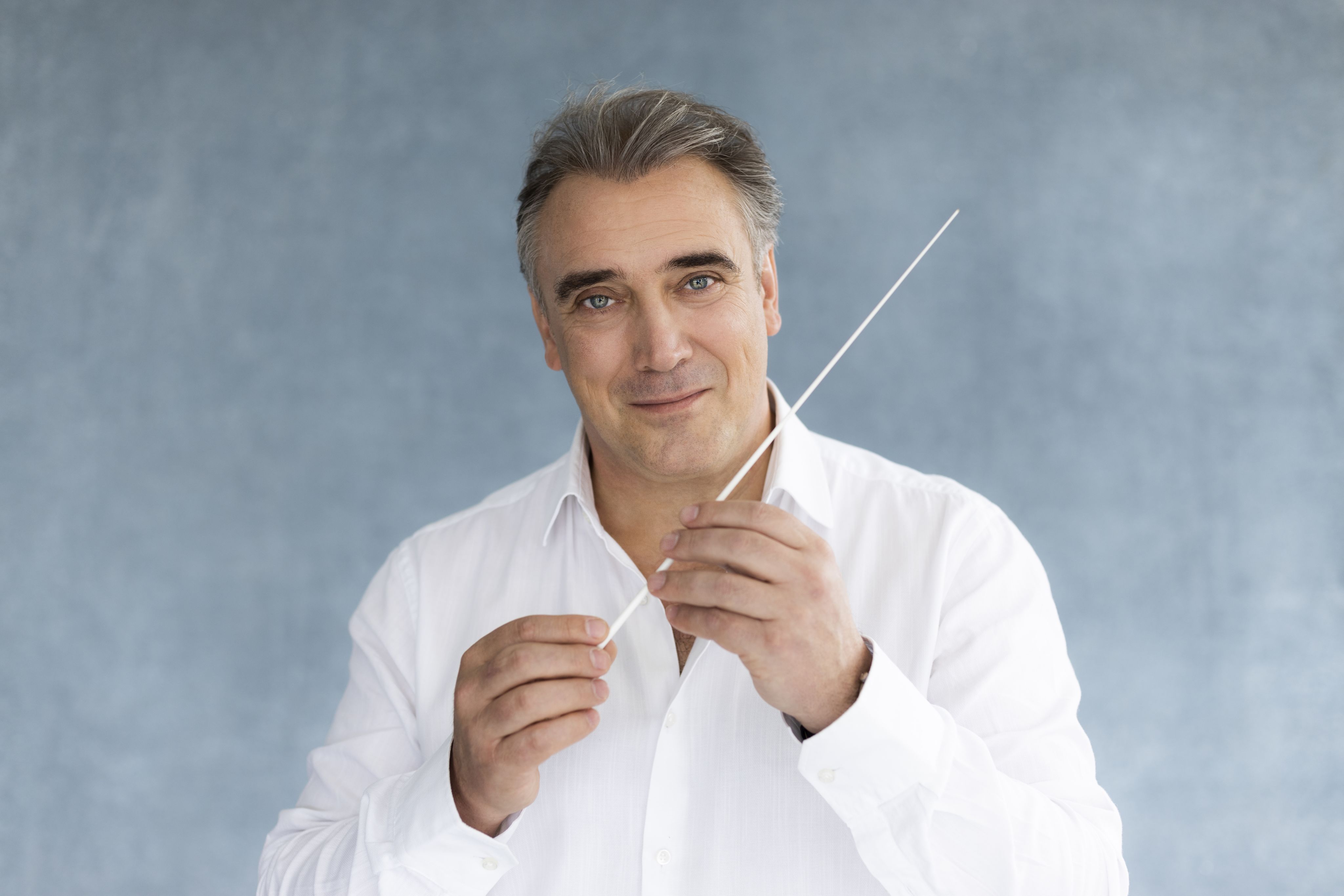
Paul Marc Mitchell
Paul Marc Mitchell
Spanish conductor Jaime Martín is currently Music Director of the Los Angeles Chamber Orchestra, Chief Conductor of the Melbourne Symphony Orchestra and Principal Guest Conductor of the BBC National Orchestra of Wales. He has also held the positions of Chief Conductor of the National Symphony Orchestra of Ireland (2019–24), Principal Guest Conductor of the Spanish National Orchestra (2022–24) and Artistic Director and Principal Conductor of Gävle Symphony Orchestra (2013–22).
Having spent many years as a highly regarded flautist, he turned to conducting full-time in 2013 and quickly became sought after at the highest level.
Highlights of the last season have included an 11-day Beethoven Festival with the Melbourne Symphony Orchestra, conducting all nine symphonies. He also returned to conduct orchestras in Spain, the UK and Australia and undertook a UK and European tour with the Melbourne SO that included appearances at the BBC Proms and the Edinburgh International Festival.
In the 2025/26 season he conducts the Aalborg, Colorado, Euskadi, Gothenburg, New Zealand and Queensland Symphony orchestras, Budapest Festival Orchestra, George Enescu and Strasbourg Philharmonic orchestras, Berlin Radio Symphony Orchestra and RTVE Madrid.
His extensive discography includes recordings with the Barcelona, Gävle and Melbourne Symphony orchestras, Cadaqués Orchestra and London Philharmonic Orchestra.
Jaime Martín is Artistic Advisor and former Artistic Director of the Santander Festival and a Fellow of the Royal College of Music, where he was a flute professor.
Elizaveta Ivanovaflute

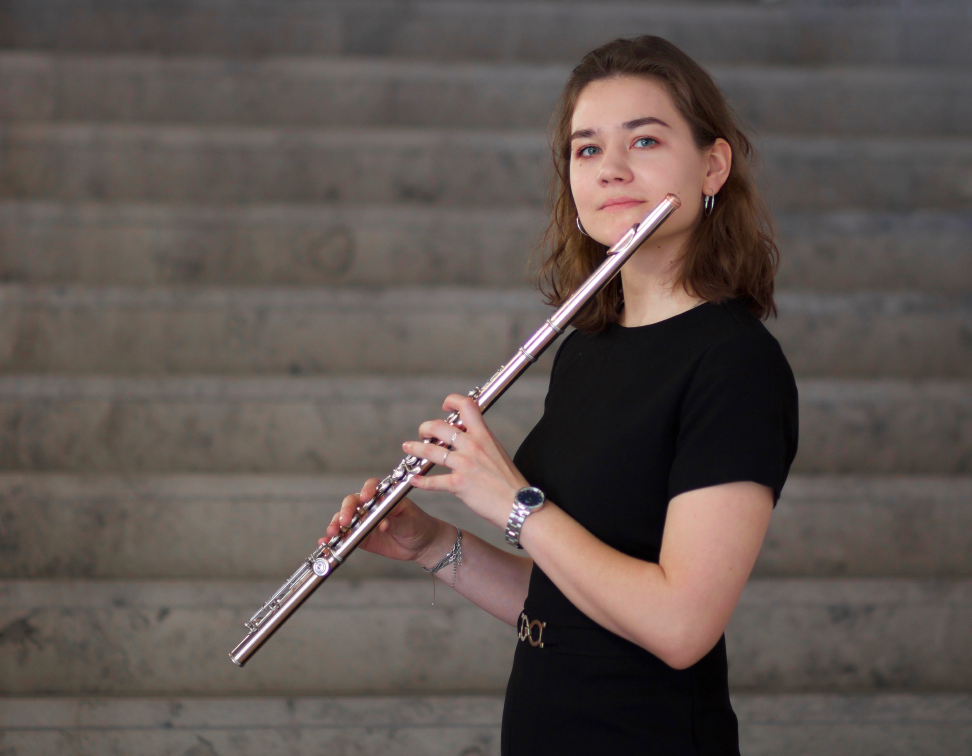
Elizaveta Ivanova has held the position of Associate Principal Flute of Frankfurt Opera and Museum Orchestra since 2022, having previously held the same position with the St Petersburg Symphony Orchestra from 2017 to 2022. In 2024 she was selected as a BBC Radio 3 New Generation Artist.
She was born in 1997 in Estonia into a musical family and began her studies at a young age. After several years of piano lessons, she started to play the flute aged 12. From 2009 until 2014 she studied with Vladimir Ushakov at the St Petersburg Lyceum, continuing her education at the St Petersburg Conservatory with Olga Chernyadeva and Ksenia Kuelyar. In 2021 she entered the Basel Academy of Music where she studied with Felix Renggli and graduated from the master’s programme with honours.
In 2023 she won First Prize at the Geneva International Competition. She has also been a prizewinner at prestigious competitions including the Crusell Competition, Cluj International Competition and the Maxence Larrieu Competition. As a member of St Petersburg Winds she also won prizes at several chamber music competitions in Russia.
Elizaveta Ivanova regularly performs in chamber music groups and as a soloist appears with international orchestras including the Transylvania and Frankfurt Philharmonic orchestras and festivals such as the Lubljana Festival and Austrian Flute Festival, among others.
BBC National Orchestra of Wales
For over 90 years, the BBC National Orchestra of Wales, the only professional symphony orchestra in Wales, has played an integral part in the cultural landscape of the country, occupying a distinctive role as both a broadcast and national orchestra, and serving as an ambassador of Welsh culture, regularly performing music created in Wales and championing Welsh composers and artists.
Part of BBC Cymru Wales and supported by the Arts Council of Wales, BBC NOW performs a busy schedule of concerts and broadcasts, working with acclaimed conductors and soloists from across the world, including its Principal Conductor, the award-winning Ryan Bancroft.
The orchestra is committed to working in partnership with community groups and charities, taking music out of the concert hall and into settings such as schools and hospitals to enable others to experience and be empowered by music. It undertakes workshops, concerts and side-by-side performances to inspire and encourage the next generation of performers, composers and arts leaders, and welcomes thousands of young people and community members annually through its outreach and education projects.
BBC NOW performs annually at the BBC Proms and biennially at the BBC Cardiff Singer of the World competition, and its concerts can be heard regularly across the BBC – on Radio 3, Radio Wales and Radio Cymru. On screen, music performed by BBC NOW can be heard widely across the BBC and other global channels, including the soundtrack and theme tune for Doctor Who, Planet Earth III, Prehistoric Planet, The Pact and Children in Need.
Based at BBC Hoddinott Hall, Cardiff Bay, BBC NOW utilises a state-of-the-art recording studio with a camera system for livestreams and TV broadcasts to bring BBC NOW’s music to a broader audience across Wales and the world. For more information about BBC NOW please visit bbc.co.uk/now
Patron
HM King Charles III KG KT PC GCB
Principal Conductor
Ryan Bancroft
PrincipalGuest Conductor
Jaime Martín
Composer-in-Association
Gavin Higgins
First Violins
Tom Aldren
Martin Gwilym-Jones sub-leader
Gwenllian Hâf MacDonald
Terry Porteus
Suzanne Casey
Kerry Gordon-Smith
Emilie Godden
Alejandro Trigo
Carmel Barber
Ruth Heney **
Anna Cleworth
Alefredo Reyes Logounova
Gary George-Veale
Second Violins
Anna Smith *
Kirsty Lovie #
Ros Butler
Sheila Smith
Michael Topping
Katherine Miller
Joseph Williams
Beverley Wescott
Vickie Ringguth
Roussanka Karatchivieva
Lydia Caines **
Laurence Kempton
Violas
Alex Thorndike #
Tetsuumi Nagata
Peter Taylor
Laura Sinnerton
Robert Gibbons
Anna Growns
Lowri Taffinder
Catherine Palmer
Lydia Abell
Cellos
Alice Neary ‡
Raphael Lang
Sandy Bartai
Carolyn Hewitt
Rachel Ford
Alistair Howes
Keith Hewitt
Kathryn Graham
Double Basses
David Stark *
Alexander Jones #
Christopher Wescott
Emma Prince
Thea Sayer
Antonia Bakewell
Matthew Featherstone *
John Hall †
Lindsey Ellis
Piccolo
Oboes
Amy McKean †
Ellen Wilkinson
Clarinets
William White
Bassoons
Jarosław Augustyniak *
David Buckland
Meilyr Hughes
Jesse Durkan
Flora Bain
Tom Taffinder
Carys Williams
Trumpets
Robert Samuel
Corey Morris †
Dean Wright
Trombones
Liam Belford
Bass Trombone
Tubas
Patrick Miller
Timpani
Percussion
Harry Lovell Jones
Andrea Porter
Sam Jowett
Sarah Mason
Riccardo Fabisiak
Harp
Eluned Pierce
* Section Principal
The list of players was correct at the time of publication
Director Lisa Tregale
+ Green Team member
Keep up to date with BBC National Orchestra of Wales
Listen to our BBC Radio 3 broadcasts via the BBC Sounds app. Visit our website and follow us on Facebook and Instagram
To help us improve our online concert programmes, please take this 5-minute survey
Produced by BBC Proms Publications