Vaughan Williams
Saturday 9 April, 7.30pm
The Bridgewater Hall, Manchester


Welcome to tonight’s performance
John Wilson returns to the Bridgewater Hall to continue our season-long Vaughan Williams celebration with two symphonies inspired by two very different environments. We start at the South Pole in the company of Captain Scott for the Sinfonia antartica, an immensely evocative work partly drawn from music Vaughan Williams wrote for the 1948 film Scott of the Antarctic. And then we’re rather closer to home for A London Symphony – a colourful portrait of our bustling capital in the years before the First World War.
This concert is part of ‘Toward the Unknown Region – RVW150’. Building upon our acclaimed collaborations, we’re once again joining forces with the Hallé to celebrate the 150th anniversary of Ralph Vaughan Williams’s birth by sharing a complete cycle of his symphonies. Explore the full concert list at www.halle.co.uk/rvw150.
Our relationship with BBC Radio 3
As the BBC’s flagship orchestra for the North, almost all of the BBC Philharmonic’s concerts are recorded for broadcast on Radio 3. Tonight you will see a range of microphones on the stage and suspended above the orchestra. We have a Producer, Assistant Producer and Programme Manager at the orchestra who produce our broadcasts.
We seek to bring a diverse and risk-taking range of repertoire to our audiences, including our concert-goers here in Manchester, as well as the two million listeners who tune in to BBC Radio 3.
Please do not take flash photographs during the performance as this is very distracting to the artists. Audio and video recording is strictly prohibited.
To ensure that everyone can enjoy the concert, please either turn off your phone and any other electronic devices before it begins or ensure that they are turned to silent.


Ralph Vaughan Williams
Sinfonia antartica (Symphony No. 7) 42’
INTERVAL: 20 minutes
A London Symphony (Symphony No. 2) 44’
Sarah Fox soprano
Ladies of the Manchester Chamber Choir
BBC Philharmonic
John Wilson conductor


Tonight’s concert is being recorded for broadcast on BBC Radio 3 on Tuesday 12 April at 7.30pm. It will be available to stream or download for 30 days after broadcast via BBC Sounds, where you can also find podcasts and music mixes.
Help us Improve Our Online Programmes.
Please take this 5-minute survey and let us know what you think of these notes.
Programme Survey
Ralph Vaughan Williams (1872–1958)
Sinfonia antartica (Symphony No. 7) (1949–52)

1 Prelude: Andante maestoso
2 Scherzo: Moderato
3 Landscape: Lento –
4 Intermezzo: Andante sostenuto
5 Epilogue: Alla marcia, moderato (non troppo allegro)
Sarah Fox soprano
Ladies of Manchester Chamber Choir
Four of Vaughan Williams’s nine symphonies have titles: A Sea Symphony (No. 1), A London Symphony (No. 2), Pastoral Symphony (No. 3) and Sinfonia antartica (No. 7). There’s much more to these, though, than mere mood-painting: they are also voyages of discovery. In A Sea Symphony’s finale, ‘The Explorers’, the great choral shout of ‘steer for the deep waters only’ sounds out like an artistic and spiritual manifesto.
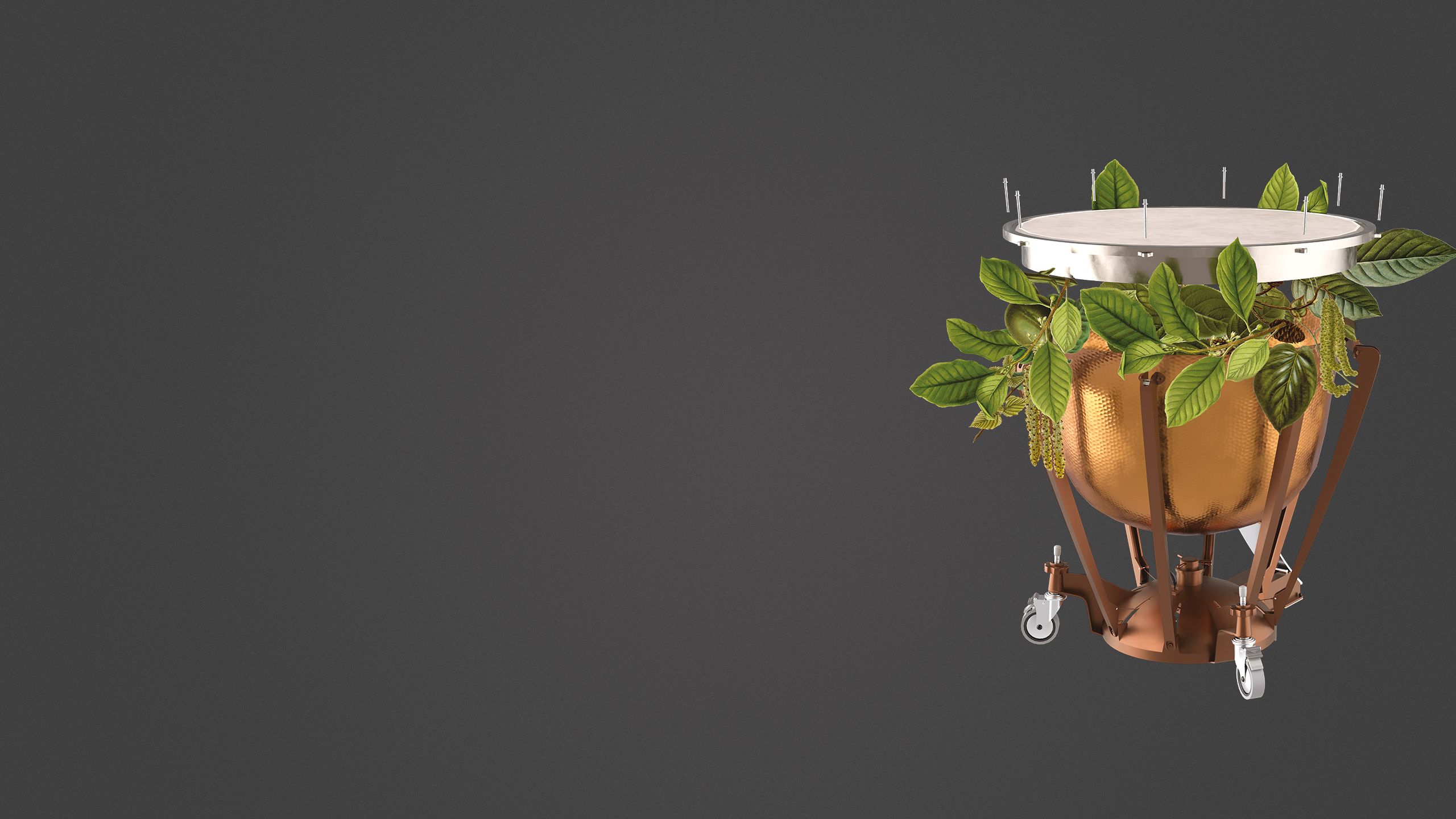
In the case of the Sinfonia antartica a real journey inspired much of the music, only in this case ‘steering for the deep waters’ had tragic consequences. In 1947 Vaughan Williams was invited to write the music for the Ealing film Scott of the Antarctic. He soon found that the story of Robert Falcon Scott’s doomed expedition to find the South Pole in 1910–12 was giving him ‘very definite ideas’. The challenge to evoke an unimaginably strange landscape inspired Vaughan Williams to enlarge his orchestral palette as never before: piano, celesta, organ, harps, a large percussion section including gong, bells, vibraphone and wind machine, and wordless women’s chorus with solo soprano. These sounds are combined to create unforgettable sonic images: xylophone tremolos, brittle piano chords and muted brass create glittering ice formations; shuddering strings register stabs of cold as the voices wail like Antarctic sirens; soft flute dissonances against deep rumbling harp, piano and percussion suggest the powerful slow currents of a vast frozen sea.
But there’s also the human dimension – the tiny figures of the explorers, awe-struck, tormented and oppressed by extreme cold, and finally obliterated by vast and merciless nature – and this emerges far more in the Sinfonia antartica than in the film score. Scott famously insisted in his final diary entry that he did not ‘regret this journey’. Vaughan Williams’s music hints movingly how such a statement might be possible, as for instance in the Intermezzo fourth movement, where we can sense something of the hopelessly touching dignity of Captain Oates’s self-sacrifice.
Nowhere is this dignity more evident than in the wonderful long tune, noble yet full of foreboding, that begins and very nearly ends the symphony. The sounds of the void soon begin to assert themselves, but the first movement ends with hope reaffirmed – a quiet but majestic trumpet fanfare and a noble long crescendo.
The weird and wonderful fauna of the Antarctic are evoked vividly in the Scherzo, but the central Landscape strips the music of even animal presence, conveying the lifeless grandeur of the interior with unsettling power, not least at the massive climax with its fortississimo gong stroke and crashing full organ chords.
The Intermezzo follows without a break, emphasising the gulf between its depiction of fragile human warmth and the implacable inhumanity of Landscape.
The Epilogue rouses itself resolutely, but the sounds of the void return, leading to a recapitulation of the symphony’s noble opening theme – but nobility means very little in an environment like this. Ultimately, voices and wind machine wipe the snow clean of human tracks.
Programme note © Stephen Johnson
Stephen Johnson is the author of books on Bruckner, Wagner, Mahler and Shostakovich, and a regular contributor to BBC Music Magazine. For 14 years he was a presenter of BBC Radio 3’s Discovering Music. He now works both as a freelance writer and as a composer.
Ralph Vaughan Williams
Unlike Elgar before him, Vaughan Williams received a traditional musical education at the Royal College of Music in London, but he also studied abroad – in Berlin with Bruch and in Paris with Ravel. Soon after his return came the Fantasia on a Theme by Thomas Tallis (1910) and A Sea Symphony (1903–9). He was active as a collector of folk music and edited The English Hymnal (1906). After completing his second symphony, A London Symphony (1911–13), he joined the army. As well as choral works such as Sancta civitas (1923–5) and Serenade to Music (1938), he wrote a Mass and made many choral arrangements of English folk songs. Apart from The Lark Ascending (1914)for violin and orchestra, his concerto-type works – for viola (Flos campi), piano, oboe and tuba – remain rarely performed. After the death of his first wife he remarried aged 80, and he produced two more symphonies before his death.
Profile by Edward Bhesania © BBC
Edward Bhesania is Editorial Manager, BBC Proms Publications, and reviews for The Stage and The Strad. He has written for The Observer, Country Life, The Tablet and International Piano.
INTERVAL: 20 minutes
Ralph Vaughan Williams (1872–1958)
A London Symphony
(Symphony No. 2) (1911–13, rev. 1918, 1920, 1933)


1 Lento – Allegro risoluto
2 Lento
3 Scherzo (Nocturne): Allegro vivace
4 Andante con moto – Maestoso alla marcia (quasi lento) – Allegro Epilogue: Andante sostenuto
It was Vaughan Williams’s friend and fellow-composer George Butterworth who urged him to compose his first purely orchestral symphony. At first Vaughan Williams was doubtful, but then he looked again at sketches he’d made for a symphonic poem about London and began to see how they could be developed into a highly unusual four-movement symphony. He worked on it relatively quickly, and by 1913 the first version was finished.
Given Vaughan Williams’s lifelong doubts about Mahler, it’s striking how Mahlerian his conception is here. For Mahler the symphony had to ‘embrace everything’, and in his London Symphony Vaughan Williams presents a remarkably vibrant collage of sounds and impressions – street vendors’ cries, tavern music, the kaleidoscopic bustle of busy streets and, framing it all, the eternal ebb and flow of the city’s great river. At the same time, it’s a triumph of symphonic engineering, or rather it is in the familiar revised version of 1933, which Vaughan Williams regarded as definitive. What we’re listening to here isn’t simply an illustrative tone-poem; there’s a current, like that of the River Thames itself, which not only carries us through, but juxtaposes the sound images in a way that challenges us (as in Mahler) to seek out deeper meanings.
As to what those meanings might be, Vaughan Williams provided only slender hints, but he did offer one significant comparison between the symphony’s ending and that of H. G. Wells’s novel Tono-Bungay: ‘The river passes – London passes, England passes …’ What Vaughan Williams doesn’t tell us is that the novel’s hero is sailing away in a destroyer, and that his last look back at the Imperial capital is (like that of the socialist Wells) a somewhat jaundiced one. What Wells in his novel calls ‘the last great movement in the London Symphony’ contains a grim depiction of a hunger march. The increasingly tragic march in Vaughan Williams’s finale is surely his response to that. Vaughan Williams’s London is life itself, in all its glory, but also in its pain and sadness, which makes it all the more fitting that this was the work he dedicated to George Butterworth’s memory when he was killed at the Somme in 1916.
A slow, possibly foggy dawn over the Thames, through which the muffled chimes of Big Ben can be heard, is suggested by the symphony’s opening music; then the city bursts into life, harshly at first, but with growing tenderness towards the heart of the movement, culminating in a shout of joy.
Vaughan Williams described the moody second movement as ‘Bloomsbury Square on a November afternoon’; in this ‘pastoral of grey skies’ the sound of a lavender-seller’s cry can be heard on viola.
The Westminster Embankment at night ‘with its crowded streets and flaring lights’ is the scene for the nocturnal Scherzo; at one point strings and muted horns do a very creditable impersonation of a mouth organ.
Then the finale begins its tragic procession; the climax is unmistakably anguished, but then comes stillness, Big Ben chimes again, and night descends as the river’s current carries the listener steadily away.
Programme note © Stephen Johnson.
Biographies
John Wilson conductor

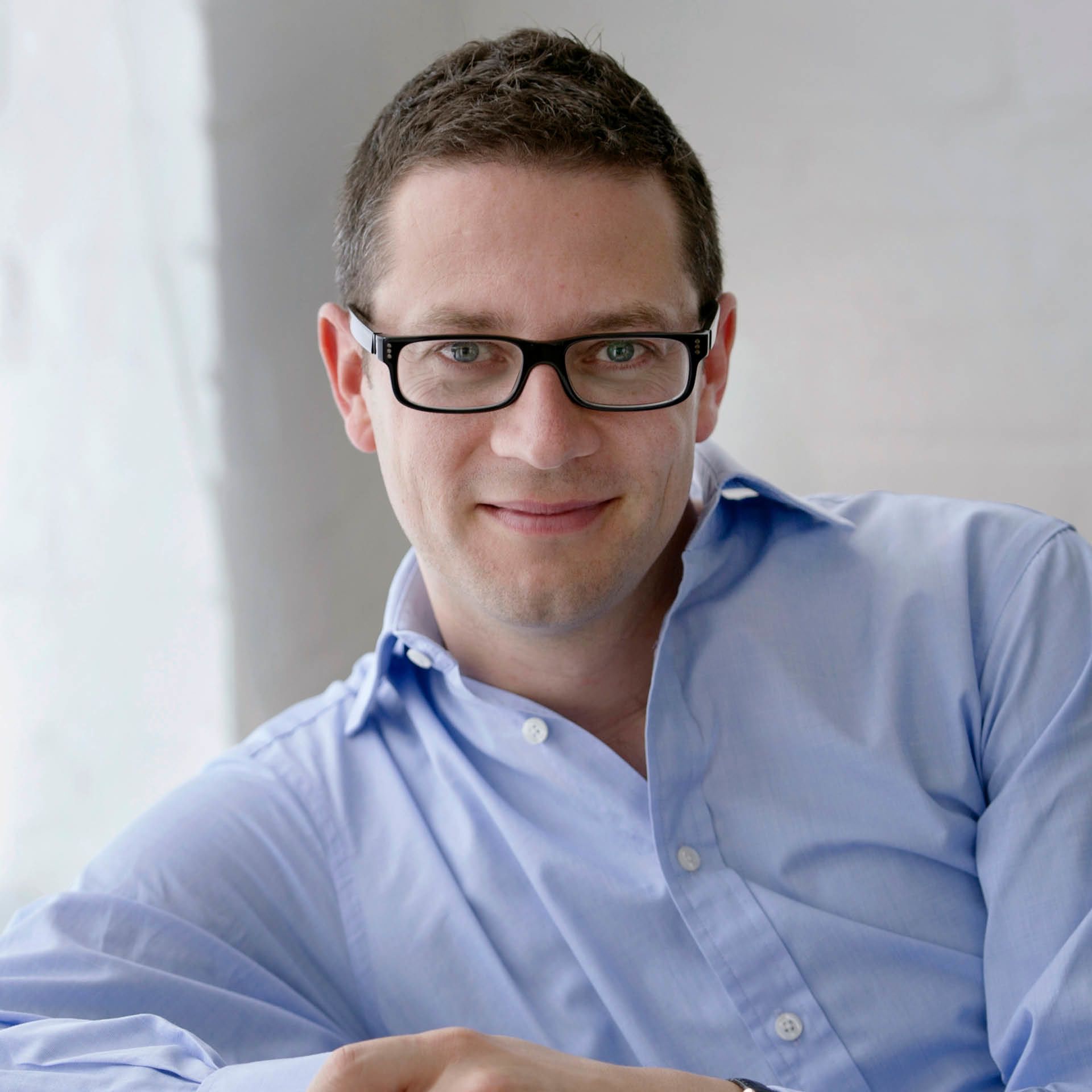
Photo: Sim Canetty-Clarke
Photo: Sim Canetty-Clarke
Born in Gateshead, John Wilson studied composition and conducting at the Royal College of Music in London. He is in demand across the globe, regularly guest- conducting the world’s finest orchestras. In recent seasons these have included the London, Oslo and Royal Stockholm Philharmonic orchestras, Bavarian Radio, London and Sydney Symphony orchestras, Budapest Festival Orchestra and Royal Concertgebouw Orchestra. He has also conducted productions at English National Opera and the Glyndebourne Festival.
For many years John Wilson appeared widely across the UK and abroad with the John Wilson Orchestra and in 2018 he relaunched the Sinfonia of London, with which he has recorded several award-winning CDs covering a range of repertoire. In 2021 he and the Sinfonia of London made their debut performance at the BBC Proms, followed by two performances at Snape Maltings.
John Wilson has a large and varied discography. His most recent recordings with the Sinfonia of London include Respighi’s ‘Roman Trilogy’ and a disc of early works by Henri Dutilleux.
In 2011 he was made a Fellow of the Royal College of Music. In 2019 he was awarded the prestigious ISM Distinguished Musician Award for his services to music and in 2021 he was appointed Henry Wood Chair of Conducting at the Royal Academy of Music.
Sarah Fox soprano

Photo: Grahame Mellanby
Photo: Grahame Mellanby
Sarah Fox was educated at Giggleswick School, the University of London and the Royal College of Music. A former winner of the Kathleen Ferrier and John Christie awards, she is also an Honorary Fellow of Royal Holloway, University of London.
Roles with the Royal Opera, Covent Garden, include Micaëla (Carmen), Asteria (Tamerlano), Zerlina (Don Giovanni) and Woglinde (The Ring). Other highlights include Susanna (The Marriage of Figaro) for Glyndebourne Festival Opera and the Royal Danish Opera, and Mimì (La bohème) for Opera North.
Sarah Fox’s concert career encompasses engagements across the USA and Asia, as well as tours throughout the UK and Europe. She works with many of the world’s leading orchestras, including the Berlin and Oslo Philharmonic orchestras, Colorado and Melbourne Symphony orchestras, Hallé and Salzburg Camerata.
She has appeared at the BBC Proms, Edinburgh Festival, Three Choirs Festival and Wigmore Hall, and is a regular guest with the Classical Opera Company. She performs frequently with John Wilson and his Orchestra, was a regular guest on BBC Radio 2’s Friday Night Is Music Night, and has performed in concerts with Rufus Wainwright in Europe and Hong Kong.
Sarah Fox has a varied discography that includes songs by Poulenc, Mahler’s Symphony No. 4, Mozart’s Requiem and The Cole Porter Songbook.
Manchester Chamber Choir
Manchester Chamber Choir was formed in 2002 and has become one of the UK’s most versatile and accomplished vocal ensembles. The choir has sung on BBC Radio 4’s Daily Service and Sunday Worship, and regularly works with the BBC Philharmonic. It premiered James MacMillan’s Credo with the orchestra at the BBC Proms and has broadcast live performances of Bach’s cantatas with Nicholas Kraemer, Bach’s Christmas Oratorio with Juanjo Mena and a BBC Radio 2 Special with Pet Shop Boys.
In the 2015 Manchester International Festival the choir performed Arvo Pärt’s Drei Hirtenkinder aus Fátima and premiered The Immortal by Mark Simpson. That year the ladies of MCC also performed with Maxime Tortelier, the BBC Philharmonic and Jarvis Cocker at the BBC Proms, and recorded Panambí by Alberto Ginastera with the same orchestra.
Other concerts have been given at the Whitworth Gallery (featuring new commissions inspired by the gallery’s collection), the Buxton Festival with Paul Spicer and at the BBC Proms, performing Beethoven’s Missa solemnis. Performances of Bach’s St Matthew Passion took place in Macclesfield and in the Bridgewater Hall with the BBC Philharmonic on Good Friday 2017 (broadcast live on Radio 3).
The choir has collaborated with Chetham’s Symphony Orchestra, both in the Stoller Hall’s opening concert in 2017 and in a 2019 concert of works by Purcell and Handel. The end of 2017 saw the choir travel to Xi’an in China and give a televised performance of Beethoven’s ‘Choral’ Symphony with the Xi’an Symphony Orchestra. This was followed by a 2018 concert in Manchester Cathedral conducted by Jonathan Lo celebrating both the centenary of Leonard Bernstein and the cathedral’s new organ.
More recent performances include Rachmaninov’s All-Night Vigil in Salford Cathedral under Paul Spicer, a concert reflecting on a century since the end of the First World War and also on the centenary of women’s suffrage under Suzzie Vango, Walton’s Cantico del Sole under Philip Rushforth, Brahms’s A German Requiem under Jonathan Lo and concerts in the Bridgewater Hall for the Manchester Mid-Day Concerts Society.
Principal Conductor
Vicente Chavarría
First Sopranos
Alex Antonova
Emily Beahan
Alice Capper
Laurenne Chapman
Fiona Clucas
Jackie Cuthbert
Suzanne Hodge
Lyndsey Key
Eva McDermid
Philippa Neal
Debbie Trigg
Hannah Whitehouse
Second Sopranos
Joanna Bluck
Claire Campbell-Smith
Claire Claymore
Clare Jackson
Becca Jenkins
Clara Marshall-Cawley
Susan Maxwell
Julia Mayall
Claire Valentine
Jane Whittell
Anne Wynne
Altos
Naomi Cooper
Ellie Field
Theadora Fisher
Bekki Gocher
Sarah Johnston
Anna Kaskevicha
Rachel Shatliff
Alison Syner
Gill Walsh
Georgina Williamson
Rachel Yates
The list of players was correct at the time of publication
BBC Philharmonic
The BBC Philharmonic is reimagining the orchestral experience for a new generation – challenging perceptions, championing innovation and taking a rich variety of music to the widest range of audiences.
The orchestra usually performs around 100 concerts every year, the vast majority of which are broadcast on BBC Radio 3. Along with around 35 free concerts a year at its MediaCityUK studio in Salford and a series of concerts at Manchester’s Bridgewater Hall, the orchestra performs across the North of England, at the BBC Proms and internationally, and records regularly for the Chandos label.
The BBC Philharmonic’s Chief Conductor is Omer Meir Wellber. Described by The Times’s Richard Morrison as ‘arguably the most inspired musical appointment the BBC has made for years’, Israeli-born Wellber burst into his new role at the 2019 BBC Proms and has quickly built an international reputation as one of the most exciting young conductors working today. The orchestra also has strong ongoing relationships with its Chief Guest Conductor John Storgårds and Associate Artist Ludovic Morlot. In May last year the orchestra announced young British composer and rising star Tom Coult as its Composer in Association.
The scope of the orchestra’s programme extends far beyond standard repertoire. Over the past few years it has collaborated with artists as varied as Clean Bandit, Jarvis Cocker and The Wombats; played previously unheard music by writer-composer Anthony Burgess in a unique dramatisation of A Clockwork Orange; joined forces with chart-toppers The 1975 at Blackpool’s Tower Ballroom; premiered The Arsonists by composer Alan Edward Williams and poet Ian McMillan, the first opera ever written to be sung entirely in a Northern English dialect; and broadcast on all seven BBC national radio networks, from BBC Radio 1 to BBC Radio 6 Music and the BBC Asian Network. Last year the orchestra also entered the UK Top 40 singles chart with ‘Four Notes: Paul’s Tune’.
The BBC Philharmonic is pioneering new ways for audiences to engage with music and places learning and education at the heart of its mission. Outside of the concert hall, it is passionate about taking music off the page and into the ears, hearts and lives of listeners of all ages and musical backgrounds – whether in award-winning interactive performances, schools’ concerts, Higher Education work with the Royal Northern College of Music or the creation of teacher resources for the BBC’s acclaimed Ten Pieces project. Through all its activities, the BBC Philharmonic is bringing life-changing musical experiences to audiences across Greater Manchester, the North of England, the UK and the rest of the wor
First Violins
Zoe Beyers Leader
Midori Sugiyama Assistant Leader
Thomas Bangbala Sub Leader
Alison Fletcher *
Kevin Flynn †
Austeja Juskaityte
Anna Banaszkiewicz-Maher
Martin Clark
Julian Gregory
Karen Mainwaring
Catherine Mandelbaum
Anya Muston
Robert Wild
Toby Tramaseur
Paula Smart
Alison Williams
Second Violins
Glen Perry ‡
Rachel Porteous
Sophie Szabo
Christina Knox
Rebecca Mathews
Claire Sledd
Matthew Watson
Adam Riding
Anna O’Brien
Natalie Purton
Oliver Morris
Cleo Annandale
Eve Kennedy
William Chadwick
Violas
Kimi Makino ‡
Alex Mitchell
Bernadette Anguige †
Kathryn Anstey
Matthew Compton
Ruth Montgomery
Alexandra Fletcher
Roisin Ni Dhuill
Fiona Dunkley
Amy Hark
Carolyn Tregaskis
Michael Dale
Cellos
Peter Dixon *
Maria Zachariadou ‡
Steven Callow †
Jessica Schaefer
Rebecca Aldersea
Elinor Gow
Miriam Skinner
Marina Vidal Valle
Elise Wild
Mandy Turner
Double Basses
Alice Durrant †
Andrew Vickers
Miriam Shaftoe
Ivor Hodgson
Elena Mariogmez
Lisa Featherston
Bryn Davies
Flutes
Alex Jakeman *
Robert Looman
Piccolo
Jennifer Hutchinson
Oboes
Gordon Hunt §
Helen Clinton
Cor anglais
Gillian Callow
Clarinets
John Bradbury *
Fraser Langton
Bass Clarinet
Lenny Sayers
Bassoons
Graeme Brown §
Simon Durnford
Contrabassoon
Bill Anderson
Horns
Ben Hulme *
Rebecca Hill ¥
Phillip Stoker
Tom Kane
Jonathan Barrett
Trumpets
Richard Blake §
Gary Farr †
Tom Fountain
David Hooper
Trombones
Richard Brown *
Gary MacPhee
Bass Trombone
Russell Taylor
Tuba
Christopher Evans
Timpani
Paul Turner *
Percussion
Paul Patrick *
Geraint Daniel
Oliver Patrick
Sophie Hastings
Edward Cervenka
Mark Concar
Harp
Clifford Lantaff *
* Principal
† Sub Principal
‡ Assistant Principal
§ Guest Principal
¥ Associate Principal
Director
Simon Webb
Orchestra Manager
Tom Baxter
Assistant Orchestra Manager
Stefanie Farr/Beth Wells
Orchestra Personnel Manager
Helena Nolan
Orchestra Administrator
Maria Villa
Senior Producer
Mike George
Programme Manager
Stephen Rinker
Assistant Producer
Katherine Jones
Marketing Manager
Amy Shaw
Marketing Executive
Jenny Whitham
Marketing Assistant
Kate Highmore
Manager, Learning and Digital
Jennifer Redmond/Beth Wells
Project Co-ordinator, Learning
Youlanda Daly/Róisín Ní Dhúill
Librarian
Edward Russell
Stage Manager
Thomas Hilton
Transport Manager
Will Southerton
Team Assistant
Diane Asprey
* Principal
† Sub Principal
‡ Assistant Principal
§ Guest Principal
¥ Associate Principal
The list of players was correct at the time of publication
Keep up to date with the
BBC Philharmonic
Listen to our BBC Radio 3 broadcasts via the BBC Sounds app. Visit our website and follow us on Twitter, Facebook and Instagram and sign up to the newsletter
To help us improve our online concert programmes, please take this 5-minute survey
Produced by BBC Proms Publications