Elgar’s Cello Concerto
Friday 4 March 2022, 7.00pm


Judith Weir
Concrete (a motet about London) 24’
Edward Elgar
Cello Concerto in E minor 31’
INTERVAL: 20 minutes
Maurice Ravel
Daphnis and Chloe 52’
Senja Rummukainencello
Jamie Parkerspeaker
BBC Symphony Chorus
BBC Symphony Orchestra
Sakari Oramoconductor


This concert is being broadcast live by BBC Radio 3 in ‘Radio 3 in Concert’. It will be available for 30 days after broadcast via BBC Sounds, where you can also find podcasts and music mixes.
Help us improve our online programmes
Please take this five-minute survey and let us know what you think of these notes.
Programme Survey
Brutalism and beauty collide in tonight’s concert, which celebrates the 40th anniversary of the official opening of the Barbican Centre.
The hall’s opening concert back in 1982 featured Elgar’s Cello Concerto, composed in the immediate aftermath of the First World War. Joining the BBC Symphony Orchestra and Chief Conductor Sakari Oramo tonight is the brilliant young Finnish cellist Senja Rummukainen.
Concrete is the theme and the title of Judith Weir’s work for speaker, chorus and orchestra, commissioned by the BBC and premiered here 15 years ago. It pays homage to the Barbican and the surrounding area – its idealism, its boldness and the stories of the city from which it emerged.
After the interval, the beguiling orchestral tapestry of Ravel’s music for Michel Fokine’s ballet Daphnis and Chloe. This pastoral romance, brimming with youthful passions, drew from Ravel music of breathtaking beauty, dripping in nostalgia and opulence.
Judith Weir (born 1954)
Concrete (a motet about London) (2007)


Jamie Parker speaker
BBC Symphony Chorus
‘Concrete’ is what Judith Weir’s music always is, in the sense that it offers sharply delineated ideas that lodge in the mind and the memory. But the title here refers, rather surprisingly, to the prosaic and unloved building material that’s become synonymous with the worst aspects of the urban landscape, as in ‘concrete monstrosity’. This isn’t a sign that Weir has finally signed up to the zeitgeist and become an edgy, urban composer. As always, it’s history and memory she’s interested in. The real subject here is the way a city grows and decays, is rebuilt, burnt down and reborn.
The city is London, specifically the area around the Barbican. Weir chose this area for her ‘motet about London’ partly because it was commissioned for a BBC Composer Weekend, held here in 2008, but also because the Barbican and its neighbouring areas are a microcosm of London’s history. The Thames ran nearby in the days before it was confined within the Embankment. In the pre-Christian era it had Greek-inspired temples and a Roman wall, then later a whole clutch of medieval churches. Periodically there were fires, after which rebuilding would begin again, fuelled by the conviction that what rose from the ruins would be better than what existed before. But the old didn’t vanish; it was memorialised in poetry and prose, and its fragments were physically incorporated in the new buildings – most famously in St Paul’s Cathedral, which somewhere contains a brick from the old cathedral bearing the carved word ‘Resurgam’ – ‘I will rise again’. Concrete as a building material is a metaphor for this mingling of old and new, as it’s made by mixing pre-existing material, ground up small, with cement and water.
Weir’s motet follows the same method, appropriately enough. She takes fragments of texts from poets, antiquaries, diarists and even the planning document for the Barbican Centre, and binds them into something solid and durable. Running through all five movements are fragments of John Evelyn’s description of the Great Fire of London, which contains in concentrated form the theme of the whole piece.
The first movement begins with a recitation of ancient Celtic and Anglo-Saxon river gods and goddesses, marked ‘wild and keening’, under which the reciter begins Evelyn’s account of the Great Fire. A change of pace introduces a 9th‑century Watchman’s song in Latin, while fragments of a Mithraic liturgy bring an exotic note into the narrative. In the second movement the tone lightens for a survey of London’s churches taken from an 18th-century source, with a brief description of the saints and martyrs associated with them. A vigorous orchestral interlude leads to the third movement, which has ‘vox pops’ from 19th-century Londoners culled from Henry Mayhew’s famous book London Labour and the London Poor. (Note that the first voice says, ‘I am not a Londoner’ – is this Weir’s sly reference to the fact that London has always embraced immigrants, including herself?) The fourth movement is the most sombre. Here John Evelyn’s narration tells how he clambers over the smoking ruins of London the morning after the fire, while the chorus intones Shakespeare’s brooding Sonnet No. 55. In the final movement the pace quickens, and we hear fragmentary words from the original 1952 prospectus for the redevelopment of the Barbican. Meanwhile John Evelyn’s narration comes to a hopeful end with his ‘plot for a new city’, and the chorus finally comes to rest on that word ‘Resurgam’ – ‘I will rise again’.
Programme note © Ivan Hewett
Ivan Hewett is a critic and broadcaster who for nine years presented BBC Radio 3’s Music Matters. He writes for The Daily Telegraph and teaches at the Royal College of Music.
Judith Weir
‘When the work continues to flow in, of its own accord’: that is how Judith Weir defines success as a musician. Now in her late sixties, Weir has ticked every imaginable box on a composer’s wish list and it is fair to say that the work continues to flow in. She has been, variously, Associate Composer to the City of Birmingham Symphony Orchestra (1995–8), Artistic Director of the Spitalfields Festival (1995–2000), Associate Composer to the BBC Singers (2015–19) and visiting professor at Princeton (2001), Harvard (2004) and Cardiff (2006–13), and she is now Master of the Queen’s Music – the first woman to hold this post in the four centuries of its existence.
Her music is of the rare and remarkable kind: intelligent, surprising and intensely communicative. She does not shy away from stark, contemporary ideas and yet she has a knack for making ‘simple musical ideas appear freshly mysterious’ (The Guardian). She is celebrated in particular for her stage works and operas, the earliest of which was The Black Spider (1984) and the most recent Miss Fortune (2011), and has been called ‘one of the most successful British opera composers since Britten’ (The Daily Telegraph). This – and her extensive choral catalogue, which includes oratorios (In the Land ofUz, 2017), masses (Missa del Cid, 1988) and her song-cycle-cum-cantata We are Shadows (1999) – speaks of a deep love for the human voice, although this does not come at the expense of all else. ‘I’ve always felt that a balance between writing vocal music and abstract music for instruments is important,’ she says, ‘because technique has to continue to evolve, and this is the best way to do it.’
Profile © Jo Kirkbride
Jo Kirkbride is Chief Executive of the Edinburgh-based Dunedin Consort and a freelance writer on classical music. She studied Beethoven’s slow movements for her PhD and writes regularly for the London Symphony Orchestra, London Philharmonic Orchestra, London Sinfonietta and Snape Proms.
Edward Elgar (1857–1934)
Cello Concerto in E minor, Op. 85 (1918–19)


1 Adagio – Moderato –
2 Lento – Allegro molto
3 Adagio
4 Allegro – Moderato – Allegro, ma non troppo
Senja Rummukainen cello
‘Iam lonely now & do not see music in the old way & cannot believe I shall complete any new work … Ambition I have none,’ wrote Elgar, little more than a year after completing his Cello Concerto in E minor. The Concerto would become his last major work. With the exception of some small pieces of chamber music and a handful of transcriptions, Elgar wrote little of any consequence in the last 14 years of his life, though he began work on a whole array of abortive new scores. A new piano concerto, a third symphony, an opera – all went unfinished. His enthusiasm for composing had died along with his wife, Alice, who passed away just five months after the Cello Concerto received its premiere.
Her death had not come as a surprise. In the months leading up to it, Elgar described how Alice ‘seemed to be fading away before one’s very eyes’. But, as her health diminished, so too did Elgar’s outgoing musical persona, and in its place a more measured, introspective composer seemed to emerge. Having written almost nothing at all during the war years, during 1918 and 1919 Elgar immersed himself in four of the most beautiful – and distinctive – works of his career. His Violin Sonata, String Quartet and Cello Concerto (all in E minor) and Piano Quintet in A minor were marked by their newly contemplative style, which Alice considered ‘wonderful’. The critics admired the new Elgar, too, although the premiere of the Cello Concerto, given by the London Symphony Orchestra at Queen’s Hall in October 1919, was nearly a disaster. With too much rehearsal time apparently having been given over to the other works on the programme, a reviewer for The Observer wrote: ‘Never, in all probability, has so great an orchestra made so lamentable an exhibition of itself … The work itself is lovely stuff, very simple – that pregnant simplicity that has come upon Elgar’s music in the last couple of years – but with a profound wisdom and beauty underlying its simplicity.’
By contrast to his Violin Concerto of 1910, which is grand, impassioned and – in Elgar’s own words – ‘too emotional’, the Cello Concerto is solemn, reflective and altogether more wistful. This is not a virtuoso concerto in the traditional sense, though it is still the soloist who carries the weight of the narrative. Instead, the soloist is part-performer and part-narrator, opening the work with a bold piece of recitative that begins as a cry of anguish before quickly fading into melancholy. The orchestra, too, is pared back, its gentle echoes and hushed accompaniment never eclipsing the soloist’s wandering lines. While there are flashes of grandeur and even of lightness, notably in the scurrying second movement and the march-like finale, these moments seem to pass all too quickly, either swept away by another passing thought or undercut by a note of sadness. This is Elgar in a deep and thoughtful mode, unburdening himself as though he were afloat on a sea of improvisation.
Programme note © Jo Kirkbride
Edward Elgar
Elgar rose from humble beginnings (his father was a piano tuner and organist) to occupy an elevated social standing: he was knighted (1904), awarded the OM (1911) and became Master of the King’s Music (1924). Born in Worcester, he failed in his early attempt to establish himself in London, though his reputation grew steadily during the 1890s. The ‘Enigma’ Variations of 1899 first brought him to national attention, followed closely by his darkly imaginative The Dream of Gerontius (1900). He waited until his fifties to produce his First Symphony, the first of his large-scale orchestral works (followed by the Violin Concerto, the Second Symphony and the Cello Concerto). The death of his wife in 1920 stunted his will to compose, though in 1932 the BBC commissioned his Third Symphony. At his death Elgar left 130 pages of sketches for the work, which were elaborated by the British composer Anthony Payne (1936–2021). Fittingly, the completed Symphony was finally premiered by the BBC Symphony Orchestra in 1998.
Profile by Edward Bhesania © BBC
INTERVAL: 20 MINUTES
Maurice Ravel (1875–1937)
Daphnis and Chloe – choreographic symphony (1909–12)


Part 1
1 Introduction
2 Religious dance
3 The maidens entice Daphnis and surround him with their dancing – General dance
4 Dorcon’s grotesque dance
5 Daphnis’s light and graceful dance
6 Lycéion enters and dances
7 Nocturne. Slow mystical dance of the Nymphs
Part 2
8 Introduction
9 War dance
10 Chloe’s dance of supplication
Part 3
11 Daybreak
12 Pantomime. Daphnis and Chloe mime the tale of Pan and Syrinx
13 General dance – Dance of Daphnis and Chloe – Dance of Dorcon – Final dance: Bacchanal
BBC Symphony Chorus
In 1909 Serge Diaghilev – then in his first season with what would become the legendary Ballets Russes – commissioned Ravel to compose a new ballet score. It was to be based on Daphnis and Chloe, a second-century AD Greek romance about two orphaned children who are raised by shepherds, grow up together, are abducted and eventually fall in love. While Ravel was delighted to accept the commission, it would be three years before the music was finally complete. By the time the score reached the stage in 1912, audiences had already assimilated the new sounds of Stravinsky’s The Firebird (1910) and Petrushka (1911), while Nijinsky’s overtly erotic performance of Debussy’s mysterious Prélude à l’après-midi d’un faune only days before had caused an uproar. By contrast, Ravel’s ethereal, dreamlike score made little impression.
Where Stravinsky’s ballet scores of the same era are marked by their hard edges and rhythmic dynamism, Ravel favours a softer approach. Describing Daphnis and Chloe not as a ballet but as a ‘choreographic symphony in three parts’, Ravel outlined his intention ‘to compose a vast musical fresco, less scrupulous as to archaism than faithful to the Greece of my dreams, which inclined readily enough to what French artists of the late 18th century have imagined and depicted’. But Michel Fokine, the ballet’s choreographer, had rather different views and imagined the ‘ancient dancing depicted in red and black on Attic vases’. The fact that neither spoke the same language only compounded the issue: ‘Fokine doesn’t know a word of French,’ Ravel complained, ‘and I know only how to swear in Russian.’ Ravel eventually became so exasperated by the delays that he gathered a series of excerpts from Parts 1 and 2 (later published as Suite No. 1) for a one-off concert performance in 1911, more than a year before the ballet itself received its premiere.
Despite the work’s troublesome beginnings and rather lukewarm reception, it has since become recognised as Ravel’s masterpiece, noted for its opulent orchestration and sensuous melodies. As the ballet opens, we are cast into a shimmering, nocturnal world, where nymphs carved into the rocks come alive and dance for Daphnis, inciting twinges of jealousy from Chloe. But Daphnis only has eyes for Chloe and the two embrace – only for Chloe to be abducted by pirates, who carry her away to their camp. The god Pan is summoned to release her; and, as Part 3 opens, the two lovers are reunited at daybreak back in Pan’s sacred grove. As the sun rises hazily in the sky, so Ravel’s rendering of the dawn chorus grows into one of the most evocative depictions of daybreak in all of Western music. After finding one another, Daphnis and Chloe act out a ‘Pantomime’ as a token of gratitude to Pan, who saved Chloe from her abductors. Finally, they are married before the nymphs’ altar and a huge celebration unfolds in the ‘General dance’ – a movement that took Ravel a full year to complete. Here tension is replaced by relief, ardour by joy, in a bustling dance that builds to a thrilling and explosive conclusion.
Programme note © Jo Kirkbride
Maurice Ravel
Born in the Basque region to a Swiss father and a Basque mother, Ravel studied at the Paris Conservatoire, where he consistently and controversially failed to win the prestigious Prix de Rome. Yet by the time of his final failure, in 1905, he had written key works such as the solo-piano Jeux d’eau (1901), the String Quartet (1902–3) and the orchestral song-cycle Shéhérazade (1903). Often cast as an Impressionist alongside Debussy, he was nevertheless drawn to the simplicity of Classical dance forms (Sonatine, Le tombeau de Couperin), and worked with extreme precision. He served as a driver in the First World War, returning just before the death of his mother, which broke down all close human contact for the reclusive composer. Other dances figure prominently – waltzes (La valse, Valses nobles et sentimentales) and the Boléro (one of many works showing an Iberian influence) – and he conjured up a world of childhood innocence in the ballet Mother Goose and the opera L’enfant et les sortilèges. He wrote little after his two piano concertos (1929–31), and died a week after a brain operation in December 1937.
Profile by Edward Bhesania © BBC
Coming up at the Barbican
Friday 11 March 2022, 7.30pm
Scott of the Antarctic
A compelling synthesis of film and music as the BBC SO performs Vaughan Williams’s groundbreaking orchestral score live to accompany a screening of Charles Frend’s landmark movie.
Book tickets


Biographies
Sakari Oramo conductor


Photo: Benjamin Ealovega
Photo: Benjamin Ealovega
Sakari Oramo began his career as a violinist and was leader of the Finnish Radio Symphony Orchestra. He is currently Chief Conductor of the BBC Symphony Orchestra, Honorary Conductor of the Finnish Radio Symphony Orchestra and Conductor Laureate of the Royal Stockholm Philharmonic Orchestra (of which he was Chief Conductor and Advisor, 2008–21). From 1998 to 2008 he was Music Director of the City of Birmingham Symphony Orchestra.
This season marks his eighth with the BBC SO, with which he champions new and rarely performed works alongside established highlights of the repertoire. Among his guest appearances this season are engagements with the Berlin Philharmonic, Vienna Symphony, Finnish Radio Symphony and NDR Elbphilharmonie orchestras.
He is a regular at the BBC Proms, where he conducts a typically wide variety of works, often with the BBC Symphony Chorus. He has conducted the Last Night of the Proms on five occasions.
His recordings have won many accolades, including a BBC Music Magazine Award for Nielsen’s Symphonies Nos. 1 and 3 with the Royal Stockholm Philharmonic Orchestra, a Gramophone Award for Rued Langgaard’s Symphonies Nos. 2 and 6, and an ICMA Award for Busoni’s Piano Concerto with Kirill Gerstein and the Boston Symphony Orchestra. Other recent releases include orchestral works by Sibelius, Rachmaninov’s Piano Concertos Nos. 2 and 3 with Yevgeny Sudbin and a disc of music by Florent Schmitt, all with the BBC Symphony Orchestra.
Senja Rummukainen cello
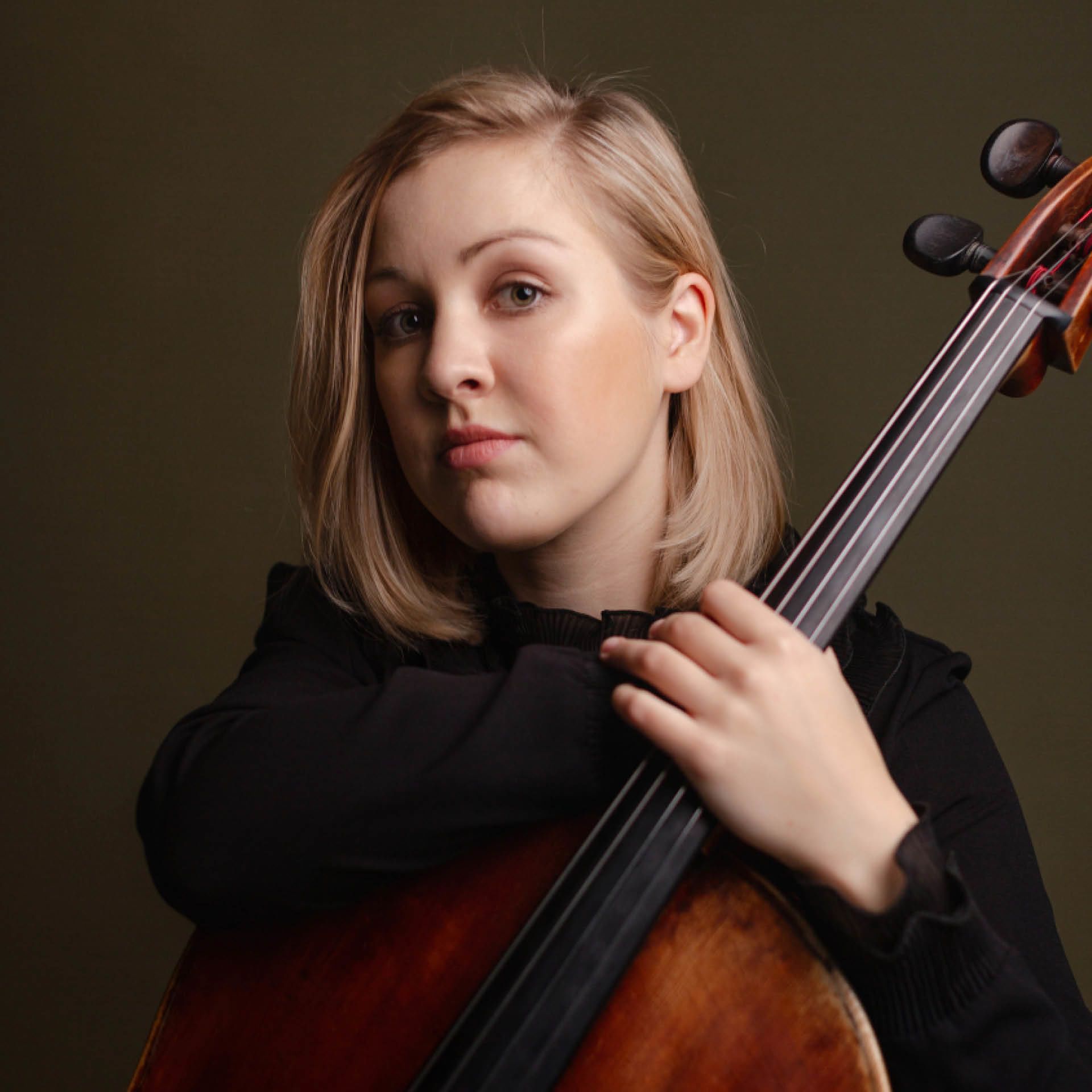
Photo: Sanna Lehto
Photo: Sanna Lehto
Senja Rummukainen is currently studying at the University of Berlin with Jens Peter Maintz, having studied with Truls Mørk at the Norwegian Academy of Music, Young-Chang Cho at the Folkwang University of Essen, Marko Ylönen at the Sibelius Academy in Helsinki and Taru Aarnio and Allar Kaasik at the East Helsinki Music Institute. She was a prize-winner at the 2019 International Tchaikovsky Competition, won First Prize at the Turku Cello Competition in 2014 and was a finalist for the Guilhermina Suggia Prize.
She has performed with all the major Finnish orchestras and with the Mariinsky Orchestra, St Petersburg Philharmonic and Orquestra Sinfónica do Porto Casa da Música under conductors including Valery Gergiev, Jorma Panula, Petri Sakari, Leif Segerstam and Dima Slobodeniouk. She was a principal cellist of the Helsinki Philharmonic Orchestra from 2017 to 2021 and continues to visit the Oslo Philharmonic Orchestra as a guest principal.
As a chamber musician she has appeared at music festivals throughout Finland and was co-Artistic Director with Johannes Piirto, Kasmir Uusitupa, Tami Pohjola and Riina Piirilä of the Kamarikesä Festival in Helsinki. She can be heard performing on the soundtrack of Aku Louhimies’s 2021 film The Wait.
Among other highlights, this season sees her debut with the Finnish Radio Symphony Orchestra under Nicholas Collon, performing Beethoven’s Triple Concerto with violinist Otto Antikainen and pianist Fanny Söderström.
Senja Rummukainen plays a cello by Giovanni Grancino from 1698, generously loaned to her by the OP Art Foundation.
Jamie Parker speaker
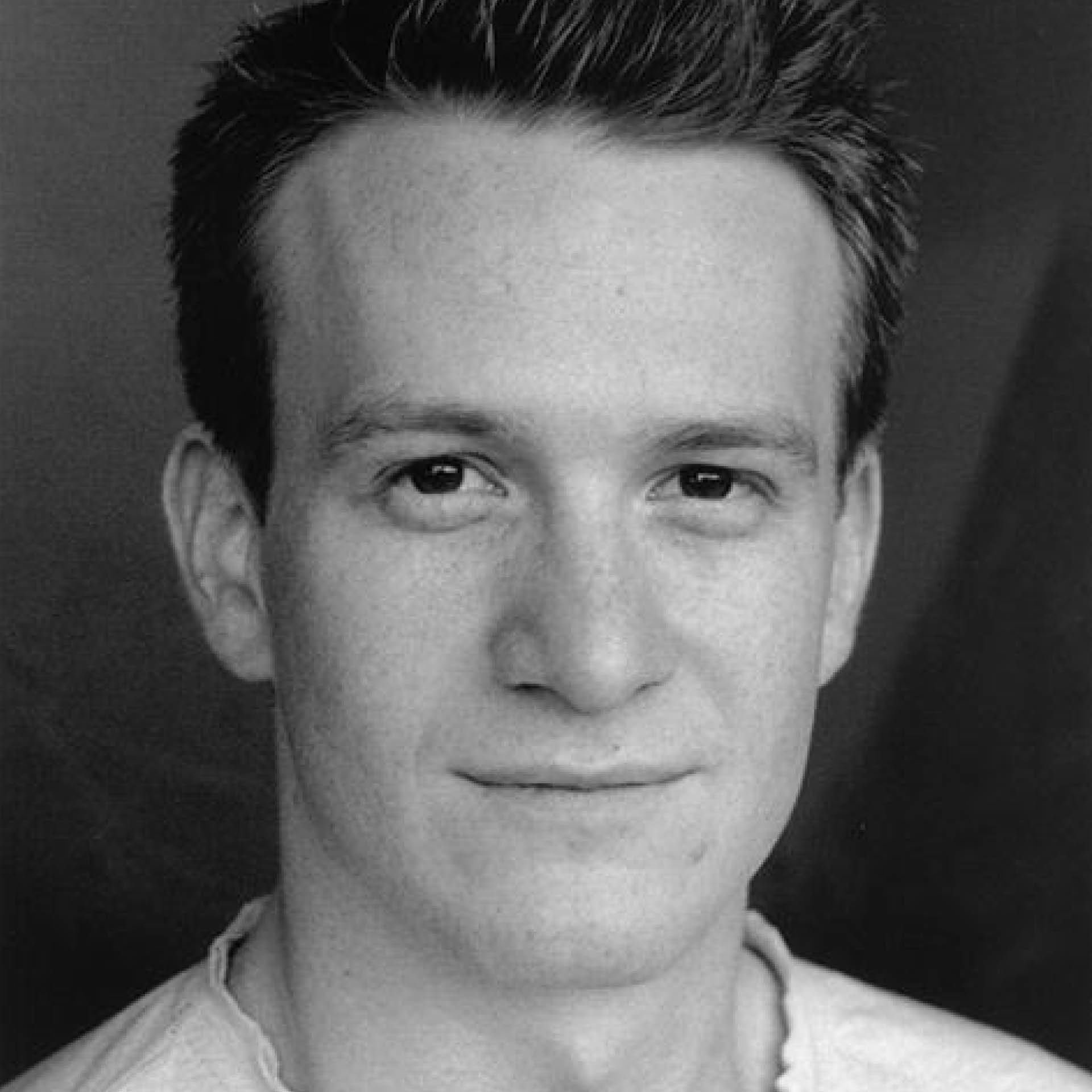
Jamie Parker graduated from the Royal Academy of Dramatic Art in 2002. He won an Olivier Award (2017) and was nominated for a Tony Award (2018) for Harry Potter and the Cursed Child.
His film roles include Lieutenant Richards (1917, directed by Sir Sam Mendes), Scripps (The History Boys) and Estate Agent (The Lady in the Van, both directed by Sir Nicholas Hytner) and Werner von Haeften (Valkyrie, directed by Bryan Singer).
His television experience includes Jonathan Strange & Mr Norrell, Count Arthur Strong, Silk, Imagine … Vincent Van Gogh, Silent Witness and Maxwell for the BBC, Des for ITV and Lawless for Sky.
Jamie Parker has appeared on Broadway and at leading UK venues including the National Theatre, Palace Theatre, Savoy Theatre, Old Vic, Menier Chocolate Factory, Theatre Royal Bath, West Yorkshire Playhouse, Shakespeare’s Globe, Sheffield Crucible and Chichester Festival Theatre. He has taken major roles in Guys and Dolls, Racing Demon, Rosencrantz and Guildenstern Are Dead, Henry IV Parts 1 and 2, Henry V, The History Boys, The Gondoliers, High Society and Assassins, among others.
BBC Symphony Orchestra
The BBC Symphony Orchestra has been at the heart of British musical life since it was founded in 1930. It plays a central role in the BBC Proms at the Royal Albert Hall, performing at the First and Last Night each year in addition to regular appearances throughout the Proms season with the world’s leading conductors and soloists.
The BBC SO performs an annual season of concerts at the Barbican in London, where it is Associate Orchestra. Its commitment to contemporary music is demonstrated by a range of premieres each season, as well as Total Immersion days devoted to specific composers or themes. Highlights of the current season include concerts conducted by Sakari Oramo with music by Beethoven, Brahms, Ruth Gipps, Dora Pejačević, Sibelius and others; performances with Principal Guest Conductor Dalia Stasevska, including the devised work Concerto No. 1: SERMON by Davóne Tines, combining music and poetry in a unique examination of racial justice; children’s author Jacqueline Wilson reading from her best-selling books in a family concert; the world premiere of Up For Grabs by composer and Arsenal fanatic Mark-Anthony Turnage; the BBC Symphony Chorus’s return to the Barbican stage for a Christmas concert; concerts celebrating the 100th anniversary of the BBC and a half-century of collaboration with Sir Andrew Davis; and two Total Immersion days, one focusing on music composed in the camps and ghettos of Nazi-occupied Europe and one featuring the music of Frank Zappa. Guest conductors include Alpesh Chauhan, Eva Ollikainen, Jukka-Pekka Saraste, Jordan de Souza and Nathalie Stutzmann.
The vast majority of performances are broadcast on BBC Radio 3 and a number of studio recordings each season are free to attend. These often feature up-and-coming new talent, including members of BBC Radio 3’s New Generation Artists scheme. All broadcasts are available for 30 days on BBC Sounds and the BBC SO can also be seen on BBC TV and BBC iPlayer and heard on the BBC’s online archive, Experience Classical. The BBC Symphony Orchestra and Chorus – alongside the BBC Concert Orchestra, BBC Singers and BBC Proms – also offer enjoyable and innovative education and community activities and take a leading role in the BBC Ten Pieces and BBC Young Composer programmes.
Chief Conductor
Sakari Oramo
Principal Guest Conductor
Dalia Stasevska
Günter Wand Conducting Chair
Semyon Bychkov
Conductor Laureate
Sir Andrew Davis
Creative Artist in Association
Jules Buckley
First Violins
Igor Yuzefovich leader
Cellerina Park
Jeremy Martin
Jenny King
Colin Huber
Shirley Turner
Ni Do
Molly Cockburn
Annabel Drummond
Daniel Meszoly Mate
Alexandra Lomeiko
Joanne Chen
Thea Spiers
Katharina Paul
David Larkin
Kate Cole
Second Violins
Heather Hohmann
Daniel Meyer
Nihat Agdach
Vanessa Hughes
Danny Fajardo
Lucy Curnow
Rachel Samuel
Tammy Se
Caroline Cooper
Victoria Hodgson
Lucica Trita
Nicola Gleed
Marina Solarek
Sarah Thornett
Violas
Abigail Fenna
Philip Hall
Joshua Hayward
Nikos Zarb
Audrey Henning
Natalie Taylor
Michael Leaver
Carolyn Scott
Mary Whittle
Peter Mallinson
Matthias Wiesner
Zoe Matthews
Cellos
Alice Neary
Tamsy Kaner
Marie Strom
Mark Sheridan
Clare Hinton
Sarah Hedley Miller
Michael Atkinson
Augusta Harris
Morwenna Del Mar
Colin Alexander
Double Basses
Nicholas Bayley
Richard Alsop
Anita Langridge
Michael Clarke
Beverley Jones
Elen Pan
Lucy Hare
Peter Smith
Flutes
Michael Cox
Daniel Pailthorpe
Tomoka Mukai
Piccolo
Helen Keen
Oboes
Jonathan Kelly
Alison Alty
Cor Anglais
Ilid Jones
Clarinets
Richard Hosford
Jonathan Parkin
Jenny McLaren
Bass Clarinet
Paul Richards
Bassoons
John McDougall
Shelly Organ
Lully Bathurst
Contrabassoon
Steven Magee
Horns
Nicholas Korth
Michael Murray
Andrew Antcliff
Nicholas Hougham
Alexei Watkins
Trumpets
Philip Cobb
Joseph Atkins
Robin Totterdell
Kaitlin Wild
Trombones
Helen Vollam
Becky Smith
Bass Trombone
Robert O’Neill
Tuba
Sam Elliott
Timpani
Antoine Bedewi
Percussion
Alex Neal
Fiona Ritchie
Joe Cooper
Joe Richards
Richard Cartlidge
Oliver Lowe
Heledd Gwynant
Tom Edwards
Oliver Yates
Harps
Louise Martin
Daniel De Fry
Piano/Celesta
Elizabeth Burley
The list of players was correct at the time of publication
BBC Symphony Chorus
Founded in 1928, the BBC Symphony Chorus’s early performances included Mahler’s Symphony No. 8, Stravinsky’s Persephone and Walton’s Belshazzar’s Feast, and this commitment to new music continues undiminished. Through its appearances with the BBC Symphony Orchestra and internationally acclaimed conductors and soloists – most of which are broadcast on BBC Radio 3 – the chorus performs diverse and challenging repertoire.
Performing regularly at the Barbican and the BBC Proms, upcoming highlights with the BBC Symphony Orchestra include Shostakovich’s Symphony No. 2 with Dalia Stasevska; Ravel’s Daphnis and Chloe, Britten’s St Nicolas and Finzi’s In terra pax with Sakari Oramo; and Brahms’s Nänie, Song of the Fates and Schicksalslied with Nathalie Stutzmann.
In addition to featuring in studio recordings for BBC Radio 3, the chorus has also made a number of commercial recordings, including a Grammy-nominated release of Holst’s First Choral Symphony and a Gramophone Award-winning disc of Elgar’s The Dream of Gerontius. Uniquely among symphony choruses, the BBC Symphony Chorus has specialised in performing a cappella choral repertoire, including works by Rachmaninov, Schoenberg and Poulenc and the world premiere of Jonathan Dove’s We Are One Fire at the 2019 BBC Proms, commissioned for the chorus’s 90th anniversary and conducted by Chorus Director Neil Ferris.
President
Sir Andrew Davis
Director
Neil Ferris
Deputy Director
Grace Rossiter
Accompanist
Paul Webster
Sopranos
Helena Ballard
Clara Coslett
Sarah Counter
Erin Cowburn
Bryony Davies
Catrin Hepworth
Samantha Hopkins
Karan Humphries
Jacqueline Hunt
Valerie Isitt
Helen Jeffries
Emily Jacks
Helen Jorgensen
Rei Kozaki
Sue Lowe
Sarah Noyce
Rebecca Rimmington
Wendy Sheridan
Nathalie Slim
Altos
Philippa Bird
Kirsty Carpenter
Joanna Dacombe
Danniella Downs
Camilla Draycott
Susannah Edwards
Rosie Hopkins
Matilda Jackson
Ruth James
Kirsten Johnson
Ruth Marshall
Jenny McPherson
Cecily Nicholls
Louisa Rosi
Elisabeth Storey
Jayne Swindin
Joanna Thompson
Helen Tierney
Elizabeth Tyler
Tenors
Robert Carlin
Phiroz Dalal
David Halstead
Michael Harman
Robert Jenkins
Simon Lowe
James Murphy
Simon Naylor
Jim Nelhams
Ernie Piper
Bill Richards
Richard Salmon
Greg Satchell
James Savage-Hanford
Jonathan Williams
Jonathan Williams
Basses
Malcolm Aldridge
Vicente Chavarría
Alan Barker
Tim Bird
Paul Bodiam
Mark Graver
Richard Green
David England
Quentin Evans
Jonathan Forrest
Alan Hardwick
Kevin Hollands
Alan Jones
John McLeod
Mark Parrett
Simon Potter
Philip Rayner
Richard Steedman
Joshua Taylor
Duncan Thompson
The list of singers was correct at the time of going to press