
Andrew Gourlay conducts …
Saturday 17/9/22, 7.30pm


Carl Maria von Weber
Oberon – overture (9’)
William Mathias
Celtic Dances (14’)
Gareth Glyn
Amaterasu (15’)
INTERVAL (20’)
Ralph Vaughan Williams
Pastoral Symphony (Symphony No. 3) (34’)
Andrew Gourlay Conductor
Hannah Stone Harp
Ffion Edwards Soprano
Donal Bannister Trombone


The concert is being recorded by BBC Radio 3 for future broadcast in Radio 3 in Concert. It will be available to stream or download for 30 days via BBC Sounds, where you can also find podcasts and music mixes. Visit bbc.co.uk/now for more information on future performances.
Introduction
Welcome to the new season, in which BBC NOW is conducted by Andrew Gourlay in a feast of music ranging from early German Romanticism right up to the current day.
The concert, in which we’re very grateful to Andrew Gourlay for stepping in at short notice, begins with the overture from Oberon by Weber – the founding father of German Romantic opera – which immediately conjures a sense of magic thanks to the composer’s unerring ear for instrumental colour. Nearly a century later Vaughan Williams was evoking a much more ambiguous world in his Third Symphony. Though he named it Pastoral, it’s a piece peppered with unease – hardly surprising given his harrowing experiences as an ambulance driver in the First World War.
In between comes music by two of Wales’s most distinctive voices. William Mathias wrote his Celtic Dances for the National Youth Orchestra of Wales and a spirit of optimism underpins each one of them. In Amaterasu Gareth Glyn takes an ancient Japanese myth and translates it into a glitteringly imagined work for harp, trombone and orchestra.
Please respect your fellow audience members and those listening at home. Turn off all mobile phones and electronic devices during the performance. Photography and recording are not permitted.
Carl Maria von Weber (1786–1826)
Oberon (1825–6) – overture

The premiere of Weber’s thrillingly atmospheric ‘national’ opera Der Freischütz (‘The Free-Shooter’) in 1821 was a colossal success. Beethoven was so impressed by the score that he demanded that Weber ‘write nothing but operas now, one after the other!’ Alas, composing his first opera for London – Oberon, or The Elf-King’s Oath (1826) – demanded so much of Weber’s already fragile constitution that it effectively killed him. He died less than two months after Oberon’s London premiere in April 1826; he was only 39.
Had he lived, Weber would almost certainly have revised Oberon, tightening up the bizarrely loose structure and ensuring that its fine music made a proper impact. It was not to be, but fortunately the overture is strong enough to speak for itself. The slow introduction is wonderfully atmospheric (Mendelssohn remembered it when he wrote his own fairy music for Shakespeare’s A Midsummer Night’s Dream): Weber’s use of muted strings, flickering high flutes and clarinet, and hushed bassoons with horns and trumpets is, as the plot demands, magical. Most telling of all is the writing for solo horn, evoking King Oberon’s own magic horn, which comes to the aid of the main characters – and also of the complicated plot – on several occasions in the opera. A vigorous Allegro con fuoco follows, drawing in other ideas from the opera and building to an exultant conclusion.
Programme note © Stephen Johnson
Further Listening: Konzerthaus Orchester Berlin/Christoph Eschenbach (Alpha ALPHA744)
Further Reading: Carl Maria von Weber John Warrack (Cambridge University Press)
William Mathias (1934–92)
Celtic Dances, Op. 60 (1972)

1 Moderato – Allegro vivace
2 Allegro leggiero
3 Andante con moto
4 Allegro con slancio
This joyous work is a celebration of youth in every sense. Mathias was born at Whitland, Carmarthenshire, on All Saints’ Day 1934 and studied at Aberystwyth University before moving on to the Royal Academy of Music. After nearly a decade of lecturing at Bangor University he went briefly to Edinburgh in 1968 – but he’d barely settled before his father died and this triggered a decision to move back to Whitland to concentrate exclusively on composing. Mathias later referred to this period as his ‘year in clover’ and it seemed to refocus a deep awareness of his Welsh heritage. This first emerged in the Harp Concerto of 1970, which he described as his first ‘archetypally’ Welsh score, and it also provides the context for the Celtic Dances, which were commissioned to celebrate the 50th anniversary in 1972 of the founding of Urdd Gobaith Cymru (Welsh League of Youth), an organisation now celebrating its centenary.
They were also designed to be performed by the young players of the National Youth Orchestra of Wales on their annual summer tour, and it was especially fortuitous that the National Eisteddfod that year was held in Ammanford, Mathias’s native county (where the score was officially premiered.
The music starts with an air of ritual, as if gathering around a stone circle on a misty morning: a lively dance soon starts. Two more follow, one gentle and the other romantic, before a dramatic summons ushers the fastest music and a drawing together of all the ritualistic flags into a thrilling finish. In a note, the composer wrote of Celtic qualities embodied in the music: ‘Rite and magic, jewelled colours, the spirit of play, wistfulness, lyrical warmth and (above all) rhythmic vitality’. There is indeed rite and colour aplenty, singing and dancing – but the magic is uniquely Mathias’s own.
Programme note © Geraint Lewis
Further Listening: National Youth Orchestra of Wales/Owain Arwel Hughes (Divine Art DDV24135)
Further Reading: William Mathias: A Bio-bibliography Stewart R. Craggs (Greenwood Press)
Gareth Glyn (born 1951)
Amaterasu (2015)

Hannah Stone harp
Donal Bannistertrombone
This work for solo harp and orchestra, plus trombone, is a musical depiction of the story of Amaterasu, the Shinto religion’s divinity of light, as recounted in the eighth-century Japanese chronicle known as the Kojiki.
Having been mistreated by her volatile brother Susanowo, Amaterasu retreats into a cave, whereupon the whole world is plunged into darkness. To lure her out, the other gods hold a boisterous party outside, and her curiosity gets the better of her; when she emerges the whole world is flooded with light once again.
Gareth Glyn’s tone-poem uses the solo harp to represent the actions and emotions of Amaterasu herself, while the important role of her brother is given to a solo trombone.
The piece follows the story closely in a number of linked sections, some of them very short. The events can be summarised thus: the god Izanagi creates his daughter Amaterasu from his left eye during ritual purification in the River Woto. Her first moments are carefree and frolicsome, but she is soon solemnly deified by her father. Susanowo, expelled to the underworld for his misdemeanours, first strides earth-shakingly heavenwards to confront his sister. Amaterasu, perturbed by the commotion, meets him as authoritatively as she can; however, her brother is unexpectedly cordial and suggests that, before he leaves, they should create children from each other’s belongings. She produces three female deities, and he five male, but the pact turns sour when Amaterasu unwisely claims superiority. Susanowo becomes enraged and wreaks havoc all around him, finally flinging a flayed pony into the hall where his sister is weaving. In deep sadness, she shuts herself in a cave, closing the entrance with a huge stone. Darkness covers the world; evil spirits appear, and the gods lament. Their solution – a grand party – gradually gets under way, culminating in the frenzied striptease dance of the goddess Uzume on an overturned washtub. Amaterasu is captivated by the rhythm of the dance, and opens the door to the cave, bathing the world in dazzling light once again.
Further Listening: Hannah Stone; Donal Bannister; BBC National Orchestra of Wales/Gavin Sutherland (Heritage HTGCD181)
Website: http://garethglyn.info
INTERVAL: 20 minutes
Ralph Vaughan Williams (1872–1958)
Pastoral Symphony (Symphony No. 3) (1916–21)
1 Molto moderato
2 Lento moderato
3 Moderato pesante
4 Lento – Moderato maestoso
Ffion Edwardssoprano
Vaughan Williams’s Pastoral Symphony is one of the most beautiful things he ever wrote, but it’s also one of the most enigmatic. Reactions to it have varied wildly: for some it’s simply a gorgeous, fondly nostalgic evocation of an ideal rural paradise; for others it’s full of dark shadows, and for many listeners the longest and deepest of those shadows is cast by the composer’s traumatic experience as a medical orderly in the trenches in the First World War. ‘It’s not really lambkins frisking’, Vaughan Williams later remarked. ‘It’s really war-time music – a great deal of it incubated when I used to go up night after night with the ambulance wagon at Écoivres and we went up a steep hill and there was a wonderful Corot-like landscape in the sunset.’
What is most striking about that account is what it leaves out. Ambulance-driving was not for the emotionally squeamish. Others recalled how the wounded soldiers inside would groan and scream in agony whenever the truck went over a bump (which was often). Vaughan Williams’s Pastoral Symphony avoids the almost cinematic depictions of the horrors of industrial warfare found in the Sixth Symphony, but its sumptuous orchestral colours and sweetly folk-inflected long melodies mask some surprisingly harsh unresolved dissonances. And at the heart of the second movement is something very revealing: a trumpet recalls the sound of a bugler Vaughan Williams heard in the trenches trying to play the ‘Last Post’ and always missing the top note. The orchestra’s brief anguished reaction reminds us that the young bugler’s chances of survival were pitifully small.
The work’s four movements are all moderate or slow paced – the only fast music is in the hushed, ghostly coda to the scherzo-like third. The character is meditative, change is gradual, rarely dramatic: it’s easy to imagine ourselves gazing out over that twilit ‘Corot-like’ landscape with Vaughan Williams, for a few moments blissfully oblivious to the horrors we’ve just been witnessing. But the memory will keep intruding, however subtly: in the Molto moderato first movement’s momentarily strange harmonic twists; in the nocturnal Lento’s ghostly bugler solo, and in its faint but telling echoes of Wagner’s wounded hero Tristan (eerily ascending violin harmonies near the start); while the third movement’s galumphing folk-dance tunes do grow more threatening with time.
It’s in the finale, however, that the symphony’s elegiac character reveals itself most clearly. A distant solo voice begins and ends the movement. What does it represent – a memory of someone singing in the fields, before the devastation began? Or is it closer to the solo soprano voice of heartless nature in the much later Sinfonia antartica? Between these mysterious utterances, a noble processional theme rises in two great waves, building finally to a wonderful climax in which love and profound loss seem to well up together. But the ending is stillness: the solo voice sounds again under high sustained violins, neither grief-tormented nor comforting.
Programme note © Stephen Johnson
Further Listening: BBC Symphony Orchestra/Martyn Brabbins (Hyperion CDA68280)
Further Reading: Vaughan Williams: Composer, Radical, Patriot Keith Alldritt (Robert Hale)
Website: https://rvwsociety.com
Help us Improve Our Online Programmes.
Please take this 5-minute survey and let us know what you think of these notes.
Programme Survey
Biographies
Andrew Gourlay Conductor

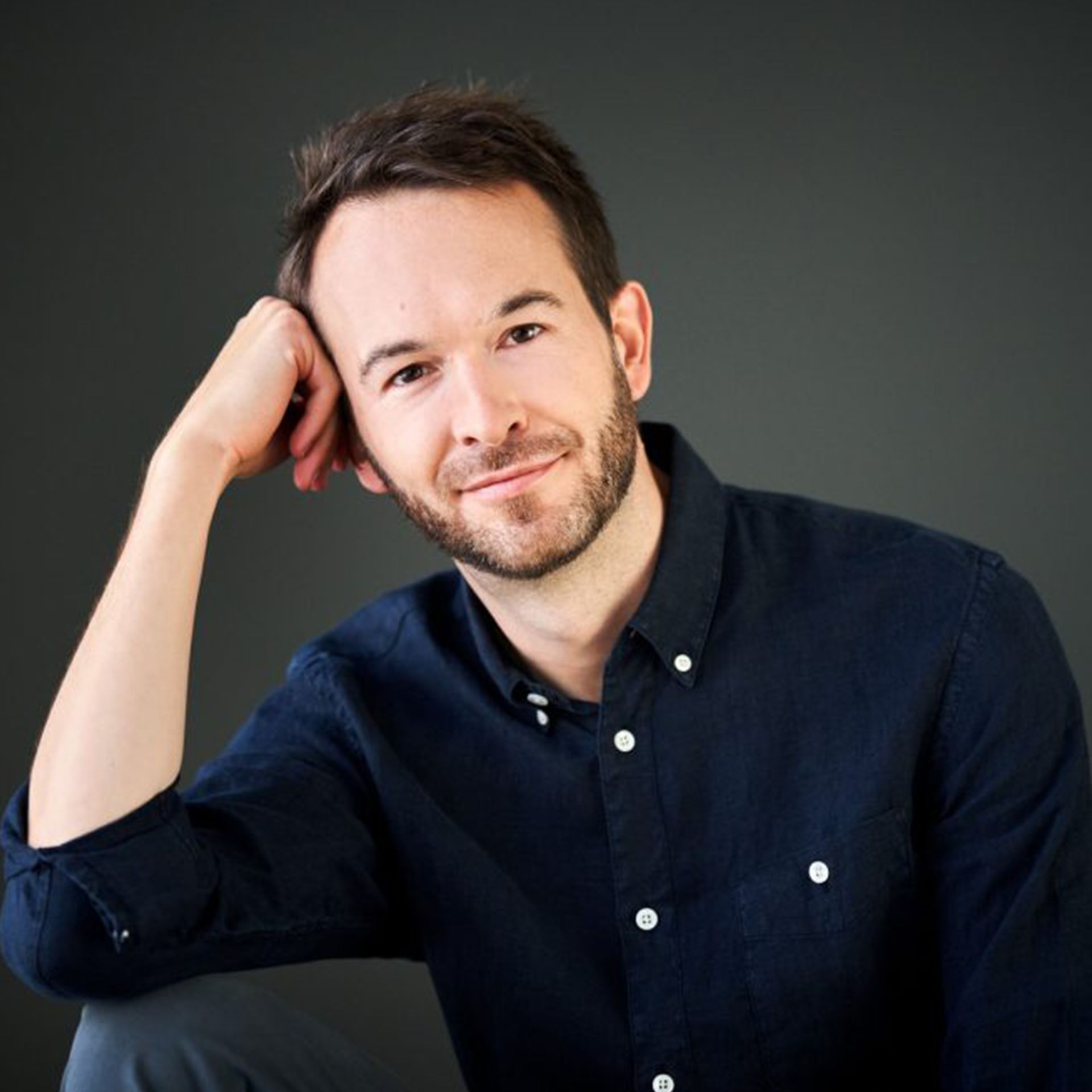
Photo: Kaupo Kikkas
Photo: Kaupo Kikkas
Andrew Gourlay studied conducting at the Royal College of Music, where he assisted Bernard Haitink on Bruckner symphonies and Sir Roger Norrington on Mozart symphonies. He was selected by Gramophone magazine for its ‘One to Watch’ feature, and by BBC Music Magazine as a ‘Rising Star: great artists of tomorrow’.
He won First Prize at the 2010 Cadaqués International Conducting Competition, securing concerts with 29 orchestras around the world. Subsequently he was Assistant Conductor to Sir Mark Elder and the Hallé and in 2015 he was appointed Music Director of the Orquesta Sinfónica de Castilla y León.
Recent guest engagements include concerts with the Philharmonia, the BBC orchestras, the Bremen, London, Rotterdam, Royal Liverpool and Tampere Philharmonic orchestras, the City of Birmingham, Melbourne, Norrköpping, RTÉ National and Stavanger Symphony orchestras, the Hallé, Ulster Orchestra, Auckland Philharmonia, Orchestre National Bordeaux Aquitaine and Australian Youth Orchestra. He made his US debut in the 2016–17 season with the San Diego Symphony.
He appears regularly at the BBC Proms, where he has conducted the London Sinfonietta, BBC Concert Orchestra and the National Youth Orchestra of Great Britain.
Operatic engagements include the UK premiere of Luca Francesconi’s Quartett at the Royal Opera House, Covent Garden; Rusalka and La tragédie de Carmen for English Touring Opera; The Marriage of Figaro at the Royal College of Music; Tippett’s The Ice Break in a new production by Graham Vick for Birmingham Opera Company; Huw Watkins’s In the Locked Room with Britten Sinfonia; and the premiere of Tom Coult’s Violet at the Aldeburgh Festival. Next spring he conducts The Cunning Little Vixen for Opera North.
His discography includes recordings with the BBC and London Symphony orchestras, Irish Chamber Orchestra, RLPO, Britten Sinfonia and BBC National Orchestra of Wales. His orchestral suite from Parsifal, which he has recorded with the LPO, is due for release this autumn.
Hannah Stone Harp
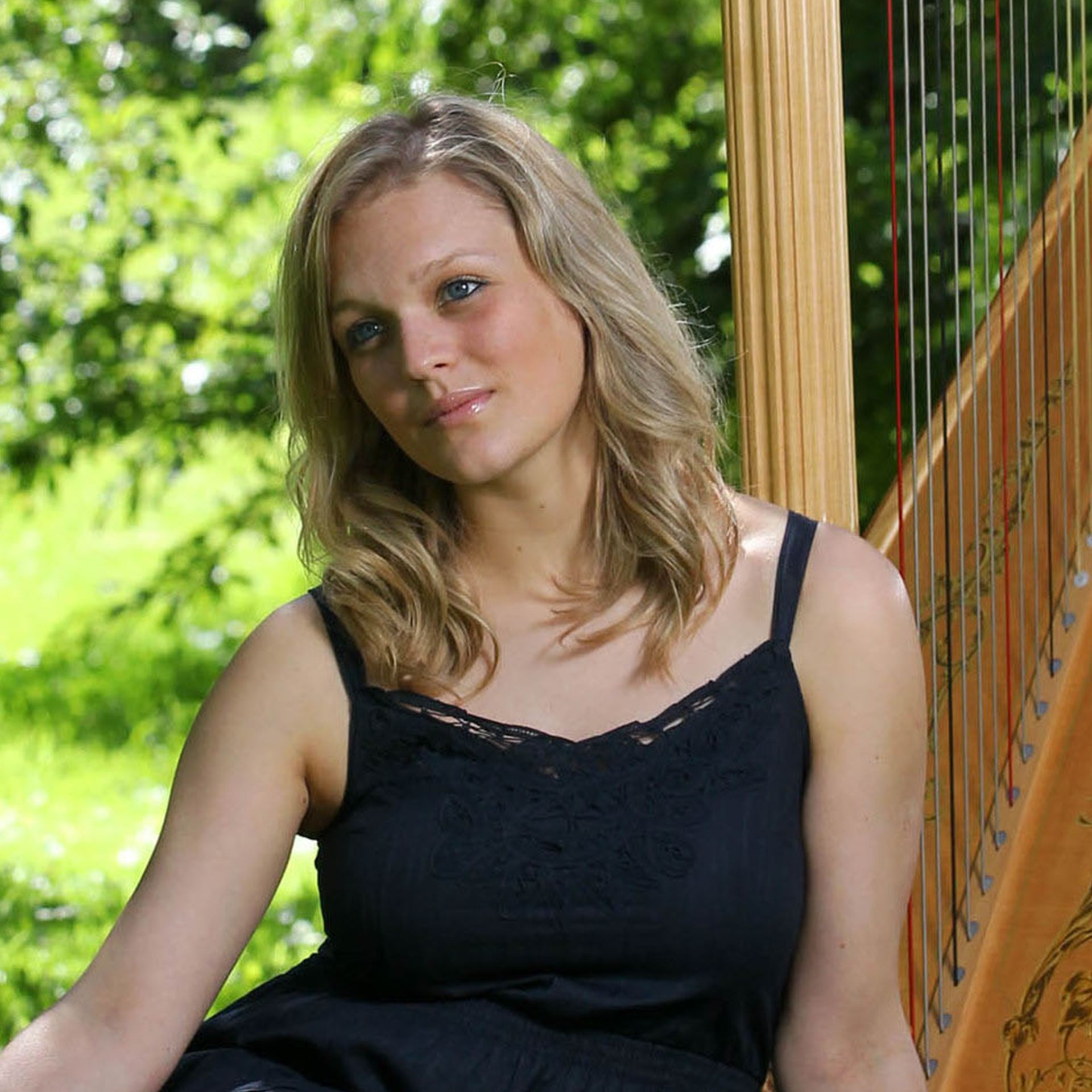
Hannah Stone, former Harpist to HM King Charles III, studied at the Guildhall School of Music & Drama and the Royal Welsh College of Music & Drama, graduating in 2012. She is a National and International Eisteddfod winner and a major prize-winner at the Franz Josef Reinl Competition in Vienna, the Camac Harp Competition in London and the International Harp Competition in Caernarfon.
She has performed at many notable venues, including the Royal Albert Hall, Barbican Centre, LSO St Luke’s, St John’s Smith Square, Museum of London, Dublin’s National Concert Hall, and St David’s Hall and the Wales Millennium Centre in Cardiff. In 2010 she was appointed principal harpist with the Schleswig-Holstein Festival Orchestra, touring Europe with the ensemble. She has performed as guest soloist with leading orchestras, including BBC National Orchestra of Wales, Sinfonia Cymru, RTÉ Concert Orchestra, English Chamber Orchestra and Borusan Philharmonic Orchestra, Istanbul.
She has performed for members of the Royal Family on several occasions, including during the late Queen’s Diamond Jubilee tour of Wales.
She has given recitals at the Edinburgh, King’s Lynn and Lichfield festivals and at Kings Place, London and Hampton Court Palace, as well as in Tokyo, Melbourne, Toronto and Vancouver. She gave the world premieres of Sir Karl Jenkins’s St Asaph’s Dance in 2012 and Gareth Glyn’s Amaterasu in 2015.
She has appeared on a number of festival broadcasts, as well as on BBC One’s Songs of Praise. She also appears on Catrin Finch’s Lullabies album.
Recent engagements include recitals with Sir Bryn Terfel at the Monte Carlo and Zurich opera houses, concerts at Sydney Opera House and Melbourne’s Hamer Hall with Orchestra Victoria, performances at the Verbier Festival, Cardiff’s Festival of Voice, and a concert celebrating the 90th birthday of Osian Ellis.
Ffion Edwards Soprano
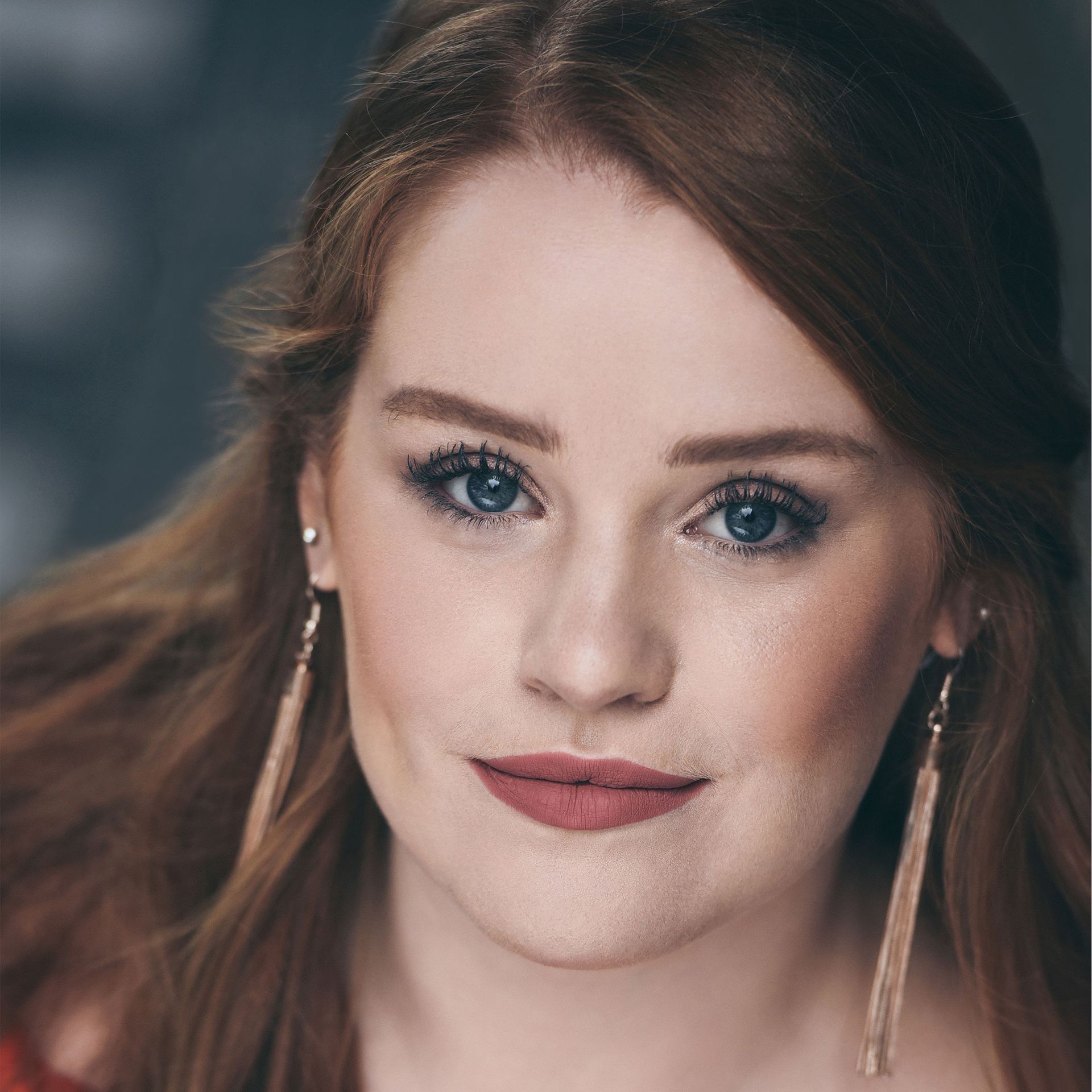
London-based Welsh soprano Ffion Edwards was a Young Artist at the National Opera Studio for the 2021–22 season. She studied at the Royal College of Music and the Royal Welsh College of Music & Drama. She won the Handel Prize in the Maureen Lehane Virtual Vocal Awards 2021.
Last season she made debuts with Glyndebourne Festival Opera (as Oberto in Handel’s Alcina), Opéra National de Lorraine (as Kristin in Boesmans’ Julie) and English National Opera (as Frantík and Jay in Janáček’s The Cunning Little Vixen).
Earlier performances include roles in Haydn’s Il mondo della luna, Bernstein’s Trouble in Tahiti, Richard Strauss’s Ariadne auf Naxos and Mozart’s Il re pastore at the Royal College of Music. She has also performed a number of times with Welsh National Youth Opera in minor roles and as a chorus member, while in 2019 she sang in the Chorus in a Royal Opera House production of Tosca with Sir Bryn Terfel, Vittorio Grigolo and Kristine Opolais at the Abu Dhabi Festival.
As a soloist she has appeared with the orchestras of ENO and WNO and sung in Bach’s Ascension Oratorio and B minor Mass and Handel’s Messiah.
Donal Bannister Trombone
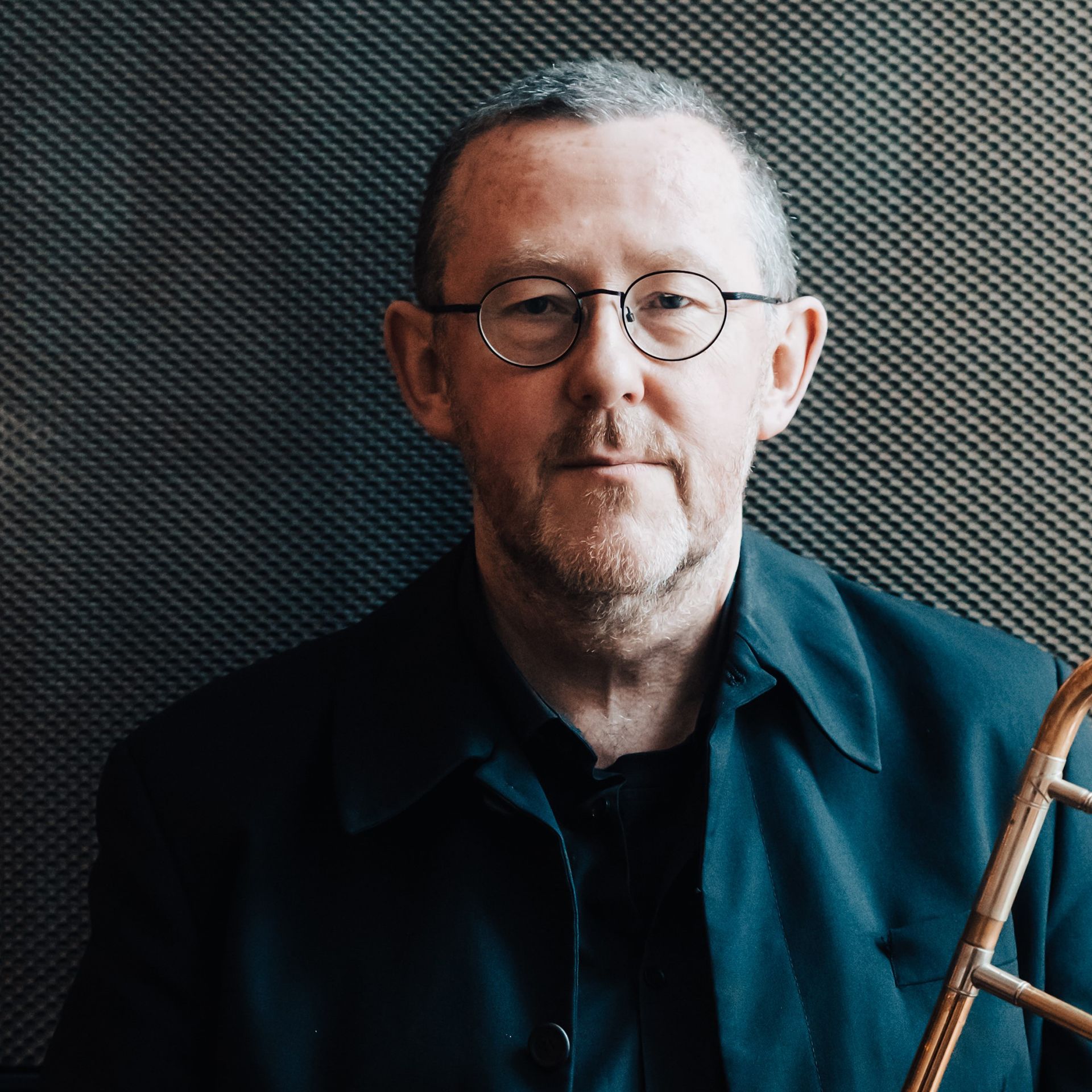
Donal Bannister is principal trombone of BBC National Orchestra of Wales. He is originally from Dublin and studied at the Royal Irish Academy of Music, Trinity College Dublin (where he was a scholar) and The Eastman School of Music, New York (where he was a Fulbright scholar).
In 1987 he joined the Bournemouth Symphony Orchestra, spending 20 years there performing with the orchestra and its very active brass ensemble. He became principal trombone of BBC NOW in 2007. He also maintains a busy freelance career, appearing as a guest with most of the UK’s major orchestras, including the London Symphony Orchestra, Philharmonia and Scottish Chamber Orchestra, among others.
In addition to performing, he also teaches trombone, makes arrangements for brass and plays chamber music at the Royal Welsh College of Music & Drama.
His musical interests are wide-ranging: in addition to his orchestral work, he also performs on period instruments and conducts community orchestras and brass bands. Many of his arrangements for brass have been published and recorded, and during lockdown BBC NOW brass players recorded some of his work which is available on the orchestra’s website.
BBC National Orchestra of Wales
For over 90 years, BBC National Orchestra of Wales has played an integral part in the cultural landscape of Wales, occupying a distinctive role as both broadcast and national symphony orchestra. Part of BBC Wales and supported by the Arts Council of Wales, it has a busy schedule of live concerts throughout Wales and the rest of the UK. The orchestra is an ambassador of Welsh music and champions the works of contemporary composers.
It performs annually at the BBC Proms and biennially at the BBC Cardiff Singer of the World competition, and can be heard regularly across the BBC: on Radio 3, Radio Wales and Radio Cymru, as well as providing the soundtracks for some of your favourite television programmes.
Highlights of this season include the Elemental Explorations concerts in Brecon and Newport with Nil Venditti, Disney’s Fantasia in concert, Britten and Elgar with the orchestra’s much-loved Conductor Laureate Tadaaki Otaka, an all-new Gaming concert with gaming music legend Eímear Noone and a CoLaboratory concert with the sensational cellist Abel Selaocoe.
Alongside its busy schedule of live concerts, BBC NOW works closely with schools and music organisations throughout Wales, regularly delivering workshops, side-by-side performances and young composer initiatives to inspire and encourage the next generation of performers, composers and arts leaders and make music accessible to all. To find out more visit bbc.co.uk/bbcnow
Patron
HRH The Prince of Wales KG KT PC GCB
Principal Conductor
Ryan Bancroft
Conductor Laureate
Tadaaki Otaka CBE
Composer-in-Association
Gavin Higgins
Composer Affiliate
Sarah Lianne Lewis
First Violins
Martin Gwilym- Jones sub-leader
Gwenllian Hâf MacDonald
Terry Porteus
Cecily Ward
Robert Bird
Kerry Gordon-Smith
Juan Gonzalez
Ilze Abola
Anna Cleworth
Anthony Wing Pong Poon
Gary George-Veale
Zhivko Georgiev
Second Violins
Emre Engin
Sheila Smith
Vickie Ringguth
Joseph Williams
Michael Topping
Beverley Wescott
Sellena Leony
Lydia Caines
Zanete Uskane
Laurence Kempton
Violas
Rebecca Jones *
Cathy Bower
Liam Brolly
Ania Leadbeater
Robert Gibbons
Catherine Palmer
Laura Sinnerton
Mabon Rhyd
Cellos
Alice Neary *
Keith Hewitt #
Raphael Lang
Sandy Bartai
Rachel Ford
Alistair Howes
Jacky Phillips
Double Basses
David Stark *
Louis van der Mespel
Christopher Wescott
Albert Dennis
Flutes
Matthew Featherstone *
John Hall
Lindsey Ellis
Piccolo
Lindsey Ellis †
Oboes
Suzie Thorn ‡
Sam Baxter
Cor anglais
Sarah-Jayne Porsmoguer †
Clarinets
Irene Chen
Andy Mellor
Lenny Sayers
Bass Clarinet
Lenny Sayers †
Bassoons
Paul Boyes ‡
David Buckland
Contra-bassoon
David Buckland †
Horns
Neil Shewan †
William Haskins
Joseph Ryan
Neil Mitchell
Tom Taffinder
Trumpets
Philippe Schartz *
Ed Burfield
Nina Tyrrell
Ben Jarvis
Trombones
Donal Bannister*
Karapet Harutyunyan
Bass Trombone
Darren Smith †
Tuba
Daniel Trodden †
Timpani
Steve Barnard *
Percussion
Chris Stock *
Mark Walker †
Phil Girling
Rhydian Griffiths
Harp
Valerie Aldrich-Smith †
Celesta
Catherine Roe Williams
* Section Principal
† Principal
‡ Guest Principal
# Assistant Principal
The list of players was correct at the time of publication
Director Lisa Tregale +
Orchestra Manager Zoe Poyser +
Assistant Orchestra Manager Vicky James **
Orchestra Administrator Nick Olsen
Orchestra Coordinator, Operations Kevin Myers
Business Coordinator Caryl Evans
Head of Artistic Production Matthew Wood
Artists and Projects Manager Eleanor Phillips
Orchestra Librarian Eugene Monteith **
Producer Mike Sims
Broadcast Assistant Jacob Perkins
Head of Marketing and Audiences Sassy Hicks
Marketing Coordinator Amy Campbell +
Digital Producer Yusef Bastawy
Social Media Coordinator Harriet Baugh
Education Producers Beatrice Carey, Rhonwen Jones **
Audio Supervisors Simon Smith, Andrew Smillie
Production Business Manager Lisa Blofeld
Stage and Technical Manager Steven Brown
Assistant Stage and Technical Manager Dave Rees
+ Green Team member
** Diversity & Inclusion Forum