
Folk Tales & Fabled Love
Saturday 11/1/25, 3.00pm
BBC Hoddinott Hall, Cardiff
Sunday 12/1/25, 3.00pm
Brangwyn Hall, Swansea


Leoš Janáček
The Cunning Little Vixen – suite23’
Bohuslav Martinů
Cello Concerto No. 130’
INTERVAL: 20 minutes
Igor Stravinsky
Petrushka(1947 version) 34’
Antony Hermusconductor
Laura van der Heijden cello


The Cardiff concert is being recorded by BBC Radio 3 for future broadcast in In Concert; it will be available for 30 days after broadcast via BBC Sounds, where you can also find podcasts and music mixes.
Introduction

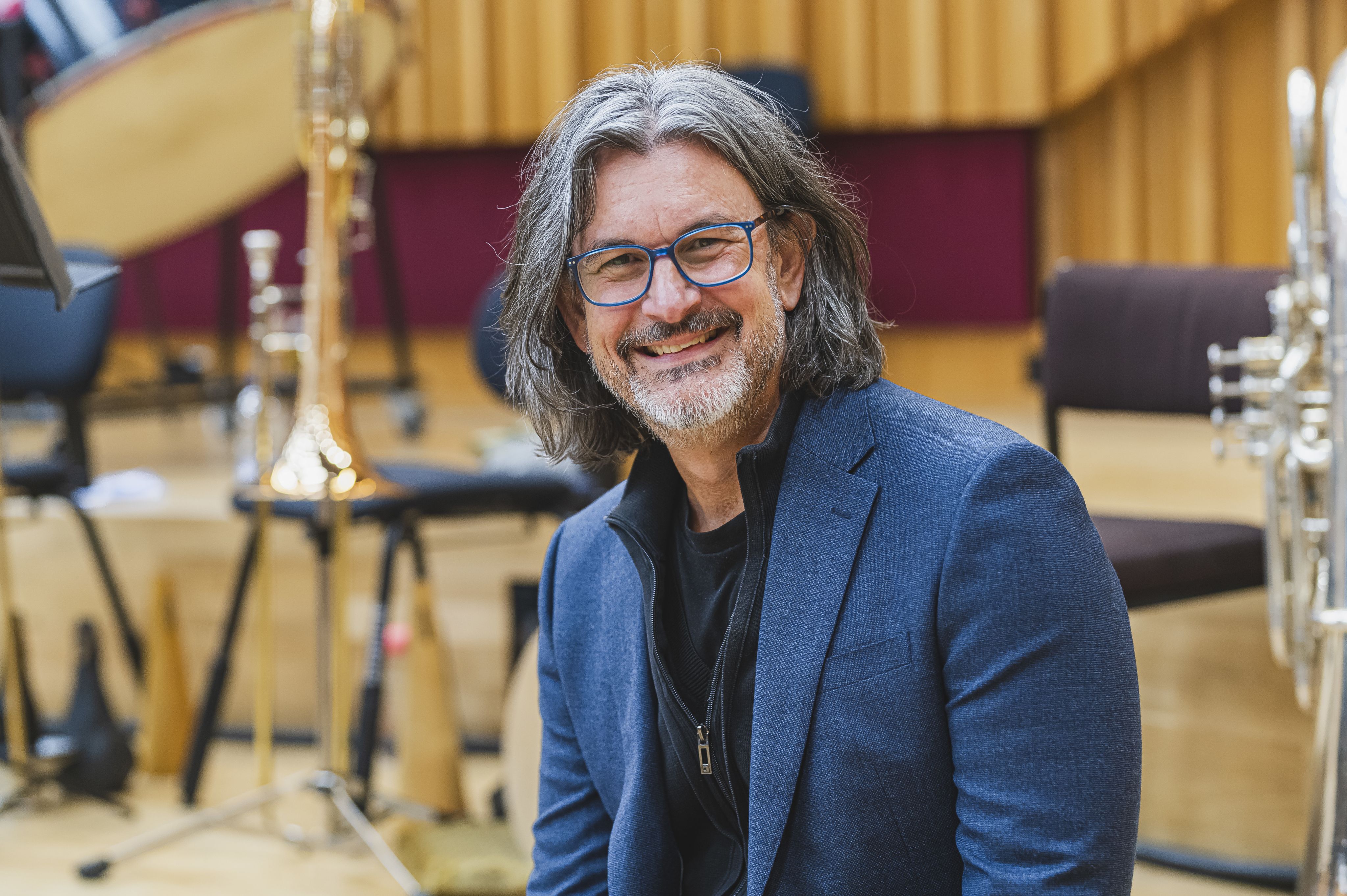
Photo: Kirsten McTernan
Photo: Kirsten McTernan
Happy New Year! Welcome to tonight’s concert, for which we’re delighted to be joined by Antony Hermus for a programme in which colour is to the fore – just the tonic for these dark January days.
We begin with the suite from Janáček’s wonderfully evocative The Cunning Little Vixen, an opera in which he combined his love of a dramatic tale with memories of his childhood, spent in the bucolic highlands of Northern Moravia.
The stage is also the starting point for the final piece tonight: Stravinsky’s Petrushka, a piece originally written for Sergey Diaghilev’s Ballets Russes in which he conjures the bustle and energy of a Russian Shrovetide Fair with characteristic brilliance.
In between, Laura van der Heijden performs Martinů’sFirst Cello Concerto. Though she is still only in her twenties, she is carving out a remarkable career, which was launched when she won the BBC Young Musician competition aged 15.
Enjoy!
Matthew Wood
Head of Artistic Planning and Production
Please respect your fellow audience members and those listening at home. Turn off all mobile phones and electronic devices during the performance. Photography and recording are not permitted.
Leoš Janáček(1854–1928), arr. Charles Mackerras (1925–2010)
The Cunning Little Vixen – suite (1921–3, arr. 2006)

1 Andante
2 Andante
Leoš Janáček’s close identification with the natural world and the rhythms of seasons began in his childhood, spent in the village of Hukvaldy – a picturesque settlement in the Beskydy highlands of Northern Moravia. The young Janáček’s imagination was fired by the Romantic ruins of Hukvaldy Castle and the game park – teeming with wildlife – that surrounded it.
The realisation that their gifted child needed a better education than Hukvaldy could provide prompted his parents to send him to school in the regional capital Brno, but, although Janáček soon became totally immersed in the musical life of the city, for the rest of his life he continued to feel the pull of Hukvaldy and the beautiful North Moravian countryside, with its rolling hills and mysterious forests.
In his late sixties, Janáček stumbled on a series of cartoons in the Brno newspaper Lidové noviny (‘People’s News’) depicting the adventures of a young female fox, and was instantly captivated. The story of the plucky vixen Bystrouška (Sharp-Ears) stimulated his musical imagination and at the same time transported him back to the landscapes of his youth. ‘I captured Bystrouška for the forest and for the sadness of one’s later years,’ the composer remarked of The Cunning Little Vixen (1921–3), his opera inspired by the charming illustrations of the artist Stanislav Lolek and the text created for them by the writer Rudolf Těsnohlídek. Despite Janáček’s reference to sadness, the opera is one of his most joyous and life-affirming works – a colourful celebration of the wonders of nature and the magical world of the Moravian forests.
The suite is basically an orchestra-only version of the music of Act 1. The first part corresponds to Scene 1 and shows all the forest creatures – including a cricket, a grasshopper, midges, a mosquito and a blue dragonfly – emerging from their hiding places and dancing around a dozing gamekeeper. The music Janáček wrote for this whimsical and enchanting scene – which culminates in the gamekeeper’s capture of the young vixen – is among the most delightfully quirky he ever produced. The second part of the suite corresponds to Scene 2 and depicts the vixen’s life as a captive animal at the gamekeeper’s home and her eventual escape back into the wild.
Programme note © Paula Kennedy
Bohuslav Martinů(1890–1959)
Cello Concerto No.1 in D major (1930, rev. 1939, 1955)
1 Allegro moderato
2 Andante moderato
3 Allegro
Laura van der Heijdencello
Though Martinů’s identity as a Czech artist was never in doubt, ironically it was only after he moved to Paris in his early thirties that he found a cultural environment in which he felt that he could thrive as a composer. With the founding of an independent Czechoslovak state in 1918, a cultural scene that had until then been solidly Central European in orientation began to look further afield for inspiration, and many members of the Czech avant-garde saw French culture as providing a welcome antidote to Teutonic seriousness and complexity.
Already by his departure from Czechoslovakia in 1923, Martinů had developed a preference for what he saw as the typically French ideals of clarity and precision, and he enthusiastically explored the many artistic currents on offer in Paris that had been slow to filter through to Prague. He experimented with jazz, dadaism and surrealism, and before long was drawn to the neo-Classicism that also became fashionable during the 1920s and had already been taken up by composers such as Stravinsky. In Martinů’s case, reaching back to the past for inspiration had an individual twist: the form that corresponded the most closely to his own aesthetic ideal was the eighteenth-century concerto grosso, with its clear contrasts and logical construction, and so neo-Baroque is probably a more appropriate label to apply to his music than neo-Classical.
The first work to bear the hallmarks of this style was the Cello Concerto No. 1, the original version of which was scored for small orchestra with piano. In 1939 Martinů re-scored the concerto for full orchestra, but after hearing a broadcast of it in 1955 became convinced that this version suffered from serious balance problems, and so he revised the work once more, this time dropping the piano part and generally thinning out the scoring to reduce the risk of the soloist being overwhelmed. The outer movements are characterised mainly by a neo-Baroque busy-ness, but at times an intensely Czech lyricism also shines through, especially in the heartfelt slow movement, where Martinů appears to be channelling the spirit of Dvořák’s works for cello.
Programme note © Paula Kennedy
INTERVAL: 20 minutes
Igor Stravinsky(1882–1971)
Petrushka(1911, rev. 1947)
1 The Shrovetide Fair
2 Petrushka’s Cell
3 The Moor’s Quarters
4 The Shrovetide Fair
What we know as Stravinsky’s Petrushka might be more correctly named ‘Pierrot’. Even Stravinsky himself noticed the issue. Following the breathtaking success he’d had with The Firebird for impresario Sergey Diaghilev’s Ballets Russes in 1910, he was immediately booked for a follow-up work, and started thinking about the street puppet shows he remembered from his childhood. Stravinsky initially considered what was to become Petrushka as some kind of concerto for piano and orchestra – traces of which remain in the final score’s prominent keyboard part – but Diaghilev persuaded him of its theatrical potential. When it came to developing the storyline with Russian designer and writer Alexandre Benois, however, Stravinsky voiced concerns that the tragic clown Benois had in mind for his title-character was far closer to the pathetic Pierrot than to the mischievous trickster Petrushka. Though, confusingly, the two characters effectively share the same name (both translate as ‘little Peter’), Petrushka is the Russian equivalent of our wife‑battering, hangman-defeating, crocodile-vanquishing Mr Punch, not the white-faced, lovelorn, pantaloon-wearing Pierrot. (Stravinsky would return to Mr Punch/Petrushka in his Italian commedia dell’arte incarnation of Pulcinella in another ballet score nine years later.)
Benois’s reply, incidentally, was that he might have mixed up the characters in remembering the carnivals of his youth. In any case, the title remained. And nobody seems to have cared much at Petrushka’s premiere, on 13 June 1911 at Paris’s Châtelet Theatre, which proved another winner.
But if The Firebird showed a Stravinsky schooled in historic Russian traditions, pupil of Rimsky-Korsakov and admirer of Tchaikovsky, in Petrushka he consciously set about forging a distinctive voice all his own. Boldly characterised blocks of music butt up brutally against each other, and rhythm is a visceral expressive force in its own right. He’d notoriously push his pioneering innovations still further in The Rite of Spring two years later.
The story that Benois concocted for Petrushka is simple enough, and Stravinsky’s score conveys it in almost cinematic detail. It opens amid the bustle of St Petersburg’s Shrovetide Fair, complete with hawkers, dancers and hurdy-gurdy. Drumrolls announce the arrival of the sinister Puppet-master with his marionette theatre. He reveals his three puppets – the tragic clown Petrushka, the beautiful Ballerina and the handsome Moor – and once he’s set them cavorting to Stravinsky’s vibrant ‘Russian Dance’, the intrigues begin. The Ballerina flirts with Petrushka but rejects him when he reveals his love for her. When the sorry clown sees her dancing with the Moor, however, Petrushka challenges him and is pursued across the fair.
We return to the hectic activity of the fair, complete with a lumbering dance for a chained bear on tuba and shrieking clarinet. It’s interrupted, however, by the Moor and Petrushka’s chase; but once the unfortunate clown has been stabbed repeatedly by the Moor’s scimitar, the Puppet-master holds his limp form up to the aghast onlookers to remind them that it’s only a puppet. In the ballet’s chilling ending, however, the ghost of Petrushka materialises on the roof of the puppet theatre, cackling defiantly on two trumpets at the assembled crowd. The show ends abruptly, leaving us wondering what was real and what wasn’t.
Programme note © David Kettle
Help Us Improve Our Online Programmes.
Please take this 5-minute survey and let us know what you think of these notes.
Programme Survey
You may also like:
Expressions of Folk
Thursday 1/5/25, 7.30pm
BBC Hoddinott Hall, Cardiff
Friday 2/5/25, 7.30pm
Brangwyn Hall, Swansea
Holst Capriccio
Stravinsky Symphonies of Wind Instruments
Sir James MacMillan Where the Lugar meets the Glaisnock world premiere
Vaughan Williams In the Fen Country
Stravinsky Symphony in Three Movements
Sir James MacMillan conductor
David Childs euphonium
IMPRESSIONIST | RESONANT | RESPLENDENT
Snippets of folk-like tunes weave together in Holst’s kaleidoscopic Capriccio. Taking an equally central role in Stravinsky’s Symphonies of Wind Instruments are the Russian folk elements in a piece that explores the original meaning of ‘symphony’ – that of ‘sounding together’ – with short litanies between the different instruments that draw together contrasting episodes at three different but still related speeds.
Welsh euphonium player David Childs steps into the solo spot for the world premiere of Sir James MacMillan’s concerto Where the Lugar meets the Glaisnock. It is the folk music of England that provides the inspiration for Vaughan Williams’s In the Fen Country; this symphonic impression portrays the warmth of nature, juxtaposed with the bleak beauty of the Fens, and is an early work that offers a glimpse of the mature language of Vaughan Williams. We end with Stravinsky, this time with his response to the atrocities of the Second World War, his Symphony in Three Movements. To conduct we’re delighted to welcome Sir James MacMillan.
Songs of Destiny
BSL Interpretation
Friday 20/6/25, 7.30pm
BBC Hoddinott Hall, Cardiff
Brahms Serenade No. 2
Brahms Schicksalslied
Stravinsky Symphony of Psalms
Ryan Bancroft conductor
BBC National Chorus of Wales
EXQUISITE | FERVENT | PICTORIAL
If historically serenades were intended as music for entertainment, then Brahms has most definitely excelled in his Serenade No. 2. This early work oozes Brahmsian character from the outset with its lilting warmth, lively cross rhythms, and plenteous melody to charm the listener.
Similarly characteristic, but more brooding in nature is Brahms’s heady setting of the poem Schicksalslied by Friedrich Hölderlin. In two verses contrasting the lives of the eternally blissful with those subjected to cruel fate, Brahms moves between the light and airy versus the tempestuous. Stravinsky, by contrast, uses modes reminiscent of traditional Gregorian chant, paired with fugal writing and ecstatic dance motifs, to portray the text of psalms in a pure work of genius, his Symphony of Psalms! To conduct BBC National Orchestra and Chorus of Wales in their final concert of the Cardiff season we’re delighted to welcome back Principal Conductor, Ryan Bancroft.
Biographies
Antony Hermusconductor

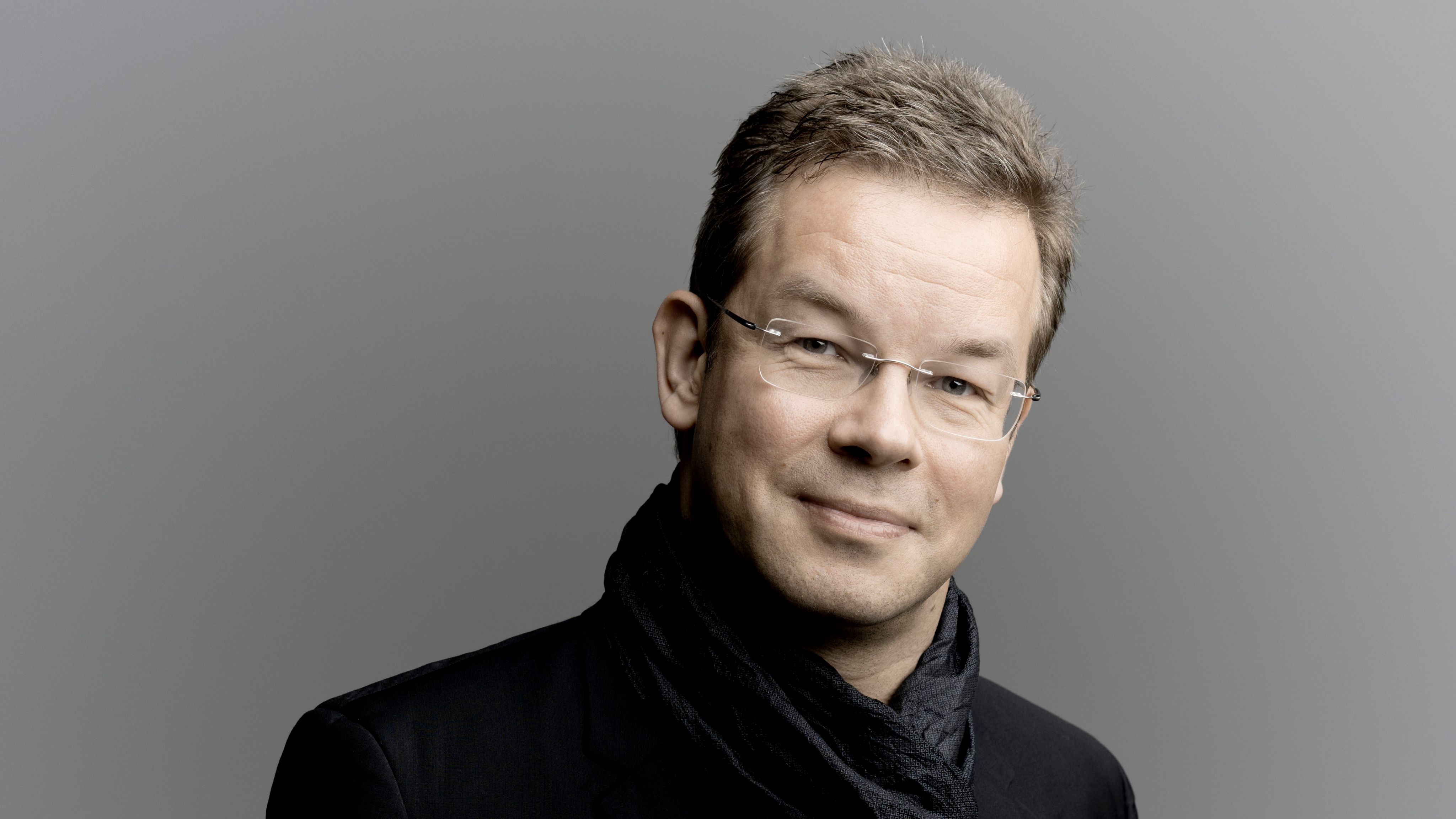
Marco Borggreve
Marco Borggreve
Antony Hermus is Chief Conductor of the Belgian National Orchestra, conducting the orchestra at their home in Brussels BOZAR, on tour internationally and at the Queen Elisabeth Competition. A leading figure in Dutch musical life, he conducts all the major orchestras in Holland including Royal Concertgebouw, Netherlands Radio Philharmonic, Residentie Orkest and Rotterdam Philharmonic. He was Principal Guest of the North Netherlands Orchestra from 2015 to 2024 and is now Honorary Conductor for Life.
This season he returns to the Orchestre Philharmonique de Radio France, Netherlands Radio Philharmonic, Residentie Orkest, Auckland Philharmonia, BBC Scottish Symphony and North Netherlands Philharmonic orchestras. He makes debuts with the Tenerife and Vancouver Symphony orchestras, Bonn Beethovenorchester and Polish National Radio Orchestra. He is a regular guest with the Royal Philharmonic, Orchestre National de Lyon and Danish National and Galicia Symphony orchestras.
He has been Principal Guest Conductor at Opera North since 2019 where this season he conducts Simon Boccanegra. In Nice he will conduct Martinů’s Julietta.
His most recent recording features the Belgian National Orchestra in works by Medtner and Rachmaninov, adding to a discography that includes works by Auber, Diepenbrock, Hausegger, Klughardt and Wagenaar.
For Antony Hermus, music is an essential part of life and society, and he has been involved in numerous out-of-the-box projects, ranging from Ligeti at the Lowlands rock festival via Symphonic Cinema (Mahler and Stravinsky), to the creation of the award-winning Scratch concerts at German opera houses.
He started playing the piano at the age of six, subsequently studying the instrument with Jacques de Tiège at the Brabant Music Conservatory and conducting with Jac van Steen and Georg Fritzsch. He is a visiting professor at the Amsterdam Conservatory and also teaches regularly at the Sibelius Academy and Royal Northern College of Music. He is also Artistic Advisor of the National Youth Orchestra of the Netherlands.
Laura van der Heijdencello

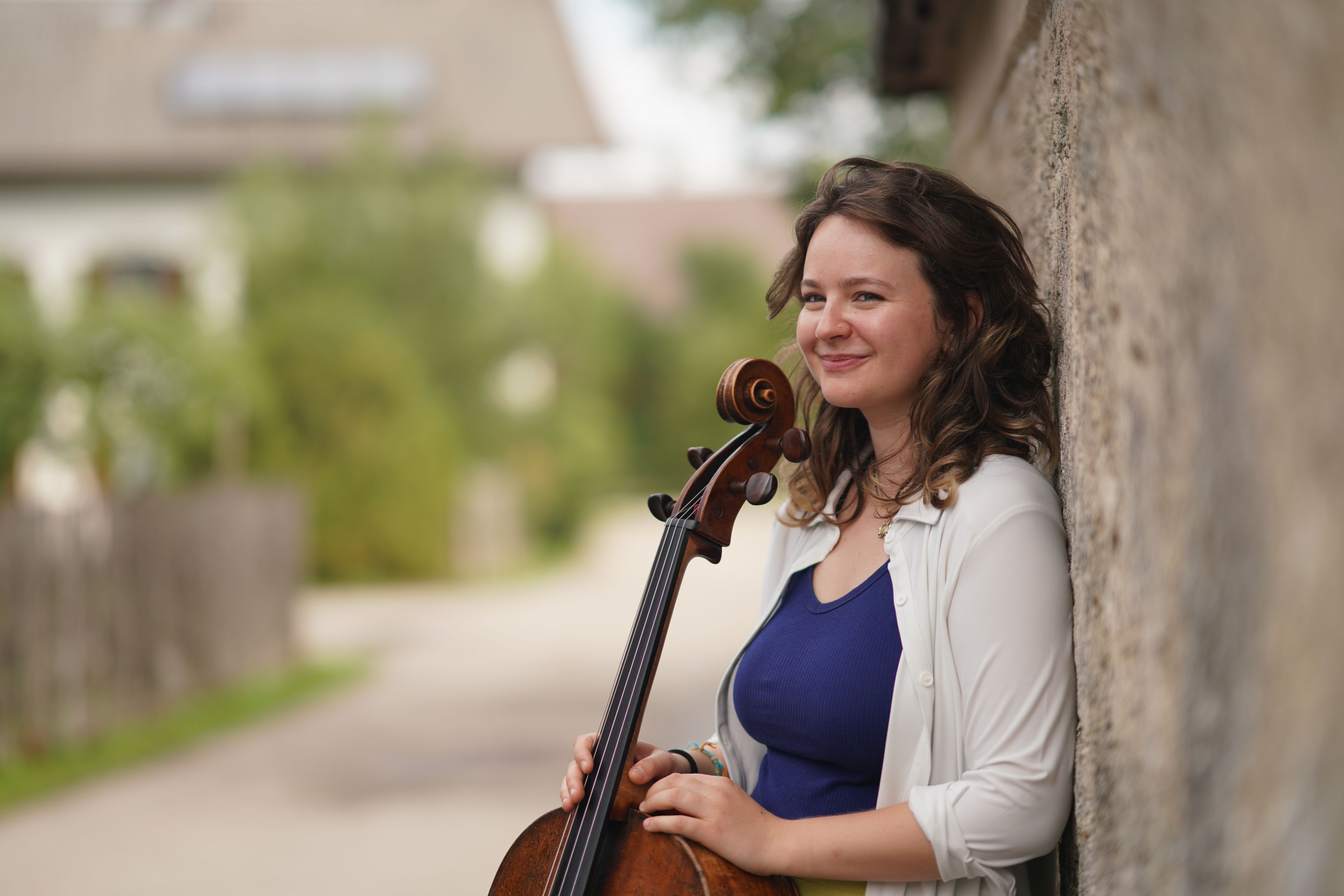
Miesbach Chamber Music Festival
Miesbach Chamber Music Festival
British cellist Laura van der Heijden has emerged as one of the leading cellists of her generation.
Forthcoming appearances include concertos with the Brno Philharmonic Orchestra and Bournemouth Symphony Orchestra. Other highlights of this season include recitals at the Cello Biënnale Amsterdam and Wigmore Hall with pianist Jâms Coleman, collaborative projects at the Seriös Festival in Helsinki and with Her Ensemble at London’s Milton Court, and a chamber project with Alina Ibragimova and Ben Goldscheider at the Pierre Boulez Saal in Berlin.
She gave the world premiere of Cheryl Frances-Hoad’s Earth, Sea, Air in 2023 with the BBC Scottish Symphony Orchestra, performing it at last year’s BBC Proms. The work also features on her latest album, along with Bridge’s Oration and Walton’s Cello Concerto. An increasingly prominent voice on the classical music scene, she has recently appeared on Jess Gillam’s show This Classical Life and Tom Service’s Saturday Morning (both BBC Radio 3), as well as being the cover artist on The Strad.
Highlights of recent seasons include an ‘Artist in Focus’ at Kings Place and concerto appearances with the London Philharmonic, Aurora and Scottish Chamber orchestras, City of Birmingham Symphony Orchestra and play/directing Britten Sinfonia. She also appeared at the Barbican with the BBC Symphony Orchestra as part of its George Walker ‘Total Immersion’ project.
She is a keen chamber musician and plays with the critically acclaimed Kaleidoscope Chamber Collective, as well as with leading musicians including Timothy Ridout, Antje Weithaas, Max Baillie, Misha Mullov-Abbado, Hélène Clément and the Doric, Redon Quartet and Brodsky quartets.
She first came to prominence when she won the BBC Young Musician competition in 2012 aged 15, and is a graduate of Cambridge University; she currently studies with Antje Weithaas in Berlin.
Laura van der Heijden plays a late 17th-century cello by Francesco Ruggieri of Cremona, on generous loan from a private collection.
BBC National Orchestra of Wales
For over 90 years, the BBC National Orchestra of Wales, the only professional symphony orchestra in Wales, has played an integral part in the cultural landscape of the country, occupying a distinctive role as both a broadcast and national orchestra, and serving as an ambassador of Welsh culture, regularly performing music created in Wales and championing Welsh composers and artists.
Part of BBC Cymru Wales and supported by the Arts Council of Wales, BBC NOW performs a busy schedule of concerts and broadcasts, working with acclaimed conductors and soloists from across the world, including its Principal Conductor, the award-winning Ryan Bancroft.
The orchestra is committed to working in partnership with community groups and charities, taking music out of the concert hall and into settings such as schools and hospitals to enable others to experience and be empowered by music. It undertakes workshops, concerts and side-by-side performances to inspire and encourage the next generation of performers, composers and arts leaders, and welcomes thousands of young people and community members annually through its outreach and education projects.
BBC NOW performs annually at the BBC Proms and biennially at the BBC Cardiff Singer of the World competition, and its concerts can be heard regularly across the BBC – on Radio 3, Radio Wales and Radio Cymru. On screen, music performed by BBC NOW can be heard widely across the BBC and other global channels, including the soundtrack and theme tune for Doctor Who, Planet Earth III, Prehistoric Planet, The Pact and Children in Need.
Based at BBC Hoddinott Hall, Cardiff Bay, BBC NOW utilises a state-of-the-art recording studio with a camera system for livestreams and TV broadcasts to bring BBC NOW’s music to a broader audience across Wales and the world. For more information about BBC NOW please visit bbc.co.uk/now
Patron
HM King Charles III KG KT PC GCB
Principal Conductor
Ryan Bancroft
PrincipalGuest Conductor
Jaime Martín
Conductor Laureate
Tadaaki Otaka CBE
Composer-in-Association
Gavin Higgins
First Violins
Lesley Hatfield leader
Nick Whiting associate leader
Gwenllian Hâf MacDonald
Terry Porteus
Suzanne Casey
Kerry Gordon-Smith
Anna Cleworth
Žanete Uškāne
Ruth Heney
Emilie Godden
Alejandro Trigo
Amy Fletcher
Gary George-Veale
Anna Szabo
Second Violins
Anna Smith *
Kirstie Lovie
Ros Butler
Sheila Smith
Vickie Ringguth
Joseph Williams
Ilze Abola
Michael Topping
Lydia Caines
Katherine Miller
Roussanka Karatchivieva
Beverley Wescott
Violas
Rebecca Jones *
Alex Thorndike #
Tetsuumi Nagata
Peter Taylor
Robert Gibbons
Catherine Palmer
Laura Sinnerton
Lowri Taffinder
Lydia Abell
Anna Growns
Cellos
Raphael Lang ‡
Jessica Feaver
Sandy Bartai
Keith Hewitt
Alistair Howes
Rachel Ford
Carolyn Hewitt
Kathryn Graham
Double Basses
David Stark *
Alexander Jones #
Ketan Curtis
Georgia Lloyd
Christopher Wescott
Richard Gibbons
Flutes
Matthew Featherstone *
John Hall †
Lindsey Ellis
Elizabeth May
Piccolos
Lindsey Ellis †
Elizabeth May
Oboes
Steve Hudson *
Catriona Lockhart
Amy McKean †
Cor anglais
Amy McKean †
Clarinets
Nicholas Carpenter *
Kie Umehara
Lenny Sayers
Bass Clarinet
Lenny Sayers †
Bassoons
Jarosław Augustiniak *
Andrew Huntriss
David Buckland
Contrabassoon
David Buckland †
Horns
Tim Thorpe *
Meilyr Hughes
Neil Shewan †
Tom Taffinder
John Davy
Trumpets
Philippe Schartz *
Ryan Linham
Corey Morris †
Trombones
Donal Bannister*
Dafydd Thomas †
Bass Trombone
Darren Smith †
Tuba
Daniel Trodden †
Timpani
Steve Barnard *
Percussion
Phil Hughes
Rhydian Griffith
Sarah Mason
Harry Lovell-Jones
Harp
Deian Rowlands
Piano
Catherine Roe Williams
Celesta
Chris Williams
* Section Principal
† Principal
‡ Guest Principal
# Assistant String Principal
The list of players was correct at the time of publication
Director Lisa Tregale
Orchestra Manager Liz Williams
Assistant Orchestra Manager Nick Olsen **
Orchestra Personnel ManagerKevin Myers
Business Coordinator Georgia Dandy
Orchestra Administrator Eleanor Hall +
Head of Artistic Planning and ProductionMatthew Wood
Artists and Projects Manager Victoria Massocchi **
Orchestra Librarian Naomi Roberts
Producer Mike Sims
Broadcast Assistantvacancy
Head of Marketing and Audiences Sassy Hicks
Marketing Coordinator Amy Campbell-Nichols +
Digital Producer vacancy
Social Media Coordinator Harriet Baugh
Education Producers Beatrice Carey, Rachel Naylor maternity cover
Audio Supervisors Simon Smith, Andrew Smillie
Production Business Manager Lisa Blofeld
Stage and Technical Manager Steven Brown +
Assistant Stage and Technical Manager Josh Mead +
+ Green Team member
** Diversity & Inclusion Forum