Ralph Vaughan Williams
Saturday 26 February, 7.30pm
The Bridgewater Hall, Manchester

Welcome to tonight’s performance
The BBC Philharmonic and the Hallé are teaming up to celebrate 150 years since the birth of Ralph Vaughan Williams. Tonight’s concert, the first in a joint series entitled ‘Toward the Unknown Region – RVW150’, looks at the composer through the prism of war. The poignant Pastoral Symphony reflects on the French fields where Vaughan Williams served during the First World War, while his Fifth Symphony gave comfort at the height of the Second World War. Continuing the theme of innocence lost, tenor Alessandro Fisher is our companion for a song-cycle of poems from A. E. Housman’s A Shropshire Lad. You can explore the full concert list in the RVW150 series at www.halle.co.uk/rvw150.
Our relationship with BBC Radio 3
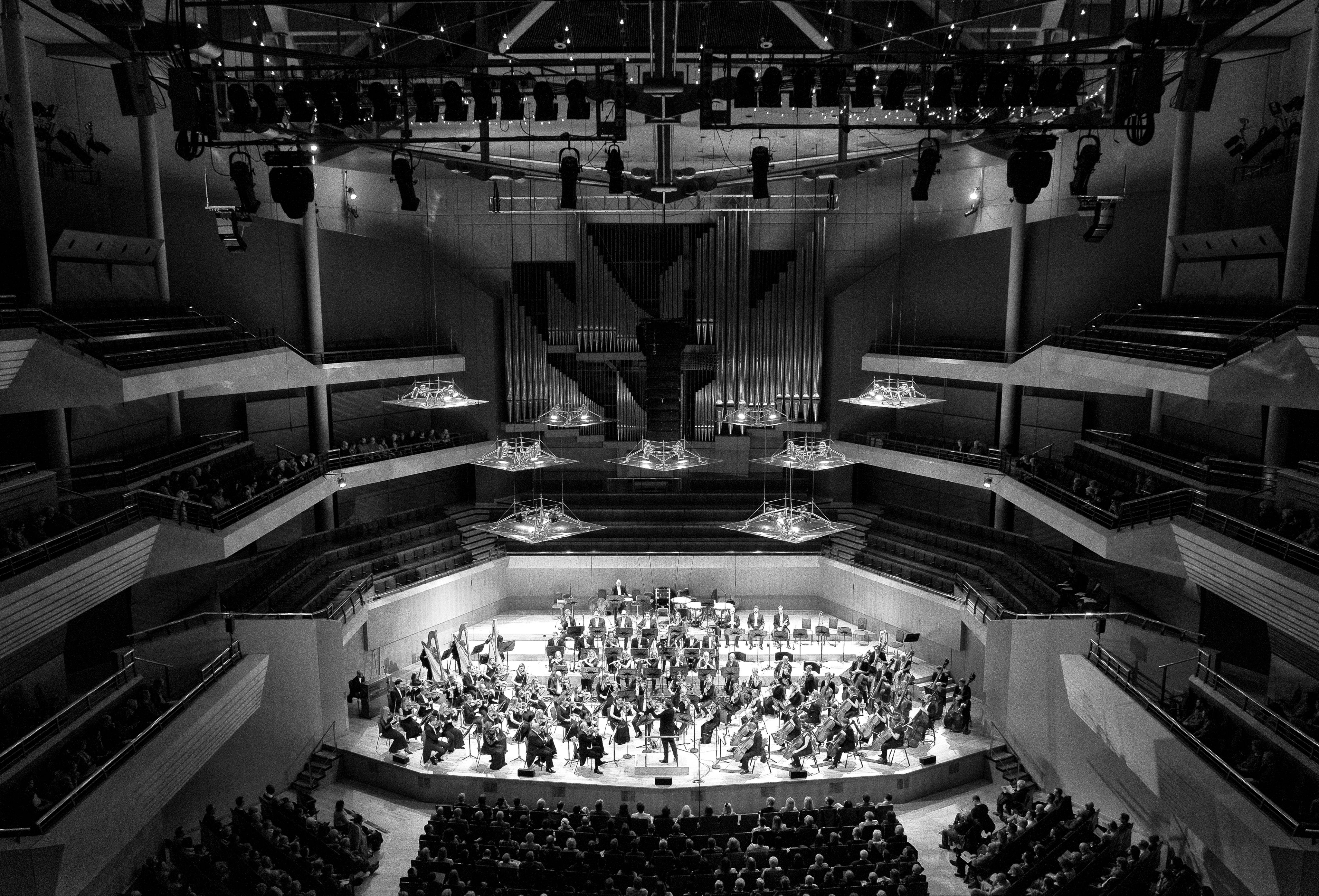
As the BBC’s flagship orchestra for the North, almost all of the BBC Philharmonic’s concerts are recorded for broadcast on Radio 3. Tonight you will see a range of microphones on the stage and suspended above the orchestra. We have a Producer, Assistant Producer and Programme Manager at the orchestra who produce our broadcasts.
We seek to bring a diverse and risk-taking range of repertoire to our audiences, including our concert-goers here in Manchester, as well as the two million listeners who tune in to BBC Radio 3.
Please do not take flash photographs during the performance as this is very distracting to the artists. Audio and video recording is strictly prohibited.
To ensure that everyone can enjoy the concert, please either turn off your phone and any other electronic devices before it begins or ensure that they are turned to silent.

Ralph Vaughan Williams
Pastoral Symphony (No. 3) 34’
INTERVAL: 20 minutes
Ralph Vaughan Williams
On Wenlock Edge 21’
Symphony No. 5 in D major 38’
Alessandro Fisher tenor
Mark Wigglesworth conductor
BBC Philharmonic


Tonight’s concert is being recorded for broadcast in ‘Radio 3 in Concert’ on 3 March at 7.30pm. It will be available for 30 days after broadcast via BBC Sounds, where you can also find podcasts and music mixes.
Help us Improve Our Online Programmes.
Please take this 5-minute survey and let us know what you think of these notes.
Programme Survey
Ralph Vaughan Williams(1872–1958)
Pastoral Symphony (No. 3) (1921)
1 Molto moderato
2 Lento moderato
3 Moderato pesante
4 Lento
Alessandro Fisher tenor
Vaughan Williams’s Pastoral Symphony is one of the most beautiful things he ever wrote, but it’s also one of the most enigmatic. Reactions to it have varied wildly: for some it’s simply a gorgeous, fondly nostalgic evocation of an ideal rural paradise; for others it’s full of dark shadows, and for many listeners the longest and deepest of those shadows is the composer’s traumatic experience as a medical orderly in the trenches during the First World War. ‘It’s not really lambkins frisking,’ the composer later remarked. ‘It’s really war-time music – a great deal of it incubated when I used to go up night after night with the ambulance wagon at Écoivres and we went up a steep hill and there was a wonderful Corot-like landscape in the sunset.’
What is most striking about that account is what it leaves out. Ambulance-driving was not for the emotionally squeamish. Others recalled how the wounded soldiers inside would groan and scream in agony whenever the truck went over a bump (which was often). Vaughan Williams’s Pastoral Symphony avoids the almost cinematic depictions of the horrors of industrial warfare found in the Sixth Symphony, but its sumptuous orchestral colours and sweetly folk-inflected long melodies mask some surprisingly harsh unresolved dissonances. And at the heart of the second movement is something very revealing: a trumpet recalls the sound of a bugler Vaughan Williams heard in the trenches trying to play the last post and always missing the top note. The orchestra’s brief anguished reaction reminds us that the young bugler’s chances of survival were pitifully small.
The symphony’s four movements are all moderate or slowly paced – the only fast music is in the hushed, ghostly coda to the scherzo-like third. The character is meditative, change is gradual, rarely dramatic: it’s easy to imagine ourselves gazing out over that twilit, ‘Corot-like’ landscape with Vaughan Williams, for a few moments blissfully oblivious to the horrors we’ve just been witnessing. But the memory will keep intruding, however subtly: in the Molto moderato first movement’s momentarily strange harmonic twists; in the nocturnal Lento’s ghostly bugler solo, and in its faint but telling echoes of Wagner’s wounded hero Tristan (eerily ascending violin harmonies near the start); and in the third movement’s galumphing folk-dance tunes, which grow more threatening with time.
It’s in the finale, however, that the symphony’s elegiac character reveals itself most clearly. A distant solo voice begins and ends the movement. What does it represent – a memory of someone singing in the fields, before the devastation began? Or is it closer to the solo soprano voice of heartless nature in the much later Sinfonia antartica? Between these mysterious utterances, a noble processional theme rises in two great waves, building finally to a wonderful climax in which love and profound loss seem to well up together. But the ending is stillness: the solo voice sounds again under high, sustained violins, neither grief-tormented nor comforting.
Programme note © Stephen Johnson
Stephen Johnson is the author of books on Bruckner, Wagner, Mahler and Shostakovich, and a regular contributor to BBC Music Magazine. For 14 years he was a presenter of BBC Radio 3’s Discovering Music. He now works both as a freelance writer and as a composer.
Ralph Vaughan Williams
Unlike Elgar before him, Vaughan Williams received a traditional musical education at the Royal College of Music in London, but he also studied abroad – in Berlin with Bruch and in Paris with Ravel. Soon after his return came the Fantasia on a Theme by Thomas Tallis (1910) and A Sea Symphony (1903–9). He was active as a collector of folk music and edited The English Hymnal (1906). After completing his second symphony, A London Symphony (1911–13), he joined the army. As well as choral works such as Sancta civitas (1923–5) and Serenade to Music (1938), he wrote a Mass and made many choral arrangements of English folk songs. Apart from The Lark Ascending (1914) for violin and orchestra, his concerto-type works – for viola (Flos campi), piano, oboe and tuba – remain rarely performed. After the death of his first wife he remarried aged 80, and he produced two more symphonies before his death.
Profile by Edward Bhesania © BBC
Edward Bhesania is Editorial Manager, BBC Proms Publications, and reviews for The Stage and The Strad. He has written for The Observer, Country Life, The Tablet and International Piano.
Ralph Vaughan Williams
On Wenlock Edge (1908–9, orch. c1923)


1 On Wenlock Edge
2 From far, from eve and morning
3 Is my team ploughing
4 Oh, when I was in love with you
5 Bredon Hill
6 Clun
Alessandro Fisher tenor
In 1907 Ralph Vaughan Williams set off for Paris to study with Maurice Ravel. Ravel didn’t take many pupils and, although he was well into his thirties, Vaughan Williams still hadn’t made much of a name for himself; but Ravel was impressed enough to take him on. In those days British composers looked largely to Germany for inspiration, but Ravel (who detested Beethoven and Brahms and eyed Wagner quizzically) was able – as Vaughan Williams later put it – to help him escape ‘the heavy contrapuntal Teutonic manner’.
One of the first things Vaughan Williams wrote on completing his studies with Ravel was the song-cycle On Wenlock Edge, a setting of six of A. E. Housman’s poems from the then hugely popular collection A Shropshire Lad. Ravel was deeply impressed, adding that Vaughan Williams was ‘my only pupil who does not write my music’. In fact Ravel’s influence can be felt, not just in the new-found transparency of the musical textures, but particularly in the exquisite evocations of distant church bells in the climactic song ‘Bredon Hill’ – an unmistakable memory here of the exquisitely sad ‘Vallée des cloches’ (‘Valley of Bells’) from Ravel’s piano suite Miroirs. The resemblance is more pronounced in the original version of On Wenlock Edge, with piano and string quartet, than in this later version with orchestra, in which Vaughan Williams enhances the bell timbres with glockenspiel, celesta, suspended cymbal and gong.
And yet it’s never derivative: Vaughan Williams’s distinctive voice is clear and vibrant right from the start. It isn’t just the music that’s so personal. As in the later Pastoral Symphony, evocation of nature and of rural life is constantly threaded by thoughts of mortality. In the first song, ‘On Wenlock Edge’, the storm-tossed trees are compared to humanity itself – though ‘never quiet’, it will ‘soon be gone’. ‘From far, from eve and morning’ grasps at the promise of a moment’s intimacy in the midst of life’s transience. The voice we come to recognise as that of a ghost in ‘Is my team ploughing’ could easily be that of a soldier, killed far away from home. A little worldly wisdom in ‘Oh, when I was in love with you’ passes quickly into the dream-like opening bell sounds of ‘Bredon Hill’, half idyll of innocent young love, half cold, stark tragedy – the contrast of hopeful radiance and deathly shadow was to be a lifelong preoccupation for Vaughan Williams. Finally, in ‘Clun’, the poet remembers the sweet valleys of his youth from London, ‘the town built ill’, which Vaughan Williams was soon to portray so brilliantly and equivocally in his London Symphony. There is relief from suffering, says the song, but it can only be found a long way from London or Clun.
Programme note © Stephen Johnson
Ralph Vaughan Williams
Symphony No. 5 in D major (1938–43, rev. 1951)

1 Preludio: Moderato
2 Scherzo: Presto misterioso
3 Romanza: Lento
4 Passacaglia: Moderato
The premiere of Vaughan Williams’s Fifth Symphony, at the 1943 BBC Proms, came as a surprise for many. After the abrasive Fourth Symphony (1931–4) and the sombre choral work Dona nobis pacem (1936) there was some speculation as to whether Vaughan Williams had left the contemplative, folk-inflected language of the Tallis Fantasia and The Lark Ascending behind him. This new Vaughan Williams seemed to be less the nature visionary, creator of musical landscapes in the spirit of Constable, Turner or Samuel Palmer, and more the kind of artist who held a mirror up to increasingly troubled times. What the Fifth Symphony embodied, however, was not so much a return to the old ways as an enrichment and development of them. The beautifully evocative passages are there, but they acquire extra power through the way the composer expertly places them within a subtle and cogently worked-out symphonic argument; the experience of concentrating his thoughts in the Fourth Symphony had had a lasting, beneficial effect.
Almost the first thing we hear are soft horn calls; but, underneath, cellos and basses add a gently clashing tension. This ambiguity is worked through in a variety of ways and only finds its full resolution in the symphony’s serene ending.
A flowing, ghostly Scherzo follows, scored with great delicacy in its outer sections – though brass and timpani manage to suggest something more heavy-footed in the central Trio section. At the end the muted opening string figures disappear deliciously into a single pianissimo timpani stroke, like a candle being snuffed out.
Then comes the Romanza, the heart of the symphony. Some of the ideas of this movement stem from Vaughan Williams’s major operatic project, The Pilgrim’s Progress (composed between 1925 and 1952). Vaughan Williams was no conventional believer but he turned repeatedly to religious themes in his music. Clearly he found some kind of transcendent meaning in John Bunyan’s famous tale of the Christian ‘Pilgrim’ and his spiritual journey, and he distils its essence movingly in this movement – offering it, perhaps, as a word of comfort and encouragement to a country then in the midst of war.
The finale is described as a ‘passacaglia’ – a movement built up over a constantly repeated theme, first presented here in the cellos. This eventually reaches a grand climax at which the symphony’s opening horn calls return, played by full orchestra in great waves of sound. As in the huge visionary climax in the first movement, the splendour fades, but this time it is followed by radiant, tranquil music led by strings – one may be reminded of a choir singing an Elizabethan anthem in an English cathedral. From here on there is no more ambiguity. The serene final cadence comes as near to perfect peace as can be found in any 20th-century symphony.
Programme note © Stephen Johnson
Biographies
Mark Wigglesworth conductor

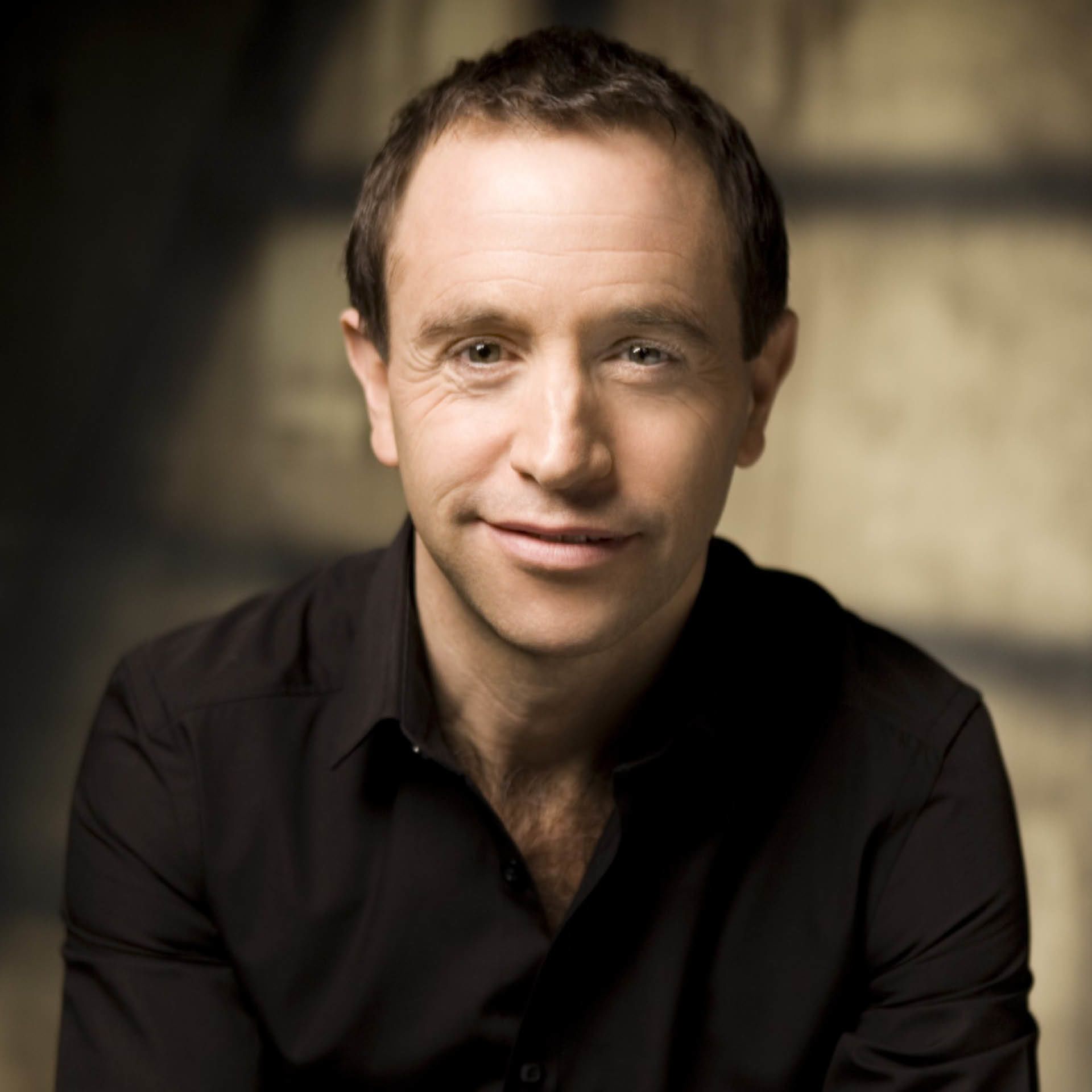
Photo: Ben Ealovega
Photo: Ben Ealovega
Through a broad repertoire ranging from Mozart to Boulez, Mark Wigglesworth has forged enduring relationships with orchestras and opera houses around the world. He has been Associate Conductor of the BBC Symphony Orchestra, Principal Guest Conductor of the Adelaide and Swedish Radio Symphony orchestras and Music Director of the BBC National Orchestra of Wales and English National Opera.
With ENO he has conducted Così fan tutte, Don Giovanni, Falstaff, The Force of Destiny, Jenůfa, Katya Kabanova, The Lady Macbeth of the Mtsensk District, Lulu, The Magic Flute and Parsifal. Other operatic engagements include the Royal Opera, Covent Garden (La clemenza di Tito, The Mastersingers of Nuremberg, Rise and Fall of the City of Mahagonny) and the Metropolitan Opera, New York (The Marriage of Figaro), as well as the Bavarian State Opera in Munich, Dresden Semperoper, Paris Opéra, Teatro Real in Madrid, Netherlands Opera, La Monnaie in Brussels, Glyndebourne Festival Opera, Welsh National Opera and Opera Australia. In 2017 he received the Olivier Award for Outstanding Achievement in Opera.
Concert highlights include performances with the Berlin, London, Los Angeles and New York Philharmonic orchestras; Boston, Chicago, London, Sydney and Tokyo Symphony orchestras; and Royal Concertgebouw, Cleveland and Philadelphia orchestras. His recordings include the complete Shostakovich symphonies with the BBC NOW and the Netherlands Radio Philharmonic Orchestra, Mahler’s Sixth and 10th Symphonies with the Melbourne Symphony Orchestra, a disc of English music with the Sydney Symphony Orchestra, Britten’s Peter Grimes with Glyndebourne Festival Opera and Brahms’s Piano Concertos with Stephen Hough.
He has written articles for The Guardian and The Independent, made a six-part TV series for the BBC entitled Everything to Play For and his book The Silent Musician: Why Conducting Matters was published in 2018.
Alessandro Fisher tenor
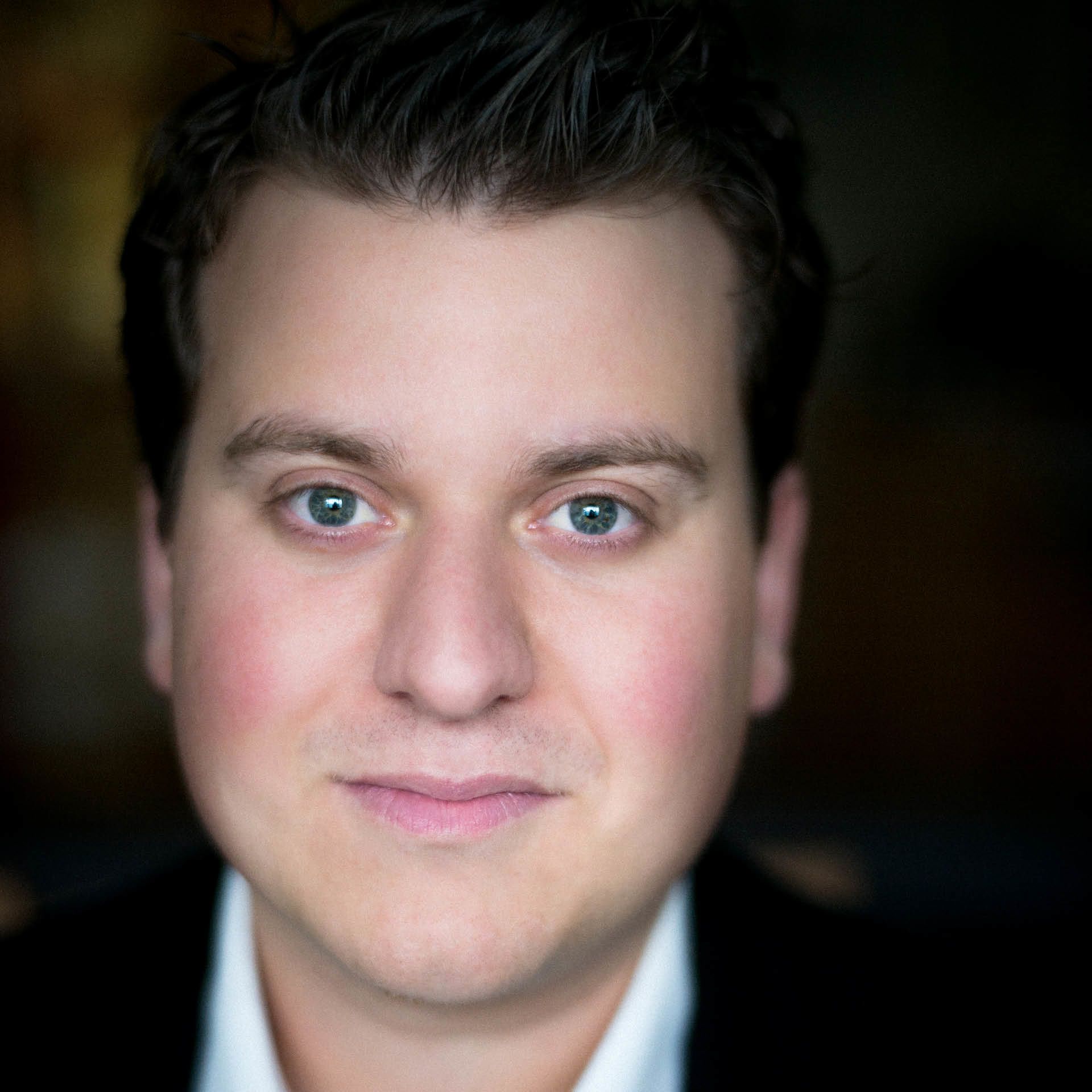
An Associate Artist of The Mozartists and former BBC Radio 3 New Generation Artist, Alessandro Fisher won First Prize at the 2016 Kathleen Ferrier Awards.
He made his Salzburg Festival debut as Lucano (L’incoronazione di Poppea) and his other operatic engagements have included performances with Garsington Opera, Glyndebourne Festival Opera, Grange Festival Opera and the Royal Opera, Covent Garden.
Concert highlights include performances with the BBC orchestras and the Netherlands Radio Philharmonic Orchestra. Recital highlights include performances at London’s Wigmore Hall, as well as the Cheltenham Music, North Norfolk Music and Oxford Lieder festivals.
Engagements this season include Osvaldo in Mercadante’s Il proscritto for Opera Rara, Britten’s Les illuminations with the Ulster Orchestra, Mendelssohn’s Elijah at the Badisches Staatstheater Klagenfurt, Monteverdi’s Vespers of 1610 with La Nuova Musica at the Wigmore Hall, First Brother in Weill’s The Seven Deadly Sins on tour with the London Symphony Orchestra, conducted by Sir Simon Rattle, a programme entitled ‘The Swinging Sixties’ with The Mozartists, also at the Wigmore Hall, and a BBC Radio 3 New Generation Artist recital at Manchester’s Stoller Hall.
BBC Philharmonic
The BBC Philharmonic is reimagining the orchestral experience for a new generation – challenging perceptions, championing innovation and taking a rich variety of music to the widest range of audiences.
The orchestra usually performs around 100 concerts every year, the vast majority broadcast on BBC Radio 3. Along with around 35 free concerts a year at its MediaCityUK studio in Salford and a series of concerts at Manchester’s Bridgewater Hall, the orchestra performs across the North of England, at the BBC Proms and internationally, and records regularly for the Chandos label.
The BBC Philharmonic’s Chief Conductor is Omer Meir Wellber. Described by The Times’s Richard Morrison as ‘arguably the most inspired musical appointment the BBC has made for years’, Israeli-born Wellber burst into his new role at the 2019 BBC Proms and has quickly built an international reputation as one of the most exciting young conductors working today. The orchestra also has strong ongoing relationships with its Chief Guest Conductor John Storgårds and Associate Artist Ludovic Morlot. In May last year the orchestra announced young British composer and rising star Tom Coult as its Composer in Association.
The scope of the orchestra’s programme extends far beyond standard repertoire. Over the past few years it has collaborated with artists as varied as Clean Bandit, Jarvis Cocker and The Wombats; played previously unheard music by writer-composer Anthony Burgess in a unique dramatisation of A Clockwork Orange; joined forces with chart-toppers The 1975 at Blackpool’s Tower Ballroom; premiered The Arsonists by composer Alan Edward Williams and poet Ian McMillan, the first opera ever written to be sung entirely in a Northern English dialect; and broadcast on all seven BBC national radio networks, from BBC Radio 1 to BBC Radio 6 Music and the BBC Asian Network. Last year the orchestra also entered the UK Top 40 singles chart with ‘Four Notes: Paul’s Tune’.
The BBC Philharmonic is pioneering new ways for audiences to engage with music and places learning and education at the heart of its mission. Outside of the concert hall, it is passionate about taking music off the page and into the ears, hearts and lives of listeners of all ages and musical backgrounds – whether in award-winning interactive performances, schools’ concerts, Higher Education work with the Royal Northern College of Music or the creation of teacher resources for the BBC’s acclaimed Ten Pieces project. Through all its activities, the BBC Philharmonic is bringing life-changing musical experiences to audiences across Greater Manchester, the North of England, the UK and around the world..
First Violins
Zoe Beyers Leader
Midori Sugiyama Assistant Leader
Alison Fletcher *
Kevin Flynn †
Austeja Juskaityte
Martin Clark
Julian Gregory
Catherine Mandelbaum
Anya Muston
Robert Wild
Toby Tramaseur
Paul Smart
Sarah White
Second Violins
Lisa Obert *
Glen Perry ‡
Lily Whitehurst
Rachel Porteous
Claire Sledd
Christina Knox
Lucy Flynn
Sophie Szabo
Oliver Morris
Sian Goodwin
Lucy McKay
Hannah Padmore
Violas
Kim Makino ‡
Carol Ella
Bernadette Anguige
Rachel Janes
Fiona Dunkley
Matthew Compton
Ruth Montgomery
Amy Hark
Cheryl Law
Alexandra Fletcher
Cellos
Peter Dixon *
Maria Zachariado ‡
Steven Callow †
Melissa Edwards
Miriam Skinner
Marina Vidal Valle
Elise Wild
Double Basses
Mario Torres §
Alice Durrant †
Peter Willmott
Miriam Shaftoe
Andrew Vickers
Daniel Whible
Flutes
Alex Jakeman *
Victoria Daniel †
Piccolo
Jennifer Hutchinson
Oboes
Jennifer Galloway *
Kenny Sturgeon
Cor Anglais
Gillian Callow
Clarinets
Fraser Langton
Lenny Sayers
Marianne Rawles
Bass Clarinet
Lenny Sayers
Bassoons
Roberto Giaccagli *
Petr Sedlak
Contrabassoon
Bill Anderson
Horns
Ben Hulme *
Rebecca Hill ¥
Phillip Stoker
Tom Kane
Jonathan Barrett
Trumpets
Kasper Knudsen §
Gary Farr †
Tim Barber
Trombones
Richard Brown *
Gary MacPhee
Bass Trombone
Russell Taylor
Tuba
Christopher Evans
Timpani
Paul Turner *
Percussion
Paul Patrick *
Geraint Daniel
Harp
Clifford Lantaff *
Celeste
Darius Battiwalla
* Principal
† Sub Principal
‡ Assistant Principal
§ Guest Principal
¥ Associate Principal
Director
Simon Webb
Orchestra Manager
Tom Baxter
Assistant Orchestra Manager
Stefanie Farr/Beth Wells
Orchestra Personnel Manager
Helena Nolan
Orchestra Administrator
Maria Villa
Senior Producer
Mike George
Programme Manager
Stephen Rinker
Assistant Producer
Katherine Jones
Marketing Manager
Amy Shaw
Marketing Executive
Jenny Whitham
Marketing Assistant
Kate Highmore
Manager, Learning and Digital
Jennifer Redmond/Beth Wells
Project Co-ordinator, Learning
Youlanda Daly/Róisín Ní Dhúill
Librarian
Edward Russell
Stage Manager
Thomas Hilton
Transport Manager
Will Southerton
Team Assistant
Diane Asprey
* Principal
† Sub Principal
‡ Assistant Principal
§ Guest Principal
¥ Associate Principal
The list of players was correct at the time of publication
Keep up to date with the
BBC Philharmonic
Listen to our BBC Radio 3 broadcasts via the BBC Sounds app. Visit our website and follow us on Twitter, Facebook and Instagram and sign up to the newsletter
To help us improve our online concert programmes, please take this 5-minute survey
Produced by BBC Proms Publications