
Icons & Reimaginings
Thursday 27/11/25, 7.30pm
BBC Hoddinott Hall, Cardiff


María Huld Markan Sigfúsdóttir
OceansUK premiere 9’
SamuelBarber
Violin Concerto 25’
INTERVAL: 20 minutes
Ottorino Respighi
Rossiniana 24’
GioachinoRossini
William Tell – overture 18’
Nil Venditti conductor
Stella Chen violin
BBC Hoddinott Hall is certified by EcoAudio and we’re proud to be supporting the BBC in becoming a more sustainable organisation. For more information on the BBC’s net-zero transition plan and sustainability strategy please visit https://www.bbc.co.uk/aboutthebbc/documents/bbc-net-zero-transition-plan-2024.pdf




This concert is being recorded by BBC Radio 3 for future broadcast in In Concert; it will be available for 30 days after broadcast via BBC Sounds, where you can also find podcasts and music mixes.
Introduction
In tonight’s concert we welcome back Nil Venditti to conduct a programme that spans America to Iceland, before landing in Italy. We begin with the UK premiere of María Huld Markan Sigfúsdóttir’s Oceans, a piece whose compositional process she has described as feeling ‘as if I was rolling around in the open sea and could not see land’.
We’re delighted to welcome Stella Chen, a rising star in the violin world, to play Barber’s Violin Concerto. It’s a work that overcame a slightly problematic start in life to become a favourite among musicians and audiences alike.
Nil Venditti returns to her Italian roots for the second half, with Respighi’s gorgeously orchestrated suite Rossiniana, a tribute to a composer whose music he adored. And we end with the famously invigorating overture to Rossini’s opera William Tell.
Enjoy!
Lisa Tregale
Director
Please respect your fellow audience members and those listening at home: mobile phones may be kept on but on silent and with the brightness turned down; other electronic devices should be switched off during the performance. Photography and recording are not permitted.
María Huld Markan Sigfúsdóttir (born 1980)
Oceans(2018)
UK premiere

The piece Oceans was composed during the autumn months on an island in the middle of the North Atlantic, more specifically off the southwest corner of Iceland. The name of the piece is not directly related to its theme, but it came up early in the process. On closer inspection, you can still say that the title is appropriate – when it was written, I thought a lot about the oceans, their condition and all the plastic debris that is floating around and in some places forms islands much larger in size than the one I live on. Also, at times I felt that the work had taken on an independent form of existence and I had nothing to say about its progress – I felt as if I was rolling around in the open sea and could not see land. Ideas, themes and motifs came to me with the autumnal storms, knocking on the door and demanding attention.
Programme note © María Huld Markan Sigfúsdóttir
Samuel Barber (1910–81)
Violin Concerto, Op. 14 (1939)
1 Allegro
2 Andante
3 Presto in moto perpetuo
Stella Chenviolin
Not without reason did Samuel Barber sarcastically refer to the 1939 Violin Concerto as his ‘concerto del sapone’ (‘soap concerto’). That slightly disparaging nickname was a reference not only to the product that had made the fortune of the piece’s commissioner – tycoon Samuel Simeon Fels, of Fels-Naptha soap fame – but also to the piece’s creation and premiere, which turned into something of a soap opera.
Fels and his wife Jennie had acted as surrogate US parents to the remarkable Odessa-born violin prodigy Iso Briselli, who was studying at Philadelphia’s Curtis School of Music – by chance, in the same year as Barber. By 1939 both Briselli and Barber had graduated and were establishing themselves professionally – Barber had in fact returned to the school, now as professor of composition. Fels was persuaded to ask the young composer to create a new concerto for Briselli, one that might showcase the violinist’s dazzling technique and profound musical insights.
At first, things went well. Barber launched into composing it on a trip to Europe in summer 1939. With war looming, though, his hasty return to the US meant a delay in completing the piece – though Briselli loved the first two movements when he received them. But his teacher, Albert Meiff, didn’t, and took it upon himself to write to Fels, informing the businessman that the concerto would need a wholesale overhaul by someone who really knew the violin (in other words, himself). Even Briselli wondered, in retrospect, if the opening movements were showy enough, and requested something more virtuosic for the finale.
Things got worse, however, when Barber sent Briselli the showy concluding movement he’d created. The violinist wasn’t convinced, finding it too lightweight and out of kilter with the earlier movements’ tone. He requested a rewrite. Barber declined, explaining: ‘I could not destroy a movement in which I have complete confidence, out of artistic sincerity to myself.’ Briselli in turn declined to play the concerto, and the premiere was given instead by the established violinist Albert Spalding (who jumped at the opportunity) with the Philadelphia Orchestra in February 1941. Barber and Briselli remained friends, however, until the composer’s death in 1981.
Despite the shenanigans over its creation, Barber’s Violin Concerto quickly found a secure place in the violin repertoire. The soloist launches the richly Romantic opening movement with a gorgeously lyrical main melody, later contrasted by a spikier theme introduced by a solo clarinet (a theme the violinist manages to avoid until almost the end of the movement). An oboe keens a long, chant-like melody above a cushion of string harmonies in the serene second movement, before the soloist leads us into stormier, more dissonant music. In the brief, breathless finale (about which you may feel Briselli had a point), the violinist skitters through an almost unstoppable melodic line, navigating Shostakovich-like grotesquerie to propel the piece to its dashing close.
Programme note © David Kettle
INTERVAL: 20 minutes
Ottorino Respighi (1879–1936)
Rossiniana (1925)
1 Capri e Taormina
2 Lamento
3 Intermezzo
4 Tarantella
It doesn’t take long, in any work by Ottorino Respighi, for us to realise that this composer’s grasp of orchestration is second to none. Like many fine orchestrators in the early 20th century, he was much influenced by Nikolai Rimsky-Korsakov, with whom he studied in St Petersburg while also serving as principal violist at the Russian Imperial Theatre. The magnificence of his three great Roman tone-poems stands testimony to the results, and in his lifetime the championship of such conductors as Arturo Toscanini, Serge Koussevitzky and Fritz Reiner helped to display that quality at its finest.
It’s nevertheless clear from Respighi’s plentiful arrangements of other composers’ works that this process held a fascination of its own. They ranged from Bach’s Passacaglia and Fugue in C minor to pieces by Monteverdi, Vivaldi and Vitali – and also Rossini.
Perhaps the best known is his Rossini-based score for Léonide Massine’s popular ballet La boutique fantasque (‘The Magic Toyshop’), first performed in London by Diaghilev’s Ballets Russes in 1919. The following year, Respighi’s wife noticed the Rossini piano pieces Les Riens (‘Trifles’) on his music stand – and Rossiniana, sparked by them, was premiered in Hamburg in 1925.
The suite seems just as much Respighi’s work as Rossini’s. Unlike the sunny and satirical Boutique fantasque, it gives Respighi free rein to go deeper and darker. Each movement evokes a different Italian dance or song – and in the first movement, two of them. ‘Capri e Taormina’ is a barcarolle in the rhythm of a siciliana, its title referring to a beautiful island and a Sicilian town. A bright fanfare sounds across the scurrying waves of what seems a slightly choppy sea; then the siciliana brightens the atmosphere seductively and the fanfare finally disappears into the distance.
Next comes the ‘Lamento’, its initially lowering atmosphere enhanced by distant timpani thunder and low strings. The melody unfolds over a bassoon ostinato, building to a central section spotlighting atmospheric effects from harp and muted brass, plus a cadenza-like episode for the clarinet. The short, lilting Intermezzo is led by the strings, which contrast with responses from glittering celesta, harp and woodwind.
Finally, after a mysterious introduction, the Tarantella breaks into a full-blooded south Italian whirl, powered by exultant brass and percussion. The chiming of bells frames a hymnlike central section before the dance returns to end the suite in a blaze of sunshine.
Programme note © Jessica Duchen
Gioachino Rossini (1792–1868)
William Tell – overture(1829)
William Tell was Rossini’s last opera and his longest and grandest. Having composed it, he decided he had earned enough from his operatic career and spent the remaining 47 years of his life enjoying himself in Paris – mainly eating! Actually he was such a prodigious eater, not to mention a fantastic cook in his own right, that several dishes were named after him, most famously the delicious Tournedos Rossini. But back to William Tell, and perhaps his best-known piece of music, its overture. This is in four parts, the last of which – The March of the Swiss Soldiers – has been used everywhere from The Lone Ranger to Mickey Mouse cartoons.
Programme note © David Threasher
Help Us Improve Our Online Programmes.
Please take this 5-minute survey and let us know what you think of these notes.
Programme Survey
You may also like:
If you’ve enjoyed the concert today, bring friends and family and come along to this forthcoming concert. As an existing audience member, you can buy tickets for it for £7 using promotion code NOWYOU when buying online.
Musical Painting, Impressions & Intrigue
Thursday 8/1/26, 7.30pm
BBC Hoddinott Hall, Cardiff
Anders Hillborg Exquisite Corpse
Shostakovich Cello Concerto No. 2
Sibelius Lemminkäinen Suite
Ryan Bancroft conductor
Alban Gerhardt cello
INTRIGUING | ENTRANCING | MODERNISTIC
From Anders Hillborg’s exhilarating Exquisite Corpse – a daring musical collage inspired by the surrealist game – to Shostakovich’s powerful Cello Concerto No. 2 performed by the incomparable Alban Gerhardt, this concert promises intrigue at every turn. Journey further into Nordic legend with Sibelius’s Lemminkäinen Suite, where brooding mystery meets shimmering folk dance and the haunting beauty of ‘The Swan of Tuonela’.
Book tickets for just £7 using promotion code NOWYOU https://www.bbc.co.uk/events/evr6gw
Biographies
Nil Venditticonductor

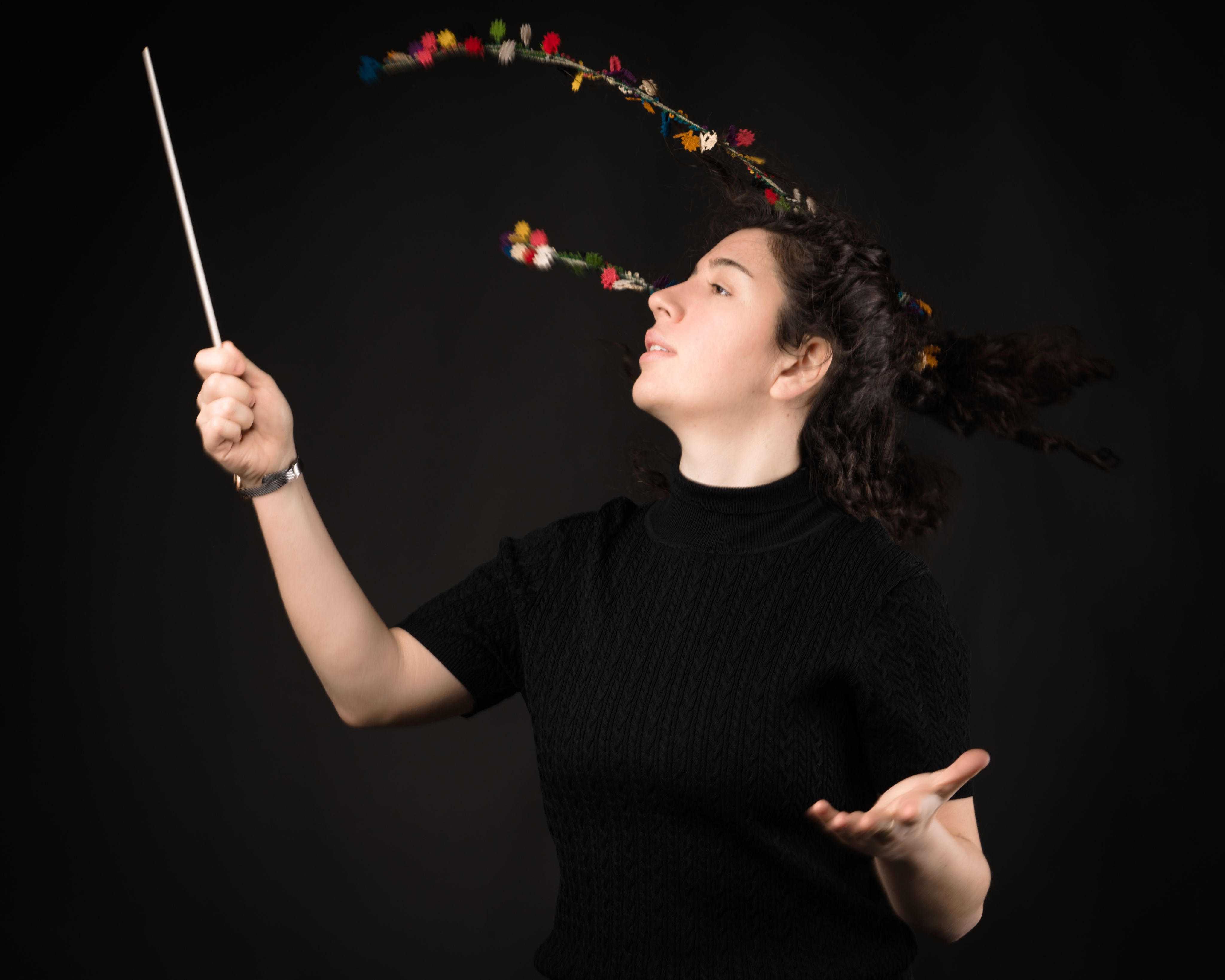
Alessandro Bertani
Alessandro Bertani
Italian-Turkish conductor Nil Venditti is fast establishing relationships with major orchestras and ensembles around the world, including the Royal Northern Sinfonia, of which she has been Principal Guest Conductor since the 2024/25 season.
This season she has engagements spanning the globe. Highlights include a number of concerts in the UK, where she works extensively with the BBC National Orchestra of Wales and Royal Philharmonic Orchestra, as well as making her debut with the Philharmonia Orchestra and City of Birmingham Symphony Orchestra. She also makes her debut at London’s Barbican with the BBC Symphony Orchestra. Additionally she appears with the Deutsches Symphonie-Orchester Berlin, Beethoven Orchester Bonn, Musikalische Akademie Mannheim, Bilbao and Quebec Symphony orchestras and Tampere Philharmonic Orchestra, among others.
Recent highlights include debuts with the Finnish Radio Symphony Orchestra, BBC Philharmonic Orchestra and Orchestra Ensemble Kanazawa, as well as returns to the BBC Proms, Schleswig-Holstein Festival, Royal Philharmonic Orchestra, and Deutsche Kammerphilharmonie Bremen.
She combines a strong affinity for Classical and early Romantic repertoire with a particular interest in Turkish and Italian composers. She continues to strengthen her reputation in the opera house, and has conducted operas from Mozart’s Così fan tutte to Peter Maxwell Davies’s The Lighthouse. Next summer she conducts Macbeth for Longborough Festival Opera.
Nil Venditti studied conducting at the Zurich University of the Arts with Johannes Schlaefli, as well as attending the Conducting Academy associated with the Pärnu Music Festival under Paavo Järvi, Neeme Järvi and Leonid Grin. Prior to this, she studied cello in Italy with Francesco Pepicelli.
Stella Chenviolin

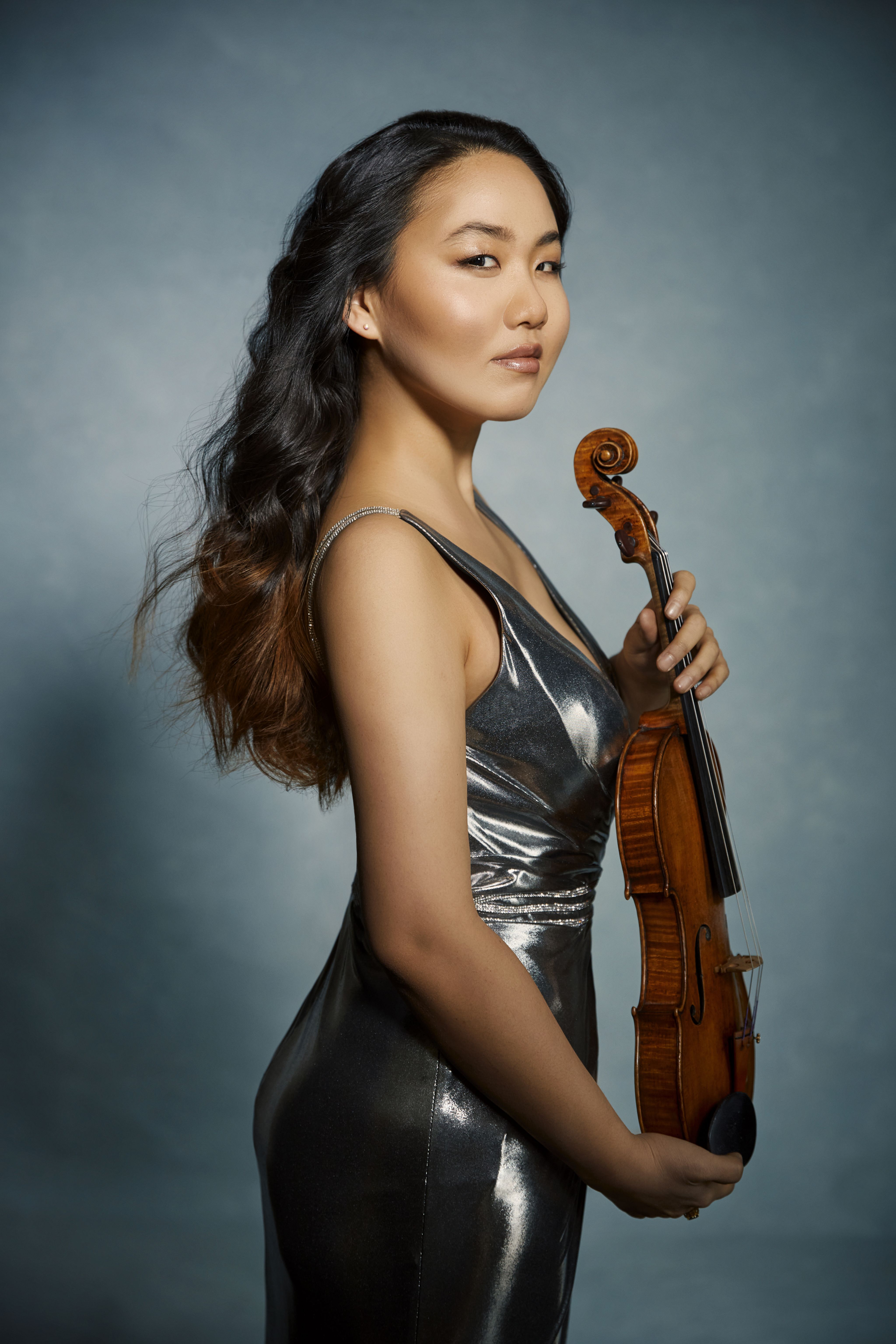
Fay Fox
Fay Fox
American violinist Stella Chen first gained international recognition as the winner of the 2019 Queen Elisabeth International Violin Competition. In 2023 she was named Young Artist of the Year at the Gramophone Awards.
She has performed concertos, recitals and chamber music across North America, Europe and Asia. She recently made debuts with the New York Philharmonic, Chicago Symphony, Minnesota Orchestra, Israel Philharmonic, Chamber Orchestra of Europe and the Orchestra of St Luke’s. Her performances have taken her to some of the world’s leading venues, including the Vienna Musikverein, Amsterdam Concertgebouw and Berlin Philharmonie. She appears frequently with the Chamber Music Society of Lincoln Center, both in New York and on tour.
Highlights of this season include concerto debuts with the Antwerp, Cincinnati and Vancouver Symphony orchestras and an American tour with the Orpheus Chamber Orchestra, including a performance at Carnegie Hall. She appears as a recitalist and chamber musician at La Jolla Music Society and Chamber Music San Francisco, as well as leading a residency at San Francisco Conservatory.
As a chamber musician, she has appeared at leading festivals such as the Kronberg Academy, Moritzburg Festival, Ravinia, Seattle Chamber Music Society, Perlman Music Program, Music@Menlo, Bridgehampton, Rockport and Sarasota Festival.
She is the inaugural recipient of the Robert Levin Award from Harvard University, where she was mentored and inspired by Robert Levin. Her teachers and mentors have included Donald Weilerstein, Itzhak Perlman, Miriam Fried, Li Lin and Catherine Cho. She received her doctorate from the Juilliard School, where she was recently appointed to the College Division String Faculty. She also serves as Visiting Assistant Professor at the Shenandoah Conservatory and is on the faculty of the Nume Festival and Academy in Cortona.
Stella Chen performs on the ‘General Kyd’ 1720 Stradivarius, generously on loan from Dr Ryuji Ueno and Rare Violins In Consortium, Artists and Benefactors Collaborative.
BBC National Orchestra of Wales
For over 90 years, the BBC National Orchestra of Wales, the only professional symphony orchestra in Wales, has played an integral part in the cultural landscape of the country, occupying a distinctive role as both a broadcast and national orchestra, and serving as an ambassador of Welsh culture, regularly performing music created in Wales and championing Welsh composers and artists.
Part of BBC Cymru Wales and supported by the Arts Council of Wales, BBC NOW performs a busy schedule of concerts and broadcasts, working with acclaimed conductors and soloists from across the world, including its Principal Conductor, the award-winning Ryan Bancroft.
The orchestra is committed to working in partnership with community groups and charities, taking music out of the concert hall and into settings such as schools and hospitals to enable others to experience and be empowered by music. It undertakes workshops, concerts and side-by-side performances to inspire and encourage the next generation of performers, composers and arts leaders, and welcomes thousands of young people and community members annually through its outreach and education projects.
BBC NOW performs annually at the BBC Proms and biennially at the BBC Cardiff Singer of the World competition, and its concerts can be heard regularly across the BBC – on Radio 3, Radio Wales and Radio Cymru. On screen, music performed by BBC NOW can be heard widely across the BBC and other global channels, including the soundtrack and theme tune for Doctor Who, Planet Earth III, Prehistoric Planet, The Pact and Children in Need.
Based at BBC Hoddinott Hall, Cardiff Bay, BBC NOW utilises a state-of-the-art recording studio with a camera system for livestreams and TV broadcasts to bring BBC NOW’s music to a broader audience across Wales and the world. For more information about BBC NOW please visit bbc.co.uk/now
Patron
HM King Charles III KG KT PC GCB
Principal Conductor
Ryan Bancroft
PrincipalGuest Conductor
Jaime Martín
Composer-in-Association
Gavin Higgins
First Violins
Lowri Porter
Gwenllian Hâf MacDonald
Terry Porteus
Suzanne Casey
Ruth Heney **
Anna Cleworth
Carmel Barber
Kerry Gordon-Smith
Žanete Uškāne
Alfredo Reyes Logounova
Gary George Veale
Anna Szabo
Grace Shepherd
Conor Simpson
Second Violins
Anna Smith *
Kirsty Lovie #
Sheila Smith
Michael Topping
Roussanka Karatchivieva
Joseph Williams
Beverley Wescott
Vickie Ringguth
Katherine Miller
Elizabeth Whittam
Frances Richards
Juan Carlos Romero
Nick Francis
Violas
Alex Thorndike #
Tetsuumi Nagata
Peter Taylor
Lowri Taffinder
Lydia Abell
Robert Gibbons
Anna Growns
Laura Sinnerton
Daire Roberts
Sam Wilson
Cellos
Pedro Silva
Jessica Feaver
Sandy Bartai
Alistair Howes
Carolyn Hewitt
Keith Hewitt
Rachel Ford
Kathryn Graham
Double Basses
Alexander Jones #
Christopher Wescott
Emma Prince
Imogen Fernando
Clare Larkman
Matthew Featherstone *
John Hall †
Lindsey Ellis
Piccolo
Oboes
Amy McKean †
Charis Yin Yan Lai
Lucy Keeley
Cor anglais
Clarinets
William White
Alvaro Hurtado
Bass Clarinet
Bassoons
Jarosław Augustyniak *
Jo Shewan
Hugh Sergeant
Meilyr Hughes
Jesse Durkan
James Mildred
John Davy
Trumpets
Trombones
Bass Trombone
Tuba
Timpani
Percussion
Andrea Porter
Sam Jowett
Sarah Mason
James Bower
Anna Newman
Harp
Alex Rider
Piano
Catherine Roe Williams
* Section Principal
The list of players was correct at the time of publication
Director Lisa Tregale
+ Green Team member
Keep up to date with BBC National Orchestra of Wales
Listen to our BBC Radio 3 broadcasts via the BBC Sounds app. Visit our website and follow us on Facebook and Instagram
To help us improve our online concert programmes, please take this 5-minute survey
Produced by BBC Proms Publications