
Grime, Gordon & Goehr with Catherine Larsen-Maguire
Friday 29 October 2021, 2.00pm
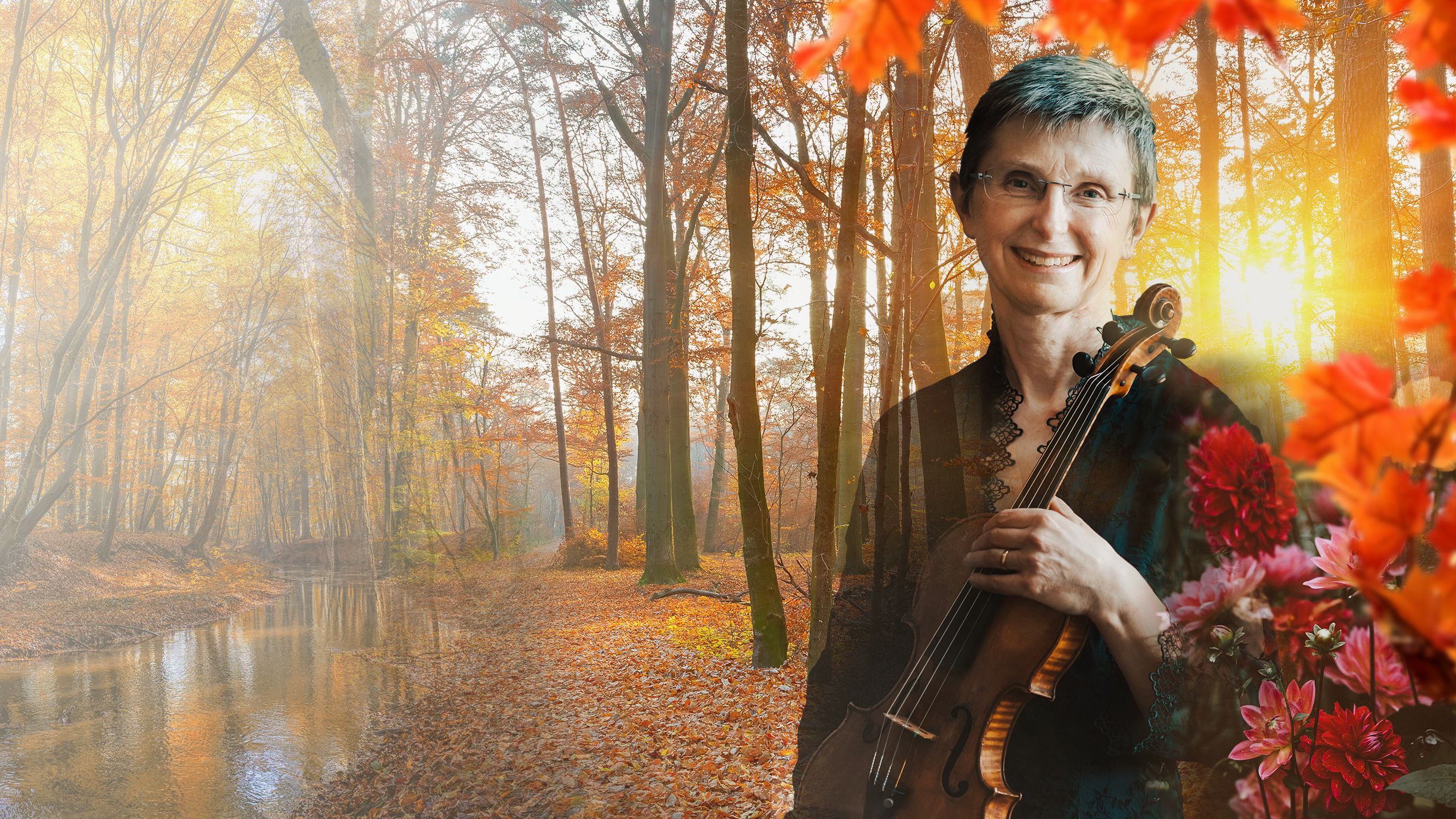

Helen Grime
Limina 12’
Michael Zev Gordon
Violin concerto 24'
INTERVAL: 20 minutes
Alexander Goehr
The Master Said, Op. 99 world premiere30’
Carolin Widmann violin
Mark Lewis Jones speaker
BBC National Orchestra of Wales
Catherine Larsen-Maguire conductor


The concert is being recorded for future broadcast on BBC Radio 3’s New Music Show, after which it will be available to stream or download for 30 days via BBC Sounds, where you can also find podcasts and music mixes. Visit bbc.co.uk/now for more information on future performances.
Introduction
A warm welcome to BBC Hoddinott Hall for today’s concert, in which conductor Catherine Larsen-Maguire presents music by three British composers representing different generations.
Most venerable is Alexander Goehr, whose The Master Said (which receives its premiere today) is typically wide-ranging in its inspiration, drawing on the writings of Confucius and Haydn’s contemplative Seven Last Words.
Like Goehr, Michael Zev Gordon explores the tension between old and new, taking the traditional form of a violin concerto but filling it with music that is innovative and fresh. He wrote the piece for today’s soloist, Carolin Widmann, directly inspired by the songfulness of her playing.
Helen Grime, the youngest figure here, draws on a Norwegian novel for her 2019 orchestral work Limina, which balances an unerring sense of narrative with a glistening array of orchestral timbres.
Please respect your fellow audience members and those listening at home. Turn off all mobile phones and electronic devices during the performance. Photography and recording are not permitted.
Helen Grime(born 1981)
Limina (2019)


Limina was inspired by a scene from the Norwegian author Tarjei Vesaas’s 1963 novel The Ice Palace, in which a young girl explores the depths of a frozen waterfall, moving between its chambers in search of her lost friend. The title is taken from the Latin for ‘thresholds’ and, as she explores the waterfall’s hidden depths, we move with her across boundaries and between caves. But in this frozen, icy landscape the glassy surfaces reflect and distort the vantage points, so that we never quite know where we are. The thresholds lose their definition, the way ahead is never clear: we can hear the girl’s confusion as she flits between feelings of wonder and desperation.
Helen Grime’s score builds through a succession of layered fragments and sonorities that catch the light and bounce off one another, occasionally coalescing into huge shafts of light that illuminate the cavern. In the ‘bright, icy’ opening, woodwind and brass dominate, their piercing motifs overlapping to create a vast acoustic space above a wave of oscillating strings, the percussion and harp finding edges that glint and glimmer. As the journey becomes more urgent, however, the fragments begin to merge, the rhythms become more regular and insistent, and the work builds towards a moment of deep catharsis. Is this joy or simply acceptance? An exquisitely delicate coda, with filigree violin solos, leads us to a more contemplative space, yet the ominous toll of the tubular bell and bass drum imparts a deep sense of trepidation that never quite subsides.
Programme note © Jo Kirkbride
Michael Zev Gordon(born 1963)
Violin Concerto (2016–17)

1 Very Still, Intense – Moderato
2 Spacious, Still – Lightly Dancing –
3 Spacious – Gently Flowing – Always
Simple
Carolin Widmann violin
My concerto is in a conventional three-movement form. However, the standard formal pattern of fast–slow–fast is replaced by moderate–fast–slow; the first two movements open with similar material, which will surface again in the final one.
Reshaping convention in this way comes from a desire to write music that is connected to the familiar and traditional while embracing the less familiar and the new. In this way, I hope to widen my means of expression and also to create fresh relationships between harmony and rhythm. In this concerto these mixtures form a long-range, expressive journey – moving from struggle to release, a recurring narrative in my music.
The piece begins with a simple two-note, oscillating pattern on the solo violin. This music is stable and sweet, but also sounds strained because the soloist plays high up on the lowest string of the violin. The stability doesn’t last, and the main body of the movement is a striving flux of ideas – led by the soloist, increasingly echoed and amplified in the orchestra – which cannot settle.
The second movement returns briefly to the quiet stability of the work’s opening, but it too quickly gives way to newly searching music. At first this is filled with rocking, repeating, even child-like patterns, emphasised by bright instrumental sonorities. But these sounds intensify and darken: the known leading to the less-known.
At the end of the second movement, the earthy dance that has emerged lifts off into something more ethereal. However, before this can feel like real repose, the final movement cuts in. Twice more, triads interrupt. But the third time, variants of the oscillating motif from the first movement – first on the horns, then in the solo part – enter too, leading to an emotional climax and introspective cadenza on the solo violin.
This releases, in turn, into a reprise of the two-note figure at its original pitch, answered by passages of gently intermingling orchestral lines. In the long, final settling, the soloist rises through the texture to reach the motif again, which reduces down to a single high A, insistently repeated. At the very end, the work’s opening harmony reappears. For me, it is both something re-found and heard anew. But it floats away almost before there is time for it to be fully registered.
When I initially worked with Carolin Widmann – today’s soloist, who gave the world premiere of the concerto with the BBC Symphony Orchestra in 2017 – she talked to me about how passionate she was to make the violin sing. It was inspiring to hear just how many nuances of singing she could bring to the instrument, intense and open, strained and fragile, passionate and vibrato-filled, delicate and almost innocent-sounding. I’ve tried to make the most of these different voices – to move from the habitual to paths less travelled and, at the concerto’s close, from struggle to a mood of contemplation.
Programme note © Michael Zev Gordon
INTERVAL: 20 minutes
Alexander Goehr (born 1932)
The Master Said, Op. 99 (2016)
world premiere

Mark Lewis Jones speaker
Alexander Goehr’s striking proclamation that ‘all art is new and all art is conservative’ is a pithy summation of his musical style. For Goehr, our relationship with the past is non-negotiable – we are all part of a tradition, however vehemently we might try to reject it. Goehr’s own music engages with the past in a more holistic way than perhaps any other composer of his generation. His absorption both of musical history and of other art forms is remarkable, revealing a deeply curious mindset. His works draw on a huge range of sources that extend from Japanese Noh theatre to Shakespearean literature and the paintings of Goya and da Vinci.
The Master Said, which today receives its world premiere, is a case in point, bringing together two seemingly disparate historical sources: the moral writings of the Chinese philosopher Confucius – the ‘Master’ of the work’s title – and Haydn’s seminal choral work, The Seven Last Words of Our Saviour on the Cross. Goehr finds in them a common ground, one that resonates with his own relationship with the past too: ‘The Master (Confucius) does not “know”, but seeks to learn from antiquity,’ he explains. ‘He does not memorise a great number of different things, but seeks their underlying unity. This all makes him, in his estimation, fit to teach others.’
Goehr adopts both the form of Haydn’s work – seven adagios for chamber orchestra, followed by a brief allegro – and its series of proclamations but, in place of Jesus’s final words, Goehr gives us Confucius’s teachings, intoned by a speaker. Conceptually, the work unfolds almost as a set of variations, with Confucius’s texts as the theme. Musically, too, we hear fragments that repeat and evolve, as though spun from a single thematic thread. A clipped, descending chromatic motif in the sparsely orchestrated opening movement evolves into a descending chromatic chain in the second, which in turn becomes inverted and extended before, in the final movement, returning to whence it came. The impression is of a series of musical splinters, each of which bears a passing relation to the other, never quite identical, never quite dissimilar – an echo of the ‘underlying unity’ of Confucius’s teachings. As the work unfolds, these ideas accumulate like hazy, near-forgotten memories, synching only in the closing bars.
Programme note © Jo Kirkbride
Further Reading: Finding the Key: Selected Writings of Alexander Goehr Alexander Goehr (Faber)
Biographies
Catherine Larsen-Maguire conductor

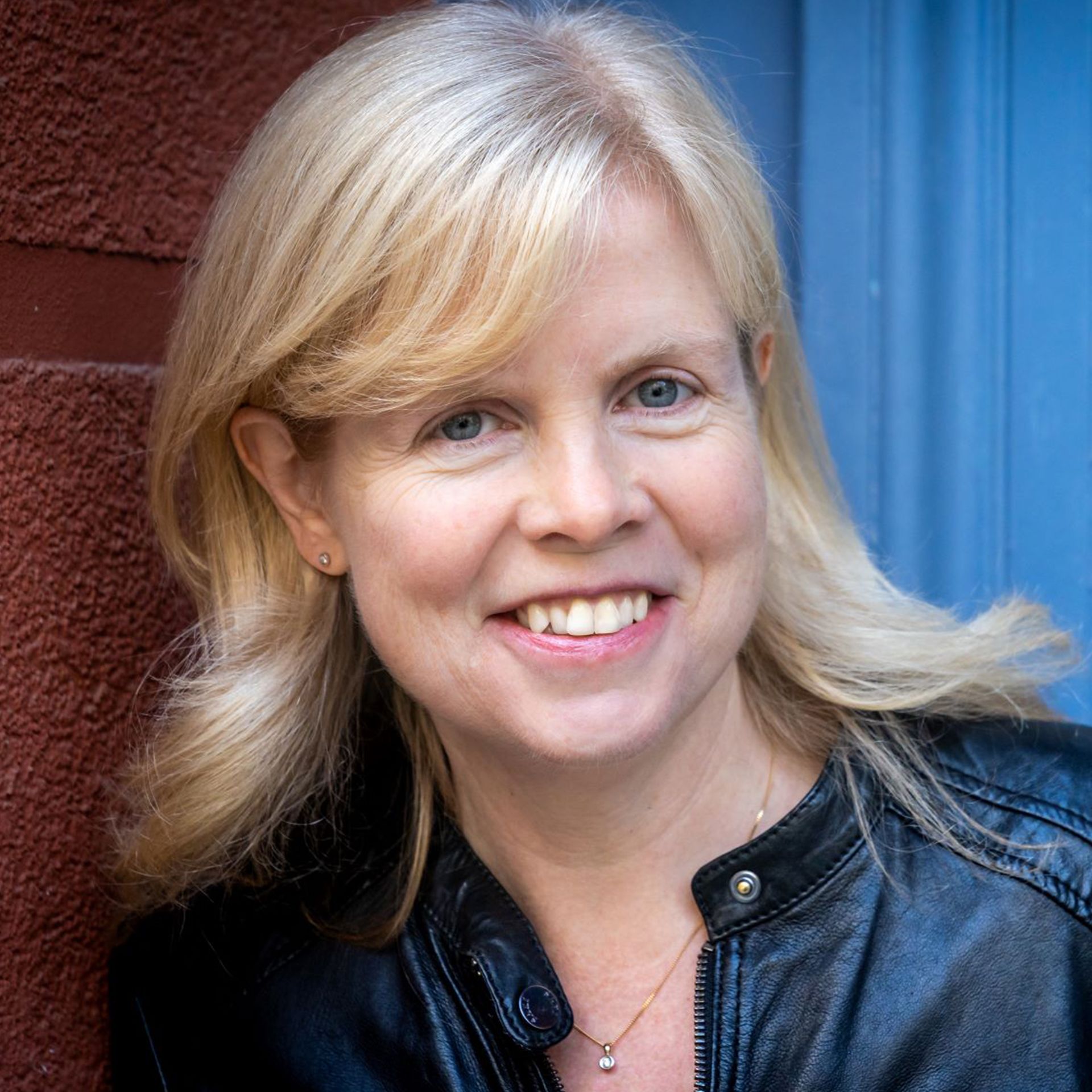
Photo: David Beecroft
Photo: David Beecroft
Catherine Larsen-Maguire turned her focus exclusively to conducting in 2012 after 10 years as principal bassoon at Berlin’s Komische Oper. She has since become a sought-after conductor with orchestras in Europe and South America.
Highlights this season includes debuts with tonight’s orchestra, the London Philharmonic Orchestra, Royal Northern Sinfonia and Geneva and Fribourg Chamber orchestras, as well as returns to the Slovenian Radio and Tenerife Symphony orchestras.
Alongside standard repertoire she also has a special interest in contemporary music and has directed numerous premieres, including Gordon Kampe’s Gefährliche Operette for the Ruhrtriennale and the North American premiere of Sir James MacMillan’s Oboe Concerto with Nigel Shore. Recent collaborations include performances with Klangforum Wien, Ensemble Musikfabrik, Ensemble Resonanz, Ensemble Ascolta and ensemble unitedberlin, while this season sees her debut with Ensemble Modern at the Berlin Music Festival.
She also enjoys working with and training youth ensembles around the world; she was a jury member for the Besançon Competition in 2017 and 2019, and for five years held a guest professorship in conducting at the University of the Arts, Berlin.
Carolin Widmann violin
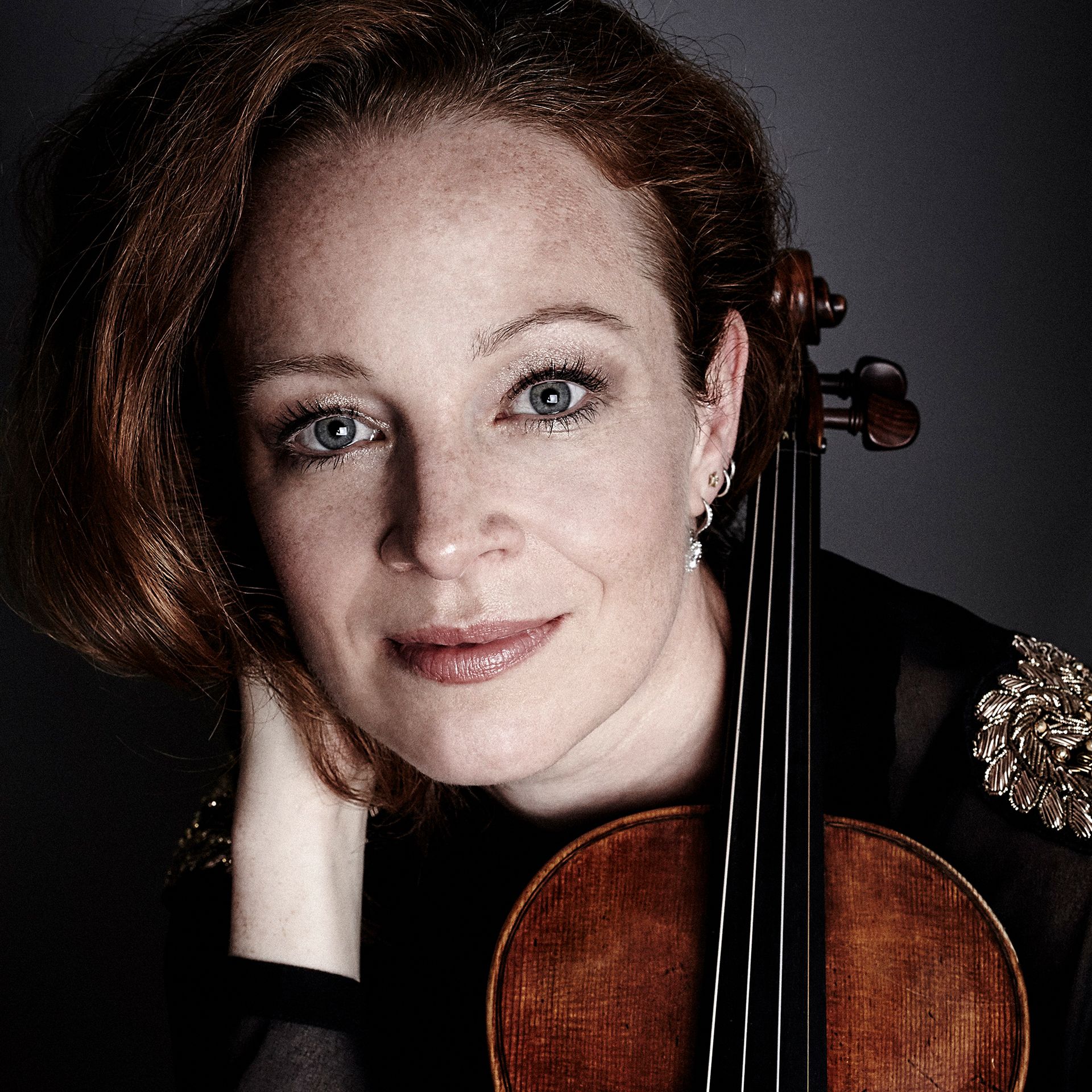
Photo: Lennard Rühle
Photo: Lennard Rühle
Carolin Widmann’s activities span the major classical concertos, new commissions, solo recitals, a wide variety of chamber music and period-instrument performances.
Her many awards include, in 2017, the Bavarian State Prize for music.
Recent highlights include debuts with the Los Angeles Philharmonic under Esa-Pekka Salonen and Scottish Chamber Orchestra under Maxim Emelyanychev, as well as her New York debut play/directing the Orpheus Chamber Orchestra. She also returned to the Vienna Radio Symphony Orchestra and the WDR Symphony Orchestra Cologne.
This season she appears with the Dresden and Munich Philharmonic orchestras, Deutsches Symphonie-Orchester Berlin, Orchestre Philharmonique de Radio France, Insula Orchestra and the Russian National Youth Orchestra, and undertakes a recital tour of Italy with pianist Dénes Várjon. Last month she premiered Georg Friedrich Haas’s new concerto with the Basle Chamber Orchestra.
She has worked with a distinguished roster of conductors, including Riccardo Chailly, Pablo Heras-Casado, Marek Janowski, Vladimir Jurowski, Sir Roger Norrington and Sir Simon Rattle.
Since 2006 she has been professor of violin at Leipzig’s University of Music and Theatre.
Mark Lewis Jones speaker
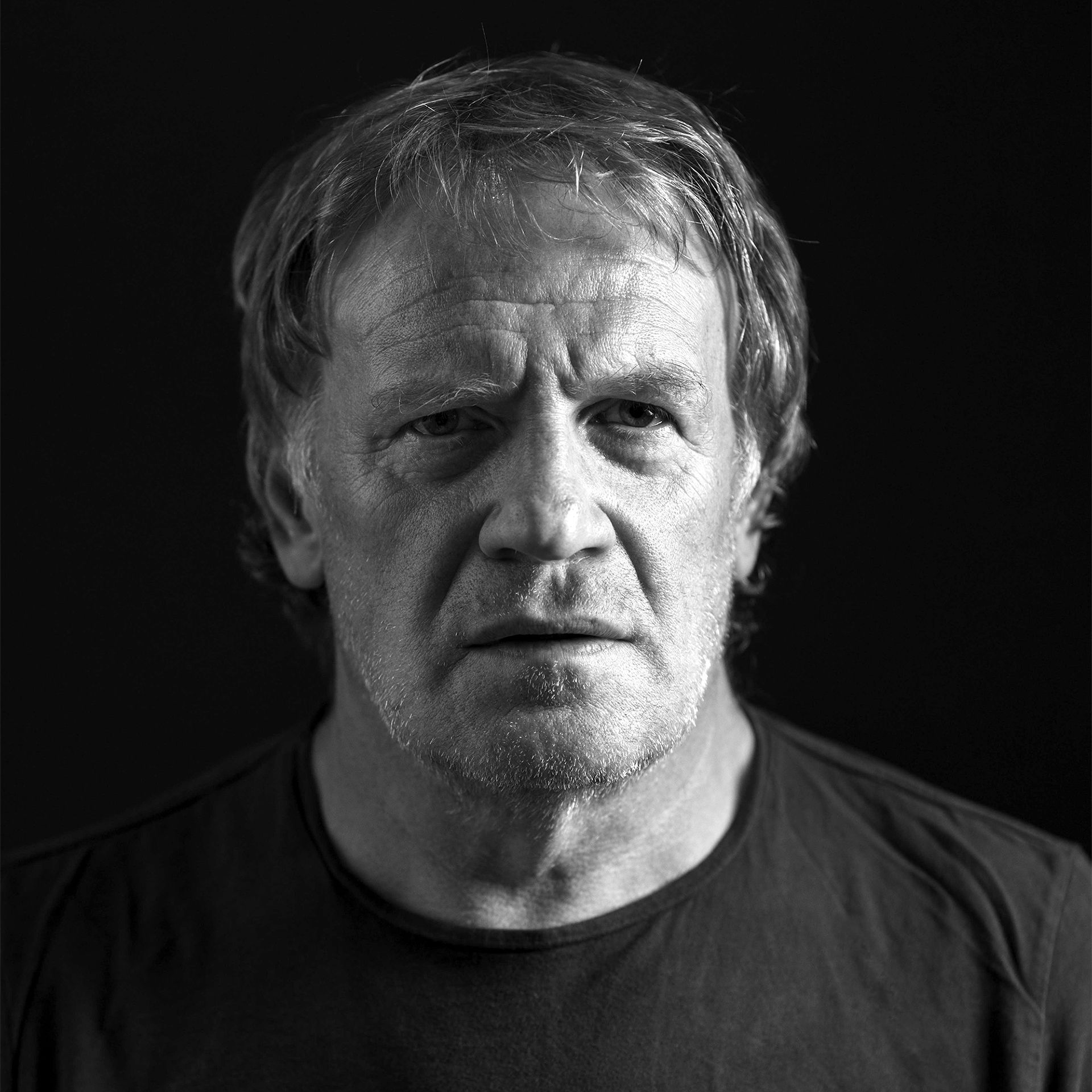
BAFTA Cymru-winning actor Welsh Mark Lewis Jones is renowned for his television roles in Stella, National Treasure and Keeping Faith, as well as appearances in Hollywood films including Star Wars: The Last Jedi, Queen of the Desert and Gwen directed by William McGregor.
In 2016 he won a BAFTA Cymru Award for Best Actor in the film The Passing/Yr Ymadawiad and was nominated in the same category the following year for his role in The Lighthouse, directed by Chris Crow.
In 2019 he appeared in Carnival Row and The Crown (Netflix), Chernobyl (HBO) and The Accident (ITV), as well as in the feature filmes Apostle and The Good Liar.
Most recently he has appeared in Gangs of London and Third Day (Sky) and The Pact (BBC).
Forthcoming releases include Munich: The Edge of War, directed by Christian Schwochow, and Phantom of the Open, directed by Craig Roberts, both out soon. He will also star in the new series of Outlander, playing Tom Christie.
BBC National Orchestra of Wales
For over 90 years, BBC National Orchestra of Wales has played an integral part in the cultural landscape of Wales, occupying a distinctive role as both broadcast and national symphony orchestra. Part of BBC Wales and supported by the Arts Council of Wales, it performs a busy schedule of live concerts throughout Wales, the rest of the UK and the world. The orchestra is an ambassador of Welsh music and champions contemporary composers and musicians.
The orchestra performs annually at the BBC Proms and biennially at the BBC Cardiff Singer of the World competition, and its concerts can be heard regularly across the BBC: on Radio 3, Radio Wales and Radio Cymru.
BBC NOW works closely with schools and music organisations throughout Wales and regularly undertakes workshops, side-by-side performances and young composer initiatives to inspire and encourage the next generation of performers, composers and arts leaders.
During the recent lockdowns, BBC NOW has continued to record and film behind closed doors at BBC Hoddinott Hall and has produced videos, soundtracks and weekly digital concerts that have been seen by 14 million people globally, including an extremely popular video of the Doctor Who soundtrack. Plans for the orchestra include live-streamed concerts and events, tours to different communities throughout Wales and education and community development schemes to include everyone in music-making. To find out more visit bbc.co.uk/bbcnow
Patron
HRH The Prince of Wales KG KT PC GCB
Principal Conductor
Ryan Bancroft
Conductor Laureate
Tadaaki Otaka CBE
Composer-in-Association
Gavin Higgins
Composer Affiliate
Sarah Lianne Lewis
First Violins
Lesley Hatfield Leader
Nick Whiting + **Associate Leader
Martin Gwilym-Jones †
Terry Porteus
Anna Cleworth
Carmel Barber
Gary George-Veale
Zanete Uskane
Judith Choi Castro
Georgina Leo
Anna Szabo
Second Violins
Anna Smith *
Jane Sinclair #
Beverley Wescott **
Joseph Williams
Michael Topping
Sellena Leony
Vickie Ringguth
Elizabeth Whittam
Violas
Tetsuumi Nagata
Peter Taylor
Ania Leadbeater
Laura Sinnerton
Robert Gibbons
Daire Roberts
Sharada Mack
Cellos
Robert Max ‡
Jessica Feaver **
Sandy Bartai
Alistair Howes
Kathryn Graham
Nick Gethin
Double Basses
Colin Paris ‡
Ben Du Toit
Richard Gibbons
David F. C. Johnson
Flute
Matthew Featherstone *
Flute/Alto Flute
John Hall
Flute/Piccolo
Lindsey Ellis †
Oboes
Amy Roberts ‡
Eric Wolfe-Gordon
Oboe/cor anglais
Sarah-Jayne Porsmoguer †
Clarinet
Matthew Glendenning ‡
Clarinet/E flat Clarinet
Will Knight
Clarinet/Bass Clarinet
Alison Lambert
Bassoons
Gareth Humphreys ‡
Joanna Shewan
Contra-bassoon
David Buckland †
Horns
Neil Shewan †
Meilyr Hughes
John Davy
William Haskins
Trumpets
Andy Everton
Rob Johnston
Sian Davis
Trombones
Donal Bannister*
Ruth Molins
Bass Trombone
Darren Smith †
Tuba
Daniel Trodden † **
Timpani
Rhys Matthews
Percussion
Chris Stock *
Mark Walker †
Christina Slominska
Harp
Valerie Aldrich- Smith †
Piano/Celesta
Catherine Roe Williams
* Section Principal
† Principal
‡ Guest Principal
# Assistant Principal
The list of players was correct at the time of publication
Director Lisa Tregale +
Orchestra Manager Zoe Poyser +
Assistant Orchestra Manager Vicky James **
Orchestra Coordinator, Operations Kevin Myers
Orchestra Administrator Rhonwen Jones **
Head of Artistic Production Matthew Wood
Artists and Projects Manager Victoria Massocchi
Orchestra Librarian Eugene Monteith **
Producer Mike Sims
Broadcast Assistant Emily Preston **
Head of Marketing and Audiences Sassy Hicks
Marketing Coordinators Amy Campbell +, Caroline Richards **
Digital Producer Yusef Bastawy
Education Producer Beatrice Carey
Chorus Manager and Outreach Coordinator Osian Rowlands **
Audio Supervisors Andrew Smillie, Simon Smith
Production Business Manager Lisa Blofeld
+ Green Team member
** Diversity & Inclusion Forum