
Shostakovich 6 with Ryan Bancroft
Friday 14/2/25, 7.30pm
BBC Hoddinott Hall, Cardiff
Saturday 15/2/25, 7.30pm
Brangwyn Hall, Swansea


Gavin Higgins
A Monstrous Little Suite world premiere c20’
Mieczysław Weinberg
Trumpet Concerto 24’
INTERVAL: 20 minutes
Dmitry Shostakovich
Symphony No. 6 30’
Ryan Bancroftconductor
Håkan Hardenberger trumpet


The concert in Cardiff is being recorded by BBC Radio 3 for future broadcast in In Concert; it will be available for 30 days after broadcast via BBC Sounds, where you can also find podcasts and music mixes.
Introduction

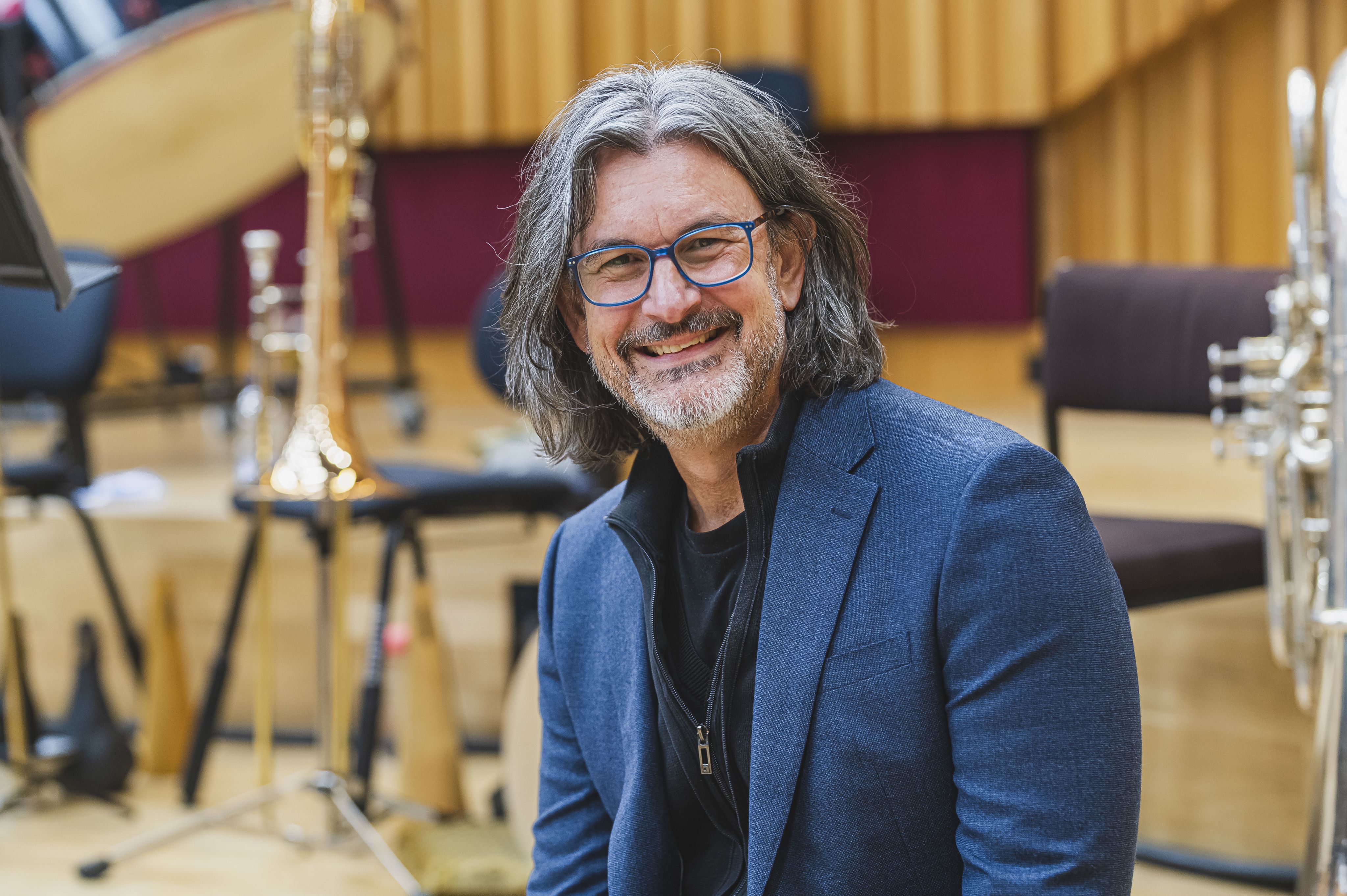
Photo: Kirsten McTernan
Photo: Kirsten McTernan
Welcome to tonight’s concert, in which our Principal Conductor Ryan Bancroft presents a programme that takes us from deep inside Soviet Russia right up to the present day. Gavin Higgins is a figure who needs no introduction, being our much-loved Composer-in-Association. This evening sees the premiere of A Monstrous Little Suite, in which Higgins condenses his acclaimed 2019 opera The Monstrous Child (his first) into an acerbic and playful orchestral work that loses none of its sense of characterisation.
This year we’re also marking 50 years since the death of Shostakovich, and tonight it’s the turn of the Sixth Symphony. This was a work whose highly contrasting movements shocked early audiences – and the authorities, too, who had been led by the composer to expect a grand choral work celebrating Lenin.
Weinberg was a friend and younger colleague of Shostakovich and his 1967 Trumpet Concerto is by turns playful, sombre and virtuosic. These are qualities that Håkan Hardenberger possesses in spades and we’re delighted to welcome this trumpet superstar to the stage this evening.
Enjoy!
Matthew Wood
Head of Artistic Planning and Production
Please respect your fellow audience members and those listening at home. Turn off all mobile phones and electronic devices during the performance. Photography and recording are not permitted.
Gavin Higgins (born 1983)
A Monstrous Little Suite(2024)
world premiere

1 Slither, Plop, Out I Come!
2 Hel Is In Love
3 Hel’s Fate and Ragnarok
4 Bìum, Bìum, Bambaló
5 Stop Fighting! Or I’ll Smash Your Skulls!
This suite is drawn from the music of my operaThe Monstrous Child,based on the book of the same name by Francesca Simon. It tells the story of Hel, the half-goddess, half-corpse daughter of Loki – and Norse goddess of the dead. Teenage girl from the waist up, but putrid and rotting from the waist down, Hel is banished to the underworld by the fearful gods and forced to rule the ungrateful dead. However, along with her monstrous brothers, Fenrir the Wolf and Jormungandr the Snake, she is fated to kill the gods and destroy the world – and even a goddess can’t change her fate …
It’s impossible to squeeze all of the musical themes from the opera into a 20-minute orchestral piece, but I’ve tried to be judicious in my choices. Hopefully I’ve captured the essence of the opera – the humour, the romance, the drama – in this Monstrous Little Suite.
‘Slither, Plop, Out I Come!’ is drawn from Scene 1 in which the giantess – and wife of Loki – Angrboda gives birth to her three monstrous children. ‘Hel Is In Love’ is taken from Scene 5 which sees Hel fantasising about the beautiful god Baldr – the one god who showed her any kindness and who she is now convinced is in love with her. ‘Hel’s Fate and Ragnarok’comes from Scene 6 when Hel finally accepts her fate, the Wolf and Snake break free, and the world is destroyed in Ragnarok. ‘Bìum, Bìum, Bambaló’ is a spiteful lullaby sung by the giantess Angrboda to her monstrous children in Scene 2, and the suite ends with ‘Stop Fighting! Or I’ll Smash Your Skulls!’ – the first musical interlude in the opera from Scene 1 in which the teenage Wolf and Snake get into a scrap!
Programme note © Gavin Higgins
Mieczysław Weinberg (1919–96)
Trumpet Concerto in B flat major, Op. 94(1967)
1 Études
2 Episodes
3 Fanfares
Håkan Hardenberger trumpet
Weinberg composed his Trumpet Concerto in 1967 for the Soviet virtuoso Timofei Dokshitser. All of the motifs and thematic material for both soloist and orchestra are idiomatic to the trumpet, so the piece is not just a concerto that happens to be written for trumpet – it could only exist as a trumpet concerto. The first movement, ‘Études’, begins with brief and rapid scale segments which are imitated by the orchestra. The trumpet then switches to imposing long notes, then to double-tonguing, and so on. The atmosphere is playful, especially when a kind of fairground polka emerges, much in the manner of Weinberg’s mentor and friend, Shostakovich.
In the second movement, ‘Episodes’, the mood is more sombre and earnest. The initial single-note fanfare is supplemented by a theme built from the interval of a perfect fourth (a heroic gesture, as at the beginning of the Marseillaise). We enter a sound world similar to that of Shostakovich’s Fourth Symphony, which had lain unperformed for almost 30 years but finally saw the light of day in the early 1960s. The influence of Mahler was strong in the symphony, and it is likewise present here, particularly when trumpet solo is accompanied by the harp. The atmosphere is intense and uneasy.
The finale, ‘Fanfares’, is puzzling: it begins with a collection of famous trumpet passages, from Mendelssohn, Rimsky-Korsakov, Bizet and Stravinsky. After these teasers the figures from the opening of the first movement return, but instead of the finale getting properly under way, we are offered a virtuosic cadenza in its place. Perhaps, now, the listener thinks, the finale will begin, but there are only fleeting snatches of a waltz in an evanescent orchestration. Some of the earlier quotations flit by, and the movement is over before we are even entirely convinced that it has begun.
The piece won Shostakovich’s admiration, and he called it a ‘symphony-concerto’. The 1960s was a period of great stylistic uncertainty for Soviet composers: some were experimenting with Western avant-garde techniques, while others still wrote in the conventional manner of the Stalin years. Weinberg’s concerto belongs to neither camp, and it showcases the solo instrument, lovingly and wittily, while constructing art from fragments of the past far from their original contexts.
Programme note © Marina Frolova-Walker
INTERVAL: 20 minutes
Dmitry Shostakovich (1906–75)
Symphony No. 6 in B minor, Op. 54(1939)
1 Largo
2 Allegro
3 Presto
Of all the Shostakovich symphonies, the Sixth is perhaps the hardest to grasp, with three very striking movements that do not seem to be connected by any standard ‘symphonic logic’. The first movement, slow, long and static, is full of grief and mourning, using idioms that remind us of the most sorrowful pages in Bach’s Passions. The second is a whirlwind scherzo, sometimes caustic, sometimes benign. The finale has a comic-opera flavour, with nods to Rossini and Prokofiev early on. There are outbursts of vicious laughter and then reminiscences of Shostakovich’s own earlier ballets (long since taken off the stage) topped off with a brash cancan.
This journey ‘from Bach to Offenbach’ was as puzzling as it was displeasing to Party-loyal critics of the time. They noted Shostakovich’s attempt to ‘reform’ himself and write in a civic-minded manner in his monumental and heroic Fifth Symphony. But the Sixth, they said, was a regrettable step backwards towards Shostakovich’s previous focus on his private obsessions. Shostakovich himself had made matters worse by leading his public to expect a grand choral symphony about Lenin. Still, the critics acknowledged the virtuosity of the composition and the dazzling orchestration, which could hardly be rivalled by any other Soviet composer at the time.
Shostakovich’s wild contrasts may have made sense, though, as a representation of the absurd world around him. As a diarist of the period expressed it: ‘Marches and songs on the radio, posters, crowds in the streets … from the outside, this seems like the normal hubbub of life. But every night, there are trains departing for the north and east, carrying prisoners, and the prison cells they have vacated are immediately refilled.’ While the terror of the Great Purge had subsided by 1939, the consequences were still present. Some of Shostakovich’s relatives remained in prison camps. Vsevolod Meyerhold, the great theatre director, who had been an important mentor for Shostakovich, was arrested in June (and secretly executed). Meyerhold’s wife, the celebrated actress Zinaida Raikh, was brutally murdered in their apartment – there was no obituary, and the only information came from contradictory rumours. In August, the Soviet Union signed a pact with Hitler, and state propaganda made a screeching U-turn. Soviet citizens hearing the news in the streets could only shake their heads in bewilderment.
Wittingly or unwittingly, the Sixth registered this shattering of any coherent worldview, in a way that no-one dared express in words.
Programme note © Marina Frolova-Walker
Help Us Improve Our Online Programmes.
Please take this 5-minute survey and let us know what you think of these notes.
Programme Survey
You may also like:
Fireworks of Passion
Thursday 20/3/25, 7.30pm
BBC Hoddinott Hall, Cardiff
Friday 21/3/25, 7.30pm
Brangwyn Hall, Swansea
Grace Williams Penillion
Bruch Violin Concerto No. 1
Rachmaninov Symphony No. 3
Tadaaki Otaka conductor
Eldbjørg Hemsing violin
FIERY | IMPASSIONED | RICH
Quasi-improvisatory melodies weave with rhythmic drive, reminiscent of harp-accompanied folk songs, in Grace William’s Penillion, forming the potent opener to a concert with BBC NOW’s much-loved Conductor Laureate Tadaaki Otaka.
Soaring melody and fiendishly tricky virtuosity combine in Bruch’s passionate First Violin Concerto. From soloistic fireworks to rich orchestral backdrop there’s little wonder this concerto remains a favourite with soloists and audiences alike; to perform we’re delighted to welcome back violin sensation Eldbjørg Hemsing. Rachmaninov’s Third Symphony is similarly passionate, striking climaxes giving way to soulful solos, forceful marches to thunderous celebration, all based on one musical motif skilfully transformed and developed throughout.
Expressions of Folk
Thursday 1/5/25, 7.30pm
BBC Hoddinott Hall, Cardiff
Friday 2/5/25, 7.30pm
Brangwyn Hall, Swansea
Holst Capriccio
Stravinsky Symphonies of Wind Instruments
Sir James MacMillan Where the Lugar meets the Glaisnock world premiere
Vaughan Williams In the Fen Country
Stravinsky Symphony in Three Movements
Sir James MacMillan conductor
David Childs euphonium
IMPRESSIONIST | RESONANT | RESPLENDENT
Snippets of folk-like tunes weave together in Holst’s kaleidoscopic Capriccio. Taking an equally central role in Stravinsky’s Symphonies of Wind Instruments are the Russian folk elements in a piece that explores the original meaning of ‘symphony’ – that of ‘sounding together’ – with short litanies between the different instruments that draw together contrasting episodes at three different but still related speeds.
Welsh euphonium player David Childs steps into the solo spot for the world premiere of Sir James MacMillan’s concerto Where the Lugar meets the Glaisnock. It is the folk music of England that provides the inspiration for Vaughan Williams’s In the Fen Country; this symphonic impression portrays the warmth of nature, juxtaposed with the bleak beauty of the Fens, and is an early work that offers a glimpse of the mature language of Vaughan Williams. We end with Stravinsky, this time with his response to the atrocities of the Second World War, his Symphony in Three Movements. To conduct we’re delighted to welcome Sir James MacMillan.
Biographies
Ryan Bancroftconductor

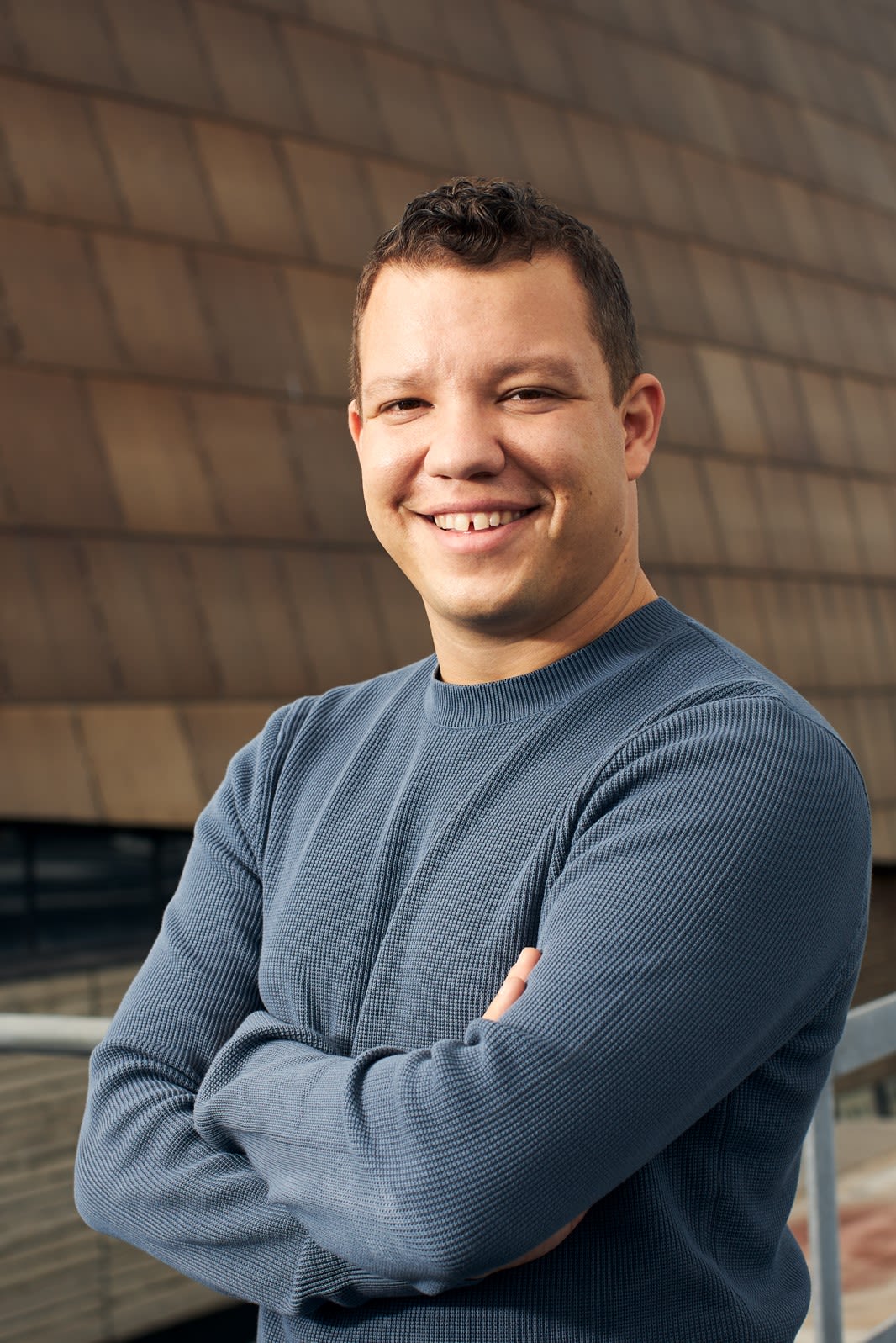
Benjamin Ealovega
Benjamin Ealovega
Ryan Bancroft grew up in Los Angeles and first came to international attention in April 2018, when he won both First Prize and Audience Prize at the prestigious Malko Competition for Young Conductors in Copenhagen. Since September 2021 he has been Principal Conductor of BBC National Orchestra of Wales. Following his first visit to work with the Tapiola Sinfonietta, he was invited to become its Artist-in-Association from the 2021/22 season. In September 2023 he became Chief Conductor of the Royal Stockholm Philharmonic Orchestra.
After beginning his tenure as Chief Conductor in Stockholm with the orchestra’s first performance of Sven-David Sandström’s The High Mass, his second season includes performances of Mahler and Bruckner symphonies, alongside world premieres by Chrichan Larson and Zacharias Wolfe, and collaborations with renowned soloists including Leif Ove Andsnes, Maxim Vengerov and Víkingur Ólafsson.
This season he makes debuts with the Boston and Finnish Radio Symphony orchestras, Deutsches Symphonie-Orchester Berlin at the Berlin Philharmonie and the WDR Symphonieorchester in Cologne.
He has a passion for contemporary music and has performed with Amsterdam’s Nieuw Ensemble, assisted Pierre Boulez in a performance of his Sur incises in Los Angeles, premiered works by Sofia Gubaidulina, John Cage, James Tenney and Anne LeBaron, and has worked closely with improvisers such as Wadada Leo Smith and Charlie Haden.
He studied at the California Institute of the Arts, Royal Conservatoire of Scotland and in the Netherlands.
Håkan Hardenbergertrumpet

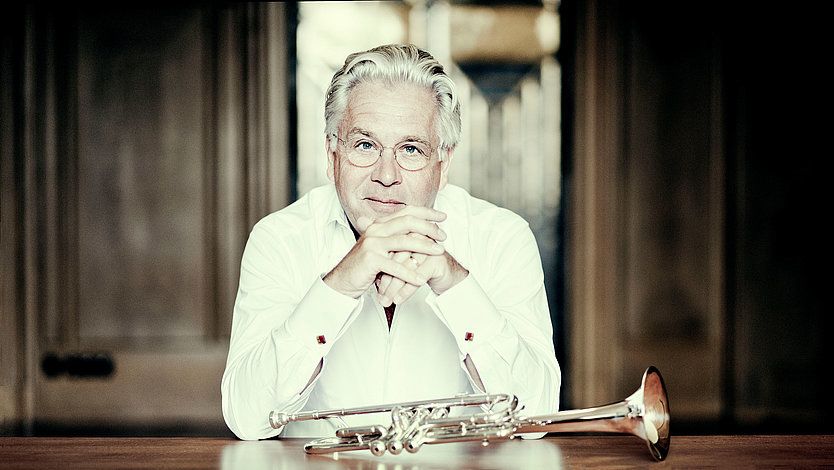
Marco Borggreve
Marco Borggreve
During his extraordinary 40-year career as the world’s most prominent trumpet soloist, Håkan Hardenberger has not only pushed the boundaries of what can be achieved with the instrument, he has also inspired countless composers and fellow musicians to expand their horizons and explore unknown musical territories with him. His quest for excellence and innovation continues to this day.
He performs regularly with the world’s leading ensembles, including the Berlin and Vienna Philharmonic orchestras, Leipzig Gewandhaus Orchestra, Royal Concertgebouw Orchestra and the Bavarian Radio, Boston, London and NHK Symphony orchestras.
Notable engagements this season include the Spanish, Swiss and Japanese premieres of Jörg Widmann’s Towards Paradise and the Swedish premiere of Helen Grime’s trumpet concerto, night-sky-blue, both works commissioned to mark his recent 60th-birthday season; HK Gruber’s Aerial; Rolf Martinsson’s trumpet concerto Bridge; the Haydn Trumpet Concerto and Betsy Jolas’s Onze Lieder with the BBC and Turku Philharmonic orchestras; and the Weinberg Trumpet Concerto here in Wales and with the NDR Elbphilharmonie Orchester.
He collaborates with the world’s most renowned conductors, including Marin Alsop, Ryan Bancroft, Fabien Gabel, Alan Gilbert, Daniel Harding, Susanna Mälkki, Andris Nelsons, Sakari Oramo, Sir Simon Rattle, Dima Slobodeniouk, and John Storgårds.
Many of the works written for him have become cornerstones of the repertoire thanks to his tireless commitment. These include pieces by Birtwistle, Brett Dean, Helen Grime, HK Gruber, Henze, Betsy Jolas, Ligeti, Olga Neuwirth, Takemitsu, Mark-Anthony Turnage, Rolf Wallin and Jörg Widmann.
He performs frequently with pianist Roland Pöntinen and percussionist Colin Currie. With the latter Hardenberger released a recording of duo works by Brett Dean, André Jolivet, and others. The latest addition to his prolific discography features French trumpet concertos by Jolivet, Schmitt and Tomasi, as well as Onze Lieder.
Born in the Swedish city of Malmö, Håkan Hardenberger began studying the trumpet at the age of eight with Bo Nilsson and continued his studies at the Paris Conservatoire with Pierre Thibaud and in Los Angeles with Thomas Stevens. From 2016 to 2018, he was Artistic Director of the Malmö Chamber Music Festival and he is a professor at the Malmö Conservatoire.
BBC National Orchestra of Wales
For over 90 years, the BBC National Orchestra of Wales, the only professional symphony orchestra in Wales, has played an integral part in the cultural landscape of the country, occupying a distinctive role as both a broadcast and national orchestra, and serving as an ambassador of Welsh culture, regularly performing music created in Wales and championing Welsh composers and artists.
Part of BBC Cymru Wales and supported by the Arts Council of Wales, BBC NOW performs a busy schedule of concerts and broadcasts, working with acclaimed conductors and soloists from across the world, including its Principal Conductor, the award-winning Ryan Bancroft.
The orchestra is committed to working in partnership with community groups and charities, taking music out of the concert hall and into settings such as schools and hospitals to enable others to experience and be empowered by music. It undertakes workshops, concerts and side-by-side performances to inspire and encourage the next generation of performers, composers and arts leaders, and welcomes thousands of young people and community members annually through its outreach and education projects.
BBC NOW performs annually at the BBC Proms and biennially at the BBC Cardiff Singer of the World competition, and its concerts can be heard regularly across the BBC – on Radio 3, Radio Wales and Radio Cymru. On screen, music performed by BBC NOW can be heard widely across the BBC and other global channels, including the soundtrack and theme tune for Doctor Who, Planet Earth III, Prehistoric Planet, The Pact and Children in Need.
Based at BBC Hoddinott Hall, Cardiff Bay, BBC NOW utilises a state-of-the-art recording studio with a camera system for livestreams and TV broadcasts to bring BBC NOW’s music to a broader audience across Wales and the world. For more information about BBC NOW please visit bbc.co.uk/now
Patron
HM King Charles III KG KT PC GCB
Principal Conductor
Ryan Bancroft
PrincipalGuest Conductor
Jaime Martín
Conductor Laureate
Tadaaki Otaka CBE
Composer-in-Association
Gavin Higgins
First Violins
Lesley Hatfield leader
Nick Whiting +associate leader
Martin Gwilym-Jones sub-leader
Gwenllian Hâf MacDonald
Terry Porteus
Suzanne Casey
Alejandro Trigo
Anna Cleworth
Kerry Gordon-Smith
Žanete Uškāne
Carmel Barber
Ruth Heney **
Emilie Godden
Juan Gonzalez
Second Violins
Anna Smith *
Kirsty Lovie
Ros Butler
Sheila Smith
Lydia Caines **
Ilze Abola
Roussanka Karatchivieva
Joseph Williams
Beverley Wescott
Vickie Ringguth
Katherine Miller
Michael Topping
Violas
Rebecca Jones *
Alex Thorndike #
Tetsuumi Nagata
Peter Taylor
Catherine Palmer
Lydia Abell
Laura Sinnerton
Lowri Taffinder
Anna Growns
Robert Gibbons
Cellos
Jessica Burroughs ‡
Jessica Feaver
Sandy Bartai
Carolyn Hewitt
Keith Hewitt
Rachel Ford
Alistair Howes
Kathryn Graham
Double Basses
David Stark *
Alexander Jones #
Evangeline Tang
Christopher Wescott
Richard Gibbons
Mike Chaffin
Flutes
Matthew Featherstone *
John Hall †
Lindsey Ellis **
Piccolo
Lindsey Ellis * **
Oboes
Steve Hudson *
Matt Jones
Amy McKean †
Cor anglais
Amy McKean †
Clarinets
Nicholas Carpenter *
Bethany Crouch
Isaac Prince
Lenny Sayers +
E flat Clarinet
Bethany Crouch
Bass Clarinet
Lenny Sayers †+**
Bassoons
Jarosław Augustiniak *
Patrick Bolton
David Buckland
Contrabassoon
David Buckland †
Horns
Tim Thorpe *
Meilyr Hughes
Neil Shewan †
Tom Taffinder
John Davy
Trumpets
Philippe Schartz *
Dean Wright
Corey Morris †
Ben Jarvis
Trombones
Donal Bannister *
Dafydd Thomas †
Bass Trombone
Darren Smith †
Tuba
Daniel Trodden †**
Timpani
Steve Barnard *
Percussion
Phil Girling
Phil Hughes
Andrea Porter
Rhydian Griffiths
Max Ireland
Harp
Elen Hydref Wright
Piano
Catherine Roe Williams
Organ
Gregory Drott
* Section Principal
† Principal
‡ Guest Principal
# Assistant String Principal
The list of players was correct at the time of publication
Director Lisa Tregale
Orchestra Manager Liz Williams
Assistant Orchestra Manager Nick Olsen **
Orchestra Personnel ManagerKevin Myers
Business Coordinator Georgia Dandy **
Orchestra Administrator Eleanor Hall +**
Head of Artistic Planning and ProductionMatthew Wood
Artists and Projects Manager Victoria Massocchi **
Orchestra Librarian Naomi Roberts **
Producer Mike Sims
Broadcast Assistant Emily Preston
Head of Marketing and Audiences Sassy Hicks
Marketing Coordinator Amy Campbell-Nichols +
Digital Producer vacancy
Social Media Coordinator Harriet Baugh
Education Producers Beatrice Carey, Rachel Naylor maternity cover
Audio Supervisors Simon Smith, Andrew Smillie
Production Business Manager Lisa Blofeld
Stage and Technical Manager vacancy
Assistant Stage and Technical Manager Josh Mead +
+ Green Team member
** Diversity & Inclusion Forum