
Pictures of Britain
Thursday 14/11/24, 7.30pm
Aberystwyth Arts Centre
Friday 15/11/24, 7.30pm
Prichard-Jones Hall, Bangor


Grace Williams
Hen Walia10’
Edward Elgar
Sea Pictures23’
INTERVAL: 20 minutes
Ralph Vaughan Williams
Symphony No. 5 39’
Martyn Brabbinsconductor
Beth Taylor mezzo-soprano


The concert in Bangor is being recorded by BBC Radio 3 for future broadcast in Classical Live; it will be available for 30 days after broadcast via BBC Sounds, where you can also find podcasts and music mixes.
Introduction

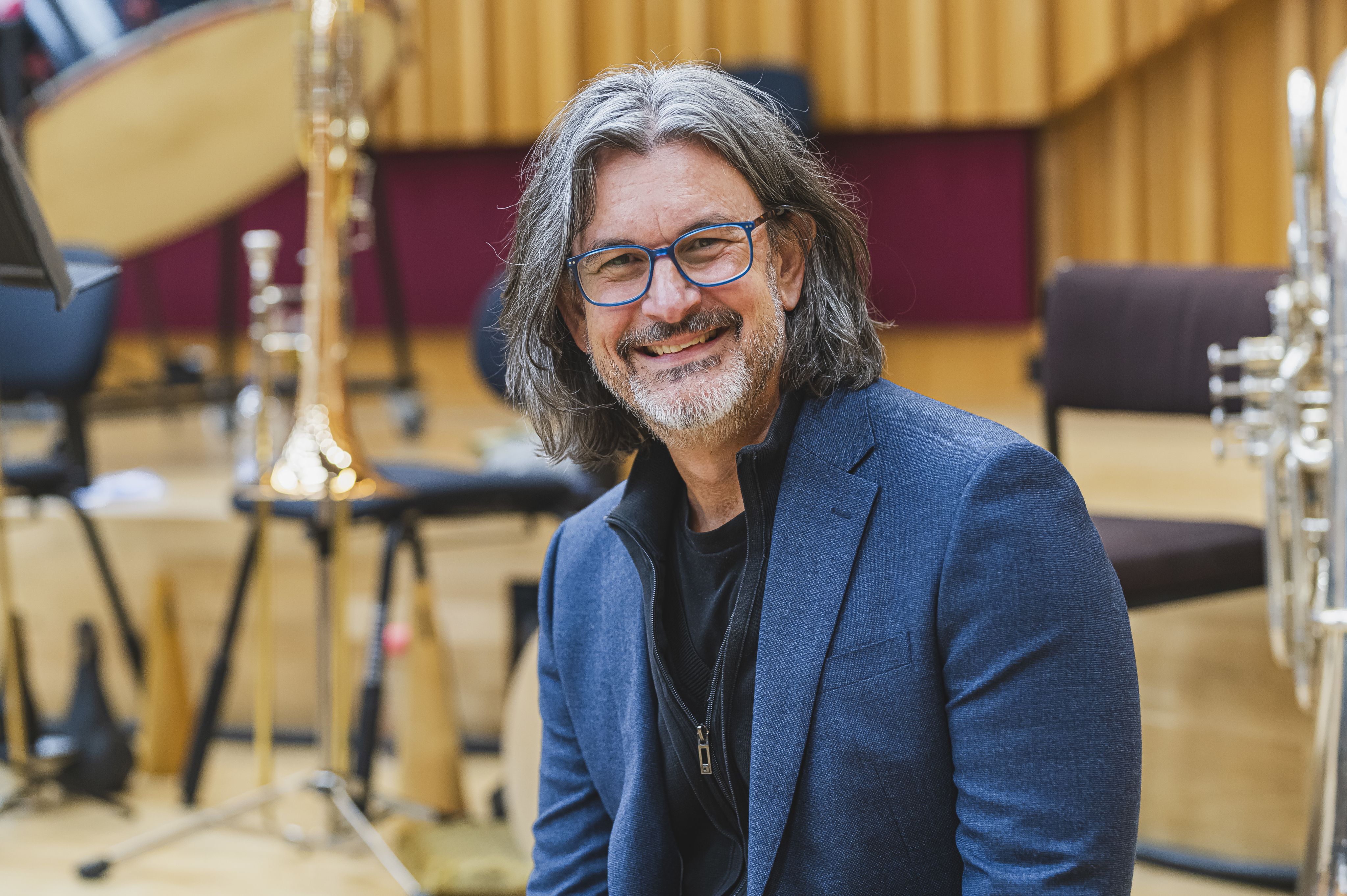
Photo: Kirsten McTernan
Photo: Kirsten McTernan
Welcome to tonight’s concert, which is conducted by a much-loved BBC NOW regular: Martyn Brabbins. Though his repertoire is very wide-ranging, British music has long been particularly close to his heart. We begin here in Wales, with one of the country’s greatest composers – Grace Williams. Her overture Hen Walia is all that remains of a planned opera, and it draws inspiration from Segontium, the Roman fort in Caernarfon.
When Elgar’s Sea Pictures were premiered in 1899 by the great contralto Dame Clara Butt, she performed dressed as a mermaid, no less. This song-cycle, by turns tender and rhapsodic, has become a treasured part of the repertoire for mezzos and contraltos. To sing it tonight is rising star Beth Taylor, who enthralled us in last year's BBC Cardiff Singer of the World competition.
We end with Vaughan Williams’s Fifth Symphony; it was written during the Second World War and uses the composer’s considerable experience in the medium to create a work that is as tautly constructed as the very different Fifth Symphonies of Beethoven and Sibelius. The sense of hard-won serenity at its close is, however, uniquely Vaughan Williams’s own.
Enjoy!
Matthew Wood
Head of Artistic Planning and Production
Please respect your fellow audience members and those listening at home. Turn off all mobile phones and electronic devices during the performance. Photography and recording are not permitted.
Grace Williams(1906–77)
Hen Walia (1930, rev. 1936)

After completing her studies at the Royal College of Music in 1929, Grace Williams was awarded a scholarship to study in Vienna with the prominent Austrian composer, Egon Wellesz. While abroad, she heard a performance of Jaromír Weinberger’s popular Czech folk opera Švanda Dudák (Schwanda the Bagpiper, 1927) and was inspired to write a Welsh folk opera of her own. Although it was never finished, she completed its overture in 1930. She named the overture Hen Walia (Old Walls) after the surviving Roman fort and external walls of Segontium in Caernarfon – her father’s hometown – and the piece draws from traditional Welsh folk tunes, including the lullaby ‘Huna Blentyn’ (Sleep, my child).
Hen Walia was premiered by the London Symphony Orchestra, conducted by E. T. Davies, at the National Eisteddfod in Bangor on 6 August 1931, and the concert was also broadcast live on the BBC’s UK-wide National Programme. Although the overture would come to be overshadowed by the popularity of her Fantasia on Welsh Nursery Tunes (1940), the work was significant in bringing Williams’s name to wide public attention and was the first of her orchestral pieces to receive regular performances and broadcasts by the BBC during the 1930s.
Programme note © Rhiannon Mathias
Edward Elgar(1857–1934)
Sea Pictures, Op. 37 (1897/99)
1 Sea Slumber-Song
2 In Haven (Capri)
3 Sabbath Morning at Sea
4 Where Corals Lie
5 The Swimmer
Beth Taylormezzo-soprano
Nestled between two of Elgar’s greatest public successes – the ‘Enigma’ Variations (1899) and The Dream of Gerontius (1900) – is his only song-cycle, Sea Pictures. It was a response to a commission from the Norfolk and Norwich Festival for a vocal piece. Elgar duly chose five poems, each by a different author, all loosely linked by their references to the sea, and composed a cycle for contralto or mezzo and orchestra, which he himself conducted at the Festival in 1899. Elgar’s soloist at the Norwich premiere was the celebrated contralto Dame Clara Butt (dressed as a mermaid, no less), and the pair gave another sold-out chamber performance in London just days later. ‘The cycle went marvellously well,’ Elgar wrote in a letter to his friend August Jaeger. ‘We were recalled four times – I think – after that I got disgusted and lost count. She sang really well.’
The public loved it, but the critics could not agree, blaming Elgar’s choice of texts for its shortcomings. The poems – by Roden Noel, Alice Elgar (Elgar’s wife), Elizabeth Barrett Browning, Richard Garnett and Adam Lindsay Gordon – appear to have been selected from an anthology of poetry about the sea and, rather than looking to create a cyclical narrative, it seems Elgar simply wanted to conjure a series of evocative snapshots. But the critic for the Manchester Courier complained that the poems, ‘having no special connection with one another, could not in any way tell a story, or even present us with a series of mood pictures evolved one from the other’. The Daily Telegraph criticised the cycle for not
being sufficiently evocative of the sea, wishing for ‘one verse, if no more, eloquent of the ocean when its waves dance in the sunshine’.
And yet Elgar’s score, while not impressionistic in the same way as Debussy’s La mer would prove just a few years later, ripples with watery evocations. The upper strings bob back and forth, the harp glistens in the sunlight, the cellos and basses tug us downwards and surge forwards. In the final song, we hear the crack of the timpani and Elgar unleashes the full might of the orchestra as the sea swells with ‘short, sharp, violent lights’. Contrary to the critics’ condemnation, Sea Pictures could hardly be more aptly named: a series of ‘mood pictures’ of the sea, in all its strength, grandeur, beauty and tranquillity.
Programme note © Jo Kirkbride
Text
1 Sea Slumber-Song
Sea-birds are asleep,
The world forgets to weep,
Sea murmurs her soft slumber-song
On the shadowy sand
Of this elfin land;
‘I, the mother mild,
Hush thee, O my child,
Forget the voices wild!
Isles in elfin light
Dream, the rocks and caves,
Lulled by whispering waves,
Veil their marbles bright,
Foam glimmers faintly white
Upon the shelly sand
Of this elfin land;
Sea-sound, like violins,
To slumber woos and wins,
I murmur my soft slumber-song,
Leave woes, and wails, and sins,
Ocean’s shadowy might
Breathes good-night,
Good-night!’
Roden Noel (1834–94)
2 In Haven (Capri)
Closely let me hold thy hand,
Storms are sweeping sea and land;
Love alone will stand.
Closely cling, for waves beat fast,
Foam-flakes cloud the hurrying blast;
Love alone will last.
Kiss my lips and softly say:
‘Joy, sea-swept, may fade today;
Love alone will stay.’
C. Alice Elgar (1848–1920)
3 Sabbath Morning at Sea
The ship went on with solemn face:
To meet the darkness on the deep,
The solemn ship went onward.
I bowed down weary in the place;
For parting tears and present sleep
Had weighed mine eyelids downward.
The new sight, the new wondrous sight!
The waters around me, turbulent,
The skies, impassive o’er me,
Calm in a moonless, sunless light,
As glorified by even the intent
Of holding the day glory!
Love me, sweet friends, this sabbath day.
The sea sings round me while ye roll
Afar the hymn, unaltered,
And kneel, where once I knelt to pray,
And bless me deeper in your soul
Because your voice has faltered.
And though this sabbath comes to me
Without the stolèd minister,
And chanting congregation,
God’s Spirit shall give comfort. He
Who brooded soft on waters drear,
Creator on creation.
He shall assist me to look higher,
Where keep the saints, with harp and song,
An endless sabbath morning,
And, on that sea commixed with fire,
Oft drop their eyelids raised too long
To the full Godhead’s burning!
From a poem by Elizabeth Barrett Browning (1806–61)
4 Where Corals Lie
The deeps have music soft and low
When winds awake the airy spry,
It lures me, lures me on to go
And see the land where corals lie.
By mount and mead, by lawn and rill,
When night is deep, and moon is high,
That music seeks and finds me still,
And tells me where the corals lie.
Yes, press my eyelids close, ’tis well;
But far the rapid fancies fly
To rolling worlds of wave and shell,
And all the lands where corals lie.
Thy lips are like a sunset glow,
Thy smile is like a morning sky,
Yet leave me, leave me, let me go
And see the land where corals lie.
Richard Garnett (1835–1906)
5 The Swimmer
With short, sharp, violent lights made vivid,
To southward far as the sight can roam,
Only the swirl of the surges livid,
The seas that climb and the surfs that comb.
Only the crag and the cliff to nor’ward,
The rocks receding, and reefs flung forward,
Waifs wreck’d seawards and wasted shoreward,
On shallows sheeted with flaming foam.
A grim, grey coast and a seaboard ghastly,
And shores trod seldom by feet of men –
Where the battered hull and the broken mast lie,
They have lain embedded these long years ten.
Love! When we wandered here together,
Hand in hand through the sparkling weather,
From the heights and hollows of fern and heather,
God surely loved us a little then.
The skies were fairer, the shores were firmer –
The blue sea over the bright sand rolled;
Babble and prattle, and ripple and murmur,
Sheen of silver and glamour of gold.
So, girt with tempest and winged with thunder
And clad with lightning and shod with sleet,
And strong winds treading the swift waves under
The flying rollers with frothy feet.
One gleam like a bloodshot sword-blade swims on
The sky-line, staining the green gulf crimson,
A death-stroke fiercely dealt by a dim sun
That strikes through his stormy winding sheet.
O, brave white horses! You gather and gallop,
The storm sprite loosens the gusty reins;
Now the stoutest ship were the frailest shallop
In your hollow backs, on your high-arched manes.
I would ride as never a man has ridden
In your sleepy, swirling surges hidden;
To gulfs foreshadowed through strifes forbidden,
Where no light wearies and no love wanes.
From a poem by Adam Lindsay Gordon (1833–70)
INTERVAL: 20 minutes
Ralph Vaughan Williams(1872–1958)
Symphony No. 5 in D major(1938–43, rev. 1951)
1 Preludio: Moderato
2 Scherzo: Presto misterioso
3 Romanza: Lento
4 Passacaglia: Moderato
The premiere of Vaughan Williams’s Fifth Symphony, at the 1943 BBC Proms, came as a surprise for many. After the abrasive Fourth Symphony (1931–4) and the sombre choral work Donanobis pacem (1936) there was some speculation as to whether Vaughan Williams had left the contemplative, folk-inflected language of the ‘Tallis’ Fantasia and The Lark Ascending behind him. This new Vaughan Williams seemed to be less the nature visionary, creator of musical landscapes in the spirit of Constable, Turner and Samuel Palmer, and more the kind of artist who held a mirror up to increasingly troubled times. What the Fifth Symphony embodied, however, was not so much a return to the old ways as an enrichment and development of them. The beautifully evocative passages are there, but they acquire extra power through the way the composer expertly places them within a subtle and cogently worked-out symphonic argument; the experience of concentrating his thoughts in the Fourth Symphony had had a lasting, beneficial effect.
Almost the first thing we hear are soft horn calls; but, underneath, cellos and basses add a gently clashing tension. This ambiguity is worked through in a variety of ways and only finds its full resolution in the symphony’s serene ending.
A flowing, ghostly Scherzo follows, scored with great delicacy in its outer sections – though brass and timpani manage to suggest something more heavy-footed in the central Trio section. At the end the muted opening string figures disappear deliciously into a single pianissimo timpani stroke, akin to a candle being snuffed out.
Then comes the Romanza, the heart of the symphony. Some of the ideas of this movement stem from Vaughan Williams’s major operatic project, The Pilgrim’s Progress (composed between 1925 and 1952). Vaughan Williams was no conventional believer but he turned repeatedly to religious themes in his music. Clearly he found some kind of transcendent meaning in John Bunyan’s famous tale of the Christian ‘Pilgrim’ and his spiritual journey, and the composer distils its essence movingly in this movement – offering it, perhaps, as a word of comfort and encouragement to a country then in the midst of war.
The finale is described as a ‘passacaglia’ – a movement built up over a constantly repeated theme, first presented here in the cellos. This eventually reaches a grand climax at which the symphony’s opening horn calls return, played by full orchestra in great waves of sound. As in the huge visionary climax in the first movement, the splendour fades, but this time it is followed by radiant, tranquil music led by strings – reminiscent, perhaps, of a choir singing an Elizabethan anthem in an English cathedral. From here on there is no more ambiguity. The serene final cadence comes as near to perfect peace as can be found in any 20th-century symphony.
Programme note © Stephen Johnson
Help Us Improve Our Online Programmes.
Please take this 5-minute survey and let us know what you think of these notes.
Programme Survey
You may also like:
Carols for Christmas – Wrexham
Sunday 22/12/24, 3.00pm
William Aston Hall, Wrexham
Adrian Partington conductor
NEW Voices
Massed Children’s Choir
JOYFUL | HEARTWARMING | FESTIVE
Christmas Carols in cosy jumpers, children joyfully singing and uplifting brass and percussion. What more could you need to get you in the Christmas spirit?
Join BBC National Chorus of Wales’s artistic director Adrian Partington, alongside a massed choir from across North Wales for this glittering, annual Christmas festivity – the perfect Sunday afternoon treat for all the family.
Shostakovich 9 with Christoph König
Thursday 13/3/25, 7.30pm
Aberystwyth Arts Centre
Friday 14/3/25, 7.30pm
Prichard-Jones Hall, Bangor
Ravel Le Tombeau de Couperin
Anna Clyne Glasslands
Farrenc Overture No. 2
Shostakovich Symphony No. 9
Christoph König conductor
Jess Gillam saxophone
PLAYFUL | CHARMING | EPIC
The year 2025 marks the 50th anniversary of Shostakovich’s death, so, in celebration of his life, we take his firecracker Ninth Symphony on the road to Aberystwyth and Bangor. This symphony, though small in scale, came as a surprise to everyone at its premiere, with its touches of slapstick, jaunty themes and spirited, dance-like feel.
Saxophone sensation Jess Gillam joins us for Anna Clyne’s Glasslands, conjuring an imaginary world governed by a banshee. Exploring a very different world is Louise Farrenc’s Second Overture; she was regarded as one of the foremost female musicians of her time – and no wonder, as this piece displays a dark emotional character with broad and skilfully woven themes and agitated rhythms, set alongside more gentle elements. But first, Ravel’s Le Tombeau de Couperin – a homage not only to the composer François Couperin, but more generally to French music of the 18thcentury. Crisp orchestration and incisive rhythms bring a work originally written for piano glisteningly to life.
Biographies
Martyn Brabbinsconductor

Benjamin Ealovega
Benjamin Ealovega
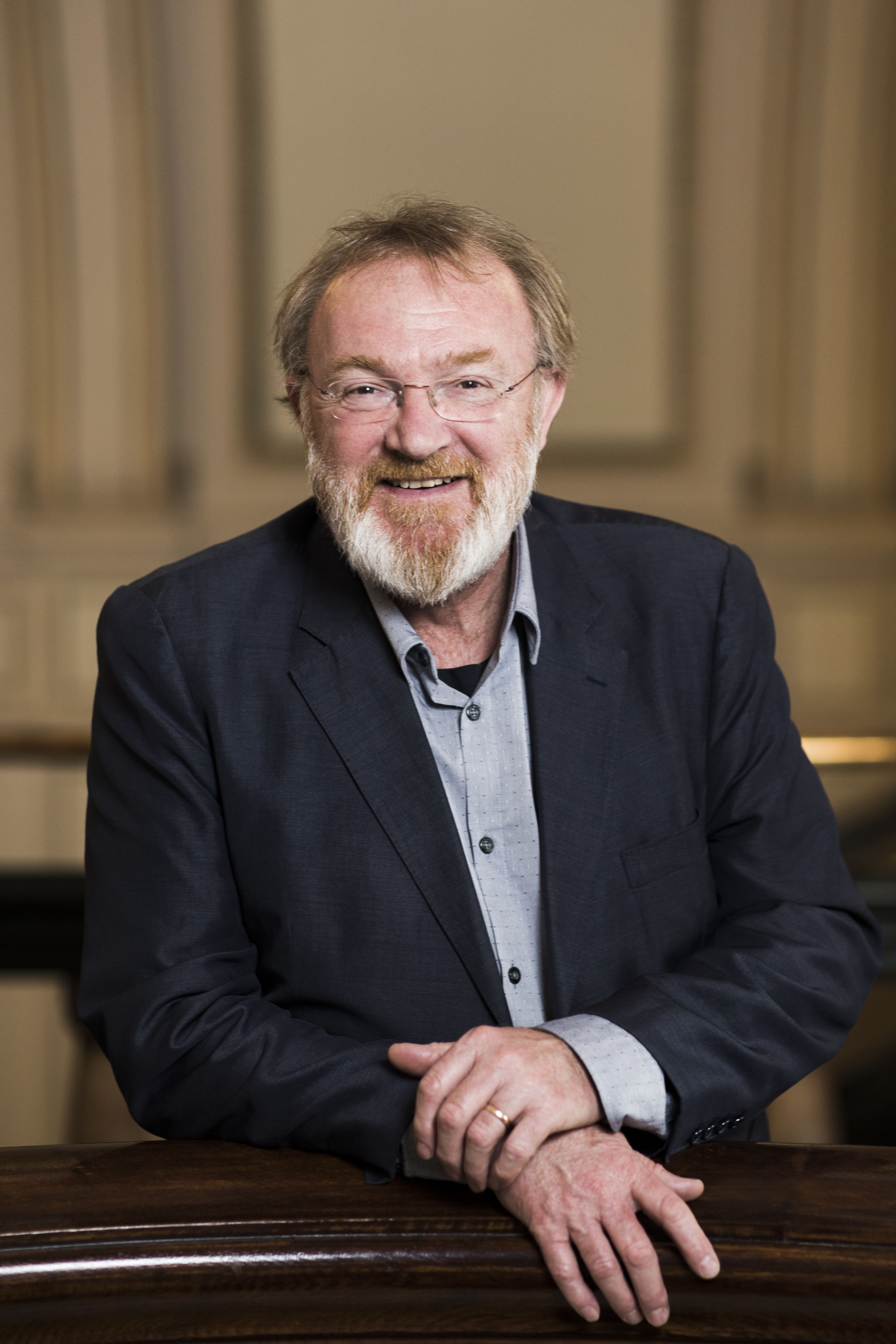
Martyn Brabbins is former Music Director of English National Opera. An inspirational force in British music, he has had a busy opera career since his early days at the Kirov and more recently at La Scala, the Bayerische Staatsoper, and regularly in Lyon, Amsterdam, Frankfurt and Antwerp.
He appears as a guest conductor with top international orchestras, including the Royal Concertgebouw, San Francisco and Tokyo Metropolitan Symphony orchestras and Deutsches Symphonie-Orchester Berlin, as well as the Philharmonia, BBC Symphony Orchestra and most of the other leading UK orchestras. He is a popular figure at the BBC Proms, which, in 2019, commissioned 14 living composers to write a 60th-birthday tribute to him. Known for his advocacy of British composers, he has conducted hundreds of world premieres across the globe. He has recorded nearly 150 CDs to date, including prize-winning discs of operas by Korngold, Birtwistle and Harvey. Last year he received the RPS Conductor Award for his ‘colossal’ contribution to UK musical life.
He was Associate Principal Conductor of the BBC Scottish Symphony Orchestra (1994–2005), Principal Guest Conductor of the Royal Flemish Philharmonic (2009–15), Chief Conductor of the Nagoya Philharmonic (2012–16) and Artistic Director of the Cheltenham International Festival of Music (2005–7). He is Prince Consort Professor of Conducting at the Royal College of Music, Visiting Professor at the Royal Scottish Conservatoire and Artistic Advisor to the Huddersfield Choral Society; he has for many years supported professional, student and amateur music-making at the highest level in the UK.
Beth Taylormezzo-soprano

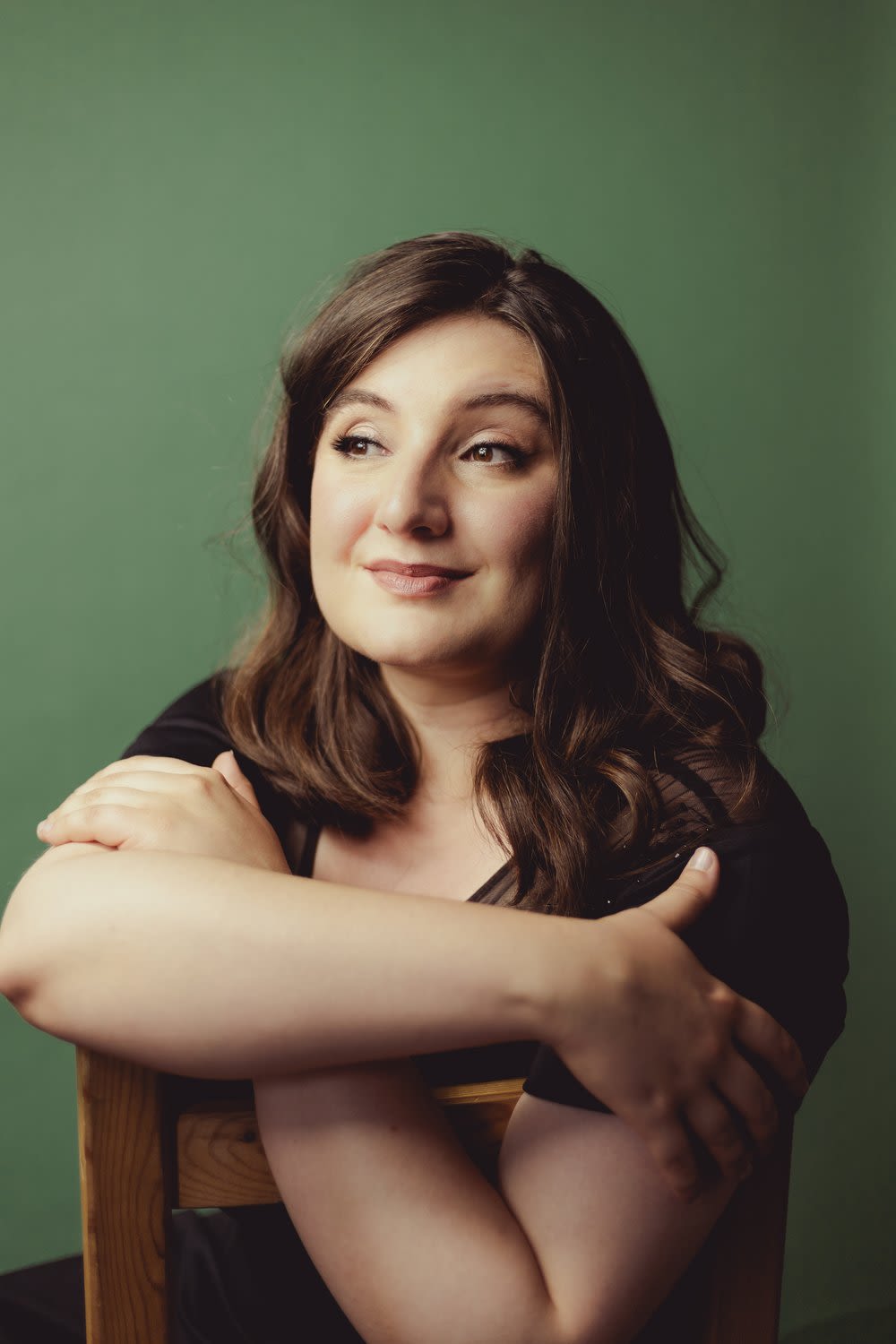
Beth Taylor is one of today’s rising young mezzo-sopranos.
This season she makes her debut in the title-role of La Cenerentola at the Opéra de Nancy, with subsequent performances in Luxembourg, Caen and Reims. She also participates in concert performances of Vivaldi’s Arsilda at the Amsterdam Concertgebouw and Auditorio Nacional Madrid and Handel’s Giulio Cesare with The English Concert at Carnegie Hall, Barbican Hall and in San Francisco and Newcastle.
In concert this season she sings in Beethoven’s Symphony No. 9 with the Berlin Philharmonic Orchestra at the Baden-Baden Easter Festival; Haydn’s Harmoniemesse at the Paris Philharmonie and Berlin Konzerthaus; Mahler’s Symphony No. 3 with the Royal Stockholm Philharmonic Orchestra and Das Lied von der Erde with the Paris Chamber Orchestra; Alma Mahler’s Fünf Lieder with the Montreal Symphony Orchestra, marking her Canadian debut; Requiems by Michael Haydn and Mozart with the Handel and Haydn Society for her US debut; Tippett’s A Child of Our Time at Glyndebourne; and Falla’s El amor brujo with the Tonkünstler Orchestra.
Recent performances on the opera stage have included Cornelia (Giulio Cesare) and Bradamante (Alcina) at Glyndebourne; Arsace (Semiramide), La Cieca (La Gioconda), Erda (Das Rheingold), First Norn (Götterdämmerung) and Schwertleite (Die Walküre) for Deutsche Oper Berlin; Giuliano Gordio (Eliogabalo) at Zurich Opera House; Falliero (Bianca e Falliero) and Dardano (Amadigi) at Oper Frankfurt; Bradamante at Nancy Opera House and staged versions of Mendelssohn’s Elijah at Opéra de Lyon and Bach’s St Matthew Passion at Theater Basel.
She is also in demand as a recitalist, having performed with Malcolm Martineau at the Buxton Festival and with Hamish Brown at the Schubertíada in Vilabertran, among others.
Beth Taylor was a finalist in the 2023 BBC Cardiff Singer of the World competition, winner of the 2022 Elizabeth Connell Award, third prizewinner of the 2019 Wigmore Hall Competition and winner of the 2018 Gianni Bergamo Classical Music Awards.
She is a graduate of the Royal Conservatoire of Scotland and the Open University. She studied with Jennifer Larmore and Iain Paton and participated in masterclasses with Dame Sarah Connolly, Susan Graham, Sir Thomas Allen, Sophie Daneman and Dame Emma Kirkby.
BBC National Orchestra of Wales
For over 90 years, the BBC National Orchestra of Wales, the only professional symphony orchestra in Wales, has played an integral part in the cultural landscape of the country, occupying a distinctive role as both a broadcast and national orchestra, and serving as an ambassador of Welsh culture, regularly performing music created in Wales and championing Welsh composers and artists.
Part of BBC Cymru Wales and supported by the Arts Council of Wales, BBC NOW performs a busy schedule of concerts and broadcasts, working with acclaimed conductors and soloists from across the world, including its Principal Conductor, the award-winning Ryan Bancroft.
The orchestra is committed to working in partnership with community groups and charities, taking music out of the concert hall and into settings such as schools and hospitals to enable others to experience and be empowered by music. It undertakes workshops, concerts and side-by-side performances to inspire and encourage the next generation of performers, composers and arts leaders, and welcomes thousands of young people and community members annually through its outreach and education projects.
BBC NOW performs annually at the BBC Proms and biennially at the BBC Cardiff Singer of the World competition, and its concerts can be heard regularly across the BBC – on Radio 3, Radio Wales and Radio Cymru. On screen, music performed by BBC NOW can be heard widely across the BBC and other global channels, including the soundtrack and theme tune for Doctor Who, Planet Earth III, Prehistoric Planet, The Pact and Children in Need.
Based at BBC Hoddinott Hall, Cardiff Bay, BBC NOW utilises a state-of-the-art recording studio with a camera system for livestreams and TV broadcasts to bring BBC NOW’s music to a broader audience across Wales and the world. For more information about BBC NOW please visit bbc.co.uk/now
Patron
HM King Charles III KG KT PC GCB
Principal Conductor
Ryan Bancroft
PrincipalGuest Conductor
Jaime Martín
Conductor Laureate
Tadaaki Otaka CBE
Composer-in-Association
Gavin Higgins
First Violins
Lesley Hatfield leader
Nick Whiting associate leader
Martin Gilyn-Jones sub-leader
Gwenllian Hâf MacDonald
Terry Porteus
Suzanne Casey
Carmel Barber
Emilie Godden
Anna Cleworth
Juan Gonzalez
Ruth Heney
Žanete Uškāne
Alejandro Trigo
Second Violins
Anna Smith *
Dmitry Khakhamov
Ros Butler
Sheila Smith
Vickie Ringguth
Joseph Williams
Michael Topping
Katherine Miller
Beverley Wescott
Roussanka Karatchivieva
Lydia Caines
Violas
Rebecca Jones *
Tetsuumi Nagata
Peter Taylor
Anna Growns
Catherine Palmer
Robert Gibbons
Lydia Abell
Lowri Taffinder
Cellos
Nina Kiva
Jessica Feaver
Sandy Bartai
Alistair Howes
Carolyn Hewitt
Rachel Ford
Double Basses
Alexander Jones #
Christopher Wescott
Richard Gibbons
Ketan Curtis
Flutes
John Hall †
Lindsey Ellis
Piccolo
Lindsey Ellis †
Oboes
Steve Hudson *
Amy McKean †
Cor anglais
Amy McKean
Clarinets
Nicholas Carpenter *
Lenny Sayers
Bassoons
Jarosław Augustiniak *
Patrick Bolton
David Buckland
Contrabassoon
David Buckland †
Horns
Neil Shewan †
Meilyr Hughes
John Davy
Flora Bain
James Chesney
Trumpets
Corey Morris †
Robert Samuel
Trombones
Donal Bannister *
Dafydd Thomas
Bass Trombone
Darren Smith †
Tuba
Daniel Trodden †
Timpani
Steve Barnard *
Percussion
Phil Hughes
Rhydian Griffiths
Harp
Ceri Wynne Jones
* Section Principal
† Principal
‡ Guest Principal
# Assistant String Principal
The list of players was correct at the time of publication
Director Lisa Tregale
Orchestra Manager Liz Williams
Assistant Orchestra Manager Nick Olsen **
Orchestra Personnel ManagerKevin Myers
Business Coordinator Georgia Dandy
Orchestra Administrator Eleanor Hall +
Head of Artistic Planning and ProductionMatthew Wood
Artists and Projects Manager Victoria Massocchi **
Orchestra Librarian Naomi Roberts
Producer Mike Sims
Broadcast Assistantvacancy
Head of Marketing and Audiences Sassy Hicks
Marketing Coordinator Amy Campbell-Nichols +
Digital Producer Yusef Bastawy **
Social Media Coordinator Harriet Baugh
Education Producers Beatrice Carey, Rachel Naylor maternity cover
Audio Supervisors Simon Smith, Andrew Smillie
Production Business Manager Lisa Blofeld
Stage and Technical Manager Steven Brown +
Assistant Stage and Technical Manager Josh Mead +
+ Green Team member
** Diversity & Inclusion Forum