
90th-Birthday Celebration for
John Williams
Wednesday 4 May & Thursday 5 May 2022, 7.30pm


John Williams
Star Wars – Main Title 6’
Lost in Space – Theme 3’
Jaws – The Shark Theme 3’
Jurassic Park – Theme 6’
Lincoln – The People’s House 5’
Elegy for Cello and Orchestra 7’
The Cowboys – Overture 10’
INTERVAL: 20 minutes
Harry Potter and the Sorcerer’s Stone – Hedwig’s Theme 5’
The BFG – A Child’s Tale (Suite) 8’
Memoirs of a Geisha – Sayuri’s Theme 4’
Schindler’s List – Theme 4’
Raiders of the Lost Ark – Raiders March 5’
Close Encounters of the Third Kind – Excerpts 7’
E.T.: The Extra-Terrestrial – Adventures on Earth 10’
Lesley Hatfieldviolin
Alice Nearycello
Philippe Schartztrumpet
Pete Harrison conductor
John Williams (born 1932)
A Life in Film

Beethoven’s greatest hit is four notes long: dah-dah-dah daaaaaaaah is the famously commanding opening phrase of his Fifth Symphony. John Williams surpassed that. He catapulted himself to fame on the back of just two notes, the low daaaaaaaah-dah motif from E to F on the tuba that forms his brooding, thrillingly malevolent theme to Jaws.
Steven Spielberg’s 1975 film wasn’t simply a blockbuster, it invented the whole notion of the summer blockbuster – a thrill-ride adventure designed with mass appeal opening widely in the summer months with advertising/promotional costs in excess of its production budget. And Williams’s instantly recognisable score was a huge part of its worldwide success, one that saw it break the box-office record, a position it held for two years until that crown was stolen by Star Wars, with a score by one John Williams.
Jaws deservedly won him an Academy Award but it wasn’t even his first win. That had come two years earlier. After having worked as a pianist in Hollywood (he’s featured at the piano in the great Cary Grant/Audrey Hepburn comedy-thriller Charade), he started composing predominantly for television drama and entertainment shows ranging from the 1960s science fiction series Lost in Space to entertainment legend Bob Hope. His movie debut came in 1958 with Daddy-O, a now justly neglected ‘comedy’ memorable solely for his input and the fact that he was billed as Johnny Williams, a moniker attached to such titles as How to Steal a Million, the 1966 Audrey Hepburn/Peter O’Toole crime caper set in Paris for which Williams created a Hollywood-meets-Poulenc sound.
But by 1971, when he won the first of his five Oscars for his big-screen adaptation of the Broadway musical Fiddler on the Roof, he was John, the name he would henceforth use for over 100 films. He has written and meticulously orchestrated lavish music for every genre, from legendary disaster movies such as The Poseidon Adventure (1973), Earthquake (1974) and The Towering Inferno (1974) through Hitchcock’s quirky final film Family Plot (1976), the period epic Memoirs of a Geisha (2005) to children’s classics including The BFG (2016) and, of course, the Harry Potter films.
Unlike many a film composer, his work has been rightly loved and lauded. He has collected 72 Grammy nominations (25 wins), 25 Golden Globe nominations (four wins) and has received more Oscar nominations – an eye-widening 52 – than anyone else bar Walt Disney. Indeed, his longevity at the peak of the industry is made plain by the fact that he is the only person in the history of the Academy Awards to have received nominations in seven consecutive decades.
Two partnerships have been central to his working life. When going out on a limb to make a spacecraft adventure series, producer/director George Lucas hired him because he wanted a composer who could hark back to the grandeur of Korngold, the Austrian Jewish émigré composer who invented Hollywood’s post-Romantic sound. Working with a guide track of Korngold’s resplendent film score for King’s Row, Williams came up with a score that is genuinely, to use the overworked term, iconic: the triumphantly brassy and lush score for Star Wars. The rest is history.
His other partnership is, of course, with Spielberg. Beginning with The Sugarland Express, the director’s second feature, the two have worked together for decades on such beloved titles as E.T., Schindler’s List, Catch Me If You Can (one of his finest scores), the Jurassic Park titles, and five Raiders of the Lost Ark adventures.
The fifth, scheduled for release in 2023, marks Williams’s retirement. He’s now 90 and a film, he told The New York Times in February, takes up to six months of his life and he wants more time elsewhere. Having spent lockdown on a rigorous schedule of mornings split between looking at film and improvising at his piano (a Steinway grand); a turkey sandwich and Perrier for lunch; and afternoons devoted to revising compositional work, he’s keen to write more for himself and other musicians, including Yo-Yo Ma. There may be little more from him on screen but concert halls await, among other things, new concerto projects.
Back in 2016, Williams was presented with the American Film Institute Lifetime Achievement Award. Honouring him, Spielberg noted that at this point they had made 27 films together across 43 years. ‘Without John Williams,’ he said, ‘bikes don’t really fly, nor do brooms in Quidditch matches, nor do men in red capes. There is no Force, dinosaurs do not walk the earth, we do not wonder, we do not weep, we do not believe. John, you breathe belief into every film we have made.’
Programme note © David Benedict
Further Listening: The Berlin Concert Berlin Philharmonic Orchestra/John Williams (DG 62938623)
Further Reading: The Film Music of John Williams: Reviving Hollywood’s Classical Style Emilio Audissino (University of Wisconsin Press)
Biographies
Pete Harrison conductor

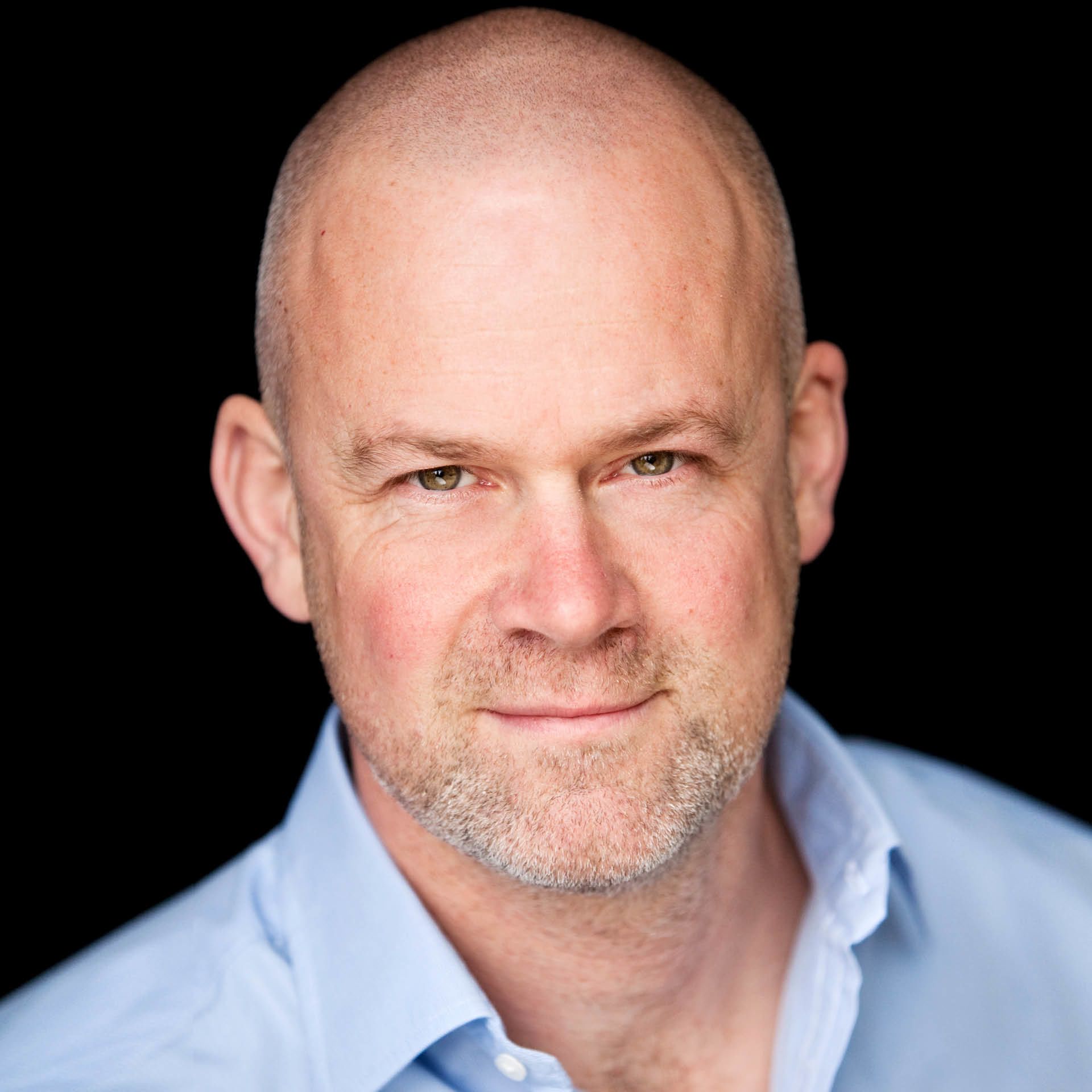
Pete Harrison studied at the Royal College of Music before beginning his conducting career in London’s West End with Crazy For You (Prince Edward Theatre), Disney’s Beauty and the Beast (Dominion Theatre) and Lautrec (Theatre Royal, Plymouth and Shaftesbury Theatre).
He is a regular guest conductor and presenter with many orchestras, including the Royal Philharmonic Orchestra, Philharmonia, Bournemouth and New Russian State Symphony orchestras, Ulster Orchestra, and BBC National Orchestra of Wales. He also frequently presents Raymond Gubbay concerts.
His work with the BSO includes its Last Night of the Christmas Proms concerts, regular series of film-music concerts and events such as Symphonic Queen, Chilled Out Classics, Abba Spectacular, Disco Symphonic Spectacular, Symphonic 80s and Symphonic Pink Floyd. He is also Musical Director of BSO Voices.
He has recently been appointed Music Director of the Brent Youth Concert Pops Orchestra, partnered with the Royal Philharmonic Orchestra.
He has also worked with the National Youth Wind Orchestra of Great Britain, National Youth Wind Orchestra of Wales, Kent County Youth Orchestra, Berkshire Youth Symphony Orchestra and the orchestras of Wells Cathedral School.
Lesley Hatfield violin

Photo: James Fear
Photo: James Fear
Lesley Hatfield leads a varied musical life, combining her role as Leader of BBC NOW with chamber music, solo playing and teaching. She performs music from all eras and has worked closely with many contemporary composers.
After graduating from Clare College, Cambridge, she studied at the Royal Academy of Music. During her early career, as a chamber musician and member of the Chamber Orchestra of Europe, she worked with Sándor Végh and Nikolaus Harnoncourt, both of whom had a lasting influence on her musical approach. She was co-Leader of the Northern Sinfonia and Leader of the Ulster Orchestra before taking up her current position.
She is a member of the Gaudier Ensemble and is regularly invited to participate as a guest in a wide range of ensembles and chamber music festivals. She has been a regular performer at the International Musicians Seminar Open Chamber Music at Prussia Cove since 1986.
She is much in demand as a teacher and is actively involved as Patron of ‘Making Music, Changing Lives’, a Cardiff-based charity which seeks to transform the lives of children through music and the opportunity to learn instruments.
She is a Fellow of the Royal Academy of Music and the Royal Welsh College of Music & Drama.
Alice Neary cello

Photo: James Fear
Photo: James Fear
Alice Neary enjoys a varied performing career as a chamber musician, soloist and principal cellist of BBC NOW. Recent concerto performances include works by Honegger and Cheryl Frances-Hoade with BBC NOW.
She was a member of the Gould Piano Trio from 2001 to 2018; highlights include the complete piano trios of Beethoven, Schubert and Dvořák at Wigmore Hall, commissioning new works from Sir James MacMillan and Mark Simpson, regular tours of the USA and over 25 CD releases.
She has appeared as guest cellist with numerous groups, including the Nash Ensemble, Ensemble 360 and the Endellion, Elias, Bingham and Heath quartets. She collaborates with pianists Viv McLean, Benjamin Frith, Robin Green and Daniel Tong. She is also a regular visitor to the International Musicians Seminar at Prussia Cove. In January she took part in a USA tour with Marlboro Music Festival musicians. Plans include appearances at the Marlboro, North Norfolk, North York Moors and Hellens festivals and the IMS 50th-anniversary concert at Wigmore Hall.
She studied with Ralph Kirshbaum at the RNCM and, as a Fulbright scholar, with Timothy Eddy at Stonybrook, USA. She is a tutor at the Royal Welsh College of Music & Drama, where she was awarded a Fellowship in 2015. She plays a cello by Alessandro Gagliano of 1710.
Philippe Schartz trumpet

Philippe Schartz was born in Luxembourg and developed an early interest in the trumpet through listening to his father play in the village wind band. His passion was cultivated by his teachers, who have included Dino Tomba and David Mason, and he later studied at the Eastman School of Music in Rochester, New York. A winner of many prizes and awards, he has developed a highly successful career as an orchestral and a chamber musician, as well as a soloist, performing all over Europe, the USA and Japan.
As a member and Principal Trumpet of the Gustav Mahler Youth Orchestra, founding Principal Trumpet of the Mahler Chamber Orchestra until the summer of 2002, and, Section Principal Trumpet of BBC National Orchestra of Wales since 1998, he has performed to much critical acclaim under conductors such as Claudio Abbado, Pierre Boulez and Bernard Haitink. In 2009 he was also appointed Principal Trumpet of the Solistes Européens, Luxembourg.
Philippe Schartz has broadcast on the BBC and numerous European radio and television networks, in addition to issuing 10 solo CDs. He is a member of the teaching staff at the Royal Welsh College of Music & Drama and has given many masterclasses and educational workshops worldwide. He made his BBC Proms debut as a soloist in 2011, and is a Europe and UK Yamaha Trumpet artist.
BBC National Orchestra of Wales
For over 90 years, BBC National Orchestra of Wales has played an integral part in the cultural landscape of Wales, occupying a distinctive role as both broadcast and national symphony orchestra. Part of BBC Wales and supported by the Arts Council of Wales, it performs a busy schedule of live concerts throughout Wales, the rest of the UK and the world. The orchestra is an ambassador of Welsh music and champions contemporary composers and musicians.
The orchestra performs annually at the BBC Proms and biennially at the BBC Cardiff Singer of the World competition, and its concerts can be heard regularly across the BBC: on Radio 3, Radio Wales and Radio Cymru.
BBC NOW works closely with schools and music organisations throughout Wales and regularly undertakes workshops, side-by-side performances and young composer initiatives to inspire and encourage the next generation of performers, composers and arts leaders.
During the recent lockdowns, BBC NOW has continued to record and film behind closed doors at BBC Hoddinott Hall and has produced videos, soundtracks and weekly digital concerts that have been seen by 14 million people globally, including an extremely popular video of the Doctor Who soundtrack. Plans for the orchestra include live-streamed concerts and events, tours to different communities throughout Wales and education and community development schemes to include everyone in music-making. To find out more visit bbc.co.uk/bbcnow
Patron
HRH The Prince of Wales KG KT PC GCB
Principal Conductor
Ryan Bancroft
Conductor Laureate
Tadaaki Otaka CBE
Composer-in-Association
Gavin Higgins
Composer Affiliate
Sarah Lianne Lewis
First Violins
Lesley Hatfield Leader
Nick Whiting Associate Leader
Martin Gwilym-Jones †
Gwenllian Hâf MacDonald
Suzanne Casey
Carmel Barber
Kerry Gordon-Smith
Chu-yu Joe Yang
Anna Cleworth
Robert Bird
Richard Newington
Gary George-Veale
Zhivko Georgiev
Cathy Fox
Second Violins
Anna Smith *
Ilhem Ben Khalfa
Sheila Smith
Katherine Miller
Robyn Bell
Beverley Wescott **
Michael Topping
Sellena Leony
Jane Sinclair
Joseph Williams
Violas
Alex Thorndike
Peter Taylor
James Drummond
Ania Leadbeater
Robert Gibbons
Catherine Palmer
Laura Sinnerton
Dáire Roberts
Sharada Mack
Cellos
Alice Neary *
Keith Hewitt #
Raphael Lang
Sandy Bartai
Carolyn Hewitt
Alistair Howes
Kathryn Graham
Sarah Berger
Double Basses
Christopher Wescott
Richard Gibbons
David Daly
Julian Walters
Elen Roberts
Ayse Osman
Flutes
Matthew Featherstone *
John Hall
Fiona Slominska
Piccolos
Matthew Featherstone
John Hall
Fiona Slominska
Alto Flutes
Matthew Featherstone
Fiona Slominska
Oboes
Steve Hudson *
Anna Seaton
Sarah-Jayne Porsmoguer
Cor anglais
Sarah-Jayne Porsmoguer †
Clarinets
Fraser Langton ‡
Will White
Lenny Sayers
E flat Clarinet
Will White
Bass Clarinet
Lenny Sayers †
Bassoons
Jarosław Augustyniak *
Patrick Bolton
David Buckland
Contrabassoon
David Buckland †
Horns
Tim Thorpe *
Meilyr Hughes
Neil Shewan †
William Haskins
Craig Macdonald
Tom Taffinder
Trumpets
Philippe Schartz *
Robert Samuel
Chris Evans
Corey Morris
Angela Whelan
Trombones
Donal Bannister *
Simon Baker
Ruth Mullins
Dafydd Thomas
Bass Trombone
Darren Smith †
Tuba
Daniel Trodden †
Timpani
Steve Barnard *
Percussion
Chris Stock *
Mark Walker †
Phil Girling
Phil Hughes
Andrea Porter
Harp
Valerie Aldrich- Smith †
Synthesizers
Catherine Roe Williams
Chris Williams
* Section Principal
† Principal
‡ Guest Principal
# Assistant Principal
The list of players was correct at the time of publication
Director Lisa Tregale +
Orchestra Manager Zoe Poyser +
Assistant Orchestra Manager Vicky James **
Orchestra Coordinator, Operations Kevin Myers
Business Coordinator Caryl Evans
Orchestra Administrator Nick Olsen
Head of Artistic Production Matthew Wood
Artists and Projects Manager Eleanor Phillips
Orchestra Librarian Eugene Monteith **
Producer Mike Sims
Broadcast Assistant Emily Preston **
Head of Marketing and Audiences Sassy Hicks +
Marketing Coordinators Amy Campbell +
Digital Producer Yusef Bastawy
Education Producer Beatrice Carey, Rhonwen Jones **
Audio Supervisors Simon Smith, Andrew Smillie
Production Business Manager Lisa Blofeld
Stage and Technical Manager Steven Brown
Assistant Stage and Technical Manager Dave Rees
+ Green Team member
** Diversity & Inclusion Forum


