
Gergely Madaras conducts …
Friday 21/06/24, 7.30pm
BBC Hoddinott Hall, Cardiff


Claude Debussy
Prélude à l’après-midi d’un faune10’
Claude Debussy
Nocturnes25’
INTERVAL: 20 minutes
Christian Mason
Thaleia UK premiere 20’
César Franck
Psyché – Part 3 18’
Gergely Madarasconductor
Noémi Győri flute/piccolo
BBC National Chorus of Wales


The concert is being recorded by BBC Radio 3 for future broadcast in Classical Live; it will be available for 30 days after broadcast via BBC Sounds, where you can also find podcasts and music mixes. The Debussy and Franck are being recorded for future broadcast in the BBC NOW Digital Concert Series.
Introduction

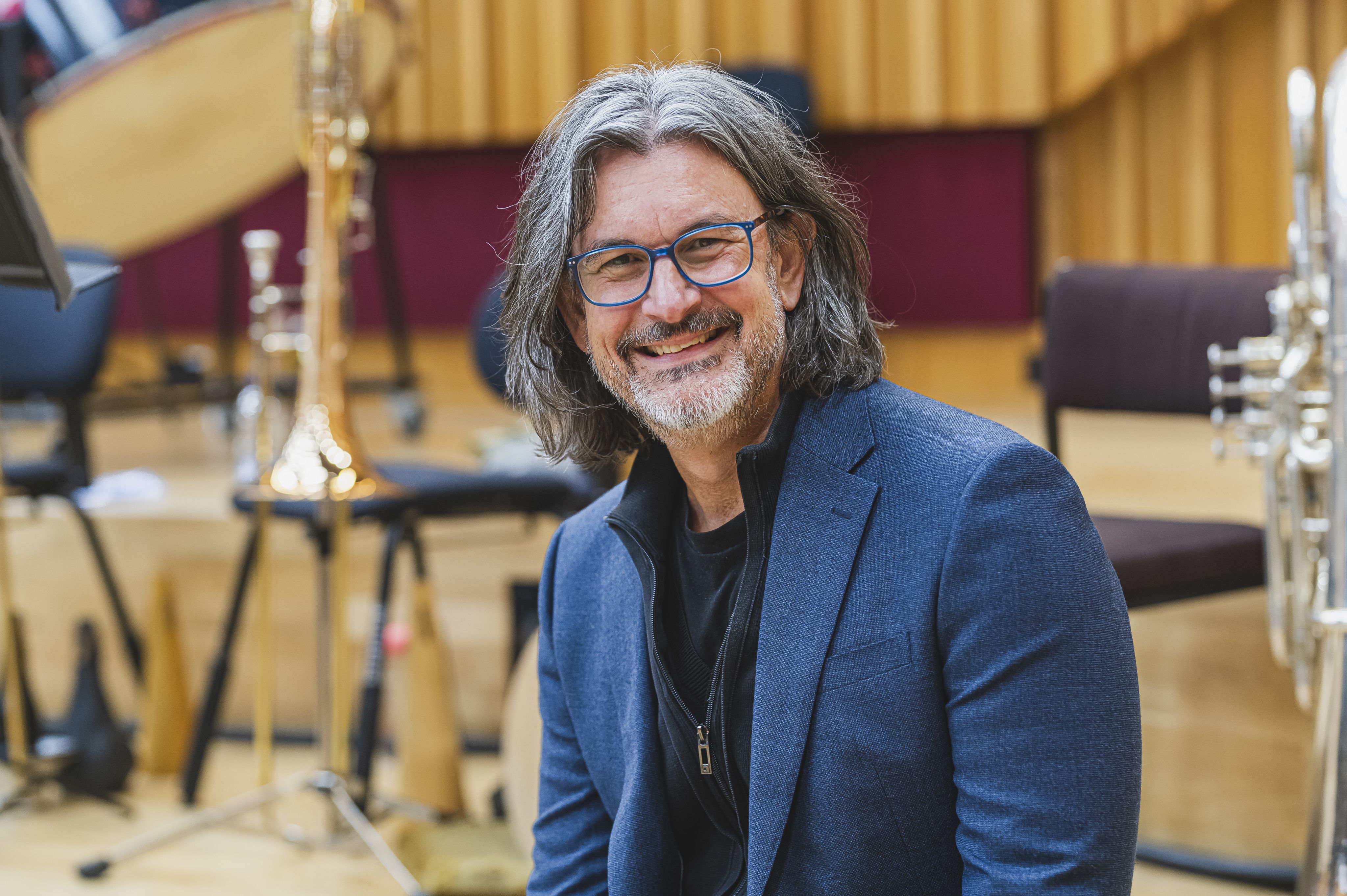
Photo: Kirsten McTernan
Photo: Kirsten McTernan
We’re delighted to welcome for this, the last concert of the season, conductor Gergely Madaras for a programme full of the heady sensuality of turn-of-the-century Paris.
Debussy sets the scene with his hugely evocative Prélude à l’après-midi d’un faune, a work whose innovation led it to be described by Pierre Boulez, no less, as the beginning of modern music itself.
Debussy’s Nocturnes take their inspiration from a series of paintings by Whistler, the composer adding a haunting wordless female chorus to the last of them, ‘Sirènes’.
Gergely Madaras is joined by his flautist wife Noémi Győri for the UK premiere of Christian Mason’s Thaleia, a work whose orchestration, and emancipation of the flute, draws directly on Debussy’s L’après-midi.
To end, we return to the heady mood of the opening piece with Part 3 from Franck’s symphonic poem Psyché.
Enjoy, and have a wonderful summer!
Matthew Wood
Head of Artistic Planning and Production
Please respect your fellow audience members and those listening at home. Turn off all mobile phones and electronic devices during the performance. Photography and recording are not permitted.
Claude Debussy(1862–1918)
Prélude à l’après-midi d’un faune (1891–4)

The Prélude à l’après-midi d’un faune (‘Prelude to the Afternoon of a Faun’) is one of the most prominent examples of the intersection between music and literature. Inspired by the French Symbolist poet Stéphane Mallarmé’s poem L’après-midi d’un faune, Debussy’s Prélude offers a musical illustration of a faun’s dreamlike recollection of his encounters with nymphs and naiads. Rather than simply synthesising Mallarmé’s narrative, Debussy seeks to depict the desires and dreams of the faun in a succession of scenes. This in turn creates sonic images of the faun’s sensual experience, an effect which captures the essence of what would become known as musical Impressionism.
Debussy’s reimagination of L’après-midi d’un faune places a strong emphasis on the flute, the instrument of the faun. The Prélude is set in motion by a wavering main theme played by the solo flute, whose timbre gives a dreamy tone to the music. The melody is then transferred to first the oboes and clarinets and subsequently violins as the faun encounters the nymphs. After the solo flute reappears over an enchanting harp figuration, a new line on the solo oboe emerges, bringing a change of scene. In this middle section, we hear an outburst of lyricism: an expressive introverted theme on tutti woodwinds and strings gives way to a climax that mirrors the faun’s exclamation of love for the nymphs. As the main theme resurfaces, we are left in an equivocal state, questioning together with the faun whether this was a dream or reality.
Programme note © Kelvin H. F. Lee
Claude Debussy
Nocturnes (1892–9)
1 Nuages [‘Clouds’]
2 Fêtes [‘Festivals’]
3 Sirènes [‘Sirens’]
BBC National Chorus of Wales (female voices)
The Nocturnes had an unusually long period of compositional gestation as Debussy struggled to find new ways of exploring colour and timbre to convey fleeting images and moods. First conceiving the work in 1892 as Trois scènes au crépuscule (‘Three scenes at twilight’), he was originally inspired by the dream-like imagery of the Symbolist poems of the same title by his friend Henri de Régnier, but then discovered the darkly atmospheric series of night-time landscapes by the Paris-based American artist James McNeill Whistler – a sort of Baudelaire figure of the visual arts – from whom Debussy borrowed the title Nocturnes. Encouraged by his discoveries in the Prélude à l’après-midi d’un faune (1894) which opened new compositional paths in terms of harmony, instrumental colour and form, Debussy finally completed his Nocturnes in 1899. In his programme note for the first complete performance by the Orchestre Lamoureux under Camille Chevillard in 1901, Debussy wrote: ‘The title Nocturnes … is not meant to designate the usual form of the nocturne, but rather all the various impressions and special effects of light that the word suggests.’
Mysterious and subdued in steadily oscillating crotchets, the tonally ambiguous ‘Nuages’ evokes what Debussy called ‘the immutable aspect of the sky and the slow, solemn motion of the clouds, fading away in grey tones tinged with white’. Debussy got the idea in Paris while standing very late one night on the pont de Solférino watching a moonless sky, the Seine below ‘without a ripple, like a tarnished mirror’.
‘Fêtes’ is more exuberant, with its dance-like triplet movement and joyful themes which portray Debussy’s ‘dazzling and fantastic vision’ of a festival procession in the Bois de Boulogne, but as seen from afar through the trees; crowds run and resplendent horsemen of the Garde Républicaine sound their bugles before disappearing into the gloom.
‘Sirènes’ looks forward to La mer (1903–5)in depicting the sea and what for Debussy were ‘its countless rhythms’. Among the waves, silvered by the moonlight, a wordless female chorus evokes the mysterious song and wistful sighs of mythical Sirens, supernatural beings who lured sailors to their doom.
Programme note © Caroline Rae
INTERVAL: 20 minutes
Christian Mason(born 1984)
Thaleia(2023–4)
UK premiere
1 Lament – Cadenza 1
2 Incantation – Cadenza 2
3 Songs (without words)
Noémi Győri flute/piccolo
Thaleia was – in Greek mythology – a Naiad-nymph of Mount Etna in Sicily, whose name means ‘joyous’, ‘abundant’. The music isn’t so much about her story as the qualities of fecundity and flourishing that she embodies, and which grow as the piece progresses: the root of the name Thaleia is thállein, ‘to flourish, to be green’.
Yet maybe there is a hint of the story too: the music is full of canons – sometimes led by the flute, sometimes forming the orchestral background – and maybe these hint at Thaleia’s children? According to myth, she bore the twin children of Zeus but, fearing his wife Hera’s jealousy, asked to be swallowed up by the earth – and so her twin children, the Palici, were born from the earth to be Sicilian gods of hot springs and geysers.
The orchestration – though not the music – refers to Debussy’s Prélude à l’après-midi d’un faune, acknowledging the role of Debussy in emancipating the flute. This concerto forms part of Noémi Győri’s ‘Contemplation of the Nymph’ project.
Programme note © Christian Mason
César Franck (1822–90)
Psyché (1886–7) – Part 3
Quasi lento – Amour, elle a connu ton nom [‘Love, she knew your name’]
Souffrances et plaintes de Psyché – Éros a pardonné [‘Psyche’s sufferings and laments – Eros has forgiven’]
BBC National Chorus of Wales
In 1886, at the height of his fame as composer, organist and Paris Conservatoire professor, Franck embarked on the last of his symphonic poems, a large-scale work based on Émile Sicard and Louis de Fourcaud’s poetic account of the Eros (Cupid) and Psyche myth. An unusual subject for a composer then known for his religious music, it enabled Franck to revel in the ecstatic sensuality of the tale while evoking the ideas of forgiveness and redemption that lie at the heart of the allegory. Vincent d’Indy, the work’s dedicatee, remarked that Psyché ‘is imbued with Christian faith and feeling’, and it is this mood that characterises the final section where the joyous expression of eternal love becomes both human and divine.
The story goes as follows. The beautiful Psyche attracts the jealousy of Aphrodite, who instructs Eros to inspire the young woman to love a monster. Smitten with her great beauty, Eros falls instead for Psyche himself and transports her to a magic garden where, under the guise of invisibility, he makes love to her. One night, curious to learn the identity of her mysterious lover, Psyche drops oil from her lamp and Eros is revealed. He chastises and abandons her. Tormented by remorse, Psyche journeys in search of her lost lover and suffers a series of humiliating labours imposed by the vengeful Aphrodite. Eventually saved by a forgiving Eros, the lovers are reunited in marriage, and Psyche is made immortal so that their love can endure for ever. A personification of the human soul, Psyche learns the true meaning of happiness through suffering and misfortune.
Scored for large orchestra and mixed chorus (without basses), Pysché comprises seven movements organised into three main sections, the last of which tells of her suffering and forgiveness. Written in the thrall of Wagner, an important influence on many French composers of the period, Psyché can be seen as Franck’s response to Tristan und Isolde in its rich orchestral colours, yearning chromaticism and impassioned climaxes. Psyché was first performed on 10 March 1888 at the Salle Erard by the Société nationale de musique with Franck conducting.
Programme note © Caroline Rae
Help Us Improve Our Online Programmes.
Please take this 5-minute survey and let us know what you think of these notes.
Programme Survey
You may also like:
Festivals of Sound
Sunday 8/9/24, 3.00pm
BBC Hoddinott Hall, Cardiff
Brahms Academic Festival Overture
Tchaikovsky Violin Concerto
Dvořák Symphony No. 6
Jaime Martín conductor
Nemanja Radulović violin
LYRICAL | BRILLIANT | UPLIFTING
What better way to ease ourselves into the 2024–25 Hoddinott Hall season than under the baton of our new Principal Guest Conductor Jaime Martín. The concert opens with Brahms’s Academic Festival Overture – a musical thank you to Breslau University following the news it was awarding him an honorary doctorate – which blends traditional students’ songs with quirky orchestration and dynamic shifts, showcasing sweeping lyricism, humorous rambunctiousness and an irrepressible feeling of fun.
Also never short on creative ideas, Tchaikovsky wrote his Violin Concerto in an astoundingly short two weeks. Inescapable magic and rousing brilliance interweave with enchanting simplicity, all crowned with crackling firework virtuosity from the solo violin, performed here by the fabulous Nemanja Radulović. To end, Dvořák’s Sixth Symphony, with its irresistible blend of limitless lyricism, warm expressiveness and fiery Bohemian spirit.
Dancing & Deities
BSL Interpretation
Thursday 21/11/24, 7.30pm
BBC Hoddinott Hall, Cardiff
Rossini, arr. Respighi La boutique fantasque – suite
Rossini Stabat mater
Nil Venditti conductor
Masabane Cecilia Rangwanasha soprano
Tara Erraught mezzo-soprano
Levy Segkapane tenor
Ashley Riches bass-baritone
BBC National Chorus of Wales
THEATRIC | MAGICAL | ENTRANCING
Imagine dancing dolls in a magical toy shop, and a pair of fabulous cancan dancers plotting to stay together at any cost and you have the charming story of La boutique fantasque. With its vibrant and whimsical music (arranged by Ottorino Respighi from piano pieces by Gioacchino Rossini) this ballet is a sequence of exquisite dances, each more lively than the last, making for a joyful listening experience.
In contrast Rossini’s own Stabat mater is a work which teeters on the edge of sacred sentimentality and overt operatics. The bravura and rollickingly memorable tunes of the ‘Cujus animam’ and the fire and brimstone of ‘Inflammatus et accensus’ seamlessly interweave with the unequivocally sacred qualities of the ‘Eja mater’ and ‘Quando corpus morietur’ – a true masterpiece that is heartfelt, expressive and vocally shapely yet rhythmic and outspokenly operatic.
Biographies
Gergely Madarasconductor

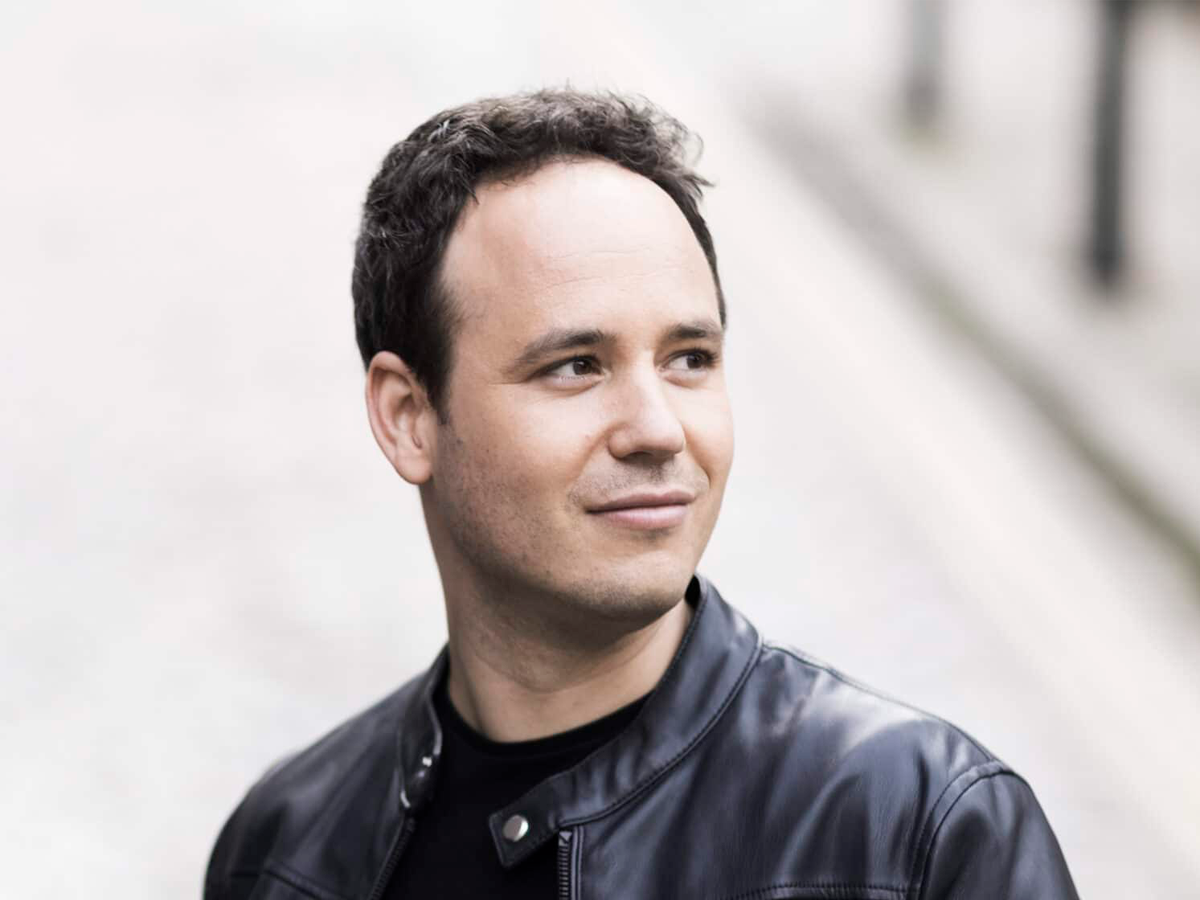
Gergely Madaras is Music Director of the Orchestre Philharmonique Royal de Liège. Together, they have performed across Belgium and toured Europe and South America. They are regularly featured on Mezzo and Medici.tv and have built an extensive discography including music by Franck, Liszt and Dohnányi. He was previously Music Director of the Orchestre Dijon Bourgogne and Chief Conductor of the Savaria Symphony Orchestra.
As a guest conductor, recent highlights include engagements with the BBC, London, Monte Carlo, Oslo and Radio France Philharmonic orchestras, Budapest Festival Orchestra, Philharmonia, Zurich Tonhalle Orchestra, Bamberg, BBC and Tokyo Metropolitan Symphony orchestras, Hallé, Toulouse Capitole Orchestra, Orchestra della Svizzera Italiana and Il Pomo d’Oro.
This season he has returned to the Borusan Istanbul, London and Radio France Philharmonic orchestras, City of Birmingham Symphony Orchestra, Musikkollegium Winterthur and Hungarian State Opera. He has made debuts with the NHK, São Paulo State and WDR Symphony orchestras and Turku Philharmonic. Plans include appearances with the Netherlands Radio and Oslo Philharmonic orchestras and Gürzenich Orchestra, Cologne.
He was the inaugural Sir Charles Mackerras Fellow at English National Opera, making his operatic debut there with a new production of The Magic Flute. Since then, he has conducted critically acclaimed productions at Dutch National Opera, Grand Théâtre de Genève, Hungarian State Opera and La Monnaie.
He also has a strong interest in new music, collaborating with Sir George Benjamin, Péter Eötvös, György Kurtág, Tristan Murail, Luca Francesconi, Philippe Boesmans and Pierre Boulez.
He has been a regular guest at the Lucerne, Gstaad, Milan, Murten, Budapest Spring, Bucharest Enescu and Tokyo Stradivarius festivals, among others.
Born in Budapest in 1984, Gergely Madaras first began studying folk music with the last generation of authentic Hungarian Gypsy and peasant musicians at the age of five. He went on to study classical flute, violin and composition, graduating from the flute faculty of the Liszt Academy in Budapest, as well as the conducting faculty of the University of Music and Performing Arts in Vienna.
Noémi Győriflute/piccolo

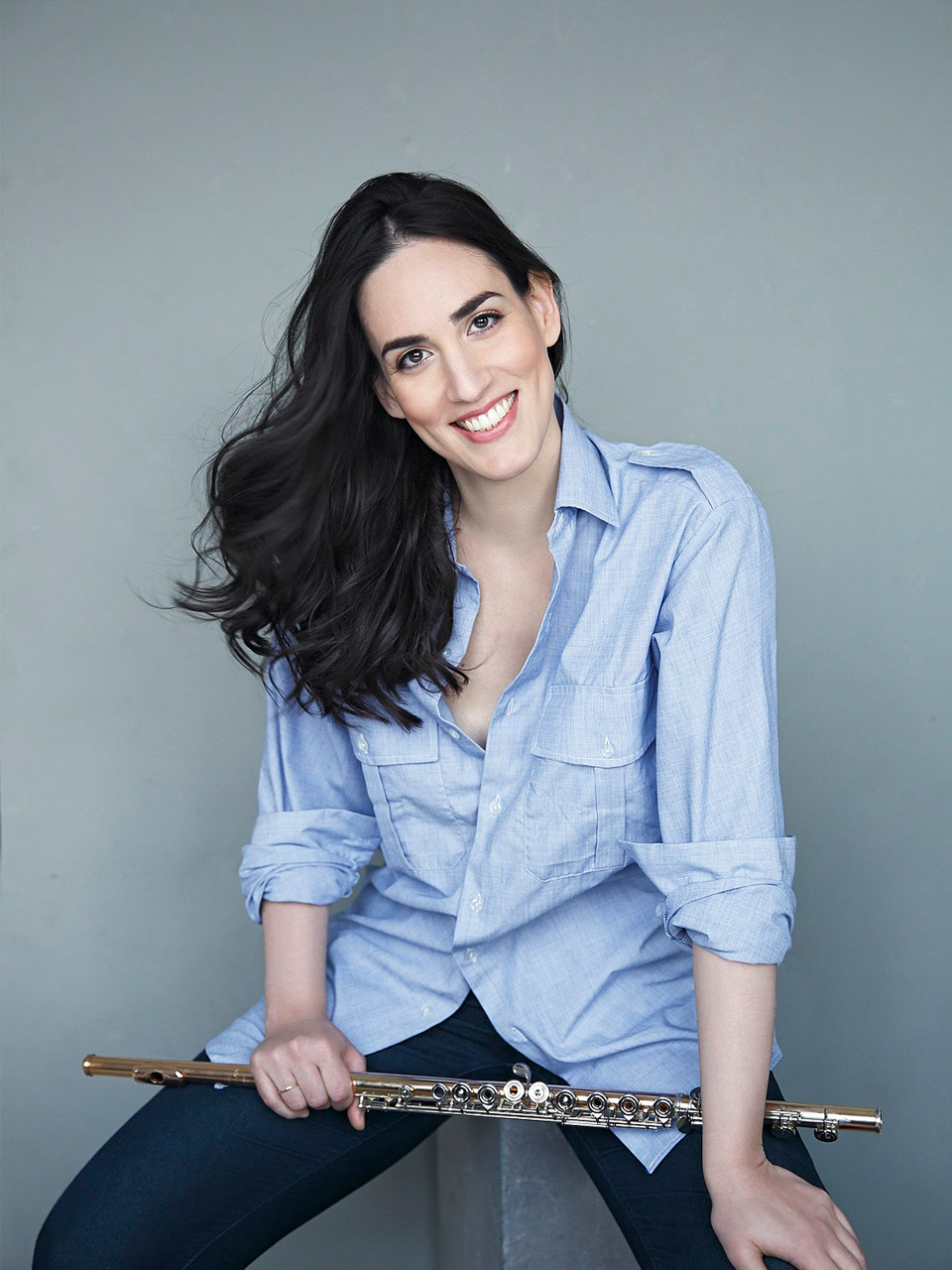
Noémi Győri is a renowned soloist and chamber musician on both modern and Baroque flutes, her creative programming and interpretations of a broad repertoire being built on flawless technical facility, a broad tonal palette and meticulous research.
Highlights of this season include tonight’s UK premiere of Thaleia by Christian Mason, a work she unveiled with the Orchestre Philharmonique Royal de Liège in April, the Hungarian premiere of Weinberg’s First Flute Concerto and performances of Ibert’s Flute Concerto with the Georgian and Turku Philharmonic orchestras. Her sixth solo album, Exploration, with pianist Suzana Bartal, was released earlier in the season.
Noémi Győri is the first flautist to hold a PhD in flute performance from London’s Royal Academy of Music, following studies at the Liszt Academy of Music, University of Music and Performing Arts, Vienna, and the Munich Hochschule für Musik und Theater.
Since 2008 she has been principal flute of the Jewish Chamber Orchestra, Munich, and has appeared as a guest with, among others, the BBC Philharmonic and the Vienna Philharmonic Orchestra, the latter at the Vienna State Opera. Since 2011 she has led a flute studio at the Junior Royal Northern College of Music and is a visiting tutor at the University of Manchester.
Noémi Győri plays a 14K gold LaFin headjoint and a 14K gold Miyazawa Boston flute.
BBC National Orchestra of Wales
For over 90 years, BBC National Orchestra of Wales has played an integral part in the cultural landscape of Wales, occupying a distinctive role as both broadcast and national symphony orchestra. Part of BBC Wales and supported by the Arts Council of Wales, it has a busy schedule of live concerts throughout Wales, the rest of the UK and the world.
The orchestra is an ambassador of Welsh music and champions contemporary composers and musicians; its concerts can be heard regularly across the BBC – on Radio 3, Radio Wales and Radio Cymru.
BBC NOW works closely with schools and music organisations throughout Wales and regularly undertakes workshops, side-by-side performances and young composer initiatives to inspire and encourage the next generation of performers, composers and arts leaders.
The orchestra is based at BBC Hoddinott Hall in Cardiff Bay, where its purpose-built studio not only provides the perfect concert space, but also acts as a broadcast centre from where its live-streamed concerts and pre-recorded content are presented as part of its popular Digital Concert Series.
For further information please visit the BBC National Orchestra and Chorus of Wales’s website: bbc.co.uk/now
Patron
HM King Charles III KG KT PC GCB
Principal Conductor
Ryan Bancroft
Conductor Laureate
Tadaaki Otaka CBE
Composer-in-Association
Gavin Higgins
Composer Affiliate
Sarah Lianne Lewis
First Violins
Nick Whiting leader
Martin Gwilym-Jones sub leader
Gwenllian Hâf MacDonald
Terry Porteus
Suzanne Casey
Žanete Uškāne
Ruth Heney
Carmel Barber
Juan Gonzalez
Alejandro Trigo
Anna Cleworth
Kerry Gordon-Smith
Emilie Godden
Gary George-Veale
Second Violins
Emily Davis ‡
Jane Sinclair
Ros Butler
Sheila Smith
Beverley Wescott
Vickie Ringguth
Katherine Miller
Roussanka Karatchivieva
Michael Topping
Lydia Caines
Joseph Williams
Ilze Abola
Violas
Joel Hunter ‡
Tetsuumi Nagata
Peter Taylor
Daire Roberts
Robert Gibbons
Anna Growns
Lydia Abell
Catherine Palmer
Ania Leadbeater
Lucy Theo
Cellos
Alice Neary *
Jessica Feaver
Keith Hewitt
Carolyn Hewitt
Alistair Howes
Katy Cox
Ali Robinson
Double Basses
David Stark *
Alex Jones #
Christopher Wescott
Fabián Galeana
Chris Kelly
Hannah Turnball
Flutes
Matthew Featherstone *
John Hall †
Elizabeth May
Piccolo
Elizabeth May
Oboes
Steve Hudson *
Catherine Tanner-Williams
Amy McKean †
Cor anglais
Amy McKean †
Clarinets
Anna Hashimoto ‡
Bethany Crouch
Lenny Sayers
Bass Clarinet
Lenny Sayers †
Bassoons
Jarosław Augustiniak *
Bruce Parris
David Buckland
Alex Davidson
Contrabassoon
David Buckland †
Horns
Tim Thorpe *
Meilyr Hughes
Neil Shewan †
Flora Bain
John Davy
Trumpets
Corey Morris †
Robert Samuel
Olly Carey
Cornets
Olly Carey
Louis Barclay
Trombones
Simon Wills
Jon Pippen
Bass Trombone
Darren Smith †
Tuba
Matthew Thistlewood
Timpani
Rhys Matthews
Percussion
Phil Hughes
Harry Lovell-Jones
Harps
Sally Pryce
Daniel deFry
* Section Principal
† Principal
‡ Guest Principal
# Assistant String Principal
The list of players was correct at the time of publication
Director Lisa Tregale
Orchestra Manager Liz Williams
Assistant Orchestra Manager Nick Olsen
Orchestra Personnel ManagerKevin Myers
Business Coordinator Georgia Dandy
Orchestra Administrator Eleanor Hall +
Head of Artistic Planning and ProductionMatthew Wood
Artists and Projects Manager Victoria Massocchi **
Orchestra Librarian Eugene Monteith **
Producer Mike Sims
Broadcast Assistant Kate Marsden
Head of Marketing and Audiences Sassy Hicks
Marketing Coordinator Amy Campbell-Nichols +
Digital Producer Yusef Bastawy **
Social Media Coordinator Harriet Baugh
Education Producers Beatrice Carey, Rhonwen Jones **
Audio Supervisors Simon Smith, Andrew Smillie
Production Business Manager Lisa Blofeld
Stage and Technical Manager Steven Brown +
Assistant Stage and Technical Manager Josh Mead +
+ Green Team member
** Diversity & Inclusion Forum
BBC National Chorus of Wales
BBC National Chorus of Wales is one of the leading mixed choruses in the UK and, while preserving its amateur status, works to the highest professional standards under Artistic Director Adrian Partington.
Based at BBC Hoddinott Hall in Cardiff Bay, the chorus, which celebrates its 40th birthday this season, regularly works alongside BBC National Orchestra of Wales, as well as giving concerts in its own right. Made up of over 120 singers, the chorus comprises a mix of amateur choristers alongside students from both the Royal Welsh College of Music & Drama and Cardiff University.
Recent highlights include performances of Fauré’s Requiem and Messiaen’s rarely performed O sacrum convivium with Ludovic Morlot, Haydn’s ‘Nelson’ Mass with renowned early-music specialist Christian Curnyn and a CD of Sir Karl Jenkins’s Dewi Sant in his 80th birthday year, plus annual engagements at the BBC Proms – with recent appearances including John Adams’s Harmonium with Principal Conductor Ryan Bancroft, Vaughan Williams’s A Sea Symphony with Andrew Manze and Mozart’s Requiem from memory with Nathalie Stutzmann.
The 2023–24 season has seen the chorus perform Vaughan Williams’s Five Mystical Songs with Harry Bicket, Karl Jenkins’s Dewi Sant to mark St David’s Day, Poulenc’s Stabat mater and the world premiere of Alexander Campkin’s Sounds of Stardust alongside BBC Cardiff Singer of the World Audience Prize-winner Julieth Lozano Rolong, plus the basses perform Shostakovich’s gritty 13th Symphony under the baton of Ryan Bancroft.
Committed to promoting Welsh and contemporary music, BBC National Chorus of Wales gave the second-ever performance of Grace Williams’s Missa Cambrensis, 45 years after its premiere, which it has just recorded for CD release later this year, and has premiered works by many composers, including a special performance of Kate Whitley’s Speak Out, set to the words of Malala Yousafzai’s 2013 UN Speech.
The Chorus can be heard on BBC Radio 3, BBC Radio Wales and BBC Radio Cymru, and recently featured in Paul Mealor’s soundtrack for BBC Wales’s Wonders of the Celtic Deep.
Soprano 1
Bethan M. Evans
Caitlin Hockley
Charlotte Town
Claire Hardy
Darcie Hamilton
Delyth Jewell
Elizabeth Phillips
Ella Edwards Beavington
Ellen Steward
Eve Carey
Hannah Willman
Jessica Rose Baber
Joanna Osborn
Leora Molnar
Lucie Jones
Phoebe Dry
Rebecca Jolliffe
Rhiannon Chard
Sally Glanfield
Sarah Jane Griffiths
Vanessa John-Hall
Zoha Sohail
Soprano 2
Caroline Thomas
Carolyn Lee
Dee Cooke
Emily Hopkins
Esme Daniell-Greenhalgh
Frankie Ingall
Hannah Soares
Hannah Williams
Imogen Rowe
Isabel D’Avanzo
Kate Bidwell
Katherine Woolley
Margaret Lake
Melanie Taylor
Nia Emanuel
Pippa Johnson
Rhian Davies
Rhiannon Humphreys
Rhianwen Hallows
Rosie Moore
Samar Small
Sarah Clinch
Sinead Gallagher
Tory Martin
Alto 1
Alison Davies
Amy Roberts
Atiyeh Dast Afkan
Catherine Bradfield
Heather Price
Joy Dando
Julie Ellen Thornton
Kate Reynolds
Kathrin Hammer
Lisa May
Naomi Hitchings
Rachel Farebrother
Sara Peacock
Sarah Roberts
Shanta Miller
Sophie Chick
Vicki Westwell
Zozi Sookanadenchetty
Alto 2
Alex Butler
Annette Hecht
Darcy Cole
Eleanor Prescott
Julie Wilcox
Max Keith
Sarah Willmott
Sian Schutz
Thomas Wilde
Tenor 1
Keith Davies
Nick Willmott
Oli Bourne
Orlando Vas
Tenor 2
Michael Willmott
Rhys Archer
Richard Shearman
Rory McIver
Phil Holtam
Roland George
Deryck Webb
Bass
Ben Pinnow
David Hoopkins
Ethan Davies
Jack Irwin
John Davies
Neil Schofield
Ben Hunt
Joshua Eatough
Lyndon Davies
Mike Osborn


