Weill
Tom Coult
Ravel
Saturday 6 November, 7.30pm
The Bridgewater Hall, Manchester

Welcome to tonight’s performance
We’re celebrating Tom Coult’s appointment as the BBC Philharmonic’s Composer in Association with a new violin concerto co-commissioned with the University of Salford. This piece is inspired by four constructed green spaces and is performed by soloist Daniel Pioro and conducted by Elena Schwarz, who makes her debut with the orchestra. We begin with Kurt Weill’s energetic Second Symphony and end with Ravel’s exquisite evocation of childhood, Mother Goose.
Our relationship with BBC Radio 3
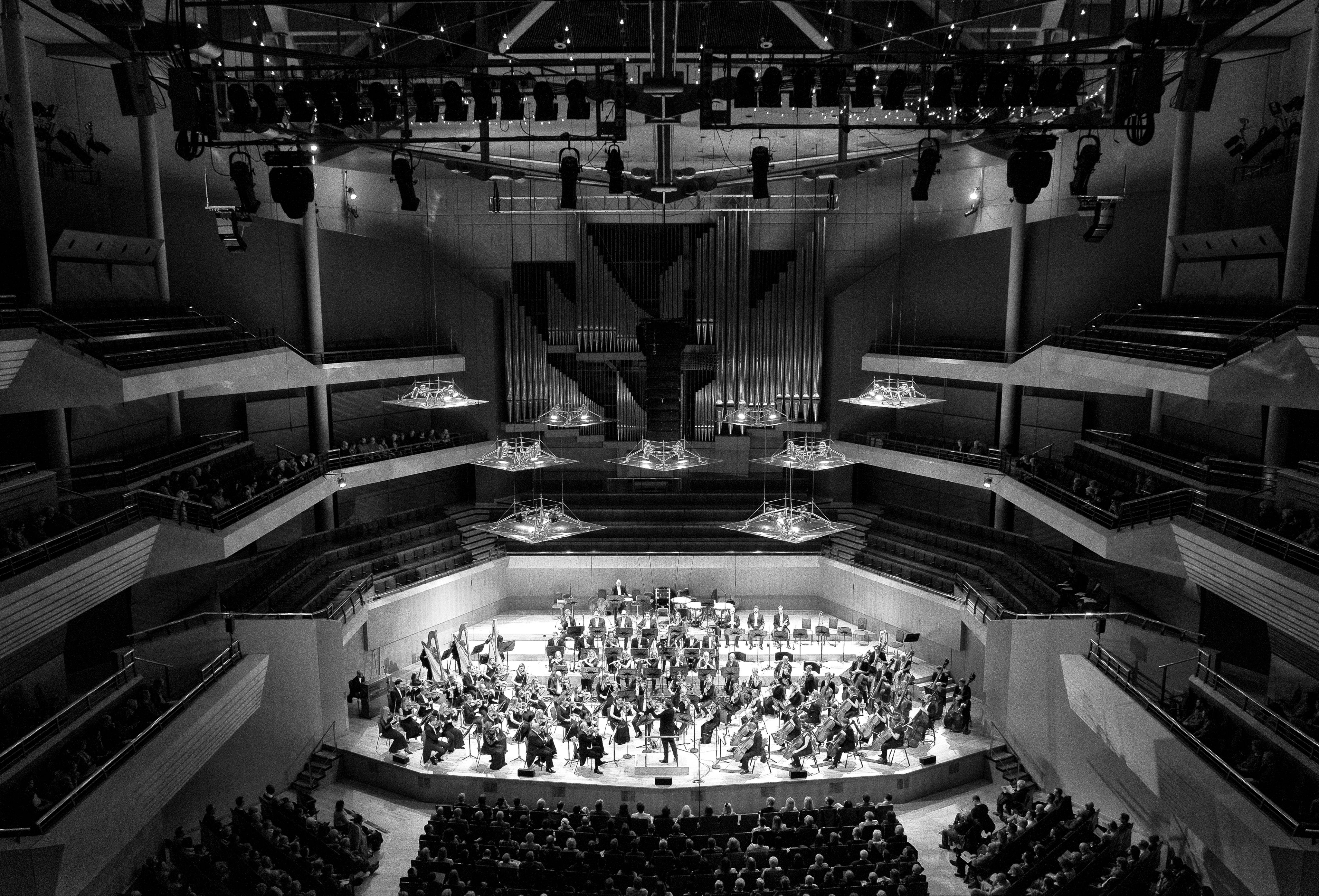
As the BBC’s flagship orchestra for the North, almost all of the BBC Philharmonic’s concerts are recorded for broadcast on Radio 3. Tonight you will see a range of microphones on the stage and suspended above the orchestra. We have a Producer, Assistant Producer and Programme Manager at the orchestra who produce our broadcasts.
We seek to bring a diverse and risk-taking range of repertoire to our audiences, including our concert-goers here in Manchester, as well as the two million listeners who tune in to BBC Radio 3.
Please do not take flash photographs during the performance as this is very distracting to the artists. Audio and video recording is strictly prohibited.
To ensure that everyone can enjoy the concert, please either turn off your phone and any other electronic devices before it begins or ensure that they are turned to silent.

Kurt Weill
Symphony No. 2 28’
INTERVAL: 20 minutes
Tom Coult
Pleasure Garden c27’
BBCco-commission: world premiere
Maurice Ravel
Mother Goose – ballet 27’
Daniel Pioro violin
Elena Schwarz conductor
BBC Philharmonic


Tonight’s concert is being recorded for broadcast in Radio 3 in Concert on Wednesday 10 November at 7.30pm. It will be available for 30 days after broadcast via BBC Sounds, where you can also find podcasts and music mixes.
Kurt Weill (1900–50)
Symphony No. 2 (1933–4)
1 Sostenuto – Allegro molto
2 Largo
3 Allegro vivace – Presto
Kurt Weill was a 21-year-old student when the ink dried on his first symphony, written in one rather cumbersome 25-minute movement and apparently never performed in its orchestral version during his lifetime. His second and final symphony was finished 13 years later in 1934, with both Weill and the wider world much changed. The Jewish composer had found huge success in 1928 with The Threepenny Opera; but then, in 1933, had left his native Germany following the rise of the Nazis.
The Second Symphony was commissioned by New York-born, Paris-based Winnaretta Singer, an heir to the Singer sewing machine fortune and a fiercely independent patron of the arts (she’s the dedicatee of Ravel’s Pavane pour une infante défunte). Weill was still living in Berlin when the invitation came, but he wrote the bulk of the work during a two-year stay in Paris – alongside his final collaboration with Bertolt Brecht, The Seven Deadly Sins.
The three movements contain hints of Weill’s flinty, spiky music for the stage, as with the final movement’s busybody opening theme. But the work also seems to look ahead to Weill’s American period: witness, for instance, the filmic quality of the slow second movement. The 1934 premiere in Amsterdam was received poorly by the press, and the symphony turned out to be Weill’s last major work for the concert hall.
Kurt Weill
Born in Dessau to a religious Jewish family, the young Kurt Weill had ambitions to become a concert-hall composer, but it was his partnership with Bertolt Brecht in the late 1920s on a series of stage works – Rise and Fall of the City of Mahagonny (1927–9) and The Threepenny Opera (1928), among others – that shot him to fame. They made Weill’s name – but, when they also made him a target for the Nazis, he fled Germany in 1933, first for Paris and then for New York. Perhaps unexpectedly, Weill soaked up American culture, finding Broadway success in the 1940s with the likes of Lady in the Dark (1940) and Street Scene (1946). Bobby Darin’s indelible recording of ‘The Ballad of Mack the Knife’ even took Weill to the top of the US charts in 1959, but he wasn’t around to enjoy it: while working on a stage version of Huckleberry Finn, he suffered a heart attack and died two weeks later. He was 50.
Programme note and profile © Will Fulford-Jones
Will Fulford-Jones is a writer and editor who works widely across music and the arts.
INTERVAL: 20 minutes
Tom Coult (born 1988)
Pleasure Garden (2021)
BBCco-commission: world premiere

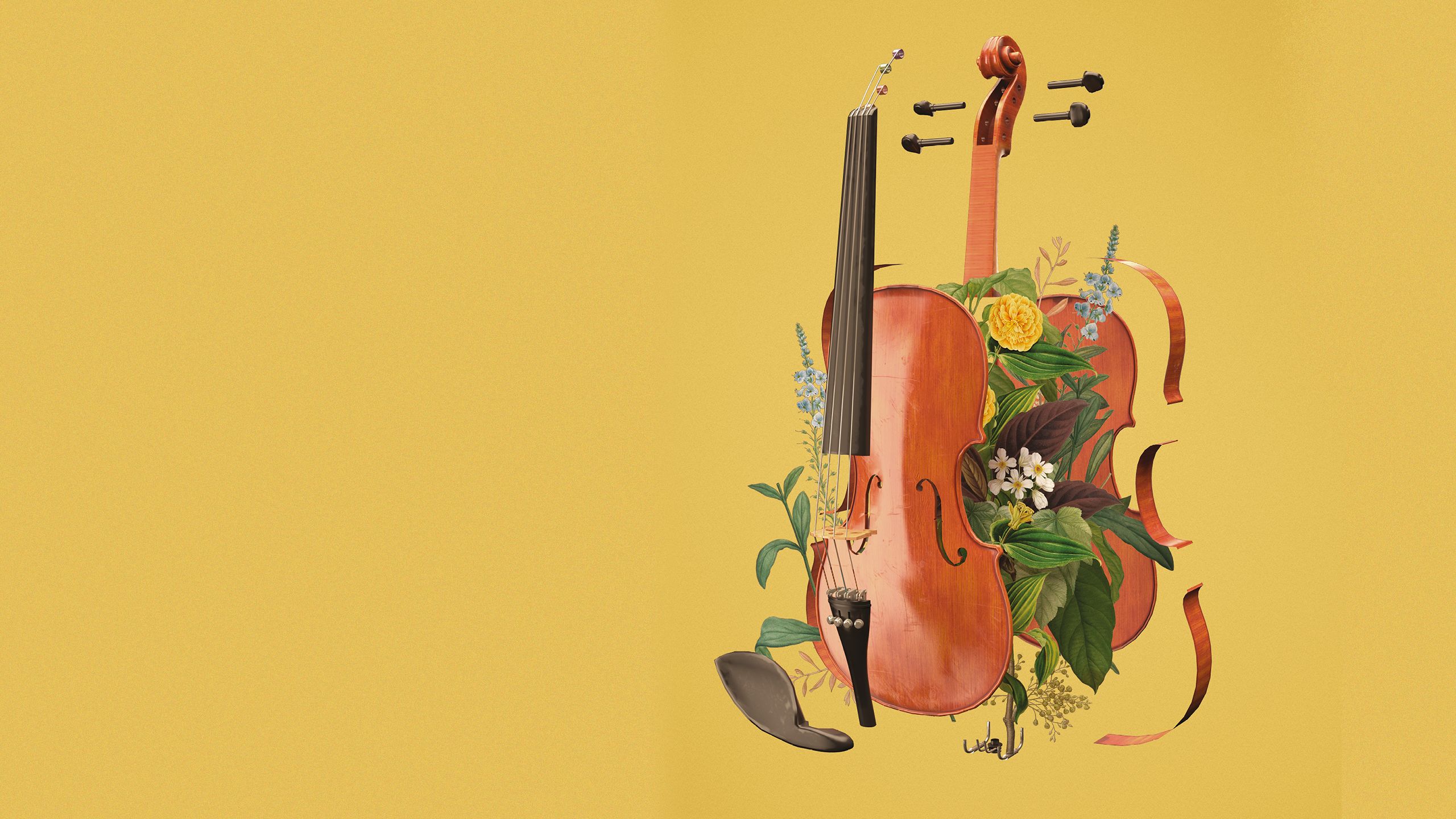
Introduction to Tom Coult’s ‘Pleasure Garden’
Nature is affected by people and people are affected by nature. Never has this two-way, dynamic relationship been more important than it is now as we seek responses to the climate emergency and the biodiversity crisis. Researchers at the University of Salford are seeking new insights to address these global challenges. They are learning from history, challenging the present and shaping the future.
Salford’s history is rich with technological and social advances, driven by industrialisation and urbanisation. England’s first canal (the Bridgewater Canal) was built here. The first street lit by gas, the first public park (Peel Park), the first free library: all in Salford.
Before the Industrial Revolution the City of Salford was home to heathland birds such as nightjars, wrynecks and corncrakes, their songs and calls filling the air. As urbanisation spread, this rich avian community became impoverished and many species became locally extinct. The few species that remained adapted to the new environmental conditions, increasing the volume and pitch of their song and singing between the gaps in noise created by humans. This is a process of behavioural plasticity. It is the process of adaptation to change and one seen widely within the natural world.
Salford’s new green spaces, such as the Royal Horticultural Society’s Garden Bridgewater, bring together plants from across the globe. Bird community diversity has increased from the low point of the Industrial Revolution, with new species joining an avian community now different from that in the pre-industrial period. Birdsong again enriches the everyday life of so many people.
What of the future? Tom Coult’s Pleasure Garden invites you to engage in the debate that will shape our future. With so many green spaces, old and new, public and private, the cities of tomorrow can be places where nature addresses climate change, where birds sing and where this increased contact with nature keeps us well. Pleasure gardens.
Professor Philip James, University of Salford
1 Starting to Rain – Zennyo Ryūō Appears
2 Dyeing the Lake Blue for Queen Victoria
3 Francesco Landini Serenades the Birds
4 The Art of Setting Stones
Daniel Pioro violin
The four movements of Pleasure Garden take inspiration from various images and stories about constructed natural spaces in and around cities. These images and stories sparked off initial musical ideas, but composition then proceeded along its own musical logic rather than each movement necessarily ‘telling a story’.
…
In the ninth century there was a rain-making contest at the Sacred Spring Garden of Kyoto’s Imperial Palace. The priests Kūkai and Shubin were ordered to make rain appear. Kūkai won the contest by summoning the Dragon Queen Zennyo Ryūō, who brought storms and torrential rain. In Pleasure Garden’s first movement there is often the sense of light drops of rain giving way to a deluge as the enormous monster appears.
Worsley New Hall, the former Gothic mansion in Salford whose grounds are now home to the new RHS Garden Bridgewater, was visited by Queen Victoria in 1851. She and her party arrived by boat on the Bridgewater Canal, dyed blue to mark her visit. As it contained iron ore from nearby mines, the water was already stained orange, so the resultant colour was more of a green. I can picture the dye slowly soaking in, beginning to mingle with the water.
Francesco Landini was a 14th-century Italian musician who played the organetto extremely beautifully. When with friends at Florence’s Paradiso gardens, he was asked to settle a bet: when he played, would the garden’s many birds sing more or less? So he began to play, and at first the birds became silent – but, as he played on, they fluttered down and sang more and more, becoming cacophonous. Eventually they subsided and one bird flew down and perched on his head.
Japanese rock gardens are constructed around artful arrangements of rocks and raked gravel or sand to evoke water. There are rules, sometimes strict, for the placement of rocks – often to encourage an overall sense of harmony without ever arranging things symmetrically. These rules use the principles of ishi wo tateru koto – ‘the art of setting stones’.
Programme note © Tom Coult
Tom Coult
Tom Coult’s music came to nationwide attention when the wild whirligig of St John’s Dance opened the First Night of the BBC Proms in 2017, following a string of acclaimed commissions for the likes of the BBC Philharmonic, the Aldeburgh Festival, Britten Sinfonia and the London Sinfonietta. Music that nods to Henri Matisse (My Curves are not Mad, 2015), W. Heath Robinson (2019’s Inventions, a tour de force for solo piano) and an automated Twitter feed (I Find Planets, 2020) testifies to his magpie’s eye for influences and inspirations. Yet Coult’s musical voice – bold yet considered, exuberantly playful yet utterly disciplined – is all his own, rooted in a search for joy and wonder at the possibilities of sound.
A former student of Camden Reeves and Philip Grange at the University of Manchester, Coult was appointed as the BBC Philharmonic’s Composer in Association in May 2021 and is writing three new works for the orchestra in the coming years. His first opera, Violet, written with Alice Birch, receives its pandemic-delayed premiere at Aldeburgh in June 2022.
Profile © Will Fulford-Jones
Maurice Ravel (1875–1937)
Mother Goose – ballet (1908–10, orch. and rev. 1911)

1 Prélude
2 Danse du rouet [Dance of the Spinning Wheel] – Scene –
3 Pavane de la Belle au bois dormant [Pavane of the Sleeping Beauty] – Transition –
4 Les entretiens de la Belle et de la Bête [Conversation between Beauty and the Beast] – Transition –
5 Petit Poucet [Hop-o’-My-Thumb] – Transition –
6 Laideronnette, Impératrice des Pagodes [Little Ugly, Empress of the Pagodas] – Transition –
7 Le jardin féerique [The Fairy Garden]
Ravel’s Mother Goose found her way to the stage in a back-to-front way. The work started life in 1908–10 as a charming five-part, four-hands piano suite, written for a friend’s children and inspired by the fictional teller of fairy stories and nursery rhymes whose name is enshrined in its title (a character invented, it seems, by 17th-century French author Charles Perrault). In 1911 Ravel orchestrated his original piano score, and only then, with the further addition of a Prélude and four transitional passages, did he build his original miniatures into this glowing half-hour ballet.
The Prélude leads us straight on to the dance floor with the divine Princess Florine, who becomes the Sleeping Beauty after falling against a spinning-wheel spindle. Soon enough, we’re in conversation with Beauty and the Beast, respectively played by a liquid clarinet and a honking contrabassoon.
‘Hop-o’-My-Thumb’ – Tom Thumb, in some translations – pictures a child lost in a forest, and the uncertain strings and abrupt ending suggest he’s probably still trying to find his way out.
The pentatonicism that introduces Little Ugly, Empress of the Pagodas (not temples but small insect-like creatures) hints at the gamelan music that a teenage Ravel first heard at the 1889 International Exposition in Paris, before we return to the Sleeping Beauty – awoken, at long last, by Prince Charming. Everybody loves a happy ending.
Maurice Ravel
Some of his contemporaries may have been more radical and others more noisily disruptive, but no composer bridged the 19th and 20th centuries as elegantly as Maurice Ravel. Born in a Basque village on the northern edge of the Franco-Spanish border, Ravel was just 14 when he moved to Paris to study piano at the Paris Conservatoire. However, his focus shifted to composition before his teenage years were up, and he seems to have quickly developed a sure sense of who he was and the music he wanted to make. No composer has ever drawn a greater rainbow of colours from the orchestra – most famously in the nagging, hypnotic Boléro (1928), in Ravel’s words ‘orchestral tissue without music’ – but Ravel both rejected and transcended the ‘impressionist’ label often attached to his work. From intimate piano pieces such as the Pavane pour une infante défunte (1899) via ballets like Daphnis et Chloé (1909–12) to later orchestral pieces such as the swirling La valse (1919–20), his music is a perfect integration of art and craft.
Programme note and profile © Will Fulford-Jones
BBC Philharmonic
The BBC Philharmonic is reimagining the orchestral experience for a new generation – challenging perceptions, championing innovation and taking a rich variety of music to the widest range of audiences.
The orchestra usually performs around 100 concerts every year, the vast majority broadcast on BBC Radio 3. Along with around 35 free concerts a year at its MediaCityUK studio in Salford and a series of concerts at Manchester’s Bridgewater Hall, the orchestra performs across the North of England, at the BBC Proms and internationally, and records regularly for the Chandos label.
The BBC Philharmonic’s Chief Conductor is Omer Meir Wellber. Described by The Times’s Richard Morrison as ‘arguably the most inspired musical appointment the BBC has made for years’, Israeli-born Wellber burst into his new role at the 2019 BBC Proms and has quickly built an international reputation as one of the most exciting young conductors working today. The orchestra also has strong ongoing relationships with its Chief Guest Conductor, John Storgårds, and Associate Artist Ludovic Morlot. In May the orchestra announced young British composer and rising star Tom Coult as its Composer in Association.
The scope of the orchestra’s programme extends far beyond standard repertoire. Over the past few years it has collaborated with artists as varied as Clean Bandit, Jarvis Cocker and The Wombats; played previously unheard music by writer-composer Anthony Burgess in a unique dramatisation of A Clockwork Orange; joined forces with chart-toppers The 1975 at Blackpool’s Tower Ballroom; premiered The Arsonists by composer Alan Edward Williams and poet Ian McMillan, the first opera ever written to be sung entirely in a Northern English dialect; and broadcast on all seven BBC national radio networks, from BBC Radio 1 to BBC Radio 6 Music and the BBC Asian Network. Last year the orchestra also entered the UK Top 40 singles chart with ‘Four Notes: Paul’s Tune’.
The BBC Philharmonic is pioneering new ways for audiences to engage with music and places learning and education at the heart of its mission. Outside of the concert hall, it is passionate about taking music off the page and into the ears, hearts and lives of listeners of all ages and musical backgrounds – whether in award-winning interactive performances, schools’ concerts, Higher Education work with the Royal Northern College of Music or the creation of teacher resources for the BBC’s acclaimed Ten Pieces project. Through all its activities, the BBC Philharmonic is bringing life-changing musical experiences to audiences across Greater Manchester, the North of England, the UK and around the world.
First Violins
Yuri Torchinsky Leader
Midori Sugiyama Assistant Leader
Thomas Bangbala Sub Leader
Alison Fletcher *
Kevin Flynn †
Austeja Juskaityte
Karen Mainwaring
Catherine Mandelbaum
Martin Clark
Anna Banaszkiewicz-Maher
Anya Muston
Julian Gregory
Second Violins
Lisa Obert *
Glen Perry ‡
Rachel Porteous
Rebecca Mathews
Christina Knox
Claire Sledd
Lucy Flynn
Matthew Watson
Anna O’Brien
Oliver Morris
Violas
Steven Burnard *
Laura Vallejo
Bernadette Anguige †
Ruth Montgomery
Kathryn Anstey
Fiona Dunkley
Nicholas Howson
Alexandra Fletcher
Matthew Compton
Cellos
Peter Dixon *
Maria Zachariadou ‡
Jessica Schaefer
Elise Wild
Miriam Skinner
Melissa Edwards
Double Basses
Ronan Dunne *
Alice Durrant †
James Goode
Andrew Vickers
Peter Willmott
Flutes
Alex Jakeman *
Victoria Daniel †
Piccolo
Jennifer Hutchinson
Oboes
Rainer Gibbons §
Kenny Sturgeon
Cor Anglais
Gillian Callow
Clarinets
John Bradbury *
Colin Pownall
Bassoons
Daniel Jemison §
Angharad Thomas
Contrabassoon
Bill Anderson
Horns
Ben Hulme *
Phillip Stoker
Tom Kane
Jonathan Barrett
Trumpets
Chris Avison §
Gary Farr †
Trombones
Richard Brown *
Gary MacPhee
Timpani
Paul Turner *
Percussion
Paul Patrick *
Geraint Daniel
Harry Percy
Mark Concar
Harp
Clifford Lantaff *
Piano & Celesta
Ian Buckle
Keyboard Glockenspiel
Richard Casey
* Principal
† Sub Principal
‡ Guest Principal
¥ Associate Principal
The list of players was correct at the time of publication
Keep up to date with the
BBC Philharmonic
Listen to our BBC Radio 3 broadcasts via the BBC Sounds app. Visit our website and follow us on Twitter, Facebook and Instagram and sign up to the newsletter
To help us improve our online concert programmes, please take this 5-minute survey
Produced by BBC Proms Publications