
Messiah
livestream
Thursday 12/12/24, 7.00pm
BBC Hoddinott Hall, Cardiff


George Frideric Handel
Messiah 159’
There will be a 20-minute interval after Part 1
John Butt conductor
Fflur Wyn soprano
Marta Fontanals-Simmons mezzo-soprano
Joshua Ellicott tenor
James Atkinson baritone
BBC National Chorus of Wales


This concert is being recorded by BBC Radio 3 and BBC Radio Cymru for future broadcast; it will be available for 30 days after broadcast via BBC Sounds, where you can also find podcasts and music mixes. It is also being livestreamed on the BBC NOW website.
Introduction

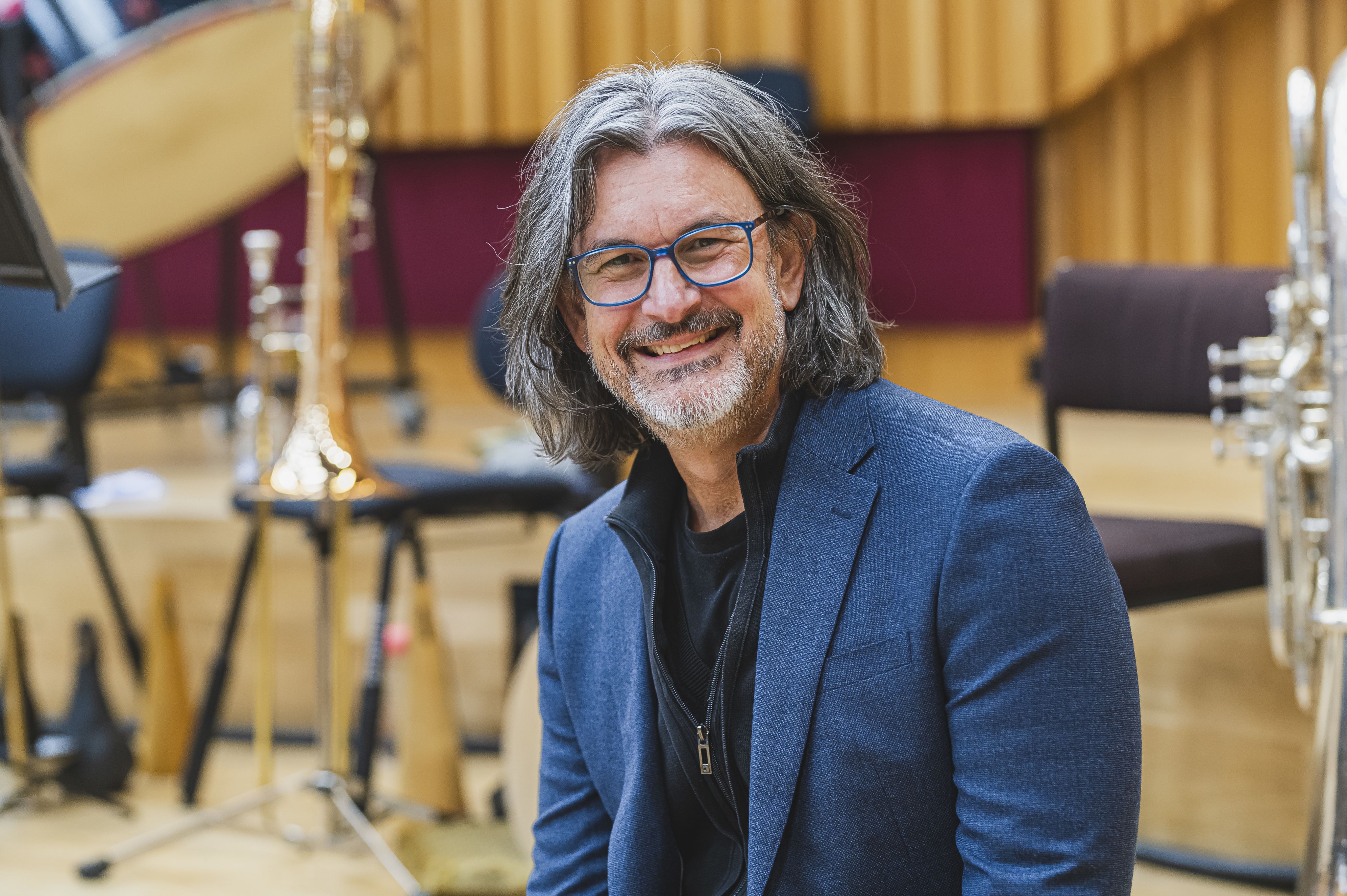
Photo: Kirsten McTernan
Photo: Kirsten McTernan
A very warm welcome to tonight’s concert, which features a single masterpiece: Handel’s Messiah. It’s a work so central to the repertoire that it’s easy to forget that it was written at a time when Handel’s stock was not exactly high. He’d left London with his tail between his legs, his last opera season having foundered. And it was to Dublin that he went, taking the score of Messiah with him.
It was a revolutionary work in several respects: drawing exclusively on passages from the Bible, Handel made the most of his experience as an opera composer in creating a compelling drama, with the chorus taking an unusually central role. To the mix, this most cosmopolitan of figures added a full gamut of national styles, from the French-style overture via the chorale tradition of his native Germany to the Italianate ‘Pastoral Symphony’.
It’s hardly surprising that the earliest audiences were enraptured and no doubt tonight we will be similarly transported, with Baroque authority John Butt leading BBC National Chorus and Orchestra of Wales and a gifted line-up of soloists.
Enjoy!
Matthew Wood
Head of Artistic Planning and Production
Please respect your fellow audience members and those listening at home. Turn off all mobile phones and electronic devices during the performance. Photography and recording are not permitted.
George Frideric Handel(1685–1759)
Messiah (1741, rev. 1743–59)

Though Handel is particularly renowned for his English oratorios, the genre didn’t become his bread and butter until relatively late in his composing career. In fact, until the 1730s, his main preoccupation was Italian opera. However, Handel’s ambitions for the opera genre were hindered by increasing production costs and shifting audience tastes. A failure to obtain enough subscribers for the 1738 opera season at the King’s Theatre prompted the composer to turn to the oratorio genre.
Oratorios had much in common with operas in terms of musical forms, styles and ideas, so Handel didn’t have to fundamentally change his compositional language. However, they attracted a wider audience by virtue of being in English and relying on biblical material, hence appealing to the Protestant middle classes who sometimes found the language and subject matter of operas inaccessible. As unstaged works designed for the concert hall, there were also fewer financial overheads. Thus the late 1730s and early 1740s saw Handel compose a stream of outstanding oratorios, including Saul, Israel in Egypt and his most famous work, Messiah, which was premiered in Dublin with great success.
Messiah is set to a text compiled by Charles Jennens and portrays Jesus Christ as the true Messiah promised by the Hebrew prophets, telling the story through the Old Testament texts that prophesy his coming and the New Testament gospels that tell of his mission, ending with the final glorification of Christ in heaven.
Though using modest forces, Messiah is grand in scope and is cast in three parts, lasting some two and a half hours. Handel’s ability to keep an audience captivated throughout is no doubt due to the extraordinary variety contained within the work.
In Part 1 the first vocal number is a beautifully lyrical tenor recitative ‘Comfort ye, my people’. It features a gently pulsating string accompaniment, like a heartbeat that underpins the soloist. By contrast, the uncertain opening of the mezzo aria ‘But who may abide the day of his coming?’ gives way to a stormy central section set to the words ‘For he is like a refiner’s fire’, with the strings playing an agitated tremolo. Famous choruses in this part include ‘For unto us a child is born’, with its sprightly tone and joyful message.
Part 2 opens with a sombre chorus, ‘Behold the Lamb of God’; its rhythm is reminiscent of majestic overtures in the French style. A tender aria for mezzo follows, ‘He was despised’, once more with a stormy central section. The crowning glory of Part 2 is the ever-popular ‘Hallelujah’ chorus, scored for the whole ensemble and featuring much musical imitation between the vocal parts, creating the effect of glorifying Jesus’s name in all corners of heaven and earth.
In Part 3 a solo trumpet has its moment of glory in the bass aria ‘The trumpet shall sound’, and the work concludes with a grand choral setting of the word ‘Amen’.
Programme note © Aditya Chander
Messiah
Part 1
1 Symphony
2 Accompanied recitative (Tenor)
Comfort ye, comfort ye, my people, saith your God. Speak ye comfortably to Jerusalem, and cry unto her, that her warfare is accomplish’d, that her iniquity is pardon’d. The voice of him that crieth in the wilderness: Prepare ye the way of the Lord, make straight in the desert a highway for our God.
Isaiah 40, vv. 1–3
3 Air (Tenor)
Ev’ry valley shall be exalted, and ev’ry mountain and hill made low: the crooked straight, and the rough places plain.
Isaiah 40, v. 4
4 Chorus
And the glory of the Lord shall be revealed. And all flesh shall see it together: for the mouth of the Lord hath spoken it.
Isaiah 40, v. 5
5 Accompanied recitative (Bass)
Thus saith the Lord of hosts: Yet once a little while and I will shake the heav’ns and the earth, the sea and the dry land; and I will shake all nations, and the desire of all nations shall come.
Haggai 2, vv. 6–7
The Lord, whom ye seek, shall suddenly come to his temple, ev’n the messenger of the covenant, whom ye delight in, behold, he shall come, saith the Lord of hosts.
Malachi 3, v. 1
6 Air (Mezzo-soprano)
But who may abide the day of his coming?
And who shall stand when he appeareth?
For he is like a refiner’s fire.
Malachi 3, v. 2
7 Chorus
And he shall purify the sons of Levi, that they may offer unto the Lord an offering in righteousness.
Malachi 3, v. 3
8 Recitative (Mezzo-soprano)
Behold, a virgin shall conceive, and bear a son, and shall call his name Emmanuel, ‘God with us’.
Isaiah 7, v. 14; Matthew 1, v. 23
9 Air (Mezzo-soprano) and Chorus
O thou that tellest good tidings to Zion, get thee up into the high mountain; O thou that tellest good tidings to Jerusalem, lift up thy voice with strength; lift it up, be not afraid; say unto the cities of Judah: Behold your God!
O thou that tellest good tidings to Zion, arise, shine; for thy light is come, and the glory of the Lord is risen upon thee.
Isaiah 40, v. 9; 60, v. 1
10 Accompanied recitative (Bass)
For, behold, darkness shall cover the earth, and gross darkness the people: but the Lord shall arise upon thee, and his glory shall be seen upon thee. And the Gentiles shall come to thy light, and kings to the brightness of thy rising.
Isaiah 60, vv. 2–3
11 Air (Bass)
The people that walked in darkness have seen a great light. And they that dwell in the land of the shadow of death, upon them hath the light shined.
Isaiah 9, v. 2
12 Chorus
For unto us a child is born, unto us a son is given, and the government shall be upon his shoulder, and his name shall be called: Wonderful, Counsellor, The mighty God, The everlasting Father, The Prince of Peace.
Isaiah 9, v. 6
13 Pifa (Pastoral Symphony)
14 Recitative and accompanied recitative (Soprano)
There were shepherds abiding in the field, keeping watch over their flock by night.
And, lo, the angel of the Lord came upon them, and the glory of the Lord shone round about them: and they were sore afraid.
Luke 2, vv. 8–9
15 Recitative (Soprano)
And the angel said unto them: Fear not: for, behold, I bring you good tidings of great joy, which shall be to all people. For unto you is born this day, in the city of David, a Saviour, which is Christ the Lord.
Luke 2, vv. 10–11
16 Accompanied recitative (Soprano)
And suddenly there was with the angel a multitude of the heav’nly host, praising God, and saying:
Luke 2, v. 13
17 Chorus
Glory to God in the highest, and peace on earth, good will toward men.
Luke 2, v. 14
18 Air (Soprano)
Rejoice greatly, O daughter of Zion, shout, O daughter of Jerusalem: behold, thy King cometh unto thee. He is the righteous Saviour, and he shall speak peace unto the heathen.
Zechariah 9, vv. 9–10
19 Recitative (Mezzo-soprano)
Then shall the eyes of the blind be open’d, and the ears of the deaf unstopped.
Then shall the lame man leap as a hart, and the tongue of the dumb shall sing.
Isaiah 35, vv. 5–6
20 Air (Mezzo-soprano, Soprano)
He shall feed his flock like a shepherd, and he shall gather the lambs with his arm, and carry them in his bosom, and gently lead those that are with young.
Isaiah 40, v. 11
Come unto him, all ye that labour, come unto him, that are heavy laden, and he will give you rest. Take his yoke upon you, and learn of him, for he is meek and lowly of heart, and ye shall find rest unto your souls.
Matthew 11, vv. 28–29
21 Chorus
His yoke is easy, his burthen is light.
Matthew 11, v. 30
INTERVAL: 20 minutes
Part 2
22 Chorus
Behold the Lamb of God, that taketh away the sin of the world.
John 1, v. 29
23 Air (Mezzo-soprano)
He was despised and rejected of men; a man of sorrows, and acquainted with grief.
Isaiah 53, v. 3
24 Chorus
Surely he hath borne our griefs and carried our sorrows: he was wounded for our transgressions, he was bruised for our iniquities; the chastisement of our peace was upon him.
Isaiah 53, vv. 4–5
25 Chorus
And with his stripes we are healed.
Isaiah 53, v. 5
26 Chorus
All we like sheep have gone astray, we have turned ev’ry one to his own way; and the Lord hath laid on him the iniquity of us all.
Isaiah 53, v. 6
27 Accompanied recitative (Tenor)
All they that see him laugh him to scorn; they shoot out their lips and shake their heads, saying …
Psalm 22, v. 7
28 Chorus
He trusted in God, that he would deliver him: let him deliver him, if he delight in him.
Psalm 22, v. 8
29 Accompanied recitative (Tenor)
Thy rebuke hath broken his heart; he is full of heaviness. He looked for some to have pity on him, but there was no man, neither found he any to comfort him.
Psalm 69, v. 20
30 Arioso (Tenor)
Behold, and see if there be any sorrow like unto his sorrow.
Lamentations 1, v. 12
31 Accompanied recitative (Soprano)
He was cut off out of the land of the living: for the transgression of thy people was he stricken.
Isaiah 53, v. 8
32 Air (Soprano)
But thou didst not leave his soul in hell; nor didst thou suffer thy Holy One to see corruption.
Psalm 16, v. 10
33 Chorus
Lift up your heads, O ye gates; and be ye lift up, ye everlasting doors; and the King of Glory shall come in.
Who is this King of Glory? The Lord strong and mighty, The Lord mighty in battle.
Lift up your heads, etc.
Who is this King of Glory? The Lord of Hosts,
He is the King of Glory.
Psalm 24, vv. 7–10
34 Recitative (Tenor)
Unto which of the angels said he at any time, thou art my son, this day have I begotten thee?
Hebrews 1, v. 5
35 Chorus
Let all the angels of God worship him.
Hebrews 1, v. 6
36 Air (Mezzo-soprano)
Thou art gone up on high; thou has led captivity captive, and received gifts for men, yea, even for thine enemies, that the Lord God might dwell among them.
Psalm 68, v. 19
37 Chorus
The Lord gave the word: great was the company of the preachers.
Psalm 68, v. 11
38 Air (Soprano)
How beautiful are the feet of them that preach the gospel of peace, and bring glad tidings of good things!
Romans 10, v. 15
39 Chorus
Their sound is gone out into all lands,
and their words unto the ends of the world.
Romans 10, v. 18
40 Air (Bass)
Why do the nations so furiously rage together, and why do the people imagine a vain thing? The kings of the earth rise up, and the rulers take counsel together against the Lord and against his anointed.
Psalm 2, v. 1–2
41 Chorus
Let us break their bonds asunder, and cast away their yokes from us.
Psalm 2, v. 3
42 Recitative (Tenor)
He that dwelleth in heaven shall laugh them to scorn: the Lord shall have them in derision.
Psalm 2, v. 4
43 Air (Tenor)
Thou shalt break them with a rod of iron; thou shalt dash them in pieces like a potter’s vessel.
Psalm 2, v. 9
44 Chorus
Hallelujah, for the Lord God omnipotent reigneth, Hallelujah. The kingdom of this world is become the kingdom of our Lord and of his Christ; and he shall reign for ever and ever, Hallelujah! King of Kings, and Lord of Lords, and he shall reign for ever and ever, Hallelujah!
Revelations 19, v. 6; 11, v. 15; 19, v. 16
Part 3
45 Air (Soprano)
I know that my Redeemer liveth, and that he shall stand at the latter day upon the earth.
And though worms destroy this body, yet in my flesh shall I see God.
Job 19, vv. 25–26
For now is Christ risen from the dead, the first fruits of them that sleep.
I Corinthians 15, v. 20
46 Chorus
Since by man came death, by man came also the resurrection of the dead. For as in Adam all die, even so in Christ shall all be made alive.
I Corinthians 15, vv. 21–22
47 Recitative (Bass)
Behold, I tell you a mystery: we shall not all sleep, but we shall all be chang’d, in a moment, in the twinkling of an eye, at the last trumpet.
I Corinthians 15, vv. 51–52
48 Air (Bass)
The trumpet shall sound, and the dead shall be raised incorruptible, and we shall be changed. For this corruptible must put on incorruption, and this mortal must put on immortality.
I Corinthians 15, vv. 52–53
49 Recitative (Mezzo-soprano)
Then shall be brought to pass the saying that is written; death is swallowed up in victory.
I Corinthians 15, v. 54
50 Duet (Mezzo-soprano, Tenor)
O death, O death, where is thy sting? O grave, where is thy victory? The sting of death is sin, and the strength of sin is the law.
I Corinthians 15, vv. 55–56
51 Chorus
But thanks be to God, who giveth us the victory through our Lord Jesus Christ.
I Corinthians 15, v. 57
52 Air (Soprano)
If God be for us, who can be against us? Who shall lay anything to the charge of God’s elect? It is God that justifieth; who is he that condemneth?
It is Christ that died, yea, rather that is risen again; who is at the right hand of God, who makes intercession for us.
Romans 8, vv. 31, 33–34
53 Chorus
Worthy is the Lamb that was slain, and hath redeemed us to God by his blood, to receive power, and riches, and wisdom, and strength, and honour, and glory, and blessing. Blessing and honour, glory and pow’r be unto him that sitteth upon the throne, and unto the Lamb, for ever and ever. Amen.
Revelations 5, vv. 12–13
Libretto by Charles Jennens (1700–73) from biblical texts
Help Us Improve Our Online Programmes.
Please take this 5-minute survey and let us know what you think of these notes.
Programme Survey
You may also like:
Missa solemnis
Thursday 10/4/25, 7.30pm
Llandaff Cathedral, Cardiff
Friday 11/4/25, 7.30pm
Brangwyn Hall, Swansea
Beethoven Missa solemnis
Andrew Manzeconductor
Carolyn Sampson soprano
Sophie Harmsen mezzo-soprano
Ed Lyon tenor
Darren Jeffery bass
BBC National Chorus of Wales
MAGNIFICENT | REVERENTIAL | WORLD-CLASS
Standing as a monument among sacred choral works, Beethoven’s Missa solemnis is a Mass setting of immense weight and scale. In it, lofty grandeur and heavenward serenity dance with angular leaping figures; violent dynamic contrasts weave through the delicately orchestrated massed forces; and a searching quality reflective of the composer’s own faith – that of looking beyond our understanding at a numinous God – is never far from the surface.
Beethoven regarded the Missa solemnis as his greatest work, and it is surely a ‘bucket list’ piece for all music lovers. With an acclaimed line-up of soloists stepping up alongside the BBC National Orchestra and Chorus of Wales, this is a performance not to be missed.
Songs of Destiny
BSL Interpretation
Friday 20/6/25, 7.30pm
BBC Hoddinott Hall, Cardiff
Brahms Serenade No. 2
Brahms Schicksalslied
Stravinsky Symphony of Psalms
Ryan Bancroft conductor
BBC National Chorus of Wales
EXQUISITE | FERVENT | PICTORIAL
If historically serenades were intended as music for entertainment, then Brahms has most definitely excelled in his Serenade No. 2. This early work oozes Brahmsian character from the outset with its lilting warmth, lively cross rhythms, and plenteous melody to charm the listener.
Similarly characteristic, but more brooding in nature is Brahms’s heady setting of the poem Schicksalslied by Friedrich Hölderlin. In two verses contrasting the lives of the eternally blissful with those subjected to cruel fate, Brahms moves between the light and airy versus the tempestuous. Stravinsky, by contrast, uses modes reminiscent of traditional Gregorian chant, paired with fugal writing and ecstatic dance motifs, to portray the text of psalms in a pure work of genius, his Symphony of Psalms! To conduct BBC National Orchestra and Chorus of Wales in their final concert of the Cardiff season we’re delighted to welcome back Principal Conductor, Ryan Bancroft.
Biographies
John Butt conductor

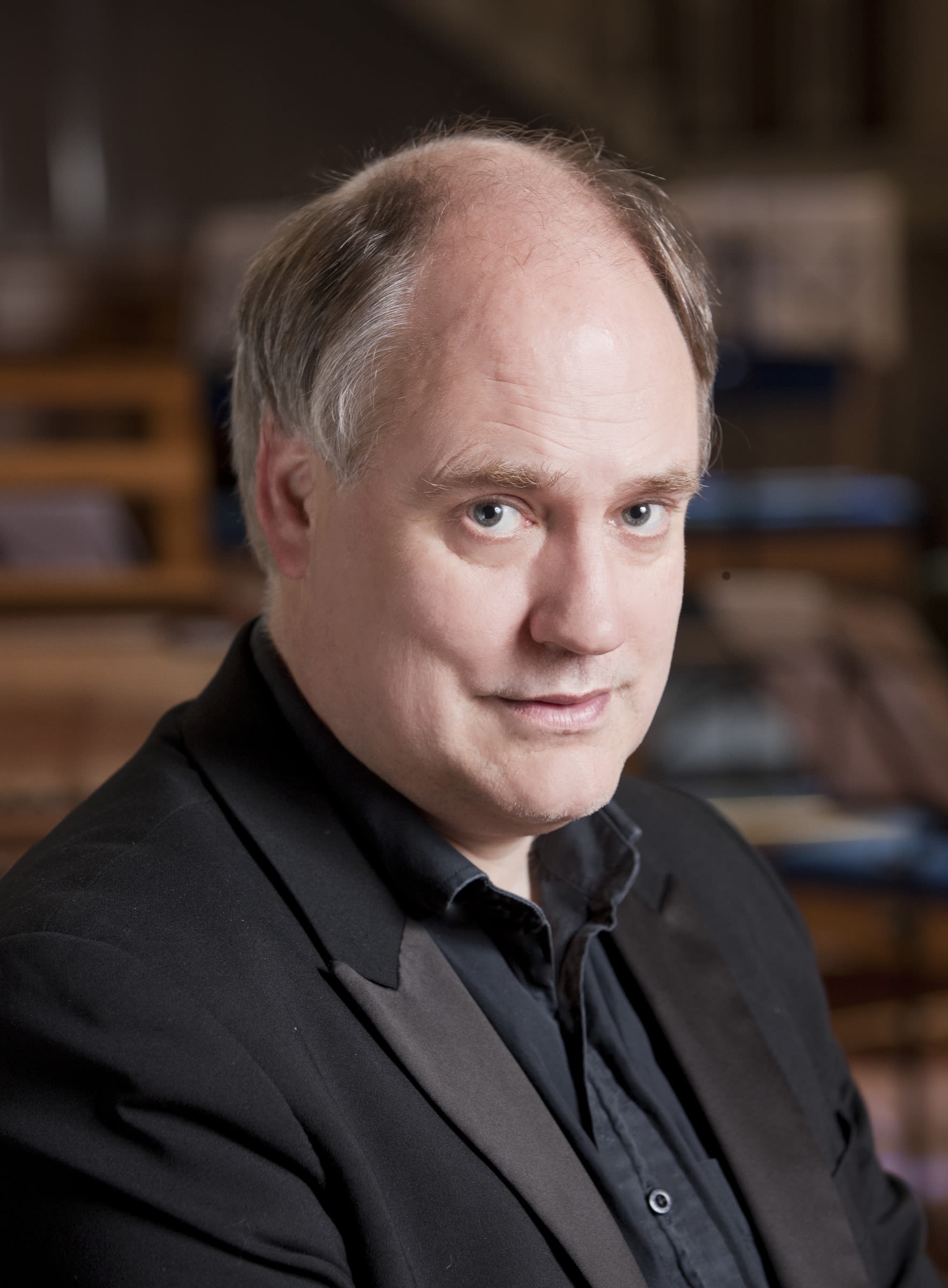
John Buttconductor
John Butt is musical director of Dunedin Consort and a Principal Artist with the Orchestra of the Age of Enlightenment. He was Gardiner Professor of Music at the University of Glasgow (2001–24), where he continues as an honorary professorial research fellow. His career began with his appointment as organ scholar at King’s College, Cambridge, and this led to various academic and performing posts (including at UC Berkeley, 1989–97). His work, as both musician and scholar, gravitates towards music of the 17th and 18th centuries, but he is also occupied by the implications of the past on our present culture. He is author of five monographs centring around Bach, the Baroque and the concepts of historical performance practice, his recent work concerns music and modernity, listening cultures and music and film.
His discography ranges from solo albums on organ and harpsichord to those with the Dunedin Consort, which include Gramophone award-winning recordings of Handel’s Messiah and Mozart’s Requiem, as well as Bach’s Passions, Mass in B minor, Magnificat, Christmas Oratorio, Brandenburg Concertos and Orchestral Suites and Monteverdi’s 1610 Vespers. A recording of Bach cantatas won a BBC Music Magazine Award in 2021.
With Dunedin and other ensembles, he has made multiple appearances at the BBC Proms and the Edinburgh International Festival. International tours have covered much of Europe, the US, Mexico and Colombia.
Since winning the W. H.Scheide prize for his first book, he has received the Dent Medal of the RMA together with the RAM/Kohn Foundation’s Bach Prize. He has been awarded an OBE, FBA and FRSE, together with the medal of the Royal College of Organists.
Fflur Wyn soprano

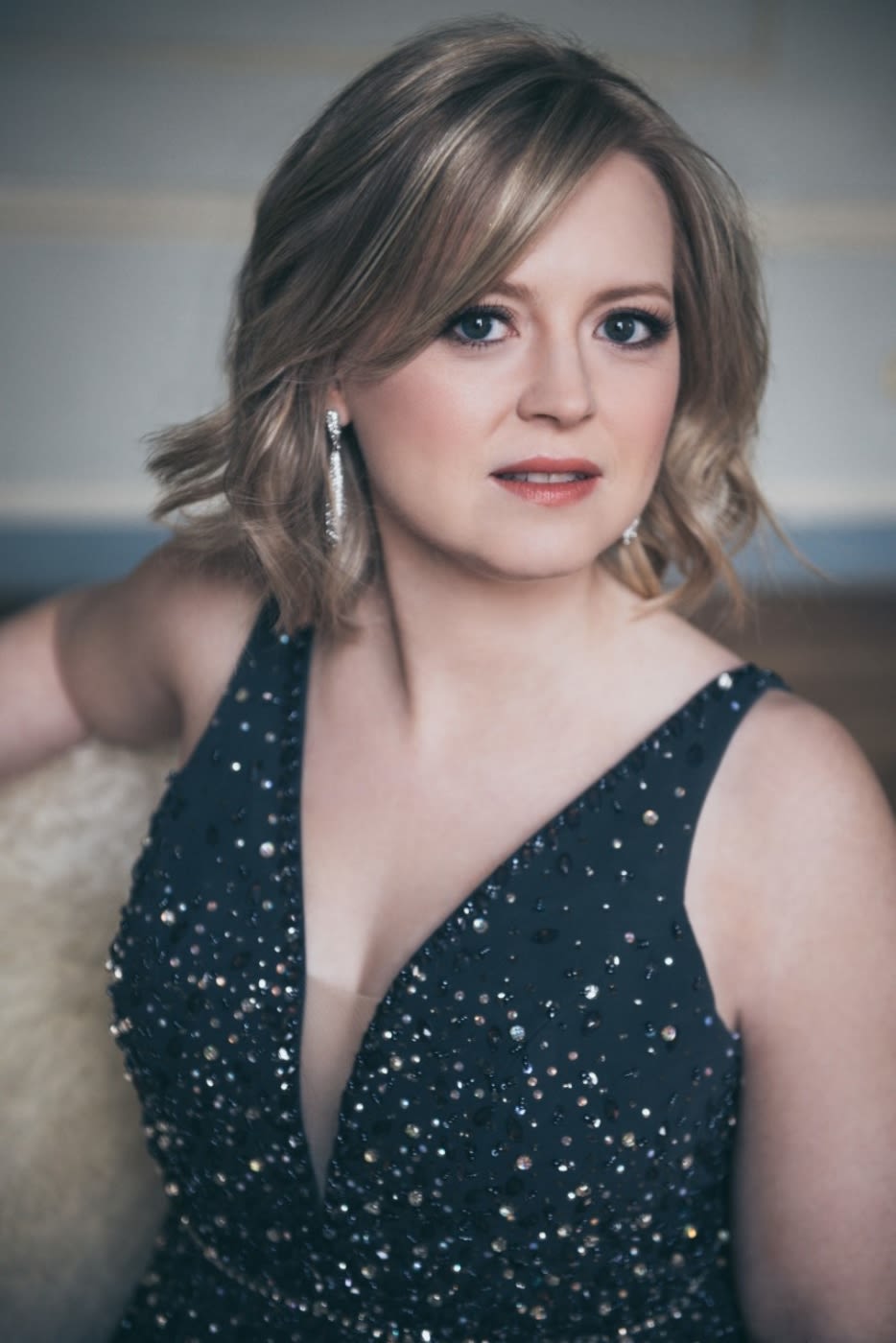
Cat Arwel
Cat Arwel
Welsh singer Fflur Wyn received a first-class honours degree from the Royal Academy of Music, and graduated from the Royal Academy Opera Course with a DipRAM. This season, she returns to Welsh National Opera to sing First Niece (Peter Grimes), and on the concert stage she returns to the Royal Scottish National Orchestra for Carmina burana and performs with the BBC Concert Orchestra.
Her operatic performances have included First Niece (Royal Danish Opera); Jemmy (William Tell), Iphis (Jephtha), Blonde (Die Entführung aus dem Serail) and Dorinda (Handel’s Orlando) for Welsh National Opera; Pamina (The Magic Flute), Vivetta (Cilea’s L’arlesiana) and the title-roles in Lakmé and Alice’s Adventures in Wonderland for Opera Holland Park; Malinka (The Excursions of Mr Brouček) forGrange Park Opera; Barbarina (The Marriage of Figaro) at La Monnaie; Lucia (TheRape of Lucretia) for Potsdamer Winteroper; Woodbird (Siegfried) for Longborough Festival Opera; Esilena (Rodrigo) for the Göttingen Handel Festival; Celia (Lucio Silla) for Buxton Opera); Euridice (Gluck’s Orfeo ed Euridice), Sophie (Werther), Marzelline (Fidelio), Susanna (The Marriage of Figaro), Morgana (Alcina), Servilia (La clemenza di Tito), Blue Fairy (Pinocchio), Woodbird (Siegfried), Achsah (Joshua), Gretel (Hansel and Gretel), Flora (The Turn of the Screw), Clerida (Croesus), Giannetta (L’elisir d’amore), Sophie (Der Rosenkavalier), Fire/Nightingale/Princess (L’enfant et les sortilèges) and Trio Soprano (Trouble in Tahiti) for Opera North; Floriana (Leoncavallo’s Zazà) for Opera Rara; Mimi (Offenbach’s Vert Vert) for Garsington Opera; Nedda (Pagliacci) with the Cambridge Philharmonic; Michal (Saul) with the BBC Singers; and Celidora (L’oca del Cairo) with the London Mozart Players.
Marta Fontanals-Simmons mezzo-soprano

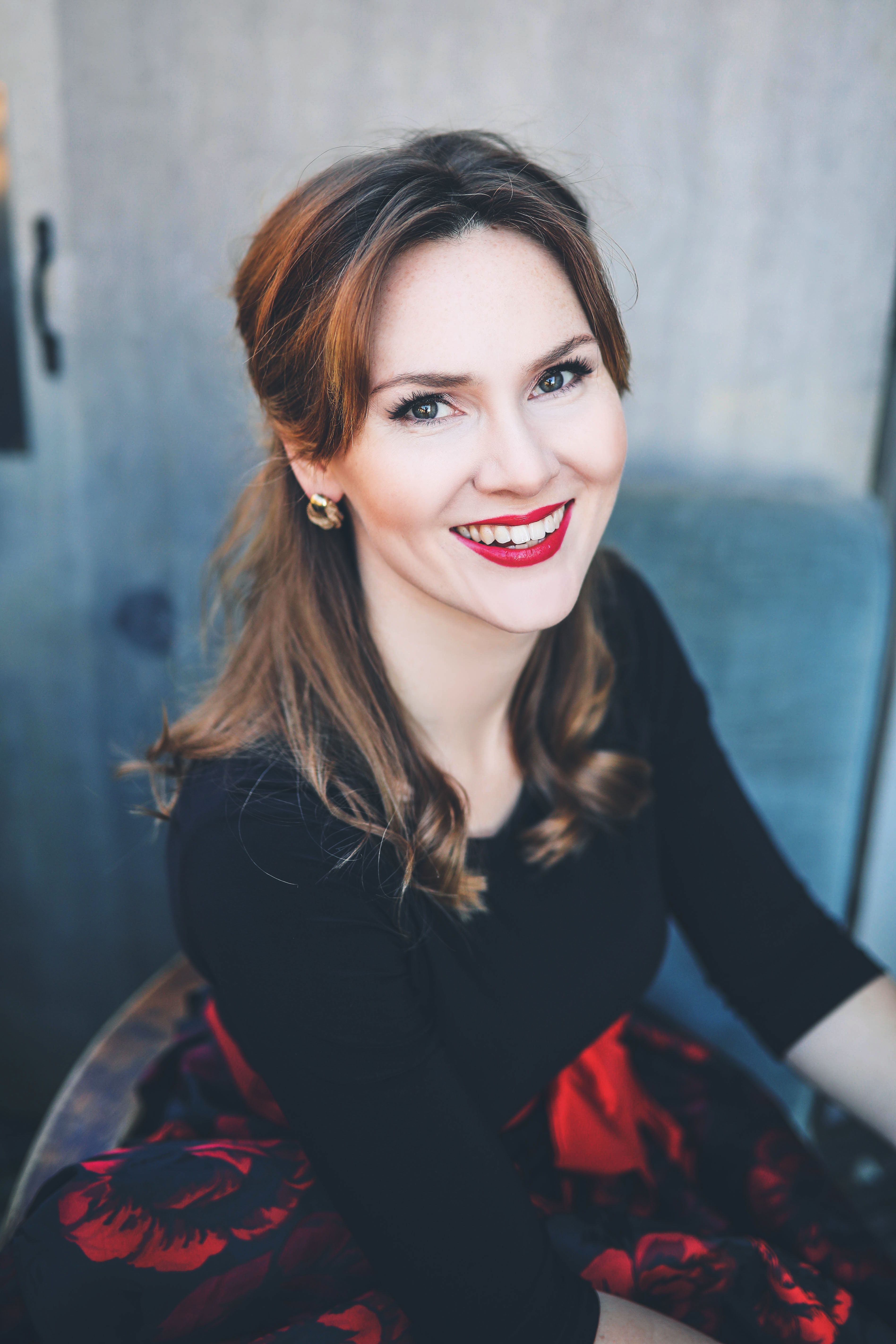
Victoria Cadisch
Victoria Cadisch
Mezzo-soprano Marta Fontanals-Simmons recently made critically acclaimed house and role debuts at the Royal Opera House, Covent Garden as Siebel (Faust), English National Opera as Eurydice Woman (Harrison Birtwistle’s The Mask of Orpheus), the Concertgebouw as Amando (Ligeti’s Le Grand Macabre) and created the title-role in the world premiere of Gavin Higgins’s The Faerie Bride at the Aldeburgh Festival.
Other recent highlights include a return to Madrid’s Teatro Real as Vlasta (The Passenger) and Kate Pinkerton (Madama Butterfly) and appearances at the Barbican and Three Choirs Festival and with her Erda Ensemble.
Recent operatic highlights include the world premiere of Anna by David Matthews at the Grange Festival, Matriosha (Prokofiev’s War and Peace) and First Maid (Elektra) both while in the Ensemble at the Grand Théâtre de Genève. For Glyndebourne, she has performed Jacquet (Ethel Smyth’s The Wreckers), Second Lady (The Magic Flute) and Lapak (The Cunning Little Vixen). For Garsington Opera, she has performed Second Lady and Cherubino (The Marriage of Figaro), the latter a role she has also sung at the Théâtre de Champs-Élysées, Opéra de Monte Carlo and Grange Park Opera.
As a recitalist, she has performed at Wigmore Hall, Barber Institute Concert Series and the Aldeburgh, Bath, Lammermuir and Oxford Song festivals, among others.
Marta Fontanals-Simmons is a graduate of the Guildhall School of Music & Drama, where she was awarded the prestigious Gold Medal in 2016 and was a Jerwood Artist at Glyndebourne for the 2015/16 season.
Joshua Ellicott tenor

Sane Seven
Sane Seven
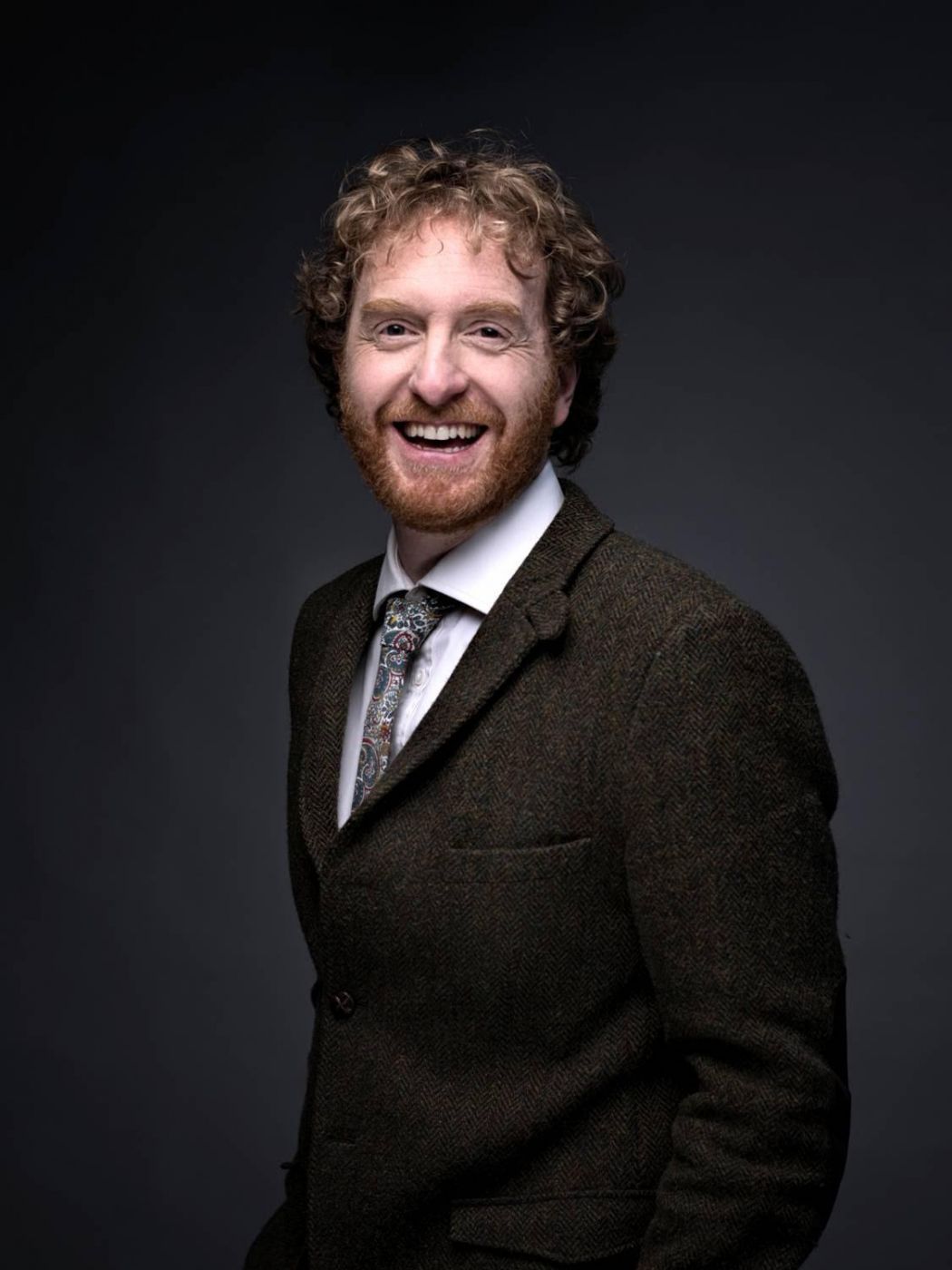
Joshua Ellicott’s sweet-toned, flexible yet powerful lyric tenor voice and versatile musicianship are apparent in the wide range of repertoire he performs, from song to opera to concert, and the list of conductors and ensembles with whom he works worldwide.
He has developed a particular affinity with the music of Bach, Handel and Monteverdi, singing the role of the Evangelist in Bach’s Passions, as well as working with conductors such as Sir Mark Elder, Daniel Harding and Esa-Pekka Salonen in repertoire ranging from Wagner via Berg to Weill.
Song is another important feature of his artistry. One of the particular successes of recent years has been a programme devised around the First World War letters of Joshua Ellicott’s Great Uncle Jack which combines readings of the letters interspersed with song. A particularly special performance took place at the Cologne Early Music Festival where some of the letters were translated into German.
This season, he returns to the Lammermuir Festival to perform his ‘Jack’ recital, gives a recital with Anna Tilbrook and sings Sir James MacMillan’s All the Hills and Vales at the Cumnock Tryst Festival, performs Elgar’s The Dream of Gerontius in Nottingham, Handel’s Susanna with the Dunedin Consort at St Martin in the Fields and Wiener Konzerthaus, Bach’s St Matthew Passion (Evangelist) with the Residentie Orkest under Richard Egarr, and a Handel programme with the Dresdner Philharmonie under Hans-Christoph Rademann.
Joshua Ellicott was born in Manchester and is a graduate of the University of York, where he read Music. He then gained a scholarship to study singing at the Guildhall School of Music & Drama. In 2006 he won the International Vocal Competition in ’s Hertegonbosch in the Netherlands.
James Atkinsonbaritone

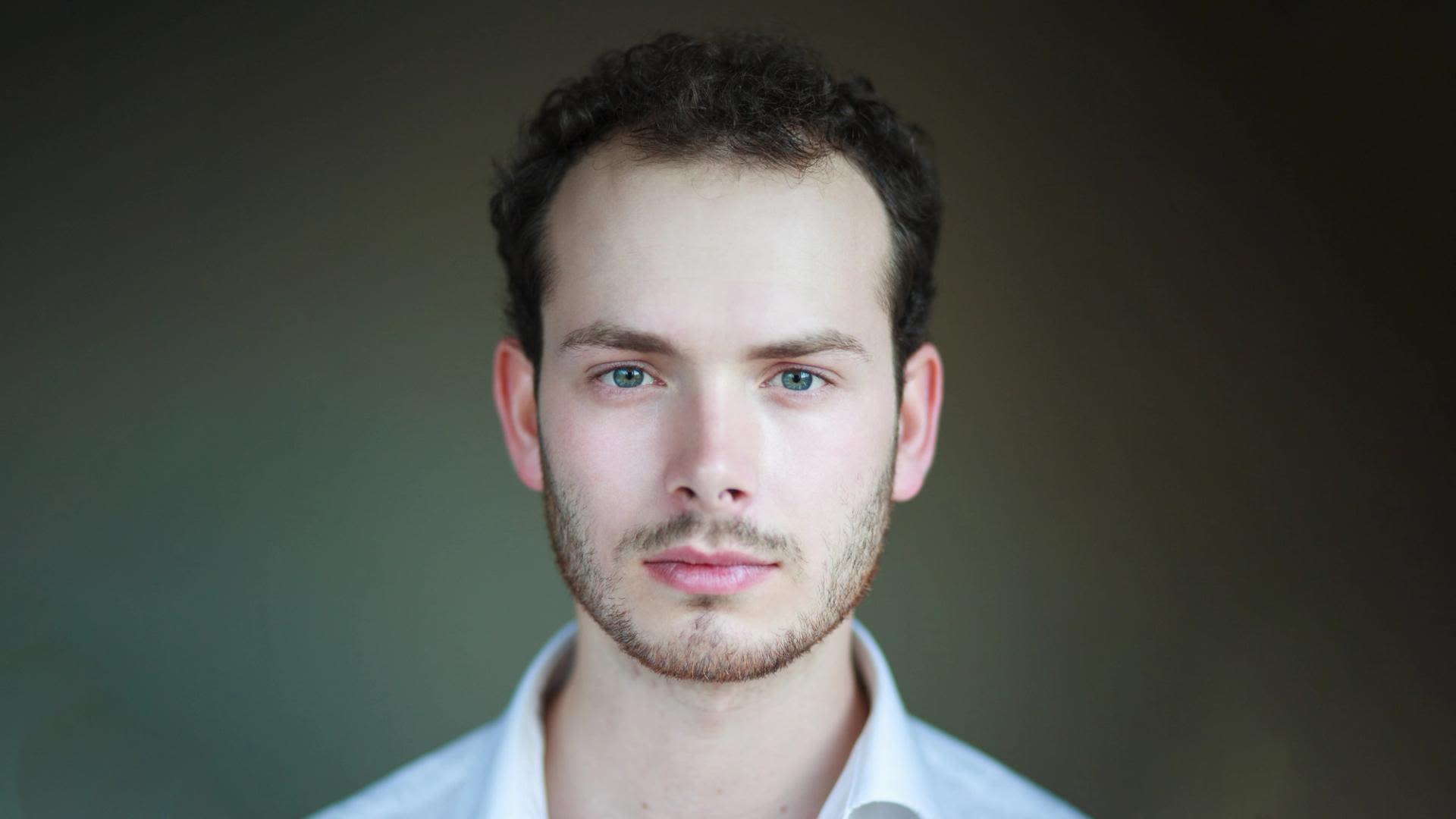
British baritone James Atkinson is a graduate of the Royal College of Music Opera Studio, where he studied with Alison Wells. He is a current BBC Radio 3 New Generation Artist (2023–25).
Already a distinguished Mozartian, he made his professional debut singing the role of Masetto (Don Giovanni) for Welsh National Opera, returning in 2024 for Guglielmo (Così fan tutte). He covered the role of Papageno for the Glyndebourne Festival and this season adds the role of Count Almaviva (The Marriage of Figaro) to his repertoire with the Mozartists and Ian Page in London and Sicily.
Last season he sang Orest (Elektra) with the Tokyo Symphony Orchestra and Jonathan Nott, Belcore (L’elisir d’amore) for Wild Arts and Steersman (Tristan und Isolde) for Luxembourg Opera. He also made his Edinburgh International Festival debut in Bach’s St Matthew Passion with the BBC Scottish Symphony Orchestra and Ryan Wigglesworth.
In concert, he sings Schubert orchestrated songs with the Luxembourg Philharmonic and Nicolas Ellis, Brahms’s A German Requiem with the Handel and Haydn Society and Bernard Labadie in Boston, and Mahler’s Des Knaben Wunderhorn with Geneva Musica.
As a recitalist he has appeared in Amsterdam, Birmingham and Oxford, as well as at Wigmore Hall, the Klosters Festival and Belfast’s Ulster Hall, where he made his BBC Proms debut.
James Atkinson’s many awards include the Royal Over-Seas League Singers’ Prize (2022), the Maureen Lehane Vocal Awards (2018) and the Mozart Competition and the Audience Prize at the Somerset Song Prize (2019).
BBC National Orchestra of Wales
For over 90 years, the BBC National Orchestra of Wales, the only professional symphony orchestra in Wales, has played an integral part in the cultural landscape of the country, occupying a distinctive role as both a broadcast and national orchestra, and serving as an ambassador of Welsh culture, regularly performing music created in Wales and championing Welsh composers and artists.
Part of BBC Cymru Wales and supported by the Arts Council of Wales, BBC NOW performs a busy schedule of concerts and broadcasts, working with acclaimed conductors and soloists from across the world, including its Principal Conductor, the award-winning Ryan Bancroft.
The orchestra is committed to working in partnership with community groups and charities, taking music out of the concert hall and into settings such as schools and hospitals to enable others to experience and be empowered by music. It undertakes workshops, concerts and side-by-side performances to inspire and encourage the next generation of performers, composers and arts leaders, and welcomes thousands of young people and community members annually through its outreach and education projects.
BBC NOW performs annually at the BBC Proms and biennially at the BBC Cardiff Singer of the World competition, and its concerts can be heard regularly across the BBC – on Radio 3, Radio Wales and Radio Cymru. On screen, music performed by BBC NOW can be heard widely across the BBC and other global channels, including the soundtrack and theme tune for Doctor Who, Planet Earth III, Prehistoric Planet, The Pact and Children in Need.
Based at BBC Hoddinott Hall, Cardiff Bay, BBC NOW utilises a state-of-the-art recording studio with a camera system for livestreams and TV broadcasts to bring BBC NOW’s music to a broader audience across Wales and the world. For more information about BBC NOW please visit bbc.co.uk/now
BBC National Chorus of Wales
Made up of over 120 singers, BBC National Chorus of Wales is one of the leading mixed symphony choruses in the UK and, while preserving its amateur status, works to the highest professional standards under its Artistic Director, Adrian Partington. Comprising a mix of amateur singers alongside students from the Royal Welsh College of Music & Drama and Cardiff University, the chorus, based at BBC Hoddinott Hall in Cardiff Bay, works regularly alongside BBC National Orchestra of Wales, as well as giving concerts in its own right.
Recent highlights include performances of Poulenc’s Stabat mater and the world premiere of Alexander Campkin’s Sound of Stardust alongside BBC Cardiff Singer of the World Audience Prize winner Julieth Lozano Rolong and choral conductor Sofi Jeannin, Shostakovich’s 13th Symphony under the baton of Principal Conductor Ryan Bancroft and Karl Jenkins’s Dewi Sant in his 80th birthday year. It also makes annual appearances at the BBC Proms, with recent performances including Verdi’s Requiem, John Adams’s Harmonium with Ryan Bancroft and Vaughan Williams’s A Sea Symphony with Andrew Manze.
This season sees the chorus perform Handel’s Messiah with early-music specialist John Butt, Beethoven’s monumental Missa solemnis at Llandaff Cathedral and in Swansea with Andrew Manze, and its annual carol concert and a concert of Brahms with Ryan Bancroft.
The chorus is committed to promoting Welsh and contemporary music, and gave the second-ever performance of Grace Williams’s Missa Cambrensis, 45 years after its premiere, a recording of which is released in 2025. It has also premiered works by many composers, including a special performance of Kate Whitley’s Speak Out, a setting of the words of Malala Yousafzai’s 2013 UN speech.
The chorus can be heard on BBC Radio 3, BBC Radio Wales and BBC Radio Cymru, and recently featured in Paul Mealor’s soundtrack for BBC Wales’s Wonders of the Celtic Deep.
Patron
HM King Charles III KG KT PC GCB
Principal Conductor
Ryan Bancroft
PrincipalGuest Conductor
Jaime Martín
Conductor Laureate
Tadaaki Otaka CBE
Composer-in-Association
Gavin Higgins
First Violins
Lesley Hatfield leader
Martin Gwilym-Jones sub-leader
Shana Douglas
Terry Porteus
Ruth Heney
Alejandro Trigo
Kerry Gordon-Smith
Anna Cleworth
Second Violins
Anna Smith *
Hatty Haynes
Ros Butler
Vickie Ringguth
Lydia Caines
Ilze Abola
Violas
Rebecca Jones *
Tetsuumi Nagata
Anna Growns
Laura Sinnerton
Cellos
Joely Koos ‡
Sandy Bartai
Alistair Howes
Double Basses
David Stark *
Emma Prince
Oboes
Amy McKean †
Alec Harmon
Bassoons
Sarah Burnett
David Buckland
Trumpets
Philippe Schartz *
Robert Samuel
Timpani
Steve Barnard *
Chamber Organ
Gregory Drott
* Section Principal
† Principal
‡ Guest Principal
The list of players was correct at the time of publication
Director Lisa Tregale
Orchestra Manager Liz Williams
Assistant Orchestra Manager Nick Olsen **
Orchestra Personnel ManagerKevin Myers
Business Coordinator Georgia Dandy
Orchestra Administrator Eleanor Hall +
Head of Artistic Planning and ProductionMatthew Wood
Artists and Projects Manager Victoria Massocchi **
Orchestra Librarian Naomi Roberts
Producer Mike Sims
Broadcast Assistantvacancy
Head of Marketing and Audiences Sassy Hicks
Marketing Coordinator Amy Campbell-Nichols +
Digital Producer Yusef Bastawy **
Social Media Coordinator Harriet Baugh
Education Producers Beatrice Carey, Rachel Naylor maternity cover
Audio Supervisors Simon Smith, Andrew Smillie
Production Business Manager Lisa Blofeld
Stage and Technical Manager Steven Brown +
Assistant Stage and Technical Manager Josh Mead +
+ Green Team member
** Diversity & Inclusion Forum
BBC National Chorus of Wales
Artistic Director Adrian Partington
Accompanist Chris Williams
Vocal Coach Gail Pearson
Soprano 1
Elizabeth Aitken
Jessica Rose Baber
Eve Bennett
Asia Bonuccelli
Anwen Boyce
Eve Carey
Iustina Chirila
Logan Clark
Charlotte Crane
Phoebe Dry
Rebekah Edwards
Ella Edwards-Beavington
Sarah Jane Griffiths
Darcie Hamilton
Kylie Hansen
Claire Hardy
Megan Hastings
Delyth Jewell
Vanessa John-Hall
Rebecca Jolliffe
Lucie Jones
Rachael Leary
Katherine Meredith
Bethan Nicholas-Thomas
Emma Noonan
Joanna Osborn
Angharad Phillips
Elizabeth Phillips
Ellen Steward
Helen Thomas
Jo Westaway
Hannah Willman
Lydia Wilson
Soprano 2
Megan Allen
Marcella Benson
Angie Contestabile
Denise Cooke
Isabel D’Avanzo
Esme Daniell-Greenhalgh
Rhian Davies
Sofia Franklin
Sinead Gallagher
Penelope George
Rhianwen Hallows
Cerys Herbert-Stott
Emily Hopkins
Rhiannon Humphreys
Victoria Illsley
Francesca Ingall
Isabel Jackson
Margaret Lake
Carolyn Lee
Lucy Paterson
Kensey Petschow
Sarah Roberts
Samar Small
Melanie Taylor
Florence Waddington
Hannah Williams
Katherine Woolley
Alto 1
Ceri-Ann Absalom
Grace Barrett
Catherine Bradfield
Alison Davies
Catherine Duffy
Anna Eldred
Rachel Farebrother
Kathrin Hammer
Naomi Hitchings
Rhian-Carys Jones
Lisa May
Shanta Miller
Bethany Piper
Heather Price
Rhian Pullen
Avery Rabbitt
Kate Reynolds
Amy Roberts
Zozi Sookanadenchetty
Cerys Thomas
Vicki Westwell
Jessica Williams
Alto 2
Jennie Beard
Yasmin Browne
Alex Butler
Darcy Cole
Charley Davies
Heledd Evans
Annette Hecht
Yvonne Higginbottom
Rhian Humphreys
Mattina Keith
Josie Nemeth
Eleanor Prescott
Cerian Rolls
Sian Schutz
Julie Wilcox
Sarah Willmott
Tenor 1
Oli Bourne
Keith Davies
Roland George
Phil Holtam
Tom Lazell
Andrew Lunn
Andrew Morris
Carwyn Whomsley
Nicholas Willmott
Tenor 2
Rhys Archer
Orin Daniel
Joshua Dickin
Jonathan Dobie
Michael Ennis
Peter Holmes
Rory McIlver
Owen Parsons
Sam Proll
Richard Shearman
Richard Wilcox
Bass 1
Noah Boneham-Hill
Peter Cooke
David Davies
Ethan Davies
John Davies
Claurindo Diakiesse
Josh Eatough
Raphael Grigoletto
David Hopkins
Jack Irwin
Morgan Jones
Emyr Wynne Jones
John Rhys Liddington
Lucas Maunder
Ben Pinnow
Jez Piper
Joseph Pitkethly
Neil Schofield
David Stephens
Andrew Watt
Alun Williams
Daniel Williams
Bass 2
Jeffrey Davies
Lyndon Davies
Ollie Hodgson
Stuart Hogg
David Hutchings
David McLain
Gareth Nixon
Mike Osborn
David Rodgers
The list of singers was correct at the time of publication


