
CoLaboratory: Fiona Monbet
Thursday 19/10/23, 7.30pm
BBC Hoddinott Hall, Cardiff


Jacques Ibert
Divertissement 15’
Erik Satie
La belle excentrique 9’
Germaine Tailleferre
Petite Suite 5’
Darius Milhaud
Le boeuf sur le toit 15’
INTERVAL: 20 minutes
Leonard Bernstein
Three Dance Episodes from ‘On the Town’ 11’
Fiona Monbet
Faubourg 23: Suite for jazz band and orchestra world premiere c30’
Fiona Monbetviolin/director
Zacharie Abraham double bass
Auxane Cartigny piano
Philippe Maniez drum kit


This concert is being broadcast live by BBC Radio 3 inRadio 3 in Concert and being livestreamed via the BBC NOW website.
Introduction
A warm welcome to tonight’s concert, in which BBC National Orchestra of Wales is joined by violinist and conductor/composer Fiona Monbet for the first CoLaboratory concert of the season.
Fiona Monbet’s passion for jazz and classical music runs through the entire concert, the first half of which takes us to her native France. In mood, we move from the extrovert playfulness of Ibert’s Divertissement via the beautifully etched finesse of Germaine Tailleferre’s Petite Suite to works staged by the anarchic visionary Jean Cocteau: Satie’s La belle excentrique and Milhaud’s Le boeuf sur le toit.
For the second half we cross the Atlantic for Bernstein’s irresistible jazz-infused Three Dance Episodes that he drew from his hit musical On the Town, his love letter to the city of New York. To conclude, the world premiere of Fiona Monbet’s suite for jazz band and orchestraFaubourg 23, which brings together her twin musical fascinations to compelling effect.
Enjoy!
Please respect your fellow audience members and those listening at home. Turn off all mobile phones and electronic devices during the performance. Photography and recording are not permitted.
Jacques Ibert (1890–1962)
Divertissement(1929, arr. 1930)

1 Introduction
2 Cortège
3 Nocturne
4 Valse
5 Parade
6 Finale
Ibert’s often rambunctious Divertissement suits its title; this is unquestionably music to divert and entertain. Imbued with the spirit of burlesque, its six contrasting movements have their origins in incidental music he wrote for a 1929 production of the popular Eugène Labiche comedy Un chapeau de paille d’Italie (‘The Italian Straw Hat’). Farce reigns supreme in the play as a horse eats a straw hat and illicit romantic entanglements form the backdrop for the quest to track down a replacement.
Divertissement is scored for chamber orchestra with a smattering of percussion and a standout part for piano. A rough-and-tumble Introduction leads into the Cortège, a movement where a glimpse of Mendelssohn’s famous Wedding March can be heard among the ragtime rhythms. A brief night-time interlude featuring the clarinet provides a moment of pause before the playful swirling Valseensues. This is indebted to European waltzes, Viennese sophistication eventually ceding to vaudeville as a drowsy trombone takes the lead. The penultimate movement sees the trappings of military marches come to the fore – albeit for toy soldiers rather than any genuine battlefield – while in the Finale whistles blare en route to a riotous conclusion.
Erik Satie (1866–1925)
La belle excentrique(1920)
1 Grande ritournelle
2 Marche franco-lunaire
3 Valse du ‘mystérieux baiser dans l’oeil’
4 Cancan grand-mondain
It was for the avant-garde dancer-choreographer known as Caryathis that Satie composed the three dances and interlude that make up La belle excentrique (‘The Eccentric Beauty’). Caryathis – real name Élise Jouhandeau, née Toulemont – was a friend of Coco Chanel, a firm feature of the Parisian social scene, and known for her daring. In collaboration with artist, writer and general man-about-town Jean Cocteau she planned an evening of dance and music at Paris’s Théâtre du Colisée on 14 June 1921. There, alongside works by Ravel and the young composers Cocteau was then championing as Les Six, La belle excentrique received its first performance.
Satie’s original plan was for a series of musical portraits of Paris, but ultimately this was revised into its current form, an idiosyncratic play on popular dances for chamber orchestra. After recycling an old cakewalk number for the ‘Grande ritournelle’ the suite as it now stands moves through the amusingly titled ‘Franco-lunar March’, ‘Waltz of the Mysterious Kiss in the Eye’ and ‘High-Society Cancan’. The result is quintessential Satie: the sounds of dance and music halls transformed and knocked off course with unexpected dissonances, rhythmic inventiveness and ribald orchestration.
Germaine Tailleferre (1892–1983)
Petite Suite(1957)
1 Prélude
2 Sicilienne
3 Les filles de La Rochelle
Tailleferre’s music is known for its refined neo-Classical style and sense of balance. This is found across her output, from the major commissions she undertook in the 1920s to later pieces such as the Petite Suite. The suite was written in 1957 for the French broadcaster RTF and comprises three elegant, if somewhat melancholy, movements. The ‘Prélude’ immerses us in a distinctive sound-world, with fleeting references to Stravinsky emerging from an often shimmering orchestral texture. Dance rhythms are a recurring feature in the suite and a gentle almost ticking triple-time metre forms the backdrop for soloistic melodic lines here. In the central ‘Sicilienne’, which also has dance at its core, there is a wistfulness to its characteristic sway, while the final ‘Les filles de La Rochelle’ is an arrangement of a French sea shanty about a group of 15-year-old girls from La Rochelle who take to the seas. Tailleferre’s rousing interpretation captures the independence of the girls who decide to go it alone.
Darius Milhaud (1892–1974)
Le boeuf sur le toit, Op. 58(1919)
On 21 February 1920aa troupe of dancers and acrobats in giant cardboard masks took to the stage of the Comédie des Champs-Élysées for the premiere of a new ballet, Le boeuf sur le toit (‘The Ox on the Roof’) The characters they played were to be instantly recognisable, with the Red-Haired Lady, the Jockey, the Man in Evening Dress and the Policeman – among others – populating an absurdist tale cooked up by Cocteau and set in an American bar. Featuring striking designs by Raoul Dufy and choreography by Léonide Massine, the ballet seemed to reflect all that was new and fashionable in interwar Paris.
For Milhaud, the score heralded his return to France following two years spent in Brazil during the war. He had been embassy secretary to writer-turned-diplomat Paul Claudel in Rio de Janeiro but, importantly, also found plenty of time to explore local musical culture. The effect of his discovery and interest in Brazilian music reverberates through Le boeuf sur le toit. Around 25 themes are now acknowledged to have roots in Brazilian songs and dances, with Milhaud later recalling the process of composing the work back in France: ‘Still haunted by the memories of Brazil, I assembled a few popular melodies, tangos, maxixes, sambas and even a Portuguese fado and transcribed them with a rondo-like theme recurring between each successive pair.’
The opening theme, complete with prominent güiro (a ribbed gourd played with a wooden scraper), indeed returns time and again, acting as punctuation between numerous contrasting episodes. From toe-tapping syncopation to sentimental lyricism, this is a colourful and rhythmically vibrant score that makes sizeable demands of its players, particularly the wind and brass. Moreover, for all that it looks to the popular and vernacular, Milhaud’s penchant for polytonality and piquant dissonances are a reminder of his decidedly modern credentials.
Perhaps surprisingly, given the extent of the dance styles to be found – not to mention its sheer danceability – Milhaud had first written it to accompany a silent Charlie Chaplin film. Cocteau convinced him to use it for a ballet (despite no Brazilian connection), with the only hint of its earlier life now found in its subtitle, ‘cinéma-symphonie’.
Nodiadau’r rhaglen © Sophie Redfern
INTERVAL: 20 minutes
Leonard Bernstein (1918–90)
Three Dance Episodes from ‘On the Town’ (1944, arr. 1945)

1 The Great Lover Displays Himself
2 Lonely Town: Pas de deux
3 Times Square: 1944
‘There are ballets, of course. Cripes, what I would give to see a good ole hoof and chorus again,’ complained the reviewer for the New York Daily News after the wartime musical On the Town opened on Broadway on 28 December 1944. While most critics found much to praise – it was described as ‘the freshest, most engaging musical show to come this way since the golden day of Oklahoma!’ in TheNew York Times – some felt it had ideas above its station. Alongside the usual songs, up-and-coming choreographer Jerome Robbins included eight ballets (all of which moved the plot forwards) and Bernstein composed more than 90 minutes of original music symphonic in scale and approach. For a lighthearted show about sailors on 24-hour shore leave in New York City, even the creators had to admit they had been ambitious: ‘All right. It was revolutionary. I’ll admit it,’ was Bernstein’s recollection decades later.
In the wake of On the Town’s successin the theatre, Bernstein created the Three Dance Episodes as a party piece for the concert hall. Drawing on the show’s extensive dance music, the three contrasting movements provide a vivid snapshot of the city. They open with the music for a dream sequence involving the transformation of the sensitive and romantic sailor Gabey into a dashing and confident lover, with Bernstein’s playful and occasionally brash writing featuring returning motifs and a distinctive rhythmic interplay. The bluesy ballad ‘Lonely Town: Pas de deux’ that follows is built around the contemplative song ‘Lonely Town’, while the concluding ‘Times Square: 1944’ plunges us into the hustle and bustle of Times Square on a night out with the sailors and their new-found girls. As it races to the finish, Bernstein brings together jazz, fiendishly difficult syncopations and the sound of the arcade and music hall. In the words of the sailors: ‘New York, New York! It’s a helluva town!’
Programme note © Sophie Redfern
Fiona Monbet (born 1989)
Faubourg 23: Suite for jazz band and orchestra (2023)
world premiere
Fiona Monbetviolin/director
Auxane Cartigny piano
Zacharie Abraham double bass
Philippe Maniezdrum kit
This piece revolves very much around the piano. I wrote it for Auxane Cartigny, a magnificent jazz pianist capable of great freedom in all styles, but also in the waltz musette style. The piano unfurls like a continuous thread of thought, until the violin disrupts the tranquil course of things.
The work begins in old Paris and its Faubourg atmosphere, conjured by waltzes and references to Edith Piaf and Joséphine Baker. A ‘faubourg’ also refers to what lies beyond the city’s walls, beyond its boundaries, and thus the writing changes, taking us elsewhere and bringing together very different worlds, or worlds yet to be invented.
My focus was on writing the transitions between the different musical worlds found throughout the piece, the idea being that you can make huge leaps in style or mood as long as you approach it subtly. It alternates between a sort of concerto form and a more orchestral jazz atmosphere.
In the back of my mind, while working on transition and transformation, was the question of heritage, and what we can do with ours today.
Programme note © Fiona Monbet
Help Us Improve Our Online Programmes.
Please take this 5-minute survey and let us know what you think of these notes.
Programme Survey
You may also like:
Scheherazade
Saturday 11/11/23, 7.30pm
St David’s Hall, Cardiff
Dukas The Sorcerer’s Apprentice
Grieg Piano Concerto
Rimsky-Korsakov Scheherazade
Lionel Bringuierconductor
Zee Zeepiano
MAGICAL | CAPTIVATING | DAZZLING
This concert is imbued with an air of magic, kicking off with The Sorcerer’s Apprentice byDukas. Remarkable musical storytelling depicts an enchanted broom and the chaos that ensues. Truly spellbinding!
From the unmistakable introduction to the original quality of its writing, it’s easy to understand why Grieg’s Piano Concerto is considered such a masterpiece; with its dazzling virtuosity and strong Norwegian identity, the composer’s affinity with folk song is ever present. Then Rimsky-Korsakov takes up the mantle with music of seduction and adventure in Scheherazade,his version of A Thousand and One Nights. This dazzlingly opulent work is full of colour, rhythmic vitality and flavours of the Orient.
Playing Picasso
Friday 8/12/23, 7.30pm
BBC Hoddinott Hall, Cardiff
Stravinsky Pulcinella
Satie Parade
Stravinsky Ragtime
Falla The Three-Cornered Hat – Suite No. 2
Ryan Bancroftconductor
Katharine Dain soprano
Jorge Navarro Colorado tenor
Michel de Souzabaritone
COLOURFUL | IMPASSIONED | ENLIGHTENING
Pablo Picasso is one of the most influential artists of the 20th century, famed, not least, for co-founding the Cubist movement; surprisingly less known is his close involvement in the costume designs for many ground-breaking ballets. His creative union with ballet impresario Serge Diaghilev was one of the most potent collaborations of the 20th century, not only altering the nature of ballet, but for Picasso opening up a whole new world of artistic exploration.
Fifty years after Picasso’s death we celebrate his legacy in a concert of music from the ballets he designed. These range from Stravinsky’s Pulcinella, in which traditional stories are ‘entirely transformed into striking modernist masterpieces, reimagining the ballet as a site for clashing avant-garde styles, shapes and forms’ through Picasso’s sets and costume designs, to Satie’s angular, confrontational and avant-garde Parade and Falla’s Three-Cornered Hat, telling a Spanish love story set within the Andalusian mountains.
Jurassic Park in Concert
Wednesday 13/12/23, 7.30pm
St David’s Hall, Cardiff
Thursday 14/12/23, 7.30pm
Brangwyn Hall, Swansea
Benjamin Popeconductor
MULTIGENERATIONAL | NOSTALGIC | THRILLING
Who can forget the earth-quaking, thunderous plod of a T rex, or the terrifying sounds of a velociraptor? Join BBC NOW this December for Jurassic Park live in concert.
Follow the story of Dr Alan Grant and Ellie Sattler as they battle for survival on Isla Nublar when the theme park’s newly revived dinosaurs escape their enclosures and seek to rule the earth once more. Featuring stunning visual imagery and ground-breaking special effects, this action-packed adventure may not be your typical Christmas concert, but with BBC National Orchestra of Wales performing John Williams’s epic score live to film, it is a more than fitting way to celebrate the 30th anniversary of the iconic film!
Biographies
Fiona Monbetviolin/director

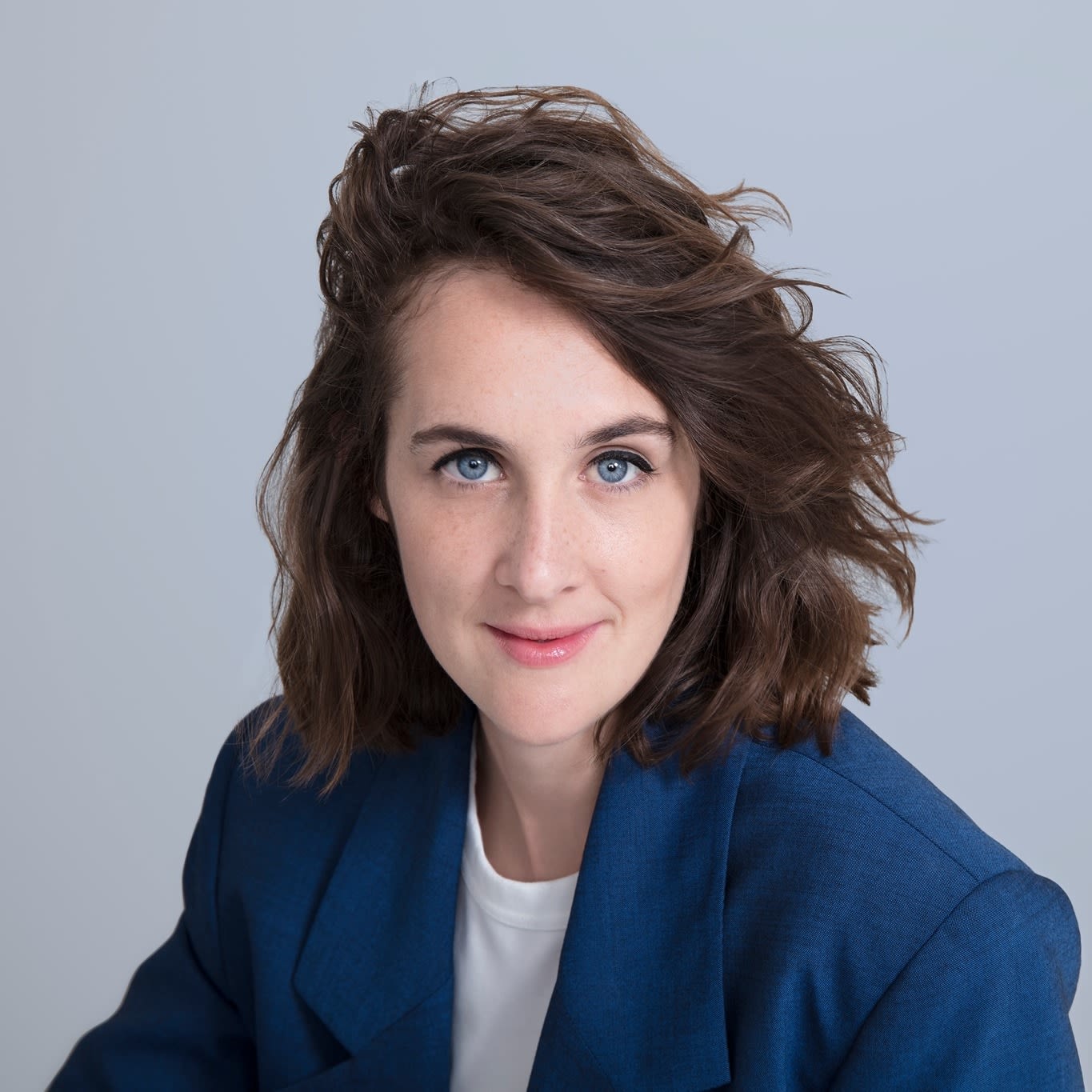
Fiona Monbet began a jazz career before studying classical violin at the Paris Conservatoire, from which she graduated in 2015. Her influences are wide-ranging and she has collaborated with many artists, including Philip Catherine, Marcel Azzola, Biréli Lagrène, Adrien Moignard and Ibrahim Maalouf.
As a performer and composer, she has several albums to her credit: Django Club (2011), O’Ceol (2013) and Contrebande (2018). The latest – Maelström, featuring jazz trio and chamber orchestra – was recorded last year and has toured to the Jazz in Marciac Festival. It was subsequently arranged for symphony orchestra and the Danish Radio Big Band.
In addition to her activities as a jazz artist, she is also a conductor. She regularly appears in her native France and internationally, and has conducted leading orchestras and opera companies in the United Kingdom and Ireland. In 2017 she co-founded Miroirs Étendus, of which she is the principal conductor.
Fiona Monbet’s dual interests in jazz and classical music have led to her directing projects that bring together contemporary music, jazz and world music with the symphony orchestra. These include collaborations with Seckou Keita, António Zambujo, Ana Moura and MC Solaar.
Since September 2020 she has been artist-in-residence with the Orchestre National de Bretagne, which she has regularly conducted, including at the Festival Interceltique de Lorient, Opéra de Rennes and Festival de Saint-Denis. This season she is also artist-in-residence at the Irish Cultural Centre in Paris.
BBC National Orchestra of Wales
For over 90 years, BBC National Orchestra of Wales has played an integral part in the cultural landscape of Wales, occupying a distinctive role as both broadcast and national symphony orchestra. Part of BBC Wales and supported by the Arts Council of Wales, it has a busy schedule of live concerts throughout Wales, the rest of the UK and the world.
The orchestra is an ambassador of Welsh music and champions contemporary composers and musicians; its concerts can be heard regularly across the BBC – on Radio 3, Radio Wales and Radio Cymru.
BBC NOW works closely with schools and music organisations throughout Wales and regularly undertakes workshops, side-by-side performances and young composer initiatives to inspire and encourage the next generation of performers, composers and arts leaders.
The orchestra is based at BBC Hoddinott Hall in Cardiff Bay, where its purpose-built studio not only provides the perfect concert space, but also acts as a broadcast centre from where its live-streamed concerts and pre-recorded content are presented as part of its popular Digital Concert Series.
For further information please visit the BBC National Orchestra and Chorus of Wales's website: bbc.co.uk/now
Patron
HM King Charles III KG KT PC GCB
Principal Conductor
Ryan Bancroft
Conductor Laureate
Tadaaki Otaka CBE
Composer-in-Association
Gavin Higgins
Composer Affiliate
Sarah Lianne Lewis
First Violins
Lesley Hatfield leader
Nick Whiting associate leader
Martin Gwilym-Jones sub-leader
Terry Porteus
Suzanne Casey
Carmel Barber
Rebecca Totterdell
Emilie Godden
Anna Cleworth
Juan Gonzalez
Ruth Heney
Daniel Joseph
Zanete Uskane
Gary George-Veale
SecondViolins
Anna Smith *
Sheila Smith
Vickie Ringguth
Joseph Williams
Michael Topping
Katherine Miller
Beverley Wescott
Roussanka Karatchivieva
Lydia Caines
Ilze Abola
Jane Sinclair
Anna Szabo
Violas
Francis Kefford ‡
Peter Taylor
Liam Brolly
Laura Sinnerton
Catherine Palmer
Robert Gibbons
Ania Leadbeater
Charlotte Limb
Lucy Theo
Cellos
Reinoud Ford ‡
Keith Hewitt #
Jessica Feaver
Sandy Bartai
Rachel Ford
Alistair Howes
Carolyn Hewitt
Kathryn Graham
DoubleBasses
David Stark *
Christopher Wescott
Richard Gibbons
David F. C. Johnson
Antonia Bakewell
Thea Sayer
Flutes
Matthew Featherstone *
John Hall †
Lindsey Ellis
Piccolo
Lindsey Ellis †
Oboes
Steve Hudson *
Sarah-Jayne Porsmoguer
Cor anglais
Sarah-Jayne Porsmoguer †
Clarinets
Fiona Cross ‡
Jennie Joy Porton
Lenny Sayers
Bass Clarinet
Lenny Sayers †
Bassoons
Guylaine Eckersley ‡
David Buckland
Contrabassoon
David Buckland †
Horns
Tim Thorpe *
Meilyr Hughes
Neil Shewan †
Trumpets
Philippe Schartz *
Robert Samuel
Corey Morris
Jean Paul Gervasoni
Trombones
Donal Bannister*
Simon Baker
Bass Trombone
Darren Smith †
Tuba
Daniel Trodden †
Timpani
Rhys Matthews
Percussion
Phil Hughes *
Rhydian Griffiths
James Bower
Max Ireland
Drum Kit
Rhydian Griffiths
Harp
Valerie Aldrich-Smith †
Piano/Celesta
Catherine Roe Williams
* Section Principal
† Principal
‡ Guest Principal
# Assistant String Principal
The list of players was correct at the time of publication
Director Lisa Tregale
Orchestra Manager Vicky James
Assistant Orchestra Manager Nick Olsen
Orchestra Coordinator, Operations Kevin Myers
Business Coordinator Caryl Evans
Orchestra Administrator Eleanor Hall
Head of Artistic Production Matthew Wood
Artists and Projects Manager Eleanor Phillips
Orchestra Librarian Eugene Monteith **
Producer Mike Sims
Head of Marketing and Audiences Sassy Hicks
Marketing Coordinator Amy Campbell +
Digital Producer Yusef Bastawy
Social Media Coordinator Harriet Baugh
Education Producers Beatrice Carey, Rhonwen Jones **
Audio Supervisors Simon Smith, Andrew Smillie
Production Business Manager Lisa Blofeld
Stage and Technical Manager Steven Brown +
Assistant Stage and Technical Manager Josh Mead
BBC Wales Apprentices Analese Thomas-Strachan, Jordan Woodley
+ Green Team member
** Diversity & Inclusion Forum