
Sounds of Nature
Thursday 6/11/25, 7.30pm
Brangwyn Hall, Swansea


Ralph Vaughan Williams
The Wasps – overture 9’
Ester Mägi
Bukoolika UK premiere 10’
Helen Grime
Trumpet Concerto, ‘night-sky-blue’ 22’
INTERVAL: 20 minutes
Carl Nielsen
Symphony No. 4, ‘The Inextinguishable’ 36’
Arvo Volmer conductor
Matilda Lloyd trumpet


The concert is being recorded by BBC Radio 3 for future broadcast; it will be available for 30 days after broadcast via BBC Sounds, where you can also find podcasts and music mixes.
Introduction
Welcome to tonight’s concert, for which we’re delighted to welcome conductor Arvo Volmer for a programme inspired by nature in its varied forms.
Vaughan Williams’s overture to The Wasps was inspired by the Ancient Greek comedy by Aristophanes, and his evident delight in the subject matter can be heard right from the off.
Next, we have the long-awaited UK premiere of a work by Arvo Volmer’s fellow-Estonian Ester Mägi. In Bukoolika she movingly conjures the herding songs and folk tunes of her beloved countryside.
For her Trumpet Concerto, poetically subtitled ‘night-sky-blue’, Helen Grime took inspiration from a book of photographs of the natural world captured after dark. Tonight it is played by rising star Matilda Lloyd, who first made her name as a teenager when she won the Brass Final of BBC Young Musician of the Year in 2014.
Nielsen’s extraordinary spirit of optimism is nowhere more dramatically revealed than in his Fourth Symphony, ‘The Inextinguishable’. Even though it was written during the First World War, the composer declared: ‘In case all the world was devastated … then nature would still begin to breed new life again, begin to push forward again … These forces, which are “inextinguishable”, I have tried to represent.’
Enjoy!
Lisa Tregale
Director
Please respect your fellow audience members and those listening at home: mobile phones may be kept on but on silent and with the brightness turned down; other electronic devices should be switched off during the performance. Photography and recording are not permitted.
Ralph Vaughan Williams (1872–1958)
The Wasps – overture(1909)

Every year since 1882, students and alumni of Cambridge University have got together to perform an Ancient Greek play. In 1909 they decided on Aristophanes’s comedy The Wasps, a bizarre story of father-son conflict, in which the father is rescued from effective house arrest by a wasp-like swarm of friends. For the theatre music they chose Vaughan Williams, already in his mid-thirties but a year short of his first breakthrough successes with his Sea Symphony and Fantasia on a Theme by Thomas Tallis.
For the event, Vaughan Williams provided over 100 minutes of music. From this he later extracted a five-movement suite. As a whole this hasn’t caught on, but the overture soon took on a life of its own in the concert hall. It’s easy to see why. The opening, with its wasp-like buzzing sounds passed around the orchestra, is a brilliant piece of musical mimicry – a trick Vaughan Williams had clearly picked up during his studies with the magical musical scene-painter Maurice Ravel the previous year. From this a bustling, vivacious allegro emerges, propelled by three marvellous tunes, each of which shows how much Vaughan Williams had learned during his extensive folk music researches. If the end result sounds more like Gloucestershire than Ancient Greece, who cares?
Programme note © Stephen Johnson
Ester Mägi (1922–2021)
Bukoolika (1983)
UK premiere
From her emergence in the 1950s, Ester Mägi, born in Tallinn on 10 January 1922 and dying just shy of her 100th birthday, quietly built up a body of works that can be seen as among the most directly representative of Estonian national music; at the same time they also reflect the basic trends of the late 20th century. Although her music has never been at the centre of any of the stylistic disputes that characterised that of the past century – the onset of the avant-garde in the 1950s, for example, or the postmodern changes towards consonant, minimalist music in the 1970s – she was recognised throughout her career as a sovereign, serious and sincere composer. The abrupt modernisation of musical language that took place in Estonian music in the 1960s left Mägi to one side, but her individual style absorbed new elements and changed much over the years.
Bukoolika (‘Bucolica’) is a series of pastoral scenes for orchestra written in 1983. The title refers not only to the emotional atmosphere of the composition but also to its material, since for an Estonian listener many of the melodies and motifs of herding songs used in this piece are relatively familiar from folksong broadcasts and the settings of several earlier composers.
But you do not have to recognise the motifs to understand music full of such universal sounds – such as birdsong, herders’ pipes and reeds, or the vocally embellished shouts and hoots encountered in folk-traditions in many corners of the world. Yet Bukoolika is not merely nature-painting or a genre piece: the composer has distanced herself enough from the material to create an attractive, lyrical composition in which the folk-melodies and other voices merge with the composer’s own material.
Programme note © Urve Lippus
Helen Grime (born 1981)
Trumpet Concerto, ‘night-sky-blue’ (2022)
Matilda Lloydtrumpet
The starting point for Helen Grime’s Trumpet Concerto was the theme of night, in particular nocturnal gardens. Her inspiration came from a book of photographs depicting scenes from the natural world taken after darkness had fallen. Images of organic growth and the nocturnal life filled the composer’s mind and are reflected in music that is in a constant state of transformation.
The concerto is in a single movement, the music evolving over a series of interlinked sections. It begins in a mood of hushed stillness, over which the trumpet introduces an expansive melody. Gradually the solo line becomes more elaborate and virtuosic. As the music moves into its second section, a rhythmic, percussive motif is fired back and forth between soloist and orchestra. The music continues to spin and gain momentum, while alternating with freer, dreamlike passages in which vibraphone and harp hover in the background. Increasing in speed and intensity, the concerto finally reaches its climax with an explosion of orchestral colour. In its wake comes a return to the stasis of the opening music.
The work’s subtitle, ‘night-sky-blue’, is taken from a poem by Fiona Benson.
Programme note © Chester Music Ltd.
INTERVAL: 20 minutes
Carl Nielsen (1865–1931)
Symphony No. 4, Op. 29, ‘The Inextinguishable’(1914–16)
1 Allegro –
2 Poco allegretto –
3 Poco adagio quasi andante –
4 Allegro
Although Carl Nielsen’s Denmark stayed neutral throughout the First World War, it remained as sensitive as ever to the activities of its big, powerful neighbour to the south. The effect on Nielsen was profound. Before the war he’d been a deeply engaged nationalist. But, as he began to realise the horrors men were inflicting on each other for Kaiser – or King – and Country, his faith was shaken to the core.
Rather than give in to despair, Nielsen felt he had to make some kind of statement of belief – if not in humanity (and definitely not in nationhood), then perhaps in life itself. This was to be the theme of his latest symphony, No. 4, ‘The Inextinguishable’. ‘Under this title,’ Nielsen wrote in the score, ‘the composer has tried to indicate in one word what music alone is capable of expressing to the full: the elemental Will of Life. Music is life and, like it, inextinguishable.’
The energy and shaping power of that elemental will can be felt throughout the Fourth Symphony. Although the broad outlines of the traditional four symphonic movements can be made out, ‘The Inextinguishable’ is really conceived in a single sweep. Transitions between these ‘movements’ are so skilfully dovetailed that it isn’t always easy to tell where one ends and another begins. It feels as though the main themes, presented in the symphony’s early stages, are in a state of continual flux, giving birth to new ideas one moment, drawing old ones back into the drama the next.
The Fourth Symphony begins in turbulence, violence and tonal instability but, as this subsides, a calm, singing woodwind tune (clarinets) emerges, then grows in strength. After many upheavals, the initial Allegro claws its way to a massive reaffirmation of this more hopeful theme, but this fades mysteriously into a gentle, folkish interlude-like Poco allegretto, dominated by woodwind. But the tensions are still there, under the surface, and they erupt again in the sudden anguished outburst from strings and timpani that begins the Poco adagio. After more fraught struggles this heaves itself up to another massive assertion of major-key hope.
A moment of atmospheric, pregnant stillness (oboe and high strings) and a hurtling string passage lead – after a dramatic pause – into the final Allegro. This music seems determined to sing of hope, yet it meets powerful opposition, as a second timpanist joins the first to lead a destructive onslaught. After a quiet but tense section, the timpani begin their attack with redoubled energy, but somehow the first movement’s hopeful tune manages to reassert itself through the turmoil. This is no glib Romantic ‘triumph’, however: the timpanists are not silenced. Their final hammer blows suggest that the struggle to affirm must go on, perhaps without end. Hope is still possible, but it must know what it’s up against.
Programme note © Stephen Johnson
Help Us Improve Our Online Programmes.
Please take this 5-minute survey and let us know what you think of these notes.
Programme Survey
You may also like:
If you’ve enjoyed the concert today, bring friends and family and come along to this forthcoming concert. As an existing audience member, you can buy tickets for it for £7 using promotion code NOWYOU when buying online.
‘Grace’
Thursday 20/11/25, 7.30pm
BBC Hoddinott Hall, Cardiff
Grace Williams Ballads for Orchestra
Elizabeth Maconchy Serenata concertante
Anna Semple The Gates
Julia Wolfe Pretty
Stephanie Childressconductor
Geneva Lewis violin
INNOVATIVE | FRESH | PICTORIC
In our annual ‘Grace’ series exploring both the music of Grace Williams and modern women in music, this November we showcase works by living composers Anna Semple and Julia Wolfe, under the baton of Stephanie Childress.
Anna Semple’s The Gates was written for the Malcolm Street Orchestra and plays with the ideas of recall and memory, specifically the musical illustration of an image of a set of gates seen up close, then reimagined from afar but not remembered exactly. Julia Wolfe’s Pretty is inspired by the distortions and reverberations of rock and roll and is a raucous celebration of the connotations of what being ‘pretty’ means.
In a change to the previously advertised repertoire, BBC NOW will perform Elizabeth Maconchy’s Serenata concertante, with its contrast between lyrical, slower movements and more rhythmic, vigorous ones.
But first we turn to the series’ namesake, Grace Williams and her Ballads for Orchestra.
Book tickets for just £7 using promotion code NOWYOU https://www.bbc.co.uk/events/evr6gw
Biographies
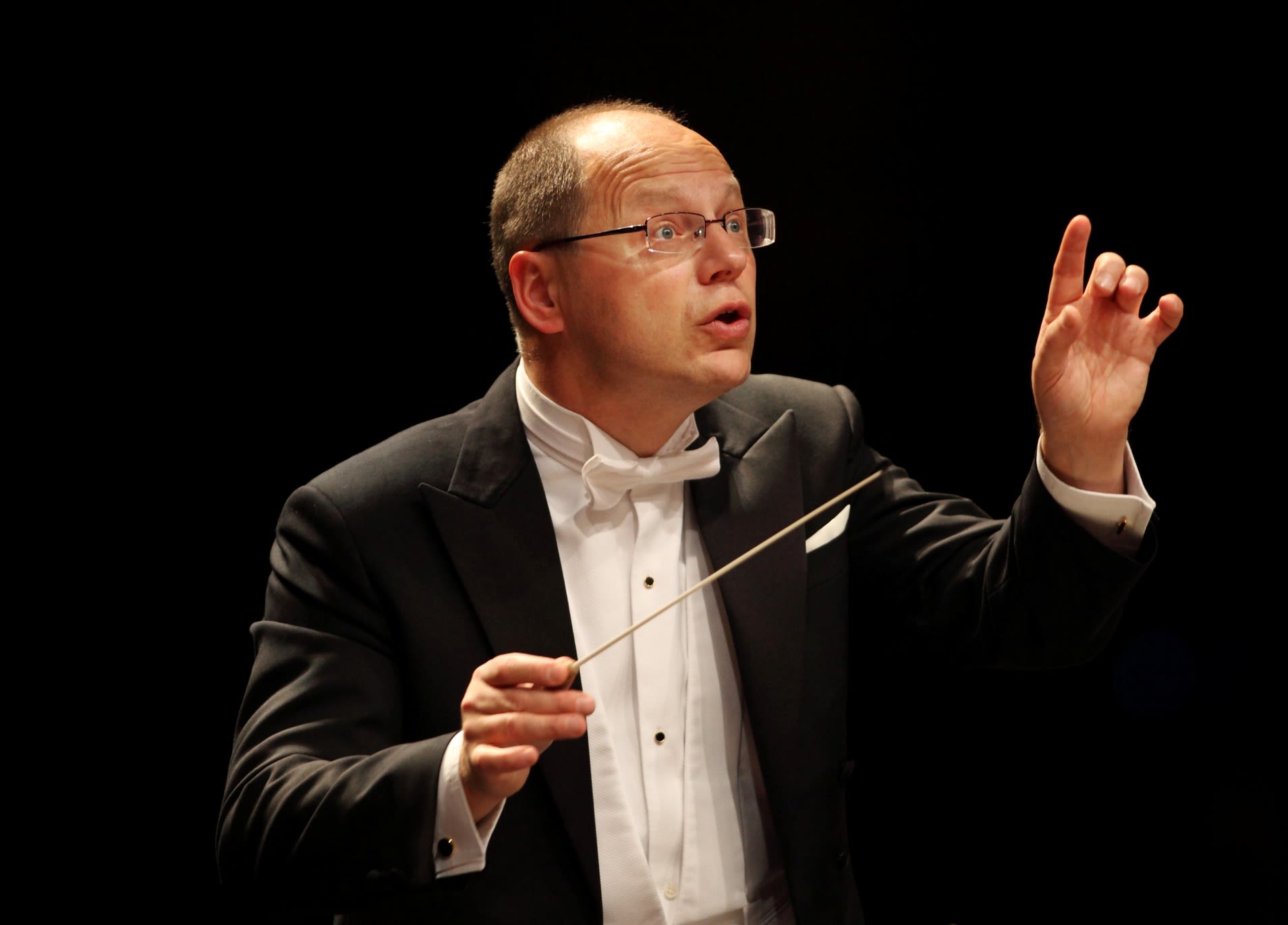
Arvo Volmer conductor

Adelaide Symphony Orchestra
Adelaide Symphony Orchestra
Estonian conductor Arvo Volmer is widely acclaimed for his powerful performances in both opera and concert. He is particularly renowned in the music of Mahler and Sibelius, German, Nordic and Russian composers and contemporary music.
He is General Music Director of the Estonian National Opera, where he leads new productions of works including Donizetti’s Don Pasquale, Verdi’s Il trovatore and Ravel’s L’enfant et les sortilèges. Other current and recent highlights include an ongoing relationship with the São Paulo State Symphony Orchestra and appearances with Orchestra Haydn di Bolzano e Trento and the Oulu and Porto Symphony orchestras, among many others.
Arvo Volmer made his professional debut with the Estonian National Opera at the age of 22 and has been associated with the company ever since. He became Associate Conductor of the Estonian National Symphony Orchestra in 1989 and Music Director from 1993 until 2001. He was also Chief Conductor and Artistic Director of Finland’s Oulu Symphony Orchestra between 1994 and 2005. Additionally, he was Music Director of the Adelaide Symphony Orchestra (2004–13), leading the orchestra on tours to Los Angeles and New York’s Carnegie Hall and on a five-year Mahler project.
He has appeared with leading orchestras, including the BBC, Helsinki and Royal Stockholm Philharmonic orchestras, City of Birmingham, Finnish Radio, Gothenburg, Singapore and Taiwan Symphony orchestras, Orchestre National de France, Orchestre Philharmonique de Radio France and all the major orchestras in Australia. As an opera conductor, he has performed at the Bolshoi Theatre, Finnish National Opera, Norwegian Opera Oslo and regularly with Opera Australia in the Sydney and Melbourne opera houses.
Among his extensive number of recordings, highlights include the complete symphonies of Sibelius, symphonic works of Tubin, complete works of Madetoja and albums of Swedish and Estonian contemporary music. His most recent release features the wind concertos of Ross Edwards with the Melbourne Symphony Orchestra.
Arvo Volmer studied conducting at the St Petersburg Conservatoire. In 1989 he was a prizewinner at the Nikolai Malko Competition in Copenhagen.
Matilda Lloydtrumpet


Neda Navaee
Neda Navaee
Matilda Lloyd is redefining the voice of the trumpet on the world stage. She is celebrated for her flawless tone, purity of line, dynamic subtlety and virtuosity.
Recent additions to her critically acclaimed discography include Weinberg’s Trumpet Concerto with the London Symphony Orchestra and Lee Reynolds, Casta Diva with Britten Sinfonia and Rumon Gamba and Fantasia with organist Richard Gowers, pairing Baroque works with newly commissioned pieces by leading British composers.
This season’s highlights include performances of Helen Grime’s Trumpet Concerto here with BBC NOW as well as at Staatstheater Meiningen and the Gaida Festival (the latter its Lithuanian premiere). She makes her Korean debut playing the Haydn Concerto and performs Robin Haigh’s Trumpet Concerto LUCK in December. She joins pianist Federico Colli next spring for a performance and recording of Shostakovich’s Concerto for piano and trumpet with the Bergen Philharmonic Orchestra and Dima Slobodeniouk, before rounding out the season with her concerto debut at the Schleswig-Holstein Festival.
Chamber music collaborations take her to Tokyo’s Musashino Civic Cultural Hall for her Japanese debut and to London’s Kings Place in February 2026. She appears with The Gesualdo Six at Wigmore Hall and in France.
As one of the 2024/25 European Concert Halls Organisation (ECHO) Rising Stars, she gave 18 recitals on Europe’s most prestigious stages, including the Amsterdam Concertgebouw, Vienna Musikverein, Hamburg Elbphilharmonie and Philharmonie de Paris.
Music education is important to her and in September she was appointed Professor of Trumpet at the Trinity Laban Conservatoire of Music & Dance in London. She regularly gives masterclasses at leading conservatoires and is an ambassador for the charity Brass for Africa and mentors young brass players in the UK with Future Talent.
Matilda Lloyd is a graduate of Trinity College, Cambridge, and the Royal Academy of Music; she completed her studies with Håkan Hardenberger at the Malmö Academy of Music. In 2014 she won the BBC Young Musician of the Year Brass Final and made her BBC Proms solo debut two years later.
BBC National Orchestra of Wales
For over 90 years, the BBC National Orchestra of Wales, the only professional symphony orchestra in Wales, has played an integral part in the cultural landscape of the country, occupying a distinctive role as both a broadcast and national orchestra, and serving as an ambassador of Welsh culture, regularly performing music created in Wales and championing Welsh composers and artists.
Part of BBC Cymru Wales and supported by the Arts Council of Wales, BBC NOW performs a busy schedule of concerts and broadcasts, working with acclaimed conductors and soloists from across the world, including its Principal Conductor, the award-winning Ryan Bancroft.
The orchestra is committed to working in partnership with community groups and charities, taking music out of the concert hall and into settings such as schools and hospitals to enable others to experience and be empowered by music. It undertakes workshops, concerts and side-by-side performances to inspire and encourage the next generation of performers, composers and arts leaders, and welcomes thousands of young people and community members annually through its outreach and education projects.
BBC NOW performs annually at the BBC Proms and biennially at the BBC Cardiff Singer of the World competition, and its concerts can be heard regularly across the BBC – on Radio 3, Radio Wales and Radio Cymru. On screen, music performed by BBC NOW can be heard widely across the BBC and other global channels, including the soundtrack and theme tune for Doctor Who, Planet Earth III, Prehistoric Planet, The Pact and Children in Need.
Based at BBC Hoddinott Hall, Cardiff Bay, BBC NOW utilises a state-of-the-art recording studio with a camera system for livestreams and TV broadcasts to bring BBC NOW’s music to a broader audience across Wales and the world. For more information about BBC NOW please visit bbc.co.uk/now
Patron
HM King Charles III KG KT PC GCB
Principal Conductor
Ryan Bancroft
PrincipalGuest Conductor
Jaime Martín
Conductor Laureate
Tadaaki Otaka CBE
Composer-in-Association
Gavin Higgins
First Violins
Martin Gwilym-Jones sub-leader
Gwenllian Hâf MacDonald
Terry Porteus
Suzanne Casey
Alejandro Trigo
Juan Gonzalez
Žanete Uškāne
Emilie Godden
Ruth Heney **
Carmel Barber
Rebecca Totterdell
Gary George-Veale
Second Violins
Anna Smith *
Kirsty Lovie #
Sheila Smith
Roussanka Karatchivieva
Joseph Williams
Michael Topping
Vickie Ringguth
Katherine Miller
Lydia Caines **
Beverley Wescott
Laurence Kempton
Elizabeth Whittam
Violas
Alex Thorndike #
Tetsuumi Nagata
Anna Growns
Laura Sinnerton
Catherine Palmer
Robert Gibbons
Lydia Abell
Lowri Taffinder
Daire Roberts
Cellos
Joely Koos ‡
Jessica Feaver
Sandy Bartai
Rachel Ford
Alistair Howes
Carolyn Hewitt
Keith Hewitt
Katy Wright
Double Basses
David Stark *
Alexander Jones #
Christopher Wescott
Emma Prince
Phoebe Clarke
Ben Havinden Williams
Albert Dennis
Flutes
Matthew Featherstone *
John Hall †
Enlli Parri
Piccolo
Enlli Parri
Oboes
Russell Coates
Cor anglais
Russell Coates
Clarinets
Lenny Sayers
E flat Clarinet
William White
Bassoons
Joanna Shewan
Alex Davidson
Contrabassoon
Alex Davidson
Horns
Meilyr Hughes
John Davy
Flora Bain
Tom Taffinder
Trumpets
Robert Samuel
Rob Johnston
Trombones
Dafydd Thomas †
Bass Trombone
Tuba
Timpani
Barnaby Archer
Percussion
Harry Lovell-Jones
Phil Girling
Andrea Porter
Rhydian Griffiths
Harp
Sally Pryce
Piano
Catherine Roe Williams
Celesta
Catherine Roe Williams
Chris Williams
* Section Principal
The list of players was correct at the time of publication
Director Lisa Tregale
+ Green Team member
Keep up to date with BBC National Orchestra of Wales
Listen to our BBC Radio 3 broadcasts via the BBC Sounds app. Visit our website and follow us on Facebook and Instagram
To help us improve our online concert programmes, please take this 5-minute survey
Produced by BBC Proms Publications