
Rachmaninov 2 with Martyn Brabbins
Friday 8/3/24, 7.30pm
Brangwyn Hall, Swansea
Saturday 9/3/24, 7.30pm
BBC Hoddinott Hall, Cardiff


Grace Williams
Elegy for Strings5’
Carl Nielsen
Violin Concerto34’
INTERVAL: 20 minutes
Sergey Rachmaninov
Symphony No. 258’
Martyn Brabbinsconductor
Liya Petrova violin


The concert in Swansea is being recorded by BBC Radio 3 for future broadcast in Radio 3 in Concert. It will be available for 30 days after broadcast via BBC Sounds, where you can also find podcasts and music mixes.
Introduction
Martyn Brabbins makes a much-anticipated return to BBC NOW to conduct a programme of three 20th-century works which may have been written within decades of one another, but which showcase highly contrasting musical styles. We begin close to home with Grace Williams’s Elegy, a work composed shortly after she’d finished her studies; in it you can hear her beginning to experiment with mixing a modern musical language with the folk songs of her native Wales.
Carl Nielsen had been dreaming of writing a concerto for violin – his own instrument – for years before it became a reality. The resulting piece is full of the quirks that make Nielsen’s music instantly – and delightfully – recognisable. To play it, we’re delighted to welcome Liya Petrova, a former winner of the prestigious Nielsen Violin Competition.
To end, Rachmaninov’s Second Symphony, a work written just a few years before the Nielsen, but which couldn’t be more different in style, summoning a rich Romantic tradition with a songfulness and nostalgia that have ensured its place in the concert hall to this day.
Enjoy!
Matthew Wood
Head of Artistic Production
Please respect your fellow audience members and those listening at home. Turn off all mobile phones and electronic devices during the performance. Photography and recording are not permitted.
Grace Williams (1906–77)
Elegy for Strings(1936, rev. 1940)

The Elegy for Strings was written early in Grace Williams’s career, shortly after finishing her studies with Ralph Vaughan Williams in London and Egon Wellesz in Vienna. In this formative period, the two tendencies that inform the composer’s later output had begun to take shape: on the one hand, her use of traditional Welsh folk tunes as an inspiration and, on the other, her putting into practice the modernist idioms which she acquired through her years of training.
While the earlier overture Hen Walia (1930) prefigures Williams’s folk-inspired works, the Elegy demonstrates the composer’s early mastery of the modernist language. The music is built upon the first three notes played by the second violins and violas, which serve as the seed for subsequent transformations. After it reaches a climax over syncopated violins and dissonant lower strings, the initial pitches resurface with a similar rhythmic profile on the first violins, signalling a reprise that gradually leads to the consonant chord with which the piece ends.
Programme note © Kelvin H. F. Lee
Carl Nielsen (1865–1931)
Violin Concerto, Op. 33(1911)
1 Praeludium – Allegro cavalleresco
2 Poco adagio – Rondo (Allegretto scherzando)
Liya Petrova violin
One of the few parallels that can be traced between Carl Nielsen and his exact Nordic contemporary Jean Sibelius is the fact that both composers started out as violinists. Unlike Sibelius, Nielsen wasn’t presented with a beautiful instrument by an exotic seafaring uncle. Instead, he played a battered old fiddle as part of his father’s travelling dance band.
Years later, Nielsen found himself playing in the rather more prestigious Royal Danish Orchestra in Copenhagen. He was a member of the ensemble for 16 years; though, as time progressed, he was increasingly working as a conductor rather than as a second violinist. But, like Sibelius, Nielsen felt compelled to exploit his practical experience on the violin by furthering the tradition of concertos for the instrument that had blossomed in the previous century. Some time after 1905 Nielsen commented to a friend that he’d thought about writing a violin concerto ‘every day for the last quarter-century’. Then, in 1910, Nielsen got the human inspiration he needed. The violinist Peder Møller, bankrupted abroad, returned to his homeland to become leader of the Royal Danish Orchestra.
In the spring of 1911, at the invitation of Edvard Grieg’s widow Nina, Nielsen travelled to Norway, where he stayed at Troldhaugen, the house the Norwegian composer had built outside Bergen. ‘You can’t imagine how delightful it is up here,’ Nielsen wrote to his family. ‘We can row around the romantic little islands and inlets … and fancy that we are the only people in the world.’ There, Nielsen started work on the new concerto. Back in Denmark in September, he was forced to lay down his pen and pick up his baton as orchestral rehearsals resumed. It wasn’t until December that he turned to his Violin Concerto once more. On 28 February 1912, Møller gave the first performance of the finished work, with Nielsen conducting.
The work is formed of two parts, each of which effectively contains two movements, slow then fast. It’s launched by an abrupt cadenza (the first of three) that prefaces the grave beauty of the Praeludium. If this music draws deep breaths, speaking of the idyllic, spacious surroundings Nielsen described in his letter from Troldhaugen, perhaps the ‘big tune’ of the following Allegro cavalleresco (‘chivalrous allegro’) says something of the imposing rock formations that line Nordåsvannet bay, beside which Troldhaugen is perched.
That ‘big tune’ is the nearest Nielsen gets to acknowledging the Romantic violin concerto tradition in music that is otherwise neo-Classical, unshowy and typically anti-Romantic. And, despite its breadth, the tune is presented with a cut and thrust that changes the footing of the piece. Shortly after the soloist takes it on, it runs into trouble: the orchestra is having none of the soloist’s quasi-heroism and forces him into a more humble, plain-speaking expression of the theme as a simple song to be shared.
Part 2 begins with an explicit gesture of neo-Classicism as a solo oboe spells out the four-note figure associated with the name Bach. As the Adagio continues, the music seems increasingly to inhabit the elfin, brittle sound-world that would become typical of Nielsen, toying ambiguously with major and minor keys. That continues with the fantasies and games of the Allegretto scherzando, in which the renegade folk-fiddler of Nielsen’s childhood gets a foretaste of the confrontations that would soon erupt in his scores.
The composer himself compared this final movement to ‘an earnestly smiling layabout on a better day’. Its perky main theme, introduced by the soloist right at the start, is twice jolted from its whimsy by music of total contrast. Just over halfway through, the soloist turns inwards for an even more crystalline, Bach-like cadenza from which the main theme then emerges over pizzicato orchestral strings. The spirited conversation between soloist and orchestra – which at one point punches out a playful transformation of that big tune from Part 1 – continues until the final bar.
Programme note © Andrew Mellor
INTERVAL: 20 minutes
Sergey Rachmaninov (1873–1943)
Symphony No. 2 in E minor, Op. 27 (1906–7)
1 Largo – Allegro moderato
2 Allegro molto
3 Adagio
4 Allegro vivace
Rachmaninov’s Second Symphony comes from his most fruitful decade, when he was already an international celebrity, a virtuoso pianist and conductor at the Bolshoi Opera. Needing a sabbatical to focus on composition, he moved to Dresden, lured by its rich musical life and its relative peace and quiet. The composition of an ambitious new symphony would enable Rachmaninov to exorcise bitter memories of the 1897 premiere of his First, which had been received with incomprehension and mockery. When the reviews came in, he was much relieved that the Second was considered ‘profound and beautiful’. Premiered in 1908 by Rachmaninov himself, it was quickly adopted by Arthur Nikisch and other major conductors.
The first movement’s Largo introduction matches the popular associations Rachmaninov’s music has gathered: nostalgia and the great expanses of Russia. Usually overlooked is the innovative nature of the writing. The introduction grows from an initial motif in the basses, one of Rachmaninov’s many chant-like phrases. The rest of the introduction is filled with extensions, compressions or inversions of the motif, but sounding natural rather than pedantic. The orchestral texture becomes astonishingly complex (perhaps under the influence of Richard Strauss, whose opera Salome Rachmaninov had just heard).
The Allegro of the first movement introduces a sense of greater rhythmic propulsion, but all the themes are still interrelated and stem from the initial motif. The melancholy falling phrases are interrupted by exultant upward surges, and we are at the mercy of these waves, both large and small (around this time, Rachmaninov also wrote his symphonic poem The Isle of the Dead, which explicitly portrays the waves of the sea).
The second movement is a scherzo, a kind of infernal dance. The themes are spiky and angular, and yet their contours are still related to the material of the first movement, as if distorted by a Mephistopheles. The motifs now approximate to the Dies irae chant that Rachmaninov used in many of his major works as a symbol of death. The centrepiece of the movement is a great surprise, a strident and relentless fugal section. It was fitting that the Symphony was dedicated to Sergey Taneyev, theorist and composer, who had been Rachmaninov’s teacher for fugue.
The third movement is a marvel, its opening melody so enticing that it was later adopted as a pop song (‘Never Gonna Fall in Love Again’ by Eric Carmen, 1975). Rachmaninov was a major influence on many a lush Hollywood film score, and it is difficult for today’s listeners to hear this movement afresh. But the effort is worth making: there is much intricate compositional work behind the fragrant atmosphere of the implied romantic scene.
The finale is an exuberant celebration propelled by the rhythms of a tarantella. It is capacious enough to include
colourful episodes and echoes of the previous movements, but its main role is to dispel all the doubts and shadows. One striking compositional coup is a suspenseful passage built entirely from descending scales, in a multitude of different rhythmic variants.
Programme note © Marina Frolova-Walker
Help Us Improve Our Online Programmes.
Please take this 5-minute survey and let us know what you think of these notes.
Programme Survey
You may also like:
Let All the World in Every Corner Sing
Friday 22/3/24, 7.30pm
BBC Hoddinott Hall, Cardiff
NunesGarcia Overture ‘Zemira’
J. S. Bach Cantata No. 82, ‘Ich habe genug’
Haydn Symphony No. 26, ‘Lamentatione’
Vaughan Williams Five Mystical Songs
Harry Bicket conductor
Julien Van Mellaerts baritone
BBC National Chorus of Wales
MAGNIFICENT | SPIRITUAL | SPELLBINDING
The subtle spirit of Easter permeates this concert, with Harry Bicket returning to the helm of BBC National Orchestra and Chorus of Wales. The evening kicks off with Brazilian composer José Maurício Nunes Garcia’s Zemira Overture, followed by Bach’s sublime cantata ‘Ich habe genug’ performed by baritone Julien Van Mellaerts. With its text recounting the purification of Mary and a desire to escape earthly misery and to be reunited with Jesus, this work is a perfect fit for any Easter concert.
It is less well known that Haydn’s Symphony No. 26 was written for Easter, although the music contains plentiful hints, not least its Sturm und Drang (‘storm and stress’) style, its minor key and a thundery atmosphere underpinning Passiontide plainsong quotations more pertinent for a church than the concert hall. Also composed for Easter is Vaughan Williams’s Five Mystical Songs, which sets texts from The Temple: Sacred Poems by Welsh poet and priest George Herbert. Intrinsically spiritual and direct in delivery, the five movements range from quiet and meditative to triumphant shouts of praise.
Bartók’s Concerto for Orchestra
Thursday 9/5/24, 7.30pm
BBC Hoddinott Hall, Cardiff
Friday 10/5/24, 7.30pm
Brangwyn Hall, Swansea
Caroline Shaw The Observatory UK premiere
Ravel Piano Concerto in G major
Bartók Concerto for Orchestra
Giancarlo Guerrero conductor
Sergio Tiempo piano
COLOURFUL | DYNAMIC | ENTHRALLING
Caroline Shaw’s The Observatory (which receives its UK premiere) was inspired by a trip to the Griffin Observatory near the Hollywood Bowl; it explores in sound new ways of looking at the universe, melding old and new with chaos and clarity, in a tantalising stream of consciousness.
Ravel’s atmospheric Piano Concerto, a rich mix of lyricism, evocative orchestration and virtuoso piano writing, is performed by the inimitable Sergio Tiempo as he makes his debut with BBC NOW. The virtuosity continues in Bartók’s brilliant, folk-inflected Concerto for Orchestra, which closes this breathtaking programme, conducted by the illustrious Grammy Award-winning Costa Rican conductor Giancarlo Guerrero.
Season Closing Concert
Thursday 6/6/24, 7.30pm
BBC Hoddinott Hall, Cardiff
Friday 7/6/24, 7.30pm
Brangwyn Hall, Swansea
Dvořák Cello Concerto
Jennifer Higdon Blue Cathedral
Dawson Negro Folk Symphony
Ryan Bancroft conductor
Alisa Weilerstein cello
INSPIRING | ICONIC | MULTIFARIOUS
Globally renowned cellist Alisa Weilerstein joins BBC NOW in this season-closing concert for one of the most beloved of all cello concertos. Melodic genius, irrepressible energy and a love of his native folk music radiate as Dvořák looks back on a life well lived, one of joy but also of deep loss. Similarly, intuitive musical invention, rich orchestration and an exploration of the cathedral ‘as a symbolic doorway into and out of this world’ form a platform for floating and contemplative other-worldly atmospheres in Jennifer Higdon’s Blue Cathedral.
Picture the scene: November 1934, Carnegie Hall and a brand-new symphony is unveiled, receiving rapturous applause from the audience and multiple bows from its unassuming composer. That composer was William Dawson, a 35-year-old African American man who had run away from home aged 13 to follow his dream of studying music; and the piece – the Negro Folk Symphony. With melodies that ooze both sensuousness and directness, Dawson set out to compose music that was ‘unmistakably not the work of a white man’ and found his inspiration in the negro folk music he had learnt as a small child. Who better to conduct this expertly crafted and highly emotionally charged symphony than our Principal Conductor Ryan Bancroft?
Biographies
Martyn Brabbinsconductor

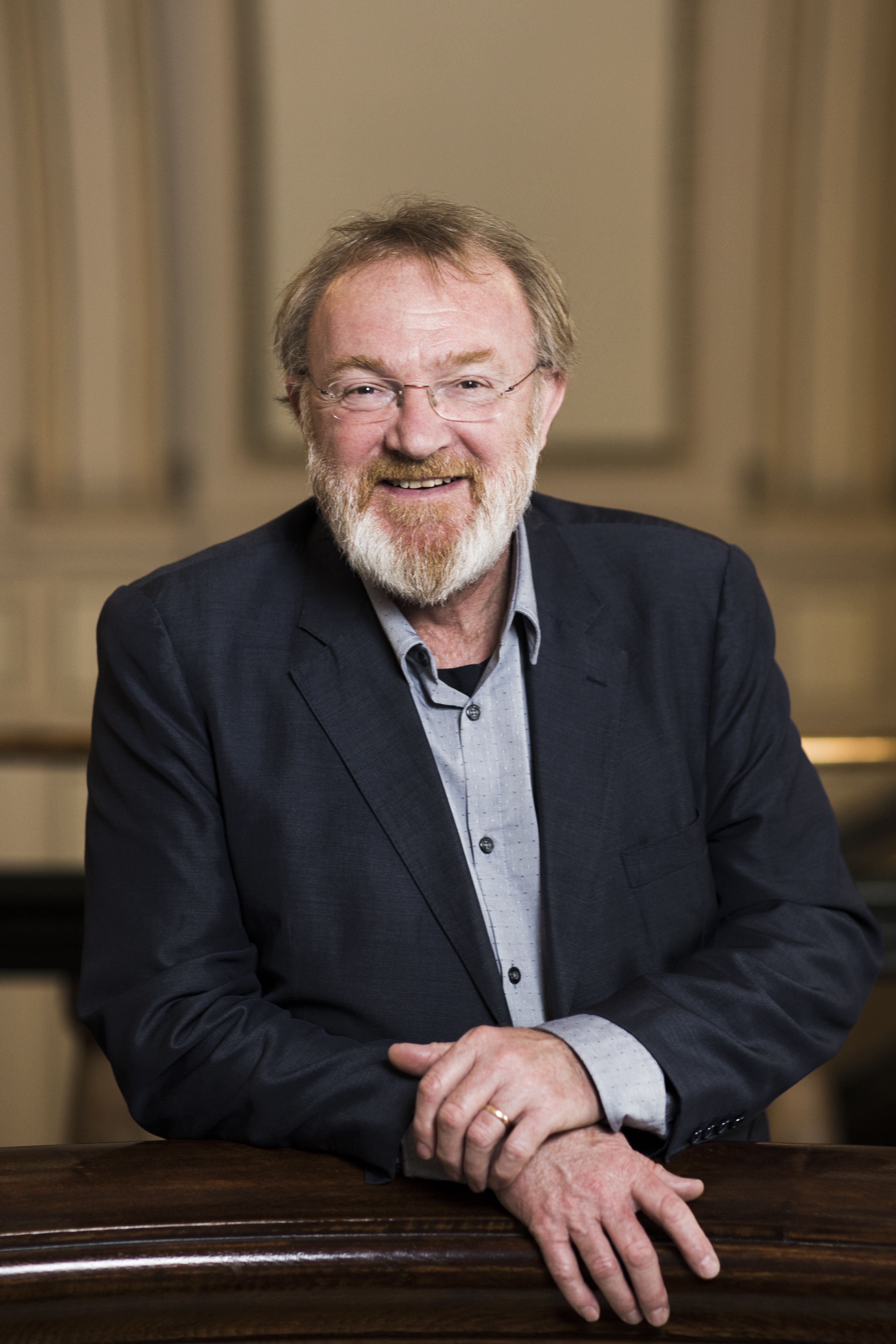
Photo: Benjamin Ealovega
Photo: Benjamin Ealovega
Martyn Brabbins is former Music Director of English National Opera. An inspirational force in British music, he has had a busy opera career since his early days at the Kirov and more recently at La Scala, the Bayerische Staatsoper, and regularly in Lyon, Amsterdam, Frankfurt and Antwerp.
He appears as a guest conductor with top international orchestras, including the Royal Concertgebouw, San Francisco and Tokyo Metropolitan Symphony orchestras and Deutsches Symphonie-Orchester Berlin, as well as the Philharmonia, BBC Symphony Orchestra and most of the other leading UK orchestras. He is a popular figure at the BBC Proms, which, in 2019, commissioned 14 living composers to write a 60th-birthday tribute to him. Known for his advocacy of British composers, he has conducted hundreds of world premieres across the globe. He has recorded nearly 150 CDs to date, including prize-winning discs of operas by Korngold, Birtwistle and Harvey. Last year he received the RPS Conductor Award for his ‘colossal’ contribution to UK musical life.
He was Associate Principal Conductor of the BBC Scottish Symphony Orchestra (1994–2005), Principal Guest Conductor of the Royal Flemish Philharmonic (2009–15), Chief Conductor of the Nagoya Philharmonic (2012–16) and Artistic Director of the Cheltenham International Festival of Music (2005–7). He is Prince Consort Professor of Conducting at the Royal College of Music, Visiting Professor at the Royal Scottish Conservatoire and Artistic Advisor to the Huddersfield Choral Society; he has for many years supported professional, student and amateur music-making at the highest level in the UK.
Liya Petrovaviolin

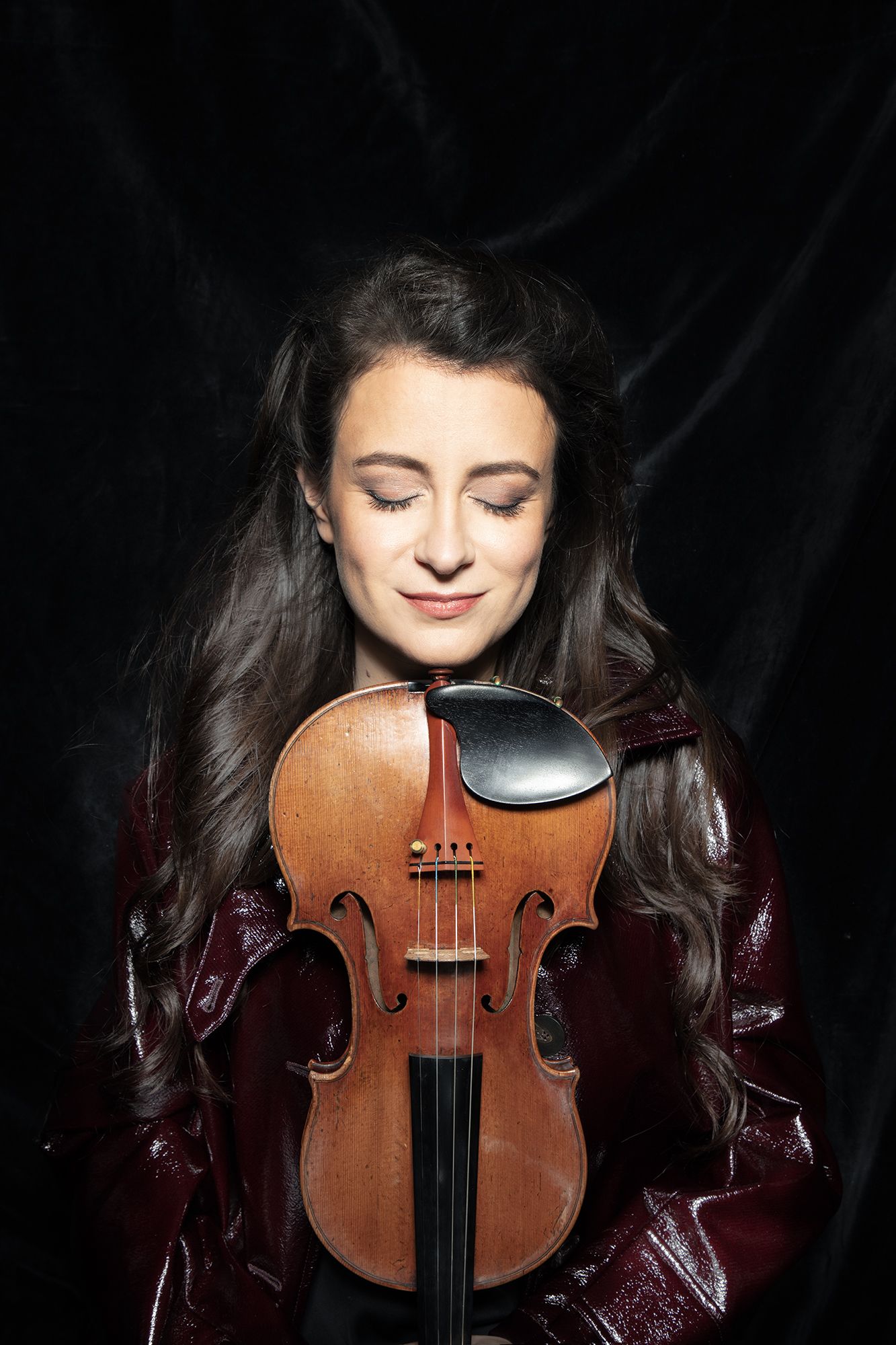
Bulgarian-born violinist Liya Petrova came to international attention when she won the 2016 Carl Nielsen Competition in Denmark.
She has appeared as a soloist with ensembles including the Orchestre de Paris, Orchestre Philharmonique de Radio France, Brussels, Kansai, Luxembourg, Monte Carlo, Netherlands Radio and Royal Philharmonic orchestras, Antwerp, Bournemouth, China State, Flanders, Odense and WrocławSymphony orchestras, Hong Kong Sinfonietta, Staatskapelle Weimar and Sinfonia Varsovia, among others. She has worked with leading conductors, including Elim Chan, Stanislas Kochanovsky, Duncan Ward, Philippe Herreweghe, Krzysztof Penderecki, Tan Dun, Nikolaj Szeps-Znaider, Catherine Larsen-Maguire, Martyn Brabbins, Alexander Liebreich, Mihhail Gerts, Kristiina Poska, Yan-Pascal Tortelier, Xian Zhang, Roberto Minasi and Jesús López Cobos.
As a chamber musician she has performed with Alexandre Kantorow, Beatrice Rana, Emmanuel Pahud, Pablo Ferrandez, Martha Argerich, Yuri Bashmet, Mischa Maisky, Renaud and Gautier Capuçon, Augustin Dumay, James Ehnes, Nicholas Angelich, Frank Braley, Yuja Wang, Gérard Caussé, Antoine Tamestit, Bruno Philippe and Aurélien Pascal.
She appears regularly at chamber music festivals, including Mecklenburg-Vorpommern, Rheingau, Ludwigsburger Schlossfestspiele, Aix-en-Provence Easter, La Folle Journée, La Roque d’Anthéron and the Rencontres Musicales d’Evian.
Her discography includes concertos by Beethoven, Nielsen, Prokofiev and Walton, which have been warmly critically acclaimed.
Liya Petrova was born into a family of musicians and studied with Augustin Dumay at the Chapelle Musicale Reine Elisabeth in Brussels, Antje Weithaas at the Hochschule für Musik Hanns Eisler Berlin and Renaud Capuçon at the Haute École de Musique in Lausanne.
She plays a 1742 ‘Rovelli’ Guarneri del Gesù, thanks to the support of her generous sponsor.
BBC National Orchestra of Wales
For over 90 years, BBC National Orchestra of Wales has played an integral part in the cultural landscape of Wales, occupying a distinctive role as both broadcast and national symphony orchestra. Part of BBC Wales and supported by the Arts Council of Wales, it has a busy schedule of live concerts throughout Wales, the rest of the UK and the world.
The orchestra is an ambassador of Welsh music and champions contemporary composers and musicians; its concerts can be heard regularly across the BBC – on Radio 3, Radio Wales and Radio Cymru.
BBC NOW works closely with schools and music organisations throughout Wales and regularly undertakes workshops, side-by-side performances and young composer initiatives to inspire and encourage the next generation of performers, composers and arts leaders.
The orchestra is based at BBC Hoddinott Hall in Cardiff Bay, where its purpose-built studio not only provides the perfect concert space, but also acts as a broadcast centre from where its live-streamed concerts and pre-recorded content are presented as part of its popular Digital Concert Series.
For further information please visit the BBC National Orchestra and Chorus of Wales's website: bbc.co.uk/now
Patron
HM King Charles III KG KT PC GCB
Principal Conductor
Ryan Bancroft
Conductor Laureate
Tadaaki Otaka CBE
Composer-in-Association
Gavin Higgins
Composer Affiliate
Sarah Lianne Lewis
First Violins
Lesley Hatfield leader
Nick Whiting associate leader
Martin Gwilym-Jones sub-leader
Gwenllian Hâf MacDonald
Terry Porteus
Carmel Barber
Anna Cleworth
Juan Gonzalez
Rebecca Totterdell
Emilie Godden
Zhivko Georgiev
Amy Fletcher
Gary George-Veale **
Barbara Zdziarska **
SecondViolins
Anna Smith *
Paul Medd
Ros Butler
Sheila Smith
Ilze Abola
Lydia Caines
Joseph Williams
Beverley Wescott
Roussanka Karatchivieva
Katherine Miller
Vickie Ringguth
Sebastian Canellis **
Violas
Yukiko Ogura ‡
Alex Thorndike #
Tetsuumi Nagata
Peter Taylor
Robert Gibbons
Lydia Abell
Anna Growns
Daire Roberts
Catherine Palmer
Lowri Thomas
Cellos
Alice Neary *
Raphael Lang
Sandy Bartai
Carolyn Hewitt
Keith Hewitt
Rachel Ford
Alistair Howes
Kathryn Graham **
Double Basses
David Stark *
Christopher Wescott
Evangeline Tang
Richard Gibbons
Antonia Bakewell
Thea Sayer **
Callum Duggan **
Flutes
Matthew Featherstone *
John Hall †
Lindsey Ellis
Piccolo
Lindsey Ellis †
Oboes
Steve Hudson *
Ross Williams
Amy McKean †
Cor anglais
Amy McKean †
Clarinets
Nick Carpenter *
Aaron Hartnell-Booth
Lenny Sayers
Bass Clarinet
Lenny Sayers †
Bassoons
Jarosław Augustiniak *
Verity Burcombe
Horns
Tim Thorpe *
Meilyr Hughes
Neil Shewan †
Samuele Bertocci
John Davy
Trumpets
Philippe Schartz *
Robert Samuel
Corey Morris † +
Trombones
Donal Bannister*
Jake Durham
Bass Trombone
Darren Smith †
Tuba
Anders Swane
Timpani
Steve Barnard *
Percussion
Phil Hughes ‡
Andrea Porter
Rhydian Griffiths
Harry Lovell-Jones
* Section Principal
† Principal
‡ Guest Principal
# Assistant String Principal
** Rachmaninov only
++ Principal in Nielsen
The list of players was correct at the time of publication
Director Lisa Tregale
Orchestra Manager Vicky James
Assistant Orchestra Manager Nick Olsen
Orchestra Coordinator, Operations Kevin Myers
Business Coordinator Caryl Evans
Orchestra Administrator Eleanor Hall +
Head of Artistic Production Matthew Wood
Artists and Projects Manager Victoria Massocchi **
Orchestra Librarian Katie Axelsen (paternity cover)
Producer Mike Sims
Broadcast Assistant Kate Marsden
Head of Marketing and Audiences Sassy Hicks
Marketing Coordinator Amy Campbell-Nichols +
Digital Producer Yusef Bastawy
Social Media Coordinator Harriet Baugh
Education Producers Beatrice Carey, Rhonwen Jones **
Audio Supervisors Simon Smith, Andrew Smillie
Production Business Manager Lisa Blofeld
Stage and Technical Manager Steven Brown +
Assistant Stage and Technical Manager Josh Mead
BBC Wales Apprentice Jordan Woodley
+ Green Team member
** Diversity & Inclusion Forum