
Tchaikovsky Symphony No. 5
Thursday 16/3/2023, 7.30pm
Aberystwyth Arts Centre
Friday 17/3/2023, 7.30pm
Prichard-Jones Hall, Bangor
Sunday 19/3/2023, 3.00pm
Venue Cymru, Llandudno


Tansy Davies
Monolith: I Extend My Arms 17’
Jean Sibelius
Violin Concerto 31’
INTERVAL: 20 minutes
Pyotr Ilyich Tchaikovsky
Symphony No. 5 44’
Clara-Jumi Kang violin
Ryan Bancroftconductor


The concert in Aberystwyth is being recorded by BBC Radio 3 for future broadcast in BBC Radio 3 in Concert. It will be available for 30 days after broadcast via BBC Sounds, where you can also find podcasts and music mixes. Visit bbc.co.uk/now for more information on future performances.
Introduction

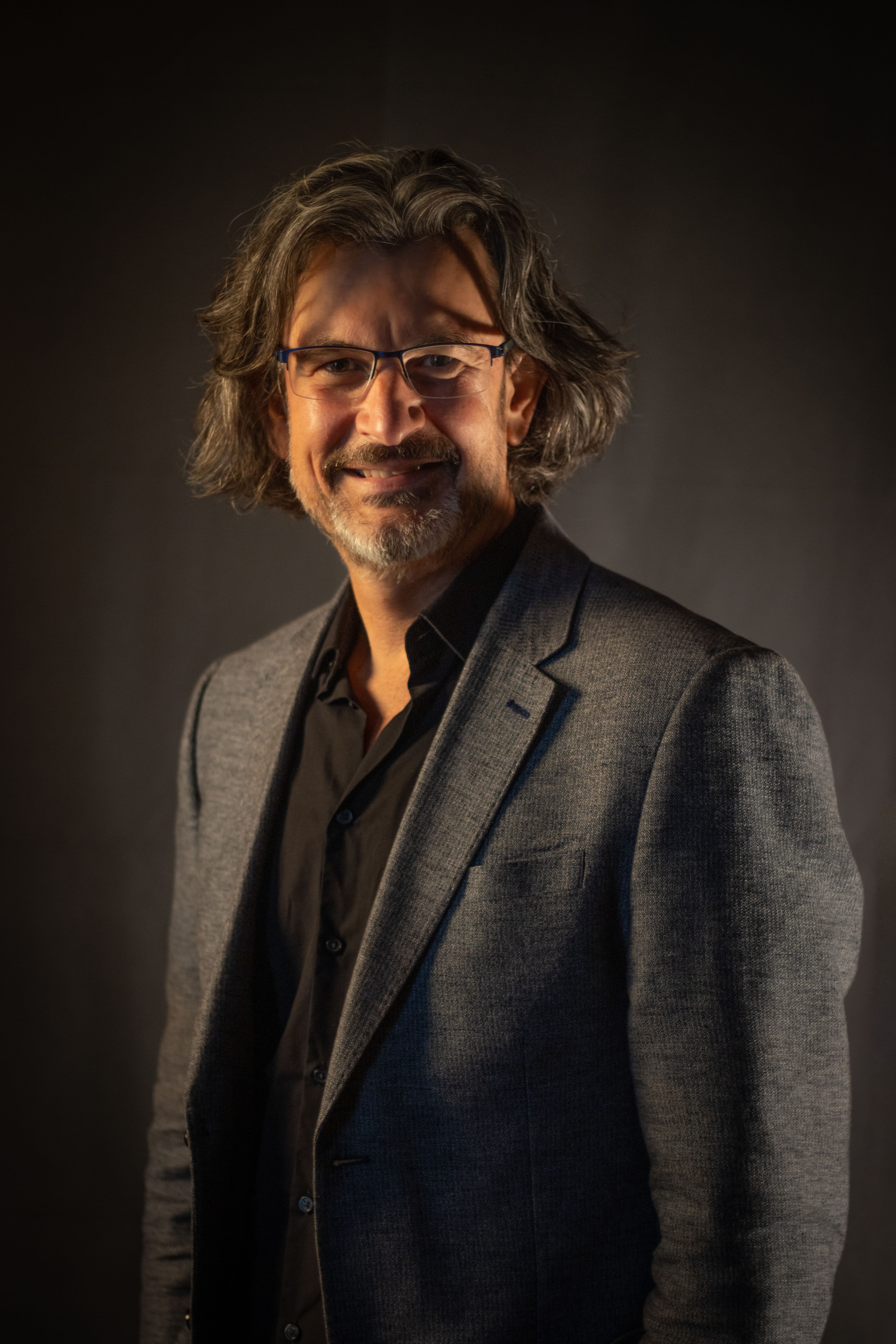
We’re delighted to be back in North Wales, following our tour last autumn, this time with Principal Conductor Ryan Bancroft.
We launch the programme with Tansy Davies’s hugely evocative Monolith: I Extend My Arms. Written in 2021, it was inspired by a photograph by the French surrealist artist Claude Cahun.
Sibelius had initially hoped to become a solo violinist before having to give up on this dream, so composing his only concerto must have been a bittersweet experience. With its haunting songfulness, allied to fiendish virtuosity, it’s not surprising it has become a favourite in the concert hall. Tonight we’re delighted to welcome as soloist Clara-Jumi Kang.
We finish with Tchaikovsky’s darkly dramatic Fifth Symphony, a work written during a period of crisis, with the composer confiding to his brother Modest that he was ‘gradually, and with some difficulty … squeezing a symphony out of my dulled brain.’
Enjoy!
Matthew Wood
Head of Artistic Production
Please respect your fellow audience members and those listening at home. Turn off all mobile phones and electronic devices during the performance. Photography and recording are not permitted.
Tansy Davies (born 1973)
Monolith: I Extend My Arms (2021)

A rock-like strata of canons, Monolith: I Extend My Arms came to me as a vision of layered, cyclical material for a large body of strings. Simultaneously dense and translucent, I saw the sound as a cloud-shaped body of rock descending gently and very slowly, like an enormous feather, from sky to earth.
The exterior – sometimes vast and granite-like with quartz sparkles, sometimes opaque and web-like, drifting and coalescing – is highlighted and accentuated by percussion: bells and bass drum. Internal rhythms gradually work their way out from deep within, finally bubbling up and dancing across the rock’s surface.
Claude Cahun’s black-and-white photograph I Extend My Arms (c.1930) – a pair of arms emerging from inside a stone monolith – perfectly fits the essence of my own work: monolithic but open and/or protective; an idea of divine masculinity.
The ancient rock in Cahun’s photograph evokes the chthonic, essential, primal non-gendered self that Cahun’s many self-portrait images express. ‘Masculine? Feminine?’ Cahun wrote in her book Aveux non Avenus, published in English as Disavowals: ‘It depends on the situation. Neuter is the only gender that always suits me.’
Programme note © Tansy Davies
Website: https://tansydavies.com
Jean Sibelius (1865–1957)
Violin Concerto in D minor (1903–1904, rev. 1905)

1 Allegro moderato
2 Adagio di molto
3 Allegro, ma non tanto
Clara-Jumi Kang violin
For a time as a young man, Sibelius had hoped to become a violin virtuoso. Yet something seems to have gone wrong with Sibelius’s confidence, and his technique suffered. He thought of renouncing music altogether ‘and living the life of an idiot, for which I’m well qualified’. In the end, the urge to compose was too strong but, even so, one can imagine how mixed his feelings must have been when he came to tackle the concerto project in 1903.
It may be significant that the time immediately before and during Sibelius’s work on the Violin Concerto was marked by one of his worst periods of alcoholism. His heroically patient wife Aino frequently went out to search Helsinki’s fashionable clubs, bars and restaurants for him, hoping against hope that he might just sober up enough to complete the work. The slow movement of the concerto was apparently sketched out during a colossal three-day hangover. Sibelius’s brother Christian (a clinical psychiatrist) begged him to stop drinking. But Sibelius replied that he was just too weak. ‘When I am standing in front of a grand orchestra and have drunk a half-bottle of champagne, then I conduct like a young god. Otherwise I am nervous and tremble, feel unsure of myself, and then everything is lost. The same is true of my visits to the bank manager.’
And yet nowhere is this the kind of music one would describe as self-indulgent or loose-limbed. The violin-writing is masterly – showing how thoroughly Sibelius understood his instrument. There are moments that can bring the most expert player out in a cold sweat – and they’re not always the passages that sound the most difficult to the audience.
The idea of mastery extends to every dimension of the Violin Concerto. Construction is taut, emotions are powerful but not uncontrolled, the long lyrical paragraphs (such as the floating, soaring violin line at the very beginning) are always beautifully shaped – they never sprawl. There are moments, such as the impassioned second theme of the first movement, or virtually the whole of the central slow movement, where the mood is achingly nostalgic, even pained. But the hand of Sibelius the great symphonist, the master of organic logic, is always in evidence. And after the emotionally probing first and second movements comes an energetic, resolute finale. The stern, stormy but unambiguously major-key ending suggests inner darkness confronted and defied. In terms of Sibelius’s own life at the time, this may have been wish-fulfilment, but as art it’s resoundingly convincing.
Programme note © Stephen Johnson
Further Listening: Viktoria Mullova; Boston Symphony Orchestra/Seiji Ozawa (Philips 4784812)
Further Reading: Jean Sibelius: Life, Music, Silence Daniel M. Grimley (Reaktion Books)
INTERVAL: 20 minutes
Pyotr Ilyich Tchaikovsky (1840–93)
Symphony No. 5 in E minor, Op. 64 (1888)

1 Andante – Allegro con anima
2 Andante cantabile con alcuna licenza – Moderato con anima
3 Valse: Allegro moderato
4 Finale: Andante maestoso – Allegro vivace – Molto vivace
Tchaikovsky began his Fifth Symphony in a torment of writer’s block and self-doubt during the late spring and summer of 1888. Though relaxing at a vacation house he had built in the village of Frolovskoe, not very far from his home in Moscow, Tchaikovsky confessed to his brother Modest that ‘the urge to create has deserted me … I am gradually, and with some difficulty, squeezing a symphony out of my dulled brain.’
As the summer wore on, Tchaikovsky continued to squeeze out an initial draft of the symphony, now lost. Surviving sketches indicate a very different work from the one we now know; perhaps it was this initial draft to which Tchaikovsky referred with such doubt and uncertainty. Yet, even as he completed a final version of the symphony, Tchaikovsky remained neutral about the work, reporting to his patroness Nadezha von Meck, ‘I can view [the new symphony] objectively and […] it is no worse than my previous ones.’
Tchaikovsky conducted the work’s premiere in November 1888, and audiences were enthusiastic in their response. However, Tchaikovsky’s doubts about the work remained at the forefront of his mind. ‘The realisation that it is unsuccessful (or perhaps that my powers are declining) is very distressing to me,’ he confessed. ‘The symphony is too colourful, massive, insincere, drawn out and on the whole very unsympathetic.’
Listening to the symphony, one might say that Tchaikovsky was right in his critique – but for the wrong reason. The tones of the orchestra are indeed colourful and, though the work is organised in a Classical four-movement structure, it is less tightly unified than his Fourth Symphony of a decade earlier. But, even though he was uncomfortable with the symphony’s emotionalism and dimensions, the Fifth marks a turning point in Tchaikovsky’s freedom of expression, one that his Sixth Symphony, the ‘Pathétique’, would subsequently amplify.
The Fifth Symphony begins with a sombre motif in the clarinets, one that sets the tone for the rest of the work. It reappears frequently, sometimes extensively reworked, but always recognisable. Something of Tchaikovsky’s doubt leaked through his pen and onto the page – much of the music is dark and bleak. Yet occasionally we can hear the light break through the darkness in the form of more optimistic melodies and brighter tones from the orchestra.
An early critic wrote: ‘If Beethoven’s Fifth Symphony is Fate knocking at the door, then Tchaikovsky’s Fifth is Fate trying to get out.’ We can hear this attempted escape in the final movement through a thundering cascade of B major chords. Yet the work concludes ambiguously in four E major chords, flipping the E minor of the introduction triumphantly on its head, yet so ominously that it also hints at darkness.
Programme note © Margaret Frainier
Further Listening: Royal Liverpool Philharmonic Orchestra/Vasily Petrenko (Onyx ONYX4150)
Further Reading: Tchaikovsky: The Man and his Music David Brown (Faber)
Help us Improve Our Online Programmes.
Please take this 5-minute survey and let us know what you think of these notes.
Programme Survey
Biographies
Ryan Bancroft conductor

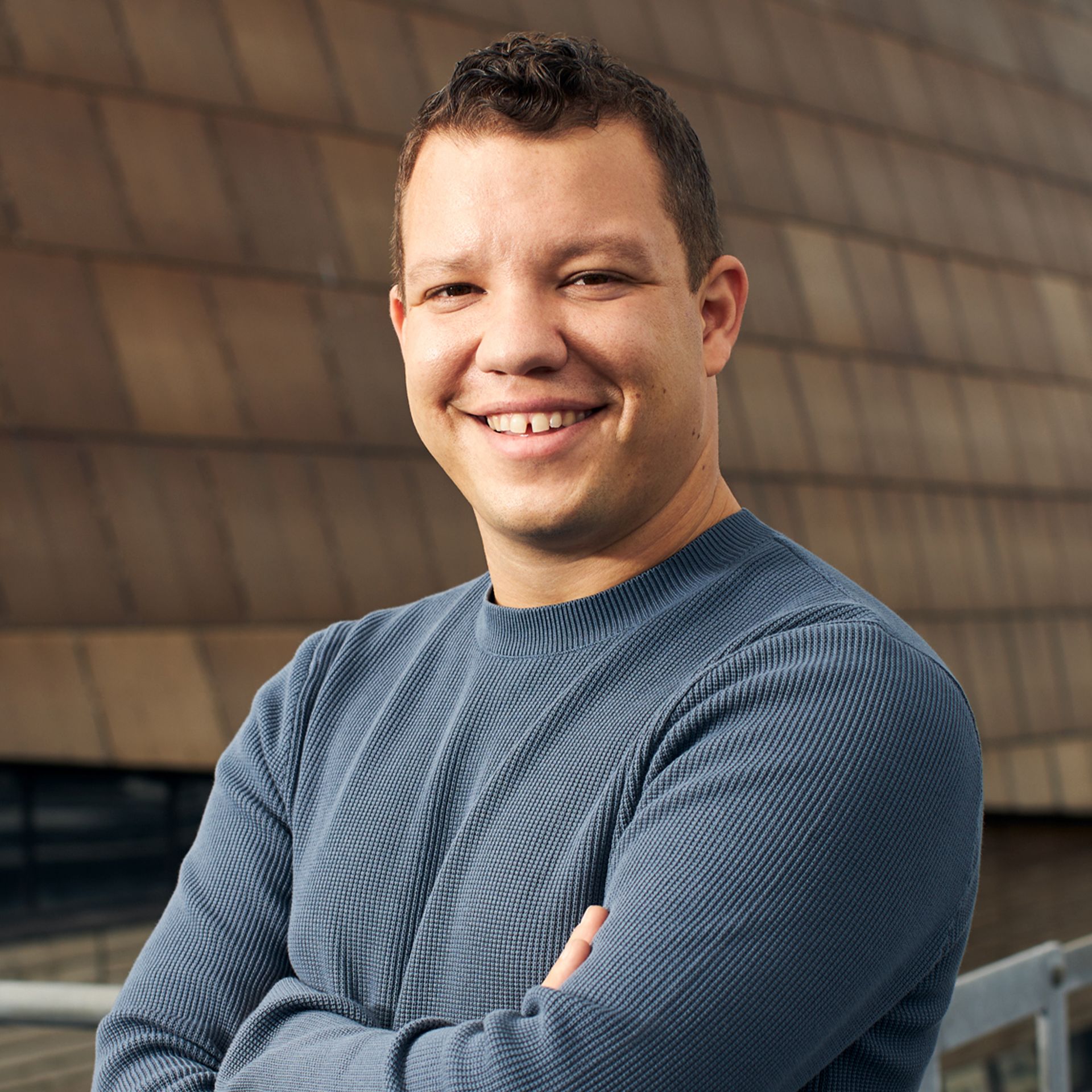
Photo: Benjamin Ealovega
Photo: Benjamin Ealovega
Ryan Bancroft grew up in Los Angeles and first came to international attention in April 2018, when he won both First Prize and Audience Prize at the prestigious Malko Competition for Young Conductors in Copenhagen. Since September 2021 he has been Principal Conductor of BBC National Orchestra of Wales. Following his first visit to work with the Tapiola Sinfonietta, he was invited to become its Artist-in-Association from the 2021–22 season. Last year he was announced as Chief Conductor Designate of the Royal Stockholm Philharmonic Orchestra and will take up the position next September.
He has made debuts with a number of leading European orchestras, including the Philharmonia, London and Rotterdam Philharmonic, BBC, Danish National and Swedish Radio Symphony orchestras, Toulouse Capitole Orchestra, RAI Turin and Ensemble Intercontemporain. In North America he has worked with the Baltimore, Houston and Toronto Symphony orchestras and this season makes debuts with the Dallas Symphony and Minnesota Orchestra. He also appears for the first time at Suntory Hall with the New Japan Philharmonic and Midori, at the Royal Festival Hall with the Philharmonia and Sir Stephen Hough and at the Royal Concertgebouw with the Netherlands Philharmonic. He also returns to the City of Birmingham, Gothenburg and Malmö Symphony orchestras.
He has a passion for contemporary music and has performed with Amsterdam’s Nieuw Ensemble, assisted Pierre Boulez in a performance of his Sur incises in Los Angeles, premiered works by Sofia Gubaidulina, Cage, Tenney and Anne LeBaron, and has worked closely with improvisers such as Wadada Leo Smith and Charlie Haden. He returns to work with the Ensemble Intercontemporain later this month.
He studied at the California Institute of the Arts, Royal Conservatoire of Scotland and in the Netherlands.
Clara-Jumi Kang violin
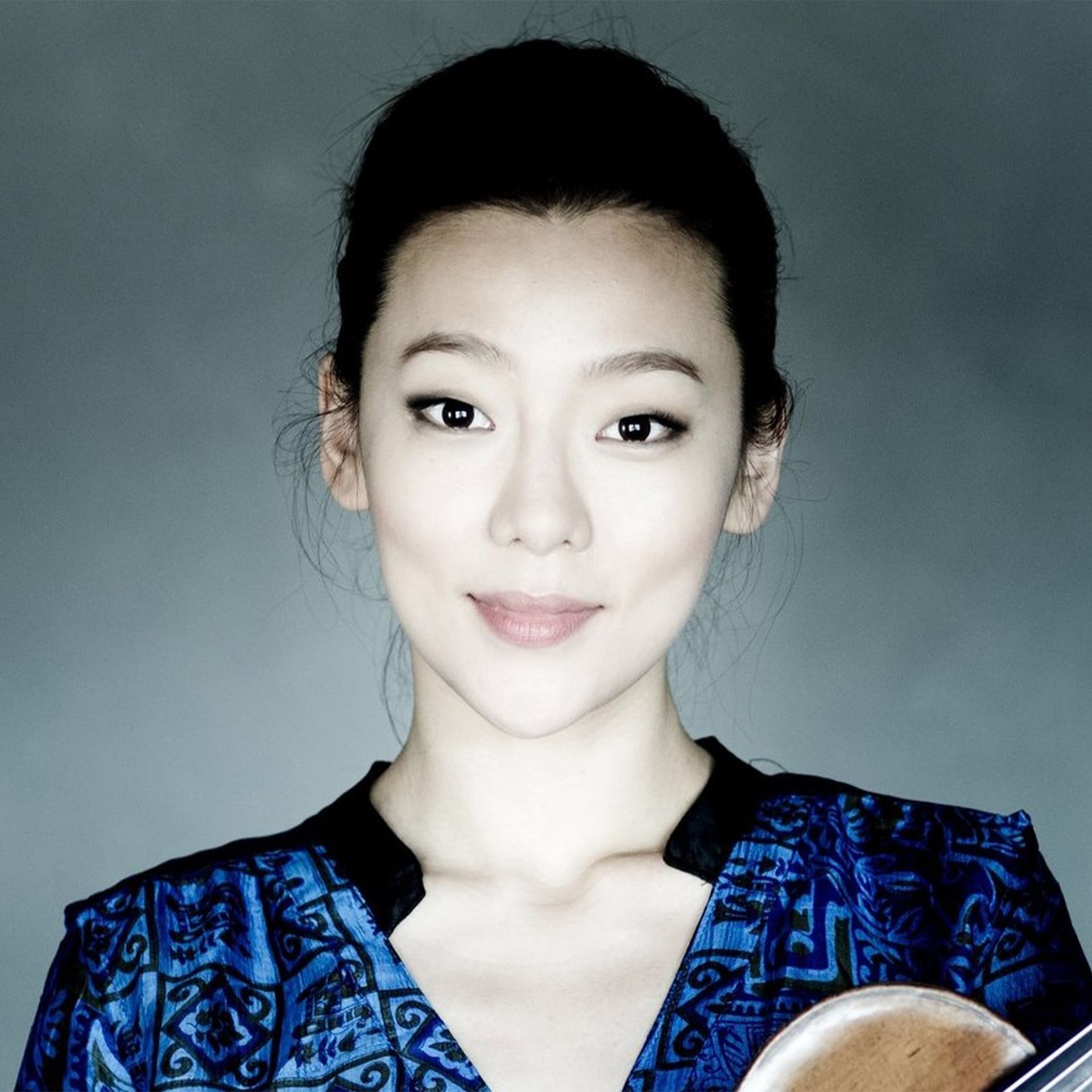
Clara-Jumi Kang came to international attention when she won the Indianapolis International Violin Competition and Sendai Violin Competition (both 2010) and the Seoul Violin Competition (2009).
Recent and current highlights include her debut at the BBC Proms in 2022 with BBC National Orchestra of Wales, performances with the Bremen, BBC and Royal Stockholm Philharmonic orchestras, Gürzenich Orchestra, Deutsche Kammerphilharmonie Bremen and City of Birmingham, Israel, Melbourne, Taipei and Tokyo Metropolitan Symphony orchestras.
She has worked with leading conductors such as Andrey Boreyko, Lionel Bringuier, Myung-Whun Chung, Vladimir Fedoseyev, Valery Gergiev, Lü Jia, Jun Märkl, Juanjo Mena, Christoph Poppen, François-Xavier Roth, Yuri Temirkanov and Kazuki Yamada.
A devoted chamber musician, she regularly visits chamber music festivals and collaborates with renowned musicians including Janine Jansen, Gidon Kremer and Misha Maisky.
Clara-Jumi Kang’s discography includes Modern Solo, featuring works by Schubert and Ysaÿe, and a Brahms and Schumann album with Yeol-Eum Son. Her most recent recording, of Beethoven violin sonatas with pianist Sunwook Kim, was warmly critically received.
Born in Germany to a musical family, she took up the violin at the age of three and a year later enrolled at the Mannheim Musikhochschule, making her concerto debut with the Hamburg Symphony Orchestra at the age of five. She went on to study with Zakhar Bron at the Lübeck Musikhochschule and at the age of seven was awarded a full scholarship to the Juilliard School to study with Dorothy DeLay. She took her Bachelor and Masters degrees at the Korean National University of Arts under Nam-Yun Kim before completing her studies at the Munich Musikhochschule with Christoph Poppen.
BBC National Orchestra of Wales
For over 90 years, BBC National Orchestra of Wales has played an integral part in the cultural landscape of Wales, occupying a distinctive role as both broadcast and national symphony orchestra. Part of BBC Wales and supported by the Arts Council of Wales, it has a busy schedule of live concerts throughout Wales and the rest of the UK. The orchestra is an ambassador of Welsh music and champions the works of contemporary composers.
It performs annually at the BBC Proms and biennially at the BBC Cardiff Singer of the World competition, and can be heard regularly across the BBC: on Radio 3, Radio Wales and Radio Cymru, as well as providing the soundtracks for some of your favourite television programmes.
Highlights of this season include the Elemental Explorations concerts in Brecon and Newport with Nil Venditti, Disney’s Fantasia in concert, Britten and Elgar with the orchestra’s much-loved Conductor Laureate Tadaaki Otaka, an all-new Gaming concert with gaming music legend Eímear Noone and a CoLaboratory concert with the sensational cellist Abel Selaocoe.
Alongside its busy schedule of live concerts, BBC NOW works closely with schools and music organisations throughout Wales, regularly delivering workshops, side-by-side performances and young composer initiatives to inspire and encourage the next generation of performers, composers and arts leaders and make music accessible to all. To find out more visit bbc.co.uk/bbcnow
Patron
HM King Charles III KG KT PC GCB
Principal Conductor
Ryan Bancroft
Conductor Laureate
Tadaaki Otaka CBE
Composer-in-Association
Gavin Higgins
Composer Affiliate
Sarah Lianne Lewis
First Violins
Lesley Hatfield leader
Nick Whiting associateleader
Martin Gwilym-Jones sub-leader
Terry Porteus
Suzanne Casey
Carmel Barber
Kerry Gordon-Smith
Anna Cleworth
Juan Gonzalez
Ruth Heney
Patrycja Mynarska
Ilze Abola
Second Violins
Anna Smith *
Jane Sinclair
Vickie Ringguth
Joseph Williams
Michael Topping
Katherine Miller
Beverley Wescott
Sellena Leony
Gary George-Veale
Catherine Fox
Violas
Rebecca Jones *
Tetsuumi Nagata
Peter Taylor
Liam Brolly
Ania Leadbeater
Robert Gibbons
Catherine Palmer
Laura Sinnerton
Cellos
Alice Neary *
Morwenna Del Mar
Rachel Ford
Carolyn Hewitt
Alistair Howes
Jacky Phillips
Double Basses
David Stark *
Daniel Vassallo
Richard Gibbons
Emma Prince
Flutes
Fiona Kelly ‡
John Hall
Elizabeth May
Piccolo
Elizabeth May ‡
Oboes
Steve Hudson *
Sarah-Jayne Porsmoguer
Clarinets
Thomas Verity ‡
Lenny Sayers
Bassoons
Jarosław Augustyniak *
Paul Boyes ‡
Lois Au
Horns
Tim Thorpe *
Meilyr Hughes
Neil Shewan †
William Haskins
John Davy
Trumpets
Ryan Linham
Robert Samuel
Trombones
Donal Bannister *
Ryunosuke Abe
Bass Trombone
Darren Smith †
Tuba
Daniel Trodden †
Timpani
Steve Barnard *
Percussion
Mark Walker †
Phil Hughes
* Section Principal
† Principal
‡ Guest Principal
# Assistant Principal
The list of players was correct at the time of publication
Director Lisa Tregale +
Orchestra Manager Vicky James **
Assistant Orchestra Manager Nick Olsen
Orchestra Coordinator, Operations Kevin Myers
Business Coordinator Caryl Evans
Head of Artistic Production Matthew Wood
Artists and Projects Manager Eleanor Phillips
Orchestra Librarian Eugene Monteith **
Producer Mike Sims
Broadcast Assistant Jacob Perkins
Head of Marketing and Audiences Sassy Hicks +
Marketing Coordinator Amy Campbell +
Digital Producer Yusef Bastawy
Social Media Coordinator Harriet Baugh
Education Producers Beatrice Carey, Rhonwen Jones **
Audio Supervisors Simon Smith, Andrew Smillie
Production Business Manager Lisa Blofeld
Stage and Technical Manager Steven Brown
Assistant Stage and Technical Manager Dave Rees
BBC Wales Apprentices Josh Gill, Analese Thomas-Strachan, Jordan Woodley
+ Green Team member
** Diversity & Inclusion Forum