Mendelssohn and Mozart with François Leleux
Thursday 30 September, 7.30pm

If viewing these notes at the concert, please do so considerately and not during performances. Please ensure your mobile device is on silent mode throughout.
Felix Mendelssohn
A Midsummer Night’s Dream – overture c.12’
Wolfgang Amadeus Mozart (arr. Leleux)
Arias from ‘The Magic Flute’ and ‘Don Giovanni’ c.20’
INTERVAL: 15 minutes
Louise Farrenc
Overture No.1 c.7’
Felix Mendelssohn
Symphony No.4 in A major, ‘Italian’ c.30’
François Leleux director/oboe


Tonight’s concert is being recorded for broadcast on BBC Radio 3 and BBC Sounds on Thursday 14 October. After broadcast it will be available to stream or download for 30 days.
There’s a chill in the air and the nights are drawing in, but here’s a concert from superstar oboist François Leleux that simply bursts with sunshine.
Mendelssohn’s depiction of Shakespearean shenanigans glows in the light of a balmy summer evening, while his sun-dappled ‘Italian’ Symphony is as ripe and zesty as a freshly plucked lemon. Louise Farrenc’s first Overture bounds along with energy and invention; and Leleux plays for us, too, in his own arrangements of arias from two of Mozart’s most celebrated operas. An evening of feel-good favourites so dazzling that you might need a pair of sunglasses.
Felix Mendelssohn (1809–47)
A Midsummer Night’s Dream – overture (1826)c.12 minutes

His grandfather was Moses Mendelssohn, one of Germany’s most influential Enlightenment thinkers. His father Abraham was one of Berlin’s most successful bankers. As a child, he mingled with Europe’s cultural and intellectual elite at the family house in central Berlin. So it’s no surprise that – amid his early immersion in music, painting, literature and philosophy – the young Felix Mendelssohn should quickly develop a passion for Shakespeare.
He and his sister Fanny would act out favourite scenes from the Bard’s plays, and when the family acquired a new German translation of A Midsummer Night’s Dream in 1826, its stories of lovers and fairies, spells and transformations immediately captured the 17-year-old’s imagination. So much so that he quickly set about transforming the play into music, completing his overture on 6 August the same year.
It’s a remarkably assured achievement for a 17-year-old composer, but Mendelssohn was already something of an old hand: he’d composed 12 string symphonies between the ages of 12 and 14, and his glorious Octet at 16. The overture is intended for the concert hall rather than the theatre, and doesn’t set out to tell the play’s story. Nonetheless, its enchanted opening chords invite listeners into a world of magic and mystery, complete with the braying of Bottom the ass and the scampering of fairy feet.
Wolfgang Amadeus Mozart (1756–91) (arr. François Leleux) (born 1971)
Arias from ‘The Magic Flute’ and ‘Don Giovanni’ (for oboe and orchestra) c.20 minutes

The Magic Flute (1786)
1 Aria ‘Der Vogelfänger bin ich ja’ (I am the birdcatcher)
2 Aria ‘Dies Bildnis ist bezaubernd schön’ (This image is enchantingly beautiful)
3 Aria ‘Ein Mädchen oder Weibchen’ (A girl or a wife)
4 Aria ‘Alles fühlt der Liebe Freuden’ (Everyone feels the joys of love)
Don Giovanni (1787)
5 Canzonetta ‘Deh vieni alla finestra’ (Oh, come to the window)
6 Aria ‘Non mi dir, bel’idol mio’ (Say not, my beloved)
François Leleuxoboe
MThe Harmonie or wind band became quite the thing in central Europe by the end of the 18th century, playing arrangements of hit arias from the latest operas as entertainment for wealthy patrons. Little is known about Joseph Heidenreich, who made wind-band arrangements of music from Mozart’s The Magic Flute, while Joseph Triebensee, who arranged excerpts from Don Giovanni, was an oboist, and a member of the orchestra in The Magic Flute’s first performances.
Jump forward to our own times, and oboist François Leleux, tonight’s conductor and soloist, has taken the idea of arrangement one step further: ‘I have always played Mozart opera wind octet arrangements, and I thought I should take the first oboe part and play with an orchestra. After 20 years of playing with an octet, I finally did it. The arrangement is more about reducing the orchestra size than changing anything from the original music.’
Leleux plays four arias from The Magic Flute and two from Don Giovanni. The comic birdcatcher Papageno introduces himself in ‘Der Vogelfänger bin ich ja’, while in ‘Dies Bildnis ist bezaubernd schön’, the hero Tamino falls in love with a portrait of a beautiful woman, whom we later discover to be the heroine Pamina. Papageno longs for the affection of a wife in ‘Ein Mädchen oder Weibchen’, and the otherwise sinister slavemaster Monostatos sings of everyone’s need for love in ‘Alles fühlt der Liebe Freuden’. Across in Don Giovanni, the womanising Don serenades a young serving girl in ‘Deh vieni alla finestra’, while Donna Anna asks her suitor Don Ottavio to cool his advances in ‘Non mi dir, bel’idol mio’.
INTERVAL: 15 minutes
Louise Farrenc (1804–75)
Overture No. 1 in E minor, Op. 23 (1834) c.7 minutes
For an example of talent, determination and sheer hard graft overcoming apparently insurmountable obstacles, look no further than French composer Louise Farrenc. Born in Paris in 1804, she wowed Europe as a touring piano virtuoso before settling down to teach and compose following the birth of her daughter in 1826. As a professor of piano at the Paris Conservatoire, she made history as the institution’s only salaried woman professor during the whole of the 19th century – though she had to tolerate an income of barely half that of her male colleagues, until she successfully demanded parity. Ironically, part of her success came from audiences who could barely believe a woman might be capable of the powerful, passionate music she created.
Both power and passion are more than evident in her Overture No. 1 of 1834, which packs plenty of drama (though of an abstract, unspecific nature) into its brief duration, contrasting pompous swagger in its slow introduction with driving, stormy energy in its later music.
Felix Mendelssohn
Symphony No. 4 in A major, Op. 90 ‘Italian’ (1833) c.30 minutes
1 Allegro vivace
2 Andante con moto
3 Con moto moderato
4 Saltarello: Presto
We met Mendelssohn the precocious teenager at the start of tonight’s concert, and we close a few years later with Mendelssohn the gap-year traveller. It was more like three gap years, in fact, off and on between 1829 and 1831, and it’s probably fairer to describe his travels as excursions in the tradition of a Grand Tour, in which a wealthy young man completed his education by ticking off the cultural highlights of Europe. Mendelssohn began – unconventionally – with a three-week visit to Scotland in 1829, which inspired both his Hebrides Overture and his ‘Scottish’ Symphony. But, encouraged by the eminent writer Johann Wolfgang von Goethe, whom Mendelssohn counted as a friend, and his composition teacher Carl Friedrich Zelter, he set off for the more traditional destination of Italy in October 1830. He spent 10 months in the country, making his way from Venice to Naples via Bologna, Florence and Rome, then back home again through Genoa and Milan.
If his Scottish trip had been about brooding landscapes, swirling mists and blood-soaked history, his Italian trip, as he wrote home to his parents, was about light, sunshine and happiness: ‘This is Italy! And now has begun what I have always thought to be the supreme joy in life. And I am loving it.’
He devoted time during his travels to planning what he called ‘the jolliest piece I have ever done’ in a letter to his sister Fanny, completing his ‘Italian’ Symphony back home in Berlin on 13 March 1833. It was an immediate success at its premiere in London two months later.
Mendelssohn described the symphony as ‘blue sky in A major’, and bright optimism is certainly encapsulated in the first movement’s bounding opening theme, though the movement’s central development section brings in somewhat darker, more impish material.
The slow second movement was inspired by religious processions that Mendelssohn watched in Rome: it contrasts a noble melody in the woodwind and violas with a plodding bass line, slipping away at its conclusion as if the procession has moved into the distance.
Following an elegant third-movement minuet (complete with distant horn calls in its gently martial trio section), Mendelssohn closes with a finale that blends two breathless Italian dances: the Roman saltarello (which gives the movement its name) and the Neapolitan tarantella.
The ‘Italian’ is one of very few symphonies in the repertoire that begins in the bright positivity of the major and ends in the more serious minor (often the journey is the other way round, as in Beethoven’s Fifth). The finale’s whirling energy, however, alongside a melancholy memory of the symphony’s opening melody just before the end, ensures a propulsive, somewhat delirious conclusion.
Programme notes © David Kettle
David Kettle is an Edinburgh-based writer and editor who contributes regularly to The Scotsman, The Daily Telegraph, The List and The Strad.
Biographies
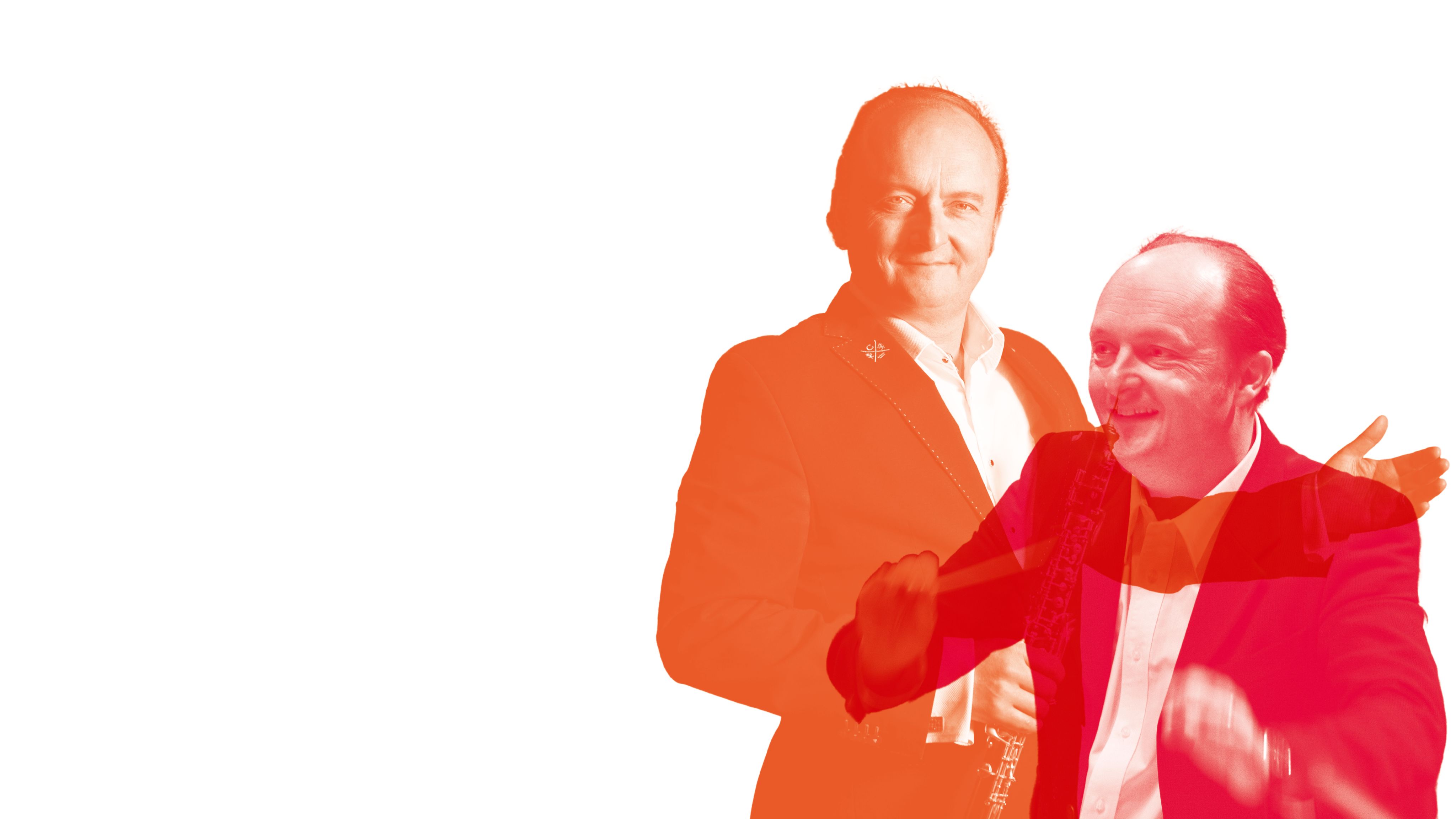
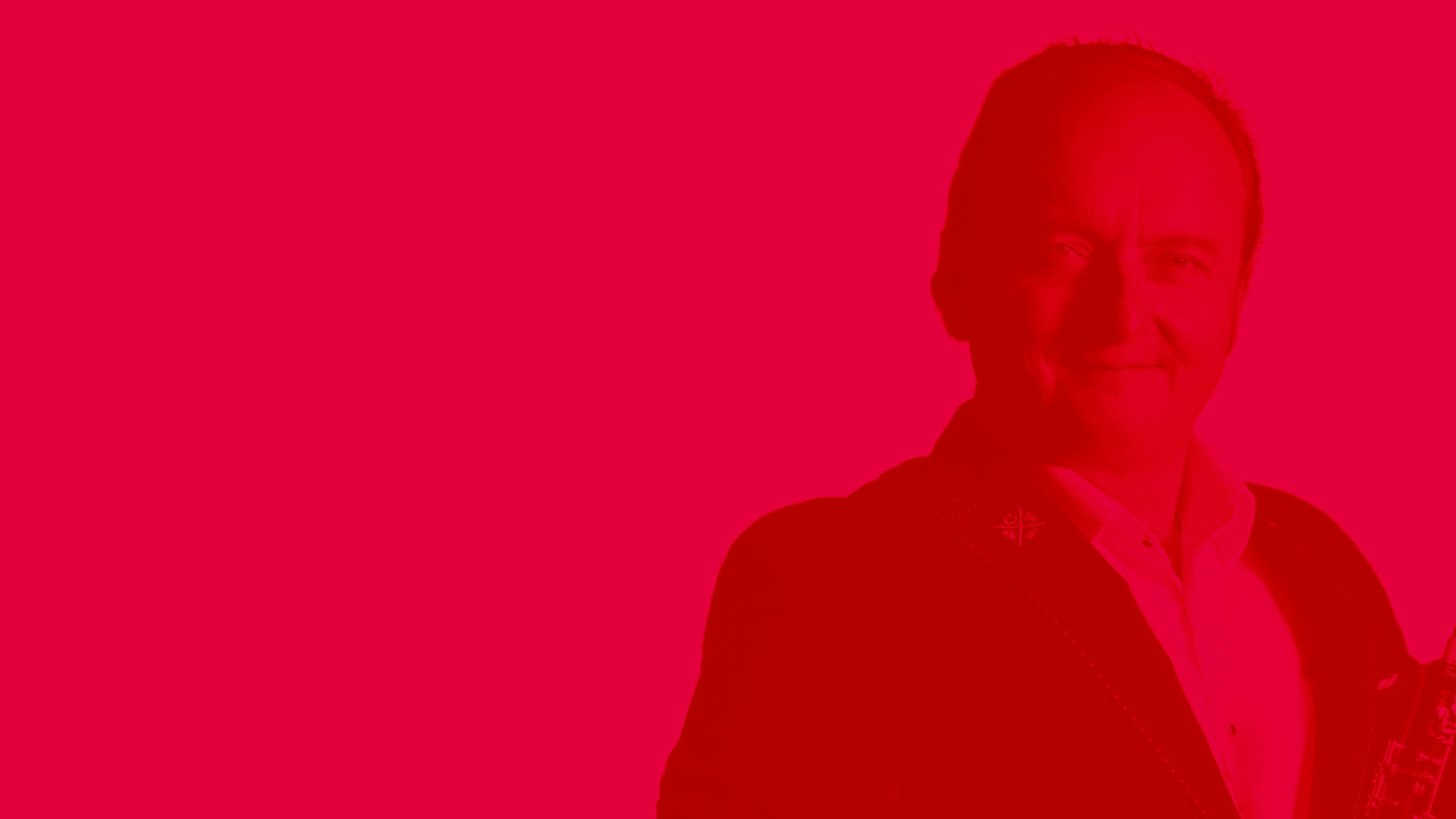
François Leleux director/oboe

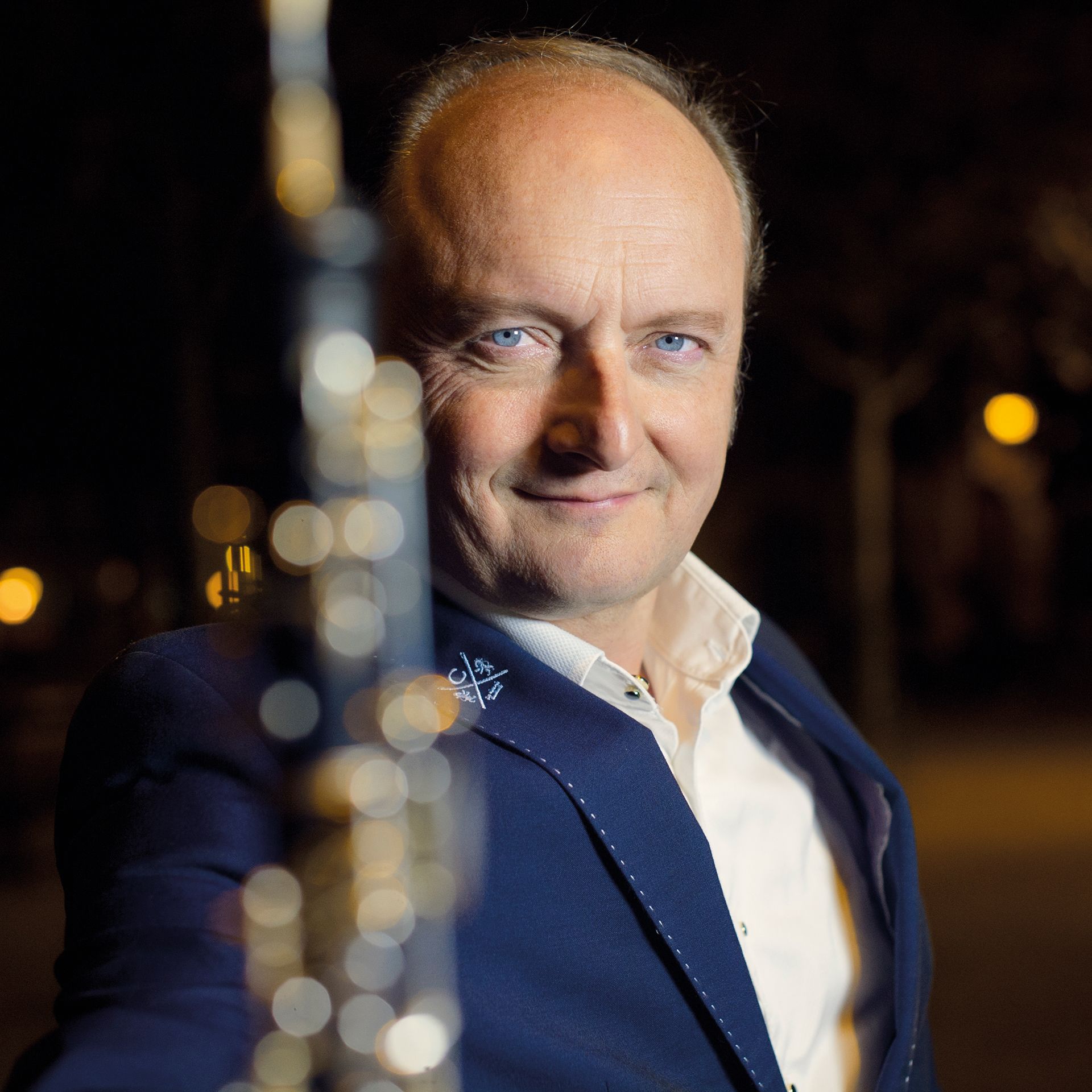
Photo: Jean-Baptiste Millot
Photo: Jean-Baptiste Millot
Conductor and oboist François Leleux is an Artistic Partner of Camerata Salzburg and was previously Artist-in-Association with the Paris Chamber Orchestra and has been an Artist-in-Residence with the Frankfurt Radio Symphony, Berne Symphony, Tenerife Symphony, Strasbourg Philharmonic and Norwegian Chamber orchestras.
He has appeared as oboist with orchestras in Europe, the USA and Japan. As a chamber musician he performs worldwide with the sextet Les Vents Français and with violinist Lisa Batiashvili and pianists Eric Le Sage and Emmanuel Strosser. He has commissioned new works from composers such as Nicolas Bacri, Michael Jarrell, Giya Kancheli, Thierry Pécou, Gilles Silvestrini and Eric Tanguy.
This season he appears as conductor with the City of Birmingham Symphony, Hungarian National Philharmonic Orchestra, Svizzera Italiana, BBC Scottish Symphony and Hungarian National Philharmonic orchestras, Camerata Salzburg, the Chamber Orchestra of Europe and the Scottish, Netherlands and Paris Chamber orchestras.
François Leleux’s latest recording, Bienvenue en France, is a collaboration with Emmanuel Strosser featuring music by 20th-century French composers. As a conductor, he released an album of music by Bizet and Gounod with the Scottish Chamber Orchestra in 2019. Other recordings include music by Haydn and Hummel with the Munich Chamber Orchestra, Bach with the COE, Mozart with Camerata Salzburg and Richard Strauss’s Oboe Concerto with the Swedish Radio Symphony Orchestra under Daniel Harding.
BBC Scottish Symphony Orchestra
The BBC Scottish Symphony Orchestra is one of Britain’s most versatile orchestras, with a huge repertoire ranging from contemporary and experimental scores to the great classics, and from music by Scottish composers to film scores and music for television.
Founded in December 1935, and based at City Halls in Glasgow since 2006, the orchestra appears at the UK’s most prestigious events such as the BBC Proms and Edinburgh International Festival, and tours all over Scotland and the UK. It has appeared in many of the great musical centres of Europe and has visited the USA, South America, China, India, and most recently Japan with Chief Conductor Thomas Dausgaard.
During the current global pandemic the orchestra streamed and broadcast regular live and recorded concerts from City Halls; staged a digital version of its annual new music festival, Tectonics; and created an online version of Tunes for Tots for very young children with its Associate Artist, Lucy Drever.
The majority of its performances are broadcast on BBC Radio 3 and available on BBC Sounds, and its innovative programming and acclaimed recordings have made it the recipient of numerous awards, including four Gramophone Awards.
Thomas Dausgaard
Chief Conductor
Ilan Volkov
Principal Guest Conductor
Alpesh Chauhan
Associate Conductor
Lucy Drever
Associate Artist
Sir Donald Runnicles
Conductor Emeritus
Jerzy Maksymiuk
Conductor Laureate
First Violins
Laura Samuel (leader)
Kanako Ito (associate leader)
David Routledge *
Jane Mackenzie
Elita Poulter
Alastair Savage
Olivier Lemoine
Gent Kocho
Emily Ward
Mireia Ferrer Yabar
Second Violins
Lise Aferiat *
Jamie Campbell †
Liza Johnson ‡
Barbara Downie
Julia Norton
Ben Norris
Julia Carpenter
Ana do Vale
Violas
Scott Dickinson *
Andrew Berridge †
Rhoslyn Lawton
Fiona Robertson
Alice Batty
Mary Ward
Rik Evans
Cellos
Rudi De Groote *
Tom Rathbone ‡
Sarah Oliver
Sharon Molloy
Harold Harris
Gill De Groote
Double Basses
Iain Crawford †
Tom Berry
Jeremy Ward
Paul Speirs
Flutes
Charlotte Ashton *
Brontë Hudnott
Oboes
Stella McCracken *
Alexandra Hilton †
Clarinets
Yann Ghiro *
Simon Butterworth †
Bassoons
Julian Roberts ¥
Graeme Brown †
Horns
Andrew McLean ¥
Hector Salgueiro
Lauren Reeve Rawlings ¥
Stephanie Jones
Trumpets
Mark O’Keeffe *
Mark Calder
Trombones
Simon Johnson *
Jonathan Hollick †
Bass Trombone
Alan Mathison *
Tuba
Andrew Duncan *
Timpani
Gordon Rigby *
* sectionprincipal
† principal
‡ string sub-principal
¥ guest principal
orchestra list correct at
time of publication
Coming Up Next at the Glasgow Royal Concert Hall
Thursday 21 October, 7.30pm
States of America
With Ilan Volkov and Peter Evans
Eleanor Hovda Fields 87
Talib Rasul Hakim Visions of Ishwara
Courtney Bryan White Gleam of Our Bright Star UK premiere
Lucia Dlugoszewski Abyss and Caress*UK premiere
*Peter Evans trumpet
Ilan Volkov conductor
Join the BBC SSO and Principal Guest Conductor and Tectonics Festival founder, Ilan Volkov, for a journey through 20th-century American music and beyond. Lucia Dlugoszewski was a Polish-American composer whose work Abyss and Caress, commissioned by the New York Philharmonic in 1975, showcases both her typical use of a ‘timbre’ (or ‘prepared’) piano and her innovative bowing for strings. The composer-improviser-trumpeter Peter Evans is our soloist.
Eleanor Hovda was renowned for her beautifully crafted, sparse imaginative sound-worlds (represented here byFields 87) while Talib Rasul Hakim (born Stephen Alexander Chambers) was taught by Morton Feldman and Ornette Coleman and influenced by Sufism and Eastern religions. And we move into this century with the swelling hope of Courtney Bryan’s White Gleam of Our Bright Star, a meditation on America’s potential and ‘themes of sister/brotherhood, freedom and equality’.
Book Free Tickets(booking fee may apply)



Coming Up Next at City Halls
Thursday 28 October 7.30pm
Spotlight on Jörg Widmann
Weber Clarinet Concerto No.1
JörgWidmann Con brio
Schumann Symphony No.2 in C major
Jörg Widmann clarinet/director
Certain musicians seem to make everything they touch buzz with electricity – and few do so with more verve, humour or flair than Jörg Widmann: composer, conductor and clarinettist extraordinaire. ‘Any Widmann performance brings whatever he plays kicking and screaming into the present day,’ says The Guardian, so expect to hear Schumann’s familiar Second Symphony with new ears. You’ll be wowed, too, at the brilliance of his musical calling card Con brio (which breaks Beethoven into tiny pieces before putting him back together) and the beauty of his playing in Weber’s famous clarinet concerto.
Book Now
Save Money by booking a Subscription Package (4+ concerts)


What Did You Think?
Let us know what you thought about tonight’s concert, by getting in touch via Facebook or Instagram, or by sending us a message on Twitter
Sign Up to Our Newsletter
Sign up for e-alerts to get the latest information about our all our live concerts, broadcasts and recordings, digital streams and much more
Produced by BBC Proms Publications