
Beethoven 5
Sunday 21/9/25, 3.00pm
The Riverfront, Newport


Grace Williams
Hen Walia 10’
Antonín Dvořák Violin Concerto
Violin Concerto in A minor 32’
INTERVAL: 20 minutes
Ludwig van Beethoven
Symphony No. 5 in C minor 31’
Nil Venditti conductor
Inmo Yang violin
Introduction
Welcome to today’s concert, and the start of the new season. To conduct it, we’re delighted to welcome back Nil Venditti for a programme that celebrates the inimitable Czech sound world of Dvořák and concludes with one of the most famous works in the entire classical canon.
We start, though, closer to home, with Grace Williams’s Hen Walia, a work intended as the overture to an opera that she never completed. It was one of the first pieces that made Williams’s name and its sheer stylistic confidence is striking.
Dvořák’s Violin Concerto was originally intended for the legendary Joseph Joachim, but the composer’s formal innovations proved too much for the violinist, and it was instead premiered by the Czech virtuoso František Ondříček. To play it today Inmo Yang returns after making such a notable debut with BBC NOW.
Beethoven’s Fifth Symphony is a work that needs little introduction, yet what is astonishing more than two centuries after it was unveiled in 1808 is its sheer dramatic potency, from its famous opening right through to the defiant closing moments.
Enjoy!
Lisa Tregale
Director
Please respect your fellow audience members and those listening at home: mobile phones may be kept on but on silent and with the brightness turned down; other electronic devices should be switched off during the performance. Photography and recording are not permitted.
Grace Williams (1906–77)
Hen Walia(1930, rev. 1936)

After completing her studies at the Royal College of Music in 1929, Grace Williams was awarded a scholarship to study in Vienna with the prominent Austrian composer, Egon Wellesz. While abroad, she heard a performance of Jaromír Weinberger’s popular Czech folk opera Švanda Dudák (‘Schwanda the Bagpiper’, 1927) and was inspired to write a Welsh folk opera of her own. Although it was never finished, she completed its overture in 1930. Hen Walia draws from traditional Welsh folk tunes, including the lullaby Huna Blentyn (‘Sleep, my child’).
Hen Walia was premiered by the London Symphony Orchestra, conducted by E. T. Davies, at the National Eisteddfod in Bangor on 6 August 1931, and the concert was also broadcast live on the BBC’s UK-wide National Programme. Although the overture would come to be overshadowed by the popularity of her Fantasia on Welsh Nursery Tunes (1940), the work was significant in bringing Williams’s name to wide public attention and was the first of her orchestral pieces to receive regular performances and broadcasts by the BBC during the 1930s.
Programme note © Rhiannon Mathias
Antonín Dvořák (1841–1904)
Violin Concerto in A minor, Op. 53(1879)
1 Allegro ma non troppo –
2 Adagio ma non troppo
3 Allegro giocoso, ma non troppo
Inmo Yang violin
In 1878 Fritz Simrock, after publishing Dvořák’s Moravian Duets and the first set of Slavonic Dances (both essentially aimed at the domestic music-making market), finally offered Dvořák a commission for a major work: the Violin Concerto. The violinist Joseph Joachim was by now also taking a keen interest in his music and offered to help him with the violin part. In July 1879 Dvořák visited Joachim in Berlin, taking with him the first sketches of the concerto. Joachim’s feedback was not limited to the solo part but extended also to the structure of the piece: essentially a traditionalist, he was bothered by the concerto’s departures from formal orthodoxy (such as the absence of a long orchestral introduction before the soloist’s first entry and the linking of the first two movements).
Dvořák was unwilling to back down in the matter of what to him was the work’s essential formal logic, dictated by the nature of the musical material. From this point on, Joachim’s interest in the concerto appeared to cool. Over the next few years, the two men held further consultations, but by the autumn of 1882 it had become clear that they had agreed to disagree over the concerto. Dvořák informed Simrock that the shape of the work had now been finalised and that a performance could be arranged. But although the composer succeeded in persuading his publisher of the logic of the more unconventional aspects of the concerto, Joachim, its dedicatee, appears never to have played it.
The much-delayed first performance was given in October 1883 by the young Czech violin virtuoso František Ondříček. Thanks to Dvořák’s supreme gift of melodic invention and unmistakably Czech musical sensibility, the concerto was an immediate success and soon became a repertoire staple, with audiences everywhere responding unreservedly to its rhythmic vitality and spontaneous joie de vivre. These are apparent right at the outset, where the brief orchestral introduction, characterised by a folk-like energy, is followed by a violin solo whose initial rhythmic vigour quickly gives way to a rhapsodic passage of melting loveliness. The serenity of the equally lovely slow movement is only briefly disturbed by some menacing trumpets in the central section, and the work is brought to an invigorating and joyful conclusion by the final Allegro giocoso inspired by the furiant, a lively Czech folk dance.
Programme note © Paula Kennedy
INTERVAL: 20 minutes
Ludwig van Beethoven (1770–1827)
Symphony No. 5 in C minor, Op. 67(1807–8)
1 Allegro con brio
2 Andante con moto
3 Allegro –
4 Allegro
There are few musical themes as famous, and as endlessly reproduced – from disco tracks to doorbells – as the opening of Beethoven’s Fifth Symphony. One of the curious upshots of this is that it’s incredibly difficult for us, as 21st-century listeners, to detect the big problem that the audience at the 1808 premiere would have had with those striking initial bars. Four notes (without chords), a rest and a pause … four notes (without chords), a rest and a pause … what key is it in? And how many beats are there in the bar? Beethoven leaves us hanging, without any sense of where the ground might be. We all know now that this piece is in C minor, but the opening notes don’t actually make that explicit. You can just as easily play an E flat major chord underneath them, which would sound entirely different. And watch the conductor when the piece begins: the first thing written on the score is a rest, a silence. To show the orchestra when they are going to play, you have to begin by marking a beat on which they aren’t.
Indeed, the entire first movement is all about confounding expectations: the four-note motif appears everywhere but often leads us in surprising directions, turning the music on a dime to wander off into far-distant keys or new developments. It’s for this reason that the finale, when it comes, is so insistent in its long conclusion of C major chords, forceful and repetitive. Here is home, here is a sense of having resolved and reached the key we’re meant to be in. It serves as a balance to that alarmingly unstable first movement.
Between these two outer movements come an elegant Andante con moto, with a prominent role for the woodwinds, and a sombre C minor scherzo. In both we find moments of extreme dynamics (including some surprisingly forceful passages in the otherwise quiet Andante); and the scherzo also places the horns firmly in the spotlight, rapping out the rhythm of the piece’s initial gesture. Indeed, that little motif is with us throughout the piece, binding it together.
Beethoven’s earliest sketches for this symphony date from 1804, but he completed the bulk of the work in 1807–8. Although the premiere was given in 1808, the most important review of the piece didn’t appear until 1810: a lengthy article by the writer and musician E. T. A. Hoffmann. He pointed to the highly ‘Romantic’ nature of Beethoven’s instrumental music – a very early example of this adjective being applied to music at all. He went on to observe: ‘The heart of every sensitive listener … is certain to be deeply stirred and held until the very last chord by one lasting emotion, that of nameless, haunted yearning.’
Programme note © Katy Hamilton
Help Us Improve Our Online Programmes.
Please take this 5-minute survey and let us know what you think of these notes.
Programme Survey
You may also like:
If you’ve enjoyed the concert today, bring friends and family and come along to these upcoming concerts. As an existing audience member, you can buy tickets for these for £7 using promotion code NOWYOU when buying online.
Marches & Melodies
Thursday 25/9/25, 7.30pm
BBC Hoddinott Hall, Cardiff
Schumann, arr. Donal Bannister Four Marches
Finzi Clarinet Concerto
Franck Symphony in D minor
Gergely Madaras conductor
Nicholas Carpenterclarinet
RESPLENDENT | WARMING | JOYOUS
In a programme putting our fantastic musicians front and centre we kick off our 2025/26 season in BBC Hoddinott Hall with a showcase for our brass section – Schumann’s Four Marches, originally written for solo piano, makes a mighty impression in this arrangement by our Principal Trombonist Donal Bannister. Finzi’s Clarinet Concerto, which was premiered in Hereford at the 1949 Three Choirs Festival, remains one of his most popular works; to perform this piece, by turns soulful and virtuosic, BBC NOW’s Principal Clarinet Nicholas Carpenter steps into the spotlight.
Conductor Gergely Madaras finishes the evening with Franck’s Symphony in D minor – his last major work and only symphony. The gently lyrical and radiantly joyous themes of the first movement contrast with a second movement that fuses pizzicato strings beneath a haunting cor anglais solo with two scherzo trios. The symphony’s finale ingeniously reworks previous themes, to joyous effect.
Celebrating Shostakovich
Fri 03/10/25, 7:30pm
Brangwyn Hall, Swansea
Shostakovich Violin Concerto No. 1
Shostakovich Symphony No. 7, ‘Leningrad’
Ryan Bancroft conductor
Clara-Jumi Kangviolin
POWERFUL | HEROIC | MASTERFUL
Fifty years after his death we celebrate the mastery of Shostakovich in a concert featuring his First Violin Concerto and the mighty Seventh Symphony under the baton of our much-loved Principal Conductor, Ryan Bancroft.
The concerto is an artistic showcase on a mighty scale, from its broodingly dark opening Nocturne to an almost demonic Scherzo complete with a Jewish Klezmer-style dance for clarinet, and a grand Passacaglia to the brilliantly virtuosic Burlesque. Similarly powerful is his ‘Leningrad’ Symphony: this weightily eloquent work treads the line between Stalinist expectation and personal expression surrounding war.
Biographies
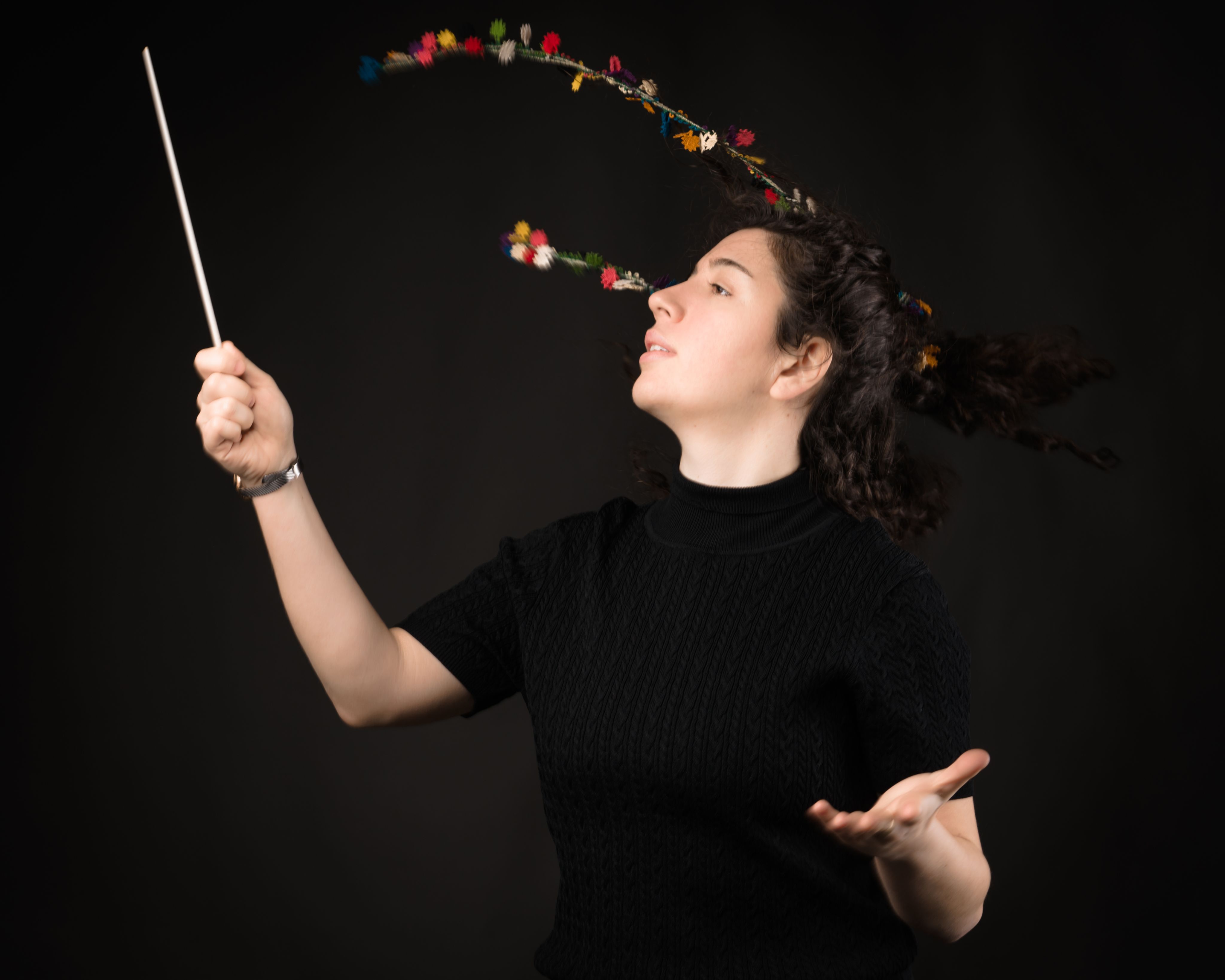
Nil Venditti conductor

Alessandro Bertani
Alessandro Bertani
Italian-Turkish conductor Nil Venditti is fast establishing relationships with major orchestras and ensembles around the world, including the Royal Northern Sinfonia, of which she has been Principal Guest Conductor since the 2024/25 season.
This season she has engagements spanning the globe. Highlights include a number of concerts in the UK, where she works extensively with the BBC National Orchestra of Wales and Royal Philharmonic Orchestra, as well as making her debut with the Philharmonia Orchestra and City of Birmingham Symphony Orchestra. She also makes her debut at London’s Barbican with the BBC Symphony Orchestra. She also appears with the Deutsche Symphonie-Orchester Berlin, Beethoven Orchester Bonn, Musikalische Akademie Mannheim, Bilbao and Quebec Symphony orchestras and Tampere Philharmonic Orchestra, among others.
Recent highlights include debuts with the Finnish Radio Symphony Orchestra, BBC Philharmonic Orchestra and Orchestra Ensemble Kanazawa, as well as returns to the BBC Proms, Schleswig-Holstein Festival, Royal Philharmonic Orchestra, and Deutsche Kammerphilharmonie Bremen.
She combines a strong affinity for Classical and early Romantic repertoire with a particular interest in Turkish and Italian composers. She continues to strengthen her reputation in the opera house, and has conducted operas from Mozart’s Così fan tutte to Peter Maxwell-Davies’s The Lighthouse. Next summer she conducts Macbeth for Longborough Festival Opera.
Nil Venditti studied conducting at the Zurich University of the Arts with Johannes Schlaefli, as well as attending the Conducting Academy associated with the Pärnu Music Festival under Paavo Järvi, Neeme Järvi and Leonid Grin. Prior to this, she studied cello in Italy with Francesco Pepicelli.
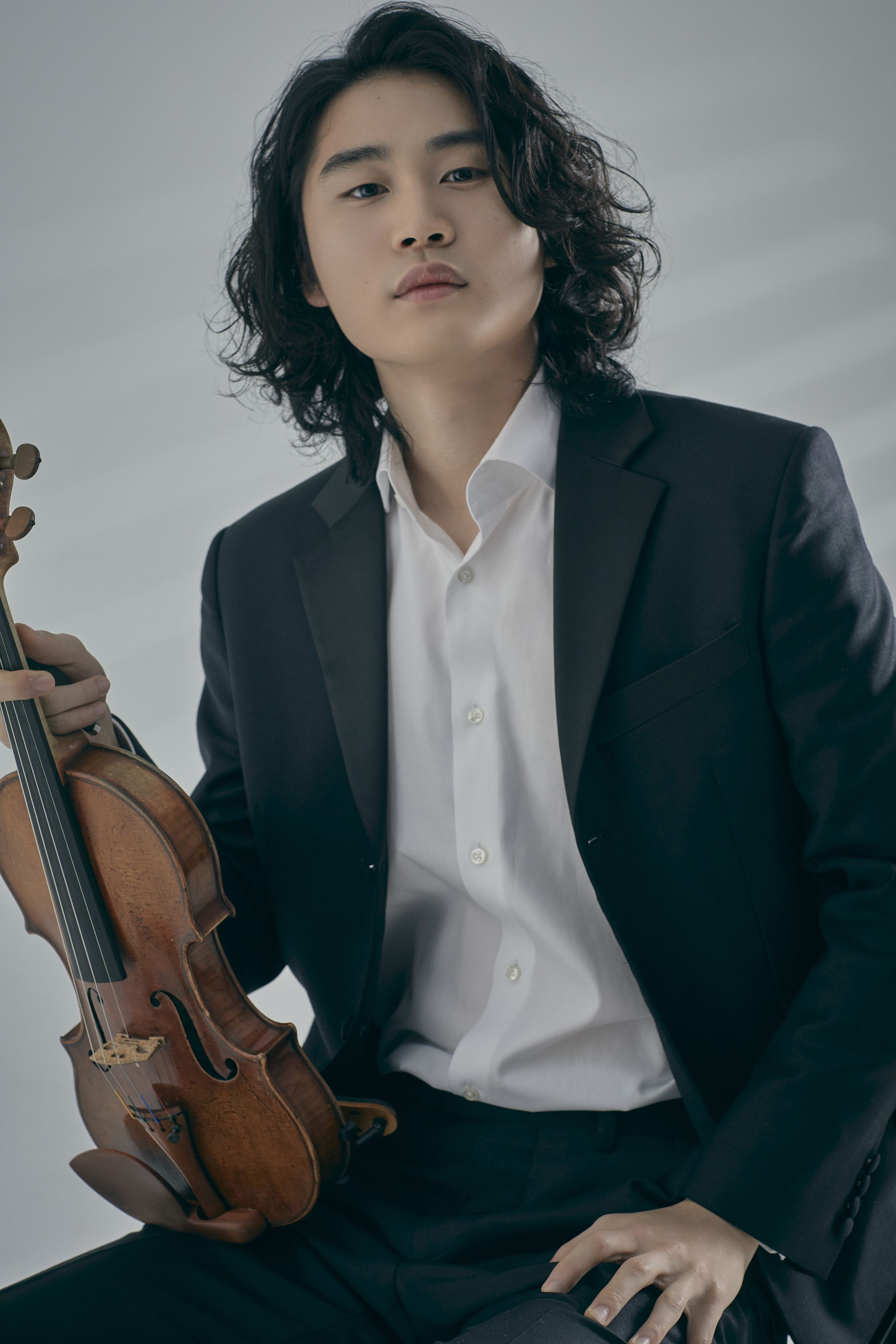
Inmo Yangviolin

Sangwook Lee
Sangwook Lee
Inmo Yang has emerged as one of the most distinctive violinists of his time.
He recently made an acclaimed BBC Proms debut with Marie Jacquot. This season he makes debuts with the City of Birmingham, Munich, Prague Radio, SWR and Taipei Symphony orchestras, Royal Liverpool Philharmonic Orchestra, Salzburg Mozarteum Orchestra, Zurich Chamber Orchestra, Konzerthausorchester Berlin and Macao Orchestra. He also returns to the BBC National Orchestra of Wales, Festival Strings Lucerne and appears at Carnegie Hall for a chamber concert with pianist Kirill Gerstein.
He has appeared as a soloist with the Dresden, Helsinki, Hong Kong, Los Angeles, New York, Royal, Royal Stockholm and Seoul Philharmonic orchestras, BBC, Danish National and Finnish Radio Symphony orchestras, Orchestre National de France, Suisse Romande Orchestra and Berlin Baroque Soloists, among others. He has collaborated with many of today’s most esteemed conductors, including Marin Alsop, Myung-whun Chung, Roberto González-Monjas, Hannu Lintu, Tianyi Lu, Fabio Luisi, Jonathan Nott, Sakari Oramo, Kristiina Poska, John Storgårds, Osmo Vänskä and Jaap van Zweden.
He first came to international attention when he won first prize at the 2015 Paganini Competition in Genoa. In 2022 he cemented his reputation with first prize at the Jean Sibelius Competition in Helsinki. He has released two albums, the most recent of which is Paganini’s 24 Caprices.
He studied with Namyoon Kim at Korea National University of Arts, Miriam Fried at Boston’s New England Conservatory of Music and Antje Weithaas at the Kronberg Academy and Hanns Eisler Hochschule für Musik in Berlin.
Inmo Yang plays the ‘Carrodus’ violin made by Giuseppe Guarneri del Gesù in 1743, on generous loan from a member of the Stretton Society.
BBC National Orchestra of Wales
For over 90 years, the BBC National Orchestra of Wales, the only professional symphony orchestra in Wales, has played an integral part in the cultural landscape of the country, occupying a distinctive role as both a broadcast and national orchestra, and serving as an ambassador of Welsh culture, regularly performing music created in Wales and championing Welsh composers and artists.
Part of BBC Cymru Wales and supported by the Arts Council of Wales, BBC NOW performs a busy schedule of concerts and broadcasts, working with acclaimed conductors and soloists from across the world, including its Principal Conductor, the award-winning Ryan Bancroft.
The orchestra is committed to working in partnership with community groups and charities, taking music out of the concert hall and into settings such as schools and hospitals to enable others to experience and be empowered by music. It undertakes workshops, concerts and side-by-side performances to inspire and encourage the next generation of performers, composers and arts leaders, and welcomes thousands of young people and community members annually through its outreach and education projects.
BBC NOW performs annually at the BBC Proms and biennially at the BBC Cardiff Singer of the World competition, and its concerts can be heard regularly across the BBC – on Radio 3, Radio Wales and Radio Cymru. On screen, music performed by BBC NOW can be heard widely across the BBC and other global channels, including the soundtrack and theme tune for Doctor Who, Planet Earth III, Prehistoric Planet, The Pact and Children in Need.
Based at BBC Hoddinott Hall, Cardiff Bay, BBC NOW utilises a state-of-the-art recording studio with a camera system for livestreams and TV broadcasts to bring BBC NOW’s music to a broader audience across Wales and the world. For more information about BBC NOW please visit bbc.co.uk/now
Patron
HM King Charles III KG KT PC GCB
Principal Conductor
Ryan Bancroft
PrincipalGuest Conductor
Jaime Martín
Conductor Laureate
Tadaaki Otaka CBE
Composer-in-Association
Gavin Higgins
First Violins
Nick Whiting + associate leader
Carmel Barber
Kerry Gordon-Smith
Emilie Godden
Anna Cleworth
Ruth Heney **
Žanete Uškāne
Alejandro Trigo
Second Violins
Anna Smith *
Kirsty Lovie #
Vickie Ringguth
Joseph Williams
Michael Topping
Katherine Miller
Beverley Wescott
Roussanka Karatchivieva
Lydia Caines **
Laurence Kempton
Violas
Cellos
Pedro Silva
Double Basses
Flutes
Piccolo
Oboes
Russell Coates
Cor anglais
Clarinets
Bassoons
Contrabassoon
Alex Davidson ‡
Horns
Trumpets
Trombone
Bass Trombone
Tuba
Timpani
Percussion
* Section Principal
The list of players was correct at the time of publication
Director Lisa Tregale
+ Green Team member
Keep up to date with BBC National Orchestra of Wales
Listen to our BBC Radio 3 broadcasts via the BBC Sounds app. Visit our website and follow us on Facebook and Instagram
To help us improve our online concert programmes, please take this 5-minute survey
Produced by BBC Proms Publications


