
Clash of the Titans
Saturday 17/1/26, 3.00pm
Brangwyn Hall, Swansea


Johannes Brahms
Violin Concerto in D major 38’
INTERVAL: 20 minutes
Gustav Mahler
Symphony No. 1 in D major 53’
Ryan Bancroft conductor
Johan Dalene violin


This concert is being recorded by BBC Radio 3 for future broadcast in In Concert; it will be available for 30 days after broadcast via BBC Sounds, where you can also find podcasts and music mixes.
Introduction
A warm welcome to tonight’s concert, in which our Principal Conductor Ryan Bancroft presents two mighty masterpieces of the 19th century.
We begin with Brahms’s Violin Concerto, a work which was inspired by the playing of his friend, the great Hungarian virtuoso Joseph Joachim. Brahms consulted him closely while writing the piece and the result is a marvel in which seriousness of intent and lyrical beauty are perfectly balanced by a quiet virtuosity. These are qualities that are abundantly evident in the playing of Johan Dalene, still only 25 but already making waves on the world stage.
Mahler’s First Symphony completes the programme. It was a work over which he expended considerable labours, aware as he was of the symphonic giants who preceded him – Beethoven and Brahms casting long shadows. That he succeeded in creating something so original is not in doubt, and though the work may have flummoxed contemporary critics, it has long been a favourite in the concert hall.
Enjoy!
Lisa Tregale
Director
Please respect your fellow audience members and those listening at home: mobile phones may be kept on but on silent and with the brightness turned down; other electronic devices should be switched off during the performance. Photography and recording are not permitted.
Johannes Brahms (1833–97)
Violin Concerto in D major, Op. 77 (1878)

1 Allegro non troppo
2 Adagio
3 Allegro giocoso, ma non troppo vivace
Johan Daleneviolin
Johannes Brahms was a 19-year-old unknown when he met Hungarian violin virtuoso and composer Joseph Joachim, just 21 but already making waves across Europe. Despite the mismatch in their reputations, the pair became mutual admirers, trusted collaborators and fast friends. It was Joachim who introduced Brahms to Robert and Clara Schumann, a landmark meeting (and not just because Brahms would later fall in love with Clara). It was Joachim to whom Brahms turned for advice on composition. And it was Joachim for whom Brahms eventually wrote his only Violin Concerto, informed by his friend’s technical guidance.
Brahms positions soloist and orchestra as near equals, subverting expectations that the orchestra is just there to provide ballast for the soloist’s flights of virtuosic fancy. After its premiere, conducted by Brahms himself in Leipzig on New Year’s Day 1879, the pianist-conductor Hans von Bülow is supposed to have said that this is a concerto ‘not for but against the violin’ (the remark is also attributed to Joseph Hellmesberger, conductor of the work’s Viennese premiere) – but time has been kinder to it, and it’s now a staple of the Romantic violin repertoire.
The huge first movement threatens to overwhelm all that follows, not least when it’s performed with the fearsome cadenza Joachim wrote for it (as we hear it today); but Brahms assures a soft landing with a second-movement Adagio that grows from unassuming beginnings (its theme unexpectedly stated by the oboe) to expansive, enveloping warmth. All dug-in double-stops and Gypsy flair, the closing Allegro is as close as Brahms gets to letting down his hair.
Programme note © Will Fulford-Jones
INTERVAL: 20 minutes
Gustav Mahler (1860–1911)
Symphony No. 1 in D major (1884–8, rev. 1893–8)
1 Langsam. Schleppend [Slow. Dragging] –
Immer sehr gemächlich [Always at a very
leisurely pace]
2 Kräftig bewegt, doch nicht zu schnell [With
strong movement, but not too fast] – Trio:
Recht gemächlich [Quite leisurely] – Tempo
primo
3 Feierlich und gemessen, ohne zu schleppen
[Solemn and measured, without dragging] –
Sehr einfach und schlicht wie eine Volksweise
[Very simple, like a folk melody]
4 Stürmisch bewegt [Stormy] – Sehr gesangvoll
[Very melodious]
No other work in Mahler’s catalogue has quite the same complicated history as his First Symphony. It exists in at least four different versions and was originally presented as a symphonic poem in two parts, comprising five movements rather than four. The symphony originally had no title, but later Mahler called it the ‘Titan’ and gave the work a descriptive programme. Later still he changed his mind again and retracted both title and programme, calling them ‘anti-artistic’ and ‘anti-musical’. It was a long and tortuous process to get to the symphony as we know it today, and it has had its fair share of negative reviews along the way. ‘The new symphony is the kind of music which for me is not music,’ the leading critic Eduard Hanslick wrote. Another critic called it a ‘parody of a symphony’. Mahler was baffled. ‘It is the most spontaneous and daringly composed of my works,’ he wrote. ‘Naively, I imagined that it would have immediate appeal … How great was my surprise and disappointment when it turned out quite differently.’
Much of the public’s consternation – and the critical accusations of parody – seem to stem from Mahler’s appropriation of pre-existing material (some of it his own, some belonging to others). The symphony is built around a raft of musical quotations and allusions, the most prominent among them being references to his song-cycle Lieder eines fahrenden Gesellen (‘Songs of a Wayfarer’), which he had completed just a few years earlier. Indeed, the main theme of the first movement is borrowed from the second song of the cycle, ‘Ging heut’ Morgen über’s Feld’ (This morning I walked across the meadow), an expression of pure joy and delight at the wonders of nature. Later, in the symphony’s slow third movement, Mahler references the last song of the cycle, ‘Die zwei blauen Augen’ (My love’s two blue eyes), in which the Wayfarer’s cares appear to evaporate as he allows himself to be calmed by nature. It was to be Mahler’s first gesture towards incorporating the voice within the symphony – a trope which, like his fixation upon nature and our position within it, would dominate his other symphonies in the years to come.
But these self-referential quotations also jostle with glimpses of Wagner’s Parsifal, Liszt’s ‘Dante’ Symphony, and even the traditional folk song ‘Bruder Jakob’ (perhaps better known as ‘Frère Jacques’), which appears in the slow movement, transmuted (somewhat disconcertingly) into a funereal minor key. It is, in many ways, a baffling assortment of themes and ideas, as ‘spontaneous and daring’ as Mahler himself knew it to be. But in his discarded programmatic outline, Mahler also gives us a hint of what he was trying to capture, which is nothing less than all of life itself: ‘The hero is exposed to the most fearful combats and to all the sorrows of the world … Only when he has triumphed over death, and when all the glorious memories of youth have returned with themes from the first movement, does he get the upper hand.’
Programme note © Jo Kirkbride
Help Us Improve Our Online Programmes.
Please take this 5-minute survey and let us know what you think of these notes.
Programme Survey
You may also like:
If you’ve enjoyed the concert today, bring friends and family and come along to this forthcoming concert. As an existing audience member, you can buy tickets for it for £7 using promotion code NOWYOU when buying online.
BBC NOW – NOW!
Thursday 19/2/26, 7.30pm
BBC Hoddinott Hall, Cardiff
Isabella Gellis Valedictions UK premiere
Deborah Pritchard Trombone Concerto ‘Light Circle’ UK premiere
Juste Janulyte Confluere for chamber orchestraUK premiere
Hannah Eisendle AzinheiraUK premiere
Katherine Balch musica pyralisUK premiere
Jack Sheen conductor
Peter Moore trombone
CONTEMPORARY | ILLUMINATING | UNIQUE
Feel the thrill of discovery as BBC NOW – NOW! bursts back this spring with five dazzling UK premieres in one unforgettable night. Immerse yourself in Isabella Gellis’s enchanting Valedictions, Deborah Pritchard’s radiant Trombone Concerto ‘Light Circle’ with star soloist Peter Moore, and Juste Janulyte’s shimmering Confluere. Experience the sheer energy of Hannah Eisendle’s Azinheira and the magical nocturnal world of Katherine Balch’s musica pyralis. Led by rising conductor Jack Sheen in his BBC NOW debut, this is your chance to witness the future of music – live, bold, and breathtaking. Don’t miss it!
Book tickets for just £7 using promotion code NOWYOU https://www.bbc.co.uk/events/evr6gw
Biographies
Ryan Bancroft conductor

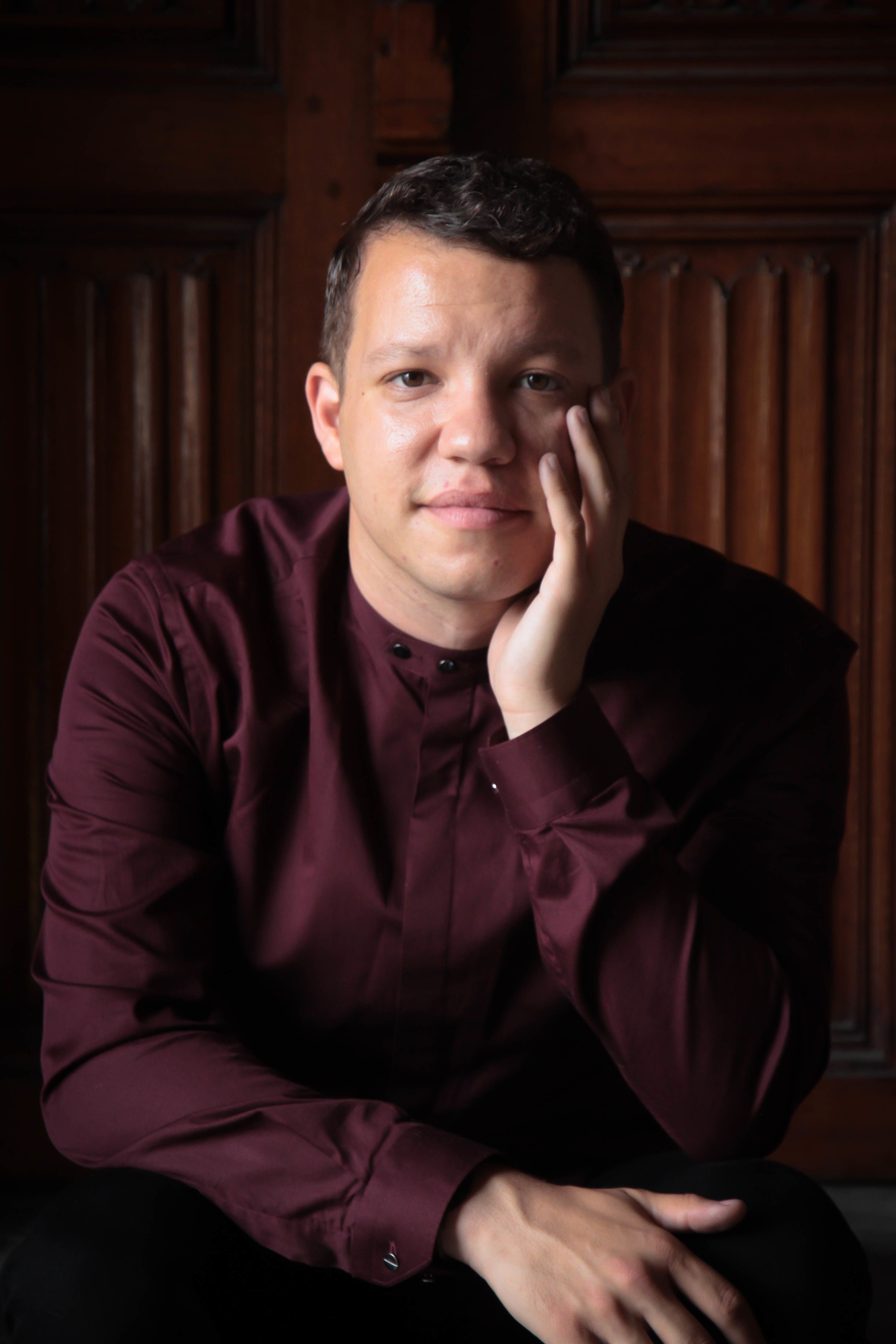
Ryan Bancroft grew up in Los Angeles and first came to international attention in 2018, when he won both First Prize and Audience Prize at the Malko Competition for Young Conductors in Copenhagen. Since September 2021 he has been Principal Conductor of the BBC National Orchestra of Wales. He is also Artist-in-Association with the Tapiola Sinfonietta and, since September 2023, has been Chief Conductor of the Royal Stockholm Philharmonic Orchestra.
After beginning his tenure as Chief Conductor in Stockholm with the orchestra’s first performance of Sven-David Sandström’s The High Mass, his second season included performances of Mahler and Bruckner symphonies, alongside world premieres by Chrichan Larson and Zacharias Wolfe, and collaborations with renowned soloists including Leif Ove Andsnes, Maxim Vengerov and Víkingur Ólafsson.
This season he has made debuts with the Boston and Finnish Radio Symphony orchestras, Deutsches Symphonie-Orchester Berlin at the Berlin Philharmonie and the WDR Symphonieorchester in Cologne.
Ryan Bancroft has a passion for contemporary music and has performed with Amsterdam’s Nieuw Ensemble, assisted Pierre Boulez in a performance of his Sur incises in Los Angeles, premiered works by Sofia Gubaidulina, John Cage, James Tenney and Anne LeBaron, and has worked with improvisers such as Wadada Leo Smith and Charlie Haden. He studied at the California Institute of the Arts, Royal Conservatoire of Scotland and in the Netherlands.
Johan Daleneviolin

Mats Bäcker
Mats Bäcker
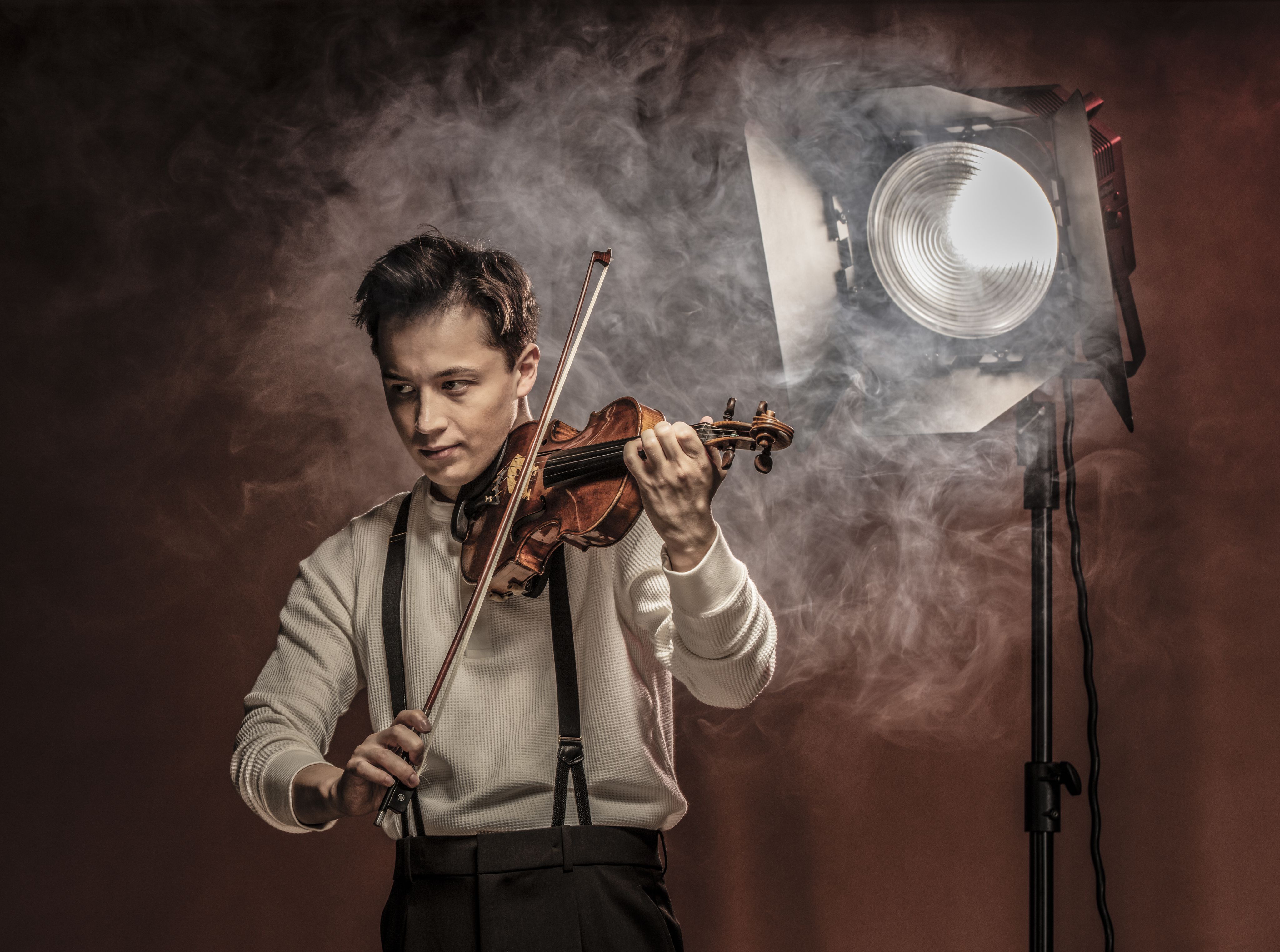
Swedish-Norwegian violinist Johan Dalene won the 2019 Carl Nielsen Competition. Now aged 25, he has performed with leading orchestras and in celebrated recital halls both at home and internationally. His combination of refreshingly honest musicality and engagement with musicians and audiences alike, has won him countless admirers. In 2022 he was named Gramophone’s Young Artist of the Year.
He is a keen advocate for new music and this season plays Thomas Adès’s Concentric Paths Concerto with the NDR Elbphilharmonie Orchestra and Jukka-Pekka Saraste and the Netherlands Radio Philharmonic and Andrew Manze. He also plays Rautavaara’s Serenades, notably with the London Symphony Orchestra and Thomas Adès, as well as Niels Viggo Bentzon’s Violin Concerto with the Copenhagen Philharmonic and Thomas Dausgaard.
After residencies with the Royal Philharmonic, Royal Liverpool Philharmonic and Gävle Symphony orchestras, he works with various orchestras throughout this season. These include debuts with the National Symphony Orchestra at the Kennedy Center, Washington DC, Detroit Symphony Orchestra and Tampere Philharmonic Orchestra and returns to the Royal Liverpool and Royal Stockholm Philharmonic orchestras. Other recent highlights include debuts with the Minnesota Orchestra and Thomas Sondergård, Leipzig Gewandhaus Orchestra and Sakari Oramo and San Francisco Symphony and Esa-Pekka Salonen.
He is equally passionate about chamber music and gives a series of recitals throughout the UK with Jeneba Kanneh-Mason. He has played at celebrated festivals such as Verbier and Rosendal and in halls such as Carnegie Hall.
He records exclusively for BIS and released his latest album – of concertos by Mendelssohn and Bruch – this autumn. It joins an award-winning discography that also includes the recital albums, Souvenirs and Nordic Rhapsody and concertos by Nielsen, Sibelius, Mozart, Barber and Tchaikovsky.
He began playing the violin at the age of four and made his professional concerto debut three years later. In 2016 he was student-in-residence at the Verbier Festival and in 2018 was accepted onto the Norwegian Crescendo programme, where he worked closely with mentors Janine Jansen, Leif Ove Andsnes and Gidon Kremer.
Johan Dalene has been awarded various scholarships and prizes. He plays the 1725 ‘Duke of Cambridge’ Stradivarius, generously on loan from the Anders Sveaas’s Charitable Foundation.
BBC National Orchestra of Wales
For over 90 years, the BBC National Orchestra of Wales, the only professional symphony orchestra in Wales, has played an integral part in the cultural landscape of the country, occupying a distinctive role as both a broadcast and national orchestra, and serving as an ambassador of Welsh culture, regularly performing music created in Wales and championing Welsh composers and artists.
Part of BBC Cymru Wales and supported by the Arts Council of Wales, BBC NOW performs a busy schedule of concerts and broadcasts, working with acclaimed conductors and soloists from across the world, including its Principal Conductor, the award-winning Ryan Bancroft.
The orchestra is committed to working in partnership with community groups and charities, taking music out of the concert hall and into settings such as schools and hospitals to enable others to experience and be empowered by music. It undertakes workshops, concerts and side-by-side performances to inspire and encourage the next generation of performers, composers and arts leaders, and welcomes thousands of young people and community members annually through its outreach and education projects.
BBC NOW performs annually at the BBC Proms and biennially at the BBC Cardiff Singer of the World competition, and its concerts can be heard regularly across the BBC – on Radio 3, Radio Wales and Radio Cymru. On screen, music performed by BBC NOW can be heard widely across the BBC and other global channels, including the soundtrack and theme tune for Doctor Who, Planet Earth III, Prehistoric Planet, The Pact and Children in Need.
Based at BBC Hoddinott Hall, Cardiff Bay, BBC NOW utilises a state-of-the-art recording studio with a camera system for livestreams and TV broadcasts to bring BBC NOW’s music to a broader audience across Wales and the world. For more information about BBC NOW please visit bbc.co.uk/now
Patron
HM King Charles III KG KT PC GCB
Principal Conductor
Ryan Bancroft
PrincipalGuest Conductor
Jaime Martín
Composer-in-Association
Gavin Higgins
First Violins
Mira Marton
Jens Lynen
Gwenllian Hâf MacDonald
Terry Porteus
Suzanne Casey
Carmel Barber
Ruth Heney **
Anna Cleworth
Kerry Gordon-Smith
Žanete Uškāne
Juan Gonzalez
Emilie Godden
Alejandro Trigo
Second Violins
Anna Smith *
Kirsty Lovie #
Ros Butler
Sheila Smith
Lydia Caines **
Vickie Ringguth
Roussanka Karatchivieva
Joseph Williams
Beverley Wescott
Michael Topping
Katherine Miller
Laurence Kempton
Violas
Alex Thorndike #
Tetsuumi Nagata
Peter Taylor
Lydia Abell
Catherine Palmer
Lowri Taffinder
Anna Growns
Robert Gibbons
Laura Sinnerton
Cellos
Leo Popplewell
Jessica Feaver
Sandy Bartai
Keith Hewitt
Alistair Howes
Rachel Ford
Carolyn Hewitt
Kathryn Graham
Double Basses
David Stark *
Alexander Jones #
Richard Lewis
Emma Prince
Christopher Wescott
Antonia Bakewell
Thea Sayer
Phoebe Clarke
Matthew Featherstone *
John Hall †
Lindsey Ellis
Charlotte Thomas
Piccolos
Lindsey Ellis †
Charlotte Thomas
Oboes
Amy McKean †
Charis Yan Yin Lai
Catriona Lockhart
Cor anglais
Clarinets
Nicholas Carpenter *
Isaac Prince
Lenny Sayers
William White
E flat Clarinet
William White
Bass Clarinet
Lenny Sayers †**+
Bassoons
Jarosław Augustyniak *
Patrick Bolton
David Buckland
Contrabassoon
David Buckland †
Meilyr Hughes
Alex Willett
Flora Bain
Tom Taffinder
Dave Ransom
James Mildred
John Davy
Trumpets
Robert Samuel
Corey Morris †
Carys Wood
Ryan Linham
Trombones
Dafydd Thomas †
Jake Durham
Bass Trombone
Tuba
Timpani
Chris Thomas
Percussion
Elliot Gaston-Ross
Phil Girling
Andrea Porter
Harp
Sally Pryce
* Section Principal
The list of players was correct at the time of publication
Director Lisa Tregale
+ Green Team member
Keep up to date with BBC National Orchestra of Wales
Listen to our BBC Radio 3 broadcasts via the BBC Sounds app. Visit our website and follow us on Facebook and Instagram
To help us improve our online concert programmes, please take this 5-minute survey
Produced by BBC Proms Publications