
Journey’s End
Friday 28 January 2022, 7.30pm


Jean Sibelius
Night Ride and Sunrise 14’
Brett Dean
Piano Concerto: Gneixendorf Music – A Winter’s Journey 22’
UK premiere
INTERVAL: 20 minutes
Kaija Saariaho
Vista 25’
Ludwig van Beethoven, arr. Felix Weingartner
Grosse Fuge, Op. 133 15’
Jonathan Biss piano
Hannu Lintu conductor
Sakari Oramo, the advertised conductor, has had to withdraw from tonight’s performance. The BBC Symphony Orchestra is very grateful to Hannu Lintu for taking his place at short notice.


This concert is being recorded by BBC Radio 3 for broadcast in ‘Radio 3 in Concert’ on Wednesday 2 February at 7.30pm. It will be available for 30 days after broadcast via BBC Sounds, where you can also find podcasts and music mixes.
Help us Improve Our Online Programmes.
Please take this 5-minute survey and let us know what you think of these notes.
Programme Survey
There’s a theme of travel underlying much of tonight’s music in a concert in which the BBC Symphony Orchestra is joined on the podium by Hannu Lintu.
The wild natural beauty of Finland was a constant source of wonder for Sibelius and one of his most potent reactions to it is Night Ride and Sunrise, inspired by a sleigh ride he’d once taken across the snowy vistas to Helsinki, and with it the sense of moving from dark to light.
Fellow Finn Kaija Saariaho is also drawn to landscape and in Vista, written after a long car journey she’d taken along the West Coast of the USA, she examines both the planet’s natural beauty but also Man’s destructive relationship with it.
To mark Beethoven’s 250th birthday in 2020, Jonathan Biss commissioned five composers to write works in response to the five piano concertos. Brett Dean – given the tricky challenge of the Fifth Concerto – has found inspiration in a typically unexpected place, a little-known journey Beethoven undertook from Vienna to the hamlet of Gneixendorf shortly before his death. The resulting concerto is by turns profound and playful.
We close with Beethoven’s mighty Grosse Fuge, a piece he originally designed as the finale of his Op. 130 String Quartet but whose sheer weight and complexity threatened to overburden the quartet. Hearing it in Felix Weingartner’s reworking for string orchestra allows us to appreciate anew its power and drama.
Jean Sibelius (1865–1957)
Night Ride and Sunrise, Op. 55 (1908)


Sunrise is a powerful symbol for human beings everywhere. But, for the people of the far-northern lands, the return of the sun after the long, depressing darkness of winter can feel more like a religious experience than a natural event. A few years before his death, Jean Sibelius spoke about how he’d taken a sleigh ride to Helsinki around the turn of the century. Just before his arrival in the city, he’d experienced one of those spectacular protracted sunrises, like a vast, slow-motion firework display, so common in his native Finland: ‘The whole heavens were a sea of colours that shifted and flowed, producing the most inspiring sight until it all ended in a growing light.’ It’s easy to relate those words to the wonderful second half of Night Ride and Sunrise, to trace the slow return of the light: thin and eerie at first, but with growing warmth and depth.
However, Sibelius was worried that listeners would think of Night Ride and Sunrise as pure tone-painting. As in Beethoven’s ‘Pastoral’ Symphony, it was more a question of the ‘inner feelings’ created by the aural spectacle. Certainly we can hear quietly persistent galloping in the rhythms of the strings and percussion, with suggestions of uncanny noises or movements within the trees from woodwind and horns. But pictorial elements fade as we sense the traveller’s awe at the stillness of the moment of dawn (impassioned hymn-like writing for strings) and his inward gratitude and relief as colour, warmth and renewed hope begin to spread through the dark, cold, comfortless forest landscape.
Programme note © Stephen Johnson
Stephen Johnson is the author of books on Bruckner, Wagner, Mahler and Shostakovich, and a regular contributor to BBC Music Magazine. For 14 years he was a presenter of BBC Radio 3’s Discovering Music. He now works both as a freelance writer and as a composer.
Jean Sibelius
Sibelius established himself early on in his career as Finland’s national composer, helped by his ability to convey the austere beauty of his country, his passionate adoption of themes from the Finnish folk epic, the Kalevala, and his patriotic music such as Finlandia (1899–1900). He was born in Hämeenlinna, around 60 miles north of Helsinki, and initially intended to become a violinist, but studied composition in Vienna and Berlin between 1889 and 1891. His choral symphony Kullervo and the tone-poem En Saga (both 1892, and both inspired by the Kalevala) preceded seven purely orchestral symphonies, ranging from the Tchaikovsky-influenced First (1900) to the enigmatically brief Seventh (1924). Supported by a government pension from the age of 32, he effectively retired for the last 30 years of his life, writing no major works (though he started an Eighth Symphony, which he destroyed). His Violin Concerto, by turns introverted and highly virtuosic, remains among the most popular in the repertoire.
Profile by Edward Bhesania © BBC
Edward Bhesania is Editorial Manager, BBC Proms Publications, and reviews for The Stage and The Strad. He has written for The Observer, Country Life, The Tablet and International Piano.
Brett Dean (born 1961)
Piano Concerto (Gneixendorf Music - A Winter’s Journey) (2019)
UK premiere


1 That sounds like a breaking axle (after his reaction after first hearing about Gneixendorf)
2 Difficult decisions. Must it be? (after annotations in his String Quartet No. 16’s final movement)
3 Applause, my friends, the comedy is over (after his alleged last utterance on his deathbed)
Jonathan Biss piano
Back in 2013 I had the great pleasure of spending a summer in Lower Austria as composer-in-residence of the Grafenegg Festival. On a free afternoon, my wife and I went driving to visit the nearby town of Krems on the Danube River and on the way found ourselves intriguingly waylaid by roadsigns pointing towards a ‘Beethovenhaus’ in the small village of Gneixendorf. We then discovered what has to be one of the most mysteriously fascinating, yet largely undocumented episodes in the life of Ludwig van Beethoven.
Having accepted an invitation from his brother Johann and wife Theresia to spend some time away from Vienna at their spacious Landhaus in this quiet hamlet of vineyards and orchards, Beethoven and his troubled nephew, Karl, arrived in Gneixendorf in late September 1826. After only a few days, a heated argument between Ludwig and Johann led Beethoven to leave his brother’s home and take up rooms at a nearby house owned by the wealthy businessman Ignaz Wissgrill. Wissgrill was honoured to host the famous composer and offered a suite of three rooms on the first floor at no charge. To this day, these rooms still retain significant original features from the time of Beethoven’s lodging, including remarkable decorative handpainted ceilings and wallpaper, a piano stool, a table and the original wooden floorboards.
Beethoven ended up staying in the house at Schlossstrasse 19 for more than two months, going for regular walks and composing his final String Quartet, Op. 135, as well as completing revisions and metronome markings for his Ninth Symphony. He returned to Vienna on 1 December in an open horse-drawn carriage in freezing conditions. He never fully recovered from the severe pneumonia contracted on that journey and the ailing composer succumbed to cirrhosis of the liver the following March.
My piece takes this extraordinary and unexpected brush with cultural history as one of its starting points. Its commission is part of American pianist Jonathan Biss’s large-scale project, Beethoven/5, in which he has commissioned five different composers to write companion pieces to the five Beethoven piano concertos. As Biss himself has stated: ‘One of the central tasks for any musician – composer or performer – is to come to terms with Beethoven.’ I couldn’t agree more, and it’s a task I’ve engaged with on several previous occasions, resulting thus far in my Pastoral Symphony (2001), Testament (written in 2002 and inspired by his ‘Heiligenstadt’ Testament from 1802) and a piano étude, Hommage à Beethoven (2018). More recently I was invited to take part in ‘Diabelli 2020’, a multi-composer project commissioned by Austrian pianist Rudolf Buchbinder to celebrate Beethoven’s 250th anniversary year.
My new piano concerto, receiving its first British performance, is the last of Jonathan Biss’s set of commissions and is thereby written in response to the remarkable Fifth or ‘Emperor’ Concerto, Op. 73. While this was Beethoven’s last-ever work for solo instrument and orchestra, dating from 1809 and revised two years later, it’s not really a late work. However, in finding inspiration not only from this great piece but also from the remarkable biographical story of his ill-fated time in Gneixendorf, my new concerto is an attempt to enter into the state of mind of the composer as he confronts profound familial conflicts as well as failing health towards the very end of his life.
Programme note © Brett Dean.
Brett Dean
Brett Dean is a viola-playing composer who combines a rich tapestry of conducting work, composition, chamber music and concerto performance. From 2014 to 2017 he was Artist in Association with the BBC Symphony Orchestra.
His composing journey began in the late 1980s as an improvising instrumentalist during his time as a member of the Berlin Philharmonic (1984–99), but his ‘coming-of-age’ piece was the clarinet concerto Ariel’s Music (1995). Subsequent successes encouraged a shift of emphasis from performance to composition, as well as a return from Berlin to his native Australia. London has more recently become home.
Dean’s debut opera, Bliss, was premiered at the Sydney Opera House in 2010. His second opera, Hamlet, was premiered at Glyndebourne in 2017. Both works have revealed a rare talent in the genre, one which skilfully grafts the more unconventional and ingenious aspects of Dean’s compositional language to the more mainstream structures and conventions of opera.
Recent major concert works have included Dramatis personae (2013), a trumpet concerto for Håkan Hardenberger; the large-scale choral-orchestral work The Last Days of Socrates, premiered in 2013 by Sir Simon Rattle, Sir John Tomlinson and the Berlin Philharmonic; and Notturno inquieto (2018), also for Rattle and the Berlin Philharmonic.
In all Brett Dean’s music, teeming, scuttering detail works against moments of explosive power and release; shafts of bright southern light shine upon something more troubled and restless. His music draws as much on his own fiercely intelligent political and literary engagement as it does on his admiration for middle-European heavyweight composers such as Kurtág, Henze, Lutosławski and Ligeti.
Profile by Meurig Bowen
Meurig Bowen is Chief Executive and Artistic Director of Britten Sinfonia. He was previously Head of Artistic Planning for BBC National Orchestra of Wales and Director of the Cheltenham Music Festival. He has written about and programmed Brett Dean’s music extensively since he got to know the composer and his music while working as Artistic Administrator of the Australian Chamber Orchestra (1995–2001).
INTERVAL: 20 MINUTES
Kaija Saariaho (born 1952)
Vista (2019)


1 Horizons
2 Targets
Like Sibelius’s Night Ride and Sunrise, Kaija Saariaho’s Vista was inspired by a memorable long journey. Only in this case the experience unfolded a long way from Saariaho’s Finland, and the outcome for her was far less emotionally affirmative than it had been for Sibelius. Buoyed up by the success of her harp concerto Trans at its Los Angeles premiere in 2019, and by the completion of her opera Innocence, Saariaho took a long drive down the coast to San Diego. Perhaps it might provide her with inspiration for the new orchestral piece she was about to start, co-commissioned by the Los Angeles Philharmonic and its Principal Guest Conductor, Susanna Mälkki.
It did, but it turned out differently from what she initially expected. The coastal road does provide some glorious ocean vistas and, as one can hear in Vista, Saariaho responded to them with all her fabulous aural imagination – few composers today have such a flair for translating visual impressions into sounds. But, along with scenic glories, came constant reminders of how much damage human beings have done and continue to do to the natural world on which we depend for far more than artistic stimulation. Huge ocean-going freighters and monstrous trucks are encountered at every stage, along with reminders of a disastrous oil spill and the spectacle of a precariously situated nuclear waste dump. In the first section, ‘Horizons’, long, sinuously expressive woodwind melodies and complex atmospheric writing from strings and percussion may suggest natural beauties, but there is a mounting sense of unease. In time this explodes into the much more active ‘Targets’, whose very title suggests the relentless goal-directed activity of human beings – activity that so rarely brings lasting satisfaction, and at its worst causes lasting environmental damage. Eventually a kind of stillness returns, but it is far from peaceful, still less hopeful.
Programme note © Stephen Johnson
Kaija Saariaho
Kaija Saariaho is widely recognised as the most original and imaginative composer to emerge from Finland since the death of Jean Sibelius. After graduating from Helsinki’s Sibelius Academy she set off on a very different path, studying first with the rigorously systematic Brian Ferneyhough and Klaus Huber in Germany and then, much more liberatingly, at IRCAM in Paris, where she encountered a refreshing new attitude to music as pure sonority, drawing on electronics, using both computers and familiar acoustic instruments to open doors on exciting sound-worlds.
Her first breakthrough in this direction was her trilogy of pieces aptly entitled Jardin Secret (‘Secret Garden’). Eventually, Saariaho says, it brought her to the realisation that ‘the visual and the musical world are one to me’. Gradually dispensing with electronics, she returned to conventional instruments with her aural imagination hugely enhanced, creating work after work in which tone-painting reaches levels of vividness, subtlety and sophistication unmatched by any other living composer. But her outstanding successes have been in the field of opera. The gorgeous, dreamlike L’amour de loin (‘Love at a Distance’) is one of the painfully few contemporary operas to remain in the repertoire since its premiere in 2000. It was followed by Adriana Mater (2006), Émilie (2010), and most recently by the turbulent and profoundly unsettling Innocence (2018).
Profile © Stephen Johnson
Ludwig van Beethoven (1770–1827) arr. Felix Weingartner (1863–1942)
Grosse Fuge, Op. 133 (1926)
Few of Beethoven’s works have divided the crowds as much as his monumental Grosse Fuge (‘Grand Fugue’), originally composed as the finale of the String Quartet in B flat, Op. 130. For the 20th-century modernist Igor Stravinsky it was ‘an absolutely contemporary piece of music that will be contemporary for ever’. But even in Stravinsky’s day most quartets refused to play it.
At Op. 130’s premiere in 1826 the Fugue bombed spectacularly. It was ‘incomprehensible, like Chinese’, wrote one reviewer, who wondered if Beethoven’s deafness hadn’t finally led him astray. It was all the more striking because the rest of the Quartet had gone down well (in fact the second and fourth movements had to be repeated), but clearly the audience was bewildered by the fugal finale. Beethoven was incensed: ‘And why didn’t they encore the Fugue? That alone should have been repeated! Cattle! Asses!’
Unusually, Beethoven eventually surrendered to pressure, wrote a new finale for the Quartet and published the Grosse Fuge separately. For years it remained a bizarre monument, respected by some, lamented or derided by others, and rarely heard. With time, however, respect has grown, and it’s now as common to hear it played as the finale of the Op. 130 Quartet (as originally intended) as it is as a free-standing piece.
The splendour of its complex multi-fugal structure is apparent enough, but did Beethoven for once expect more of the four solo strings than they could possibly give? The Austrian conductor Felix Weingartner was one of many who thought that he did. For many years his version of the Grosse Fuge for full orchestral strings was far more likely to be heard in concert than Beethoven’s original. Even today it can shed fresh light on the music’s intricacies, and hearing Beethoven’s titanic thoughts delivered with orchestral force carries a thrill of its own.
Programme note © Stephen Johnson
Ludwig van Beethoven
In his early twenties Beethoven left his native Bonn for Vienna, where he became established in fashionable circles as a composer, piano virtuoso and improviser. Largely following the Classical models of Haydn and Mozart in his ‘early’ period, he recognised signs of his impending deafness as early as 1796. In 1802 he revealed his suffering and alienation, as well as a creative resolve, in his Heiligenstadt Testament. His middle period was characterised by a broadening of form and an extension of harmony to suit his proto-Romantic expression, spawning the Symphonies Nos. 2 to 8, notable piano sonatas, several string quartets and his only opera, Fidelio. From 1812 to 1818 he produced little music, but his last years saw his mould-breaking ‘Choral’ Symphony (No. 9), and an exploration of increasing profundity in the more intimate mediums of the string quartet and piano sonata.
Profile by Edward Bhesania © BBC
Biographies
Hannu Lintu conductor

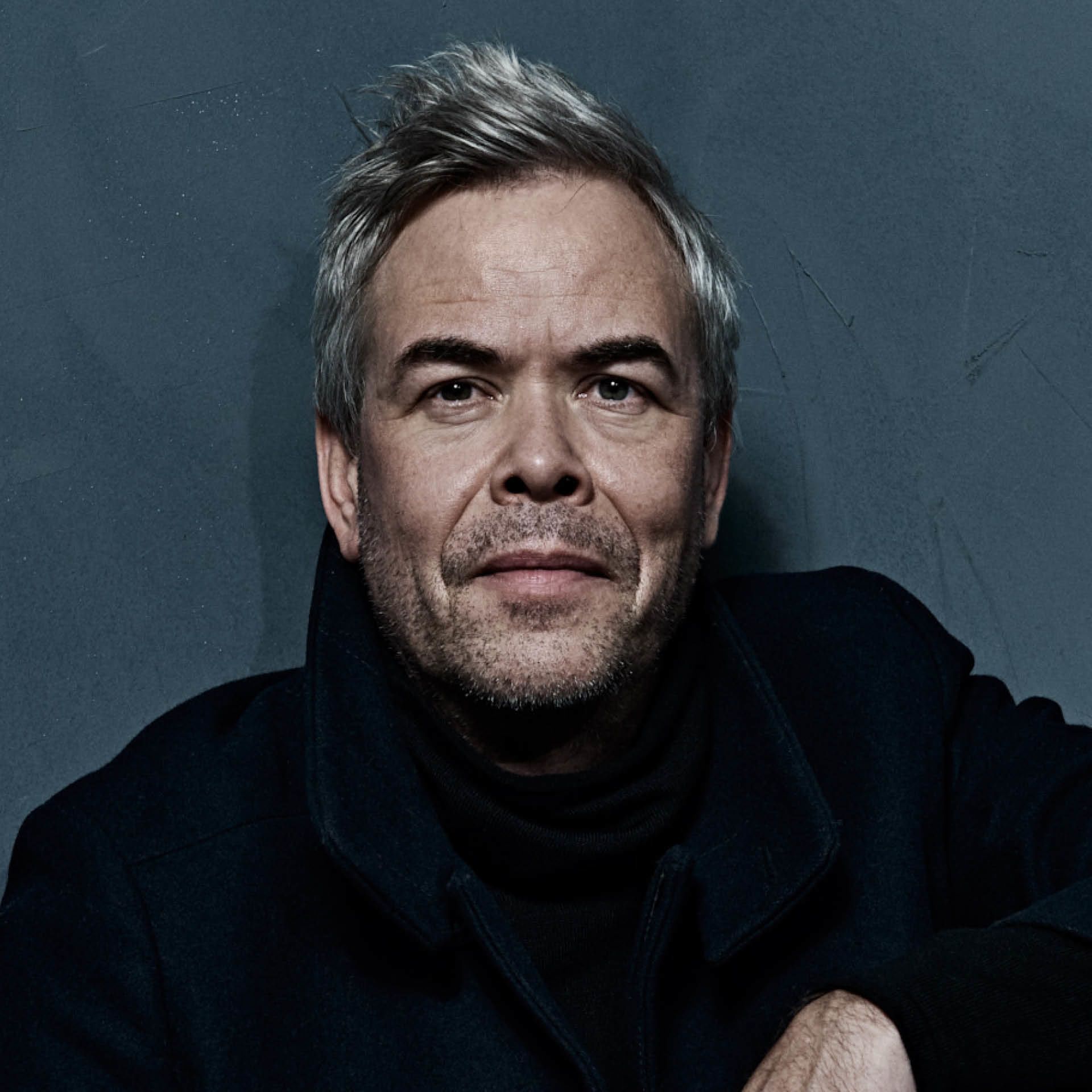
Photo: Veikko Kähkönen
Photo: Veikko Kähkönen
Hannu Lintu recently took up the position of Chief Conductor of the Finnish National Opera and Ballet, launching the season with Mascagni’s Cavalleria rusticana and Leoncavallo’s Pagliacci. Future productions will include the majority of the house’s rescheduled Ring cycle which will recommence with Die Walküre this autumn.
He recently completed his final season as the Finnish Radio Symphony Orchestra’s Chief Conductor.
This season’s highlights include his debut with Opéra national de Paris, conducting Wagner’s The Flying Dutchman; returns to the Chicago Symphony Orchestra, London and Tampere Philharmonic orchestras, Tonkünstler Orchestra and Gulbenkian Orchestra; and appearances with the Netherlands Radio Philharmonic, Orchestre de la Suisse Romande, National Symphony Orchestra Taiwan, Deutsches Symphonie-Orchester Berlin, Russian National Philharmonic Orchestra and Orchestre Philharmonique de Radio France.
Recent highlights have included his debuts with the Boston, Chicago and Montreal Symphony orchestras and returns to the Baltimore, Cincinnati, St Louis and Singapore Symphony orchestras, New Japan Philharmonic Orchestra and the NDR Elbphilharmonie. He also regularly conducts at the Savonlinna Festival, most recently Verdi’s Otello (2018) and Sallinen’s Kullervo (2017).
His award-winning discography includes works by Bartók, Beethoven, Kaija Saariajo, Sibelius and Bernd Alois Zimmermann, among others.
Jonathan Biss piano
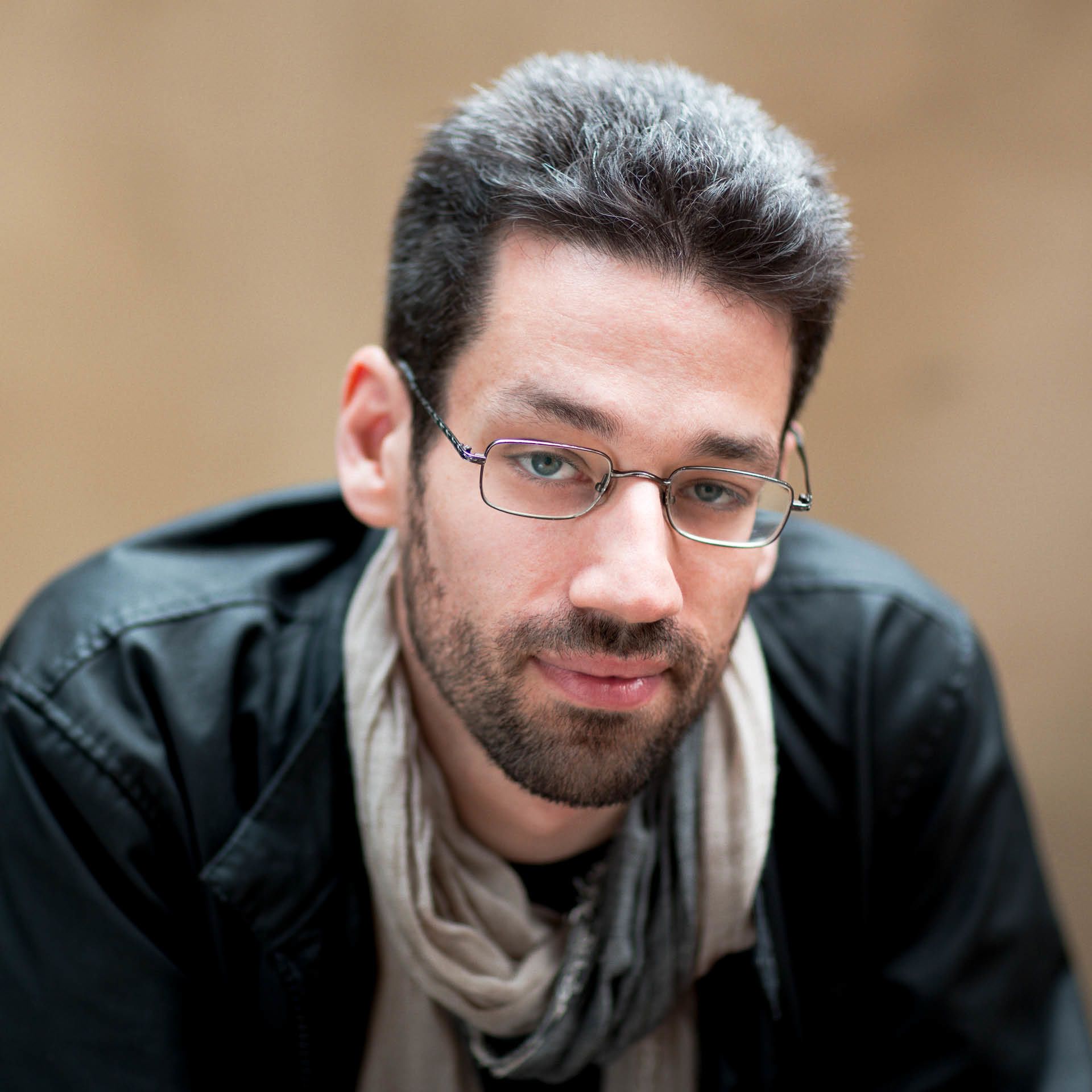
Photo: Benjamin Ealovega
Photo: Benjamin Ealovega
Jonathan Biss is one of the world’s most sought-after pianists, performing regularly with major orchestras and at leading concert halls and festivals around the globe. He is also renowned as a teacher, writer and musical thinker.
Major projects include an exploration of the late style of a diverse range of composers; a project performing and recording the complete Beethoven piano sonatas, begun in 2011 and completed in time for the 2020 anniversary; and Beethoven/5, involving the commissioning of new piano concertos from Timo Andres, Sally Beamish, Salvatore Sciarrino, Caroline Shaw and Brett Dean to go alongside those of Beethoven. Tonight he gives the UK premiere of Dean’s concerto.
Other highlights this season include concerts with the Ostrobothnian Chamber Orchestra, Swedish Radio Symphony Orchestra and Dresden Philharmonic; Schumann songs with tenor Mark Padmore at the Barbican Centre; chamber music at the kamara.hu festival in Hungary; and a piano quartet tour with Liza Ferschtman, Malin Broman and Antoine Lederlin.
He was the first American to be appointed a BBC Radio 3 New Generation Artist and one of the first recipients of the Borletti–Buitoni Trust Award in 2003; this led to a longstanding relationship with Dame Mitsuko Uchida, with whom he is now Co-Artistic Director of Marlboro Music.
BBC Symphony Orchestra
The BBC Symphony Orchestra has been at the heart of British musical life since it was founded in 1930. It plays a central role in the BBC Proms at the Royal Albert Hall, performing at the First and Last Night each year in addition to regular appearances throughout the Proms season with the world’s leading conductors and soloists.
The BBC SO performs an annual season of concerts at the Barbican in London, where it is Associate Orchestra. Its commitment to contemporary music is demonstrated by a range of premieres each season, as well as Total Immersion days devoted to specific composers or themes.
Highlights of the current season include concerts conducted by Sakari Oramo with music by Beethoven, Brahms, Ruth Gipps, Dora Pejačević, Sibelius and others; performances with Principal Guest Conductor Dalia Stasevska, including the devised work Concerto No. 1: SERMON by Davóne Tines, combining music and poetry in a unique examination of racial justice; children’s author Jacqueline Wilson reading from her best-selling books in a family concert; the world premiere of Up For Grabs by composer and Arsenal fanatic Mark-Anthony Turnage; the BBC Symphony Chorus's return to the Barbican stage for a Christmas concert; a performance with Jules Buckley and Canadian singer-songwriter Patrick Watson; concerts celebrating the 100th anniversary of the BBC and a half century of collaboration with Sir Andrew Davis, and two Total Immersion days, one focusing on music composed in the camps and ghettos of Nazi-occupied Europe and one featuring the music of Frank Zappa. Guest conductors include Alpesh Chauhan, Eva Ollikainen, Jukka-Pekka Saraste, Jordan de Souza and Nathalie Stutzmann.
The vast majority of performances are broadcast on BBC Radio 3 and a number of studio recordings each season are free to attend. These often feature up-and-coming new talent, including members of BBC Radio 3’s New Generation Artists scheme. All broadcasts are available for 30 days on BBC Sounds and the BBC SO can also be seen on BBC TV and BBC iPlayer and heard on the BBC’s online archive, Experience Classical.
The BBC Symphony Orchestra and Chorus – alongside the BBC Concert Orchestra, BBC Singers and BBC Proms – also offer enjoyable and innovative education and community activities and take a leading role in the BBC Ten Pieces and BBC Young Composer programmes.
Chief Conductor
Sakari Oramo
Principal Guest Conductor
Dalia Stasevska
Günter Wand Conducting Chair
Semyon Bychkov
Conductor Laureate
Sir Andrew Davis
Creative Artist in Association
Jules Buckley
First Violins
Igor Yuzefovich leader
Cellerina Park
Jeremy Martin
Jenny King
Celia Waterhouse
Colin Huber
Shirley Turner
Ni Do
Molly Cockburn
Henry Chandler
Zanete Uskane
Tina Jacobs
Rebecca Dinning
Iain Gibbs
Second Violins
Heather Hohmann
Daniel Meyer
Lucica Trita
Patrick Wastnage
Danny Fajardo
Tammy Se
Caroline Cooper
Victoria Hodgson
Caroline Bishop
Sophie Cameron
Eleanor Bartlett
Bethan Allmand
Violas
Richard Waters
Philip Hall
Nikos Zarb
Audrey Henning
Natalie Taylor
Michael Leaver
Carolyn Scott
Mary Whittle
Peter Mallinson
Matthias Wiesner
Cellos
Steffan Morris
Marie Strom
Mark Sheridan
Clare Hinton
Sarah Hedley Miller
Michael Atkinson
Augusta Harris
Morwenna Del Mar
Double Basses
Lynda Houghton
Richard Alsop
Anita Langridge
Michael Clarke
Beverley Jones
Josie Ellis
Elen Pan
Flutes
Daniel Pailthorpe
Tomoka Mukai
Piccolo
Kathleen Stevenson
Oboes
Alison Teale
Imogen Smith
Rachel Ingleton
Cor anglais
Ben Marshall
Clarinets
Richard Hosford
Jonathan Parkin
Bass Clarinet
Thomas Lessels
Bassoons
Julie Price
Ruth Rosales
Contrabassoon
Steven Magee
Horns
Nicholas Korth
Michael Murray
Andrew Antcliff
Nicholas Hougham
Mark Wood
Trumpets
Philip Cobb
Joseph Atkins
Robin Totterdell
Stuart Essenhigh
Trombones
Helen Vollam
Richard Ward
Bass Trombone
Robert O’Neill
Tuba
Sam Elliott
Timpani
Antoine Bedewi
Christopher Hind
Percussion
David Hockings
Alex Neal
Fiona Ritchie
Harps
Sally Pryce
The list of players was correct at the time of publication
Coming up at the Barbican
Friday 4 February2022, 7.30pm
Rachmaninov & Shostakovich Before the Iron Curtain
From the factory floor to the heights of heaven – imposing Russian music from both sides of the iron curtain under the baton of the BBC Symphony Orchestra’s Principal Guest Conductor Dalia Stasevska.
Book tickets