
Opera & Elgar with BBC NOW
Saturday 21/9/24, 3.00pm
Hafren, Newtown
Sunday 22/9/24, 3.00pm
The Riverfront, Newport


Georges Bizet
Carmen – Overture4’
Carmen – Habanera5’
Carmen – Chanson bohème5’
Giacomo Puccini
Preludio sinfonico10’
Gaetano Donizetti
La favorita – ‘O mio Fernando’7’
Pietro Mascagni
Cavalleria rusticana – Intermezzo7’
Ruperto Chapí
Las hijas del Zebedeo – ‘Al pensar en el dueño de mis amores’ (Carceleras)7’
INTERVAL: 20 minutes
Edward Elgar
Variations on an Original Theme (‘Enigma’)35’
Nil Venditticonductor
Niamh O’Sullivan mezzo-soprano


The concert in Newport is being recorded by BBC Radio 3 for future broadcast in Classical Live; it will be available for 30 days after broadcast via BBC Sounds, where you can also find podcasts and music mixes.
Introduction

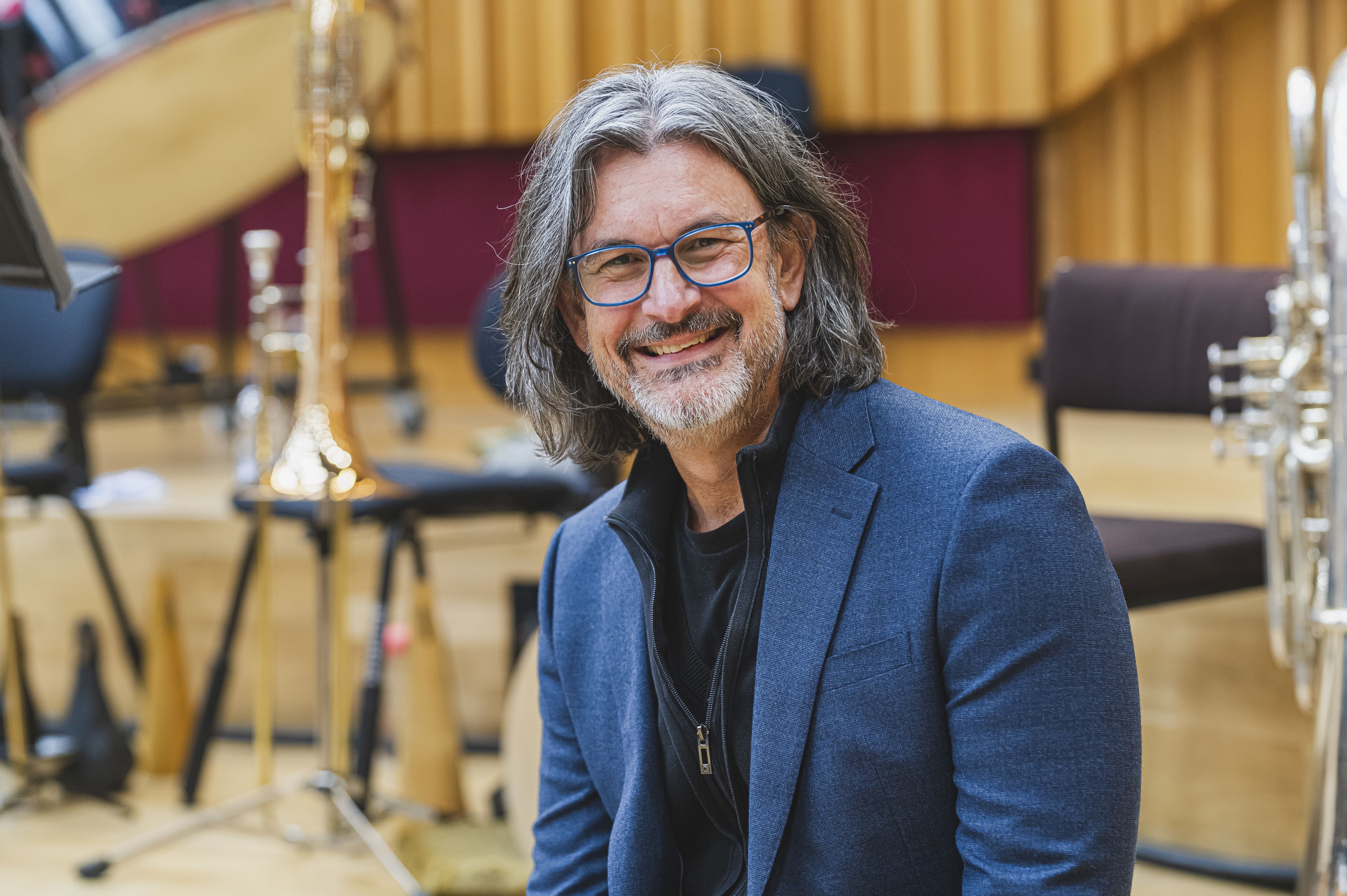
Photo: Kirsten McTernan
Photo: Kirsten McTernan
Welcome to today’s concert, which sees rising star conductor Nil Venditti reunited with BBC National Orchestra of Wales, with which she made such a memorable BBC Proms debut last month.
Nil brings her love of all things operatic to the programme today, beginning with some choice selections from one of the most beloved of all operas – Bizet’s Carmen, with its irresistible tale of love and loss. Singing the famous ‘Habanera’ is a young Irish mezzo who is already making her mark (and is currently a BBC Radio 3 New Generation Artist) – Niamh O’Sullivan. We also get to hear her in Donizetti at his most searing and the zarzuela master Ruperto Chapí. Interspersed with these is an early work by Puccini and a much-loved Intermezzo by Mascagni.
We end with Elgar’s ‘Enigma’ Variations, in which the composer offers musical portraits of friends and family, ranging in mood from the playful to the profoundly eloquent.
Enjoy!
Matthew Wood
Head of Artistic Planning and Production
Please respect your fellow audience members and those listening at home. Turn off all mobile phones and electronic devices during the performance. Photography and recording are not permitted.
Georges Bizet(1838–75)
Carmen (1875) – excerpts

Overture
Habanera
Chanson bohème
Niamh O’Sullivanmezzo-soprano
In 1875 Georges Bizet set off a theatrical bomb in the polite world of Paris’s Opéra Comique – home to elegant, well-to-do-French society. Carmen was a new kind of opera with a new kind of heroine: a woman beyond morality, who drinks and fights, seduces men then casts them aside. Adapting Prosper Merimée’s popular novella, Bizet places his heroine at the centre of a musical drama steeped in sweat and smoke and blood, an outpouring of uncensored human emotion that stamps and pulses to the relentless rhythms of castanets.
Gypsy-girl Carmen is the bad girl of Seville’s tobacco factory. A brawl brings her to the attention of Corporal Don José. Mad with desire, he allows Carmen to escape his custody, forcing him to desert and trade army life for Carmen’s band of smugglers. But Carmen is a free spirit; Don José’s jealous affection soon palls, and she leaves him for toreador Escamillo. But her fate is written in the cards: no matter how hard she tries to escape, her life and Don José’s are inextricably tangled until their bloody end.
A clash of cymbals and we’re plunged into the heady world of the bullring as the Overture drags us along breathlessly until we arrive at the Toreador’s swaggering march. But its primary colours abruptly fade as a shudder of strings introduces Carmen’s own ‘fate’ theme.
The sinuous Habanera (‘L’amour est un oiseau rebelle’) is the soundtrack to Carmen’s first entrance – music Bizet supposedly rewrote 13 times. The final version is hypnotic: a sinuous, minor-key melody (the central triplet bending time with languorous sensuality) curls and arches over a strutting rhythm, before opening out into a D major refrain full of the promise of the pleasures – and dangers – to come.
Act 2’s Chanson bohèmeis the curtain-raiser on the illicit world of the smugglers. Another dance (as so many of Carmen’s arias are), its wordless chorus whirls faster and faster, a frenzy of playful, piquant exuberance, bright with flutes, oboes and percussion.
Programme note © Alexandra Coghlan
Text
Habanera
L’amour est un oiseau rebelle
Que nul ne peut apprivoiser
Et c’est bien en vain qu’on l’appelle
S’il lui convient de refuser.
Rien n’y fait, menace ou prière
L’un parle bien, l’autre se tait:
Et c’est l’autre que je préfère
Il n’a rien dit mais il me plaît
L’amour!
L’amour est enfant de Bohème
Il n’a jamais, jamais connu de loi
Si tu ne m’aimes pas, je t’aime
Si je t’aime, prends garde à toi!
Si tu ne m’aimes pas
Si tu ne m’aimes pas, je t’aime!
Mais, si je t’aime
Si je t’aime, prends garde à toi!
L’oiseau que tu croyais surprendre
Battit de l’aile et s’envola …
L’amour est loin, tu peux l’attendre
Tu ne l’attends plus, il est là!
Tout autour de toi, vite, vite
Il vient, s’en va, puis il revient …
Tu crois le tenir, il t’évite
Tu crois l’éviter, il te tient
L’amour!
Translation
Love is a rebellious bird
that nothing can tame,
and it is simply in vain to call it
if it chooses to refuse.
Nothing will work, threat or pleading,
one speaks, the other stays quiet;
and it’s the other that I prefer
he said nothing; but he pleases me.
Love!
Love is the child of the Bohemian,
it has never, never known any law,
if you don’t love me, I love you,
if I love you, be on your guard!
If you don’t love me,
if you don’t love me, I love you!
But, if I love you,
if I love you, be on your guard!
The bird you thought to surprise
beats its wings and flew away;
love is far away, you can wait for it;
if you wait for it no more, it is there!
All around you, quickly, quickly,
it comes, goes, then it comes back!
You think to hold it, it avoids you;
you think to avoid it, it holds you!
Love!
Giacomo Puccini(1858–1924)
Preludio sinfonico (1882)
Giacomo Puccini wrote his Preludio sinfonico in 1882, as a student at the Milan Conservatory. It was first performed there that same year. At this time, Puccini was strongly influenced by the music of Richard Wagner. Indeed, he aspired to be a composer who ‘possessed a power which echoed that of Wagner from beyond the Alps’. However, the Preludio is no pastiche: in its melodic beauty and subtly shifting orchestral colours it foreshadows the composer’s operatic masterpieces such as La bohème.
The work’s main theme is introduced by high woodwind and shimmering strings, recalling the Act 1 Prelude of Wagner’s Lohengrin. It then evolves into a tender violin melody. The music becomes increasingly ardent, eventually reaching a thrilling climax with blazing brass accompanied by swirling strings. The final bars return to the initial translucent textures, the piece closing in a mood of serenity.
Programme note © Kate Hopkins
Gaetano Donizetti(1797–1848)
La favorita (1840) – ‘O mio Fernando’
Niamh O’Sullivanmezzo-soprano
Aworld away from his sunny Italian comedies, Donizetti’s grand operas for the French stage play to a public keen for spectacle, scale and heavyweight emotional drama – catalysts for some of his finest mature music.
Created from a patchwork of fragments of earlier, abandoned projects, La favorita (1840) explores a love-triangle between King Alfonso of Castile, his mistress Leonora and her lover Fernando. When the king orders Leonora to marry her beloved Fernando she is conflicted. Can she taint the man she loves with her dishonour? Can he still love her once he knows her secret? Is it a wedding or a funeral that awaits her?
Leonora’s Act 3 double-aria ‘O mio Fernando’ is one of the great vocal showpieces, mining the heroine’s mezzo voice, with its lower register and richer colours, for emotional depth. Striking in its simplicity – starkness, even – this scena sees agitated recitative give way to a lyrical cantabile, closing with a more impassioned cabaletta as Leonora contemplates death. The aria’s power lies in restraint: a flood of emotion contained – just – within formal musical bounds.
Programme note © Alexandra Coghlan
Text
O mio Fernando!
Fia dunque vero, oh ciel?
Desso, Fernando, lo sposo di Leonora!
Ah! Tutto mel dice,
E dubbia è l'alma ancora
All’inattesta gioja!
Oh Dio! Sposarlo?
Oh mia vergogna estrema!
In dote al prode recar il disonor –
No, mai; dovesse esecrarmi, fuggir,
Saprà in brev’ ora chi sia la donna
Che cotanto adora.
O mio Fernando! Della terra il trono
A possederti avria donato il cor;
Ma puro l’amor mio come il perdono,
Dannato, ahi lassa! è a disperato orror.
Il ver fia noto, e in tuo dispegio estremo,
La pena avrommi che maggior si de’, ah!
Se il giusto tuo disdegno allor fia scemo,
Piombi, gran Dio, la folgor tua su me!
Su, crudeli, e chi v’arresta?
Scritto è in cielo il mio dolor!
Su, venite, ell’ è una festa;
Sparsa l’ara sia di fior.
Già la tomba a me s’appresta;
Ricoperta in nefra vel sia la trista fidanzata,
Che reietta, disperata, non avrà perdono in ciel.
Maledetta, disperata, non avrà perdono in ciel.
Ah! crudeli, e chi v’arresta?
Scritto in cielo è il mio dolor.
Crudeli, venite.
Ah! la trista fidanzata non avrà perdono in ciel.
Translation
Could it be true, then, Oh heavens?
He … Fernando, Leonora’s husband!
Yes! Everything tells me so,
yet my soul is still doubtful
of this unexpected joy!
Oh, God! Marry him?
Oh my utmost shame!
To bring dishonour as a dowry to the great man?
No, never; even if he were to curse me, flee!
He shall soon learn who is the woman
he adores so much.
Oh, my Fernando! My heart would have given
the throne of the earth to possess you.
Yet my love, as pure as pardon,
is damned, alas, wretched me to desperate horror!
The truth will be known, and in your utmost contempt
I shall have the greatest punishment.
When your righteous disdain is diminished,
let your lightning strike me, almighty God.
Come on, you cruel ones, who can stop you?
My pain is written in heaven.
Come, come to a feast;
let the altar be scattered with flowers.
The tomb is already prepared for me
covered in a black veil, may the sorrowful fiancée
rejected, in despair, find no pardon in heaven,
no, no, she will find no pardon in heaven.
Come on, you cruel ones, who can stop you?
My pain is written in heaven.
Cursed, in despair,
she will find no pardon in heaven.
Pietro Mascagni(1863–1945)
Cavalleria rusticana (1890) – Intermezzo
Written for entry into a competition for one-act operas, Cavalleria rusticana (‘Rustic Chivalry’) representedthe first flowering of a new verismo style of operatic composition, defined by the realistic depiction of the lower classes as opposed to the artificial ‘costume’ opera that had gone before. It was a rousing success at its premiere, with Mascagni being called back for 40 curtain calls and taking first prize. The opera’s popularity spread like wildfire, with premieres following throughout Europe in little over a year. By the time Cavalleria rusticana reached America, opera promoters were fighting with each other – often through the courts – for the right to perform it. And when it reached New York’s Metropolitan Opera, competitive producers staged not one but two rival performances as spoilers, one of them directed by Oscar Hammerstein I, father of the famed Broadway lyricist.
Cavalleria rusticana is an everyday story of love, betrayal and murder, set among the peasants of rural Sicily. The Intermezzo, which has become famous as a separate concert piece, reflects the drama thus far in the opera and foreshadows what is to come; it epitomises the soaring melodies not only of this particular opera but also of the verismo style in general. Not surprisingly, given the work’s abundant melodies and high drama, it has been made into a film no fewer than three times, most opulently by Franco Zeffirelli, who filmed opera singers including Plácido Domingo, Renato Bruson and Fedora Barbieri in his 1982 version. The Intermezzo itself has graced many a soundtrack, including Raging Bull and The Godfather: Part III, not to mention the penultimate episode of The Sopranos.
Programme note © David A. Threasher
Ruperto Chapí(1851–1909)
Las hijas del Zebedeo (1840) – ‘Al pensar en el dueño de mis amores’ (Carceleras)
Niamh O’Sullivanmezzo-soprano
Zarzuela, Spanish operetta, may not often be heard on the UK’s less sunny shores, but this is a substantial genre full of sparkle, fire and irresistible melody – or in a word, oomph. Ruperto Chapí composed more than 100 of them, among which Las hijas del Zebedeo (‘The Daughters of the Zebedeo’) is considered one of his outstanding achievements. The intrigue-laden story concerns the love-lives that intertwine around a bar called the Zebedeo. ‘Carceleras’ (‘The Prisoner’s Song’) is a virtuoso aria sung by Luisa, who works at a tailor’s and is in love with the Zebedeo owner’s son, Arturo.
After a sultry opening, the music takes off into a dizzying gallop through the foothills of passion. The capricious Luisa, aware that plenty of other girls are after the seductive Arturo, wants him all to herself. ‘When he throws flowers at me,’ she says, ‘I feel my little heart die of love.’
Programme note © Jessica Duchen
Text
Al pensar en el dueño
De mis amores,
Siento yo unos mareos
Encantadores.
Bendito sea
Aquel picaronazo
Que me marea.
A mi novio yo le quiero
Porque roba corazones
Con su gracia y su salero.
El me tiene muy ufana
Porque hay muchas que le quieren
Y se quedan con las ganas.
Caprichosa yo nací,
Y le quiero solamente,
Solamente para mí.
Que quitarme a mí su amor
Es lo mismo que quitarle
Las hojitas a una flor.
Yo me muero de gozo
Cuando me mira,
Y me vuelvo jalea
Cuando suspira.
Si me echa flores
Siento el corazoncito
Morir de amores.
Porque tiene unos ojillos
Que me miran entornados,
Muy gachones y muy pillos,
Y me dicen ¡ay! lucero,
Que por esa personita
Me derrito yo y me muero.
José Estremera (1852–95)
Translation
When I think of the lord
of my love
I feel a charming
dizziness.
Blessed be
that rascal
who makes me feel so dizzy.
I love my beloved
because he steals hearts,
with his grace and his charm.
He makes me feel proud
because a lot of girls love him
but they are left with their desire.
Capricious I was born,
and I want him all for myself,
only for myself.
To take away from me his love
is the same as ripping off
the leaves of a flower.
I die of pleasure
when he looks at me,
and I lose my head
when he sighs.
When he throws flowers at me
I feel my little heart
die of love.
For he has sweet eyes
which look at me half-open
very tenderly and very naughtily,
telling me ‘Oh my darling,
for this little one
I will lose my soul and die’.
Translation by Beate Binnig © Lieder.net
INTERVAL: 20 minutes
Edward Elgar(1857–1934)
Variations on an Original Theme (‘Enigma’), Op. 36(1898–9)
Theme (‘Enigma’)
1 C. A. E.
2 H. D. S.-P.
3 R. B. T.
4 W. M. B.
5 R. P. A.
6 Ysobel
7 Troyte
8 W. N.
9 Nimrod
10 Dorabella
11 G. R. S.
12 B. G. N.
13 * * * (Romanza)
14 Finale: E. D. U.
‘TThe Enigma I will not explain’, wrote Elgar, ‘its “dark saying” must be left unguessed … further, through and over the whole set another and larger theme “goes”, but is not played.’ Several ingenious attempts have been made to find that ‘larger theme’. Could ‘Auld Lang Syne’, or even ‘Rule Britannia’, be half-concealed in the music somewhere? Or is it something more – well – enigmatic? Elgar loved puns and double meanings, so it is possible that something else, something broader is implied by the word ‘theme’?
A clue to that is provided by his description of how the ‘Enigma’ theme originally came to him. Tired from a day’s teaching, Elgar was improvising at the piano, when suddenly his wife, Alice, interrupted him:
‘Edward, that’s a good tune.’
I awoke from the dream: ‘Eh! Tune, what tune?’
And she said, ‘Play it again, I like that tune.’
I played and strummed, and played, and then she exclaimed:
‘That’s the tune.’
In another version of the story, Alice asks Elgar what he’s playing: ‘Nothing’, says Elgar, ‘but something might be made of it’. The more one knows about this ambitious but profoundly insecure composer, the more that sounds like a description of Elgar himself at that time. Though he was already in his forties, Elgar was still far from established on the British cultural scene, and was feeling thwarted and isolated. Years later he told the critic Ernest Newman that the ‘Enigma’ theme ‘expressed when written (in 1898) my sense of the loneliness of the artist … and to me, it still embodies that sense’.
So is the ‘larger theme’ that runs through the ‘Enigma’Variations Elgar himself, lonely and pensive at first, but revealing other aspects of his complex character as the 14 variations progress? The theme remains more or less clearly identifiable, but it goes through rich and ingenious transformations as it encounters each of the ‘friends’ Elgar tells us are ‘pictured within’. It becomes impassioned in the company of Alice (Var. 1), playful and flirtatious in the company of ‘Dorabella’ (Var. 10), profoundly melancholic when unburdening itself to the cellist Basil Nevinson (Var. 12) and noble in the famous ‘Nimrod’ Variation (Var. 9), which records how his publisher friend August Jaeger encouraged him to aspire for the most sublime heights. Then, in the finale (Var. 14), Elgar himself emerges like the butterfly from the chrysalis, wings outspread. If Elgar the artist is the ‘larger theme’ that ‘goes’ through the ‘Enigma’Variations, then in this magnificent apotheosis he says to each of those friends, ‘See what you have made of me!’
Programme note © Stephen Johnson
Help Us Improve Our Online Programmes.
Please take this 5-minute survey and let us know what you think of these notes.
Programme Survey
You may also like:
Dancing & Deities
BSL Interpretation
Thursday 21/11/24, 7.30pm
BBC Hoddinott Hall, Cardiff
Rossini, arr. Respighi La boutique fantasque – suite
Rossini Stabat mater
Nil Venditti conductor
Masabane Cecilia Rangwanasha soprano
Marianna Pizzolato mezzo-soprano
Levy Segkapane tenor
Ashley Riches bass-baritone
BBC National Chorus of Wales
THEATRICAL | MAGICAL | ENTRANCING
Imagine dancing dolls in a magical toy shop, and a pair of fabulous cancan dancers plotting to stay together at any cost and you have the charming story of La boutique fantasque. With its vibrant and whimsical music (arranged by Ottorino Respighi from piano pieces by Gioachino Rossini) this ballet is a sequence of exquisite dances, each more lively than the last, making for a joyful listening experience.
In contrast Rossini’s own Stabat mater is a work which teeters on the edge of sacred sentimentality and overt operatics. The bravura and rollickingly memorable tunes of the ‘Cujus animam’ and the fire and brimstone of ‘Inflammatus et accensus’ seamlessly interweave with the unequivocally sacred qualities of the ‘Eja mater’ and ‘Quando corpus morietur’ – a true masterpiece that is heartfelt, expressive and vocally shapely yet rhythmic and outspokenly operatic.
La voix humaine
Thursday 30/01/25, 7.30pm
BBC Hoddinott Hall, Cardiff
Ravel Ma mère l’Oye
Poulenc La voix humaine
Jaime Martín conductor
Danielle de Niese soprano
THEATRICAL | VIVID | BREATHTAKING
Principal Guest Conductor Jaime Martín leads us in a programme of French gems, starting with a celebration of the 150th anniversary of Ravel’s birth. His luscious, magical, enchanting and playful score to the ballet Ma mère l’Oye is based on characters from classic fairy tales, from Sleeping Beauty and Little Ugly to Tom Thumb and Beauty and the Beast.
After the interval, opera star Danielle de Niese makes her debut with BBC NOW as Elle in a semi-staged performance of Poulenc’s powerful one-act opera La voix humaine. During a phone call from her lover, grief and denial lead to outrage and despair as he calls off their relationship – the timeless theme of unrequited love playing out before our very eyes.
Biographies
Nil Venditticonductor

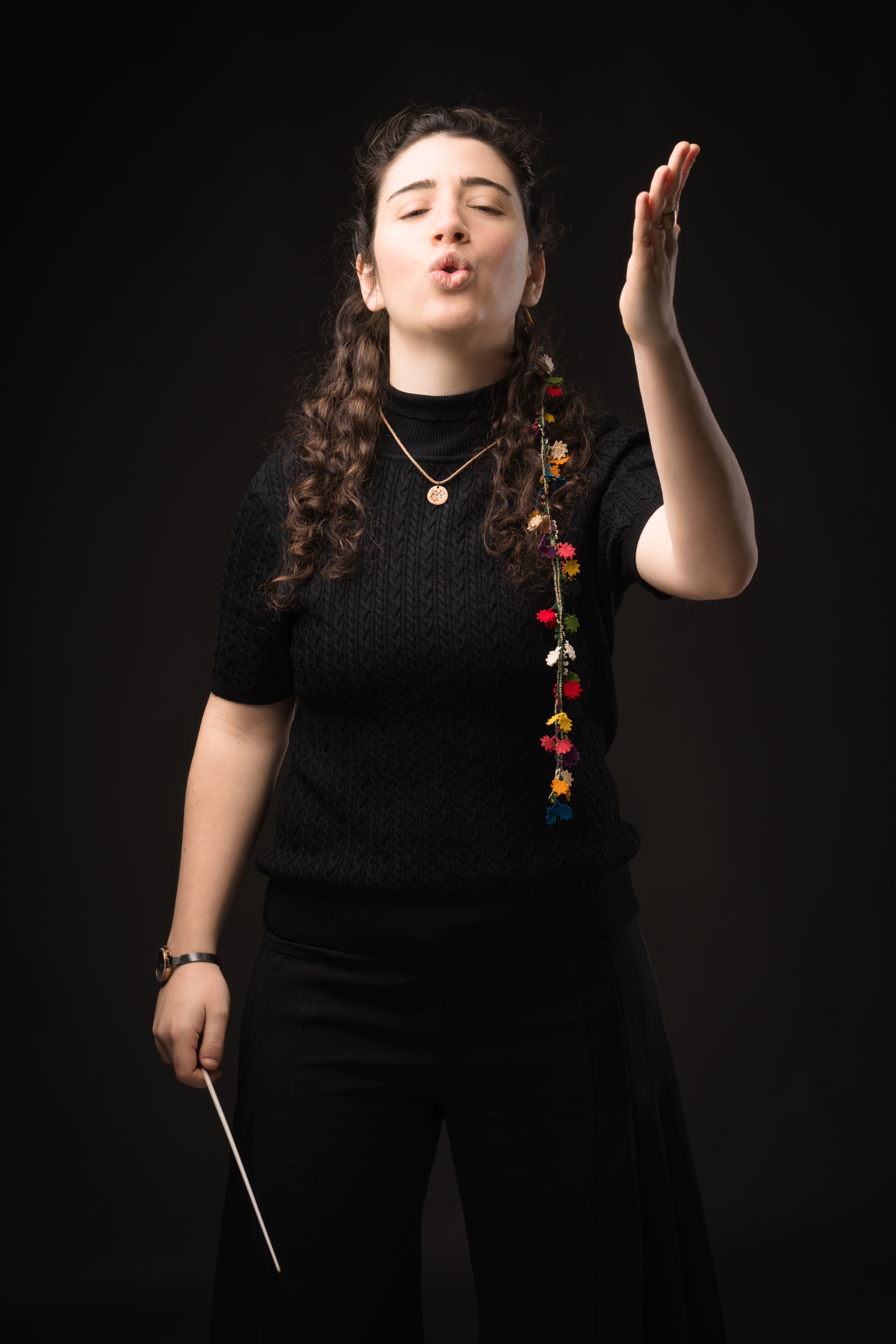
Alessandro Bertani
Alessandro Bertani
Italian-Turkish conductor Nil Venditti is fast establishing relationships with important orchestras and ensembles around the world, including the Royal Northern Sinfonia, of which she becomes Principal Guest Conductor this season.
The 2024/25 season sees her debuts with the Finnish Radio Symphony Orchestra, Arctic, Borusan Istanbul and BBC Philharmonic orchestras, as well as orchestras in Aalborg, Tenerife, the Balearic Islands, Wuppertal and Bochum. She performs twice with the Royal Northern Sinfonia and returns to the Stuttgart Chamber Orchestra for concerts at the Vienna Musikverein and in Bregenz, as well as the Royal Philharmonic Orchestra, BBC, Hamburg and Helsingborg Symphony orchestras, Deutsche Kammerphilharmonie Bremen and Real Filharmonía de Galicia.
Last season she made debuts with the Konzerthausorchester Berlin, BBC, Hiroshima and Lahti Symphony orchestras, Nagoya and Royal Philharmonic orchestras and Royal Swedish Opera (for a new production of Don Giovanni), among others. She made debuts at the BBC Proms and Schleswig-Holstein Festival and returned to the Royal Liverpool Philharmonic Orchestra, Royal Northern Sinfonia and Stuttgart Opera.
She combines a strong affinity for Classical and early Romantic repertoire with a particular interest in Turkish and Italian composers. She continues to make her mark in the opera house, having conducted operas from Mozart’s Così fan tutte to Peter Maxwell Davies’s The Lighthouse.
Nil Venditti studied conducting at the Zürcher Hochschule der Künste under the guidance of Johannes Schlaefli, as well as attending the Conducting Academy of the Pärnu Festival under Paavo Järvi, Neeme Järvi and Leonid Grin. In Italy, she studied cello with Francesco Pepicelli.
Niamh O’Sullivanmezzo-soprano


Marshall Light Studio
Marshall Light Studio
Irish mezzo-soprano Niamh O’Sullivan is a current BBC Radio 3 New Generation Artist (2023–25) and former member of the Bayerische Staatsoper.
This season she makes a series of debuts, including her house and role debut as Ino (Semele) for the Théâtre des Champs-Élysées and as Olga (Eugene Onegin) for the Canadian Opera Company and role debuts as Ursule (Béatrice et Bénédict) and Maddalena (Rigoletto) for Irish National Opera.
As a New Generation Artist, she gives recitals at the Wigmore Hall with pianist Gary Beecher and St George’s, Bristol, alongside her recital work in the UK and in Ireland.
Last season she made her role debut as Wellgunde in a new Barrie Kosky production of Das Rheingold at the Royal Opera House, Covent Garden, sang Wellgunde in Das Rheingold and Götterdämmerung and Mercédès (Carmen) for Zurich Opera, and her role debut in the title-role of La tragédie de Carmen at the Buxton Festival.
In concert she has performed Elgar’s Sea Pictures at the Prinzregententheater for the Munich Festival, Mozart’s Requiem and Handel’s Messiah with the Müncher Hofkantorei, the role of Cain (Scarlatti’s Il primo omicidio) with the Jakobsplatz Orchestra, Kusser’s The Universal Applause of Mount Parnassus at the Wigmore Hall with Ensemble Marsyas, Messiah with the Ulster Orchestra, Second Harlot (Handel’s Solomon) with The English Concert and Mahler’s Symphony No. 2 with the Irish National Symphony Orchestra under Anja Bihlmaier.
As a member of the Opera Studio at the Bayerische Staatsoper from 2016 to 2018, her repertoire included works by Humperdinck, Puccini, Menotti and Verdi , among others.
Niamh O’Sullivan studied at the Royal Irish Academy of Music in Dublin and was a participant at the 2023 Academy of the Aix-en-Provence Festival.
BBC National Orchestra of Wales
For over 90 years, the BBC National Orchestra of Wales, the only professional symphony orchestra in Wales, has played an integral part in the cultural landscape of the country, occupying a distinctive role as both a broadcast and national orchestra, and serving as an ambassador of Welsh culture, regularly performing music created in Wales and championing Welsh composers and artists.
Part of BBC Cymru Wales and supported by the Arts Council of Wales, BBC NOW performs a busy schedule of concerts and broadcasts, working with acclaimed conductors and soloists from across the world, including its Principal Conductor, the award-winning Ryan Bancroft.
The orchestra is committed to working in partnership with community groups and charities, taking music out of the concert hall and into settings such as schools and hospitals to enable others to experience and be empowered by music. It undertakes workshops, concerts and side-by-side performances to inspire and encourage the next generation of performers, composers and arts leaders, and welcomes thousands of young people and community members annually through its outreach and education projects.
BBC NOW performs annually at the BBC Proms and biennially at the BBC Cardiff Singer of the World competition, and its concerts can be heard regularly across the BBC – on Radio 3, Radio Wales and Radio Cymru. On screen, music performed by BBC NOW can be heard widely across the BBC and other global channels, including the soundtrack and theme tune for Doctor Who, Planet Earth III, Prehistoric Planet, The Pact and Children in Need.
Based at BBC Hoddinott Hall, Cardiff Bay, BBC NOW utilises a state-of-the-art recording studio with a camera system for livestreams and TV broadcasts to bring BBC NOW’s music to a broader audience across Wales and the world. For more information about BBC NOW please visit bbc.co.uk/now
Patron
HM King Charles III KG KT PC GCB
Principal Conductor
Ryan Bancroft
PrincipalGuest Conductor
Jaime Martín
Conductor Laureate
Tadaaki Otaka CBE
Composer-in-Association
Gavin Higgins
First Violins
Martin Gwilym-Jones leader
Gwenllian Hâf MacDonald
Terry Porteus
Suzanne Casey
Alejandro Trigo
Anna Cleworth
Žanete Uškāne
Ruth Heney
Zhivko Georgiev
Gary George-Veale
Anna Szabo
Grace Shepherd
Second Violins
Anna Smith *
Kirstie Lovie
Sheila Smith
Vickie Ringguth
Joseph Williams
Michael Topping
Roussanka Karatchivieva
Lydia Caines
Beverley Westcott
Liz Whittam
Violas
Alex Thorndike #
Tetsuumi Nagata
Peter Taylor
Anna Growns
Robert Gibbons
Catherine Palmer
Lowri Thomas
Lydia Abell
Cellos
Jessica Burroughs ‡
Gabriel Waite
Sandy Bartai
Keith Hewitt
Rachel Ford
Alistair Howes
Double Basses
Alexander Jones #
Christopher Wescott
Richard Gibbons
Evangeline Tang
Flutes/Piccolos
Matthew Featherstone *
John Hall †
Lindsey Ellis
Oboes
Steve Hudson *
Sam Willsmore
Amy McKean †
Cor anglais
Amy McKean †
Clarinets
Nicholas Carpenter *
Lenny Sayers
Bass Clarinet
Lenny Sayers
Bassoons
Jarosław Augustiniak *
Ruth Rosales
Chris Vale
Contrabassoon
Chris Vale
Horns
Tim Thorpe *
Meilyr Hughes
Neil Shewan †
Jack Sewter
John Davy
Trumpets
Corey Morris †
Robert Samuel
Sian Davis
Trombones
Dafydd Thomas
Huw Evans
Bass Trombone
Darren Smith †
Tuba
Daniel Trodden †
Timpani
Adrian Bending
Percussion
Phil Girling
Phil Hughes
Rhydian Griffiths
Harp
Bethan Semmens
* Section Principal
† Principal
‡ Guest Principal
# Assistant String Principal
The list of players was correct at the time of publication
Director Lisa Tregale
Orchestra Manager Liz Williams
Assistant Orchestra Manager Nick Olsen **
Orchestra Personnel ManagerKevin Myers
Business Coordinator Georgia Dandy
Orchestra Administrator Eleanor Hall +
Head of Artistic Planning and ProductionMatthew Wood
Artists and Projects Manager Victoria Massocchi **
Orchestra Librarian vacancy
Producer Mike Sims
Broadcast Assistant Kate Marsden
Head of Marketing and Audiences Sassy Hicks
Marketing Coordinator Amy Campbell-Nichols +
Digital Producer Yusef Bastawy **
Social Media Coordinator Harriet Baugh
Education Producers Beatrice Carey, Rachel Naylor maternity cover
Audio Supervisors Simon Smith, Andrew Smillie
Production Business Manager Lisa Blofeld
Stage and Technical Manager Steven Brown +
Assistant Stage and Technical Manager Josh Mead +
+ Green Team member
** Diversity & Inclusion Forum