
Gloria
Saturday 7/2/26, 3.00pm
Brangwyn Hall, Swansea
Sunday 8/2/26, 3.00pm
BBC Hoddinott Hall, Cardiff
BSL Interpretation: Julie Doyle


Henryk Górecki
Three Pieces in Old Style 10’
Francis Poulenc
Gloria 28’
INTERVAL: 15 minutes
Antonín Dvořák
Symphony No. 8 in G major 34’
Michał Nesterowicz conductor
Sophie Bevan soprano
BBC National Chorus of Wales
BBC Hoddinott Hall is certified by EcoAudio and we’re proud to be supporting the BBC in becoming a more sustainable organisation. For more information on the BBC’s net-zero transition plan and sustainability strategy please visit https://www.bbc.co.uk/aboutthebbc/documents/bbc-net-zero-transition-plan-2024.pdf




This concert is being recorded by BBC Radio 3 for future broadcast in In Concert; it will be available for 30 days after broadcast via BBC Sounds, where you can also find podcasts and music mixes.
Introduction
A warm welcome to today’s concert, in which up-and-coming Polish conductor Michał Nesterowicz makes his BBC NOW debut with a programme that takes us from music of his homeland via a 20th-century choral masterpiece to one of Dvořák’s most upbeat symphonies.
In the Three Pieces in Old Style Górecki turned to much earlier Polish music for inspiration. His mastery lies in the way he creates a suite that is full of character, each piece sounding simultaneously ancient and entirely contemporary.
Poulenc’s Gloria came about as the result of a commission from the Koussevitzky Music Foundation, though it was something of a tortuous process, with the composer first asked to write a symphony, and then an organ concerto. It was only when Poulenc was given free rein that he came up with a Gloria for soprano, chorus and orchestra. It’s typical of his quirky genius that the solemn and sacred are juxtaposed with the playful. To perform it today we’re delighted to welcome Sophie Bevan and the BBC National Chorus of Wales.
To end, music by another master of melody: Dvořák’s Eighth Symphony. Any passing shadows are quickly dispelled by music that is by turns rich in lyricism and irrepressibly energetic.
Enjoy!
Lisa Tregale
Director
Please respect your fellow audience members and those listening at home: mobile phones may be kept on but on silent and with the brightness turned down; other electronic devices should be switched off during the performance. Photography and recording are not permitted.
Henryk Górecki (1933–2010)
Three Pieces in Old Style (1963)

1 [untitled]
2 [untitled]
3 [untitled]
Polish composer Henryk Górecki was a hugely versatile and distinctive musician whose style ranged from avant-garde experimentalism in the 1960s to deeply personal and spiritual works such as the Third Symphony, the ‘Symphony of Sorrowful Songs’, of 1976. Across his career, Górecki overtly drew on external influences, including composers he admired, and folk songs that reflect his heritage and Catholic background – sometimes quoting them directly and at others adapting and incorporating this music into his own.
The title of the Three Pieces in Old Style explicitly alludes to Górecki’s practice of embracing elements of earlier music, although it was written partly to combat the reception of his more challenging compositions. His acquaintance Tadeusz Ochlewski, director of the publishing house Polskie Wydawnictwo Muzyczne at the time, teased Górecki about the supposed lack of melody in his works. The gauntlet thus thrown down, Górecki responded with these pieces, on which he worked between 28 November and 23 December 1963. The premiere followed in Warsaw on 30 April 1964, performed by the Con moto ma cantabile Ensemble – conducted by Tadeusz Ochlewski, the man who had prompted the writing of the pieces in the first place.
Górecki undertook a deep dive into Polish early music while researching source material for these pieces. He began with academic papers found in the Polish publications Muzyka and Ruch Muzyczny, specifically the series by Karol Hławiczka called ‘From Studies of Polish Renaissance Music’. This led Górecki to two Renaissance songs about the life of King Sigismund II Augustus (1520–72), including the ‘Song on the Wedding of His Majesty King Sigismund the Second’ featured in the third movement, in which Górecki used the song’s tenor line to create a multi-layered texture.
All three untitled pieces are modal (modes are ancient scales often used in early as well as folk music), and the result both evokes an earlier era and anticipates much more recent music, especially, in the case of the meditative and atmospheric first piece, contemporary film scores. The second piece is a sturdy folk dance, more obviously characteristic of a bygone age, and in the third we hear that richly textured treatment of the Renaissance wedding song.
Programme note © Joanna Wyld
Francis Poulenc (1899–1963)
Gloria (1959–61)
1 Gloria in excelsis Deo
2 Laudamus te
3 Domine Deus
4 Domini Fili unigenite
5 Domine Deus, agnus Dei
6 Qui sedes ad dexteram Patris
Sophie Bevan soprano
BBC National Chorus of Wales
Poulenc’s Gloria blends his oft-mentioned personas of the ‘pious monk’ and the ‘frivolous vagabond’. In 1955 he received a commission from the Koussevitzky Music Foundation, first asking for a symphony and then an organ concerto, both of which he declined. When the choice of genre was eventually left to the composer, Poulenc offered a Gloria which he had begun writing earlier that year. He dedicated the work to the memory of Serge Koussevitzky, musical director of the Boston Symphony Orchestra, and his wife Natalie. The world premiere took place on 21 January 1961, performed by the Boston Symphony, Pro Musica Chorus and soprano soloist Adele Addison under conductor Charles Munch. Poulenc took Vivaldi’s Gloria, RV589, as his inspiration with its repetitions of the traditional Latin Mass text. The defining characteristic of Poulenc’s Gloria is the considerable contrast between the six movements as Poulenc expresses his faith through both celebration and prayer.
The first movement (‘Gloria in excelsis Deo’) starts with a majestic fanfare, strongly reminiscent of the opening of Stravinsky’s Serenade for piano (1924), with bright brass and dotted rhythms depicting a mighty God. Syncopated rhythms result in an atypical syllabic stress, creating a sense of unpredictability and unsteadiness.
The following ‘Laudamus te’, marked ‘lively and joyful’, initially scandalised the audience with its playful, secular style. According to Poulenc, ‘I was simply thinking, in writing it, of the Gozzoli frescoes in which the angels stick out their tongues; I was thinking also of the serious Benedictines whom I saw playing soccer one day.’
A starkly contrasting ‘Domine Deus’ begins with a soaring, almost melancholy, soprano melody. The continuous return of an imploring arpeggiated motif, passed between the soprano and the chorus, goes on to create an endless cycle of prayer.
The ‘Domine Fili unigenite’ catapults the listener back to Poulenc in buoyant mode, and acts as a short transitional movement between its two more contemplative neighbours. The abrupt ending is more reminiscent of a popular song you might hear in a Parisian café rather than a religious service.
From the dense opening chord of the fifth movement (‘Domine Deus, agnus Dei’), Poulenc creates an atmosphere of desperation and humility as the voices plead for forgiveness. Whereas the previous soprano solo is dominated by a descending trajectory, the vocal line here is characterised by ascending patterns, as if looking upwards while begging for mercy.
After a declaration akin to Gregorian chant, the momentum of the final ‘Qui sedes ad dexteram Patris’ mirrors the first movement, bringing back the opening fanfare and incorporating elements from each subsequent movement. As befits the theme of contrast, Poulenc brings the work to a close with a brash statement of the fanfare, followed by restrained amens, dissolving away into silence.
Programme note © Kerry Bunkhall
Text
Gloria in excelsis Deo
Gloria in excelsis Deo.
Et in terra pax hominibus bonae voluntatis.
Laudamus te
Laudamus te. Benedicimus te.
Adoramus te. Glorificamus te.
Gratias agimus tibi propter magnam gloriam tuam.
Domine Deus
Domine Deus, rex caelestis,
Deus Pater omnipotens.
Domine Fili unigenite
Domine Fili unigenite, Jesu Christe.
Domine Deus, agnus Dei
Domine Deus, agnus Dei, Filius Patris, rex caelestis,
qui tollis peccata mundi,
miserere nobis;
qui tollis peccata mundi,
suscipe deprecationem nostram.
Qui sedes ad dexteram Patris
Qui sedes ad dexteram Patris,
miserere nobis.
Quoniam tu solus sanctus.
Tu solus Dominus.
Tu solus altissimus, Jesu Christe.
Cum Sancto Spiritu, in gloria Dei Patris.
Amen.
Translation
Glory to God in the highest
Glory to God in the highest,
and on earth peace to men of good will.
We praise you
We praise you. We bless you.
We adore you. We glorify you.
We give you thanks for your great glory.
O Lord God
O Lord God, king of heaven,
God the Father almighty.
Lord, only-begotten Son
Lord, only-begotten Son, Jesus Christ.
Lord God, lamb of God
Lord God, lamb of God, Son of the Father, king of heaven,
you who take away the sins of the world, have mercy on us;
you who take away the sins of the world, receive our prayer.
You who sit at the right hand of the Father
You who sit at the right hand of the Father,
have mercy on us.
For you only are holy.
You only are Lord.
You only are most high, Jesus Christ.
With the Holy Spirit, in the glory of God the Father.
Amen.
INTERVAL: 15 minutes
Antonín Dvořák (1841–1904)
Symphony No. 8 in G major, Op. 88 (1889)
1 Allegro con brio
2 Adagio
3 Allegretto grazioso
4 Allegro ma non troppo
Many composers struggle to find ideas; Dvořák’s problem was that he often had too many. ‘If only one could write them down straight away!’ he wrote to a friend, ‘Melodies simply pour out of me.’ This was in August 1889, when Dvořák was just finishing his gorgeous Piano Quartet, Op. 87. A week after he was jotting down ideas for a new symphony, the one we now know as ‘No. 8’, and less than a month later the piano score was complete.
Why was this a problem? Well, when it came to writing symphonies, the model established by Beethoven and Brahms dominated the scene in the late 19th century. Here, development of ideas was at least as important as the ideas themselves: just think of how much musical mileage Beethoven extracts from the famous da-da-da-DA motif in his Fifth Symphony. In his own Seventh (1885), Dvořák had shown that he could knuckle down and, in Brahms’s words, ‘make a penny do the work of a shilling’. But having achieved that, as another friend reported, he set out in No. 8 to create ‘a work different from his other symphonies, with individual thoughts worked out in a new way’. Not only is there a remarkable profusion of ideas in the Eighth Symphony’s first movement, they are all strongly flavoured and instantly memorable; there is development, but it’s the themes in their own right that charm us and thrill us when they return. Above all, the Eighth Symphony is the expression of joyous, overflowing heart. In an age when tragic or heroic symphonies represented a challenging ideal, Dvořák had done something else – created a symphony that really is profoundly happy.
That might not be quite the first impression: at the start cellos lead off with a solemn, chant-like theme in the minor key, but this is soon dispelled by a cheery birdcall on flute, and an exciting crescendo builds to a resolutely major-key hymn theme on violas and cellos, which in turn yields to pure dancing joy. In essence this is the emotional template for the whole symphony. There may be passing shadows, but warmth and light always prevail.
The second movement echoes the third of Dvořák’s piano work Poetic Mood-Pictures, Op. 85, ‘At the Old Castle’, composed that same year. You can imagine the visitor taking in the moods of the ancient fortress: grave one moment, sunlit the next, with fanfares suggesting memories of past strife in happier, safer times. Then comes the gorgeous Allegretto grazioso, half languid waltz, half sweetly melancholic folk dance, with a lovely surprise burst of rapid major-key dancing at the end – no more dance rules and regulations now! Finally, an arresting trumpet fanfare introduces a hymn-like tune led by cellos, but this mock-seriousness is soon deflated by what follows. The end is pure, unbridled high spirits. Dvořák could certainly do tragedy, but it’s hard to find even a hint of it here.
Programme note © Stephen Johnson
Help Us Improve Our Online Programmes.
Please take this 5-minute survey and let us know what you think of these notes.
Programme Survey
You may also like:
If you’ve enjoyed the concert today, bring friends and family and come along to this forthcoming concert. As an existing audience member, you can buy tickets for it for £7 using promotion code NOWYOU when buying online.
BBC NOW – NOW!
Thursday 19/2/26, 7.30pm
BBC Hoddinott Hall, Cardiff
Isabella Gellis Valedictions UK premiere
Deborah Pritchard Trombone Concerto ‘Light Circle’ UK premiere
Justė Janulytė Confluere for chamber orchestraUK premiere
Hannah Eisendle AzinheiraUK premiere
Katherine Balch musica pyralisUK premiere
Jack Sheen conductor
Peter Moore trombone
CONTEMPORARY | ILLUMINATING | UNIQUE
Feel the thrill of discovery as BBC NOW – NOW! bursts back this spring with five dazzling UK premieres in one unforgettable night. Immerse yourself in Isabella Gellis’s enchanting Valedictions, Deborah Pritchard’s radiant Trombone Concerto ‘Light Circle’ with star soloist Peter Moore, and Justė Janulytė’s shimmering Confluere. Experience the sheer energy of Hannah Eisendle’s Azinheira and the magical nocturnal world of Katherine Balch’s musica pyralis. Led by rising conductor Jack Sheen in his BBC NOW debut, this is your chance to witness the future of music – live, bold, and breathtaking. Don’t miss it!
Book tickets for just £7 using promotion code NOWYOU https://www.bbc.co.uk/events/evr6gw
Biographies
Michał Nesterowiczconductor


In recent seasons, Michał Nesterowicz has consolidated his position as one of the most recognisable Polish conductors on the international scene. Highlights include engagements with the Royal Concertgebouw Orchestra, Gewandhausorchester Leipzig, BBC Symphony Orchestra, Royal Philharmonic Orchestra, Konzerthausorchester Berlin and the Tonkünstler Orchestra.
He won the 2008 Cadaqués Orchestra European Conducting Competition and was a prizewinner at the sixth Grzegorz Fitelberg International Conducting Competition in Katowice.
He has worked frequently with the Zurich Tonhalle Orchestra, Munich, Nice and Royal Liverpool Philharmonic orchestras and National Taiwan and Singapore Symphony orchestras. He has also collaborated with the WDR Sinfonieorchester Köln, Deutsches Symphonie-Orchester Berlin, Gulbenkian Orchestra, Kyoto Symphony Orchestra, Copenhagen and Luxembourg Philharmonic orchestras, Orchestre National Bordeaux Aquitaine and Orchestra della Svizzera italiana.
He has held several key positions, including First Guest Conductor of the Basel Symphony Orchestra (2016–20), Chief Conductor of the Tenerife Symphony Orchestra (2012–16), Artistic Director of the Chile Symphony Orchestra (2008–12) and Artistic Director of the Gdańsk Philharmonic (2004–08). He is currently Principal Guest Conductor of the Arthur Rubinstein Philharmonic Orchestra in Łódź.
This season Michał Nesterowicz makes debuts with the Orchestra del Teatro Regio di Parma, Milan Symphony Orchestra, Filarmonica Arturo Toscanini, Dutch Philharmonic Orchestra, Amadeus Chamber Orchestra of Polish Radio and Cavatina Philharmonic Orchestra. He also returns to the BBC, Malmö and Singapore Symphony orchestras, the Hague, Malaysian and Stuttgart Philharmonic orchestras, Phion Orchestra and Musikalische Akademie des Nationaltheater-Orchesters in Mannheim.
Sophie Bevansoprano

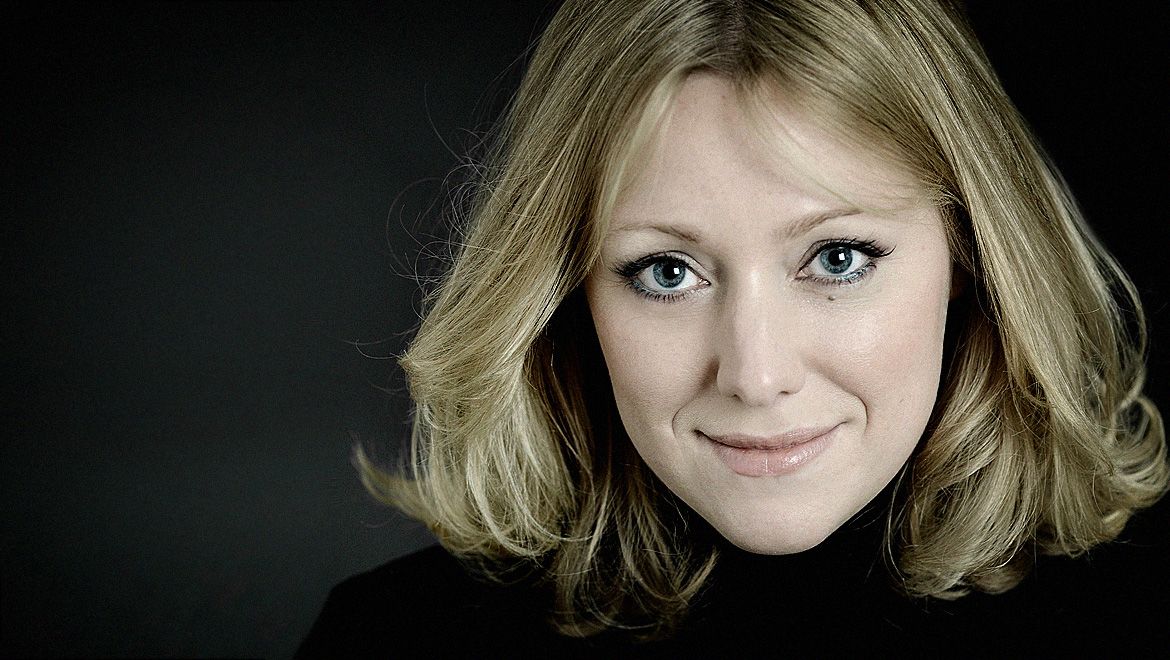
Sussie Ahlburg
Sussie Ahlburg
Sophie Bevan is recognised as one of the leading lyric sopranos of her generation; she studied at the Royal College of Music where she was awarded the prestigious Queen Mother Rose Bowl. She won the Young Singer award at the inaugural International Opera Awards in 2013 and was made an MBE in the Queen’s Birthday Honours in 2019.
She works regularly with leading orchestras worldwide and with conductors including Sir Antonio Pappano, Daniel Harding, Andris Nelsons, Edward Gardner, Laurence Cummings, Sir Mark Elder, Ivor Bolton and Mirga Gražinytė-Tyla.
In the concert hall her repertoire ranges from Bach, Handel and Haydn via Richard Strauss and Fauré to Britten, Knussen and Ryan Wigglesworth.
She is an acclaimed recitalist and has appeared with pianists including Julius Drake, Malcom Martineau, Ryan Wigglesworth, Christopher Glynn and Graham Johnson at venues including the Amsterdam Concertgebouw, Aldeburgh Festival and Oxford Lieder Festival, as well as regular appearances at Wigmore Hall in London.
Sophie Bevan is sought after for her work in opera, and recent and future engagements include Ilia (Idomeneo), Sophie (Der Rosenkavalier),Susanna (The Marriage of Figaro), Dalinda (Ariodante)and Pamina (The Magic Flute) at the Royal Opera House; Fiordiligi (Così fan tutte) for Welsh National Opera; Ellen Orford (Peter Grimes) for Rome Opera; Hermione (Ryan Wigglesworth’s The Winter’s Tale), Télaïre (Castor et Pollux) and one of the lead sopranos in The Seven Deaths of Maria Callas for ENO; Mélisande (Pelléas et Mélisande) for Dresden Semperoper; Asteria (Tamerlano) for the Grange Festival; Freia (Das Rheingold) at Teatro Real, Madrid; and Governess (The Turn of the Screw) for Garsington Opera. She made her debut at Glyndebourne Festival Opera as Michal (Saul) and at the Salzburg Festival and Metropolitan Opera as Beatriz (Thomas Adès’s The Exterminating Angel).
BBC National Chorus of Wales
BBC National Chorus of Wales is made up of over 120 singers and is one of the leading mixed symphony choruses in the UK. While preserving its amateur status, it works to the highest professional standards under Artistic Director, Adrian Partington. Comprising a mix of amateur singers alongside students from the Royal Welsh College of Music & Drama and Cardiff University, the chorus, based at BBC Hoddinott Hall in Cardiff Bay, works regularly alongside BBC National Orchestra of Wales, as well as giving concerts in its own right.
Recent highlights include performances of Poulenc’s Stabat mater and the world premiere of Alexander Campkin’s Sound of Stardust alongside BBC Cardiff Singer of the World Audience Prize winner Julieth Lozano Rolong and choral conductor Sofi Jeannin; Shostakovich’s 13th Symphony with Principal Conductor Ryan Bancroft; and Sir Karl Jenkins’s Dewi Sant in his 80th-birthday year. The chorus also appears annually at the BBC Proms, with recent highlights including Verdi’s Requiem, John Adams’s Harmonium with Ryan Bancroft and Vaughan Williams’s A Sea Symphony with Andrew Manze.
Last season the chorus performed Rossini’s Stabat mater alongside 2021 Cardiff Singer of the World Song Prize winner Masabane Cecilia Rangwanasha and Nil Venditti; Handel’s Messiah with early music specialist John Butt; and Beethoven’s Missa solemnis with Andrew Manze, as well as its annual carols concert and a programme of Brahms with Ryan Bancroft.
BBC National Chorus of Wales is committed to promoting Welsh and contemporary music and gave the second-ever performance of Grace Williams’s Missa Cambrensis, 45 years after its premiere, which was also released on CD. It has premiered works by many composers, including a special performance of Kate Whitley’s Speak Out, set to the words of Malala Yousafzai’s 2013 UN Speech.
The chorus can be heard on BBC Radio 3, BBC Radio Wales and BBC Radio Cymru, and recently featured in Paul Mealor’s soundtrack for BBC Wales’s Wonders of the Celtic Deep.
BBC National Orchestra of Wales
For over 90 years, the BBC National Orchestra of Wales, the only professional symphony orchestra in Wales, has played an integral part in the cultural landscape of the country, occupying a distinctive role as both a broadcast and national orchestra, and serving as an ambassador of Welsh culture, regularly performing music created in Wales and championing Welsh composers and artists.
Part of BBC Cymru Wales and supported by the Arts Council of Wales, BBC NOW performs a busy schedule of concerts and broadcasts, working with acclaimed conductors and soloists from across the world, including its Principal Conductor, the award-winning Ryan Bancroft.
The orchestra is committed to working in partnership with community groups and charities, taking music out of the concert hall and into settings such as schools and hospitals to enable others to experience and be empowered by music. It undertakes workshops, concerts and side-by-side performances to inspire and encourage the next generation of performers, composers and arts leaders, and welcomes thousands of young people and community members annually through its outreach and education projects.
BBC NOW performs annually at the BBC Proms and biennially at the BBC Cardiff Singer of the World competition, and its concerts can be heard regularly across the BBC – on Radio 3, Radio Wales and Radio Cymru. On screen, music performed by BBC NOW can be heard widely across the BBC and other global channels, including the soundtrack and theme tune for Doctor Who, Planet Earth III, Prehistoric Planet, The Pact and Children in Need.
Based at BBC Hoddinott Hall, Cardiff Bay, BBC NOW utilises a state-of-the-art recording studio with a camera system for livestreams and TV broadcasts to bring BBC NOW’s music to a broader audience across Wales and the world. For more information about BBC NOW please visit bbc.co.uk/now
Patron
HM King Charles III KG KT PC GCB
Principal Conductor
Ryan Bancroft
PrincipalGuest Conductor
Jaime Martín
Composer-in-Association
Gavin Higgins
BBC National Chorus of Wales
Artistic Director
Adrian Partington
Assistant Director
Christopher Williams
Soprano
Elizabeth Aitken
Ella Edwards Beavington
Amelia Beecroft
Kate Bidwell
Iustina Chirila
Logan Clark
Angela Contestabile
Charlotte Crane
Katie Cross
Isabel D’Avanzo
Esme Daniell-Greenhalgh
Beatrice Dyer
Ella Edwards
Sofia Franklin
Olivia Ghanem
Sally Glanfield
Faith Gerber
Claire Hardy
Rhiannon Humphreys
Lucie Jones
Margaret Lake
Carolyn Lee
Qianyu Lin
Amélie Mack
Bethan Nicholas-Thomas
Joanna Osborn
Lucy Paterson
Angharad Phillips
Elizabeth Phillips
Rebecca Reavley
Hannah Robertson
Caroline Thomas
Helen Thomas
Megan Veiga
Jo Westaway
Hannah Williams
Lydia Wilson
Janaki Wickramasinghe
Katherine Woolley
Qin Yan
Alto
Nazanin Dast Afkan
Catherine Bradfield
Alex Butler
Dee Cooke
Alison Davies
Rachel Farebrother
Meredith Gardiner
Kathrin Hammer
Annette Hecht
Yvonne Higginbottom
Naomi Hitchings
Matilda Holder
Max Keith
Lisa May
Lily Pearson
Heather Price
Avery Rabbitt
Kate Reynolds
Cerian Rolls
Zozi Sookanadenchetty
Sophia Szczegolski-Jacobs
Julie Thornton
Vicki Westwell
Julie Wilcox
Jessica Williams
Tenor
Jake Bussell
Orin Daniel
Meilyr Dafydd
Keith Davies
Roland George
Peter Holmes
Phil Holtam
Huw Lloyd
Andrew Lunn
Rory McIver
Andrew Morris
Richard Shearman
Nick Willmott
Bass
Noah Boneham‑Hill
Peter Cooke
David John Davies
Ethan Davies
John Davies
Neil Davies
Daniel Davies
James Downs
Charlie Gedge
Stephen Hammnett
Oliver Hodgson
Stuart Hogg
Gregg Hollister
David Hopkins
Jack Irwin
Emyr Wynne Jones
David McLain
Gareth Nixon
Mike Osborn
Ben Pinnow
Neil Schofield
David Stephens
David Rodgers
Alun Williams
Daniel Williams
BBC National Orchestra of Wales
First Violins
Roisin Verity
Martin Gwilym-Jones sub-leader
Gwenllian Hâf MacDonald
Terry Porteus
Suzanne Casey
Carmel Barber
Kerry Gordon-Smith
Emilie Godden
Anna Cleworth
Ruth Heney **
Žanete Uškāne
Alejandro Trigo
Gary George-Veale
Second Violins
Anna Smith *
Kirsty Lovie #
Ros Butler
Sheila Smith
Michael Topping
Katherine Miller
Joseph Williams
Beverley Wescott
Vickie Ringguth
Roussanka Karatchivieva
Lydia Caines **
Elizabeth Whittam
Violas
Tetsuumi Nagata
Peter Taylor
Robert Gibbons
Lowri Taffinder
Laura Sinnerton
Lydia Abell
Anna Growns
Catherine Palmer
Mungo Everett-Jordan
Cellos
Leo Popplewell
Jessica Feaver
Sandy Bartai
Carolyn Hewitt
Keith Hewitt
Rachel Ford
Alistair Howes
Kathryn Graham
Double Basses
David Stark *
Alexander Jones #
Emma Prince
Albert Dennis
Natalia Vázquez Fernández
Adam Precious
Piccolo
Oboes
Cor anglais
Clarinets
Nicholas Carpenter *
William White
Lenny Sayers **+
Bass Clarinet
Lenny Sayers †**+
Bassoons
Alex Davidson
Contrabassoon
Alex Davidson
Horns
Meilyr Hughes
Benjamin Hartnell-Booth
Flora Bain
John Davy
Trumpets
Corey Morris †
Robert Samuel
John Blackshaw
Trombones
Bass Trombone
Tuba
Timpani
Harp
Elen Hydref
* Section Principal
The list of players was correct at the time of publication
Director Lisa Tregale
+ Green Team member
Keep up to date with BBC National Orchestra of Wales
Listen to our BBC Radio 3 broadcasts via the BBC Sounds app. Visit our website and follow us on Facebook and Instagram
To help us improve our online concert programmes, please take this 5-minute survey
Produced by BBC Proms Publications